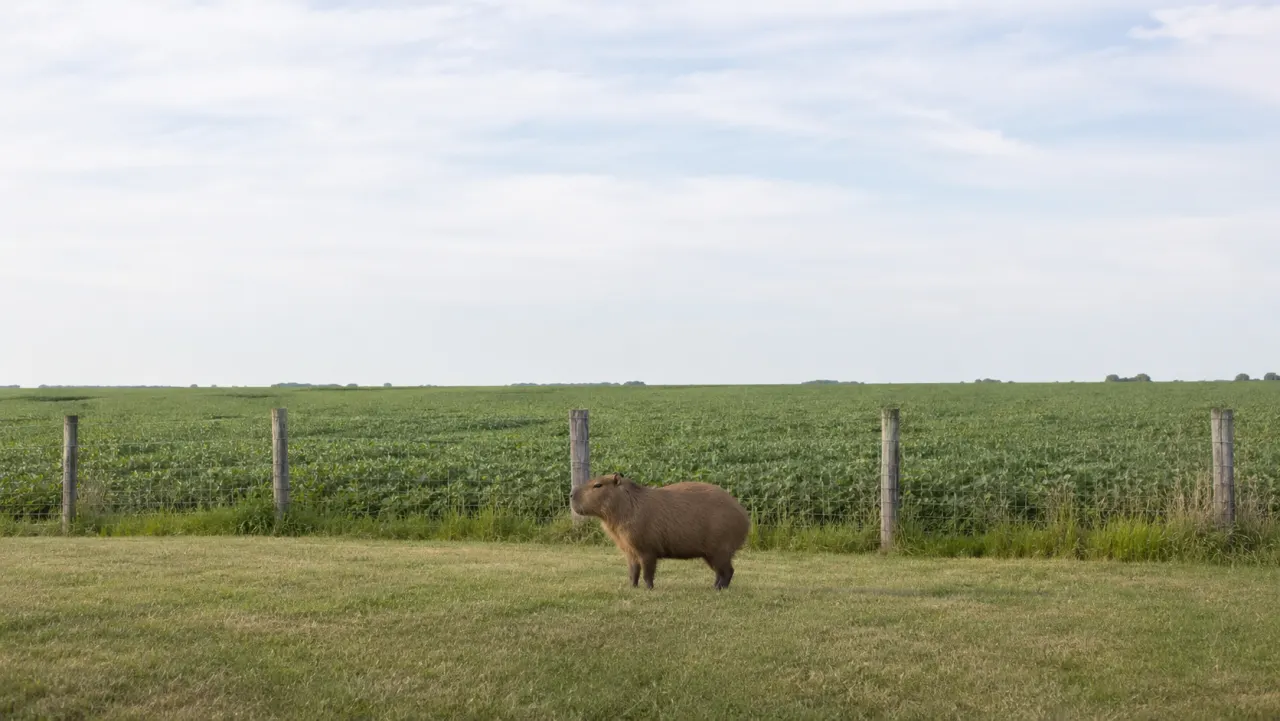
Oklahoma is the kind of state where “I have land” enters the chat early. Land helps. It does not answer the law.
The cautious 2026 answer: Oklahoma does not give ordinary readers a simple public pet-capybara yes. ODWC wildlife breeder, import/export, exhibitor, and captive wildlife inspection materials may apply depending on what you are doing, and local rules can still stop the plan.
The capybara may be relaxed. Your paperwork should not be.
Land helps. Land does not answer the law
Oklahoma is the state where "I have land" enters the conversation early. Acreage genuinely helps with the welfare side and does nothing for the wildlife department, the import paperwork or the county.
Oklahoma Is A Permit Check, Not A Forum Answer
The Oklahoma Department of Wildlife Conservation lists several wildlife applications on its permits page, including noncommercial breeder, commercial breeder, wildlife import/export, captive wildlife inspection, and exhibitor materials. That alone tells you the state has categories for captive wildlife activity.
What the public page does not do is hand a casual owner a sentence saying “capybaras are legal pets.” So the safe answer is to ask ODWC for a species-specific written response.
| Activity | Why it changes the answer |
|---|---|
| Private possession | May still need ODWC classification or confirmation |
| Import from another state | Wildlife import/export paperwork may matter |
| Breeding | Commercial or noncommercial breeder rules may apply |
| Sale | Commercial activity can trigger state and federal requirements |
| Public display | ODWC exhibitor and USDA APHIS licensing may matter |
The ODWC Layers That Can Matter
Start with ODWC and ask clearly: Does Oklahoma allow private possession, import, transport, breeding, sale, or exhibition of Hydrochoerus hydrochaeris? If yes, which permit, inspection, recordkeeping, or enclosure standards apply?
Use the activity words. “Pet” is too vague. A person keeping two capybaras privately is not the same as a person breeding them, transporting them across state lines, or bringing them to a paid event.
Also ask whether an import/export application is needed before any out-of-state animal enters Oklahoma. Buying from a legal seller in another state does not automatically make the receiving state legal. That little gap has swallowed many exotic-pet plans with impressive efficiency.
Local Oklahoma Rules Can Still Say No
Oklahoma cities, counties, and HOAs can regulate exotic animals, nuisance conditions, outdoor enclosures, water features, and zoning. Oklahoma City, Tulsa, Norman, Edmond, rural counties, and private subdivisions may not share one answer.
Do the local calls after ODWC but before purchase. Ask animal control about exotic mammals. Ask zoning about enclosure, shelter, drainage, fencing, and water. Ask the HOA or landlord directly.
If your plan requires explaining that the 100-pound rodent is “basically like a guinea pig,” stop. That sentence is already a warning light.
Where Oklahoma Capybara Assumptions Go Wrong
Most bad capybara plans do not start with a clear law. They start with a confident assumption that nobody checked. Here are the ones that show up most, and the more honest reply.
| Myth | Better answer |
|---|---|
| ”Oklahoma is rural, so exotics are basically unregulated.” | Rural does not mean rule-free. ODWC permit categories and county or city code can still apply to a non-domestic mammal. |
| ”I bought it legally in another state, so I’m covered here.” | The seller’s state and the receiving state are two separate questions. Oklahoma import/export paperwork may matter regardless of where the animal came from. |
| ”It’s a rodent, so it’s treated like a guinea pig.” | Capybaras are the world’s largest rodent and a wildlife-classification question, not a pet-store species. The size and water needs change how agencies see them. |
| ”One capybara is fine on its own.” | Capybaras are highly social herd animals. Solitary housing is a known welfare stressor, not a convenience. |
| ”If a permit exists, the permit is the whole story.” | A state permit does not override city zoning, an HOA, or USDA rules. Each layer can still say no. |
The honest take: the people who get into trouble are almost never the ones who asked too many questions. They are the ones who treated a seller’s reassurance as a legal opinion and skipped the boring calls.
The Paper Trail That Actually Protects You
A verbal “sounds fine” protects nobody. If anyone ever questions the animal, the only thing that helps is a record with your address, the species name, and a named agency answer. Build this before money moves.
| Agency / document | What to ask | Why it matters | What changes the answer |
|---|---|---|---|
| ODWC licensing / permits | Is possession, import, transport, breeding, sale, or exhibition of Hydrochoerus hydrochaeris allowed, and under which category? | Sets the state baseline for your specific activity | A “yes” for one activity is not a “yes” for all of them |
| ODWC import/export contact | Is a wildlife import/export application or inspection required before the animal enters Oklahoma? | An out-of-state purchase can stall at the state line | Source state, transport route, and timing all shift the requirement |
| Local animal control | Does city or county code allow a non-domestic mammal at this exact address? | Local code can be stricter than the state | A different address or annexation can change the rule overnight |
| Zoning office | Are fencing, shelter, drainage, and an outdoor pond or pool permitted? | Capybara housing is a built structure, not a backyard afterthought | Lot size, setbacks, and water features can each block the build |
| USDA APHIS | Does paid exhibition, breeding, sale, or transport require federal licensing? | Commercial use adds a federal layer above the state | Charging the public, even occasionally, can move you into licensed territory |
The Oklahoma Verification Checklist
Current as of June 2026: this is an editorial starting point, not legal advice. Recheck ODWC, import/export requirements, and local code in writing before acting near the scheduled October 2026 publish date.
| Who to contact | What to ask |
|---|---|
| ODWC licensing or permits | Does Oklahoma allow possession, import, transport, breeding, sale, or exhibition of capybaras? |
| ODWC import/export contact | Is a wildlife import/export application or inspection required? |
| Local animal control | Does city or county code allow a non-domestic mammal at this address? |
| Zoning office | Are fencing, shelter, pond or pool, drainage, and outdoor animal housing allowed? |
| USDA APHIS | Does public exhibition, paid encounters, breeding, sale, or transport require federal licensing? |
| Exotic veterinarian | Will you treat capybaras, including emergencies and dental issues? |
Get written answers with the species name, address, number of animals, source, intended use, and enclosure description. “Someone at the office said it sounded okay” is not a document.
Plains Space Is Not Enough
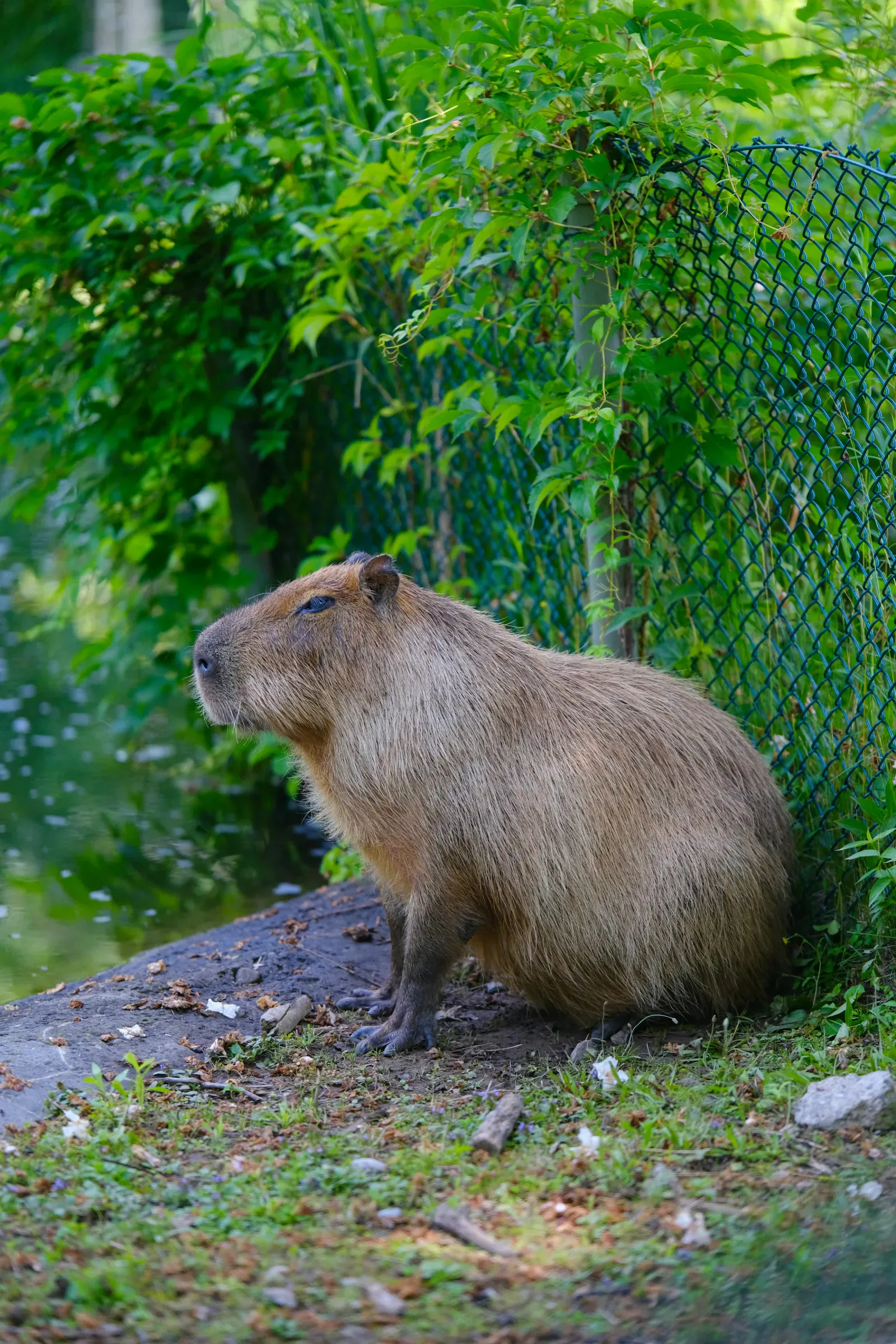
Capybaras need more than room. They need compatible capybara company, real water access, high-fiber food, shade, secure fencing, drainage, winter and heat planning, and an exotic vet. San Diego Zoo Wildlife Alliance lists adult capybaras at roughly 77 to 145 pounds; Animal Diversity Web describes their water-linked group life.
A few care realities make the cost picture honest before any permit is even granted. Water is not optional decoration. Capybaras are semi-aquatic grazers, and a real pond or pool with clean water and safe footing is part of normal husbandry, not an upgrade. Company is also a requirement, not a preference. Because they are herd animals, one capybara is usually a welfare problem, which means most serious plans are really two-animal plans, with the food, space, and vet costs roughly doubled.
Then there is the diet detail people miss. Like guinea pigs, capybaras cannot make their own vitamin C, so it has to come from their food, and a deficient diet causes real health problems over time. They are hindgut fermenters that re-ingest soft morning feces to pull more nutrients out of grass, and their teeth grow continuously, which is why a fiber-heavy diet and dental access matter rather than the occasional vegetable treat. None of this is exotic trivia. It is the ongoing, unglamorous bill behind the cute photos.
The exotic vet is the piece that quietly decides whether the whole plan is responsible. A capybara is an 8-to-10-plus year commitment, and most general small-animal clinics do not treat them, especially in an emergency or for dental work. If there is no reachable exotic vet who will see the animal, the rest of the setup is a liability waiting to happen.
Oklahoma space can help build a serious enclosure. It does not make a capybara low-maintenance. For the care side, read how to take care of a capybara, how much a capybara costs, and do capybaras make good pets.
The practical takeaway is unglamorous: ask ODWC first in writing, ask local officials next, line up an exotic vet before a deposit, and do not let a seller define Oklahoma law for you. If any one of those steps comes back unclear, treat it as a no until the agency or office says otherwise.
A Note On What This Is
This guide is general information, not legal advice, and it reflects what was on the books as of June 2026. Wildlife rules, local ordinances, and federal licensing requirements change, and an editorial page is not a substitute for the agency that actually issues the permit. Before you act, confirm the current rules in writing with ODWC and your city or county animal control and zoning offices, check USDA APHIS for any commercial activity, and if real money or a long commitment is on the line, talk to a qualified Oklahoma attorney who handles animal or exotic-species matters. Treat every assumption in this article as a permit question until the relevant office confirms it for your species, your address, and your intended use.