Tennessee gives one of the cleanest answers in this series, and almost nobody states it correctly. TCA 70-4-403 sorts every animal into classes, and Class III is the residual one. The statute’s own words: it “requires no permits except those required by the department of agriculture, and includes all species not listed in other classes.” Class I is a named list of inherently dangerous species with no rodent anywhere on it. Class II is native species. A capybara is neither, so it lands in Class III by operation of the statute rather than by anyone’s opinion. No TWRA possession permit, no facility inspection.
Class III, and Class III needs no TWRA permit
TCA 70-4-403 defines Class III as everything not listed in another class, and states it requires no permits except those required by the Department of Agriculture. Tennessee's importation rule, 1660-01-15-.01, exempts Class III wildlife outright.
Two things still bind. The Department of Agriculture carve-out inside that same sentence, and your county or city, which the state class system does not touch.
The Short Answer: Class III Is the Leftover Class
Most guides about Tennessee hedge toward Class II and a permit, because “Class II” sounds like where a large exotic animal belongs. It is not. Class II is defined as native species except those listed in other classes, and a capybara is native to South America, not to Tennessee.
That leaves the residual, and residual classes are usually where an honest answer goes to die. Tennessee is the exception, because the legislature wrote the consequence of the residual class directly into the definition instead of leaving it to be inferred. The statute does not say Class III is unregulated. It says Class III requires no permits except those required by the Department of Agriculture, which is a sentence with two halves and people only ever quote the first.
How TCA 70-4-403 Sorts Every Animal in Tennessee
| Class | What it covers | Permit position | Where a capybara sits |
|---|---|---|---|
| Class I | Named inherently dangerous species: primates, big cats, bears, wolves, elephants, rhinos, hippos, African buffalo, crocodilians, venomous snakes, poisonous amphibians | Zoos, circuses and commercial propagators only | Not listed, and no rodent is |
| Class II | Native species except those listed in other classes | Permit required | Not native to Tennessee |
| Class III | All species not listed in other classes, plus seventeen enumerated categories | No permits except those required by the Department of Agriculture | Lands here by elimination |
| Class IV | Native species held only by zoos and temporary exhibitors | Zoos and temporary exhibitors | Not native |
Two details are worth pausing on. First, the Class III enumeration at subdivisions (3)(A) through (Q) is explicitly non-exhaustive, listed after “includes, but is not limited to.” Its rodent entry names gerbils, hamsters, guinea pigs, rats, mice, squirrels and chipmunks, and a reader who stops there concludes capybaras were left out. They were not left out of anything. The class is defined by the residual clause, and the list is illustration.
Second, TWRA’s own permits page states that no one may possess a Class I or Class II species without the appropriate permit. Class III is simply absent from that sentence, which is what absence should look like when a class genuinely needs no permit.
The Department of Agriculture Carve-Out Is the Part People Skip
Here is the half of the Class III sentence that never makes it into a forum post.
Class III "requires no permits except those required by the department of agriculture." TWRA stepping back does not mean nobody is watching the state line. It means the watching moved to a different building.
Tennessee’s import requirements route native wildlife and other wild animals to TWRA, and put pet rodents, rabbits, ferrets, chinchillas, cavies and pet birds on a certificate of veterinary inspection valid for 30 days from the state of origin. A capybara is a rodent that most people would call a wild animal, and it can be read into either line depending on who is reading. Which is exactly the question to put to the state veterinarian’s office before a trailer is booked, in writing, using the scientific name.
The wildlife side is already settled in your favour. Tenn. Comp. R. & Regs. 1660-01-15-.01 governs importation of live wildlife obtained outside Tennessee, and it exempts Class III wildlife from its requirements. So the TWRA importation permit that Class I and Class II animals need does not follow a capybara across the border.
Can You Have a Capybara as a Pet in Tennessee? Nashville and Memphis Still Say No
State permission and municipal permission are different objects, and Tennessee is a good state for demonstrating that.
Metro Nashville and Davidson County, and Shelby County around Memphis, both run animal control codes covering exotic and non-domestic animals, written independently of the wildlife class system. Knoxville and Chattanooga have their own. Between them, the metro areas hold most of the state’s population and nearly all of its exotic-animal ordinance text.
What that produces is a strange phone call. You ring TWRA and get an answer that sounds like a shrug, because from their side there is genuinely nothing to issue and no file to open. Then you ring Metro codes and get a firm no, from an office that has never heard of Class III and does not need to have. Neither of them is being unhelpful. They are answering different questions, and only one of those questions is about your address.
Rural counties in the central basin, the eastern ridges and west Tennessee tend to have thin exotic-animal ordinances or none. That is where the practical conversation lives, and even there the questions are the parcel-level ones: zoning district, setbacks, whether a pond counts as an accessory structure, and what the fence code says.
Five Calls, and the Order They Go In
-
County or city codes, by parcel address
First, because it is the layer most likely to be a no. Ask about exotic and non-domestic animals, and separately about ponds, enclosures and fence height in your zoning district.
-
TWRA, to confirm the class in writing
Ask what class Hydrochoerus hydrochaeris is currently assigned to and whether any permit attaches. Classifications can move by rulemaking, and a dated written reply is worth having on file.
-
Tennessee state veterinarian's office
Which import line a capybara travels on, and what the certificate of veterinary inspection has to say. This is the carve-out inside the Class III sentence, and it is the one people miss.
-
The seller's veterinarian
The certificate is written in the state of origin, not yours. Confirm it exists before the deposit, not the week of transport.
-
Two exotic veterinarians in Tennessee
The University of Tennessee's veterinary college in Knoxville anchors the east. West Tennessee thins out. Ask both whether they treat capybaras and what happens after hours.
If money is ever going to change hands over public contact with the animal, USDA APHIS licensing under the Animal Welfare Act sits on top of all of this and is unaffected by any of it.
What Tennessee Humidity Gets Right, and What It Does Not
Tennessee is quietly one of the better climates in this series, and the reason is the thing people complain about all summer.
The AZA Capybara Care Manual notes capybaras tolerate drier air down to 15–20% relative humidity without apparent difficulty, but the target band for indoor enclosures is 30–70%. A Tennessee summer delivers that for free, which is a real advantage over the desert states, where skin condition becomes an active management problem rather than a passive one.
The manual’s habitat description is the part worth holding onto. Capybaras come from an environment that takes roughly 2.3 m (7.5 ft) of rain a year. Middle Tennessee is not the Llanos, but a humid hardwood state with long shoulder seasons is a much closer approximation than a Michigan January or an Arizona August. Winter is still the constraint. The 40°F floor comes with a heated, bedded shelter attached to it, and east Tennessee at elevation spends real time below that.
The Residual Class Costs Nothing, By Definition
Tennessee’s answer is written into the definition of the class itself, which is why there is no fee to look up.
Two exemptions in a row is a strong result, and it is worth noticing that both of them are explicit rather than inferred. Tennessee did not forget the capybara; it built a residual class and then said in the statute what the residual class requires, which is nothing from the wildlife agency.
"Except those required by the department of agriculture" is doing real work in that sentence. Tennessee routes wild animals to TWRA and pet rodents onto a certificate of veterinary inspection, so ask the state veterinarian's office which line a capybara falls on rather than assuming the Class III exemption clears the border too.
After that it is county code, and then the numbers no agency sets. The capybara cost guide covers those, and Tennessee humidity changes some of them.
Tennessee Assumptions the Statute Does Not Share
| What people believe | What is actually true |
|---|---|
| ”Capybaras are Class II in Tennessee” | Class II is native species. A South American rodent cannot be in it. The residual class is Class III. |
| ”Class III means unregulated” | The definition says no permits except those required by the Department of Agriculture. That exception is doing work. |
| ”No permit means nothing to arrange” | The animal still has to enter the state, and entry runs on veterinary documentation written in the state of origin. |
| ”Rural county, so no rules at all” | Zoning, setbacks, fence codes and pond rules apply parcel by parcel whether or not an exotic-animal ordinance exists. |
| ”A tame animal changes the classification” | Classification is by species, in statute. Temperament is not an input. |
| ”TWRA saying no permit is the same as approval” | It is the absence of a file, not the presence of one. Get the written reply anyway, because absence is hard to prove later. |
The Practical Takeaway
Tennessee is a yes, and it is one of the few yeses in this series that rests on statutory text rather than on an agency’s current mood. That is worth something. It is also the reason the risk moves somewhere less obvious.
Do the county and city layer first, because that is the layer that says no. Get TWRA’s classification in a dated email even though the statute already answers it, because in three years the only proof you had permission is the email. Ask the state veterinarian’s office which import line applies and make the seller’s vet part of the plan. Then build for the winter rather than the summer, since the summer is the part Tennessee already handles.
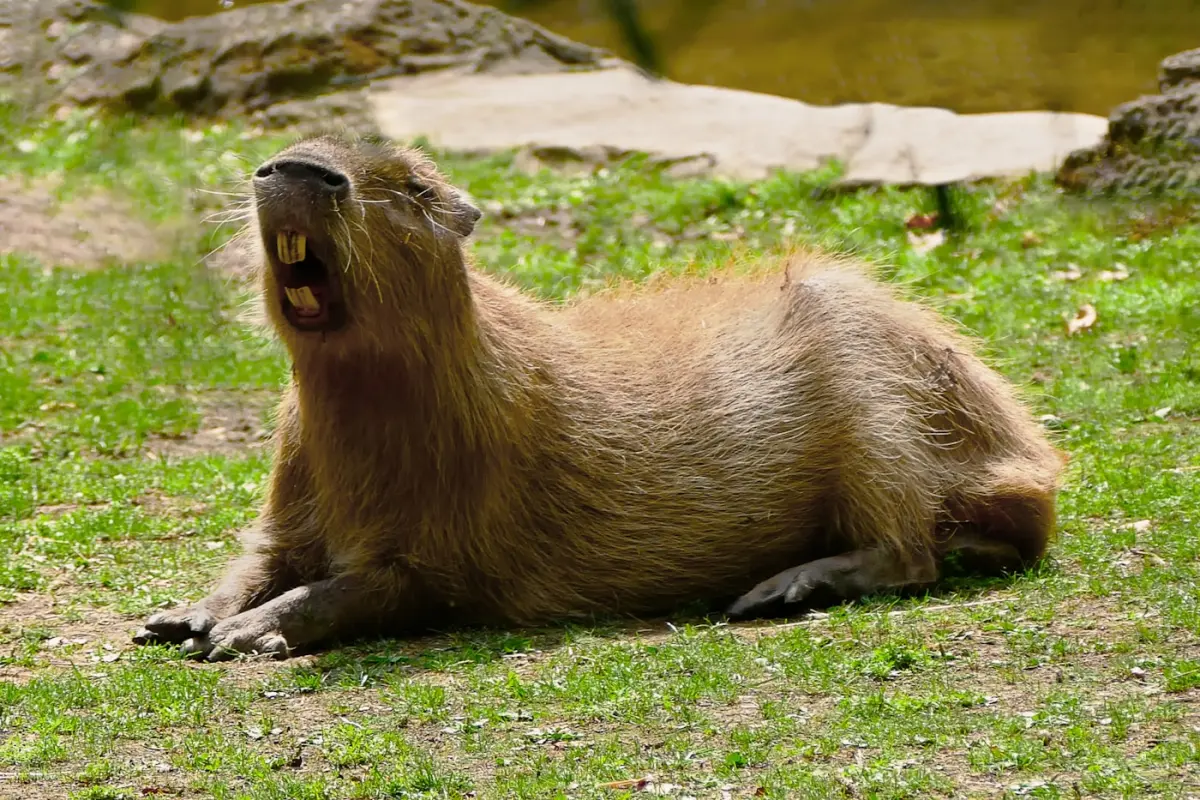
One detail to keep. The AZA manual records at least seven distinct capybara vocalisations, including an alarm bark whose function is to put the whole group in the water. Everything about the enclosure follows from that: if there is no water to go to, the alarm has nowhere to resolve, and the animal stays in the alarmed state.
If you are working through the rest of it, the capybara cost guide and the care guide are the next two pages. Do capybaras make good pets is the harder question this page does not answer. Neighbouring states run on different systems, so read the Georgia and Kentucky guides before assuming the answer travels, and the state-by-state map for national context.
This guide is current as of September 5, 2026. Classifications can change by rulemaking and local ordinances change more often than that, so treat this as a screening path rather than legal advice, and confirm with TWRA, the state veterinarian’s office and your county before acting.