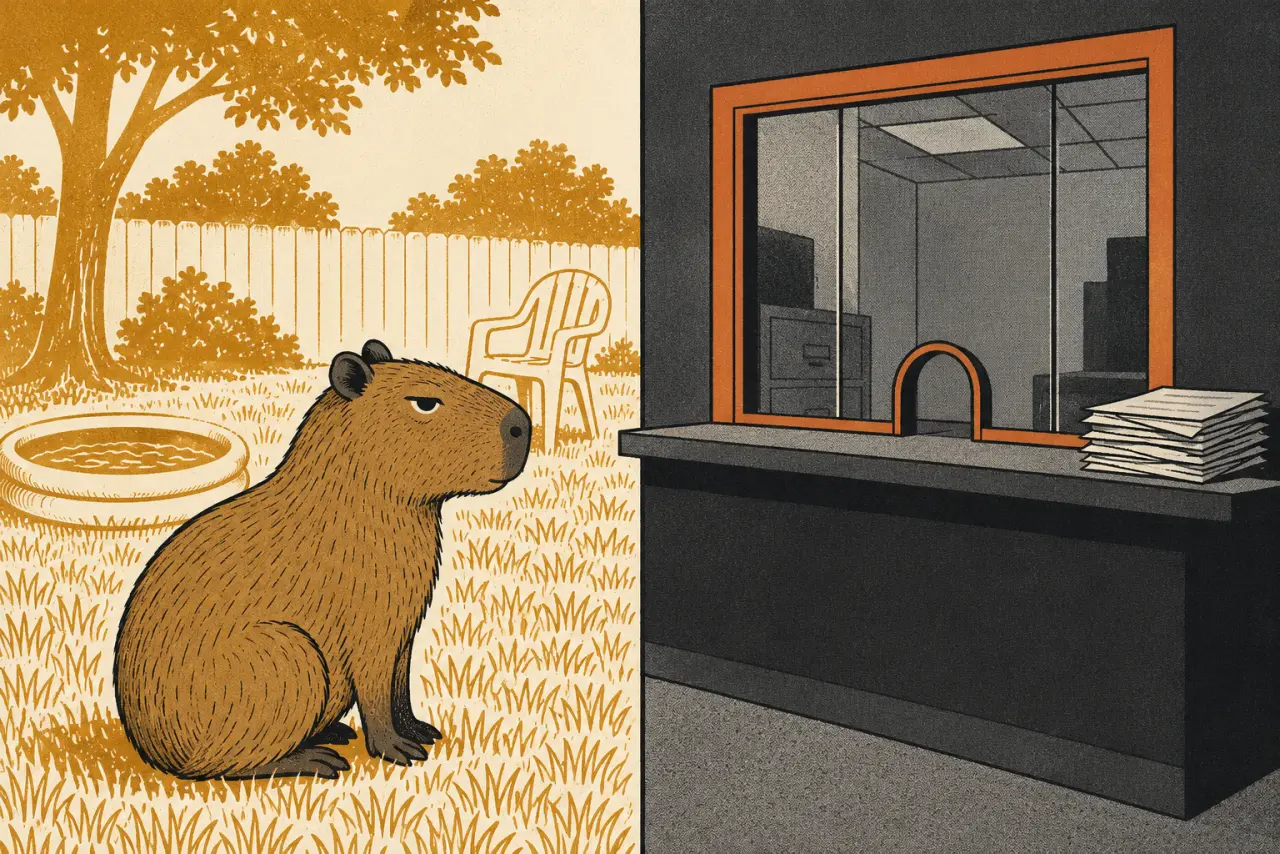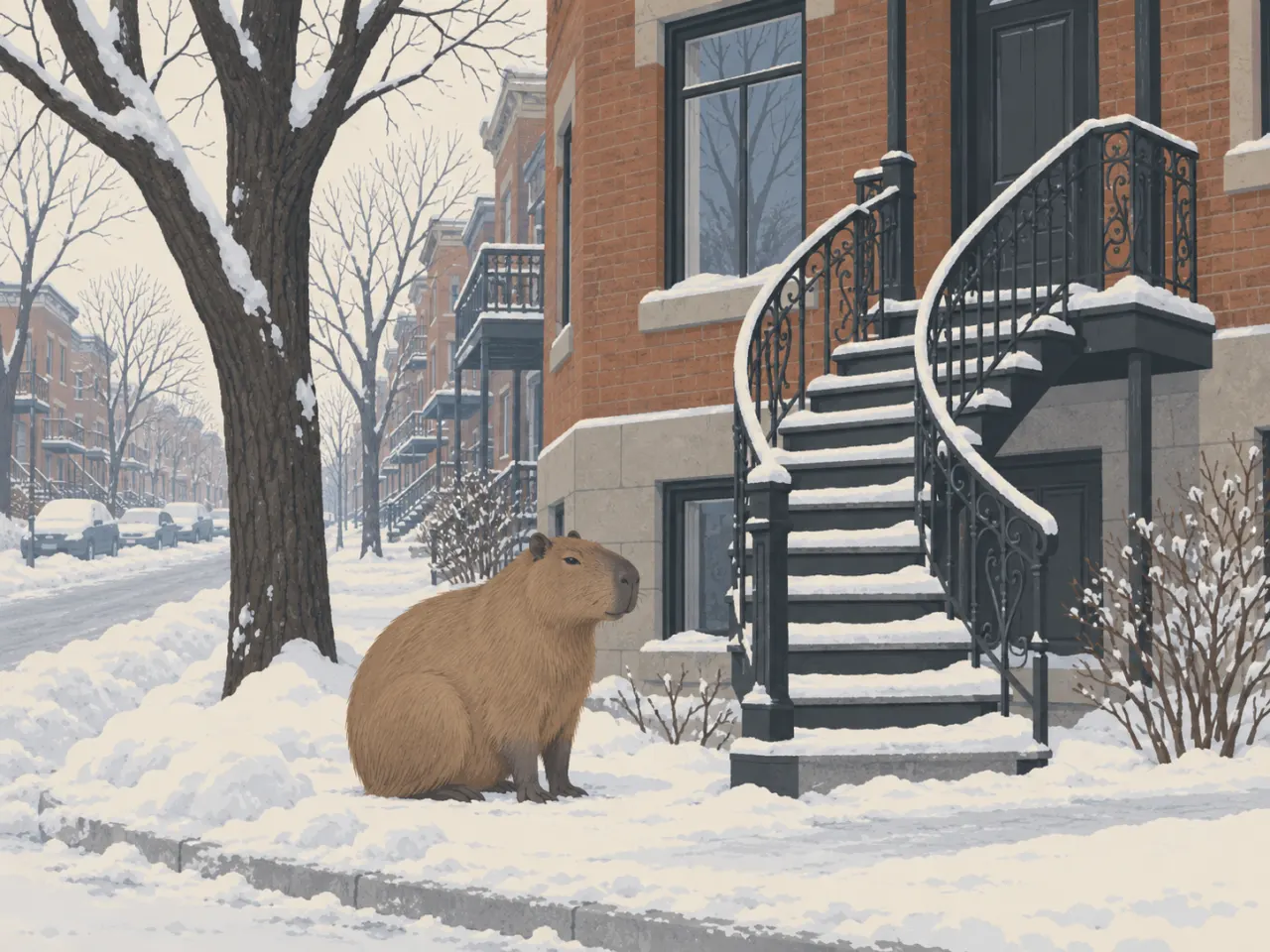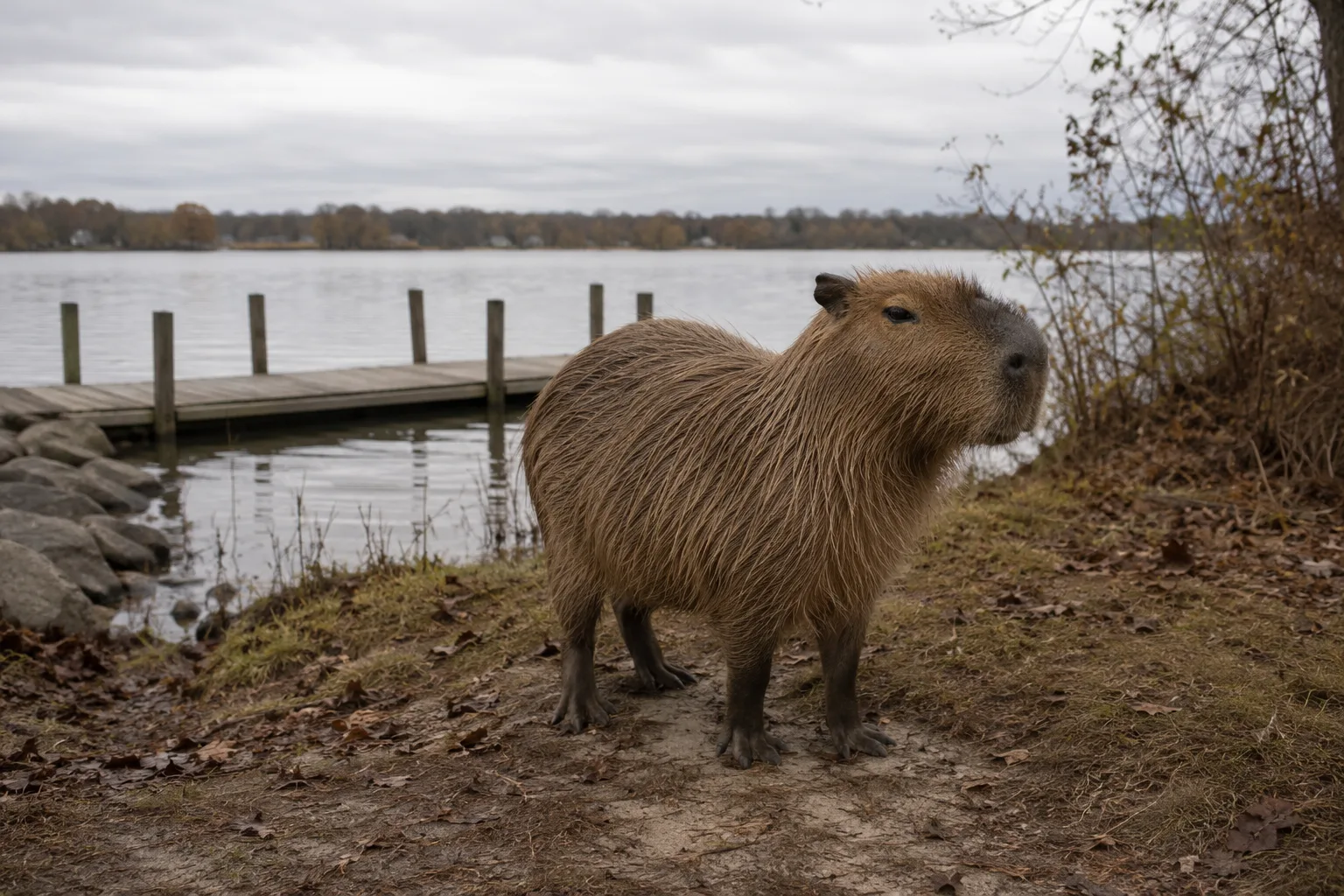

Georgia requires a licence to keep a capybara, and does not issue one you could hold. Both halves of that sentence come from the same chapter. Official Code of Georgia Annotated Title 27, Chapter 5 governs wild animal possession, § 27-5-5(b) reaches the whole order Rodentia bar a short domesticated list, and § 27-5-4(a) makes possession without a licence or permit unlawful. Then § 27-5-4(b) says who each instrument is for, and a household is not on either list.
That makes Georgia unusual. Most states in this position either name the animal and set conditions, or say nothing and leave it to the county. Georgia writes a requirement and then closes the only two doors through it, which means the useful question is not how to qualify but what the Wildlife Resources Division will confirm in writing.
Licensed category, and no licence a pet keeper can hold
O.C.G.A. § 27-5-5(b)(I) reaches every rodent except a short domesticated list, so a capybara needs a wild animal licence or permit under § 27-5-4(a). But § 27-5-4(b) reserves the licence for the wholesale and retail wild animal business and for public exhibitors, and the permit for scientific or educational use. Private pet-keeping is not one of the routes.
How Georgia’s Wild Animal License System Works
The statute does the classifying, and it does it by taxonomic order. O.C.G.A. § 27-5-5(b)(I) covers “Order Rodentia (rats, mice, etc.)—All species except Genus Cavia; Genus Gerbillus; Genus Mesocricetus; Mus musculous; Rattus rattus; Rattus norvegicus; or any other normally domesticated species”. A capybara is Hydrochoerus hydrochaeris. It is not a Cavia, and nobody has ever called it normally domesticated, so it is caught.
§ 27-5-4(a) then makes it unlawful to import, transport, transfer, sell, purchase or possess any animal on that list without either a wild animal licence or a wild animal permit. So far this reads like every other permit state. The next subsection is where Georgia diverges from all of them.
§ 27-5-4(b)(1): wild animal licences "will be issued only to persons engaged in the wholesale or retail wild animal business or persons exhibiting wild animals to the public." § 27-5-4(b)(2): wild animal permits issue only for scientific or educational purposes, to a person with a qualifying permanent disability (and that provision is about capuchin monkeys), or to a pond owner for grass carp.
Neither door opens onto a household. A private keeper who wants a capybara as a pet is not in the wholesale or retail wild animal business, is not exhibiting to the public, and is not conducting science or education. There is no third category. Georgia’s answer to the pet question is not a hard application. It is that the application does not exist.
That distinction matters more than it sounds, because it changes what the phone call to the Wildlife Resources Division is for. It is not “how do I qualify”. It is “confirm that I cannot, and tell me what exhibiting would require if I went that route instead”.
There is also a federal layer for anyone who does take the exhibition route. USDA Animal Welfare Act licensing applies to anyone who exhibits capybaras publicly: petting events, photo encounters, educational presentations. Georgia DNR and USDA operate independently, so clearing one says nothing about the other.
| Route under O.C.G.A. Chapter 5 | Who it is for | Open to a pet keeper? |
|---|---|---|
| Wild animal licence, § 27-5-4(b)(1) | Wholesale or retail wild animal business; public exhibitors | No |
| Wild animal permit, § 27-5-4(b)(2) | Scientific or educational use; qualifying disability; grass carp pond owners | No |
| USDA AWA licence (federal, separate) | Dealers, exhibitors and auction operators | Not applicable to private keeping |
The Wildlife Resources Division is still the call to make, because the board can specify additional species by regulation under § 27-5-4(a) and the chapter is amended from time to time. The current text of O.C.G.A. Chapter 27-5 is what governs the decision in 2026 — not forum posts, not seller assurances, not “my neighbor has one in Burke County.”
Georgia Has 159 Counties And Each One Can Say No
Georgia has 159 counties, more than any state except Texas, and a significant share of them have animal control codes or zoning ordinances that go beyond state law. Atlanta’s city code restricts non-domesticated animals. Most Atlanta suburbs have exotic animal ordinances that predate and operate independently of the state wild animal licensing system.
Even on the exhibition route, the state licence is necessary and nowhere near sufficient. The county in which you live may prohibit the species entirely under nuisance ordinances or zoning classifications that treat non-standard animals as incompatible with residential use. HOA covenants in suburban and exurban Georgia — particularly in the fast-growing counties around Atlanta — often prohibit exotic animals regardless of whether a state license exists.
The pattern that causes the most trouble: an applicant calls DNR, confirms a license path exists, and assumes the problem is solved. Then the county code enforcement officer arrives six months later. Georgia’s rural counties can be more permissive than metro Atlanta, but “rural” does not mean “unregulated.” The call to DNR is step one of several, not the whole answer.
Compare the Georgia framework to nearby Florida’s FWC captive wildlife system or the more restrictive California approach. Georgia sits between the two: a licensing requirement exists and is enforced, but it is not a blanket prohibition.
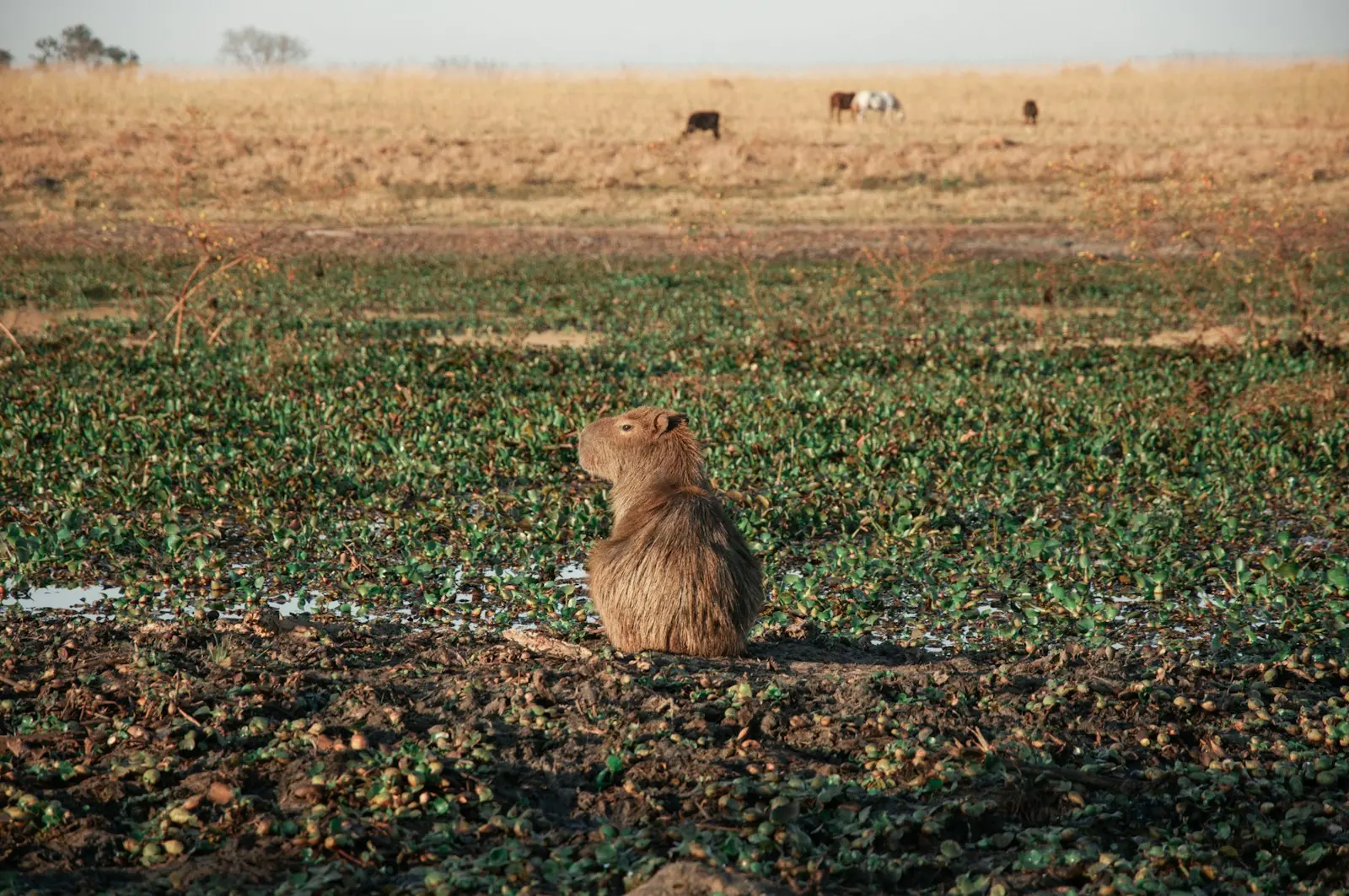
Georgia-Specific Challenges People Overlook
Georgia’s climate is better than most of the country for capybara care. The southern two-thirds of the state rarely sees sustained freezing temperatures, which reduces the infrastructure burden on water systems and shelter. A capybara setup in Valdosta or Savannah has a lower heating cost than the same setup in Columbus, Ohio.
But Georgia’s climate is not uniformly favorable. North Georgia in the Appalachian foothills can see extended cold snaps and occasional ice events. More broadly, Georgia’s heat and humidity in June through September create a different set of challenges: water quality management, algae in open containers, mosquito breeding in standing water near the enclosure, and heat stress if shade and airflow are insufficient.
The AZA Capybara Care Manual is clear that water management is a serious husbandry task, not a passive one. A Georgia setup that starts with a pond or kiddie pool in March can become an algae problem, a mosquito vector, and a skin-health issue by July if nobody is actively managing turnover, filtration, and drainage. Georgia’s humidity accelerates this timeline.
Georgia also has a genuine exotic veterinary gap outside of the Atlanta metro area. Finding a vet willing to treat a 100-pound rodent is straightforward in Atlanta; it is meaningfully harder in rural middle Georgia. The DNR license inspection will not ask you to name a vet. That gap is yours to manage.
The Georgia Assumptions That Backfire
“DNR only cares about dangerous animals like big cats.” Georgia’s wild animal licensing applies broadly to non-native wildlife, not only dangerous predators. Capybaras, as large exotic rodents from South America, fall within the scope of OCGA 27-5’s requirements.
“I can get the license later if I decide to go commercial.” Licensing tracks in Georgia are not interchangeable after the fact. If you are licensed for personal possession and then start selling, breeding, or offering paid encounters, the license category changes and the compliance bar is different.
“Georgia is permissive, so local rules are probably fine.” Georgia is not California, but it is also not a regulatory vacuum. County animal control codes and HOA covenants act independently of state licensing. Metro Atlanta is no more permissive for exotic mammals than most major U.S. cities.
“A seller in Georgia already has a license, so I can get a transfer.” A wild animal licence is issued to a specific person for a specific facility, and § 27-5-4(b)(1) issues it only to the wild animal trade and to public exhibitors. It does not transfer with the animal, and the fact that your seller holds one is evidence that they qualify, not that you do.
What the Licence Costs, and Why the Price Is Beside the Point
Georgia does publish a number, and it is worth knowing even though it is not a number you will ever pay as a pet keeper.
Read those three together and the shape of the chapter is obvious. Georgia priced a commercial licence, made the research permit free, and attached an insurance requirement to the animals that can kill someone. It did not price a household keeping a large rodent, because it did not contemplate one.
If a seller quotes you the $250 as "the Georgia licence fee for your capybara", they are describing a licence you are not eligible to hold. The fee is real. The eligibility is the part that decides it.
The federal layer prices separately and only bites if you exhibit: a USDA Animal Welfare Act licence is a $120 application under 9 CFR § 2.1(a)(2), valid for three years under § 2.5(a).
For the costs that have nothing to do with the state, from enclosure and water to feed and exotic veterinary access, see the capybara cost guide. It deliberately does not quote a purchase price for the animal.
Georgia: Work The List Before You Buy
Do these calls before spending money on anything. The point of the first one is to get the eligibility answer in writing, because everything downstream depends on it.
| Who to contact | What to ask | Why it matters | What changes the answer |
|---|---|---|---|
| Georgia DNR Wildlife Resources Division | Whether Hydrochoerus hydrochaeris is caught by O.C.G.A. 27-5-5(b), and whether any instrument in Chapter 27-5 is available for private keeping | DNR is the state authority, and this is the question the whole plan turns on | Ask for the answer by section number, and ask separately what public exhibition would require |
| County animal control or county ordinance office | Whether your county prohibits or restricts exotic mammals at your property type and zoning classification | County rules can independently prohibit what state law allows | Rural vs. suburban zoning, agricultural exemptions, nuisance code |
| City or municipality code enforcement | Whether your city has exotic animal ordinances or enclosure restrictions | Cities in metro Atlanta and Savannah routinely restrict exotics | HOA covenants, deed restrictions |
| USDA APHIS (if public exhibition planned) | Whether your intended use requires AWA licensing | Any paid or public exhibition triggers a separate federal layer | Selling, breeding, educational exhibitions, photo operations |
| Two exotic-animal veterinarians | Whether they treat capybaras and can provide emergency coverage | Vet access is not guaranteed in Georgia outside major metros | Location, species experience, emergency availability |
| Homeowner or property insurer | Whether your policy covers a licensed exotic animal and any liability events | Standard homeowners policies typically exclude exotics | Enclosure type, liability coverage, local insurer practices |
If DNR says the license path is currently unavailable or requires conditions you cannot meet, the answer for that situation is no — not “try a different county” or “apply again later.”
The Bottom Line On Georgia
Georgia has a real licensing framework, it is enforceable, and it was not built with pet keepers in mind. The path from “interested” to “legally holding a capybara in Georgia” runs through public exhibition or the wild animal trade, which is a business decision rather than a pet one, and it still ends with local ordinance confirmation, county approval and a vet on file.
For someone running a public exhibition or a wild animal business, with the land, the water setup, at least two capybaras in the plan (Animal Diversity Web is clear on their social requirements), a wild animal licence and county clearance, Georgia works. The climate helps. For someone who wants a pet, the chapter does not offer a route, and no amount of preparation creates one.
For most people asking the question casually: the full ownership picture covers why this is a harder life commitment than it looks, and the care requirements cover what the daily management actually involves. If you want to be near capybaras in Georgia without the licensing complexity, the zoo viewing guide lists facilities that have already done this correctly. The legal states map shows where Georgia fits in the national picture.
Georgia catches capybaras under O.C.G.A. 27-5-5(b), issues its wild animal licence only to the wild animal trade and public exhibitors under 27-5-4(b)(1), and then adds a local layer of county zoning, city code and HOA covenants. Any of it can change. This reflects the chapter as read on 5 September 2026. Before acting, check with Georgia DNR Wildlife Resources Division, your county animal control office, and your local municipality. A starting point, not legal advice.