Virginia does something almost no other state in this series does. It writes down a yes.
4VAC15-30-40 lists the nonnative animals the board has declared predatory or undesirable, and then says that all other nonnative (exotic) animals not listed “may be possessed, purchased, and sold” — subject to all applicable local, state and federal law, and never liberated within the Commonwealth. Capybaras are not on the list.
Then read the proviso again, because it is not decoration. “Subject to all applicable local… laws.” Virginia grants the permission and immediately hands the decision to your county. In Fairfax County, the county has already answered.
Permitted by the state, decided by the county
4VAC15-30-40 permits any nonnative animal not on its predatory-or-undesirable table, and no family covering capybaras appears there. The permission is expressly conditioned on local law and on never releasing the animal.
Fairfax County states that animals considered wild or exotic under Chapter 41.1 of its code are not permitted. Check your county before you check anything else.
The One Sentence That Decides Virginia
Most states leave you inferring. Virginia does not, and the drafting is worth reading slowly.
The regulation opens by requiring a special permit to import, possess or sell the nonnative animals the board “finds and declares to be predatory or undesirable within the meaning and intent of §29.1-542 of the Code of Virginia, in that their introduction into the Commonwealth will be detrimental to the native fish and wildlife resources of Virginia.” Then, after the table, it closes the loop: everything else is allowed.
That structure matters more than the list itself. Virginia is a negative-list state with an explicit permission clause attached, which is rarer than it sounds. Compare it with New Mexico, where anything not on the list defaults to the most restrictive group and absence is the bad outcome. Same silence, opposite result.
What Virginia Actually Banned, and Why a Capybara Missed It
The predatory-or-undesirable table is organised by order and family, and it is not short. Carnivora is heavily covered: Canidae, Ursidae, Procyonidae, Mustelidae, Viverridae, Herpestidae, Hyaenidae and Felidae. Artiodactyla brings in Suidae and Cervidae. All bats. Several hares and rabbits under Lepridae. Shrews.
Rodentia is on the list too, which is the part people miss when they assume rodents were simply overlooked. Dipodidae, Muridae, Heteromyidae and Sciuridae all appear, prairie dogs among them, with their own grandfathering rule for animals held before 1998.
On the table, special permit required
- All Canidae, Ursidae, Felidae, Procyonidae, Mustelidae
- Suidae and Cervidae
- All bats
- Dipodidae, Muridae, Heteromyidae, Sciuridae
- Prairie dogs, with a 1998 grandfather clause
Not on the table, permitted outright
- Everything else nonnative, capybaras included
- Possess, purchase and sell
- Subject to local, state and federal law
- Never to be liberated in the Commonwealth
So Virginia did think about rodents. It listed jumping mice, old-world rats and mice, kangaroo rats and ground squirrels, and it did not list the family that includes the capybara. That is a drafting decision about disease and ecological risk from small burrowing and commensal species, not an oversight, and it is the reason the honest state-level answer here is a yes rather than a shrug.
The Proviso Doing All the Work
A permission with three conditions attached is not the same as a free hand, and the conditions here are not boilerplate.
The animals "may be possessed, purchased, and sold; provided, that such animals shall be subject to all applicable local, state, and federal laws and regulations, including those that apply to threatened/endangered species, and further provided, that such animals shall not be liberated within the Commonwealth."
Local law is not an afterthought bolted on by a blogger. It is written into the permission itself. Virginia's yes is conditional on your county's yes, by its own terms.
There is a second thing worth holding onto. A capybara is still a “wild animal” in Virginia: 4VAC15-20-50 defines that as any member of the animal kingdom except domestic animals, including any nonnative exotic mammal, and the domestic list runs to dogs, cats, horses, livestock, poultry and a handful of small caged rodents. So DWR’s general framing still applies, including the flat rule that no wildlife may be released in the Commonwealth without written authorisation.
Fairfax County Already Said No, in Writing
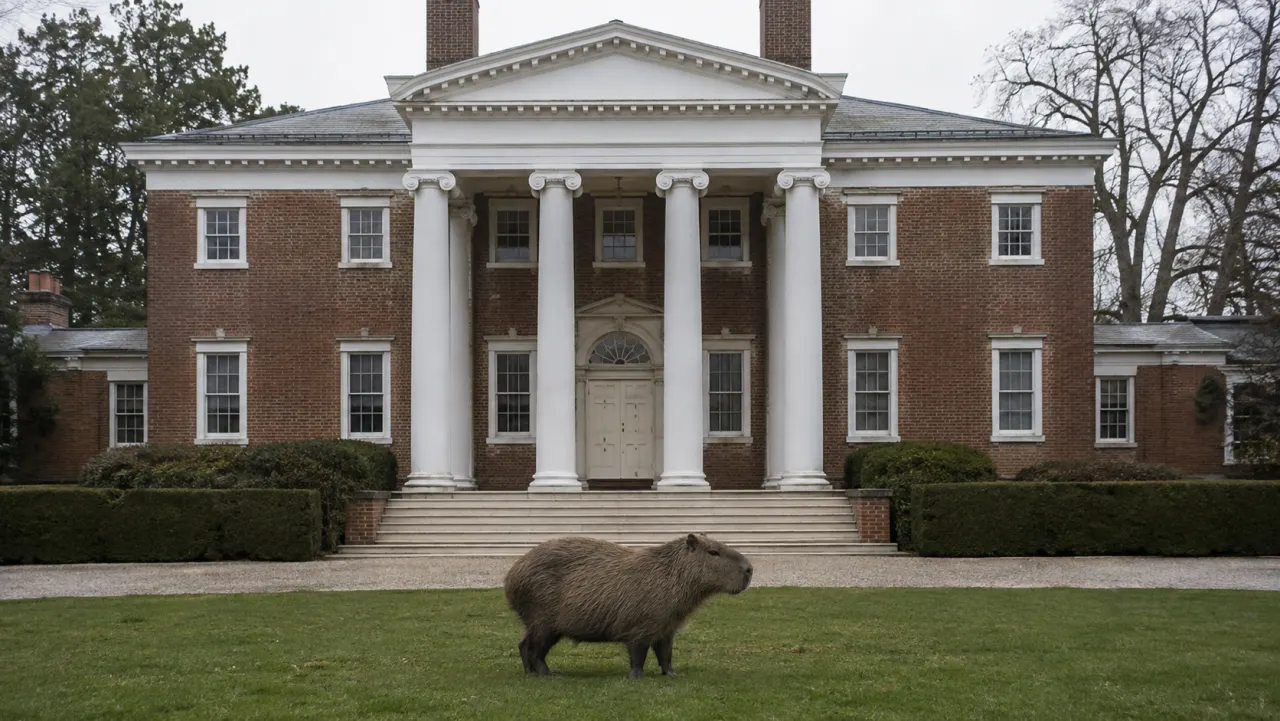
This is the part the property-price arguments obscure. Northern Virginia is not closed because land is expensive. It is closed because the largest county in the state has published a prohibition.
Fairfax County’s code compliance guidance states: “Animals considered wild or exotic under Chapter 41.1 of the County Code are not permitted.” It then directs any question about wild or exotic animals to Animal Protection Police, which is not the tone of an agency inviting an application.
Underneath that sits a zoning layer that would bite even if the first sentence did not exist. Fairfax permits the keeping of livestock or fowl only on lots of at least two acres, and caps density at one animal unit per acre. Two acres is not a Fairfax suburban lot. It is a Fauquier one.
I have not read every Northern Virginia jurisdiction’s code, and I am not going to pretend Arlington and Alexandria say the same thing just because they are nearby. What is verified is Fairfax, and Fairfax is where roughly a fifth of Virginians live.
The shape of the conversation is worth imagining before you have it. Somebody in Vienna or Annandale finds the state regulation, reads the permission clause, and feels the whole project click into place. Half an acre, a fenced yard, a plan for a proper pool rather than a stock tank, a breeder already answering emails. The call to the county is meant to be the formality at the end of the list. Instead the code compliance line says wild and exotic animals are not permitted, offers the Animal Protection Police number, and that is the entire conversation. No hearing, no variance to apply for, no acreage threshold to clear, because the prohibition is not about acreage. It took under two minutes and it happened after the state research rather than before it, which is the expensive way round.
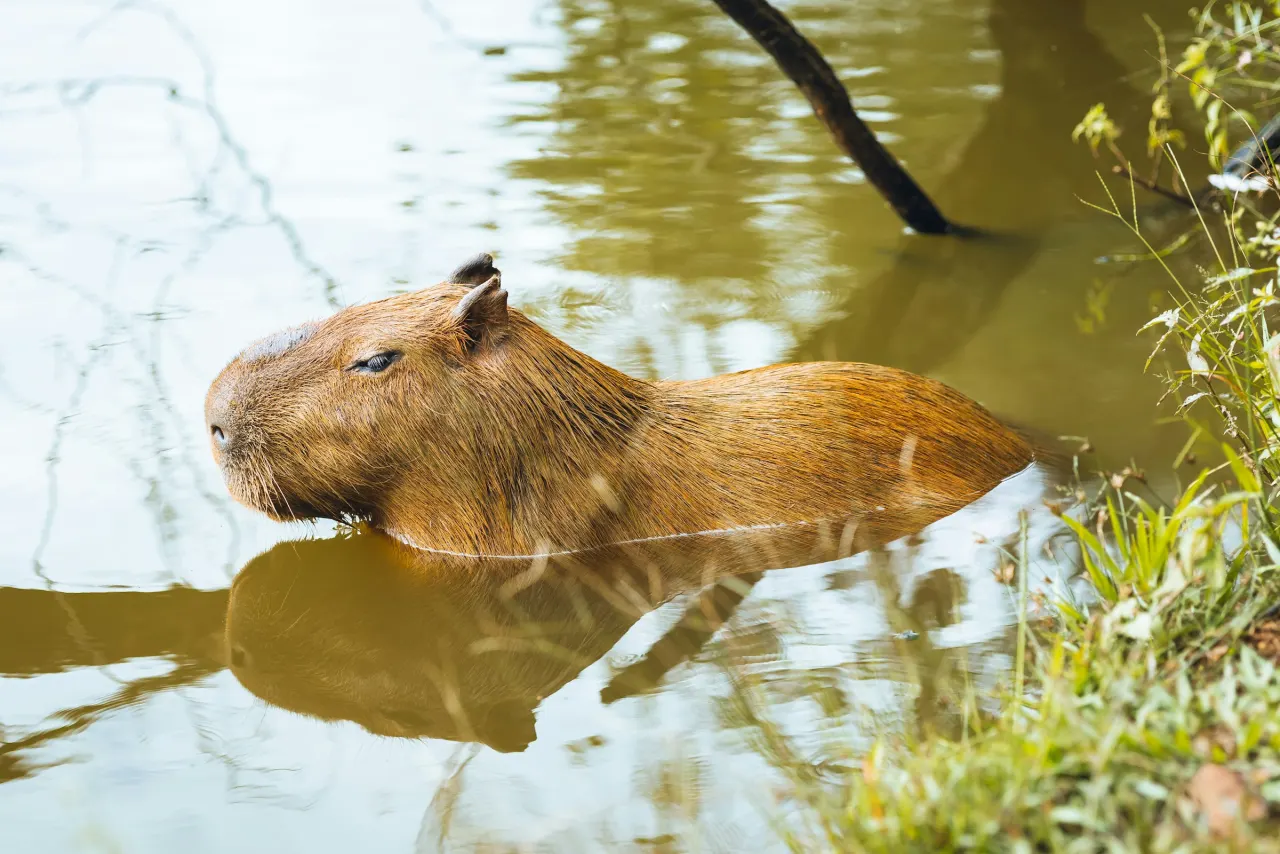
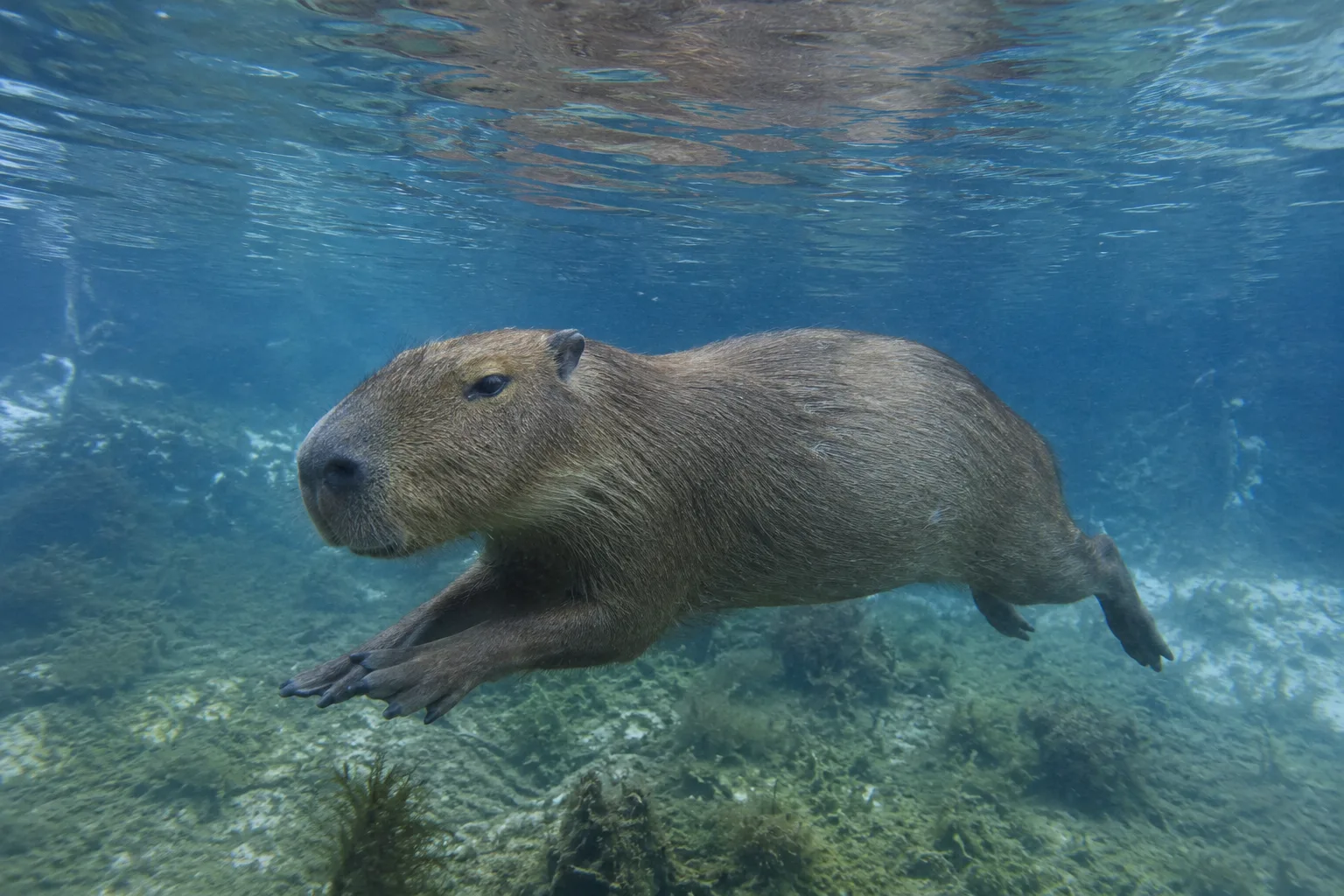
If it helps: capybaras spend a good part of the day submerged with only their eyes, ears and nostrils above the waterline, which is the arrangement a half-acre Fairfax lot was never going to reproduce anyway. The county saved somebody a pond permit.
Where in Virginia the Answer Might Be Yes
Outside the DC ring, the state permission starts doing real work, and the question becomes whether your specific county and your specific parcel agree. Rural Virginia counties generally have thinner animal ordinances and larger lots. That is a reasonable expectation and it is not a verified answer for any particular county, so treat it as a place to start calling rather than a green light.
The care side does not get easier with acreage.
The AZA Capybara Care Manual treats water access, group housing and secure shelter as baseline husbandry, and Animal Diversity Web describes an animal organised around water and herd life. Virginia winters are milder than the northern states in this series, but nights below freezing are routine across most of the Commonwealth, which still means a heated shelter and a water source that does not ice over. The care guide has the full version.
One more line that changes category rather than degree: if anyone is coming to look, 4VAC15-290-60 governs holding wild animals for exhibition and requires the permit provided for in Virginia Code §29.1-417. A private pet and an exhibit are different animals as far as the paperwork is concerned, even when they are the same animal.
The Calls, and Exactly What to Ask
| Who to ask | What to ask | Why it matters | What changes the answer |
|---|---|---|---|
| Your county zoning or code compliance | Does this county prohibit wild or exotic animals, and what lot size applies? | The state permission is expressly subject to local law | Residential versus agricultural zoning, acreage, county line |
| City or town code, if incorporated | Does the municipality have its own animal ordinance? | Virginia cities are independent of counties | Annexed parcels, town versus county jurisdiction |
| Virginia DWR permits section | Confirm Hydrochoerus hydrochaeris is not listed under 4VAC15-30-40 | Tables are amended; a 2026 read is not a 2029 answer | A future board finding under §29.1-542 |
| Virginia DWR, exhibition | Does the plan involve exhibition under §29.1-417? | Visitors move the animal into a permitted category | Any public viewing, paid or educational |
| HOA or recorded covenants | Are non-domestic animals, ponds or outbuildings restricted? | Covenants bind even where county code allows | Subdivision age, deed restrictions |
| Exotic-animal veterinarian | Do you treat capybaras, and what is the after-hours plan? | No vet, no plan, whatever the county says | Distance, species experience, emergency transport |
Ask by scientific name and get the county answer in writing before you get anything else in writing. In Virginia the state layer is the easy call and the county is the one that decides, which is the reverse of how most people run this list.

The State Says Yes for Free, and the County Sets the Price
Virginia is one of the few states whose regulation ends in an affirmative permission rather than a silence, and permissions do not carry fees.
The jump from the first figure to the third is the whole Virginia story. The state costs nothing and says yes; a single populous county costs you the plan entirely. Neither fact is a substitute for the other, and the state’s permission is the one people quote.
4VAC15-30-40's affirmative wording is genuinely helpful, and it is also the reason Virginia buyers skip the local step. The regulation permits possession as a matter of state wildlife law. It says nothing about your locality's animal ordinance, its zoning classification, or the acreage minimum attached to it.
So the Virginia budget is zero to Richmond, unknown to your county until you ask in writing, and then everything in the capybara cost guide.
Four Rodent Families, and Not This One
| What Virginia buyers believe | What is actually true |
|---|---|
| ”Virginia runs a captive wildlife permit system for exotics” | The special permit in 4VAC15-30-20 applies to species declared predatory or undesirable. Unlisted nonnative animals are permitted outright. |
| ”Rodents must be covered somewhere” | Four rodent families are listed, including prairie dogs. The capybara’s is not one of them. |
| ”Northern Virginia is closed because of lot sizes” | Fairfax’s stated reason is its own wild-and-exotic prohibition. Lot size is the second wall, not the first. |
| ”Agricultural zoning overrides everything” | It changes the local answer. It does not change the release prohibition or an exhibition permit. |
| ”State permission means I can let visitors meet them” | Exhibition is a separate permit under §29.1-417 and 4VAC15-290-60. |
| ”One capybara is simpler” | It is simpler and it is a welfare failure. They are herd animals. |
The Virginia Answer, Plainly
Virginia is the state where the internet has the answer backwards. Most write-ups describe a strict permit regime that does not apply to this species, then wave at local rules as a footnote. The regulation is the opposite shape: the state has already said yes in writing, and the footnote is the whole decision.
So run it in the right order. Call your county first, because that is the call that can end the project in ninety seconds. Confirm with DWR second, by scientific name, to make sure the table has not moved. Then decide whether two large semi-aquatic grazers actually fit the parcel, the winter and the vet coverage, which is a harder question than either agency will ask you.
My honest read: Virginia’s drafting is the most reader-friendly in this whole series, and it still produces a no for most of the people searching, because most of them live within an hour of Washington. That is not the law failing. That is density.
This guide is current as of September 5, 2026. The 4VAC15-30-40 table and county ordinances both change, so treat this as a screening path rather than legal advice, and confirm with Virginia DWR and your county before acting. For nearby comparisons, see the state-by-state map and the cost guide, and if ownership is still on the table, do capybaras make good pets is the argument worth reading last.