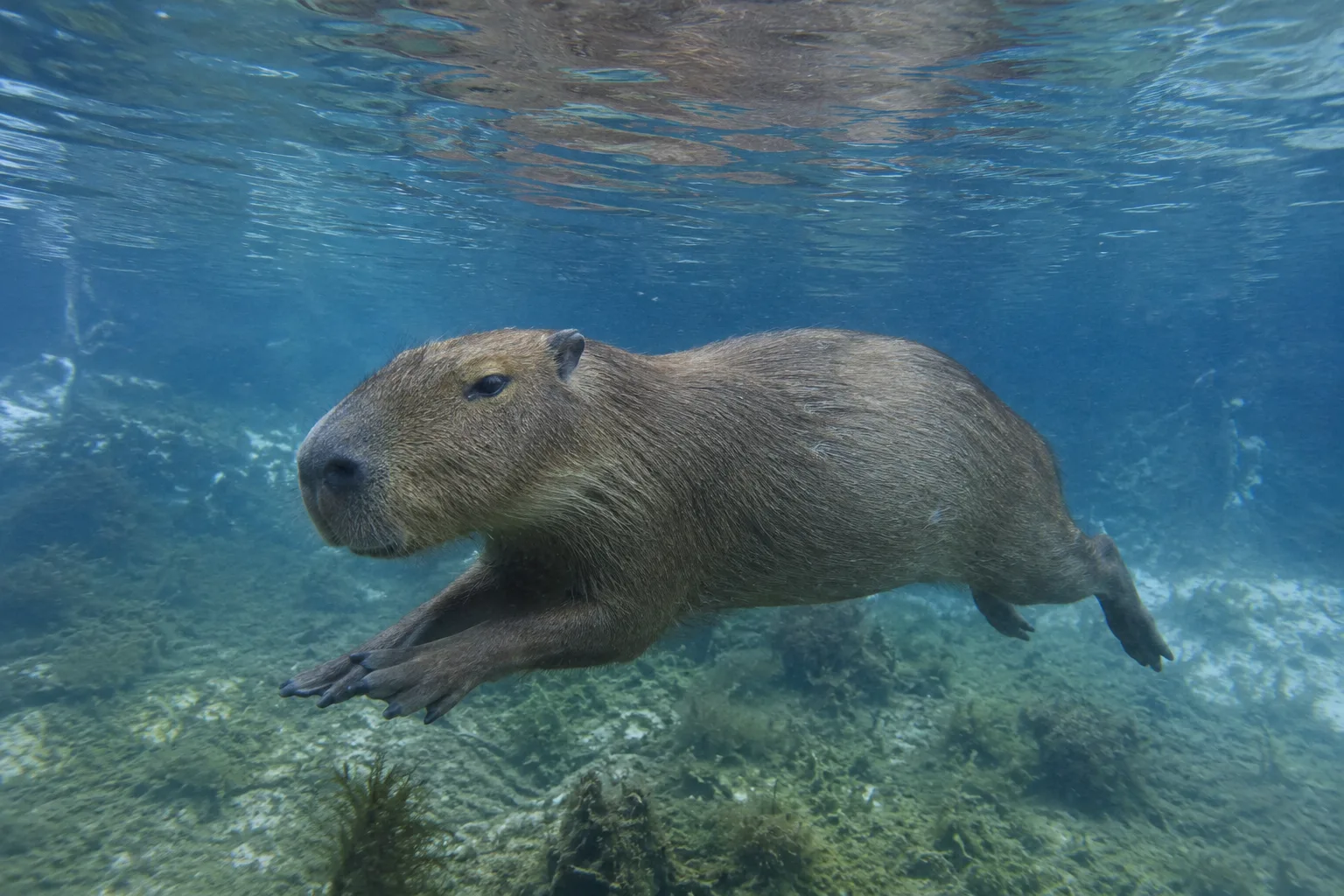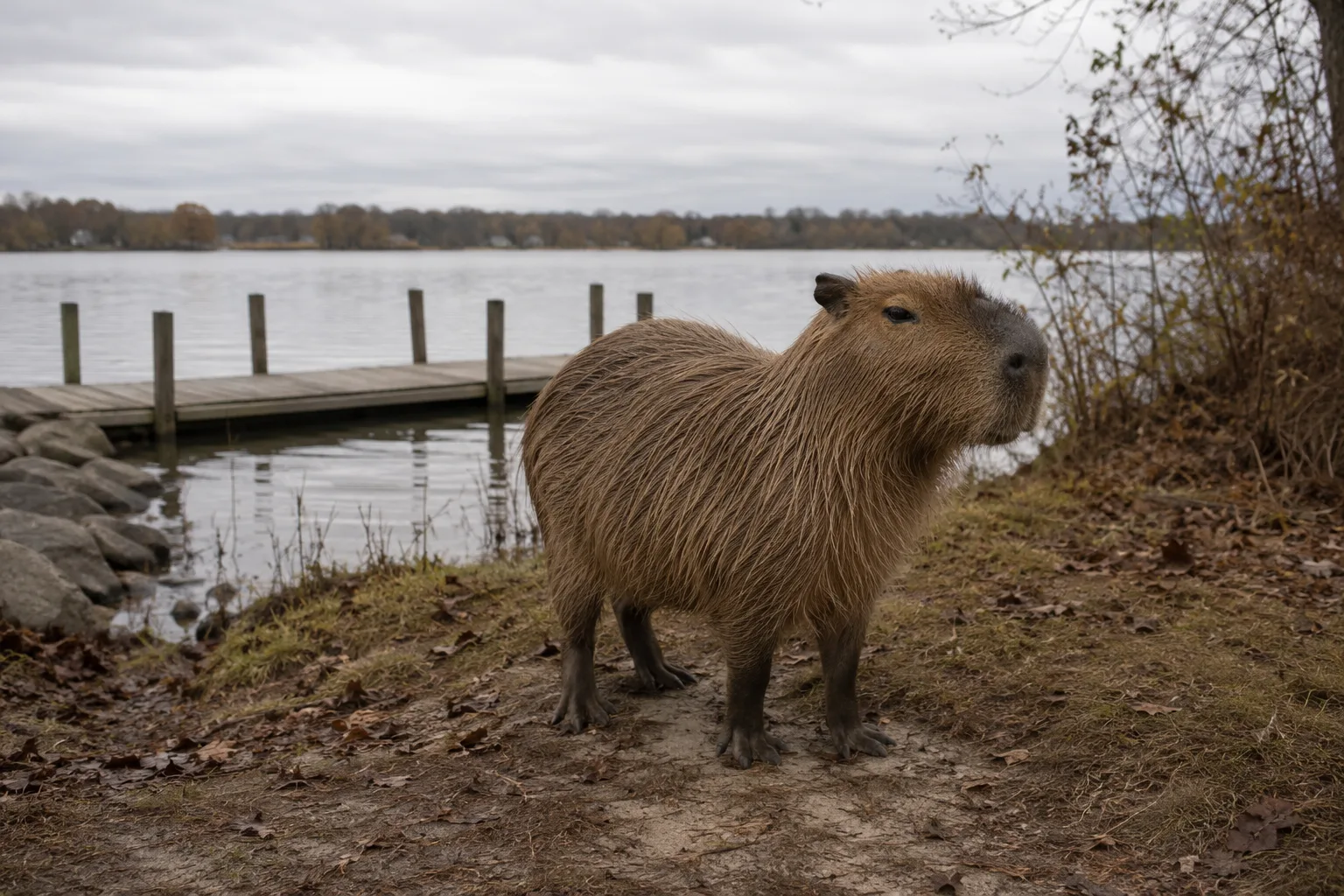

Short answer: Mississippi has no statewide capybara ban, and the reason is a list you can read. The state’s exotic animal law is Miss. Code Ann. Chapter 49-8, which regulates possession by naming the animals it considers inherently dangerous to humans. Capybaras are not on it. Neither is any rodent.
That resolves the state exotic-animal layer. It does not resolve import paperwork or your city or county code, which is where most Mississippi capybara plans actually run aground.
No statewide ban — no rodent is on the § 49-8-5 list
Miss. Code Ann. Chapter 49-8 regulates possession by naming the animals it considers inherently dangerous to humans: primates, large canids, bears, wolverines, hyenas, big cats, elephants, rhinos, hippos and African buffalo. No rodent appears, so the Chapter 49-8 permit scheme does not reach capybaras.
Can You Own a Capybara in Mississippi Without Overstating It?
The safest answer is conditional. A capybara plan in Mississippi needs written confirmation from Mississippi Department of Wildlife, Fisheries, and Parks or the relevant state office, plus a separate import or animal-health answer from Mississippi Board of Animal Health. If the animal crosses state lines, transport can trigger paperwork even when possession is not clearly prohibited.
The question people type into Google is simple, and in Mississippi it has a clean answer at the exotic-animal-statute level. What complicates it is that the statute is only one of several offices with a view. Capybaras are large, social, semi-aquatic rodents that get classified as exotic livestock by one agency, wildlife-adjacent by another, and a nuisance question by a third.
Mississippi adds a special kind of internet confusion: warm climate gets mistaken for permission. A capybara may look less absurd beside a pond than beside a snowy driveway, but the law still cares about classification, import movement, public exhibition, local nuisance rules, and disease-control paperwork. The animal’s comfort does not erase the paper trail.
| Legal layer | What it decides in Mississippi | Status for a capybara |
|---|---|---|
| Chapter 49-8, inherently dangerous animals | Whether the animal needs an MDWFP permit and liability insurance | Does not apply. No rodent is on the § 49-8-5 list |
| Board of Animal Health import rules | Whether transport into Mississippi needs a CVI or species clearance | Applies if the animal comes from out of state |
| City or county code | Whether the animal is allowed at your address | Applies, and is usually the real decision |
| Zoning, covenants, insurer | Whether the enclosure, pond and fencing can exist on the parcel | Applies, especially inside city limits |
| USDA APHIS | Whether exhibition, paid interaction or breeding needs a federal licence | Applies to any public-facing or commercial use |
| Welfare plan | Whether you can manage a Gulf-state summer for a semi-aquatic rodent | The part with no permit and no deadline |
What Mississippi’s Inherently Dangerous Animal Law Actually Covers
Mississippi does not run a general exotic-pet ban. It runs a named list, set out at § 49-8-5 and administered by the Mississippi Department of Wildlife, Fisheries and Parks under 40 Miss. Admin. Code Pt. 2, R. 8.3, last revised in April 2025.
The animals classified as inherently dangerous to humans are:
| Group | Animals named in § 49-8-5 |
|---|---|
| Primates | Gibbons, orangutans, chimpanzees, siamangs, gorillas, macaques, mandrills, drills, baboons, Gelada baboons |
| Canids | Wolves, jackals, dingos, maned wolves, red dogs, African hunting dogs |
| Other carnivores | Bears, wolverines, hyenas |
| Big cats | Lions, tigers, jaguars, leopards, snow leopards, cheetahs, cougars |
| Megafauna | Elephants, rhinoceroses, hippopotamuses, African buffalo |
No rodent appears anywhere on that list, and the capybara is not named by common or scientific name. Because Chapter 49-8 is built as a closed enumeration, an animal outside the list falls outside the scheme entirely.
That matters more than it might sound, because the Chapter 49-8 requirements are heavy. For a listed animal, § 49-8-7 requires a permit before acquisition plus proof of liability insurance at $100,000 per animal, up to $1,000,000, and § 49-8-9 allows permit fees up to $300 per type. Zoos, university research facilities, government agencies, transient circuses and approved rehabilitation or sanctuary facilities can be exempted by the Commission.
None of that applies to a capybara. Which is the answer to the question — and also the end of what the state exotic-animal statute has to say about it.
The Mississippi State Check Has Two Doors
Start with Mississippi Department of Wildlife, Fisheries, and Parks. Ask about private possession of Hydrochoerus hydrochaeris, not just “a capybara.” Scientific names keep the conversation precise. Then ask whether any permit, license, registration, inspection, or import clearance applies to a privately kept animal at a residential address.
For importation, ask Mississippi Board of Animal Health. Many private buyers would be bringing a capybara from another state. That can require a certificate of veterinary inspection, import permission, or species-specific health paperwork. A seller saying “we ship to Mississippi” is not the same as a state official saying the shipment is lawful.

This guide is current as of September 5, 2026. Laws, agency interpretations, and local ordinances can change, so treat it as a screening path, not legal advice.
Why Local Rules and Neighbors Still Matter
Falling outside Chapter 49-8 does not put a capybara in your yard. Mississippi municipal and county codes restrict exotic animals, livestock in residential zones, outdoor enclosures, standing water, odour nuisance, setbacks and fencing independently of anything MDWFP decides.
Local rules can still block the plan in Jackson, Gulfport, Southaven, Hattiesburg, Biloxi, and smaller towns with animal-control language that never once says “capybara.” Look for exotic animals, wild animals, livestock, nuisance animals, outdoor enclosures, setbacks, water features, odor, and waste. The word you search for may not be the word that stops you.
Heat is not a free pass either. Mississippi summers make shade, clean water, parasite control, mud management, and storm-safe fencing part of the basic plan. A flooded enclosure after a hard rain is not enrichment. It is a mess with teeth and paperwork.
My honest read: if the local office cannot answer quickly, that is not permission. It is homework.
The Paper Trail Before Any Money Changes Hands
Make the calls before you send a deposit. Keep written replies.
| Who to contact | What to ask | What changes the answer |
|---|---|---|
| Mississippi Department of Wildlife, Fisheries, and Parks | Is private possession of Hydrochoerus hydrochaeris allowed, and is a permit required? | Personal pet, breeding, exhibition, sale, or rescue use |
| Mississippi Board of Animal Health | What paperwork is required to import a capybara into Mississippi? | Origin state, health certificate, age, transporter, disease rules |
| City or county animal control | Are capybaras or large exotic rodents allowed at this address? | Incorporated area, zoning district, nuisance code |
| Zoning or planning office | Can the enclosure, fencing, pool, and animal use exist on this parcel? | Lot size, setbacks, water feature rules, HOA covenants |
| Exotic veterinarian | Do you treat capybaras and handle emergencies? | Distance, experience, after-hours availability |
| USDA APHIS | Does public exhibition, paid interaction, or breeding require a federal license? | Any commercial or public-facing use |
Keep written replies before any deposit, delivery plan, or enclosure build. If you only get a phone answer, email a short summary back to the office and ask them to correct anything that is wrong. That gives you a dated record and makes vague advice less vague.
The Fee You Avoid, and the Insurance You Avoid With It
Mississippi’s inherently dangerous scheme carries the expensive obligations in this area of law, and the useful fact is that none of them attaches here.
Putting the middle figure on the page is the point. When someone tells you Mississippi is a difficult state for exotic animals, they are describing Chapter 49-8 as it applies to big cats and primates. That regime is real and it is expensive. It simply is not the regime your animal is in.
The one state requirement that does apply routes through the Board of Animal Health, and it can mean a certificate of veterinary inspection, import permission, or species-specific health paperwork. Ask them directly rather than inferring it from the wildlife statute, which is silent by design.
Then city and county code, and then the costs nobody regulates. Mississippi summers make water access and shade a husbandry requirement rather than an amenity, and the capybara cost guide prices that reality.
The Welfare Reality Is Not Just Warm Weather
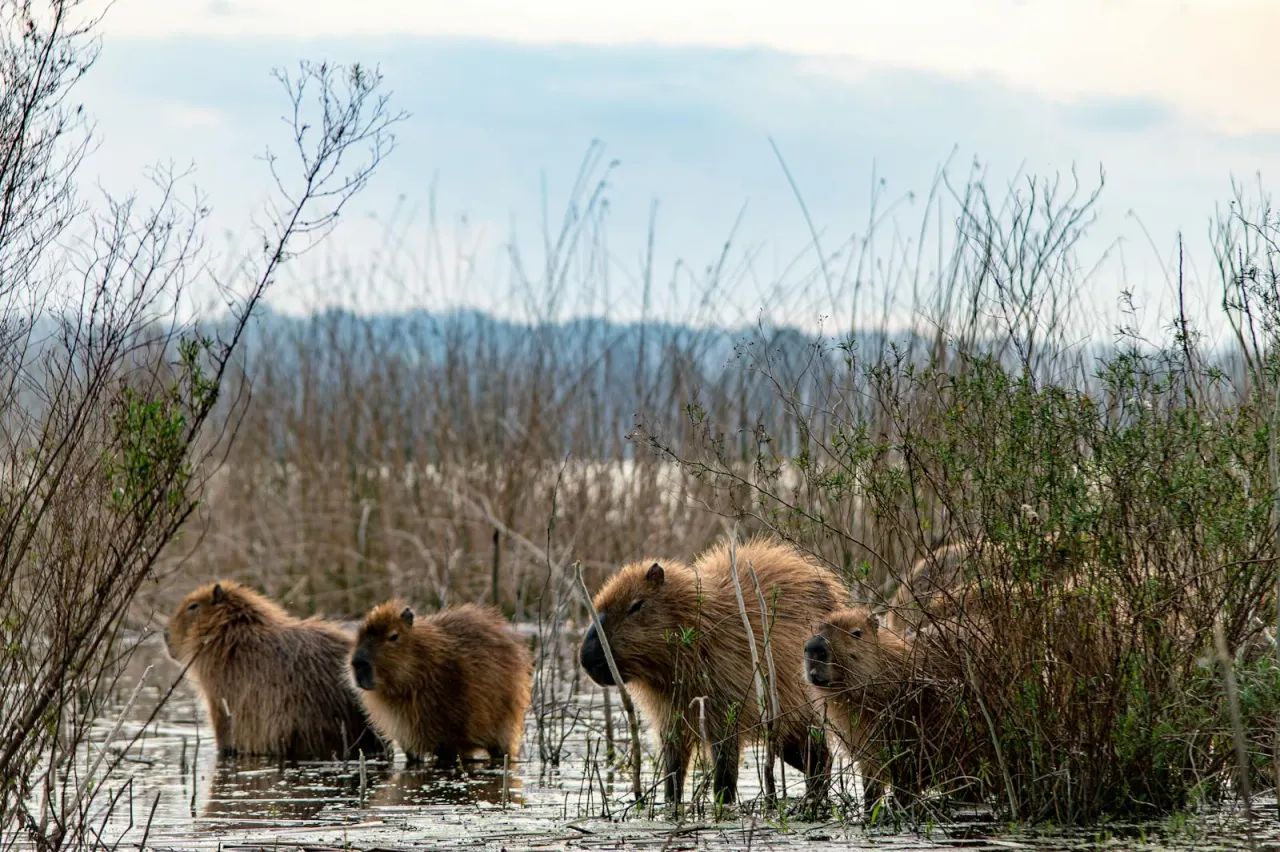
The AZA Capybara Care Manual describes an animal built around water, grazing, group life, and secure space. Animal Diversity Web describes capybaras as social mammals. A single capybara in a backyard pen is not a quirky pet plan. It is a welfare problem wearing an internet-famous face.
Capybaras need a real pool or pond, not a plastic tub. They need at least one compatible capybara companion. They need fencing that anticipates panic, strength, digging, and weather. They need hay, forage, veterinary care, and a plan for heat, cold, mud, parasites, and waste. In Mississippi, the care plan should talk about shade, water turnover, biting insects, storm damage, and what happens if evacuation is needed.
| What Mississippi buyers believe | What is actually true |
|---|---|
| ”Mississippi has an exotic animal permit, so capybaras need one” | The Chapter 49-8 permit only reaches the animals named at § 49-8-5. Capybaras are not among them. |
| ”Warm climate means it’s basically their habitat” | Mississippi humidity plus heat without deep shade and water access is a welfare risk, not a match. |
| ”Not on the dangerous list, so nothing applies” | Import paperwork through the Board of Animal Health and your local ordinance are entirely separate questions. |
| ”A pond makes it fine” | An unmanaged pond is a parasite and water-quality problem before it is an amenity. |
| ”One capybara is easier” | One capybara is usually a welfare failure. They are herd animals. |
Written Confirmation, Then Everything Else
If you are asking whether capybaras are legal in Mississippi, start with written confirmation. Use the scientific name. Ask state, import, city, county, zoning, HOA, vet, and USDA questions before paying anyone.
Then read the capybara cost guide, the care guide, and the legal states map. If the plan still seems reasonable after the paper trail and the pool math, you are at least asking the adult version of the question.
A capybara does not need your optimism. It needs water, another capybara, a vet, and a paper trail that survives a bored official with a clipboard.