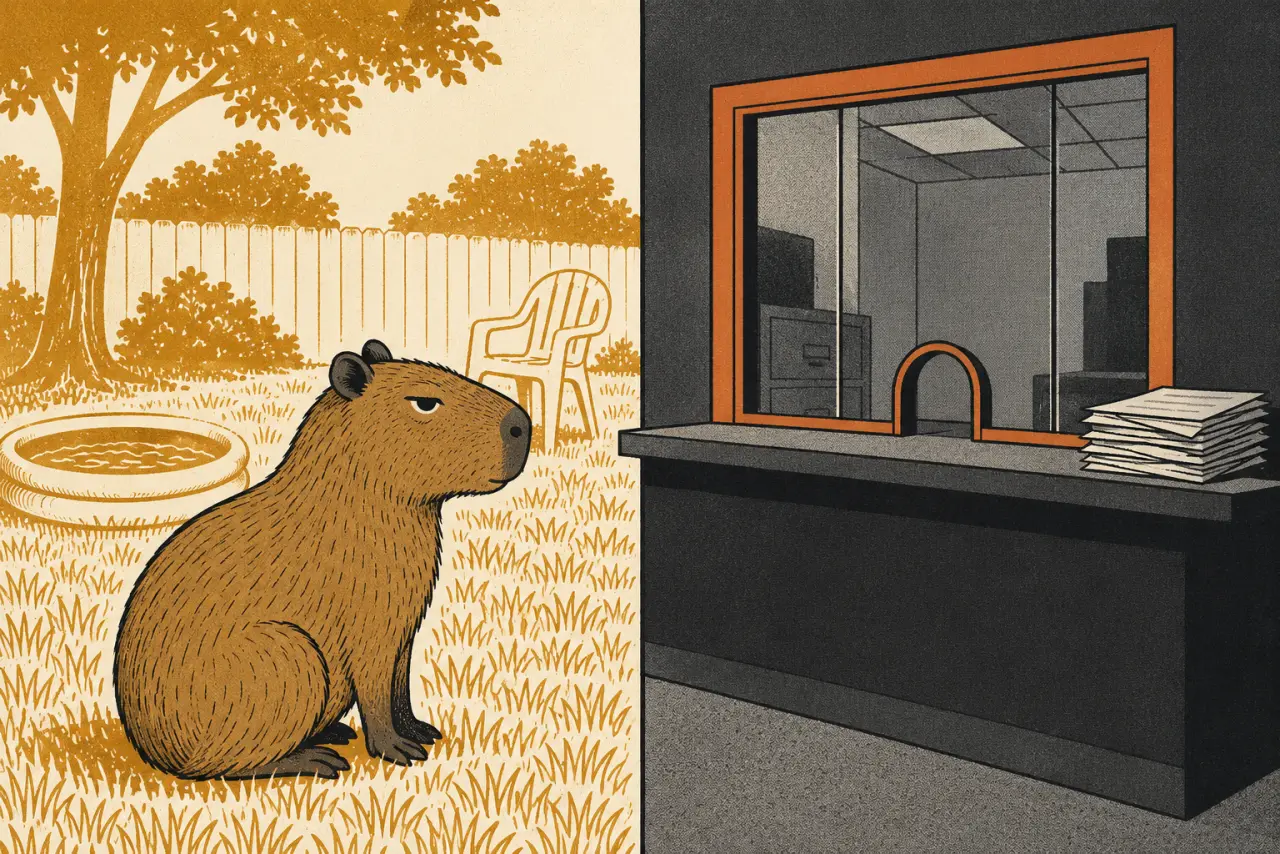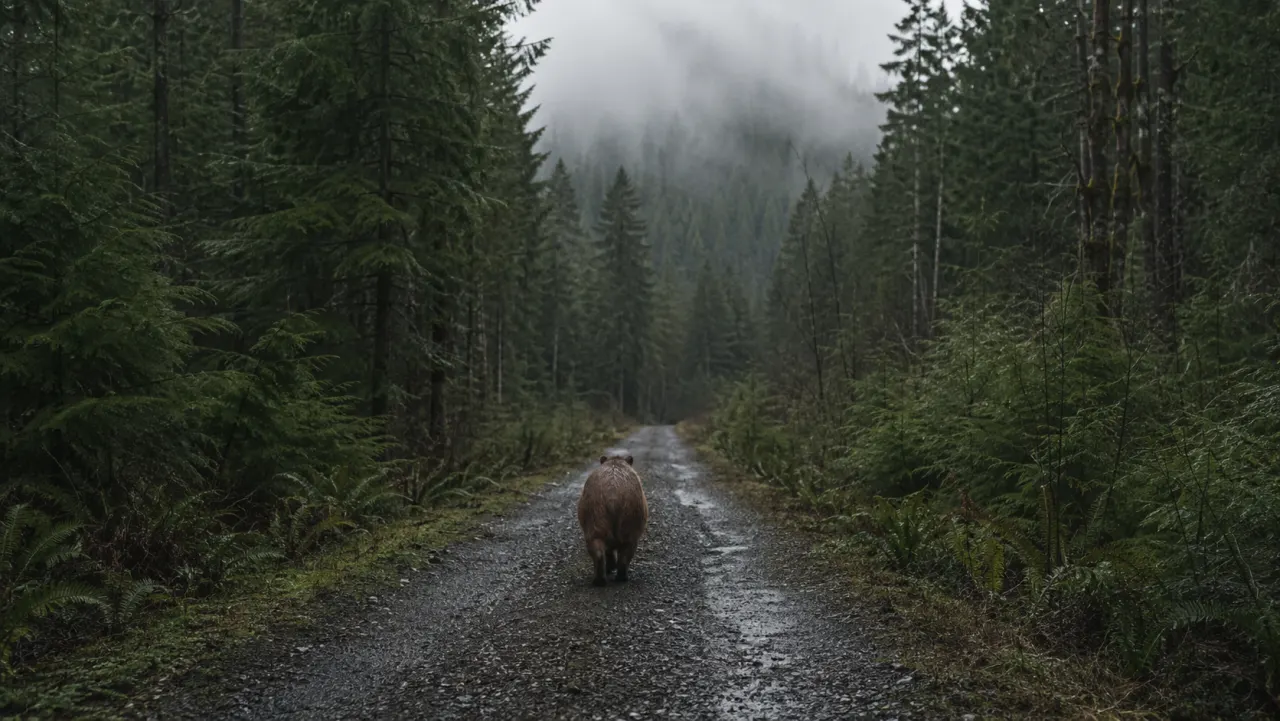
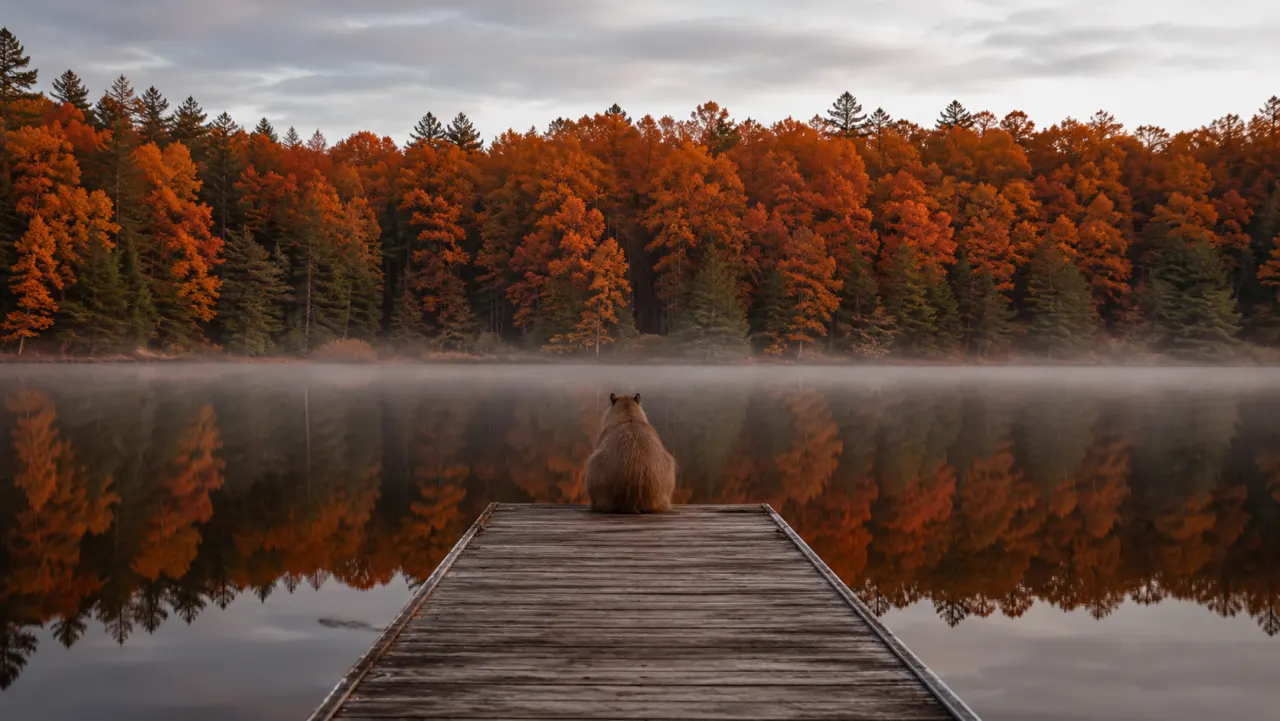
Wisconsin is not the state where you solve capybara ownership with one screenshot. The safe answer is: treat capybaras in Wisconsin as a DNR captive-wildlife licensing and local-code question, then add serious winter welfare math.
That last part matters. A capybara does not care that the law might be technically possible if the pond is a skating rink.
A DNR captive-wildlife licensing question, plus winter
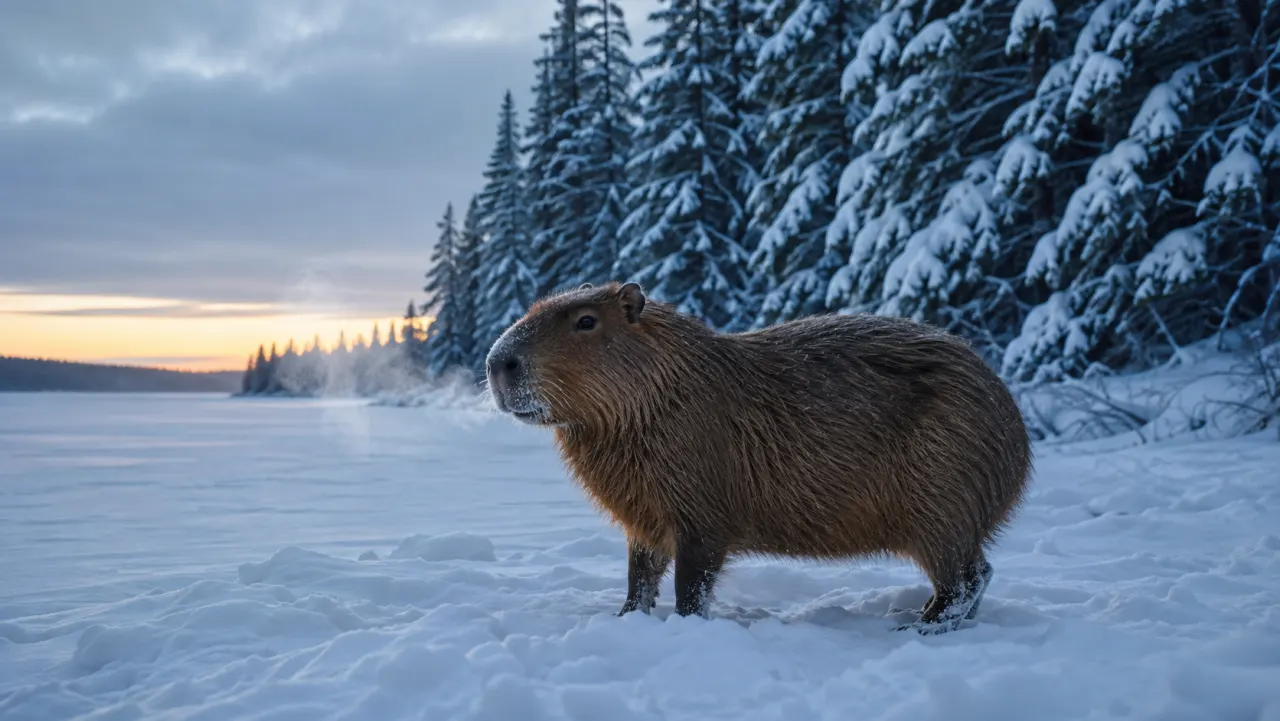
Treat capybaras in Wisconsin as a DNR captive-wildlife licensing and local-code question first, then add serious winter welfare math. The licensing is solvable on paper. A Wisconsin January for a semi-aquatic grazer is the harder half.
Wisconsin Is A DNR And Local Rules Question
Wisconsin DNR manages captive wildlife rules and licenses under state law and administrative guidance. The public DNR materials discuss captive wild animals, license categories, application steps, and recordkeeping. That makes DNR the first call for any capybara plan.
Ask the question with specifics: private possession or commercial use, number of animals, address, enclosure, water system, acquisition source, breeding, sale, public contact, and whether people will pay to see or touch the animal.
| Question | Wisconsin reality |
|---|---|
| Is there a simple pet-capybara yes? | Do not assume one. Ask DNR. |
| Could a license apply? | Yes, depending on classification and use. |
| Can local rules still stop it? | Yes. |
| Is winter a care problem? | Absolutely. |
What Wisconsin’s Captive Wildlife Law Actually Governs
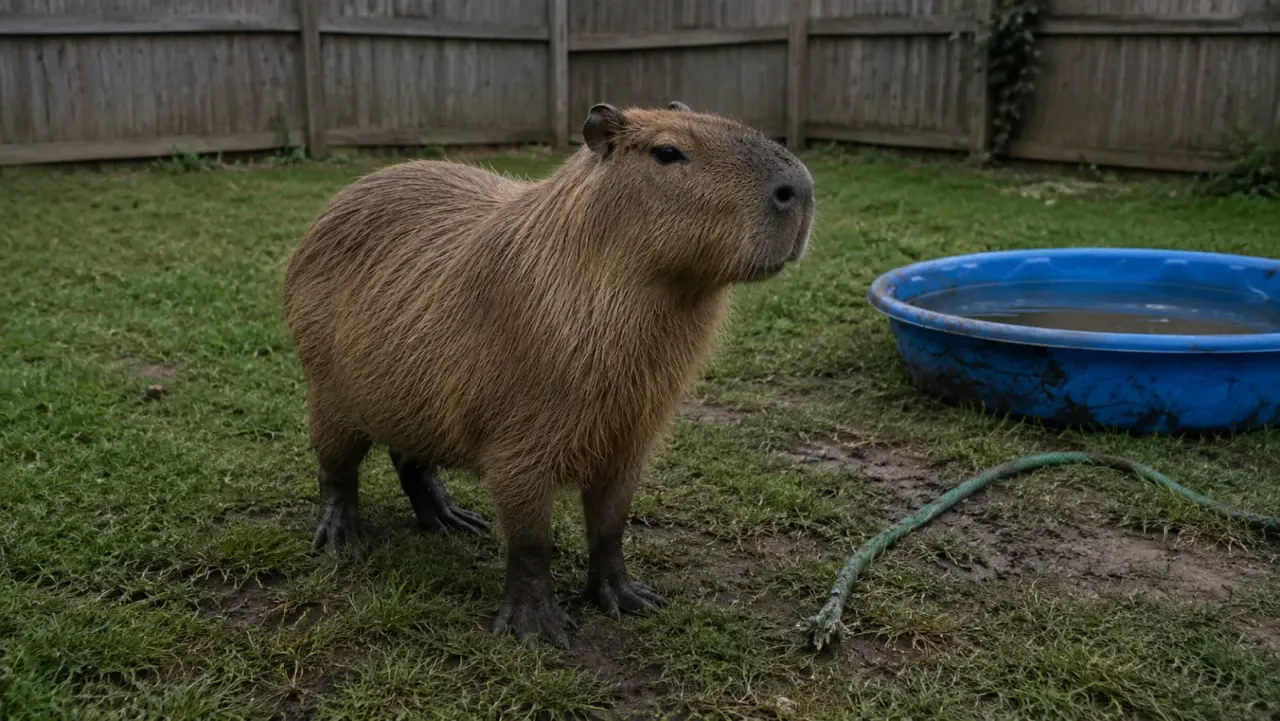
Most of the relevant rules live in Wisconsin Statutes Chapter 169, the captive wildlife chapter, plus the DNR administrative guidance built on top of it. Chapter 169 is the framework that decides who can possess, propagate, buy, sell, and exhibit wild animals in the state, and what license each activity needs.
The reason this matters for capybaras is subtle. The statute is organized around activities and animal categories, not around a tidy list of “pets you may keep.” So the honest answer to “is the capybara on the banned list” is usually the wrong question. The right question is whether your specific plan, possession, breeding, sale, transport, or public contact, lands inside a licensed activity under Chapter 169.
Wisconsin also separates native wildlife from non-native species, and a South American rodent is squarely non-native. That distinction changes which provisions and which DNR contacts apply. None of this resolves over a forum post. It resolves when a DNR captive wildlife staffer reads your plan back to you and names the license, or tells you no.
Class A, Class B, And The License Layer
Wisconsin DNR’s captive wild animal farm license application uses Class A and Class B license categories, with different fees and business thresholds. Public DNR materials also discuss recordkeeping, fence requirements, inspections, and responsibilities for keeping wild animals in captivity.
Roughly speaking, the class structure tracks the scale and risk of the operation, not whether the animal is cute. A small private holding and a commercial breeding or exhibition farm are not treated the same, and the application asks about acquisition source, enclosure, and intended use for a reason. The form is the interview.
That does not mean every private capybara automatically fits one neat box. It means the license category is a live question. A pet, breeder, exhibitor, wildlife park, classroom display, or paid encounter can produce different answers, and the DNR is the only office that can tell you which one your plan triggers.
Public exhibition is its own trap. If the plan involves paid visits, parties, photo sessions, or public handling, USDA Animal Welfare Act licensing may apply on top of Wisconsin rules. State permission and federal exhibition licensing are separate lanes. APHIS runs the federal one, and it has its own inspections, recordkeeping, and minimum standards that do not care what your state license says.
The Cold Truth About Wisconsin Capybaras
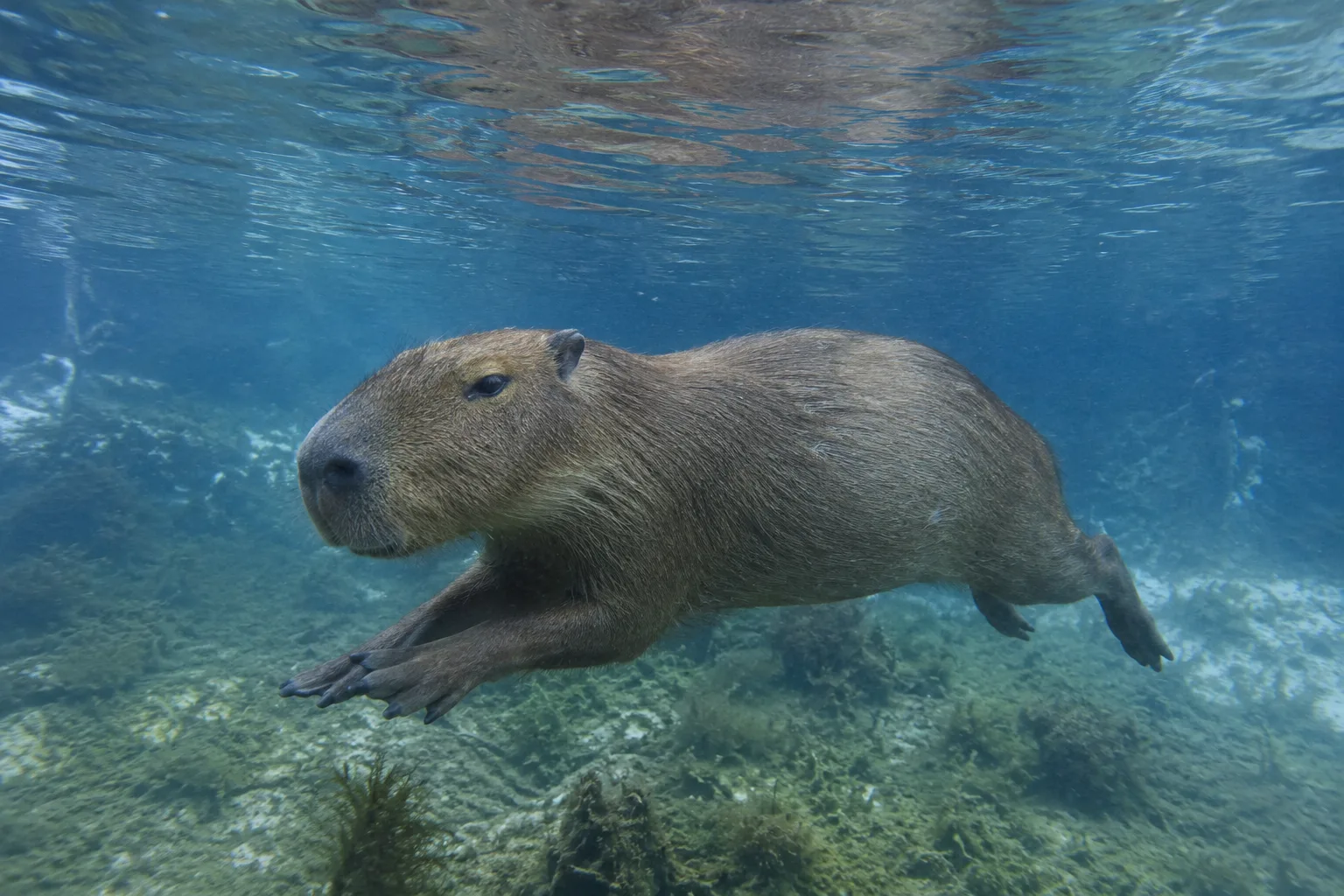
Capybaras are semi-aquatic South American herbivores. Animal Diversity Web describes their strong link to water and grazing habitat, and notes they are most at home in environments where water is always within reach. The AZA Capybara Care Manual treats water access, shelter, social grouping, diet, and veterinary planning as husbandry basics, not upgrades.
Wisconsin winter makes those basics expensive. You need heated shelter, unfrozen water access, safe footing, drainage, and an emergency plan for deep cold. “They can come inside” is not a plan. A capybara indoors with no proper pool, no group companion, and no species-aware vet is just a postponed problem with a sweet face.
The water piece is the one people underestimate most. A capybara does not just drink water, it uses it to thermoregulate, to keep its skin and eyes healthy, and to feel safe enough to rest. In a Wisconsin January, an outdoor pool is a block of ice and an indoor one is a heated, filtered, drained installation you have to build and maintain. That is closer to a small zoo exhibit than a backyard feature.
What This Actually Costs Before The Snow
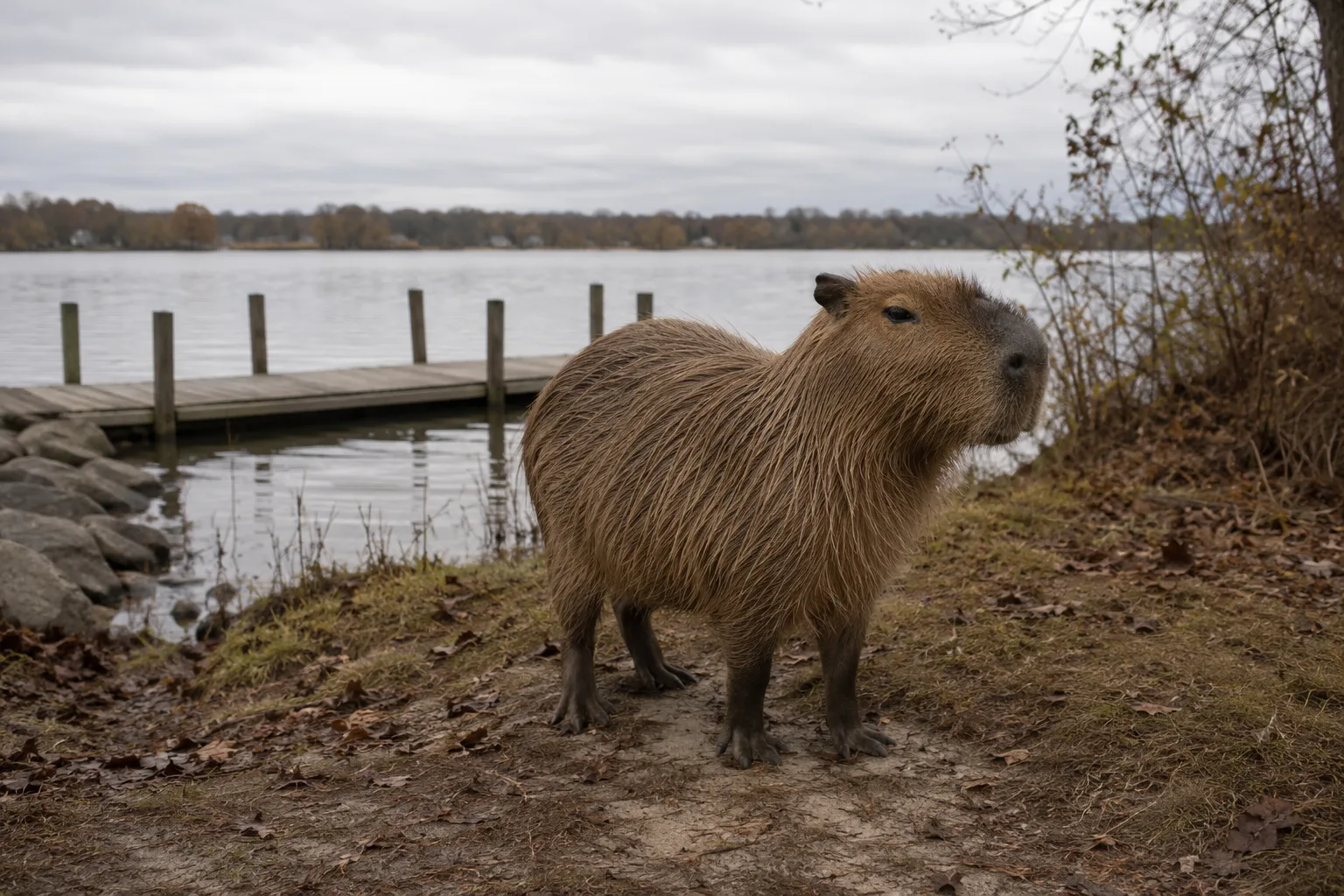
Legality and welfare collide on the budget line. Even in a state with a clear paper path, the capybara is an expensive, decade-long commitment. Capybaras can live well over eight years in captivity, are large enough that fencing and gates have to be built for a 100-plus-pound animal, and need a high-fiber, grass-forward diet supplemented with vitamin C, because like their guinea pig relatives they cannot make their own.
That last point is a real veterinary risk, not trivia. The AZA care guidance flags vitamin C and a forage-based diet as core husbandry. Get it wrong and you get a sick animal and a vet bill from one of the few clinics in the state that will even see an exotic rodent. Build the budget around the worst winter, not the best summer photo.
A single capybara is also a welfare problem on its own. These are herd animals. Plan for at least a pair, then double every line item: more feed, a bigger enclosure, more water, two animals to evacuate when the heater fails at 2 a.m. in February.
Wisconsin Capybara Myths That Need To Die
| Myth | Better answer |
|---|---|
| ”It’s not on the banned list, so it’s legal.” | Chapter 169 is built around licensed activities, not a pet whitelist. Absence from a list is not permission. Ask DNR. |
| ”A DNR license overrides my city.” | No. Local ordinances, zoning, and HOA rules apply independently and can say no after the state says maybe. |
| ”I’ll just keep it inside for winter.” | Indoor housing without a proper pool, social group, and exotic vet is a welfare failure, not a workaround. |
| ”One capybara is fine if I give it attention.” | Capybaras are social herd animals. Solitary housing is a recognized stressor in welfare guidance. |
There is a scene that plays out in exotic-vet offices every winter, and it is not the cute one from the videos. Someone calls in January because the backyard pool froze, the animal stopped eating, and the nearest clinic that treats capybaras is two hours away on icy roads. The paperwork was never the hard part. The hard part was a wetland mammal trying to survive a Wisconsin cold snap in a setup built for a TikTok.
Where The Animal Comes From Is Part Of The Law
A clean Wisconsin plan is not just about your fence and your license. It is about whether the animal can be lawfully acquired and moved at all. Captive wildlife rules generally care about the source: a legally captive-bred animal with documentation is a different conversation than an animal of murky origin.
Before money moves, ask the seller for legal origin, a health certificate, veterinary records, and any transport or interstate paperwork. Ask whether the animal crossed a state line, because that can pull in additional health and transport requirements. A seller who answers those questions with vibes instead of documents is telling you something. The capybara is the easy part to fall in love with. The paper trail is the part that keeps you out of a seizure case.
The Wisconsin Paper Trail Checklist
Do these before buying, importing, reserving, or building around a seller’s promise. Collect written answers, and keep them. The goal is a file you can show a vet, an inspector, or an insurer, not a memory of a phone call.
| Agency / document | What to ask | Why it matters | What changes the answer |
|---|---|---|---|
| Wisconsin DNR captive wildlife staff | Does a capybara require a captive wild animal farm license, other approval, inspection, or recordkeeping? | DNR is the agency with authority over captive non-native wildlife under Chapter 169. | Pet vs. breeding vs. sale vs. exhibition; number of animals; in-state vs. imported. |
| City, village, town, or county office | Are exotic mammals, outdoor enclosures, ponds, or nuisance animals restricted at this address? | Local code can prohibit what the state would license. | Municipal limits, zoning district, lot size, HOA covenants. |
| USDA APHIS | Does any public display, paid encounter, breeding, sale, or transport trigger AWA licensing? | Federal exhibition licensing is separate from state permission. | Any paid public contact, photos for money, or commercial sale. |
| Exotic-animal veterinarian | Will you treat capybaras, including after-hours and winter emergencies? | Care and licensing both assume a real vet relationship exists. | Distance to clinic, after-hours coverage, willingness to see exotic rodents. |
| Insurance and zoning contacts | Will the property, liability policy, and land use allow this enclosure and animal? | An uninsured exotic animal is a financial and legal exposure. | Liability carrier rules, mortgage or lease terms, land-use classification. |
The Wisconsin Bottom Line
Wisconsin may have a pathway for some properly licensed, properly housed situations, but it is not a casual ownership state. The law is paperwork-heavy, the climate is doing its own background check, and the welfare bar is high before either of those even matters. If your plan cannot survive a DNR call, your local code, a real winter water system, and a pair of animals instead of one, the honest answer for you is no.
Chapter 169 and the DNR license categories get revised, and local ordinances shift under them, so treat this as current to June 2026 and nothing more. Before you act, confirm the live rules with Wisconsin DNR captive wildlife staff, your municipal clerk or animal control office, and a qualified attorney. This is a starting point, not legal advice, and the AZA care standard, not a video, is the welfare bar.