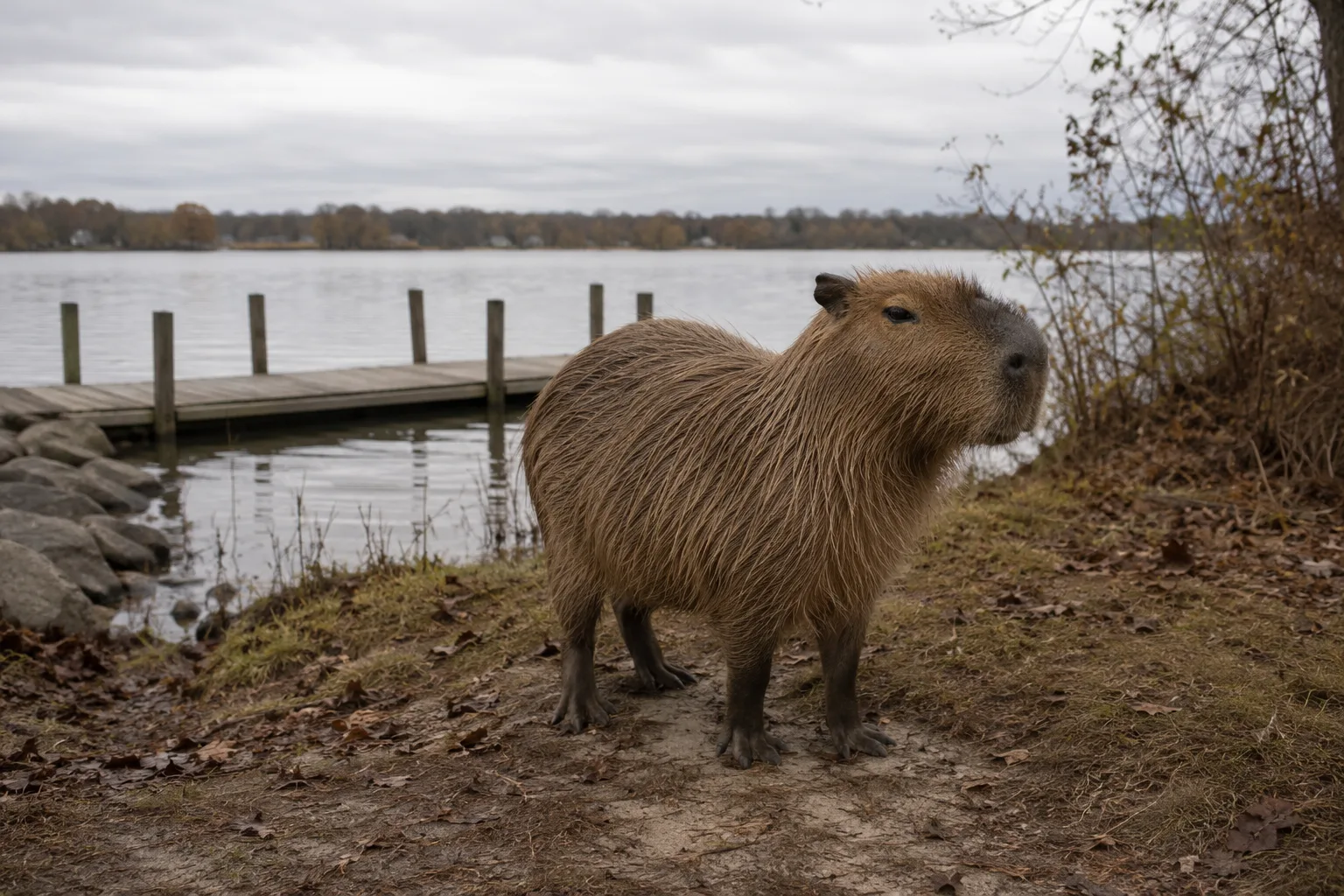

Arizona answers this one cleanly, which is rare in this series, and the answer lives in a list of family names most people never open. Not a list of animals. A list of families, which is why every page that tries to answer this by searching the word “capybara” comes up empty and then guesses.
Cleared by the state, complicated by the city
A.A.C. R12-4-406 restricts live wildlife by taxonomic family. Its rodent block names hutias, beavers, jumping mice, coypus and nutrias, New World porcupines, pocket gophers and squirrels. Caviidae, the capybara's family, is not on it, so no Game and Fish special license applies.
A certificate of veterinary inspection still travels with the animal, and Phoenix's rodent ordinance is a separate and much less friendly problem.
Arizona Restricts Seven Rodent Families, and Misses This One
Under A.R.S. 17-306 nobody may import, transport, sell or possess live wildlife in Arizona “except as authorized by the commission.” The Game and Fish Commission does that authorising through Article 4 of the administrative code, and the pivot point is R12-4-406, the restricted live wildlife list.
Restricted wildlife is defined by taxonomy, not by common name. For rodents, the rule reads “all species of the following families of the order Rodentia” and then lists them:
| Restricted rodent family | What it covers | Capybara? |
|---|---|---|
| Capromyidae | Hutias | No |
| Castoridae | Beavers | No |
| Dipodidae | Jumping mice | No |
| Echimyidae | Coypus and nutrias | No |
| Erethizontidae | New World porcupines | No |
| Geomyidae | Pocket gophers | No |
| Sciuridae | Chipmunks, marmots, prairie dogs, squirrels, woodchucks | No |
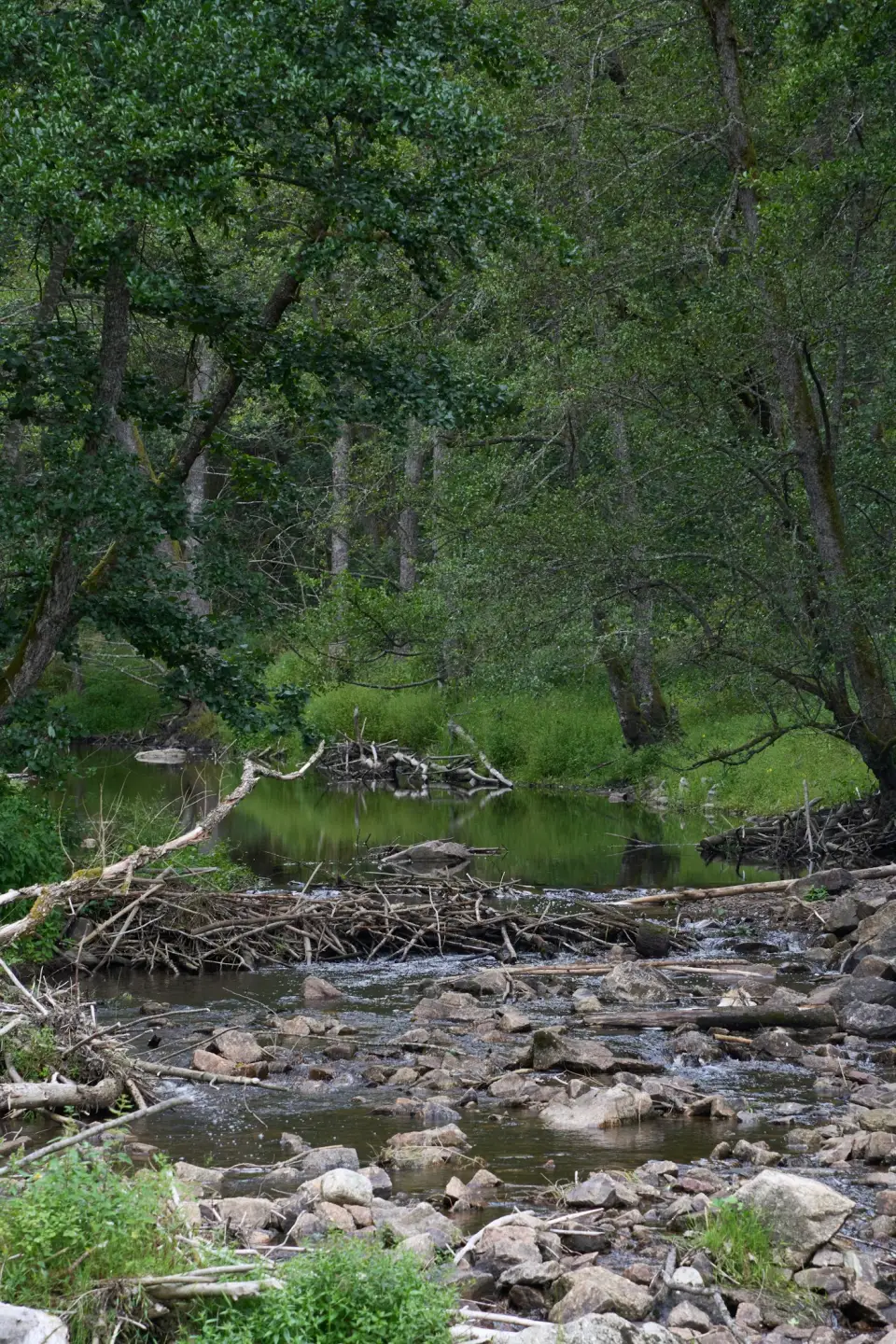
Seven families. Arizona restricts the beaver and the nutria, two animals people regularly confuse with capybaras, and it restricts the prairie dog, and it does not restrict the largest rodent alive. That is not a loophole anyone engineered. It is what happens when a list is built around species that could plausibly establish themselves in Arizona’s watersheds.
The Taxonomy Is the Entire Argument
If the answer turns on which family a capybara belongs to, then the classification has to come from somewhere specific, and the rule says where. R12-4-406 states that the Commission “recognizes the online taxonomic classification from the Integrated Taxonomic Information System as the authority in determining the designations of restricted live mammals.”
ITIS record TSN 825303 is Hydrochoerus hydrochaeris. Order Rodentia, suborder Hystricomorpha, family Caviidae, subfamily Hydrochoerinae. ITIS glosses Caviidae as “cavies, capybaras, rock cavies, maras.”
So the chain is short and it is checkable in about ninety seconds. Arizona defers to ITIS, ITIS puts capybaras in Caviidae, and Caviidae is not restricted. R12-4-409 makes a special license necessary only “when a person intends to conduct any activity using restricted live wildlife,” and R12-4-405 says a person may import mammals not listed as restricted without a special license, provided the animal was lawfully possessed where it came from.
There is a small pleasure in the detail. Caviidae is the guinea pig family. Arizona’s rule, read strictly, puts a 130-pound semi-aquatic grazer in the same regulatory bucket as the animal in a third-grade classroom, and puts the beaver in the restricted one. Nevada, next door, does something similar and lands in the opposite place, which is worth knowing before anyone assumes the desert states move together.
Not "capybaras are legal in Arizona." Say: "Hydrochoerus hydrochaeris is Caviidae under ITIS, Caviidae is not a restricted family under R12-4-406, so no special license is required under R12-4-409."
That is a sentence a department employee can confirm or correct in one reply, and it survives the list being amended, because you will have asked about the mechanism instead of the outcome.
The Clearance Nobody Books
Two Arizona agencies touch this, and they do not talk to each other on your behalf.
Game and Fish — the possession question
- Restricted live wildlife list, R12-4-406
- Special license, R12-4-409, for restricted species only
- Capybaras are not a restricted family
- Result: nothing to apply for
Agriculture — the state line question
- Importation rules, R3-2-602
- Certificate of veterinary inspection on every animal entering
- Advance entry permits written around livestock
- Result: paperwork regardless of the license answer
R12-4-405 carries a condition that is easy to skim past. The import is allowed for non-restricted mammals “provided the animals are lawfully possessed under a lawful exemption; or valid license, permit, or other form of authorization from another state.” That puts the origin state’s paperwork inside Arizona’s rule. If the breeder was operating unlawfully where they are, the import was not clean here, and the person holding the animal is the one who has to show otherwise. Collect the licensing and the bill of sale at purchase; nobody reconstructs that later.
R3-2-602 is broad in a way people miss: “All animals transported or moved into the state of Arizona shall be accompanied by a valid, official Certificate of Veterinary Inspection from the state of origin.” All animals. Not all livestock, not all restricted wildlife. The advance Arizona entry permit number is the livestock-specific requirement, which is why the honest answer for a capybara is to ring the state veterinarian’s office and ask how they handle this species rather than assuming either way.
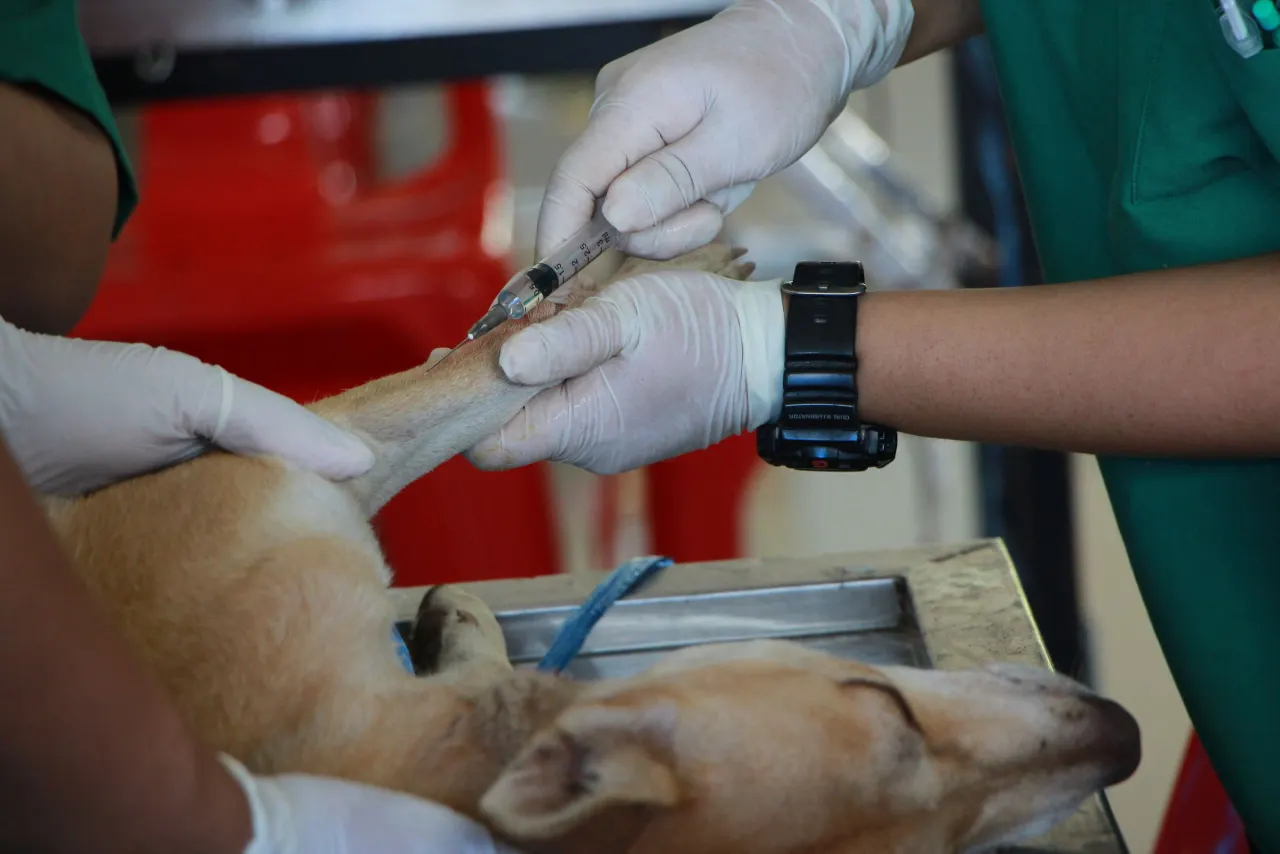
Worth picturing the moment that certificate gets written. A USDA-accredited vet in Texas or Missouri is looking at a form organised around cattle, horses and poultry, and there is no capybara row. They have to decide what to write, which tests if any apply, and whether they are comfortable signing it. Everything gets easier if somebody already asked Arizona for the requirements in writing and can hand the vet the reply. Nobody enjoys resolving that question with a trailer in the parking lot.
Phoenix Has a Rodent Ordinance, and a Capybara Is a Rodent
This is where the Arizona plan usually dies, and almost nothing written about capybaras in Arizona mentions it.
Phoenix City Code 8-7 covers poultry and rodents together, and it opens hard: “Except as otherwise provided in this article, it is hereby declared to be a nuisance and it shall be unlawful for any person to keep rodents or poultry within the City.” The article then provides the conditions. Rodents may not be kept within 80 feet of any residence without written permission from the occupants and owners, and no more than twenty-five head of rodents may be kept on the first half acre.
The ordinance was clearly written with rabbit hutches and backyard chickens in mind. It does not care. A capybara is a rodent, the setback is measured from any residence and not just your own, and 80 feet of separation on a standard Phoenix subdivision lot does not exist.
Not the state license, which does not exist. Not the vet certificate, which is a form. The 80-foot rodent setback on a lot where the neighbour's back wall is twenty feet away, discovered after the deposit.
Phoenix Code 8-6 is separate and narrower, covering poisonous reptiles and dangerous carnivorous wild animals. A capybara is neither, so 8-6 is not your problem. 8-7 is.
The phrase doing the work is “except as otherwise provided in this article.” Phoenix has not banned rodents outright; it has declared them a nuisance and then written the conditions under which they stop being one. Meet the setback and the head limits and you are inside the exception. Miss them and you are keeping a declared nuisance, which is an enforcement posture rather than a licensing one, and it usually starts with a neighbour rather than an inspector.
Tucson, Mesa, Scottsdale, Chandler, Gilbert and Glendale each write their own animal and nuisance codes, and unincorporated Maricopa County is a different answer again. Ask about your parcel, in writing, before anything else. “I have acreage” is a much better starting position than a subdivision, but it is not a finished answer, because zoning, covenants, drainage and setback rules all still apply to the enclosure you would have to build.
What the Desert Charges You For
Short version, because New Mexico’s guide covers desert husbandry in depth: Arizona’s climate does not change the legal answer at all, and it changes the budget enormously.
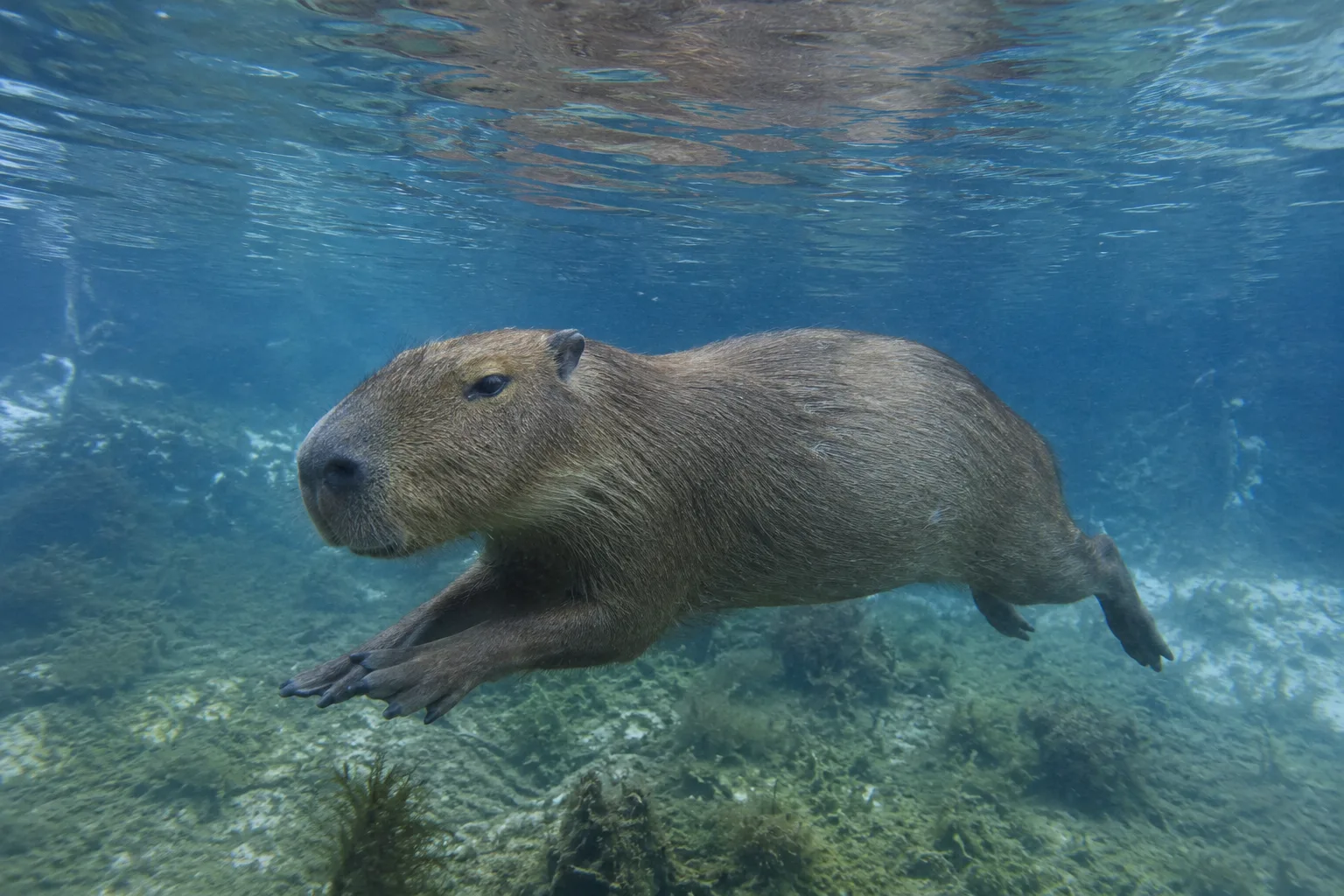
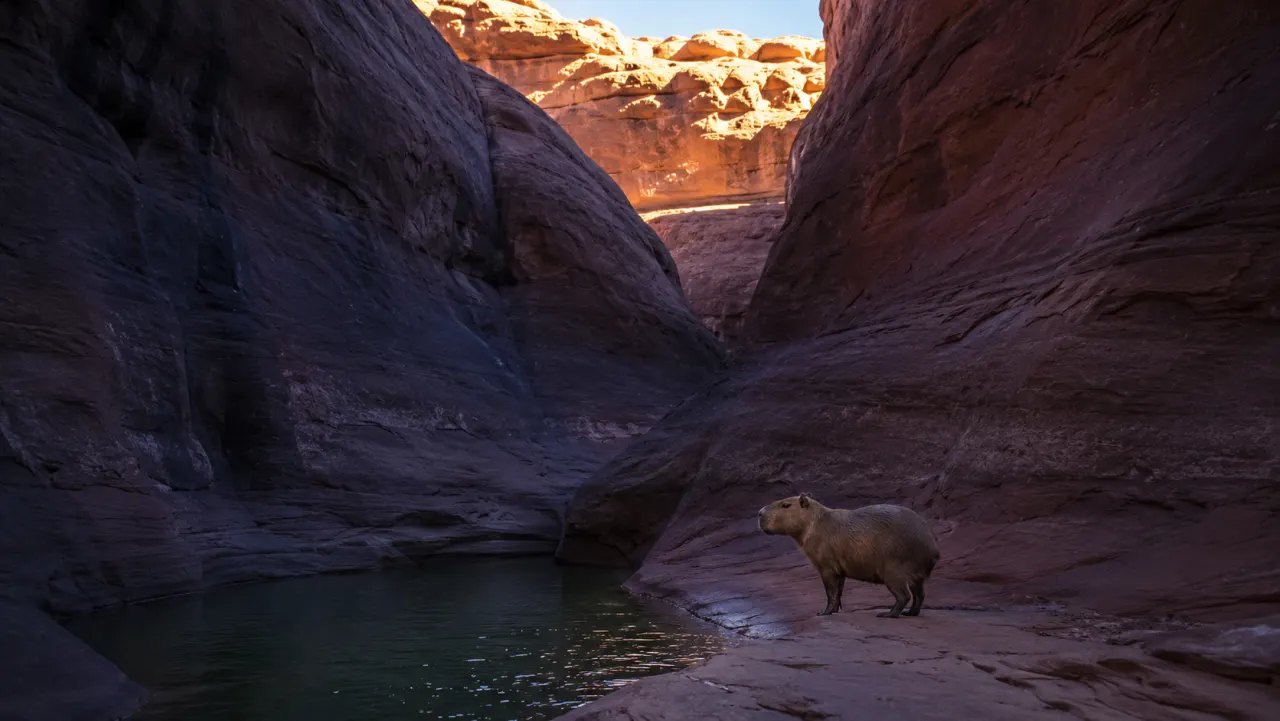
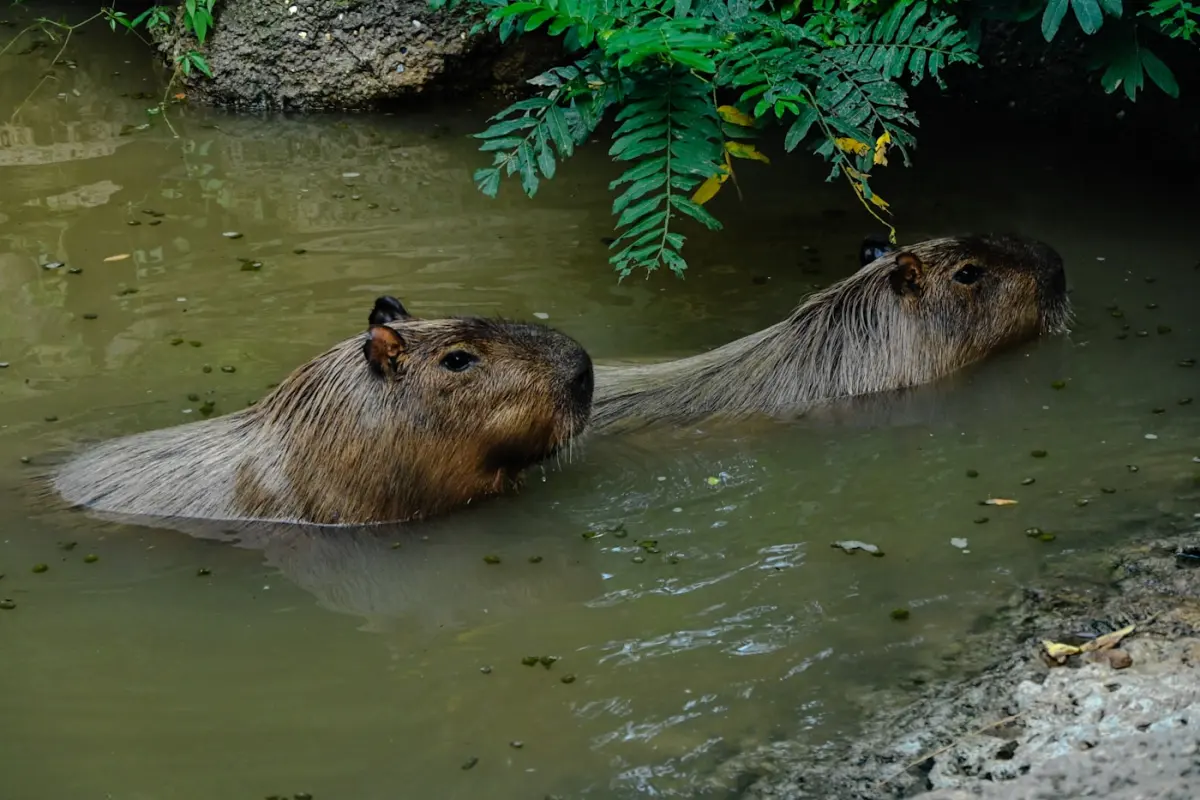
Animal Diversity Web puts it plainly: capybaras are susceptible to heat stress because of their body size, and they spend the hottest part of the day in the water. That is the whole Arizona care problem in one sentence. A Sonoran summer means shade structure, real water volume, filtration, and refill capacity that keeps up with evaporation, for two animals, every day, for as long as they live. The cost guide is where that turns into numbers.
The State Charges Nothing and Still Wants a Certificate
Arizona’s state-level cost is nil, and the only mandatory document is one your veterinarian issues rather than the state.
That is an unusually clean state layer, and it is worth being precise about what it does not mean. Arizona has decided that this animal is not its problem. It has not decided that your lot is suitable, that your city permits it, or that a desert climate is a reasonable place to keep a semi-aquatic mammal.
Shade structures, water volume and turnover, evaporative loss in summer, and the electricity to keep all of it running are the real Arizona line items. None of them appears on any permit, which is exactly why they get left out of the plan.
For those numbers, and the enclosure and veterinary reserve alongside them, see the capybara cost guide.
Arizona Claims Worth Checking
| What gets repeated | What the rules actually say |
|---|---|
| ”Capybaras need an Arizona Game and Fish special license” | A special license covers activities using restricted live wildlife. Caviidae is not a restricted family, so there is nothing to apply for. |
| ”Arizona is a free-for-all for exotics” | A.R.S. 17-306 prohibits possessing live wildlife except as the Commission authorises. The authorisation happens to reach this species. That is not the same thing as no rules. |
| ”The agriculture department only deals with farms” | R3-2-602 requires a certificate of veterinary inspection on all animals moved into Arizona, whatever the reason for the move. |
| ”Phoenix restricts exotic animals, so that is the code to read” | Phoenix 8-6 covers poisonous reptiles and dangerous carnivorous wild animals. The one that catches a capybara is 8-7, the rodent nuisance ordinance. |
| ”Acreage solves the local problem” | It helps with the 80-foot setback and the head limits. It does nothing about zoning, covenants, drainage or enclosure approval. |
| ”One capybara is easier in a hot climate” | It is not easier, it is worse. Wild groups run around ten animals, and a lone capybara is a welfare failure at any temperature. |
The Order to Do This In
-
Your city or county, before anything else
Ask whether rodents or non-domestic mammals may be kept at your specific parcel, and what setbacks and head limits apply. In Phoenix this question ends most plans, so it should be asked first rather than last.
-
Arizona Game and Fish, in writing
Confirm that Hydrochoerus hydrochaeris is not listed as restricted live wildlife under R12-4-406 and that no special license applies. Note the date of the reply; lists get amended.
-
Arizona Department of Agriculture, state veterinarian's office
Certificate of veterinary inspection requirements for this species, and whether an entry permit number is needed for the move. Do this before transport is booked, not while it is happening.
-
The seller, before the deposit
Proof the animal is lawfully possessed in the origin state, since R12-4-405 conditions the import on exactly that. Licensing, bill of sale, prior transfers.
-
Two exotic veterinarians
One to be reachable for routine care, one for after hours. Ask directly whether they treat capybaras, not whether they treat exotics.
-
USDA APHIS, only if any of this is commercial
Paid encounters, photo sessions, breeding or public exhibition pull the Animal Welfare Act into scope regardless of Arizona's answer.
Arizona is one of the more genuinely permissive states in this series, and the reason is a taxonomic accident rather than a policy choice. The state wrote a careful list of rodent families it did not want loose in its rivers, and the biggest rodent on earth was not one of them.
That leaves the city and the summer as the two real obstacles, in that order. Check the parcel first. Then read the care requirements, the state-by-state map, and the Nevada rules, which look similar from a distance and are not.
This guide is current as of September 5, 2026. Restricted wildlife lists, import rules and city ordinances all change independently of each other. Treat this as a screening path rather than legal advice, and confirm with Arizona Game and Fish, the Arizona Department of Agriculture and your city before acting.