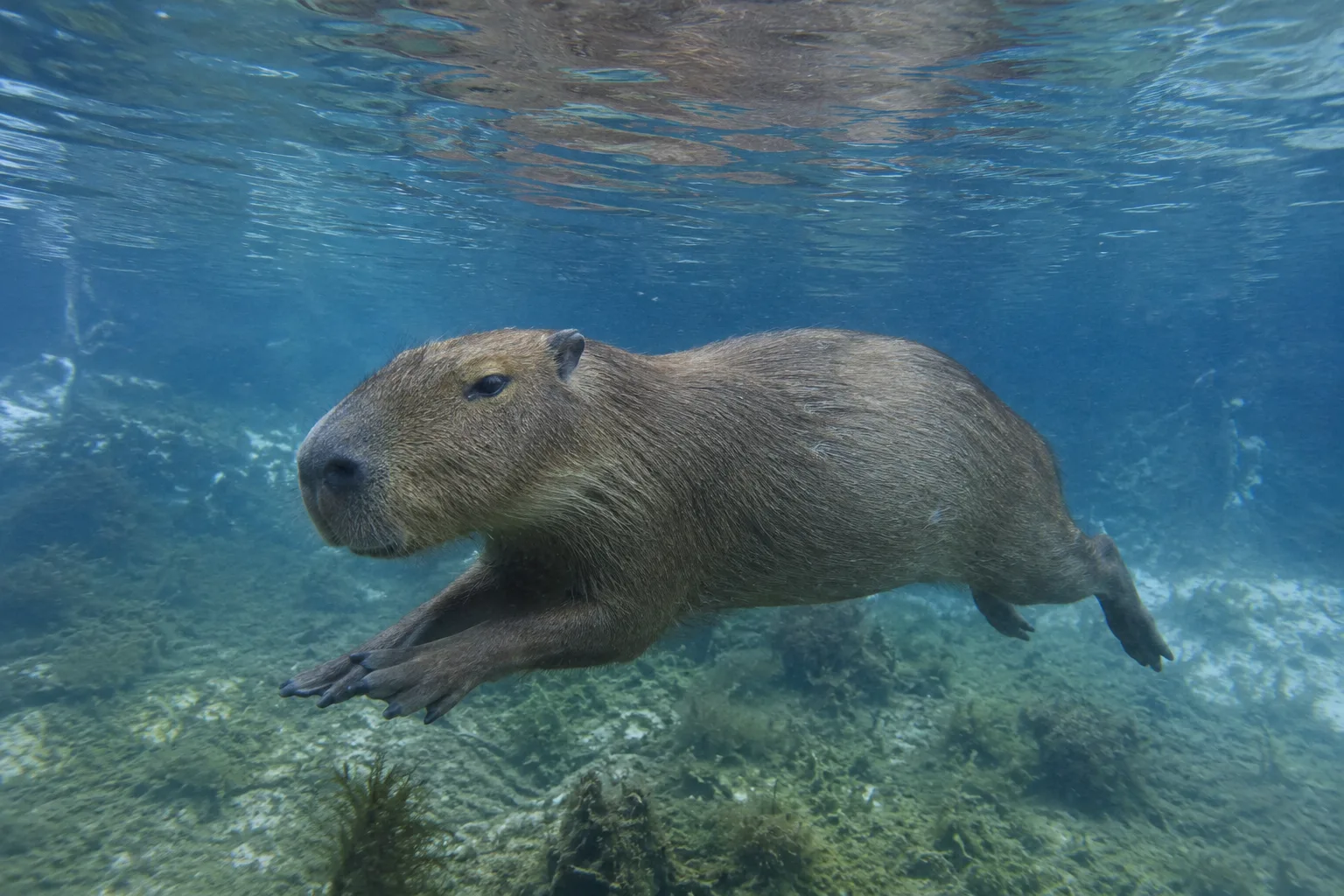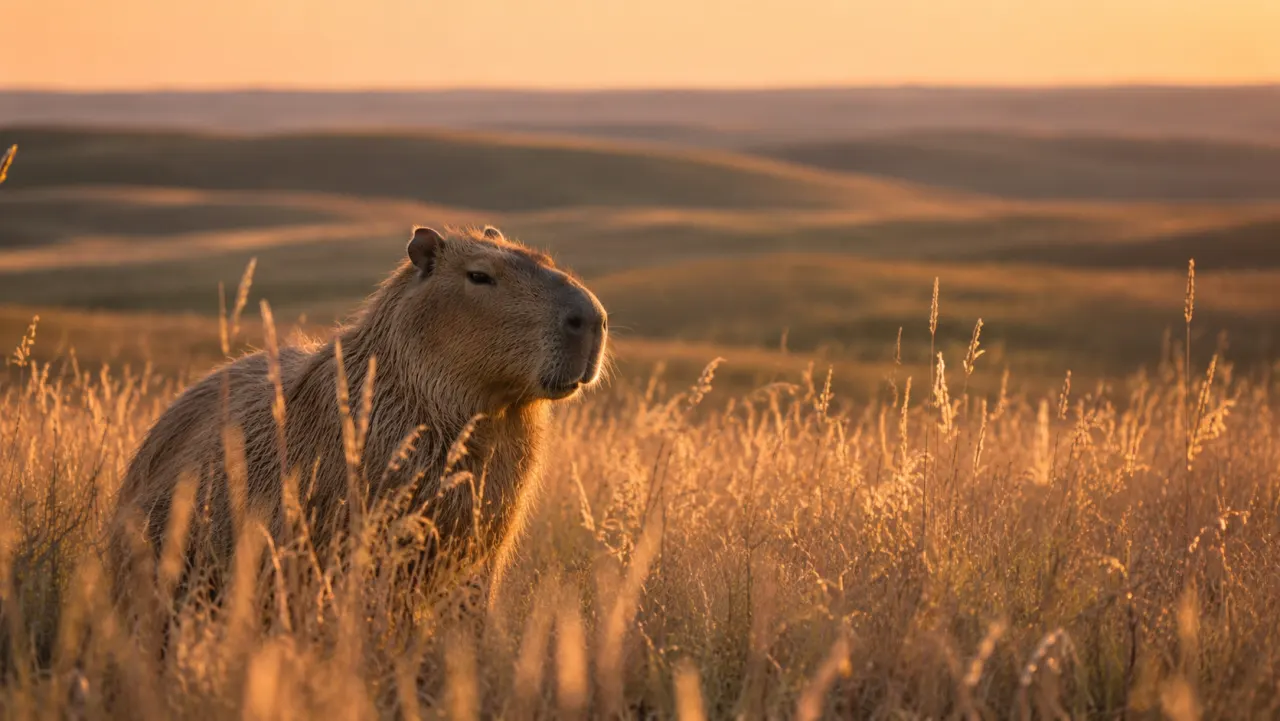
Capybara incisors never stop growing because capybaras are rodents, and rodent incisors are built for a lifetime of gnawing, grazing, and slow dental admin. It is not a cute quirk. It is the operating system.
Here’s the practical science: capybaras have continuously growing incisors. Tough plant foods wear those teeth down as the animal eats. In the wild, grasses, aquatic plants, bark, and other fibrous foods do much of the work. In captivity, diet, safe chewing material, and veterinary oversight matter because overgrown teeth are not charming. They are a problem with a face.
Rodent Hardware With A Maintenance Plan
National Geographic describes the basic rodent deal plainly: capybara teeth grow continuously and are worn down by grazing on grasses, aquatic plants, and other vegetation. Animal Diversity Web puts capybaras in Rodentia and Caviidae, which is why the teeth behave more like guinea-pig teeth than, say, dog teeth.
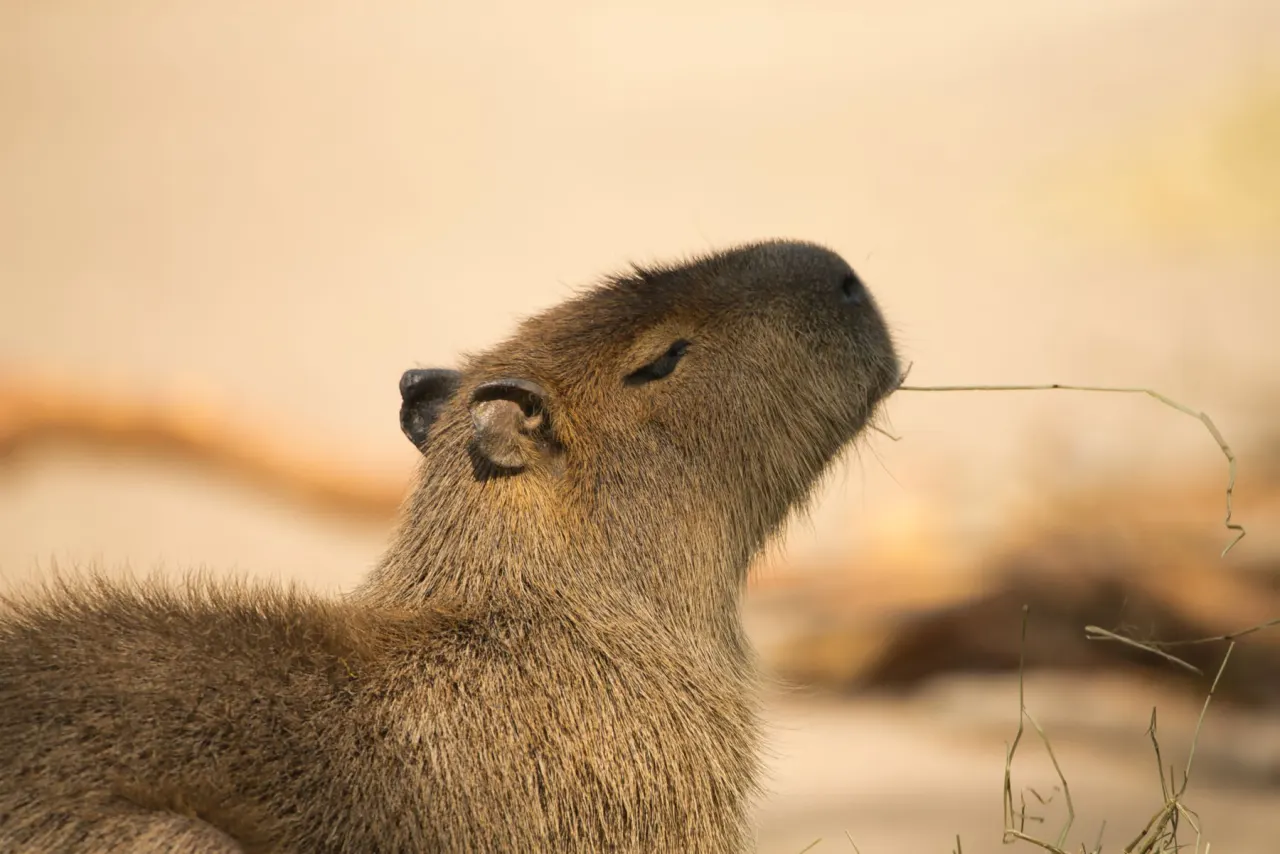
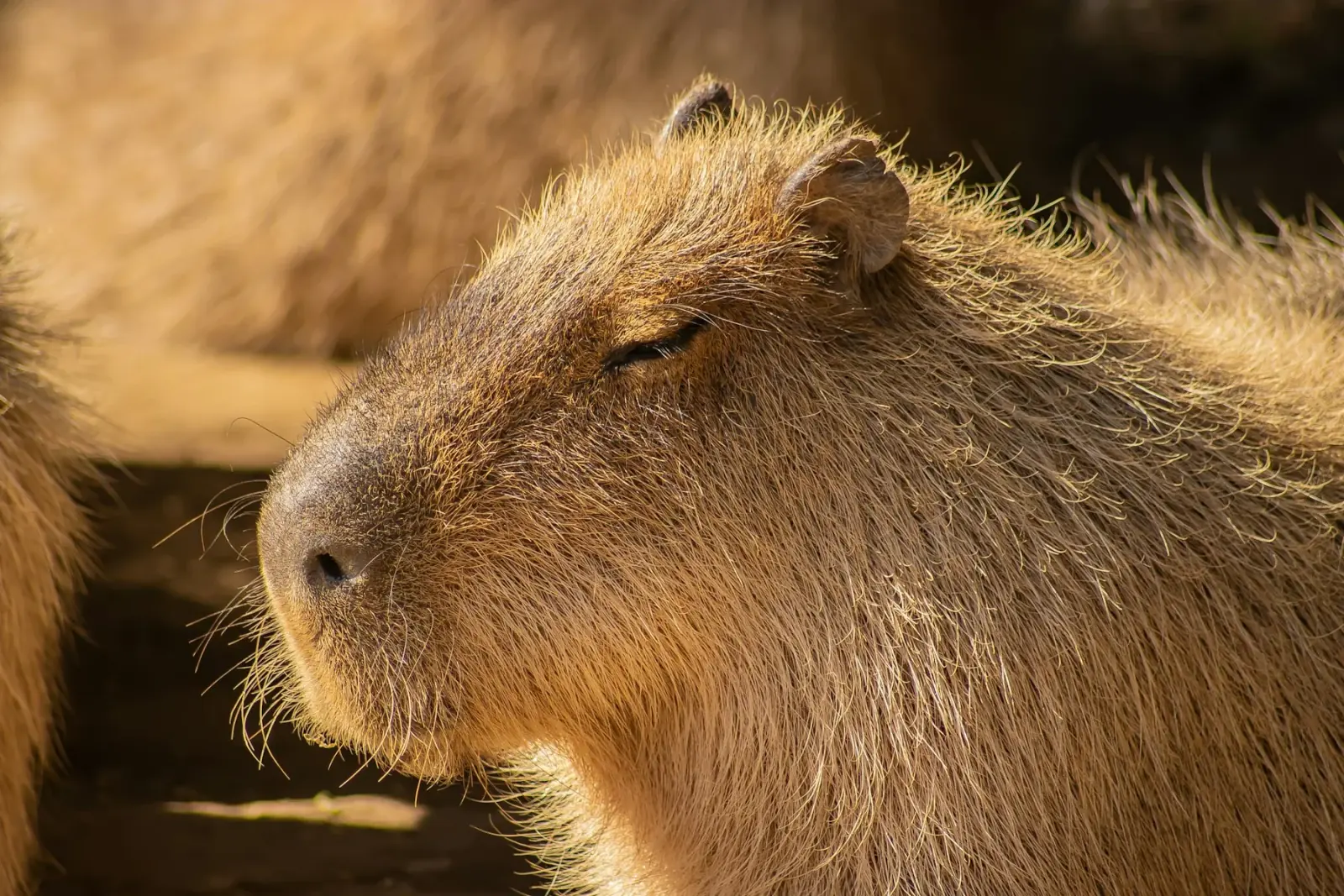
The visible stars are the incisors. They are the front chisels, used for cutting plants, stripping material, and making a blade of grass regret its choices. The cheek teeth behind them do the grinding, but the incisors get the fan attention because they look dramatic.
Why Always-Growing Teeth Make Sense
For an animal that eats fibrous plants near wetlands, teeth are tools that get used hard. Grasses and aquatic plants are not soft little spa snacks. They contain tough fibers and sometimes silica, and the chewing required to process them creates wear.
Continuously growing incisors solve that wear problem. Instead of having one fixed set of delicate front teeth, the capybara gets a self-renewing tool edge. The arrangement is useful until the system stops balancing growth with wear. Then the same biology becomes trouble.
| Tooth fact | Why it matters | Human translation |
|---|---|---|
| Incisors grow continuously | Teeth can survive constant plant cutting | The hardware keeps replacing itself |
| Chewing wears them down | Diet and texture matter | Soft diets can be suspicious |
| Front enamel is harder | The teeth keep a chisel-like edge | Nature brought a sharpener |
| Misalignment can snowball | Wear becomes uneven | Vet time, not internet time |
How Capybaras Keep The Teeth From Taking Over
San Diego Zoo Wildlife Alliance describes capybaras as grazers that eat water plants and grasses. The AZA Capybara Care Manual emphasizes high-fiber diets in managed care. Those two ideas meet in the mouth: the right kind of food gives the teeth work.
That is why capybara feeding videos can be misleading. A piece of fruit is cute. A crunchy vegetable is cute. But a diet built around sweet treats would be a nutritional and dental mess. The boring forage is doing the unglamorous work.
Why Teeth Matter So Much In Captive Care
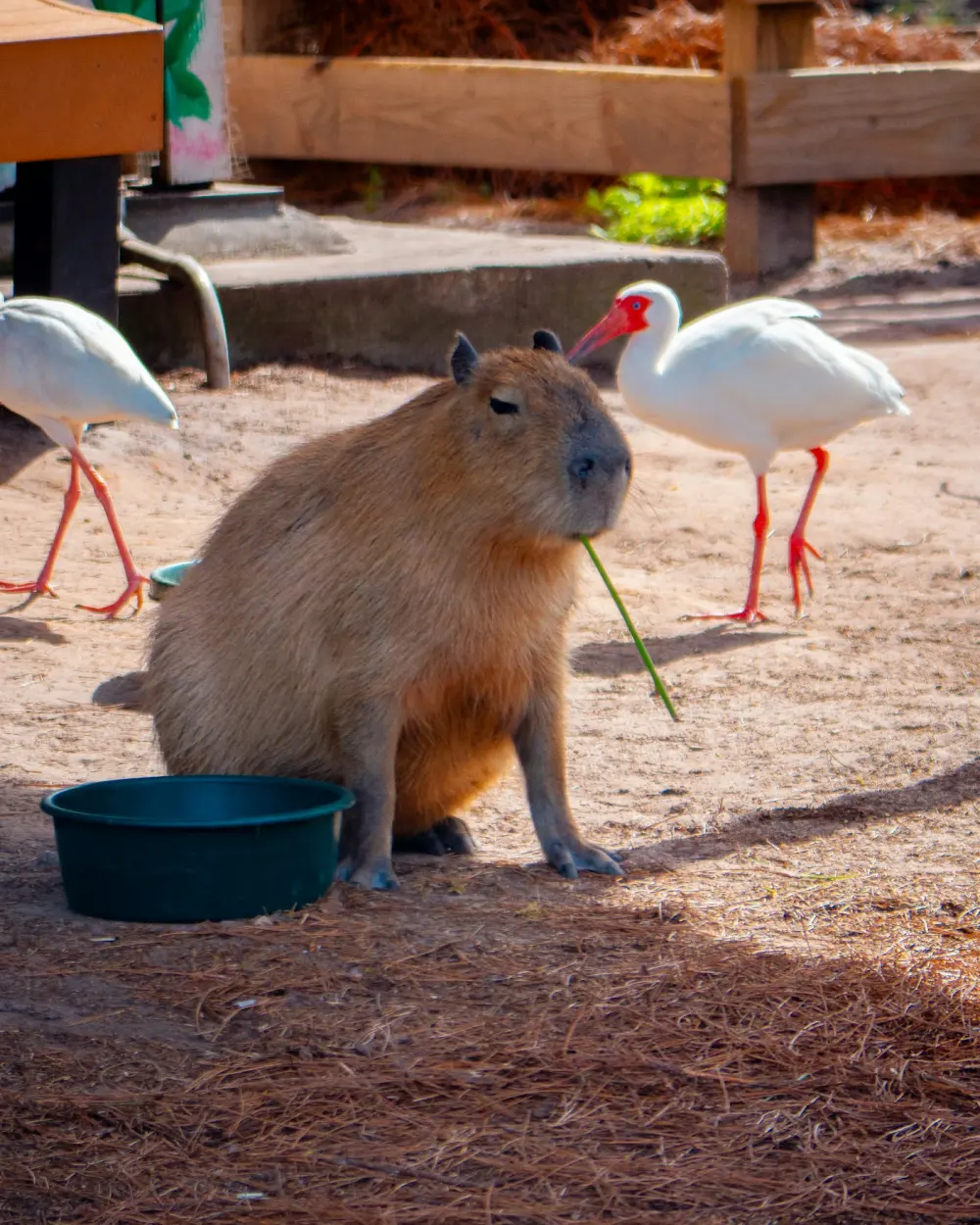
Captive capybaras do not get to solve dental wear by vibes. They need a diet plan, safe browse or chewing opportunities, and keepers or veterinarians who notice problems early. The AZA manual also notes vitamin C requirements, which matters because poor nutrition can create broader health issues, not just an unflattering snack schedule.
Watch for the general warning pattern in any captive herbivore: trouble eating, weight loss, drooling, uneven chewing, facial swelling, or a sudden change in interest in food. This article cannot diagnose a capybara, and frankly neither can a comment section with a frog avatar.
The point for fans is simpler. Those famous orange incisors are not accessories. They are working tools attached to a large animal with real welfare needs.
The Orange Is Iron, Not Carrots
People assume the orange front surface means a stained or dirty tooth. It does not. Rodent incisors carry a tougher, pigmented enamel on the front face, and the back of the tooth is softer. Because the soft side wears faster than the hard side, the tooth keeps a beveled, self-sharpening edge as it grinds against its opposite number. That is the chisel staying a chisel.
This is the part I find genuinely clever, and it is worth saying plainly: most teeth get duller with use, and capybara incisors do the opposite. The wear is the maintenance. A capybara that suddenly cannot wear its teeth down evenly loses that edge and starts heading toward overgrowth, which is when the elegant system turns into a vet appointment.
A Few Things People Get Wrong
Capybara dental content online runs heavy on confident nonsense, so here is a short correction table built only from established rodent biology and the sources cited above.
| Common claim | Better answer |
|---|---|
| The teeth are orange because of diet | The orange is naturally pigmented enamel on the front of rodent incisors, not staining from food |
| Growing teeth means they never need care | Growth must stay balanced with wear; captive animals still need diet planning and exotic-vet oversight |
| Soft fruit and treats keep them healthy | Soft, sugary food gives the teeth no work to do; high-fiber forage is what wears them down |
| Only the front teeth matter | The cheek teeth do the grinding and also grow continuously; problems often start in the back |
| A long-toothed capybara just looks goofy | Overgrowth can stop the animal eating and is a real welfare emergency, not a look |
The thread running through all of these is the same. The teeth are not a decoration that happens to grow. They are part of a feeding system that only works while grazing, grinding, and wear stay in balance.
How Capybara Teeth Compare To Familiar Rodents
It helps to place the capybara next to animals people already picture. Animal Diversity Web groups capybaras in family Caviidae alongside guinea pigs and maras, and the dental logic carries across the group.
| Animal | Incisors grow continuously? | Cheek teeth grow continuously? |
|---|---|---|
| Capybara | Yes | Yes |
| Guinea pig | Yes | Yes |
| Rat / mouse | Yes | No |
| Human | No | No |
Guinea pigs are the closest everyday comparison, which tracks with the other thing they share: neither animal can make its own vitamin C, so both need it supplied through diet. The AZA Capybara Care Manual flags vitamin C among the nutritional points keepers manage, and the older scurvy literature in captive capybaras is a reminder that a high-fiber diet has to be a good high-fiber diet, not just a rough one.
The Teeth Are Doing Their Job
Capybara teeth never stop growing because the animal evolved for constant chewing on tough plant material. That is elegant biology, but not low-maintenance biology.
The shareable line: the teeth are cute only because the maintenance department is open 24 hours a day.