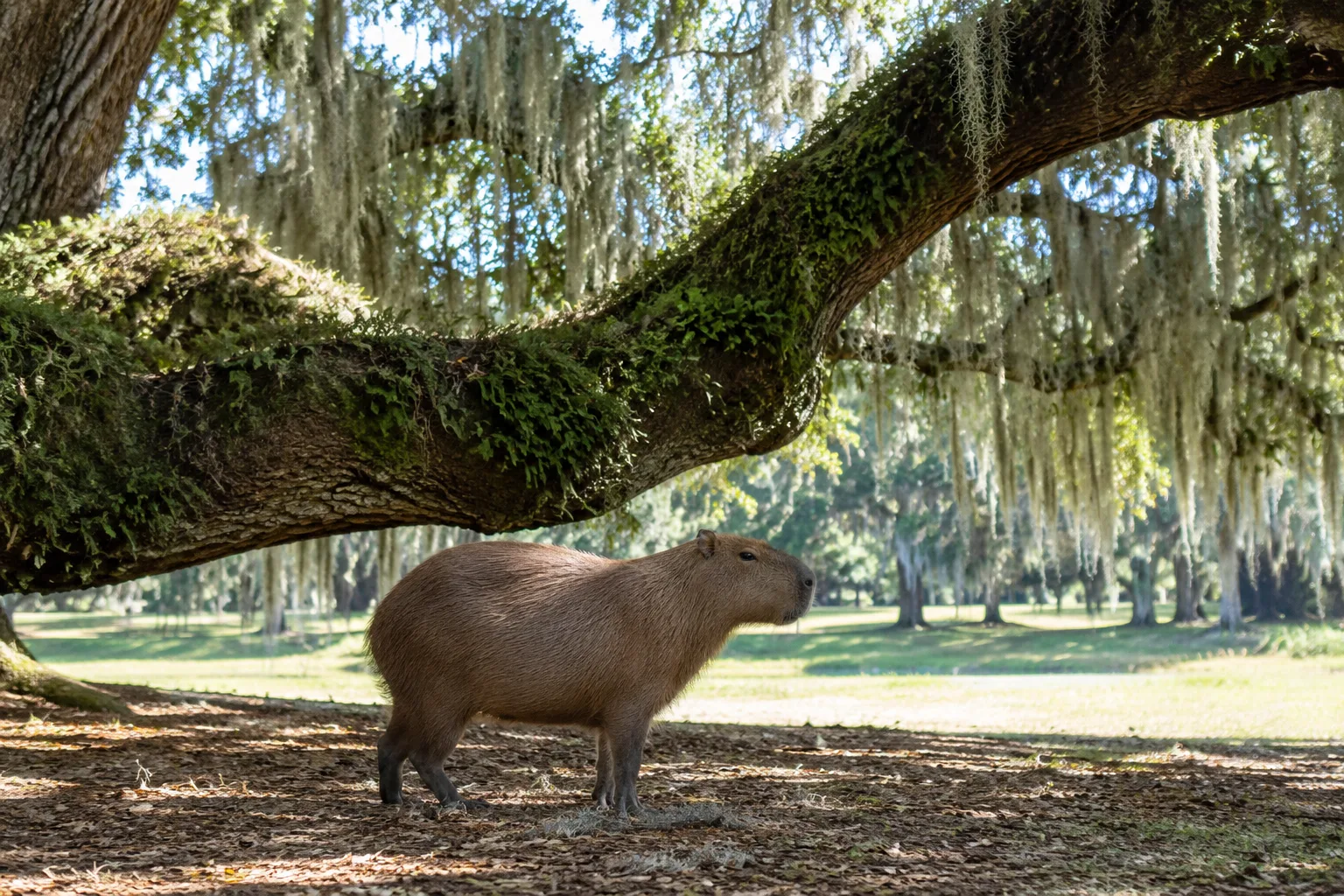
Are there wild capybaras in Florida? Yes, in the careful sense that Florida has reported free-roaming capybara sightings and records. No, in the sense that you should not plan a vacation around finding one beside a retention pond like it is a bonus attraction.
Capybaras are nonnative in Florida. Their actual home range is Central and South America. Florida has a habit of making animal questions more complicated, but this one still needs the boring words: scattered reports, nonnative species, verify before acting.
The Short Florida Answer
UF/IFAS has a fact sheet on the status of capybaras in Florida, and EDDMapS maintains capybara observation records. FWC also provides a reporting system for nonnative species sightings. That is the source-backed answer: sightings exist.
The part people overshoot is the leap from “seen in Florida” to “Florida has wild capybaras you can go visit.” A capybara sighting is not a trailhead. It is a data point with whiskers.
How Capybaras Got There
Capybaras do not naturally wander from South America to Florida because they felt the tax situation was favorable. Free-roaming animals in Florida are usually the result of escape, release, or captive-animal pathways.
That matters because a nonnative animal outside captivity is a management issue, not a mascot origin story. FWC defines nonnative species as animals living outside captivity that did not historically occur in Florida, often introduced by humans.
Are They Established?
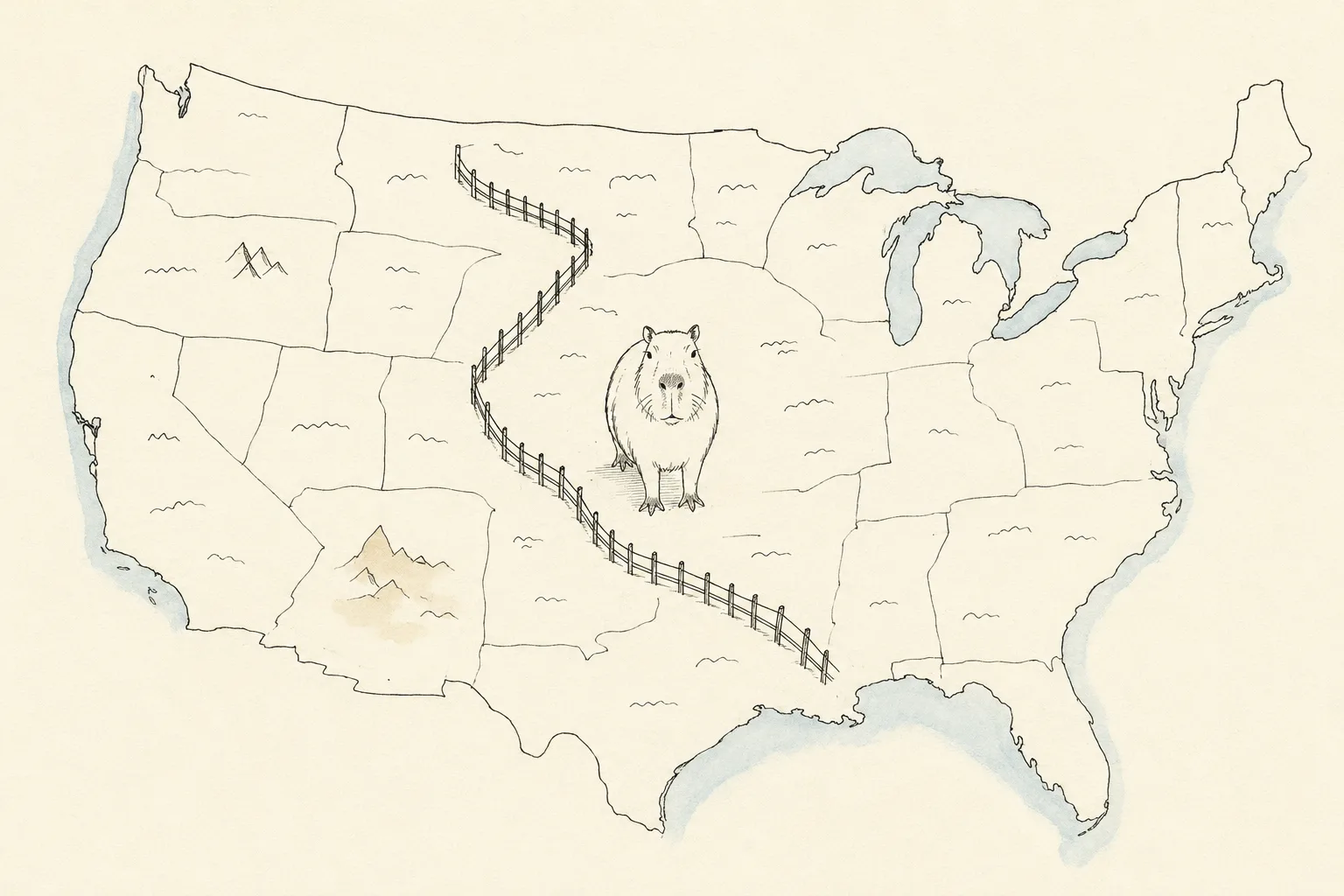
This is where the wording matters. A free-roaming animal can be reported without proving a stable breeding population. An established population means more than “someone saw one once.” It means reproduction, persistence, and enough evidence to stop calling the records isolated.
The safer 2026 phrasing is: capybaras have been reported in Florida, but treat “established” claims with caution unless the source is current and specific. The capybara does not need you turning one blurry road crossing into a documentary series.
| Claim | Better wording |
|---|---|
| Capybaras live all over Florida | Florida has scattered reported sightings |
| They are native there | They are nonnative to Florida |
| You can go find them | Sightings are unusual and not a tourist plan |
| A sighting means a population | A sighting needs verification and context |
Why Florida Keeps Coming Up
There is a reason Florida is the state people ask about, and it is not just the general Florida reputation for wildlife oddities. The climate and the water actually line up with what a capybara wants.
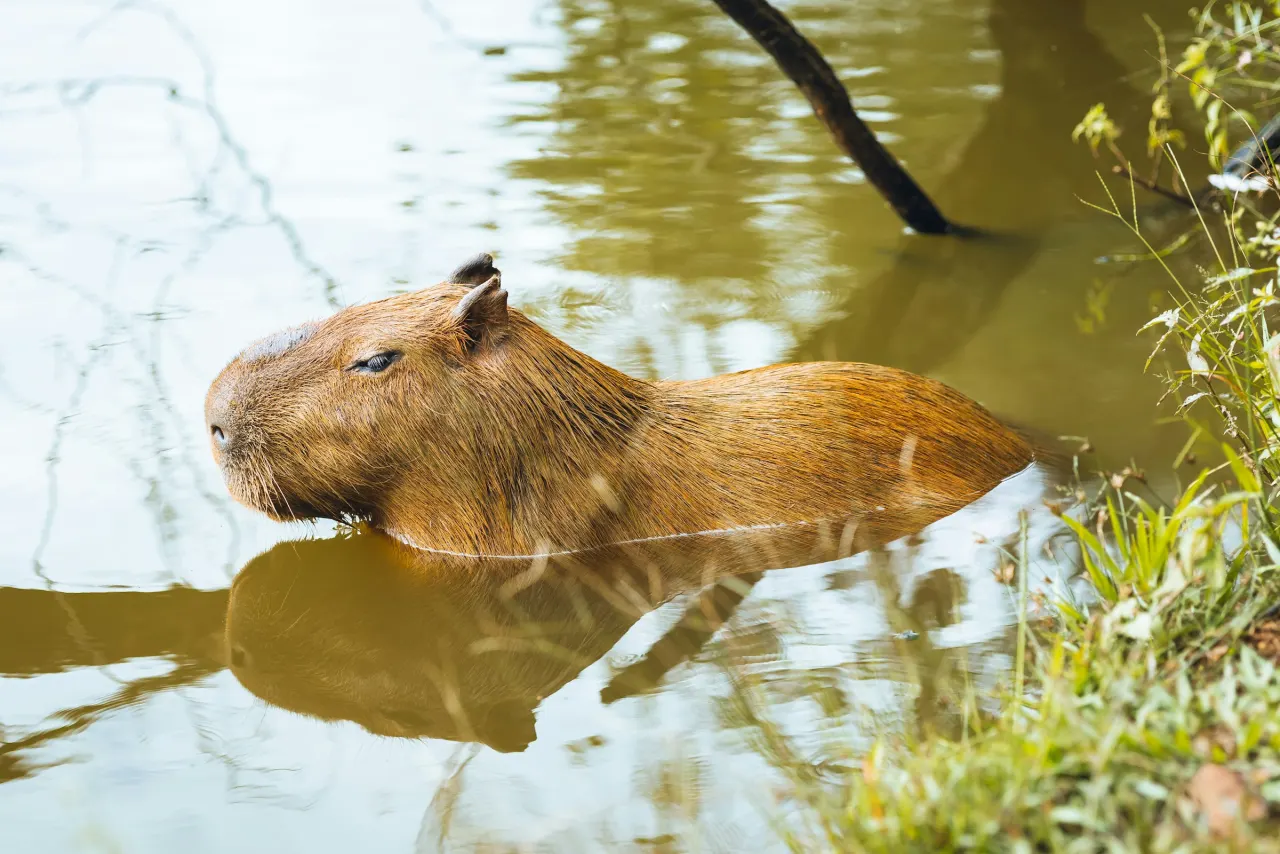
Capybaras are semi-aquatic grazers. They eat grasses and aquatic plants, they stay near water, and they use it for cooling and escape. The Animal Diversity Web profile describes them as animals tied closely to wetlands, rivers, and marshy ground. Florida has a generous supply of exactly that: warm temperatures, slow water, retention ponds, canals, and soft vegetation almost everywhere you look.
So the worry is not imaginary. A subtropical, water-heavy landscape removes some of the obvious limits that would stop a South American rodent from getting comfortable somewhere colder and drier. That is part of why UF/IFAS bothered writing a status fact sheet at all. The conditions are plausible, which is more than you can say for most nonnative-species panics.
| Capybara need | Native South America | Florida wetlands |
|---|---|---|
| Warm climate | Yes | Mostly yes |
| Standing or slow water | Abundant | Abundant |
| Grass and aquatic plants | Abundant | Abundant |
| Cover from predators | Dense vegetation | Variable |
| Established herds | Normal | Not demonstrated |
Notice the bottom row. The habitat boxes are easy to tick. The “actual stable population” box is the one that keeps not getting checked, and that gap is the whole story.
A Quick Note On What This Animal Even Is
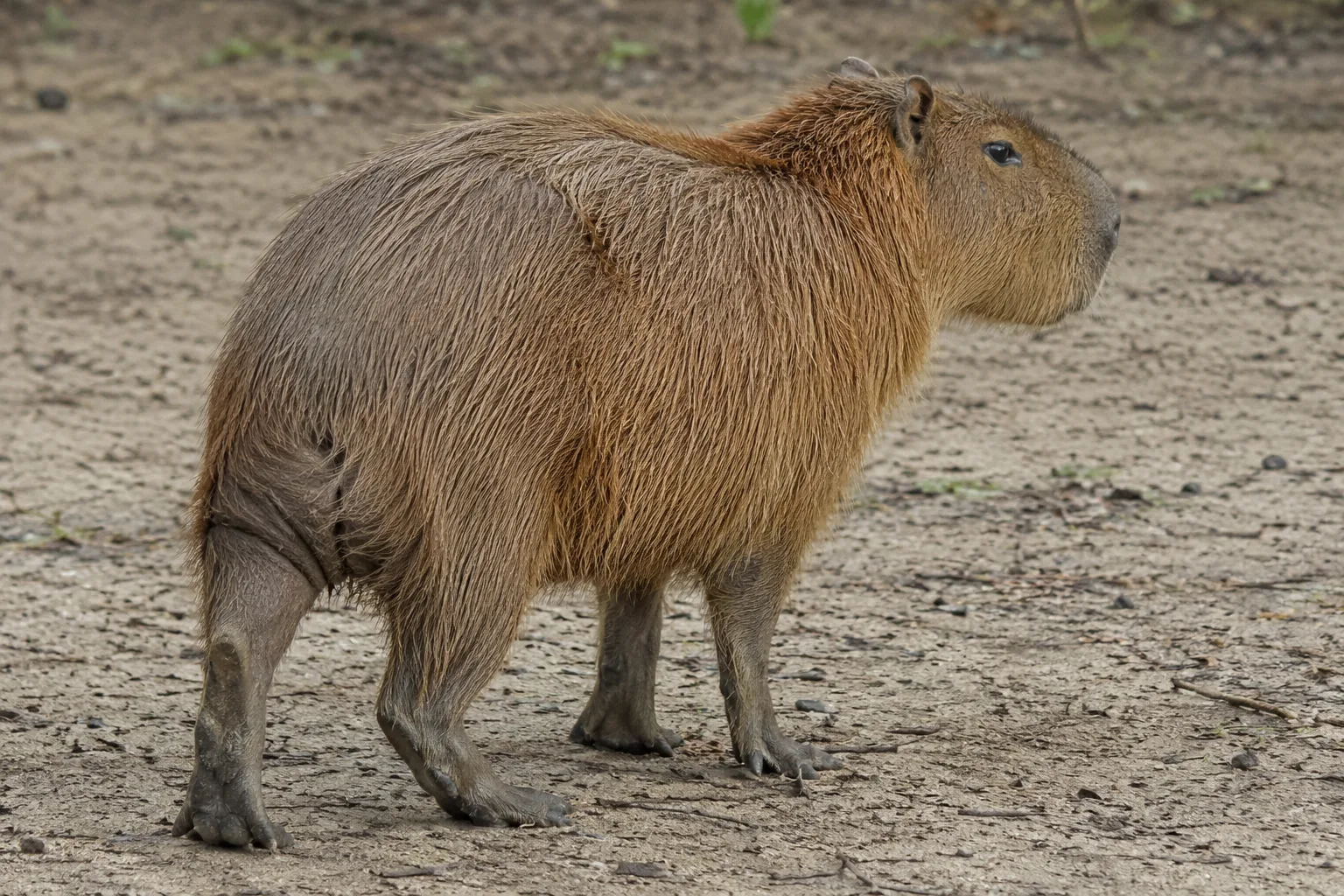
It helps to remember what a capybara actually is before deciding how alarmed to be. This is the world’s largest rodent, with adults running roughly 35 to 66 kg, which is somewhere around 77 to 145 pounds depending on the individual. Family Caviidae, so a relative of the guinea pig and the mara, just scaled up to dog-or-bigger size.
They are deeply social. In their native range they live in herds, and solitary housing is a known welfare stressor, which is one of many reasons a single loose capybara is almost always an escape or release story rather than a wild colonizer. They are hindgut fermenters that re-ingest soft morning feces to pull more nutrients out of low-quality plant matter, and like guinea pigs they cannot make their own vitamin C, so diet matters. None of this makes them a Florida native. It makes them a large, specific animal with specific needs that a retention pond does not fully meet on its own.
My honest take: the “Florida has wild capybaras” framing is more fun than it is true, and the fun version quietly does damage. It turns a real management question into a meme, and memes do not get reported to FWC.
Where Sightings Have Happened
EDDMapS includes Florida records, and older reporting has pointed to north-central Florida as a notable area in the sighting conversation. But wildlife records can include private coordinates, old data, misidentifications, and reports that need expert review.
That is another reason not to chase them. If you want to see a capybara in Florida, a reputable zoo or licensed wildlife facility is the adult answer. If you want a scavenger hunt through wetlands looking for a nonnative rodent, please consider a different hobby and better shoes.
What To Do If You See One
Do not approach it. Do not feed it. Do not try to capture it for content, which is the sentence Florida should embroider on throw pillows.
Report the sighting through FWC’s nonnative species system or hotline. Note the location, time, behavior, and photo evidence if you can get it safely from a distance. Then leave the animal alone.
The capybara may look calm. The management question is not calm at all.