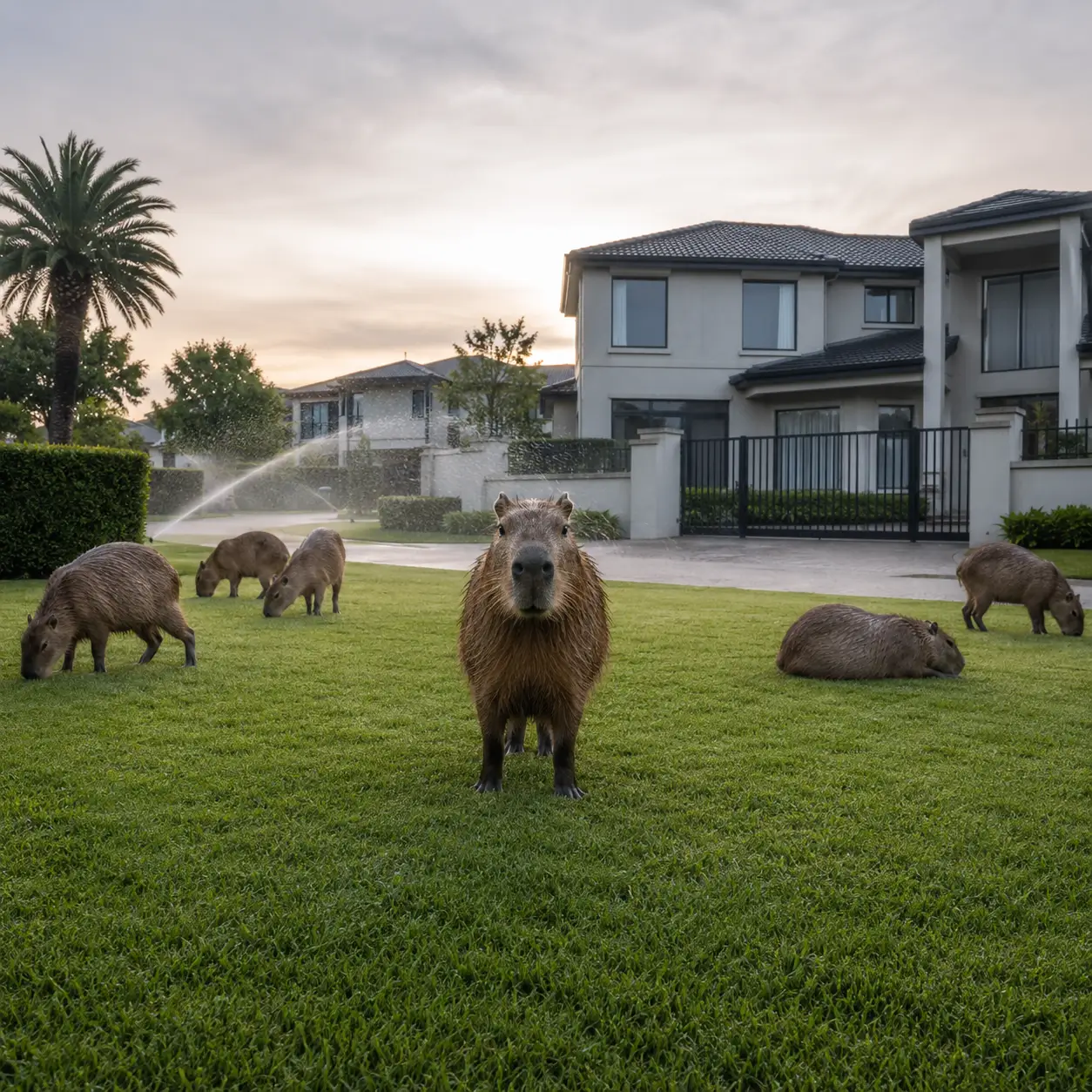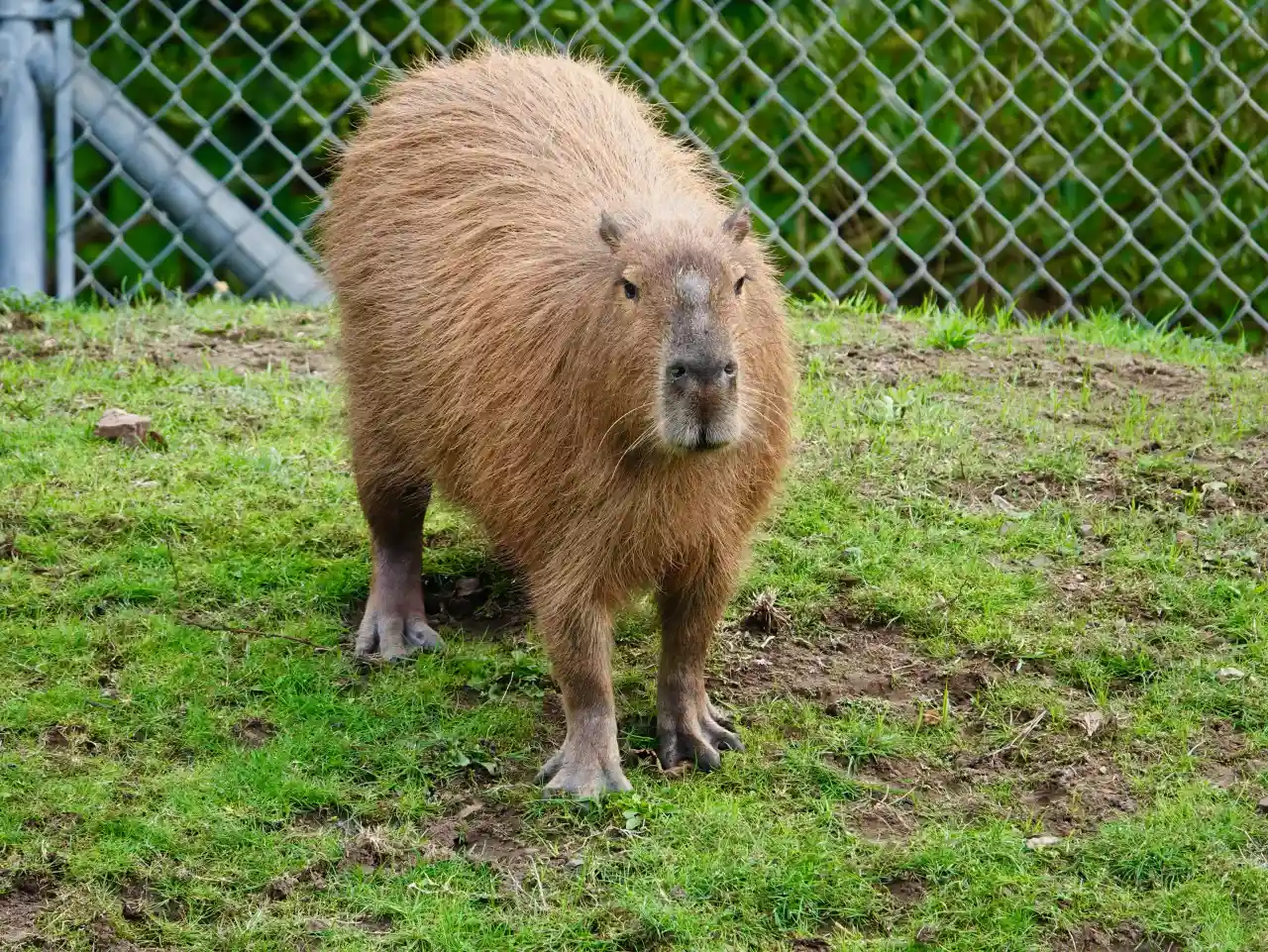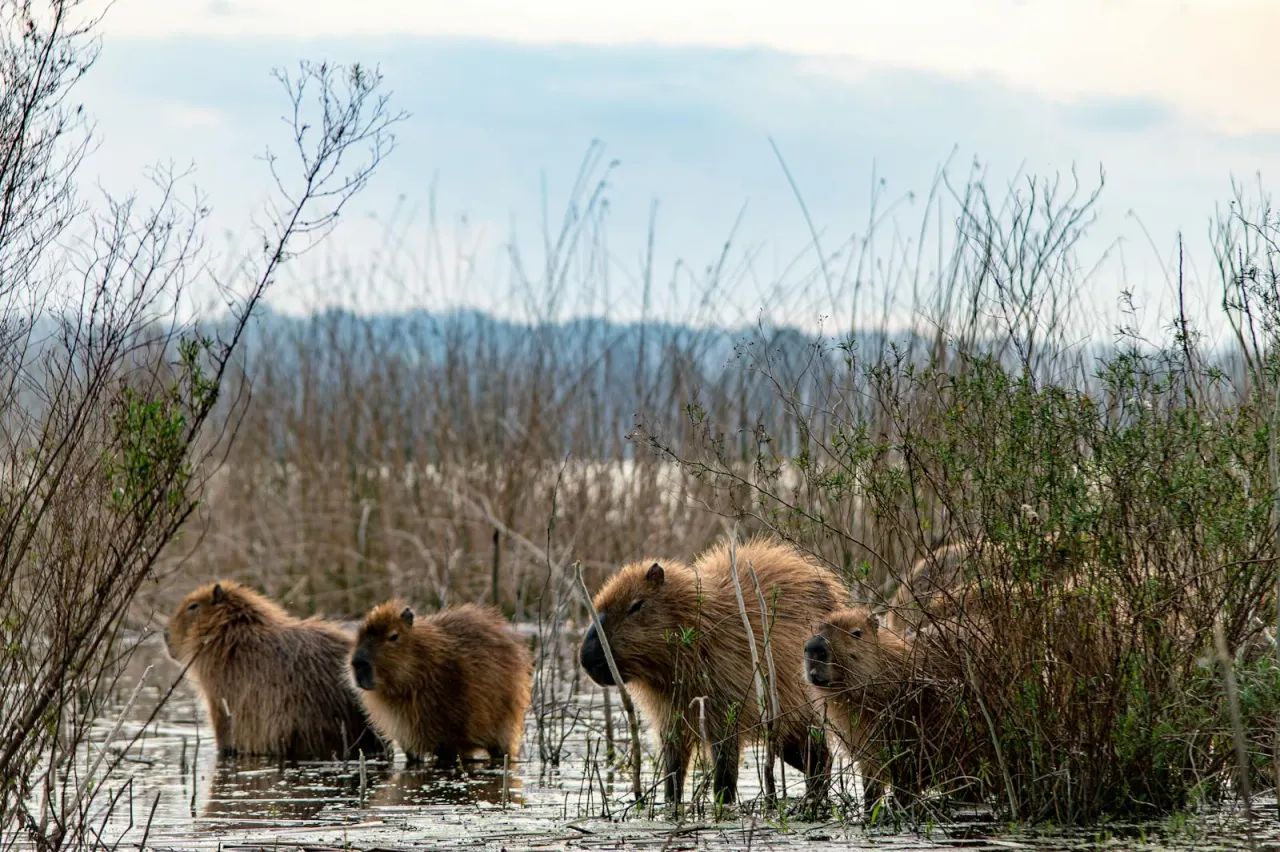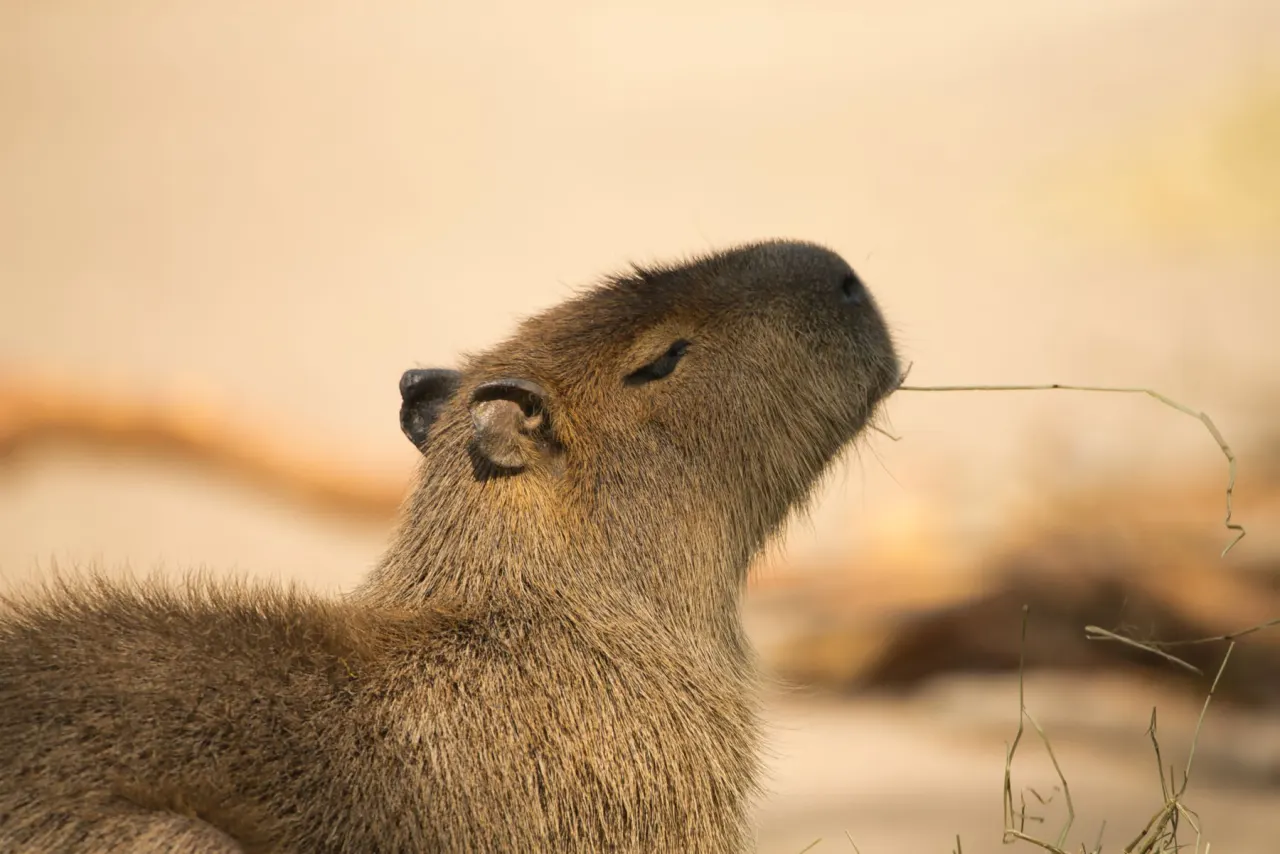
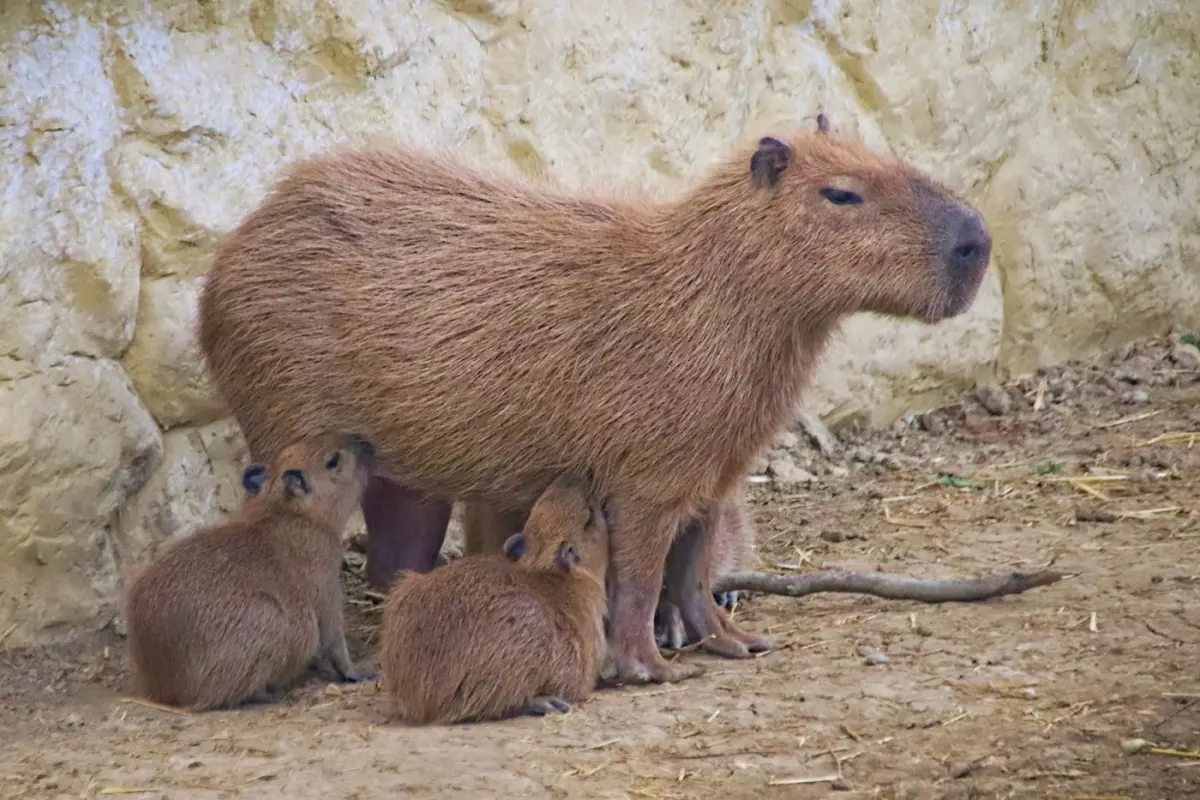
Capybara herds are not just piles of relaxed rodents. They are social systems with adults, young, dominance, calls, grooming, vigilance, water access, and rules that mostly happen without anyone making a slide deck.
Capybaras are group-living animals. Herd behavior helps them feed, watch for danger, raise young, communicate, and manage social tension. The chill is not random. It is organized.
Capybara Herds Are Calm Because They Have Rules
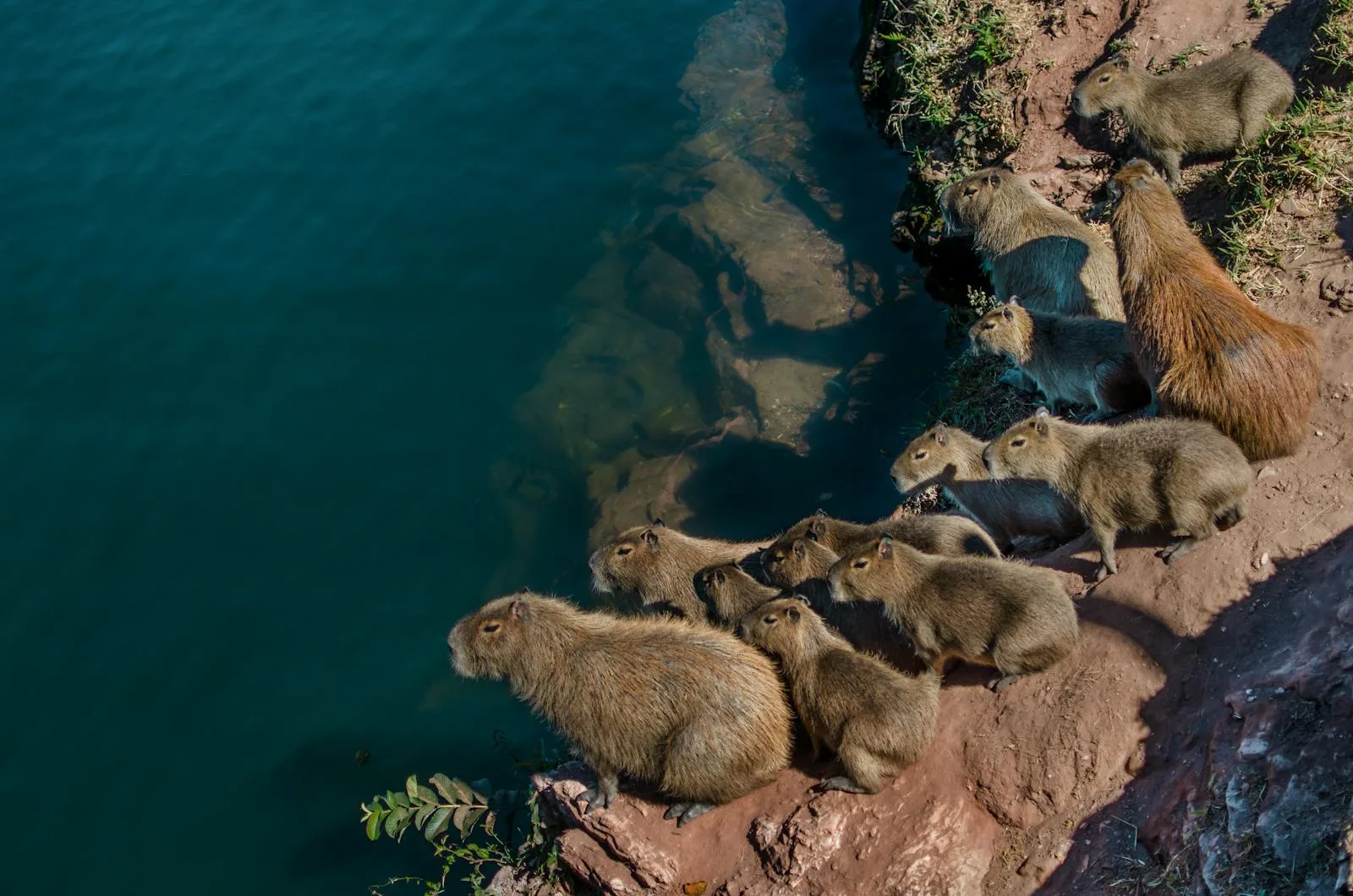
A Journal of Mammalogy review of capybara social structure says that wherever capybaras have been studied, they live in groups. Those groups are stable social units made up of adult males, adult females, and young. That is the sentence that ruins the lone-pet fantasy quickly.
San Diego Zoo’s capybara fact sheet describes herds with dominant and subordinate males, females, and young. It also notes that bonds are maintained through touching, grooming, scent marking, and vocalizations.
Who Leads And Who Gets Tolerated
Capybara hierarchy is not a children’s-book monarchy. It is a flexible social arrangement shaped by sex, age, dominance, breeding, space, and group history. Research describes male dominance hierarchies, stable units, and variation across populations.
| Social piece | What it does | Human-friendly read |
|---|---|---|
| Dominant male | Breeding and territorial role | Not a cartoon boss |
| Adult females | Core group stability and young care | The herd’s practical center |
| Young | Group protection and learning | Tiny chaos with supervision |
| Subordinate males | Present depending on group dynamics | Tolerated until not |
| Vocal signals | Contact and warning | The group chat has sound |
The Calls That Hold The Herd Together
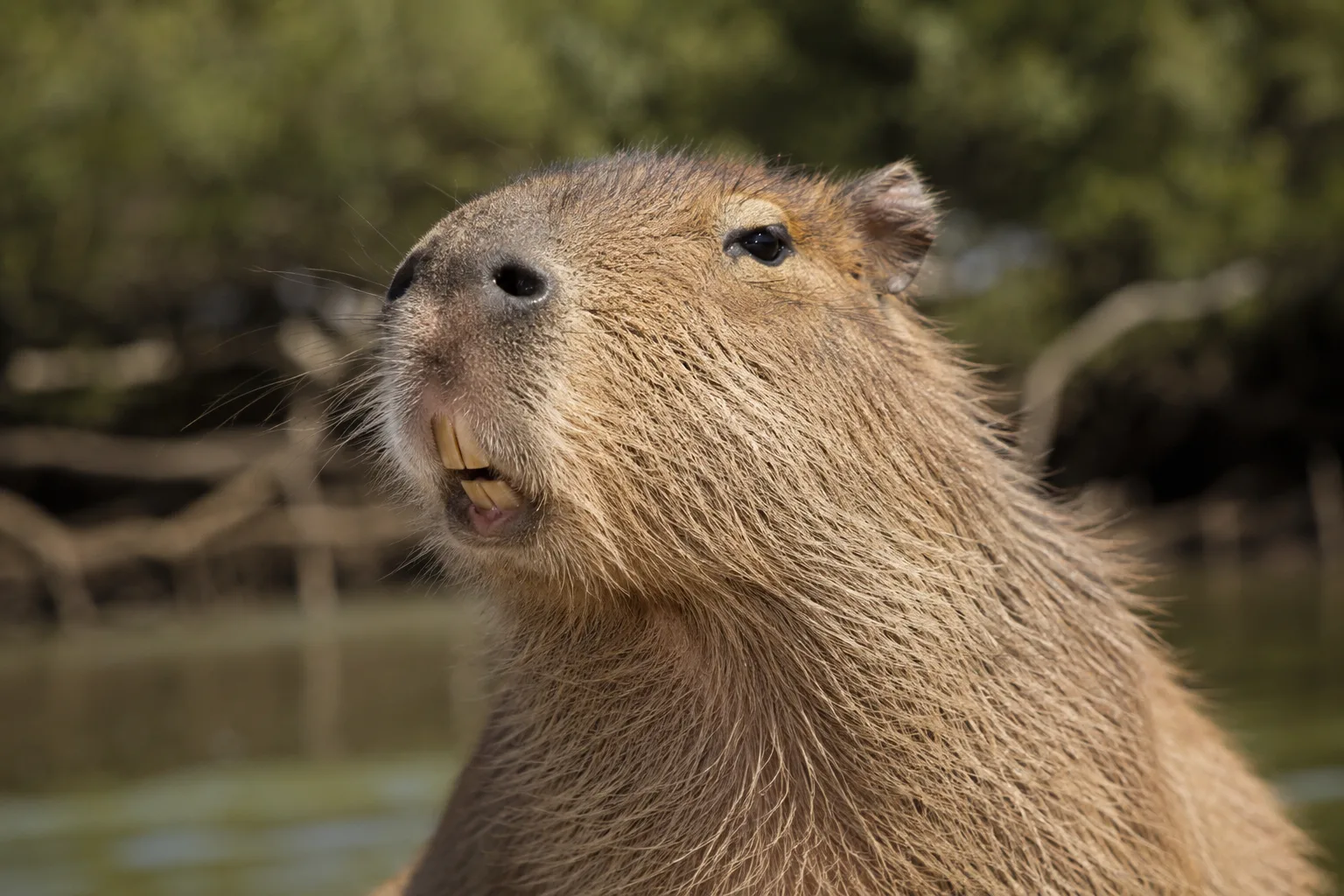
San Diego Zoo says capybaras use barks, chirps, whistles, huffs, and purrs. They chatter to keep track of one another, and warning barks can alert the group. Animal Diversity Web also describes vocal communication and group response to threats.
That is why one capybara’s reaction can matter to the whole group. A bark is not just noise. It can change the entire herd’s next move.
Why One Capybara Alone Is A Welfare Red Flag
Because group living is so central, a lone capybara in a pet context should raise questions. Does it have appropriate social housing? Does it have water access? Is it getting enough space, enrichment, diet management, and exotic-veterinary care? Is the person calling loneliness “bonding” because that sounds cuter?
The AZA manual and zoo fact sheets consistently frame capybaras through managed social, water, diet, and habitat needs. A single capybara treated like a quirky dog is not a cute exception. It is a warning label with whiskers.
Grooming, Scent, And The Boring Work That Keeps A Herd Together
Most of herd life is not drama. It is maintenance. Animal Diversity Web and the San Diego Zoo fact sheet both describe bonds held in place by ordinary, repeated contact: animals resting in piles, touching, mutual grooming, and scent marking. Capybaras carry scent glands, and males in particular use them to mark territory and signal status. None of this is glamorous. That is the point.
This matters because the things that look like personality in a single capybara are usually products of the group. A capybara that grazes calmly with its head down is trusting other animals to keep watch. The vigilance is shared, so each individual can relax in turns. Pull one animal out of that arrangement and you have not got a chilled-out solo pet. You have an animal doing every job at once with no relief, which is the opposite of calm.
There is a feeding angle here too, and it is one people skip. Capybaras are hindgut fermenters that practice coprophagy, re-ingesting soft morning feces to extract nutrients and B vitamins their gut produces overnight. Like guinea pigs, they cannot make their own vitamin C and must get it from diet. These are not herd behaviors exactly, but they shape herd life: a group of large grazers needs a lot of grass, a lot of space, and a lot of water, and that demand is part of why herds spread out across wetland and then regroup. The social calm sits on top of a very physical set of needs.
Wet Season, Dry Season: Why Herd Size Moves
Capybara groups are not a fixed number. They flex with water, food, and density. San Diego Zoo material describes smaller core groups in some conditions and larger aggregations in the wet season, when flooding and fresh grazing pull animals together. In the dry season, when water shrinks to a few reliable spots, groups can compress around what is left and tension over space tends to rise.
| Condition | What the herd tends to do | Why |
|---|---|---|
| Wet season | Larger aggregations form | Spread water and fresh grazing reduce competition |
| Dry season | Groups compress near water | Fewer reliable water and food spots concentrate animals |
| High density | More dominance friction | Less room means more boundary policing |
| Stable resources | Smaller core units hold | Less reason to merge or move |
The honest read: a lot of what gets sold as capybara “personality” is really just weather and water doing the scheduling. The animals adapt to conditions. The conditions do most of the talking.
Myths Worth Correcting
People absorb capybara facts from memes, and memes are not field studies. A few of the common ones, and what the sources actually support.
| Myth | Better answer |
|---|---|
| Capybaras are happiest as a single quirky pet | Group living is core to the species; a lone capybara is a welfare concern, per AZA and zoo care guidance |
| Herds have one king who rules everything | There are dominant and subordinate animals, but it is a flexible hierarchy shaped by sex, age, and group history, not a throne |
| Capybaras are calm by temperament alone | Calm comes from shared vigilance inside a group; remove the group and the calm goes with it |
| Group size is basically fixed | Size shifts with season, water, and density, and can swing widely between wet and dry months |
The Chill Has A Seating Chart
Capybara calm comes from social structure, not emptiness. Herds let capybaras share vigilance, maintain bonds, communicate, and move through wetland life with fewer solo disasters.
The chill is group project management with better bathing.