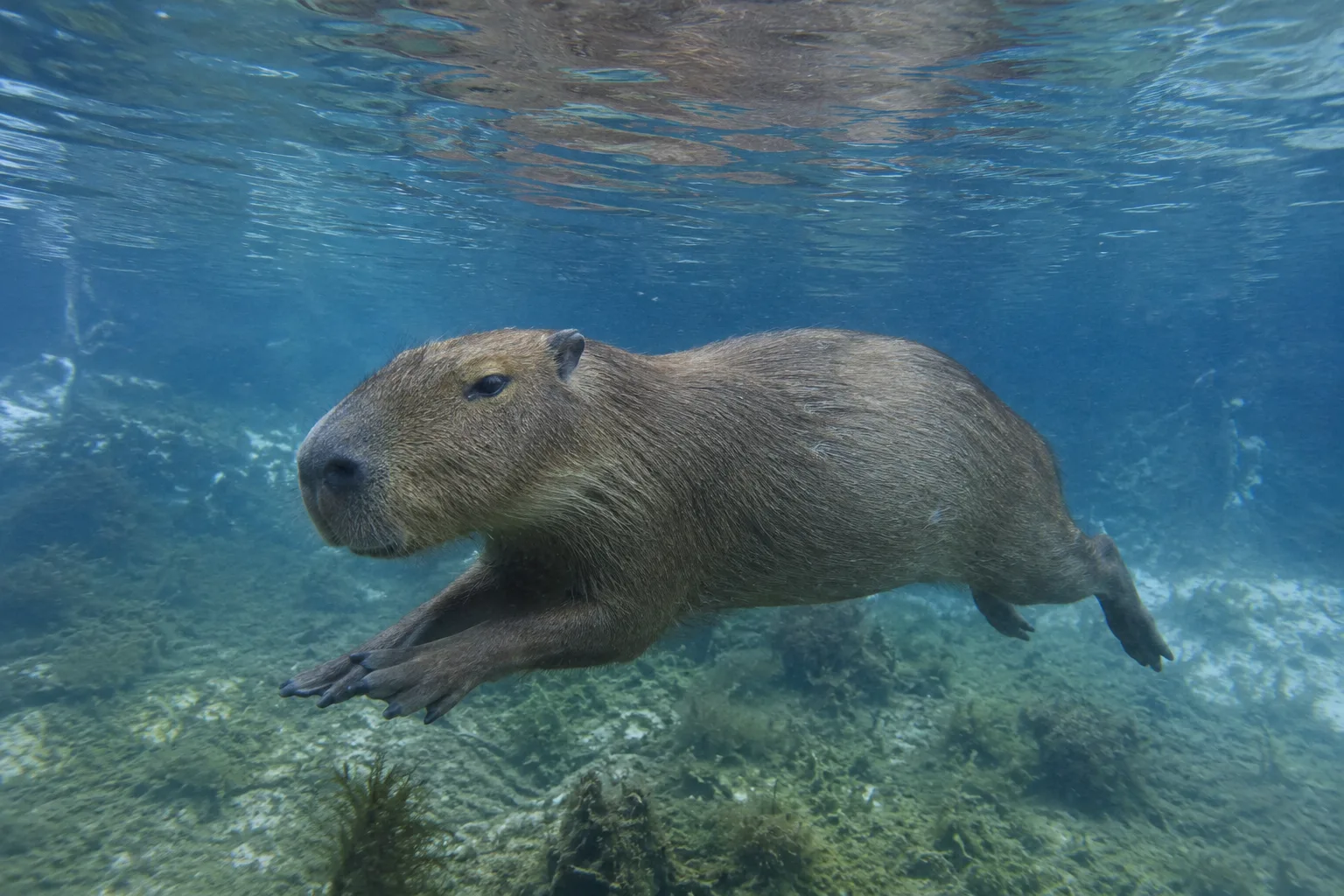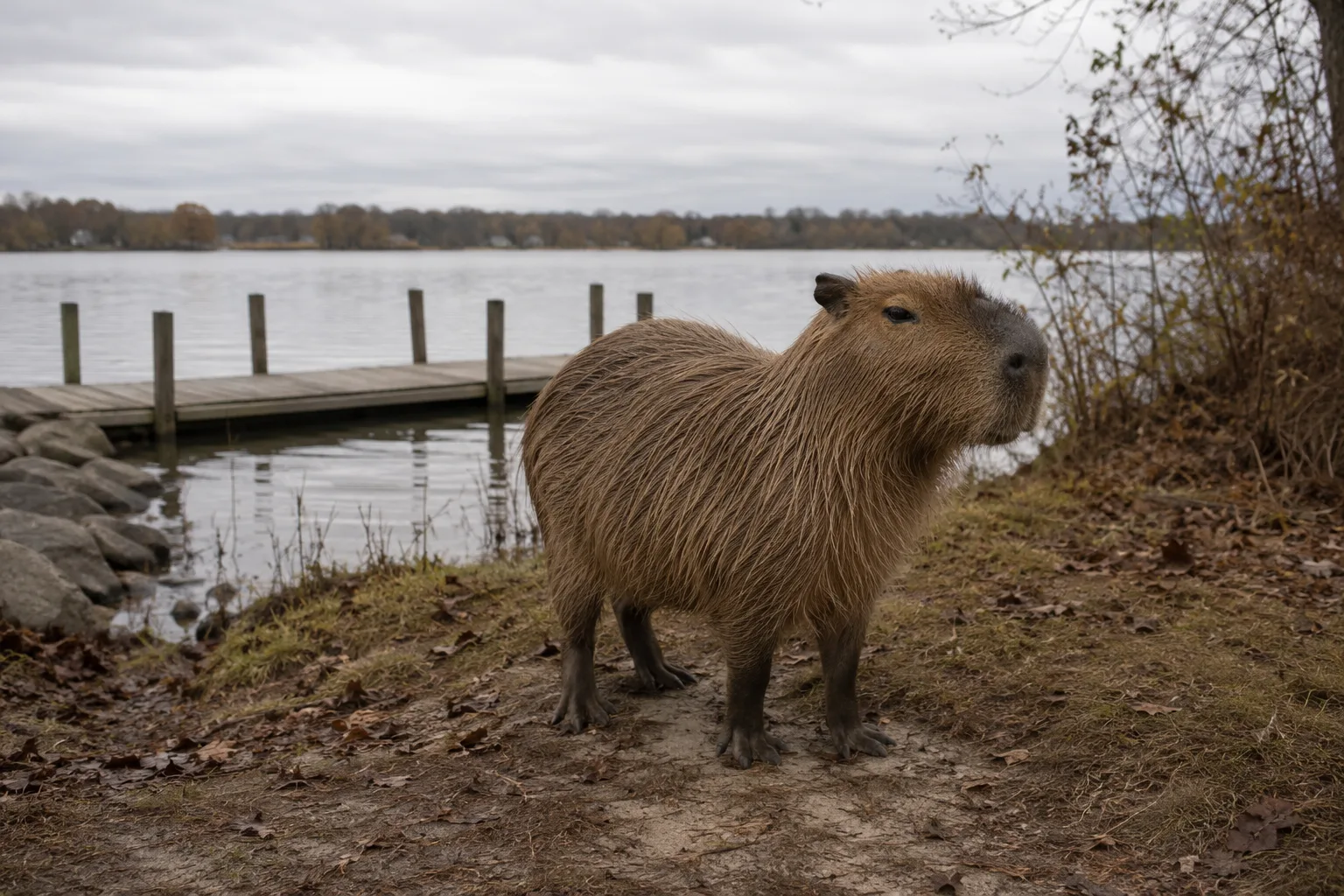
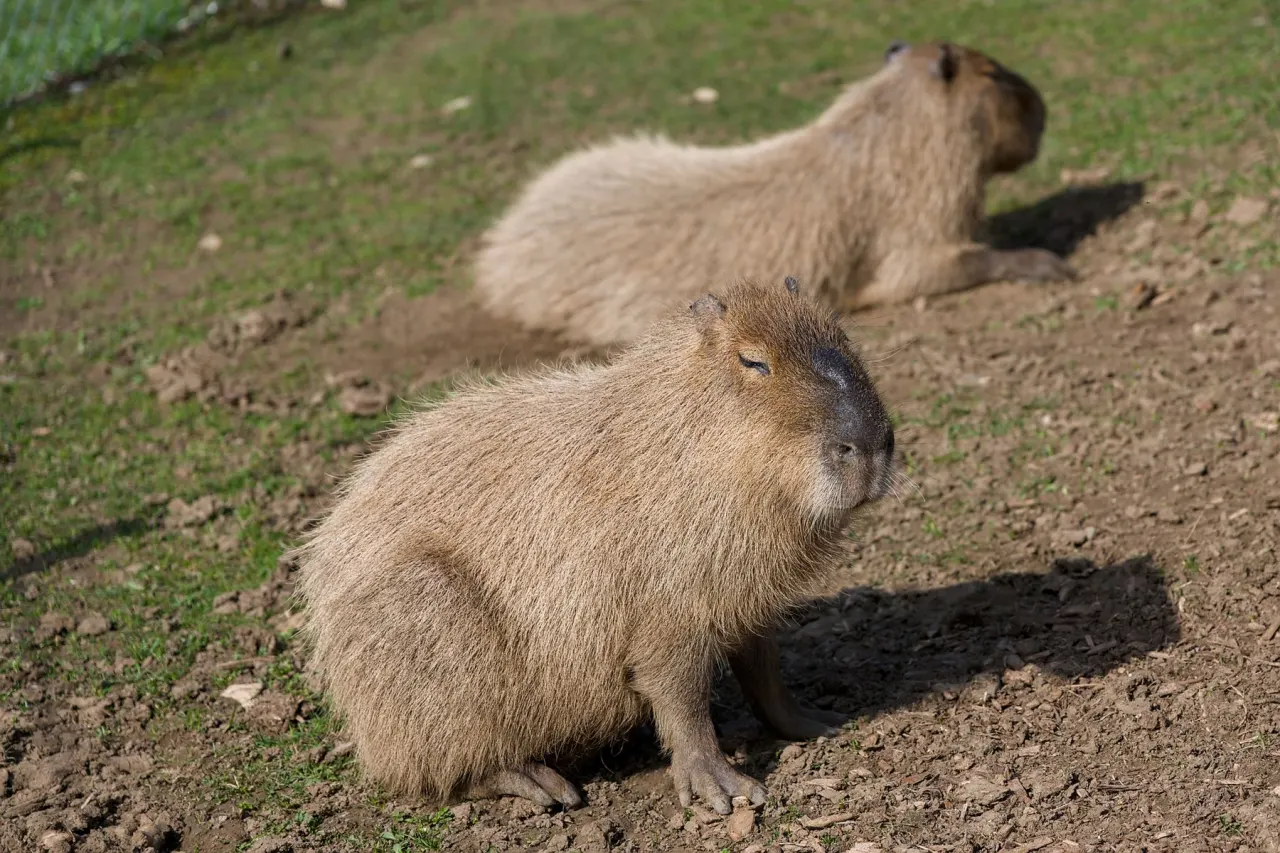
Real capybara friendships look less like a movie montage and more like a group of large rodents quietly agreeing not to make today worse.
Capybaras are social. That part is true. Animal Diversity Web describes them living in groups, communicating vocally, and using water as a shared escape route. But the internet has stretched “social” into “friends with everyone,” which is how a perfectly normal bird standing nearby becomes a cross-species wedding announcement.
Capybara Friendship Is Not Disney Casting
Start with the boring version, because it is the honest one: capybaras are group-living prey animals. A useful relationship is one that helps with safety, comfort, feeding, reproduction, and raising young. It may look sweet. It may also look like two animals sitting near each other because shade is scarce.
That does not mean capybaras are cold. It means their social life is not built for our captions.
| Internet read | Better read |
|---|---|
| ”Best friends” | Familiar animals resting calmly together |
| ”Friends with everyone” | Tolerant in that moment, in that setting |
| ”So gentle” | Calm-looking, but still capable of stress |
| ”It loves being touched” | Maybe used to staff, maybe just staying still |
Grooming, Resting, And Staying Close
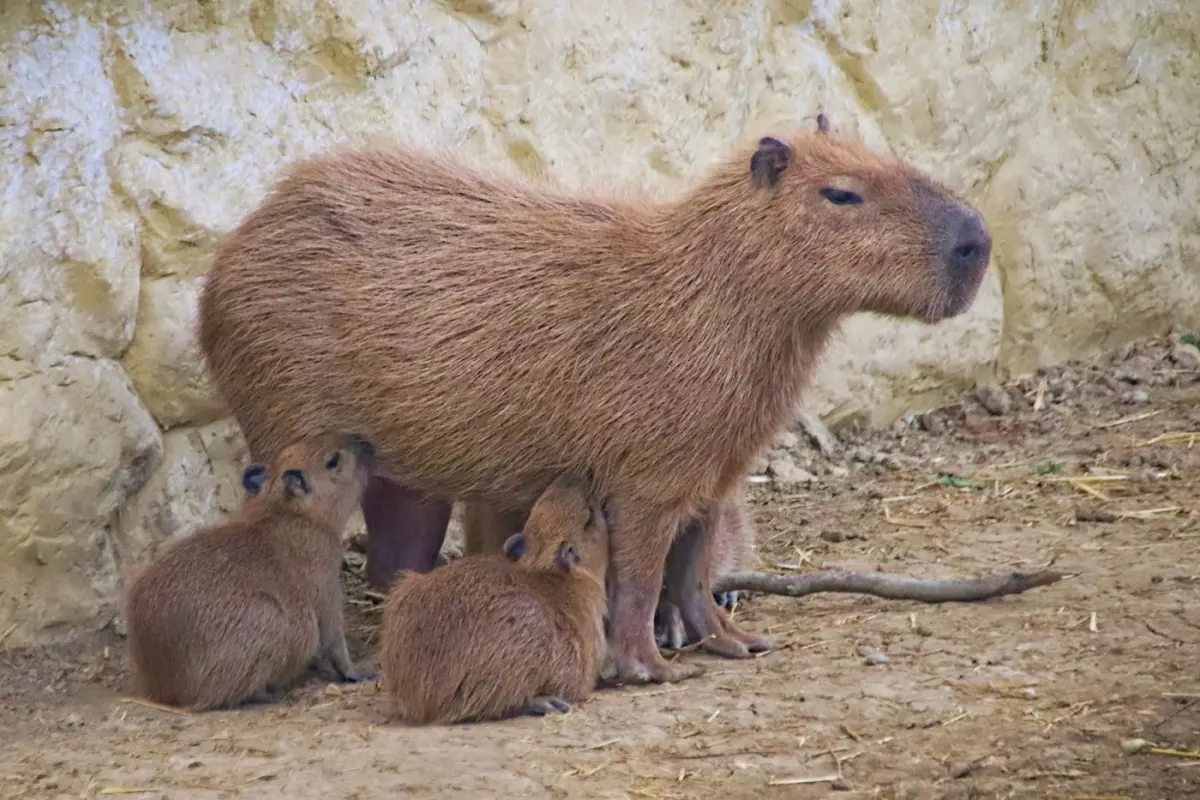
In a real group, closeness matters. Capybaras may rest together, graze together, follow group movement, and stay near water as a unit. Young often cluster near adults. Familiar animals can seem quietly synchronized, which is exactly the kind of thing fans notice before they know what they are seeing.
San Diego Zoo’s behavior notes describe group life, alarm calling, and communal care. That is the social foundation behind the softer online idea of capybara friendship.
Why Tolerance Gets Mistaken For Love
Capybaras often appear tolerant. Birds stand near them. Other animals share space in mixed exhibits. A capybara may sit still while something odd happens around it.
Sometimes that tolerance is real and relaxed. Sometimes the animal is conserving energy. Sometimes it has limited choices. Sometimes the clip started after the interesting part and ended before the animal walked away. A photo can turn “nothing bad happened for eight seconds” into a whole relationship.
Sometimes the friendship is real. Sometimes the capybara is just not moving.

A Bond Built On Practical Things
It helps to remember what a capybara actually needs from its group. These are semi-aquatic grazers, the largest rodents on the planet, with adults running roughly 35 to 66 kg. They spend their day eating grasses and aquatic plants, dodging predators, and staying near water as a shared exit. Animal Diversity Web frames their group life around exactly these pressures: safety in numbers, shared territory, communal care of young.
So the bonds that matter most are the ones that pay off in that world. A familiar group lets a capybara graze while someone else watches for trouble. It lets young animals stay close to adults. It lets the herd move to water together when something goes wrong. None of that needs to look affectionate to be real, and most of it does not.
There is also the unglamorous side of capybara life that the friendship clips never touch. They are hindgut fermenters that re-ingest soft morning feces to pull more nutrients out of tough plant matter. Their teeth never stop growing, so they grind constantly. They cannot make their own vitamin C, the way guinea pigs cannot, so diet matters more than charm. A capybara’s day is mostly logistics. Friendship, in the human sense, is a small part of that, if it is there at all.
The Herd Has Rules, Not Just Vibes
Group living comes with structure. Capybara groups can include dominant males, females, younger animals, and shifting seasonal pressures. Scent marking, vocal calls, space, and access to resources all matter.
That is why “friend-shaped” is a dangerous shortcut. A capybara is not friendly because it lacks boundaries. It is social because its species evolved a group system that works in wetlands, grasslands, and river edges where danger can arrive quickly.
What Viral Friendship Photos Leave Out
A good capybara friendship clip should leave you with at least one piece of context. Where is the animal? Is it a zoo? A farm? A private home? Are keepers present? Can the capybara leave? Is there water? Is the other animal safe to be near it?
If the answer is missing, enjoy the face but do not build a fact from it.
How To Watch A Capybara Clip Without Lying To Yourself
You do not need a biology degree to read these videos better. You need a short checklist and the willingness to admit when a clip does not earn its caption.
| What to check | What a good answer looks like |
|---|---|
| Setting | A named zoo, sanctuary, or farm, not a vague backyard |
| Exit | The capybara could clearly walk away if it wanted to |
| Water | A pool or pond is nearby, because that is the species’ escape route |
| Other animal | Not a predator, not a stressed dog, not something cornering it |
| Length | The clip shows enough time to see the animal stay relaxed, not two cherry-picked seconds |
When most of those line up, the calm is probably genuine. When they do not, you are likely watching a tolerant animal with nowhere better to be. Either way, the worst move is treating a stranger’s eight-second video as proof of a lifelong cross-species bond.
Here is the honest opinion, since the brief asked for one: the “friend to all animals” myth does capybaras a quiet disservice. It flattens a genuinely interesting social animal into a meme mascot, and it nudges people toward thinking any capybara, anywhere, is safe to crowd and pet. A real capybara has preferences, a hierarchy to answer to, and a strong opinion about being able to leave. That is more interesting than sainthood.
The real capybara is better than the caption anyway: a social animal making practical choices in a group, not a saint with paws.