
In groups. This is not a preference or a personality trait — it is the structural mode that capybara biology is built around. Animal Diversity Web, San Diego Zoo Wildlife Alliance, Smithsonian National Zoo, and the AZA Capybara Care Manual all describe the same basic picture: stable groups of around 10-20 individuals, with aggregations much larger during dry season when resources concentrate.
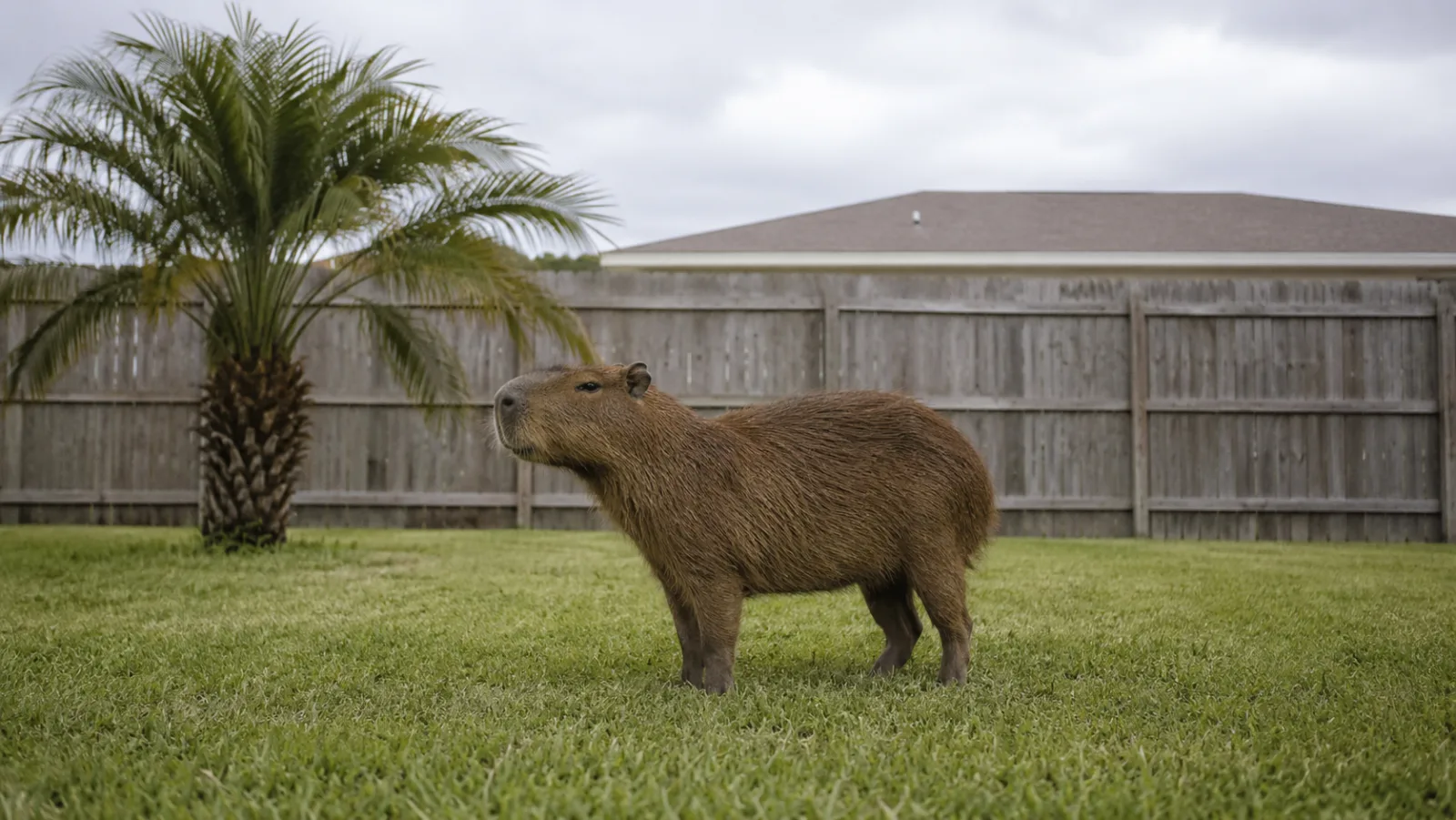
A wild capybara alone is an anomaly with a specific context: a young subordinate male that was driven out of his group by a dominant male and has not yet found a new group to join. That is a transition state, not a lifestyle. The animal is actively seeking group membership, not choosing solitude.
The Typical Wild Capybara Group
Animal Diversity Web describes stable capybara groups averaging around 10 individuals, with a range that can go higher depending on habitat quality and season. The group has a clear composition:
- One dominant male: controls access to females during mating season; has priority at feeding sites; does most of the scent marking
- Subordinate males: live within the group but defer to the dominant male; juveniles and young adults fill this role
- Females: form the stable core of the group; female kinship ties are important for group cohesion
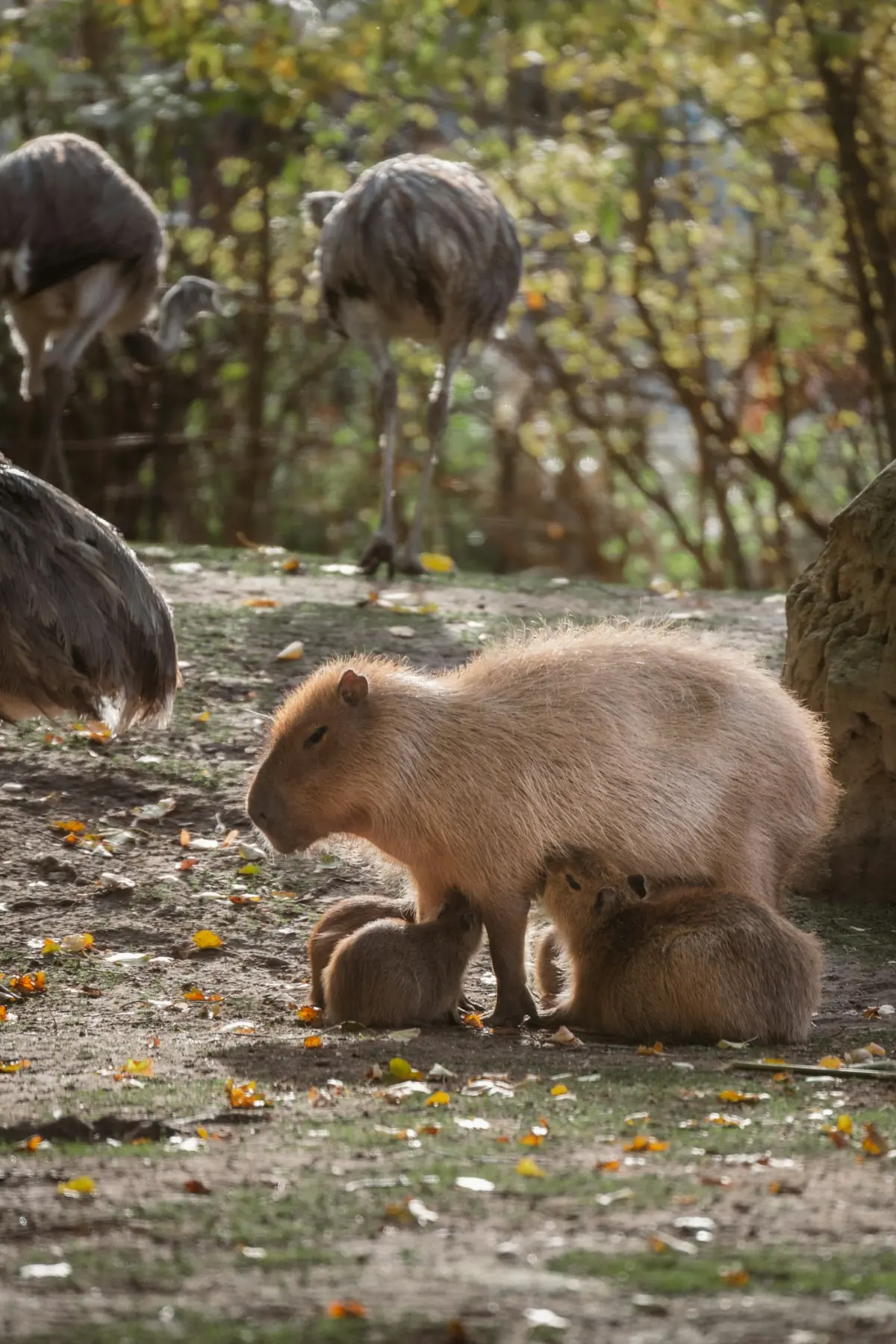
- Young: capybara young are precocial (born able to walk and graze) and are communally nursed by group females
The group occupies a home range that includes grazing areas, water access points, and resting sites. Britannica notes that groups generally do not defend exclusive territories — ranges can overlap with neighboring groups. What the group defends is access to resources within the range, particularly during competition.
| Group component | Role | Notes |
|---|---|---|
| Dominant male | Breeding access, scent marking, group defense | Changes through challenge from subordinate males |
| Subordinate males | Buffer in predator scenarios, secondary breeding | Often younger or smaller animals |
| Females | Core group cohesion, communal nursing | Group stability often tracks female relationships |
| Young | Vulnerability pool that group protects | Stay close to adults; communal care observed |
| Loner males | Transitional state, seeking group entry | Temporary status, not a natural long-term lifestyle |
Social Structure Inside The Group
Capybara groups are not egalitarian. There is a clear dominance hierarchy, maintained primarily through behavioral signals rather than constant fighting: body posture, scent marking (particularly from the morrillo gland on the male’s snout), vocalizations, and subtle approach/avoidance patterns.
The dominant male does most of the scent marking in the home range and has priority access to females during mating season. Subordinate males exist in a more complex social position — they gain the group’s predator protection benefits while accepting their secondary status. The AZA Capybara Care Manual notes that group dynamics in captive situations can create management challenges when multiple adult males are present, because subordinate males may be harassed or excluded from key resources by dominant animals.
Female relationships are less hierarchically simple in the published literature, but females are described as the stable social core of the group. Male membership turns over more frequently as dominant males are challenged and replaced.
Dry Season Aggregations: When The Group Gets Big
IUCN Red List and Animal Diversity Web both note that capybara group sizes can expand dramatically during the dry season, when multiple groups are forced to share shrinking water sources. Groups that maintain discrete home ranges during the wet season may aggregate into clusters of 50-100 individuals or more around remaining water bodies.
These aggregations are temporary and driven by resource concentration rather than genuine social merger. When the wet season returns and water becomes plentiful again, the aggregations break up and smaller stable groups re-establish their home ranges.
San Diego Zoo Wildlife Alliance notes that capybaras are social and often seen in large groups — the zoo context typically shows the stable core group rather than the dry-season aggregation, but both states represent normal capybara social behavior.
Why A Single Capybara Is Wrong
This is the most practically important part of the social structure picture. The capybara’s behavioral system is built around the group:
- Predator vigilance: distributed across group members; no single animal can maintain 360-degree threat monitoring alone
- Alarm communication: the bark alarm system only functions if there is a group to receive and respond to it
- Social grooming: mutual grooming between group members maintains social bonds and has physiological calming effects
- Behavioral context: dominance relationships, play behavior, resting proximity — all require other capybaras to function
A single captive capybara cannot perform most of these behaviors. The result is not a simplified, lower-maintenance animal. It is an animal running its behavioral system in a context where the system cannot operate correctly. Over time, this manifests as chronic stress: hypervigilance, repetitive movements, reduced appetite, and behavioral problems.
The AZA Capybara Care Manual is explicit: capybaras should be kept in social groups in captive settings. This is not optional enrichment. It is a welfare baseline. Anyone considering capybara ownership starting from a plan of one animal is starting the welfare planning wrong.
What Group Living Looks Like In Captivity
Good captive capybara management maintains a minimum of two animals, with a small group preferred. San Diego Zoo and Smithsonian’s National Zoo both maintain capybaras in social groups. The Smithsonian’s care page notes their group living arrangement as a standard management approach.
Group dynamics in captivity require active monitoring. Multiple adult males without adequate space and resource distribution can develop conflict that the AZA manual identifies as a management issue. Female-only or mixed-sex groups with careful introductions are typically more stable. Young animals introduced to established groups need a managed introduction period.
For people considering capybara ownership — which requires legal research first, as covered in the state-by-state guides — the social requirement means the minimum viable plan starts with two animals, appropriate space, and a management approach that accounts for group dynamics. Starting with one is not a smaller version of the right plan. It is a different and inadequate plan.
The ownership guide covers the broader commitment, and the care guide includes the space and enclosure requirements that the group minimum implies.