Cafes where a capybara actually turns up, cafe-style encounters that sell you a table and a timer, and capybara-themed cafes with no animal in the building at all – labelled, so you know which one you are booking. The Americas first, then Asia, where the format actually comes from.
A matcha and Vietnamese coffee bar in Folsom, California, built around capybara mascots and a lot of plushies. Open daily until nine, and there is not a live capybara in the building.
A capybara-themed boba and ramen house outside Chicago with fifty-plus claw machines and a photo booth. Chaotic, open until eleven, and entirely capybara-free in the animal sense.
Texas finally got one. Thirty minutes with Mickey and Minnie, an hour in a waterfall pool, and a cafe menu — reservation only, Monday to Thursday, an hour north of Dallas.
The St. Augustine team's second Florida location, on the other side of the state. Same small-group format, same ambassador animals, considerably easier to get to if you are anywhere near Tampa.
A Marana ranch outside Tucson that claims the largest group of friendly capybaras in the United States. Private bookings only, from $200, with a genuinely cheap local rate one Sunday a month.
Miami's $85 hand-feeding session, four slots a day, inside a park you were probably visiting anyway. No cafe, no coffee, just eighty-five dollars and a tray of snacks.
A capybara-themed boba and soft serve shop in downtown Vancouver, Washington. Note the state — this is the cafe that keeps getting mistaken for a Canadian one that does not exist.
A working Florida hay farm that sells a 45-minute private capybara encounter for $55, coffee included. The cheapest genuine hands-on capybara time we have found in the state.
The Idaho capybara cafe attached to a petting zoo. Two capybara brothers, Mario and Miguel, a jungle-themed room, and the most transparent pricing in the format.
Georgia's first capybara cafe, sitting in Helen's Bavarian-themed downtown. Scheduled sessions, a wildlife-park partnership, and a menu that includes wine slushies.
The Panama City Beach dessert cafe where the capybaras roam the garden seating and the sloths get their own private lounge. Evening hours, gelato, no walk-in guarantee.
The mid-Atlantic option, formerly Barn Hill Preserve's Delaware park. Guided tours with a capybara feeding add-on, a short drive from the Delaware beaches.
Orlando's answer to the capybara cafe. Not a cafe at all, but a low-cost meet-and-greet on an island full of flamingos, tacked onto a park you were probably visiting anyway.
A plushie-buried Korean-style drinks counter on Sainte-Catherine with two or three seats, capybara merch, and nothing on the menu over eight dollars. Takeout in practice.
A small Ukrainian-run coffee shop in Bloor West Village named after the animal, with a green wall of framed capybara art and a turf patio. Closed Mondays, closes at five, no capybaras.
One of Bangkok's oldest animal cafes, out on Sala Thammasop. Free to walk in, pay only if you want to feed something, and the capybaras wander where they like.
A capivara-themed cafe built into the Rio Pinheiros cycle path in São Paulo, funding the NGO that protects the wild capybaras living on the riverbank about thirty metres away.
Peru's capybara cafe, in the Cayma district of Arequipa, with a second counter inside the mall. Waffles, desserts, Peruvian coffee, open until half nine, and no actual capybaras.
Two Tokyo branches, both rated 4.9, three capybaras a room, free refills and a welfare-and-education framing that most of this format does not bother with.
The cafe that put capybaras and cats in the same business, in Kichijoji, with a second branch on Takeshita-dori. A free drink, a feeding, and a cat somewhere in the mix.
A family restaurant in Querétaro that announced Mexico's first live-capybara sessions, got publicly taken apart for it, and appears to have quietly not done it. The food is fine. The story is the point.
Two Bangkok branches running structured thirty-minute sessions, plus outposts on Koh Samui and Koh Phangan. The most organised version of the format in Thailand.
A capybara-themed hotpot restaurant in Taipei where you eat first and feed the capybaras afterwards. Opened late 2025, and there is nothing else like it in this directory.
Taiwan's best-known capybara cafe, in Tucheng, where NT$200-400 gets you a meal, a drink and twenty minutes with two capybaras and a very confident duck.
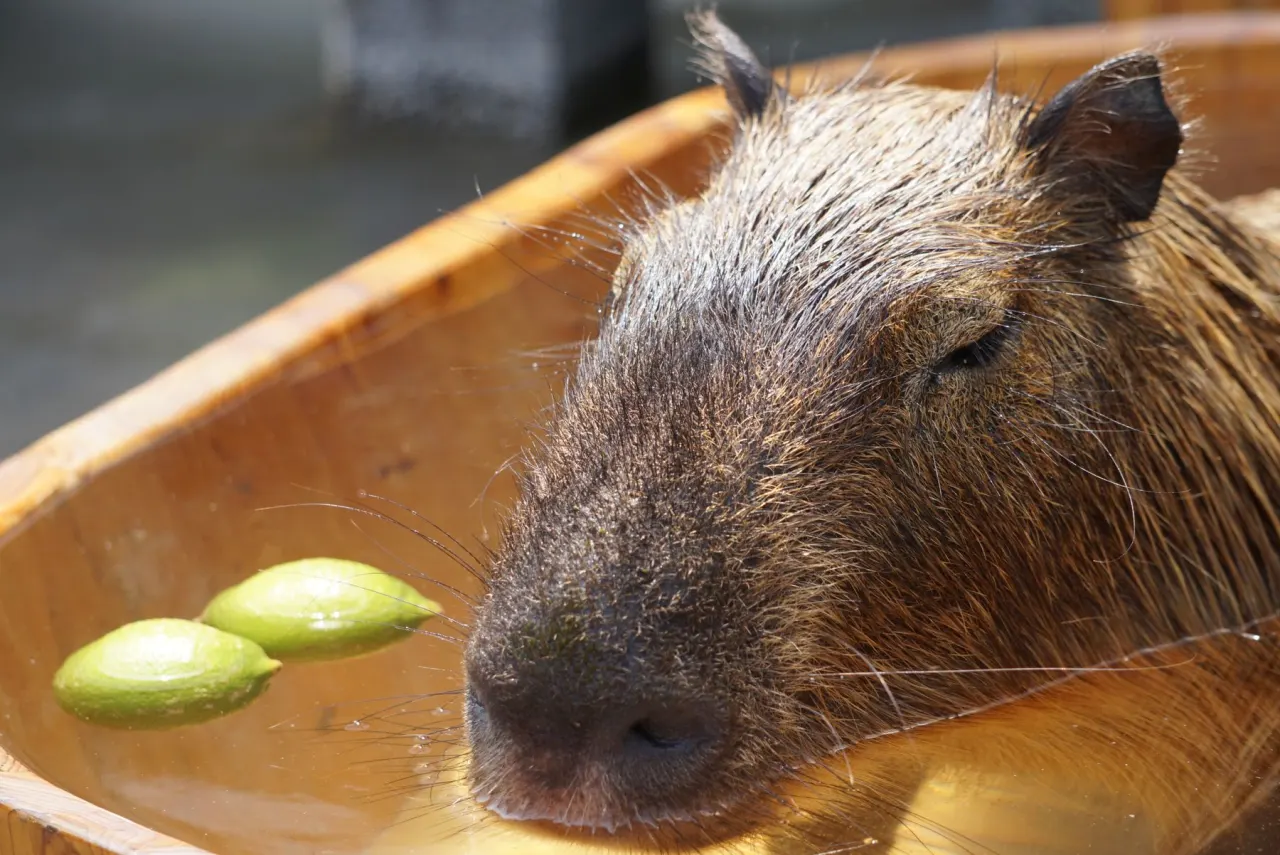
A capybara hot spring in the middle of Harajuku, four residents, 4.9 stars across four and a half thousand reviews. The most-reviewed capybara venue on this site by a factor of three.
Europe's capybara cafe is a burger bar on Avinguda del Paral·lel with plushies on the shelves and a Doble Kapy Smash on the menu. There is no animal, because in Europe there never is.
Bangkok's flagship capybara cafe, 450 baht all-in for as long as you like, with meerkats and corgis thrown in. The enclosures are small and the reviews say so.
Argentina's first capybara-themed specialty cafe, in Recoleta. Excellent coffee, capybara-shaped alfajores, a wall covered in customer drawings – and, to be clear up front, zero actual capybaras.
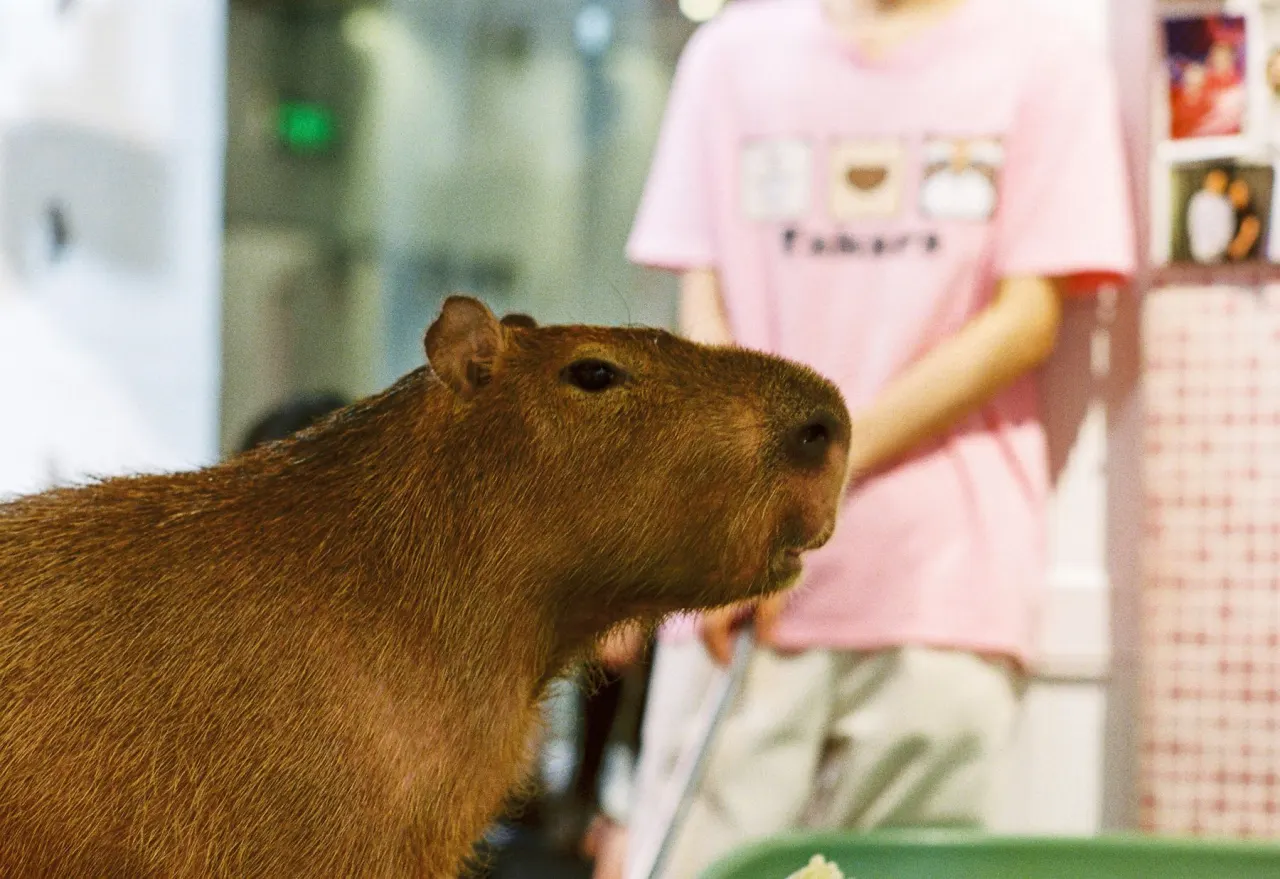
The real deal, in Tokyo. A reservation-only cafe where two capybaras wander the floor while you drink espresso and hand them vegetables. This is what the US spots are imitating.
No spots match that combo yet. Loosen a filter – the capybara population is finite.
Quick answer: in the US, cafes with real capybaras cluster in Florida – The Capybara Cafe in St. Augustine and St. Petersburg, Gatorland's $15 walk-up in Orlando, Violette Hill's $55 farm session near Mount Dora – plus Capyfriends (GA), Capy Hour (ID) and the Capybara Bistro (TX). But the format belongs to Asia: Tokyo alone has seven capybara cafes, led by Capybara Onsen Moffu in Harajuku on 4.9 stars from over 4,500 reviews, and Bangkok will sell you an afternoon for 450 baht. Everything in Canada, Latin America and Europe is themed only – no live animals anywhere. Book ahead; the good ones sell out weeks out.
Barely. True sit-down capybara cafes are mostly in Japan, like Cafe Capyba in Tokyo. In the US the closest thing is cafe-style paid encounters – The Capybara Cafe in St. Augustine, Florida is the real deal, and places like Gatorland near Orlando run cheaper meet-and-greets.
Where can I hand-feed a capybara?
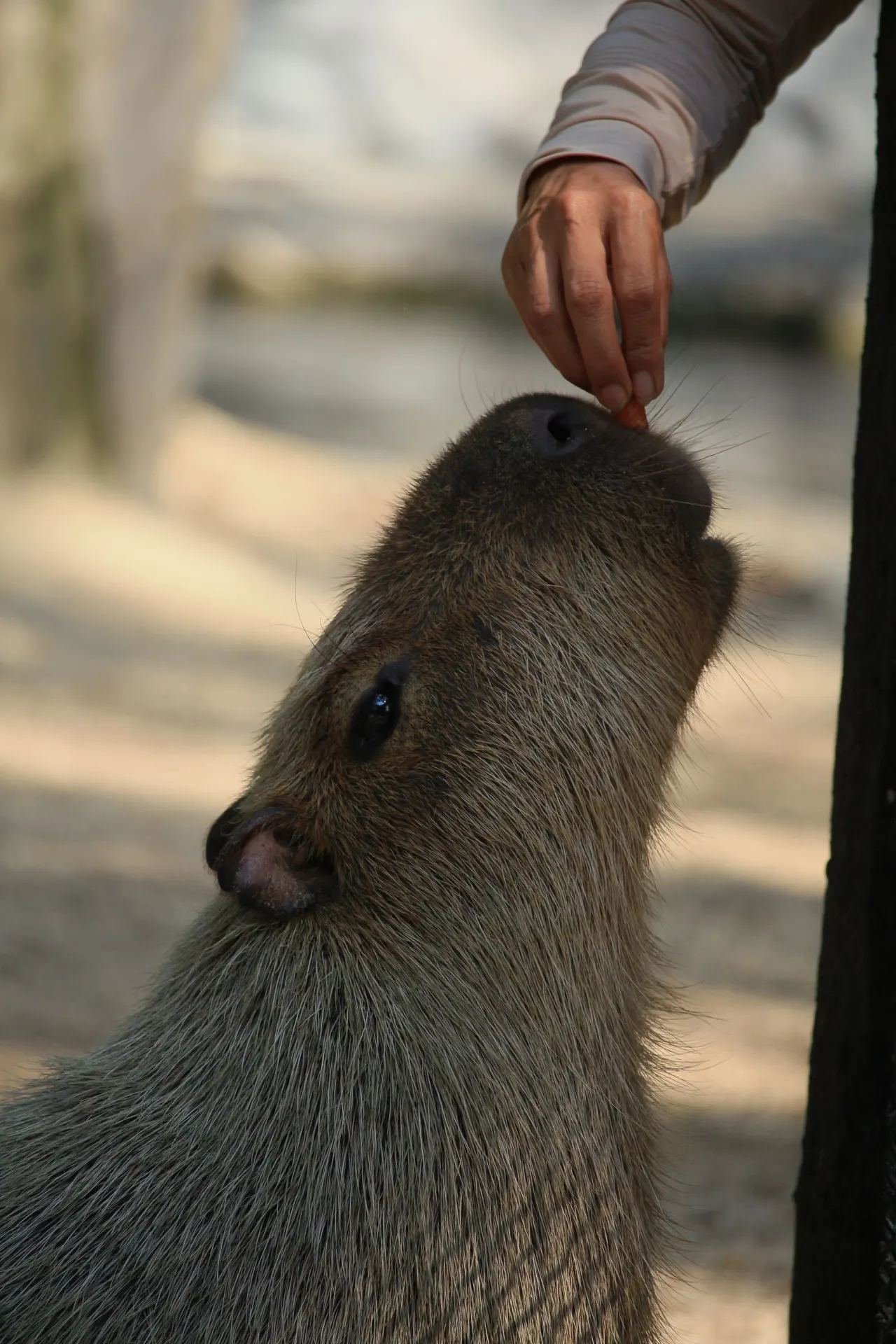
Most spots in this directory are hands-on, meaning you can feed and pet the capybaras under supervision. Check the access line on each card: hands-on means you can touch one, viewing only means you can just look, and themed only means the venue is capybara-branded but keeps no animals at all.
Do I need a reservation for a capybara cafe?
Usually yes. The Capybara Cafe and Cafe Capyba are reservation-only and book weeks ahead; Gatorland is more of a walk-up add-on. Always confirm on the official site before you travel.
How much does a capybara cafe or encounter cost?
It ranges a lot, from roughly a $10 add-on at Gatorland to about $49 to $99 at The Capybara Cafe. The price line on each card is a rough guide.
More To Browse
Latest From The Swamp
Guides, picks, and quizzes from the front page — because a good read shouldn't dead-end.
Capybaras and otters both love water, but that is where the easy comparison ends. One is a grazing rodent. The other is a carnivorous mustelid with aquatic chaos in its bones.
Missouri's answer gets messy because people jump straight to "Class III wildlife." The current path is more careful: check MDC classification, confined-wildlife rules, local ordinances, exhibition law, and welfare.
Capybara permits are not one neat form. Depending on where you live, state wildlife rules, local zoning, animal welfare law, import rules, and USDA exhibitor rules can all enter the chat.
Minnesota's famous regulated-animal statute does not neatly answer the capybara question. DNR permits, import rules, local ordinances, exhibition law, and brutal winter care still decide the real case.
Oklahoma has wildlife breeder, import/export, and exhibitor pathways on the books. That does not make a capybara a casual yard animal. Ask ODWC before the seller gets a deposit.
Wisconsin's answer is not just law; it is winter. Captive wildlife licensing, local rules, exhibition requirements, and frozen-water reality all show up before the capybara does.
Capybara Halloween decor should feel funny, cozy, and a little haunted by snack logic. Think hot spring pumpkins, ghost-capybara silhouettes, orange accents, and zero gore. The capybara is busy.
Utah does not treat capybaras like hamsters with better branding. The current bird and mammal rule lists capybaras as controlled, which means certificate-first, paperwork-first, seller-last.
Indiana is not a clean internet yes. The real answer runs through DNR captive-wild-animal rules, class categories, facility standards, local code, and a written answer before anyone buys a capybara.
Every other province in Canada answers this by omission. Quebec put Hydrochoerus in a schedule by genus, marked it as requiring a permit, and marked the cavies a few rows above it as needing none. It is the clearest provincial answer in the country, and it is a qualified yes.
The Netherlands uses a positive list for mammals kept as pets or hobby animals. Capybaras did not make the list. Dutch bureaucracy, for once, gives the internet a very short answer.
Oregon is one of the clearer states for this question. Capybara appears on the prohibited species list, which is a deeply efficient way for a dream to meet a wall.
Cookies, yes. The cookieless kind counts pageviews and
bothers no one. Analytics, heatmaps, and an ad pixel stay
off unless you say yes. Ads run either way — saying no keeps them
non-personalized. Full story in the
cookie policy.