
Capybaras scent-mark because smelling like yourself in the correct places is useful when you live in a social group and cannot send a calendar invite.
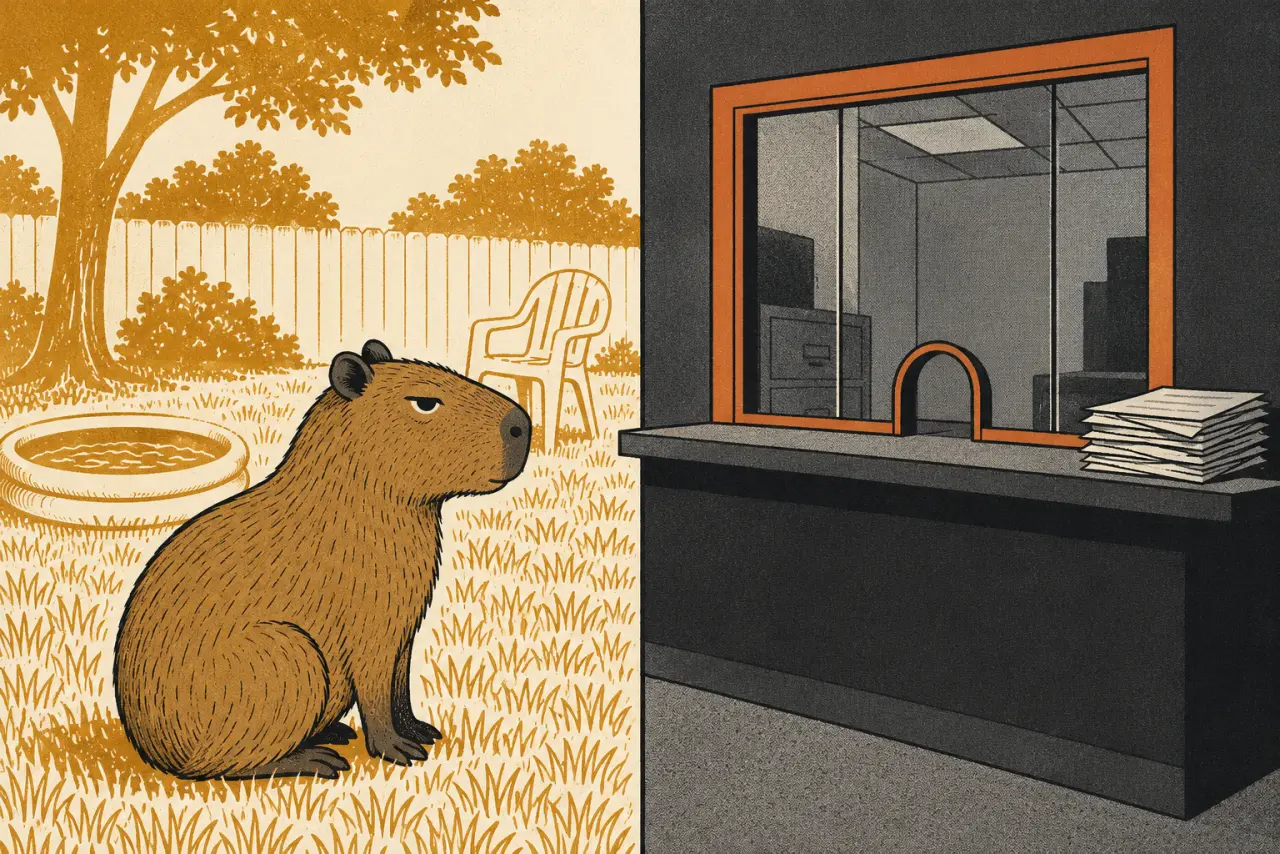
The behavior looks odd to humans: rubbing a snout on plants, marking objects, leaving chemical information where other capybaras can find it. To capybaras, that is communication. Slightly damp paperwork, basically.
Scent Marking Is Capybara Paperwork
Scent marking lets an animal leave information after it has moved on. In capybaras, that information can connect to identity, social status, reproductive condition, and space use. The JSTOR-indexed paper on scent marking treats it as socially significant behavior, not random rubbing.
If vocal calls are the loud part of capybara communication, scent is the memo stuck to the reeds.
| Behavior | What it may do |
|---|---|
| Rubbing snout on vegetation | Leaves morillo secretion |
| Marking trails or objects | Adds social information to shared space |
| Repeated marking by adult male | May connect to status or reproduction |
| Sniffing marked areas | Reading the local bulletin board |
Morillos, Anal Glands, And Rubbing Behavior
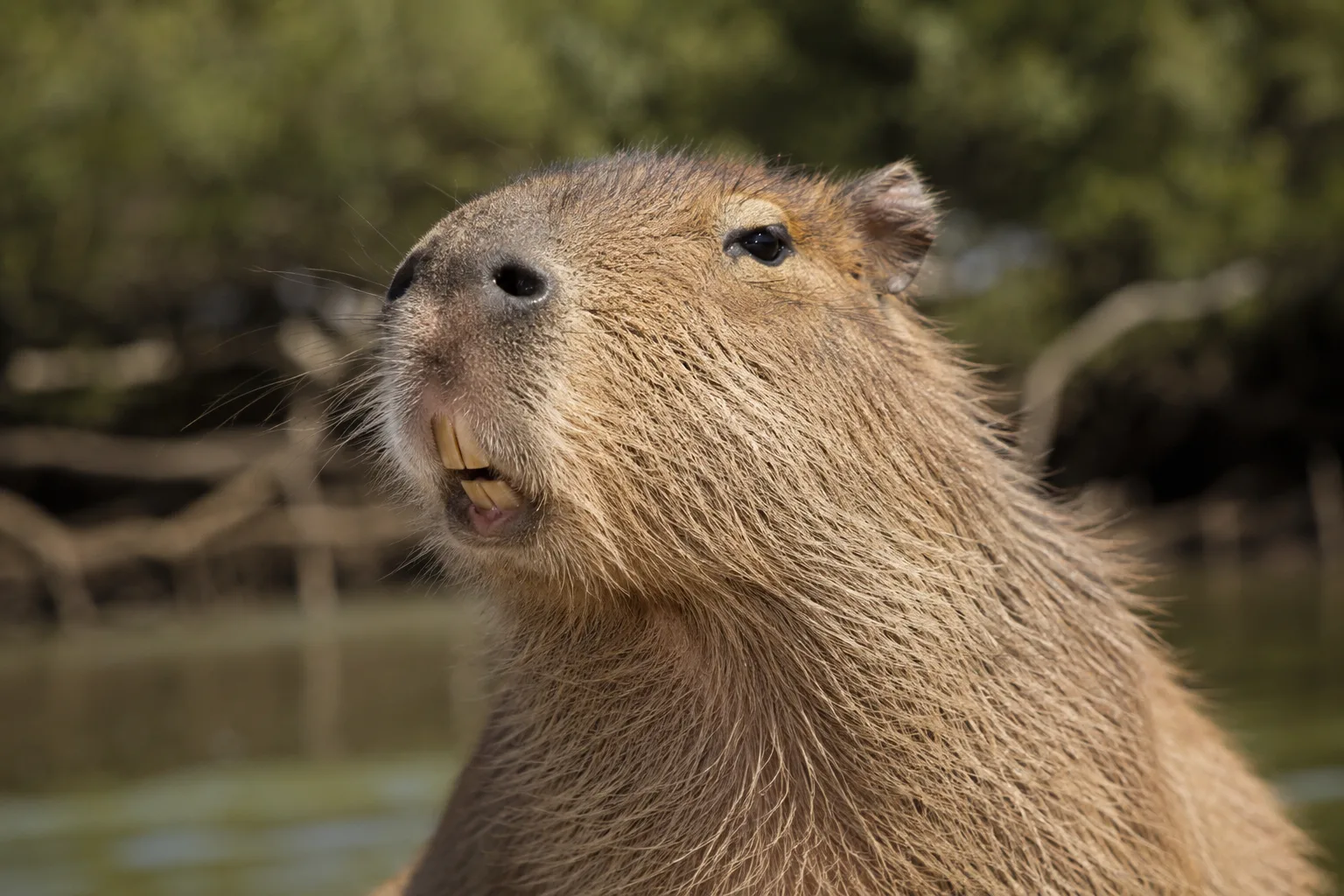
The morillo is the famous part: the raised scent gland on the top of the snout, most obvious in adult males. Research records on capybara scent marking describe males with enlarged nose glands smearing secretions on vegetation. Capybaras also have anal glands involved in scent communication.
This is where a less honest article would pretend the topic stayed cute the whole time. It did not. Biology has paperwork, and some of it is filed from the rear office.
Why Males Often Mark More
Adult males are usually the ones people notice because the morillo can become prominent. That does not mean every mark is a dramatic territorial declaration. It does mean scent is tied into capybara social life, and adult males have visible equipment for it.
In group-living animals, information matters. Who has been here? Who is mature? Who is dominant? Who is available? Who is sharing this space? A capybara cannot answer those questions with a LinkedIn profile, which is probably for the best.
What Scent Says To Other Capybaras
Humans are bad at reading capybara scent messages because we are busy inventing names like “Muffin” from 70 feet away. Other capybaras are better equipped. They can investigate marked spots and adjust behavior based on chemical cues.
That is why scent marking often appears around shared routes, vegetation, and objects. It is not a performance for viewers. It is the animal updating the room after it leaves.
The Chemistry Nobody Filmed
Scent marking is not one signal. It is a mix. The research that exists on capybara scent treats the secretions as carrying several layers of information at once, which is part of why a single mark can mean more than a single word.
The morillo secretion and the anal gland secretion are not interchangeable. They come from different glands, in different spots, and the marking behaviors that go with them look different too. A capybara dragging its rear along the ground is doing a different job than one rubbing its snout on a reed. Both are filing paperwork, just to different departments.
What makes this genuinely useful to know is that scent persists. A vocal call ends the second it leaves the animal. A scent mark sits on the vegetation and keeps working after the capybara has wandered off to chew something. That time-delay is the whole point. It lets a herd coordinate without everyone being in the same place at the same moment, which is a reasonable trick for an animal that spends a lot of its day grazing and dozing near water.
What The Behavior Is Not
Most of the confusion around scent marking comes from reading human meaning into it. People see a capybara rubbing its face on a log and reach for the nearest human comparison, usually the wrong one. Here is where the popular read tends to drift from what the behavior actually does.
| Myth | Better answer |
|---|---|
| It is just scratching an itch | The snout drag deposits morillo secretion; it is communication, not grooming |
| Only dominant males do it | Marking is part of normal social life; males are simply more visible because the morillo is larger |
| A mark equals a territorial threat | Scent can signal identity, status, reproductive state, or space use, not only “stay out” |
| It means the enclosure is dirty | Marking is normal behavior; hygiene is a keeper’s job, not a verdict on the animal |
| The animal is sick or stressed | Scent marking is baseline behavior; absence of it is more likely to concern a keeper |
The honest opinion, since the brief asks for one: the “tiny landlord” framing is a joke that happens to be useful. Capybaras are not defending property in any human sense. But the instinct to label space, log who passed through, and leave a standing record really does resemble the least loved parts of running a building. The comedy is in the resemblance, not in pretending capybaras file taxes.
What To Actually Watch For
If you spend time around capybaras, at a zoo or a sanctuary, scent marking is one of the more readable behaviors once you know the shape of it.
- A snout pressed and dragged along vegetation, an object, or a trail edge. That is morillo work.
- Repeated marking along the same route. The animal is updating a path other capybaras use, not redecorating at random.
- An adult male with a visibly raised, sometimes darker patch on top of the snout. That is the morillo, and it tracks with more frequent marking.
- Other capybaras stopping to sniff a marked spot before moving on. That is the reading half of the system, the part people forget exists.
None of this needs interpretation beyond “it is communicating.” Animal Diversity Web and the AZA care manual both describe scent marking as ordinary capybara behavior, not a problem to manage away. The mistake is overreading a single mark as a dramatic event. It usually is not.
Why This Matters In Zoos
In a zoo, scent marking is normal behavior that keepers plan around. Enclosures need cleanable surfaces, appropriate substrate, social management, and enough complexity for normal exploration. The AZA care manual spends far more time on these practical realities than a fan article can.
Because capybaras are highly social herd animals, the scent system is also a group system. Solitary housing is a recognized welfare stressor, and a lone capybara has nobody to read its marks anyway. The social context is not a side note. It is the reason the behavior exists.
For visitors, the move is simple: notice without judging. If a capybara rubs its face on a branch, it may be leaving a message. You do not have to understand the full sentence to appreciate that it is speaking capybara.