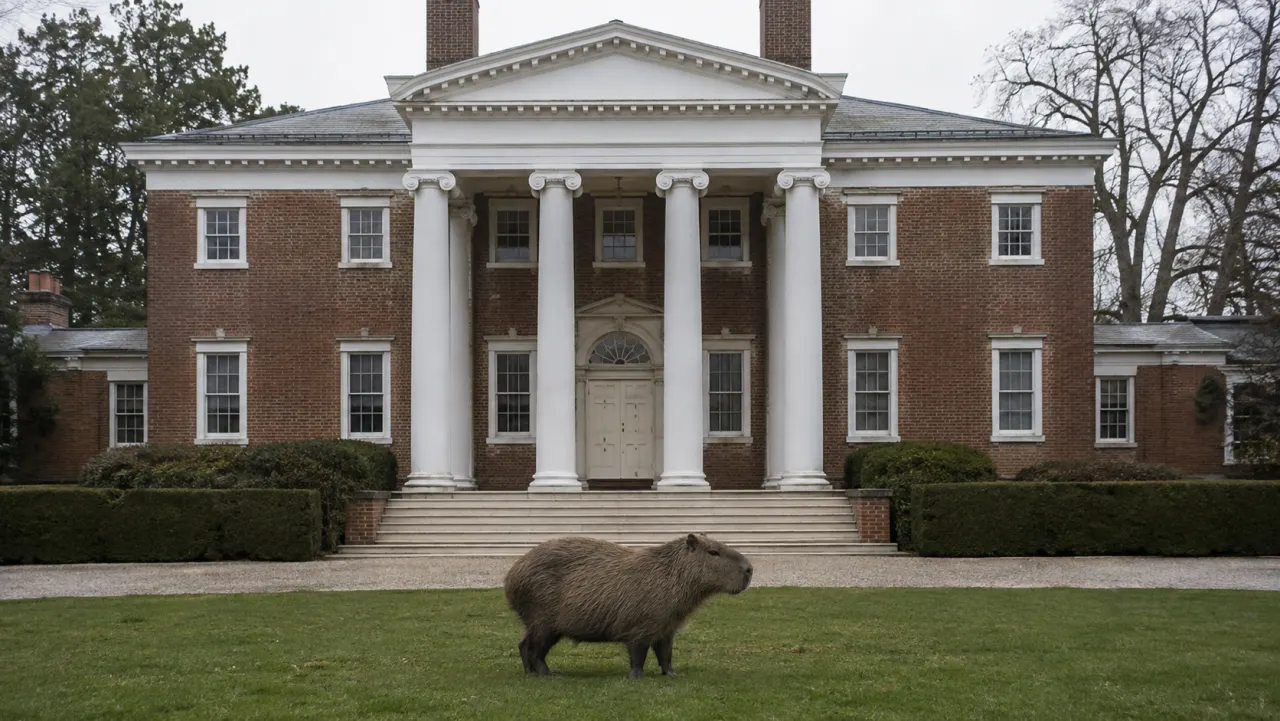
Capybaras are not quiet. They are quiet compared to howler monkeys or domestic dogs, yes. But a capybara group is a communicating entity, and the signals are active when the group is active. The popular image of the permanently serene capybara produces an expectation of silence. Reality produces a low-grade babble of purrs, clicks, whistles, and the occasional sharp bark that makes everyone near the enclosure look up.
Understanding how capybaras communicate changes what you see when you watch them.
The Seven Capybara Vocalizations
Animal Diversity Web and the AZA Capybara Care Manual both document multiple distinct capybara vocalizations. The full catalog has at least seven recognized sound types, each with identifiable social contexts:
| Vocalization | Description | Context |
|---|---|---|
| Alarm bark | Short, sharp, single bark | Perceived threat; triggers group orientation and flight |
| Purring | Low, continuous rumble | Contentment; social contact; grooming; rest |
| Whistling | Soft, high whistle | Contact call; mother-young communication |
| Clicking | Rapid dental click | Low-level alarm or annoyance; pre-conflict signal |
| Chattering | Rapid tooth chattering | Threat display; dominance assertion; aggression signal |
| Whining/crying | Continuous distress call | Infant distress; isolation; pain |
| Grunting | Short grunt series | Low-intensity social interaction; movement coordination |
The alarm bark is the most behaviorally significant call. San Diego Zoo Wildlife Alliance and Smithsonian’s National Zoo both note that capybaras are alert animals that respond to their environment. The bark is what activates the group’s collective flight response — a single alarm call from one individual can put a group of 20 into the water within seconds.
The purring is the pleasant end of the communication spectrum. It is distinct from the alarm bark in every dimension: low rather than sharp, continuous rather than single, emitted during calm social contact rather than threat. A purring capybara in a group is the baseline “system running normally” signal.
Scent Communication: The Morrillo And Beyond
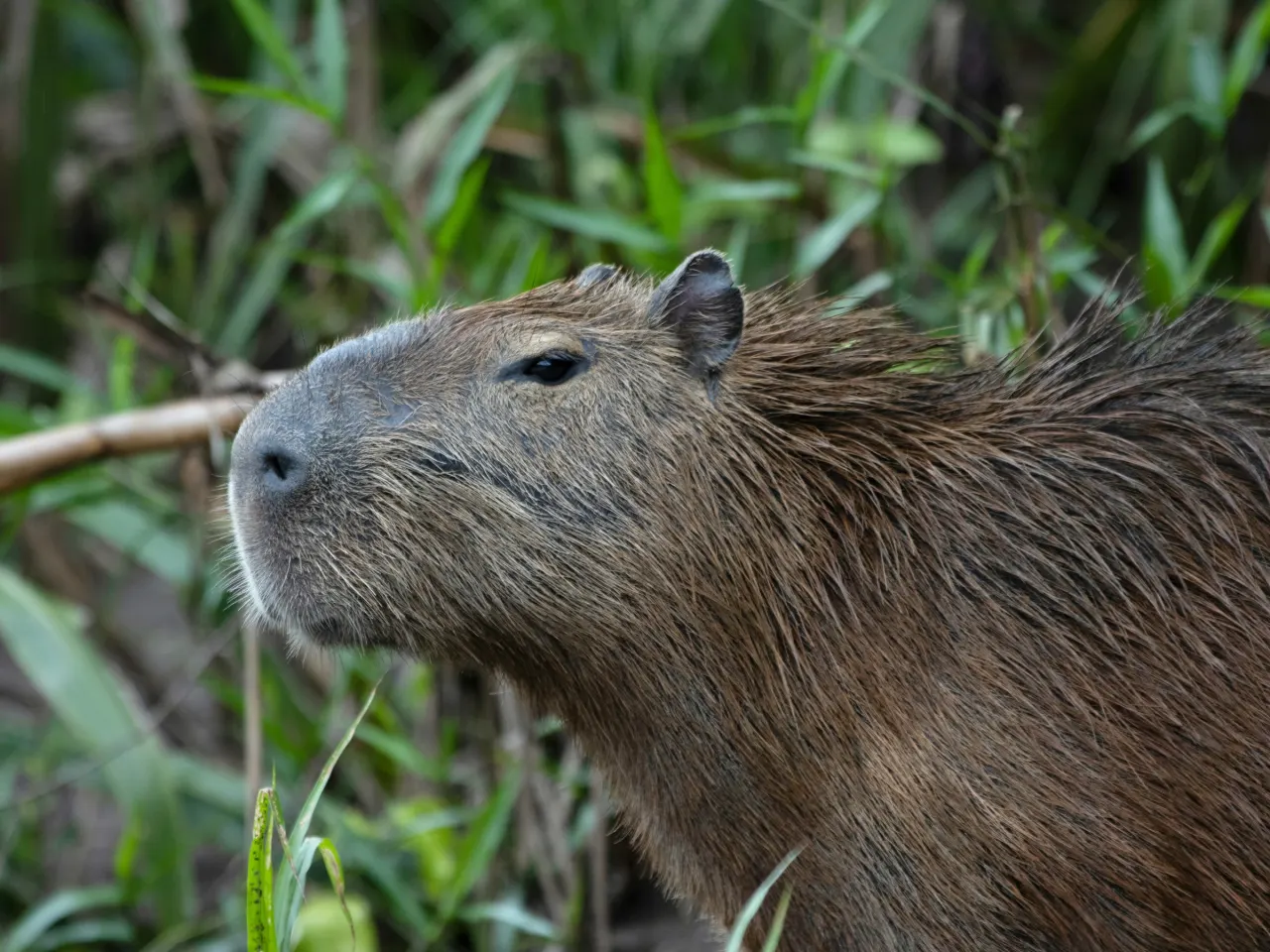
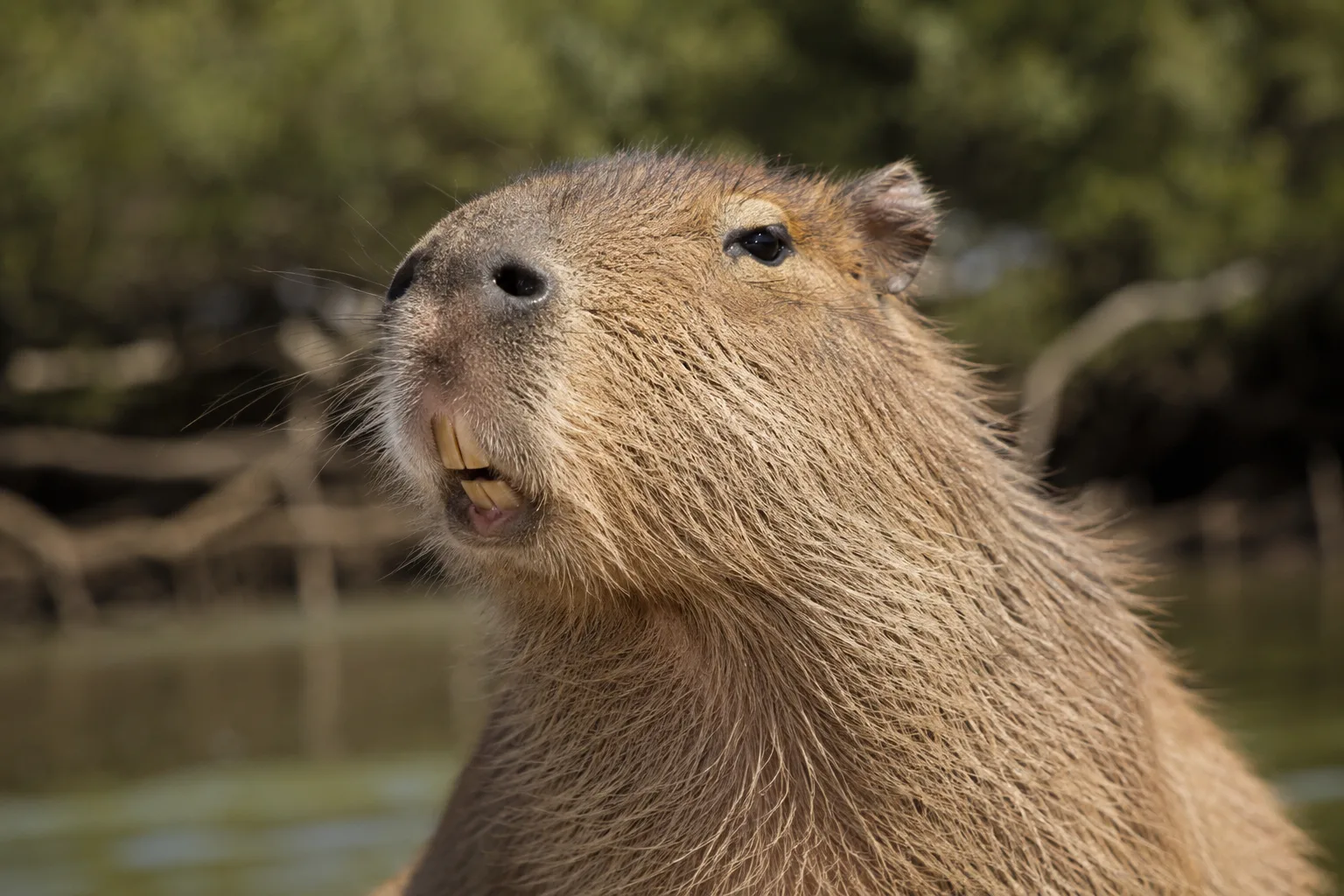
The morrillo is the feature of capybara biology that most casual observers have never heard of, despite being visible in any high-quality capybara photograph. It is a large, hairless, rounded gland located on the top of the snout — unique to the genus Hydrochoerus and one of the most prominent external glands in any rodent species.
The morrillo secretes a whitish, sebaceous material that males rub on vegetation, rocks, soil, and any available vertical surface to mark their territory and communicate social status. The marking behavior is particularly intense in dominant males during the breeding season. The gland is much larger and more active in dominant males; subordinate males have smaller morrillos as a reflection of their hormonal status.
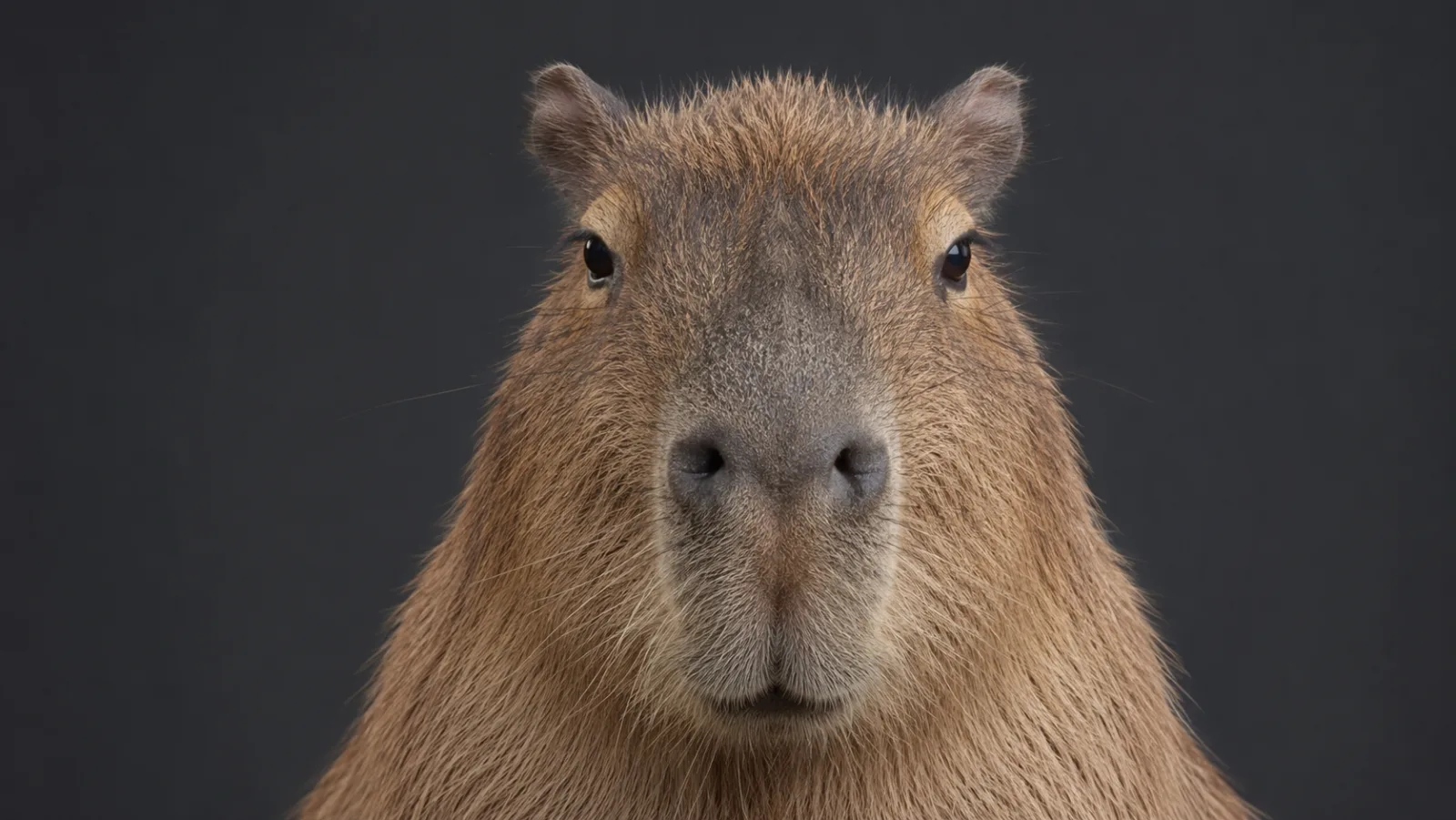
The morrillo is visible in photographs as a dark, wet-looking bump on the top of the snout. It tends to be more prominent in adult males and more subtle in females and juveniles. Looking for the morrillo is one way to identify dominant males in a group at a zoo — the larger, more visually prominent gland is usually on the dominant animal.
Capybaras also have anal scent glands used in ground marking, and scent glands on the face adjacent to the eyes that contribute to the scent profile the animal leaves when rubbing its head on objects. The morrillo is the most dramatic, but scent communication is a multi-channel system.
Body Language: What To Watch
Vocal and scent communication are supplemented by a body language system that carries significant social information. Key body language signals:
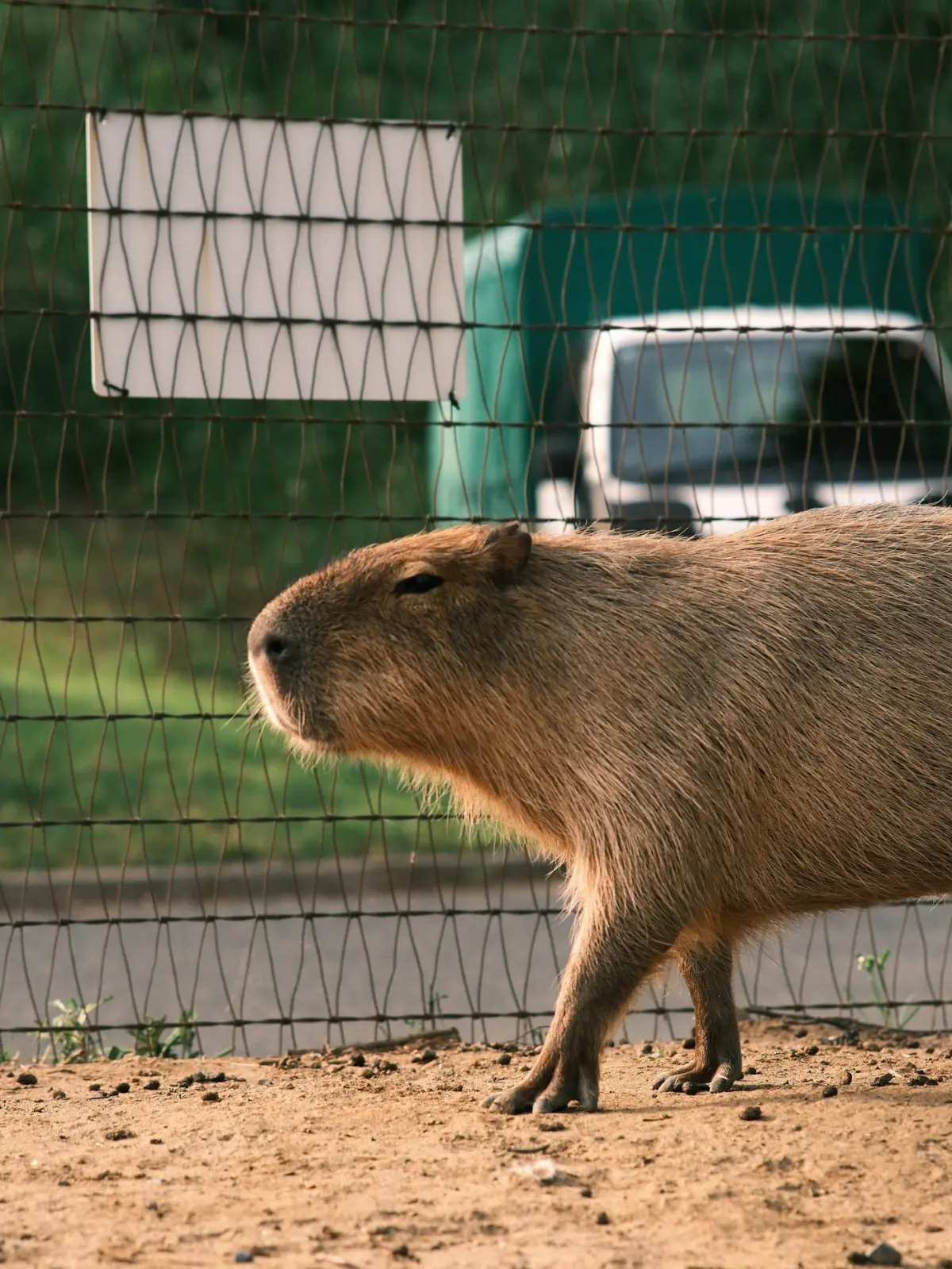
Alarm posture: head raised sharply, ears rotated forward, body still, gaze fixed on the source of concern. This is pre-alarm-bark posture — the animal is assessing whether to vocalize. Watch for this at zoos; when one animal does it, look for others to orient in the same direction within seconds.
Dominance display: stiff-legged approach, head high, direct orientation toward a subordinate. The subordinate typically avoids eye contact, lowers its head, and moves away. Rarely escalates to physical contact in stable groups.
Submission posture: lowered head, body turned partly away, indirect orientation. The signal is “I acknowledge your status; I am not challenging you.”
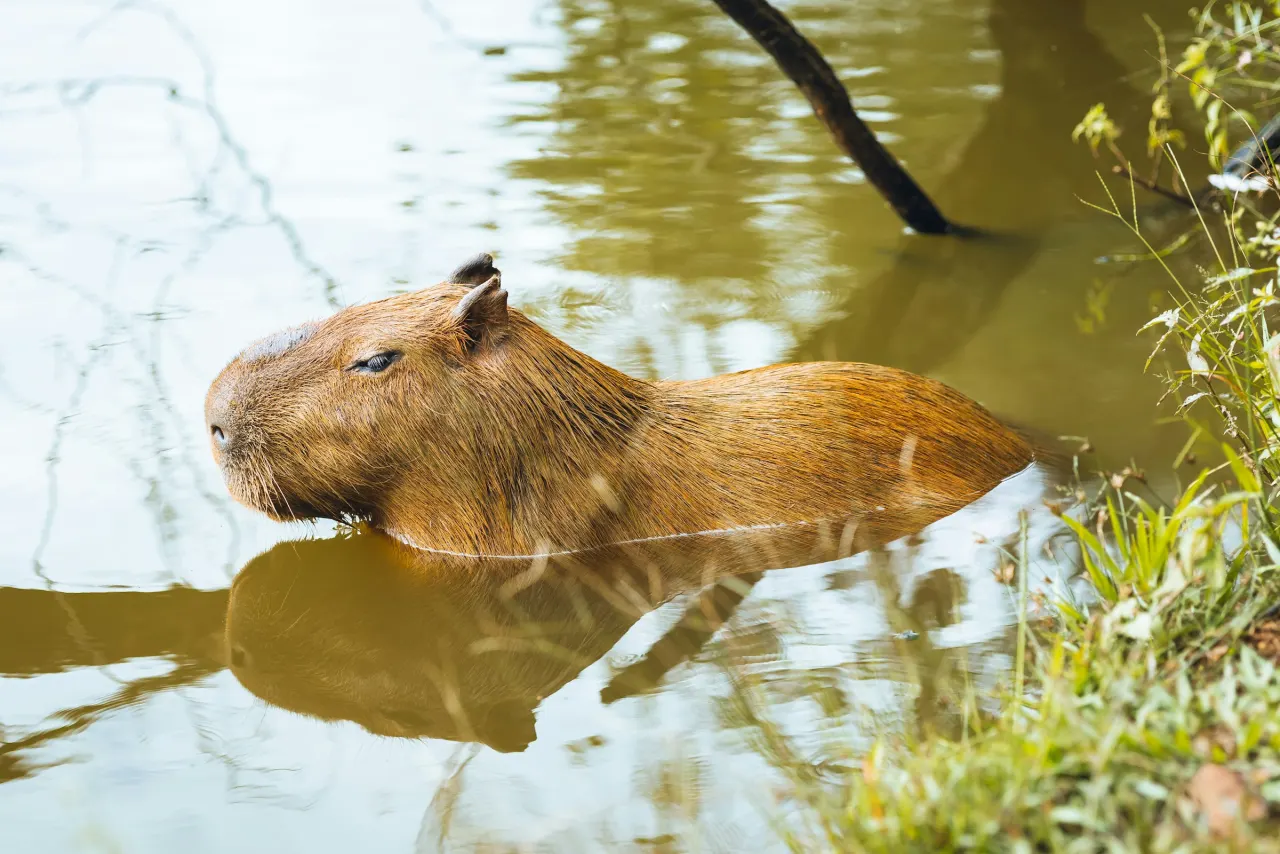
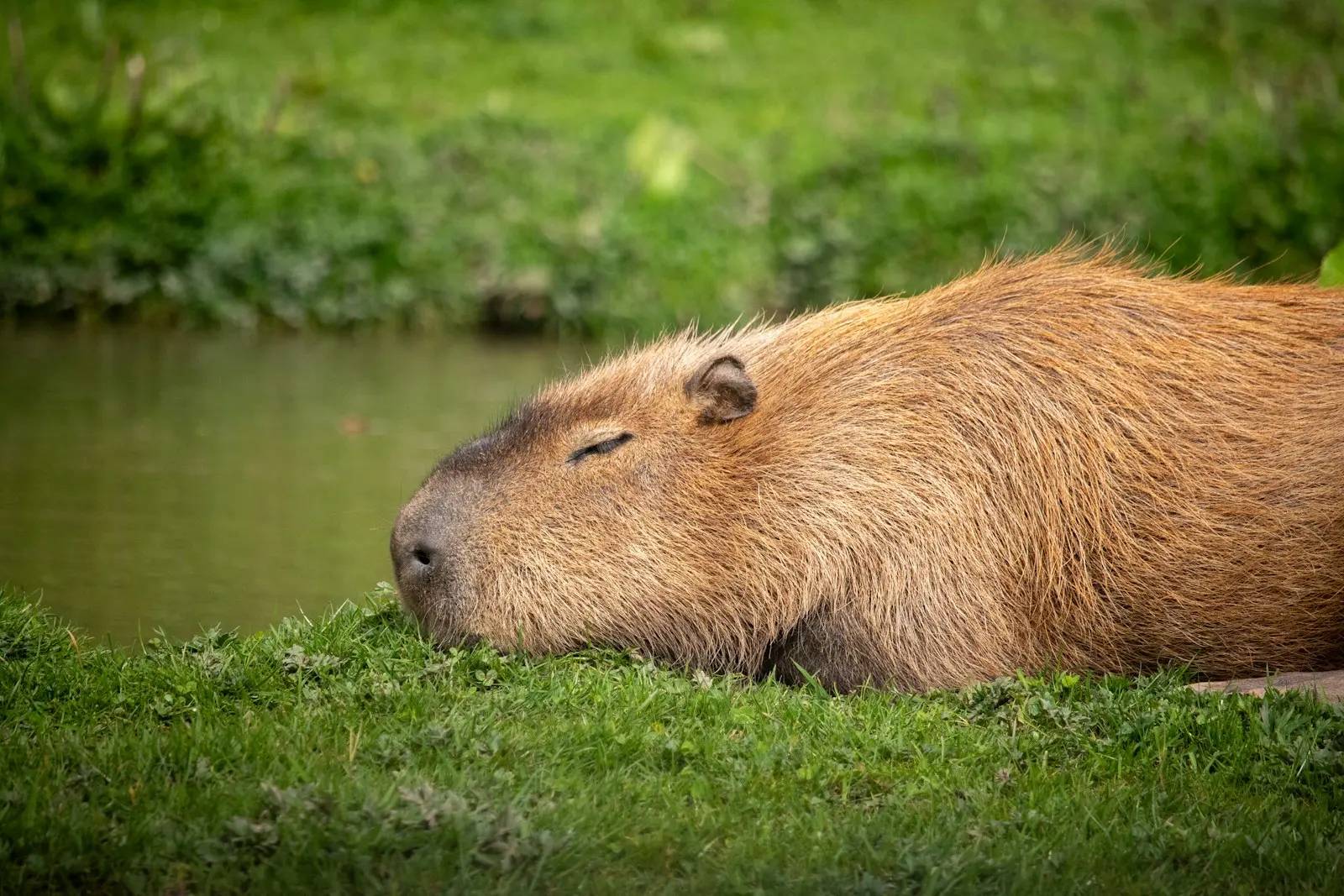
Comfort proximity: animals in good social relationships rest, groom, and graze close together with soft, relaxed body posture — no tension in the legs, head at a natural angle, not tracking anything specifically.
Tactile grooming: mutual grooming (allogrooming) between group members is common and serves both practical (parasite removal) and social (bond maintenance) functions. Animals that groom each other regularly have stable social relationships.
How Communication Works Across The Group
The integration of these channels is what makes the group function. An alarm bark from one animal triggers immediate group-level orientation — all animals look toward the calling individual and the direction it is facing. If the caller moves toward water, the group follows. If the caller returns to grazing, the group relaxes.
The system works because the group has developed individual recognition — each animal knows which group members it is hearing from, and an alarm from a reliable vocalizer is taken more seriously than the same bark from a young or peripheral animal. This is speculated in the capybara behavioral literature as consistent with individual recognition systems in other social mammals, though specific capybara individual-recognition studies are limited.
The scent marking system communicates information that persists after the animal has left the area. A vegetation marking with morrillo secretion tells other group members and potentially other groups about the presence and status of the marking male. This is a temporal extension of communication — not real-time signaling, but persistent-presence marking.
Misconceptions About Capybara Communication
“Capybaras don’t really communicate.” They have seven identified vocalizations and two primary scent channels. “Quiet” is relative; “non-communicating” is wrong.
“The purring means they are happy.” Purring is associated with calm, social contact situations. Interpreting it as human-equivalent happiness is an overreach, but it is a positive behavioral indicator in context.
“The alarm bark only happens when there’s real danger.” Captive capybaras alarm-bark at novel stimuli, unfamiliar visitors, sudden sounds, and other non-threatening triggers. The bark signals “I detected something unexpected,” not necessarily “I am in mortal danger.”
“You can’t tell a dominant male from the outside.” The morrillo size difference is often visible. Dominant adult males typically have a larger, more prominent morrillo than subordinates and females. At a zoo, the animal with the most noticeable snout gland is usually the dominant male.
The full communication system — vocal, scent, body language — is a reminder that what looks like a simple animal resting by water is actually running a constant social and environmental monitoring process. Watching for the communication is the difference between seeing a capybara and actually observing one. The sounds guide covers the vocal range in more depth, and why capybaras are friendly connects the communication system to the inter-species tolerance behavior.