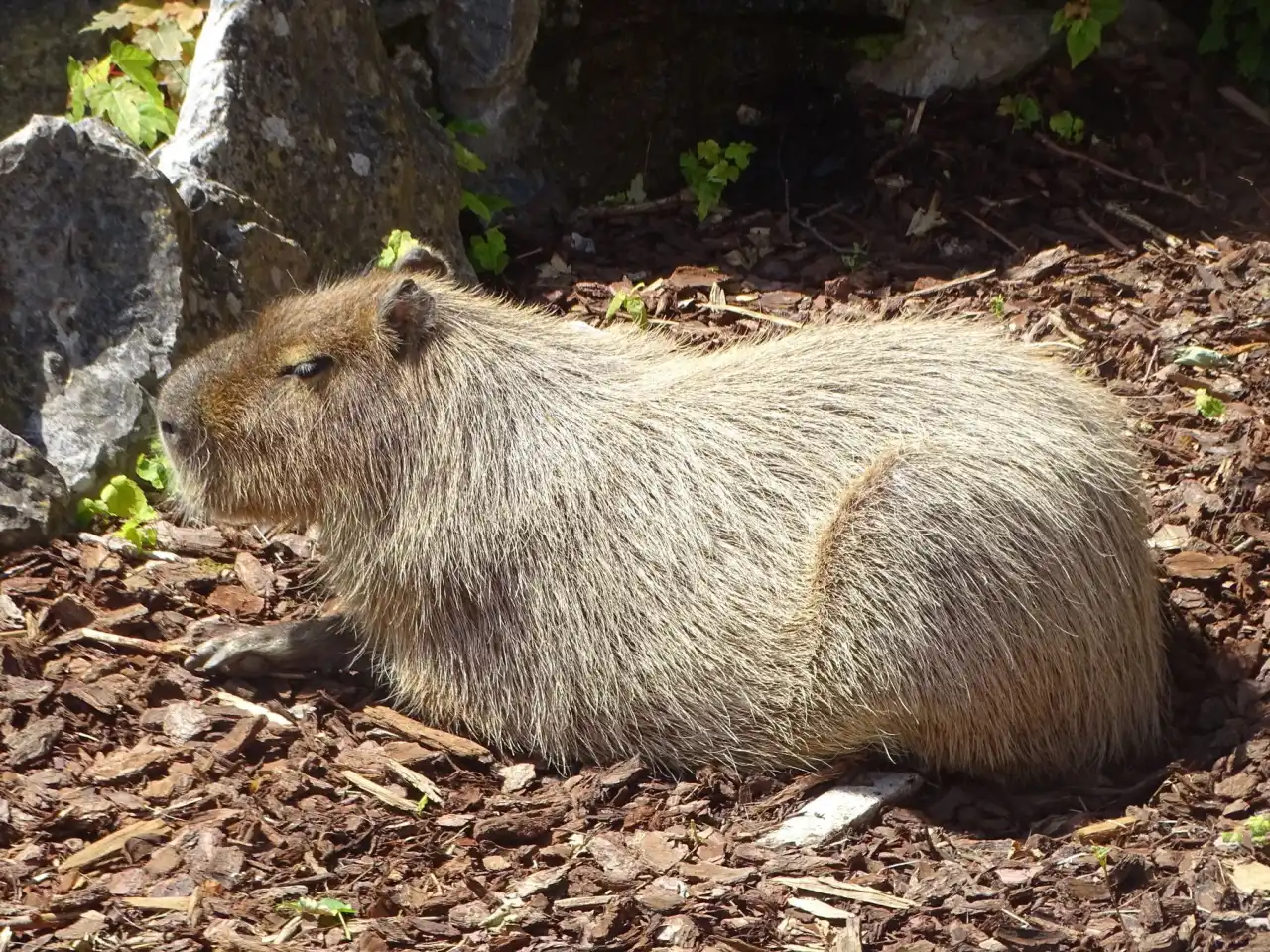
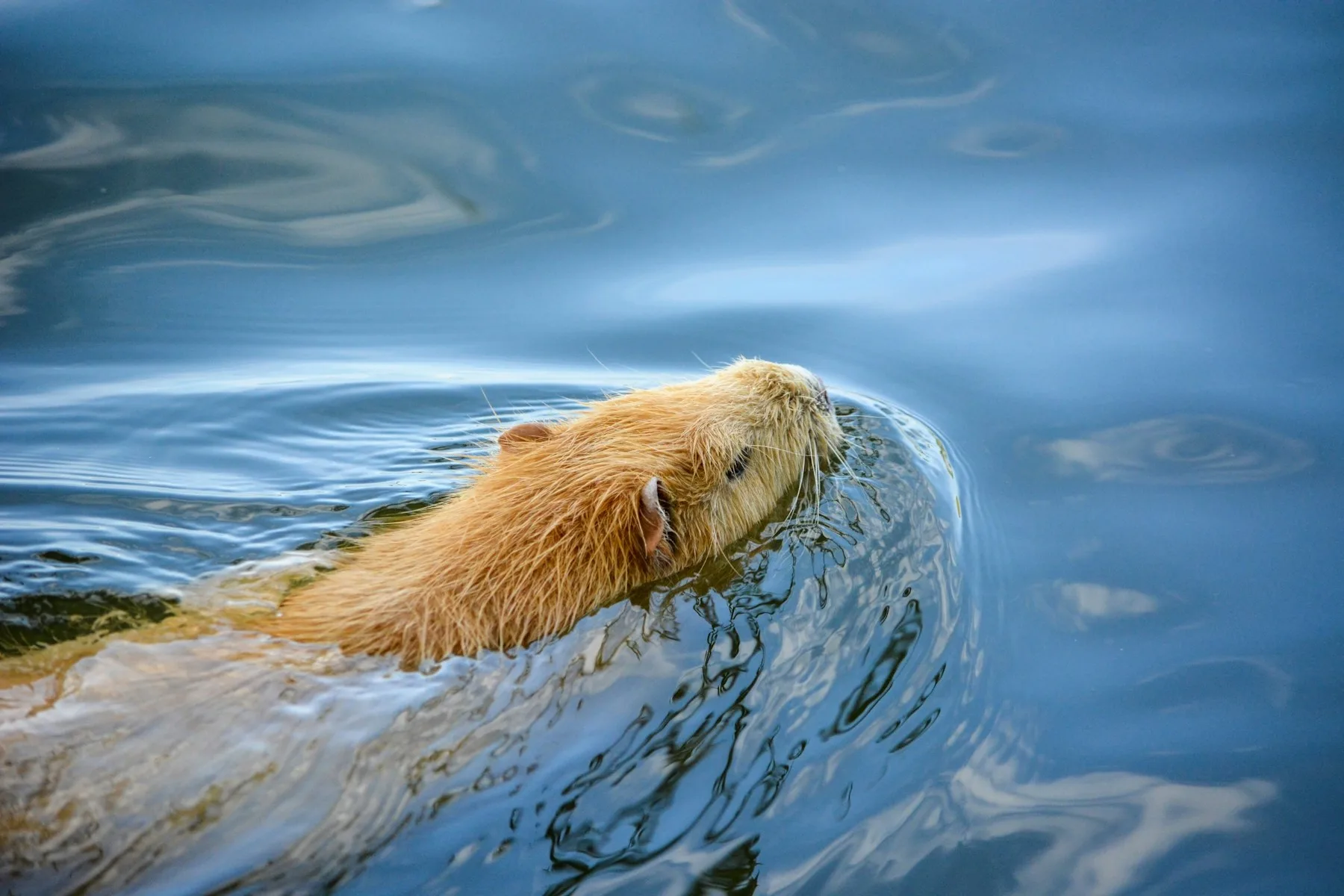
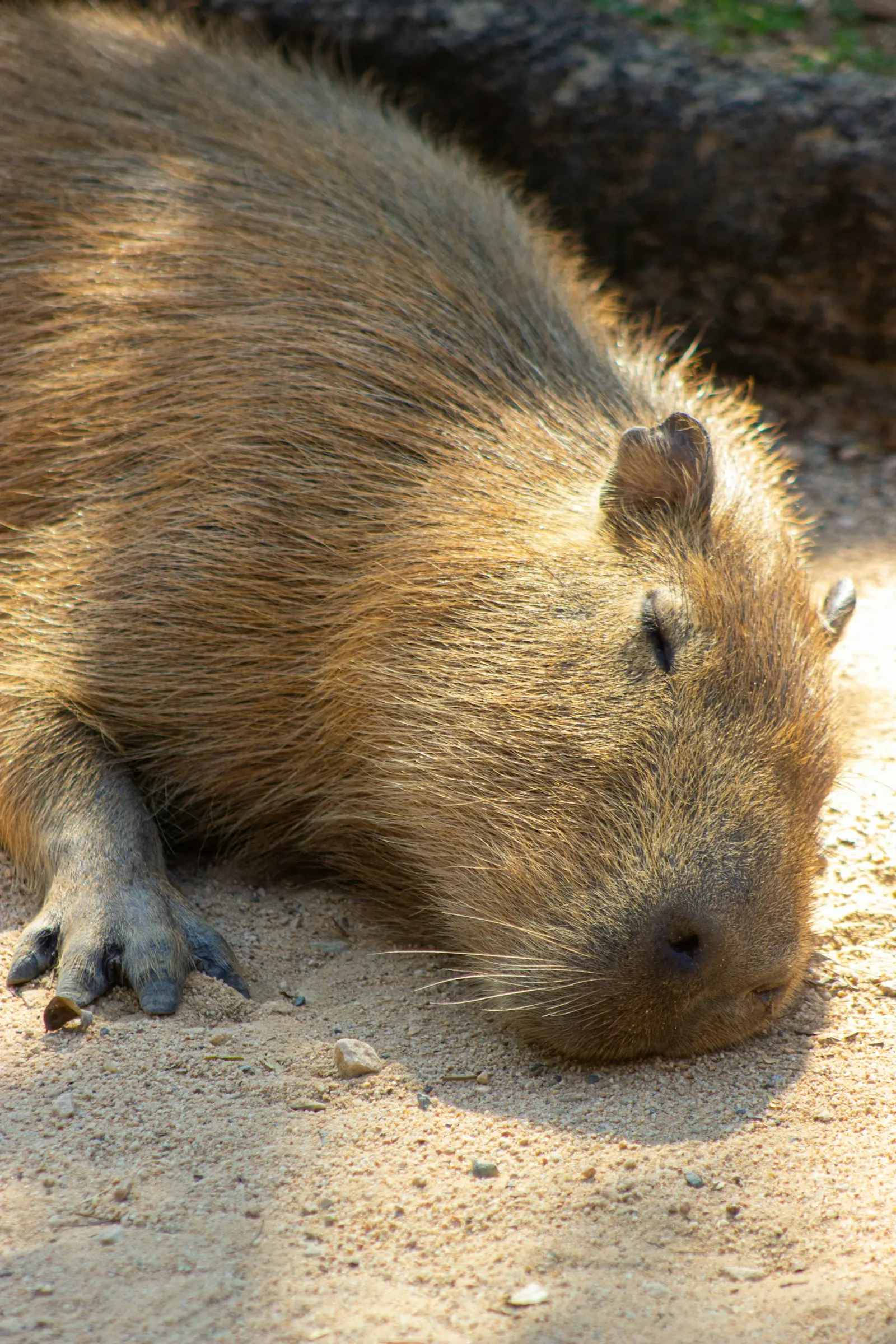
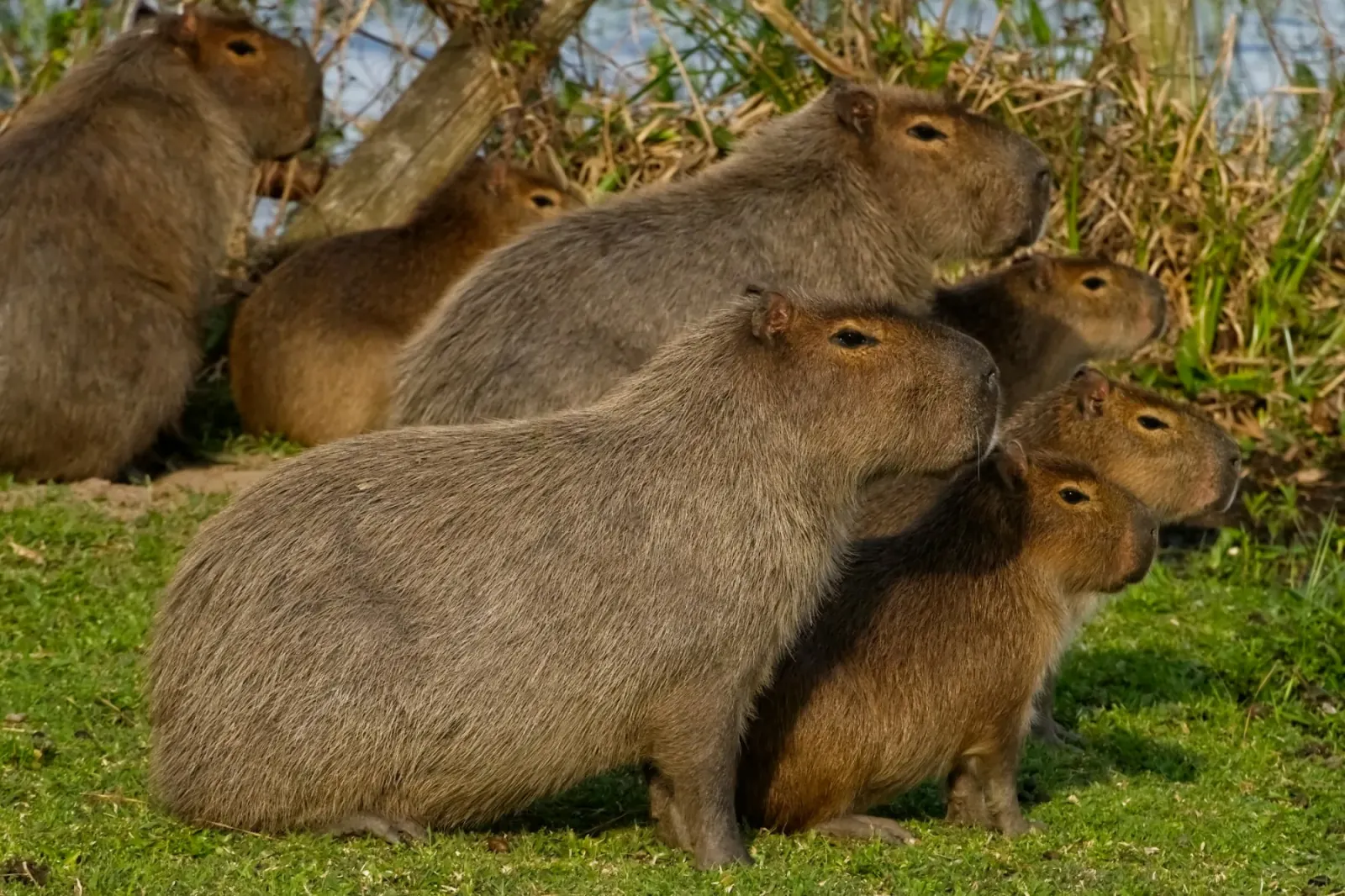
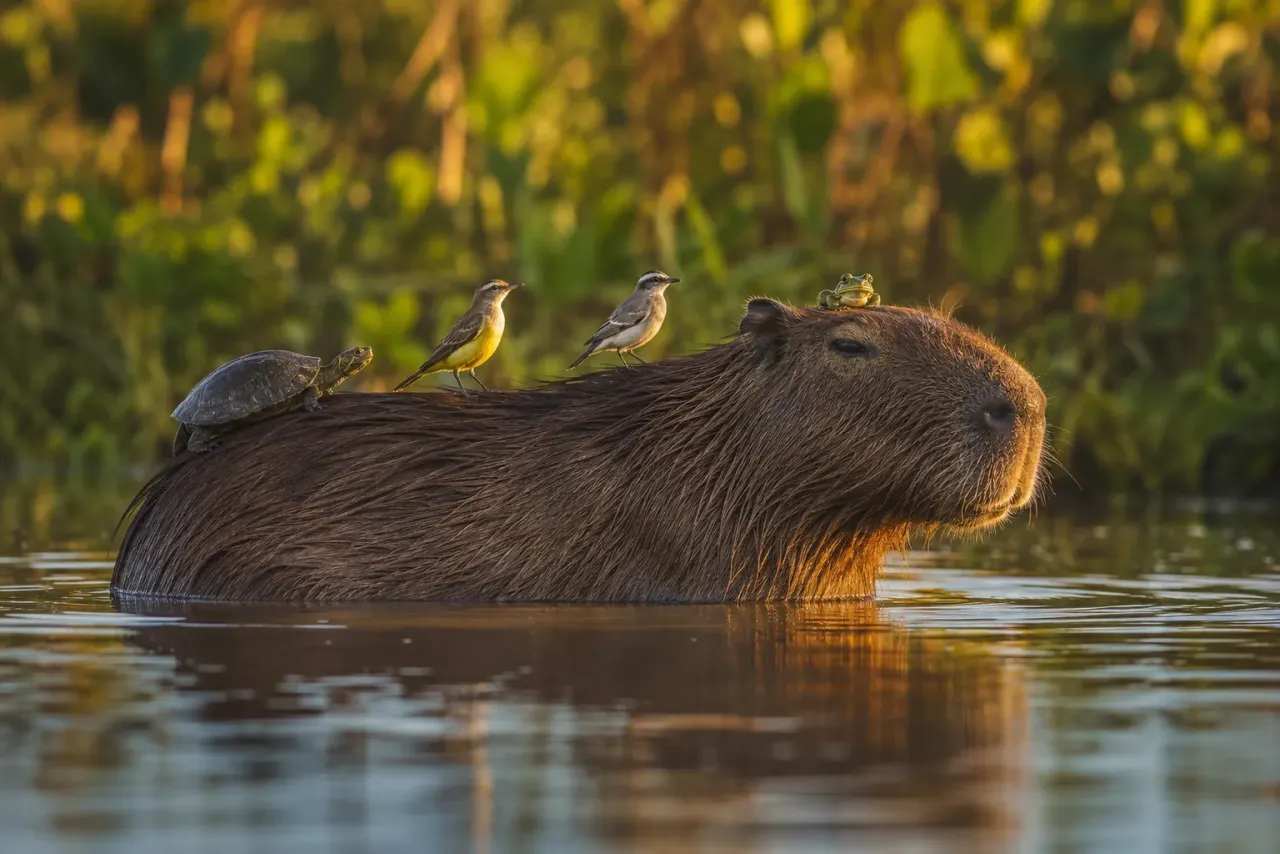
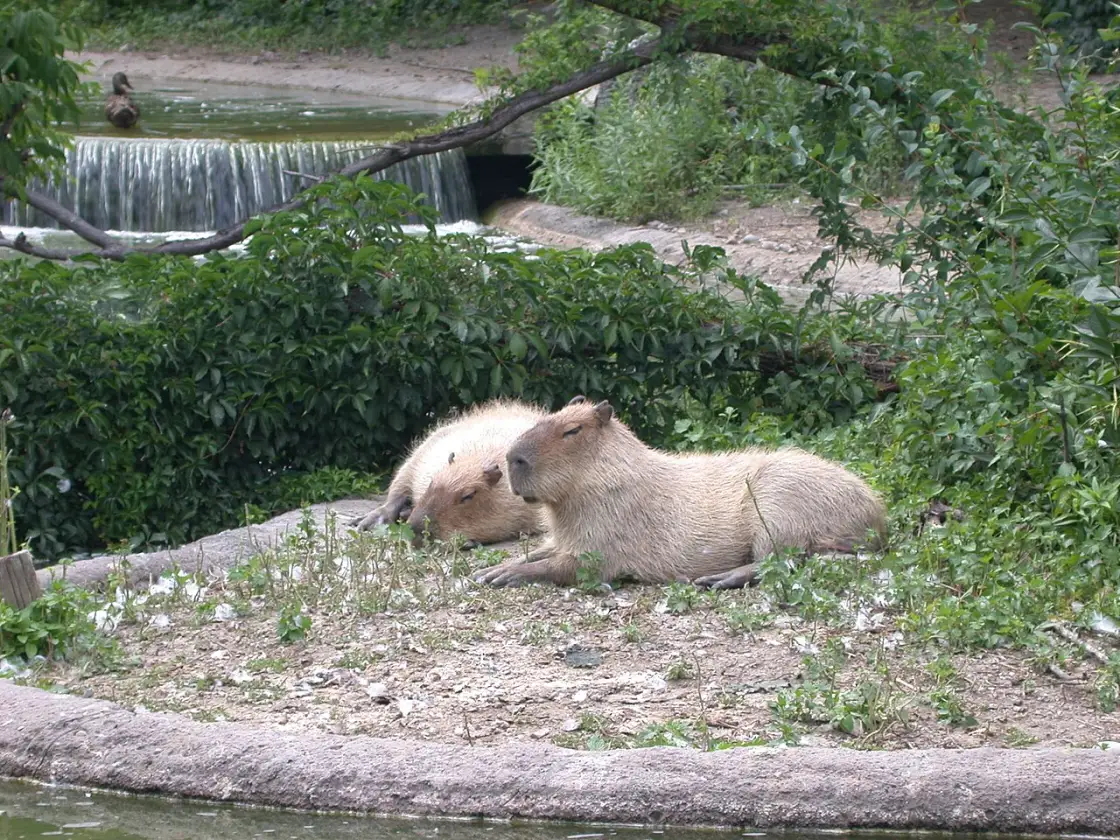
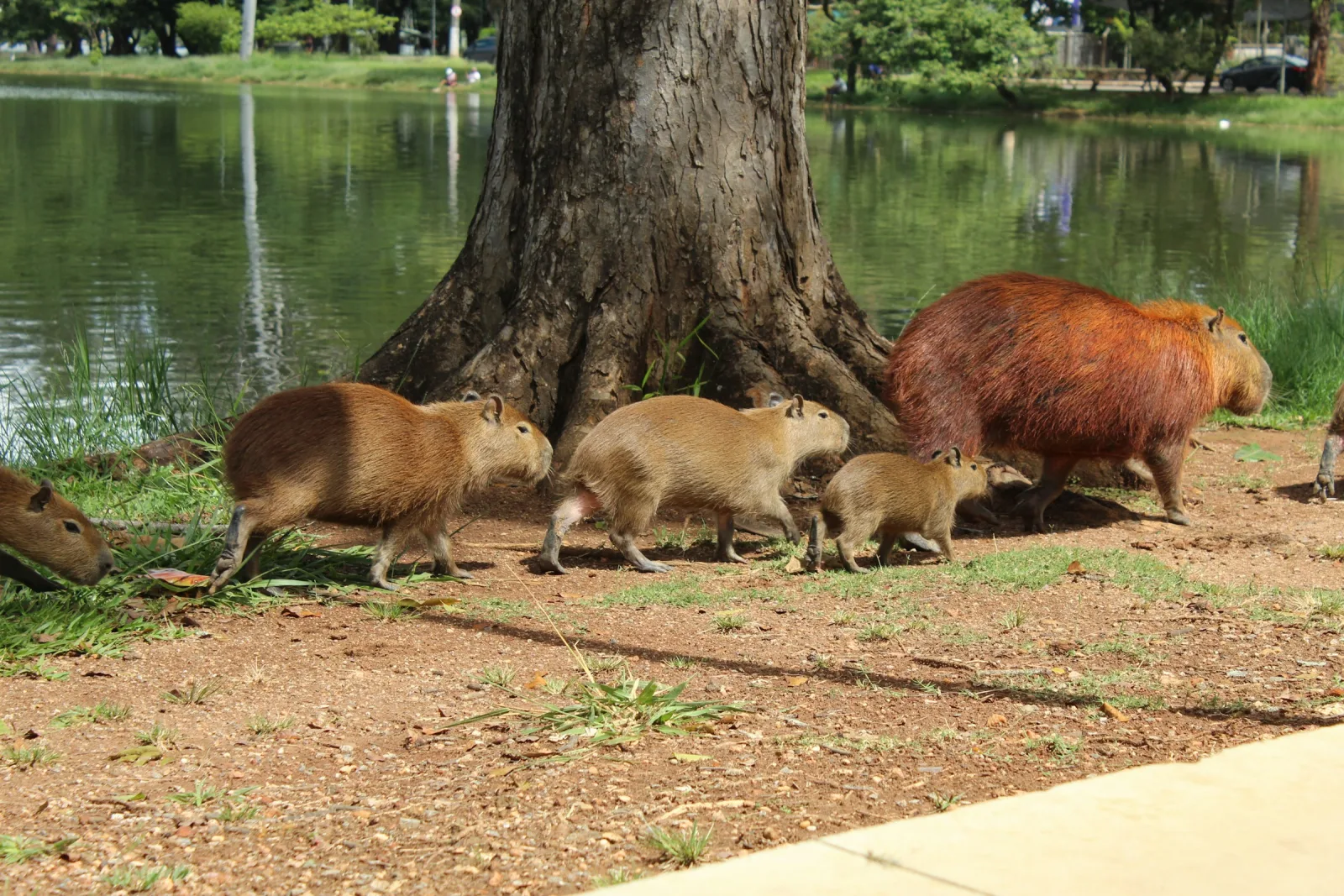
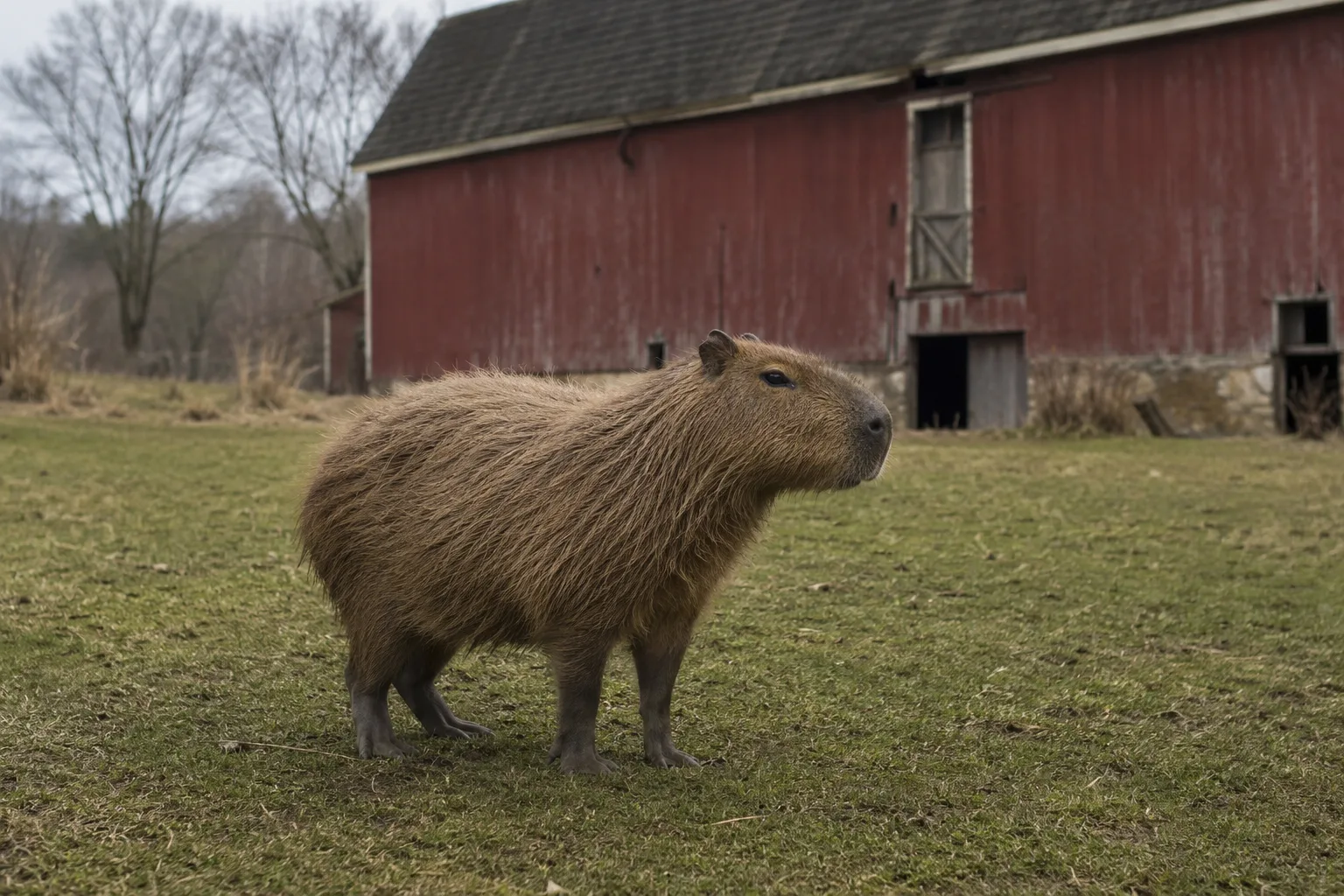
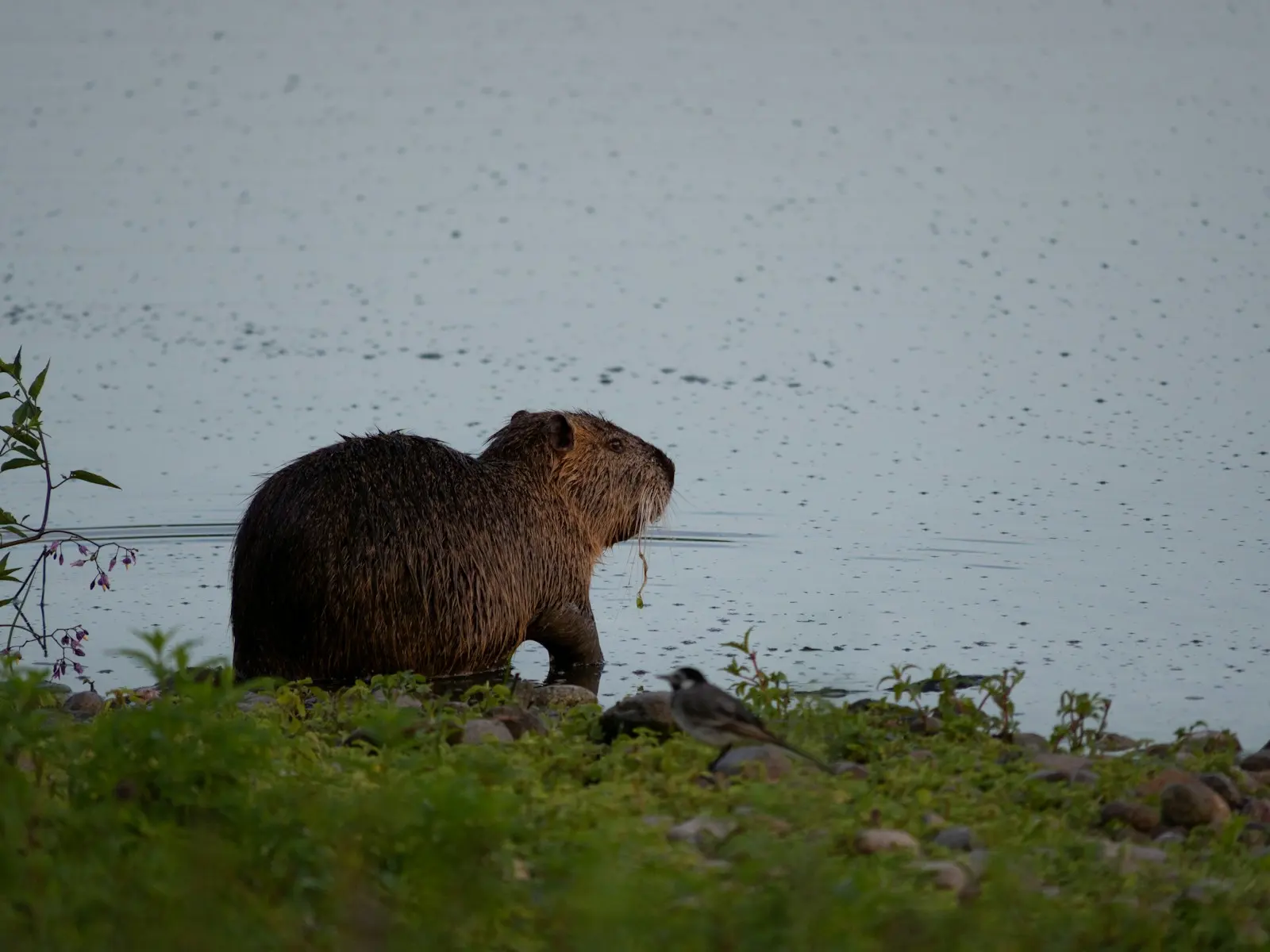
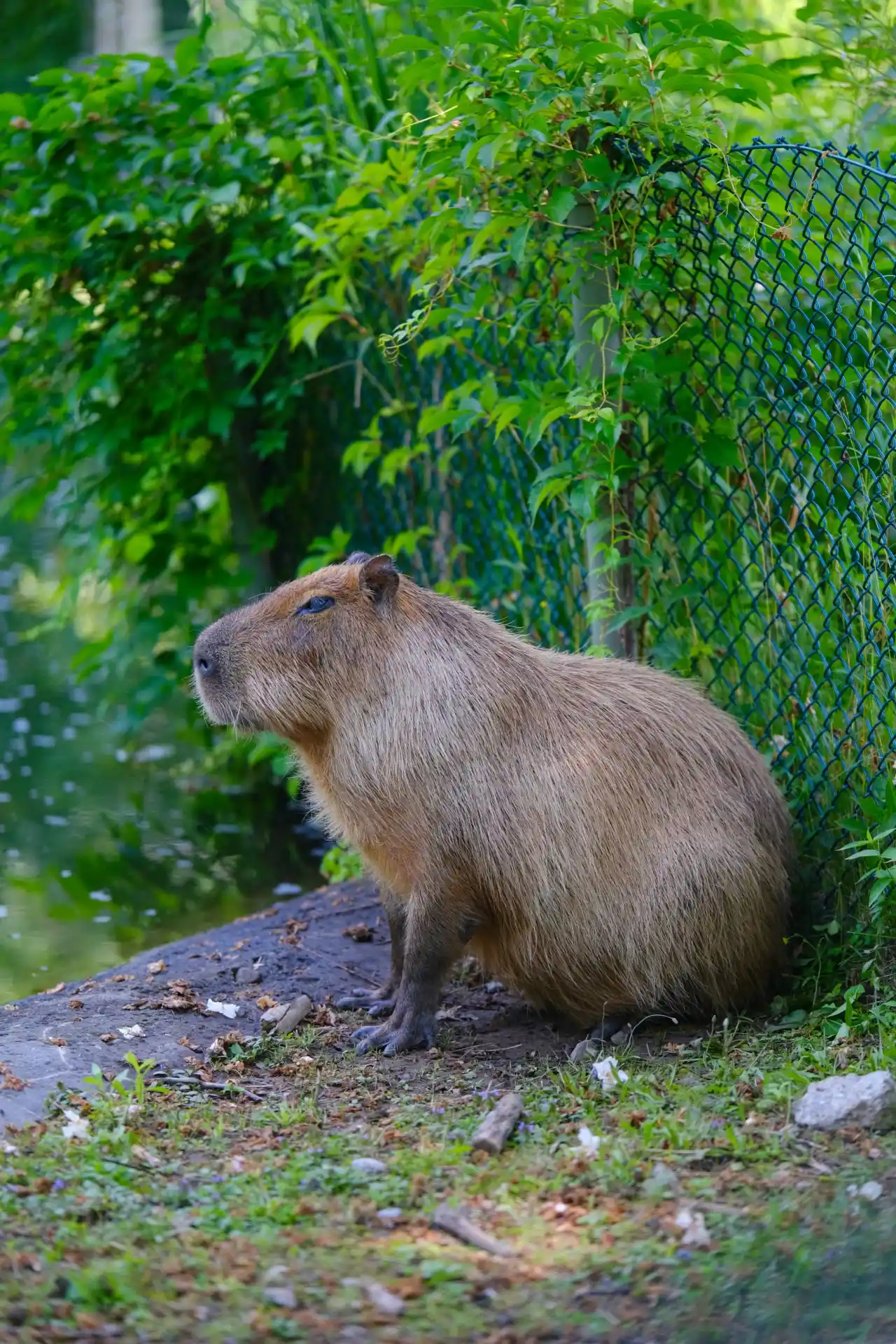
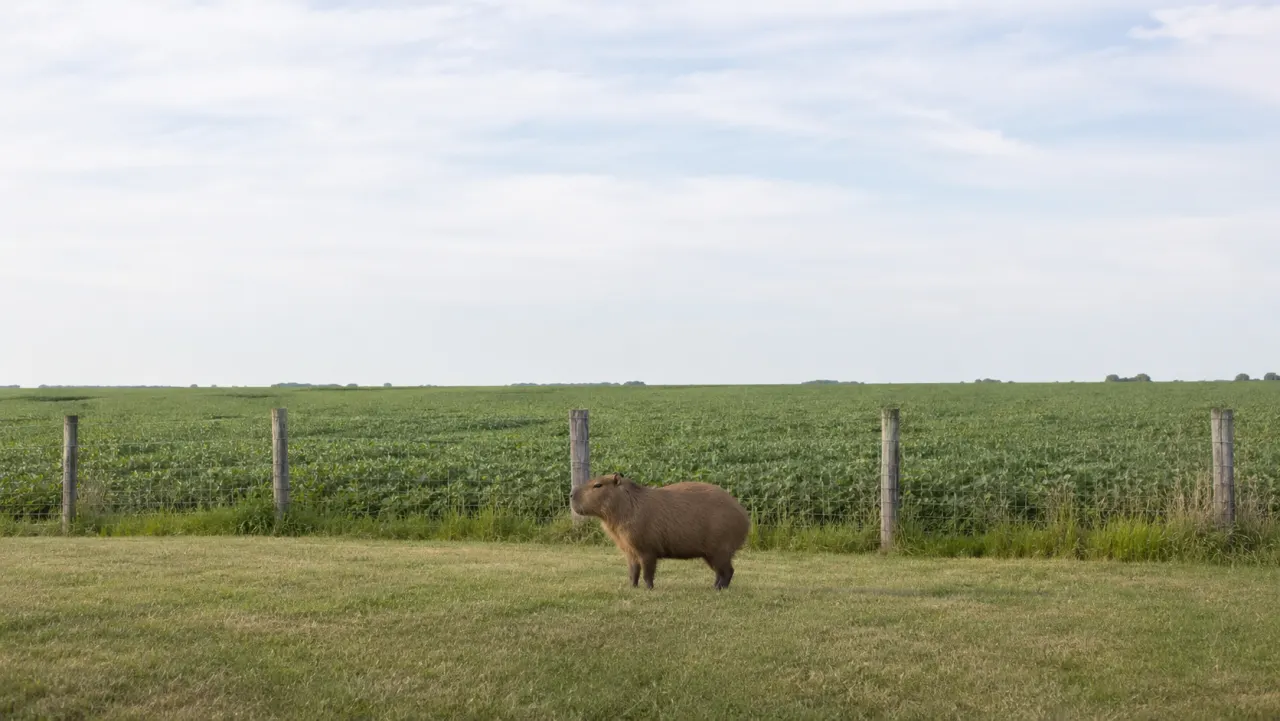
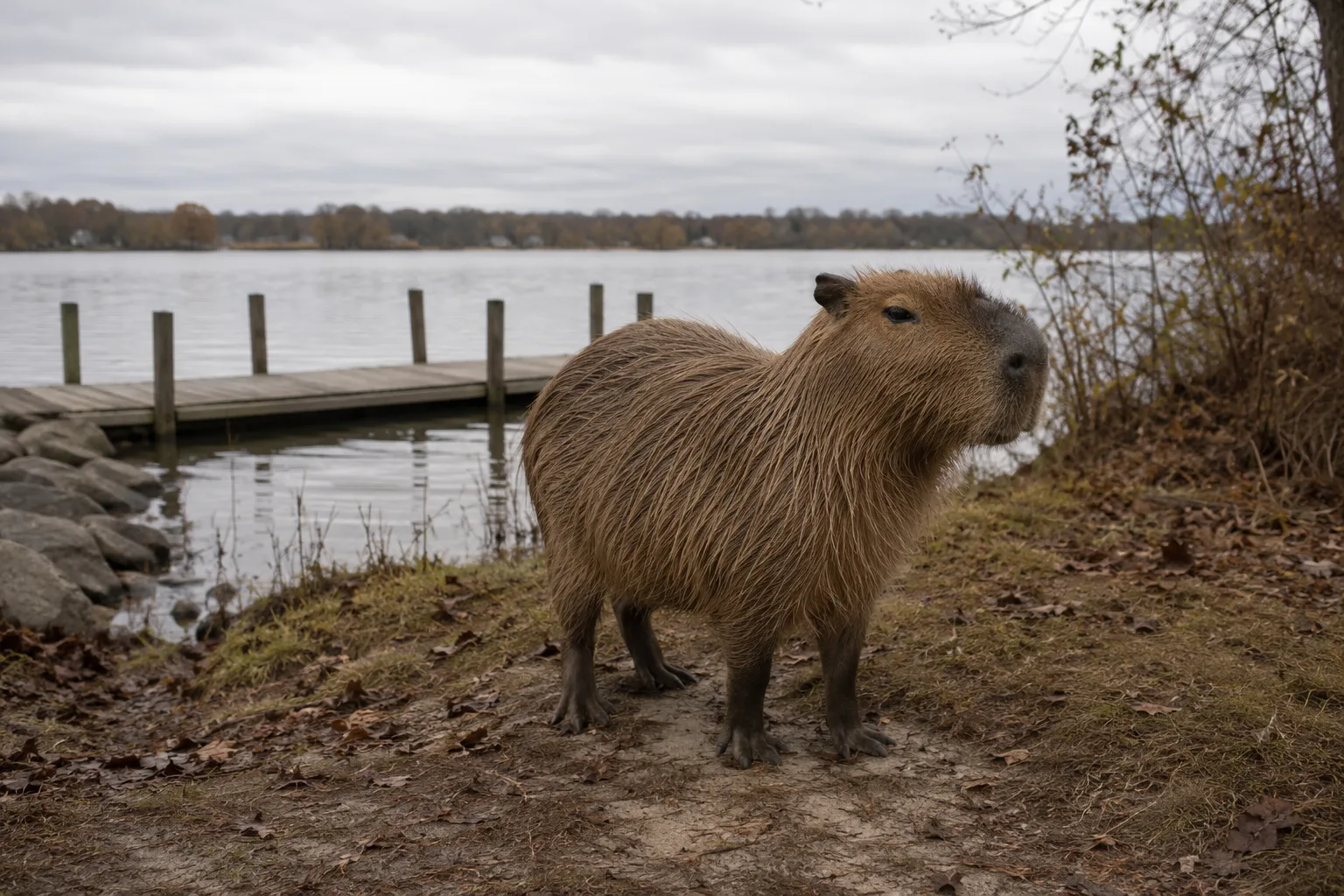
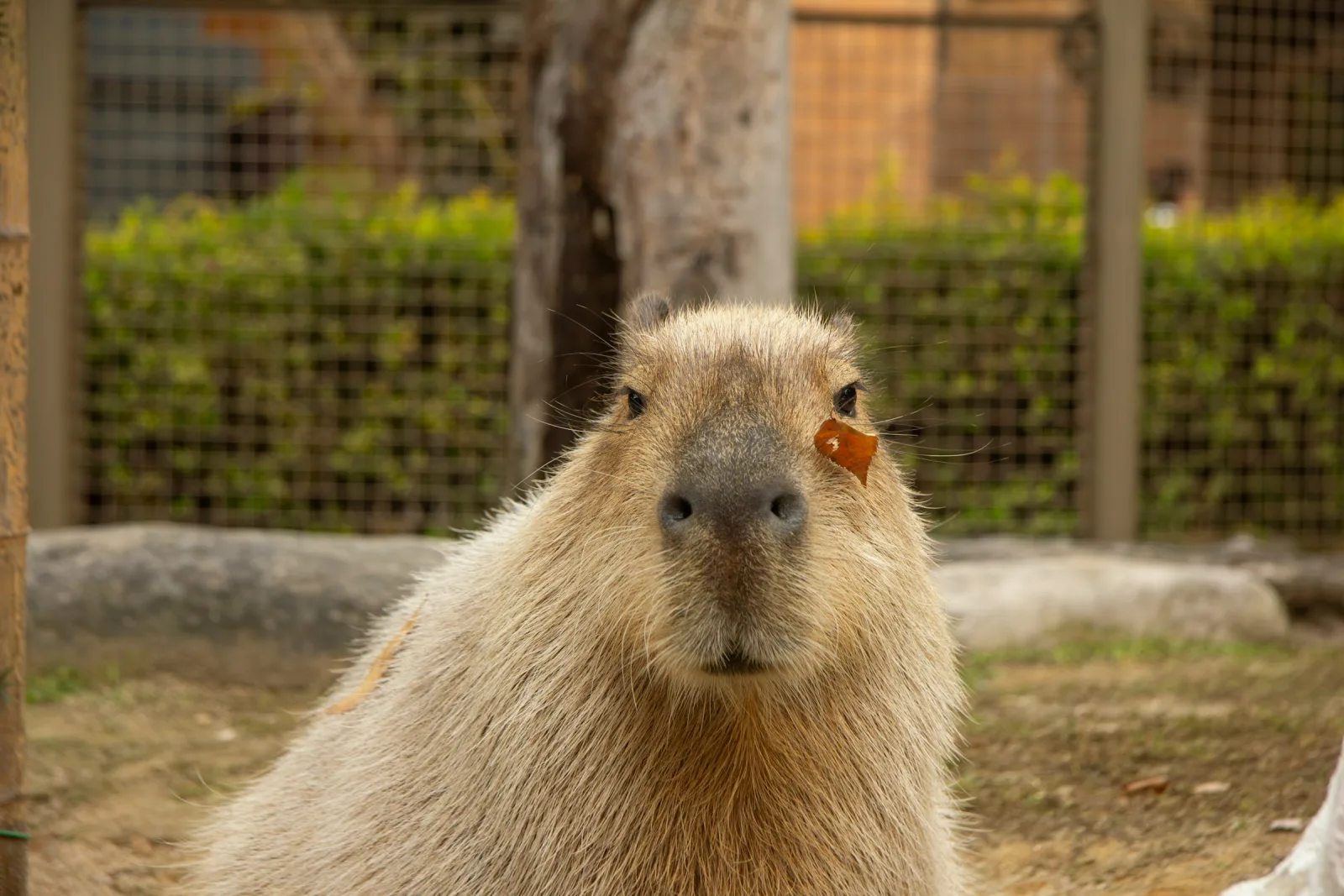
Zoos, wildlife parks, farms and sanctuaries with resident capybaras – some you just watch, some you can hand-feed under supervision, one you can get in the water with, and one where you and the capybara are in separate hot springs. US and Canada first, then Britain, Japan and the rest.
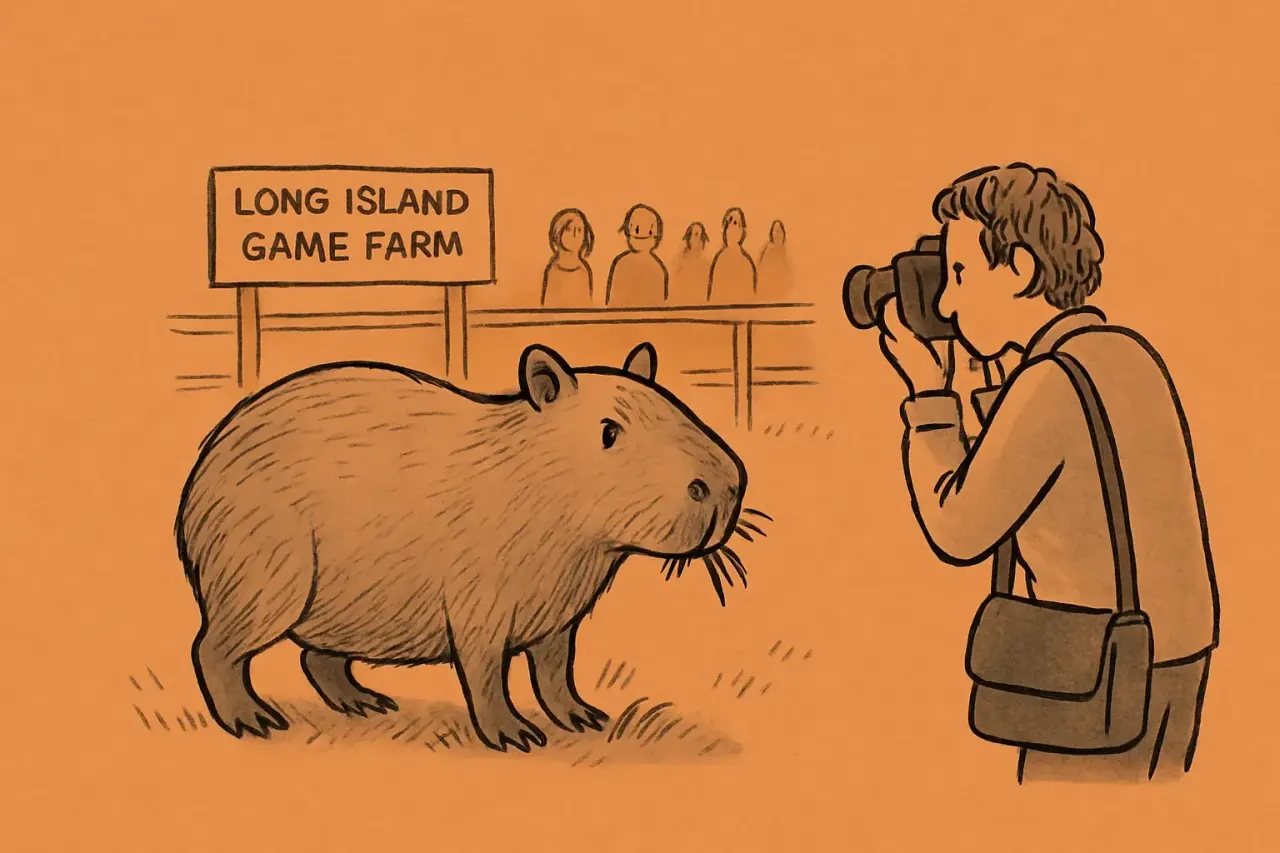
The only capybara encounter programme on Long Island, run as a family membership rather than a ticketed session. Education first, photos second, and a diner gift card on the way out.
New Jersey's capybara encounter, priced as a group booking — $400 for four — at a zoo that is otherwise free to enter. Seasonal, roughly April to October, weather permitting.
The only place in Canada we can find where you walk into an enclosure with capybaras. Admission is all-inclusive, there are no add-on fees, and it closes at three.
A sixty-acre North Carolina rescue where the capybara encounter happens at the pond, costs about $75 a head, and is emphatically not included in general admission.
A family-run Tennessee petting zoo with two capybaras called Jelly Roll and Bunnie, a 25-minute private encounter, and $15 general admission. Open three days a week.
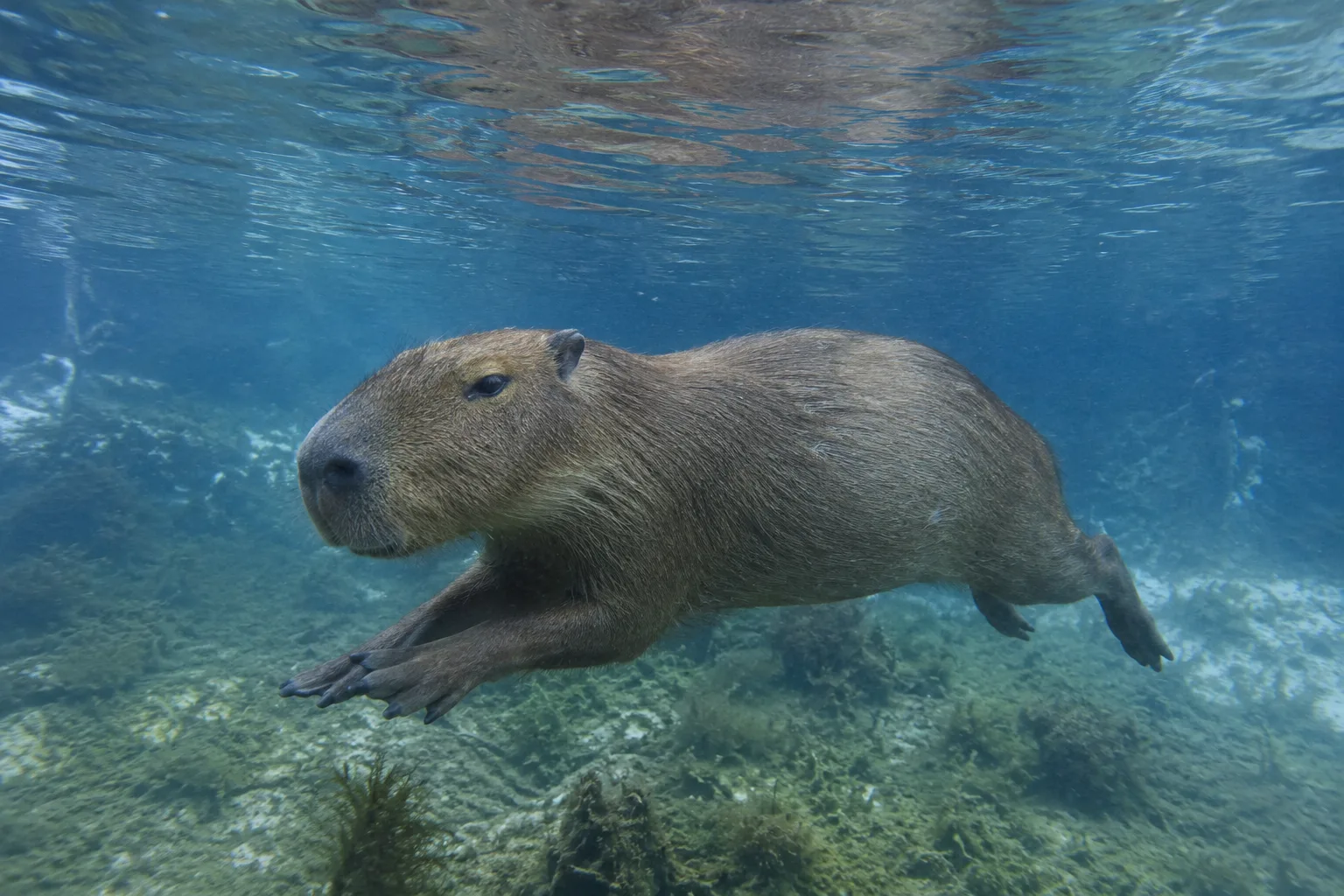
California's only hands-on capybara experience, and it costs $530. Three hours, eight people, ages thirteen up, and you end it floating in a lazy river with the capybaras.
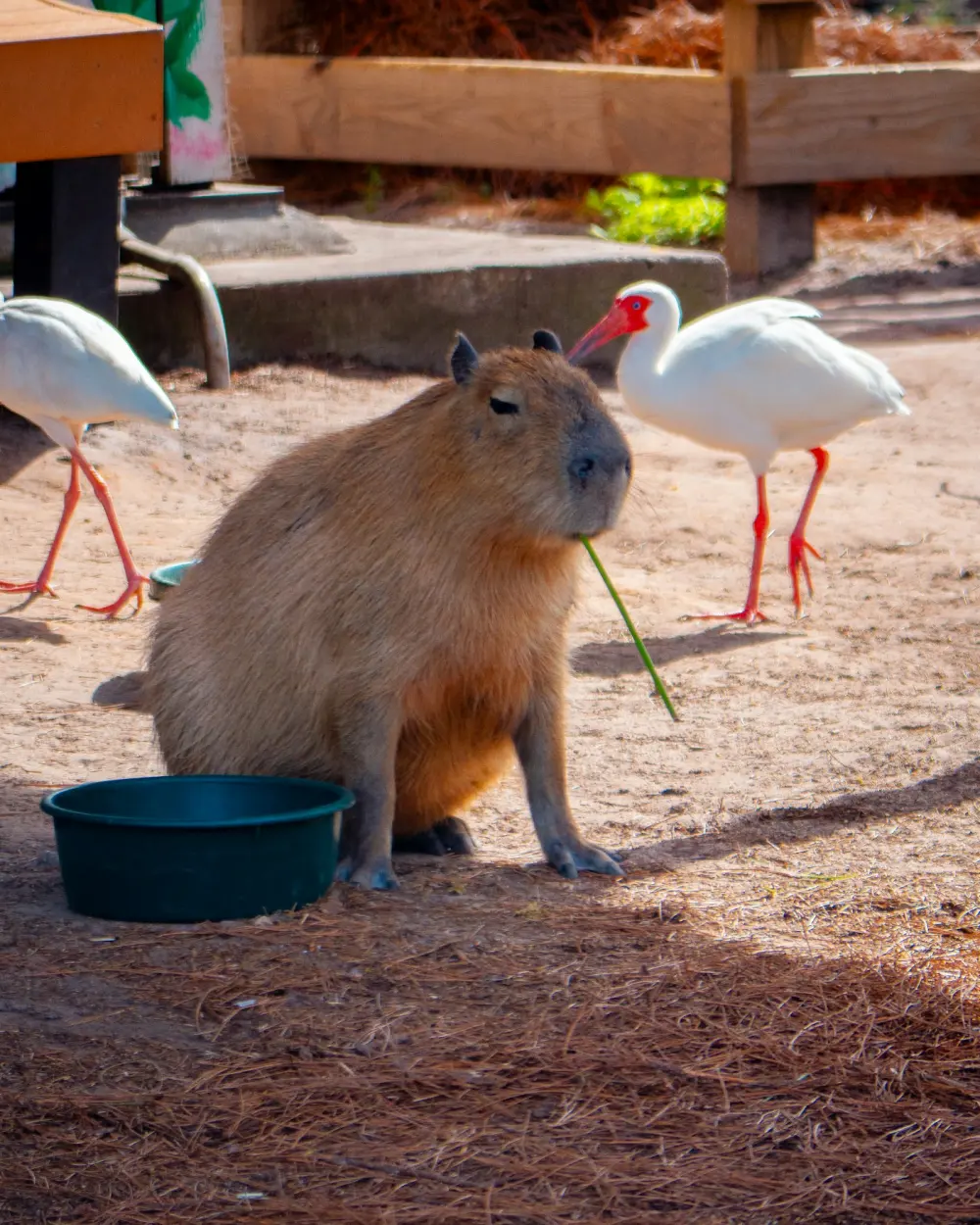
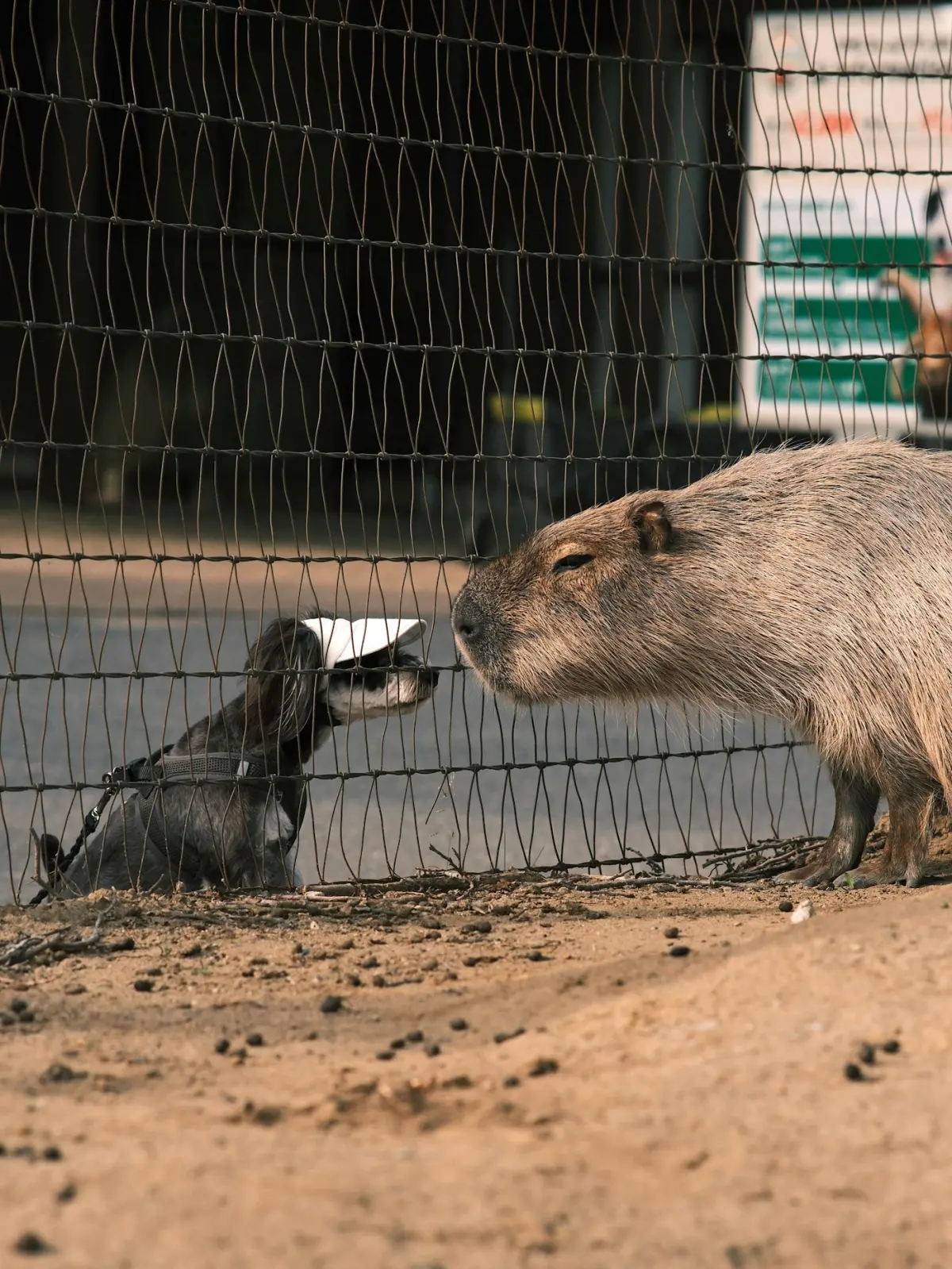
A non-contact encounter inside the capybara and tapir habitat in West Palm Beach. You feed them leafy snacks, you do not touch them, and that is the whole design.
A Texas wildlife park with a quick, cheap, hands-on capybara encounter. Fifteen minutes to feed, pet, and photograph a capybara, bolted onto general admission.
A Michigan zoo with a straightforward, well-priced capybara encounter – feeding, photos, and the honest disclaimer that the capybaras get the final say on whether they show up.
Canada's marquee capybara meet-up. An official, staff-guided Wild Encounter where you get up close and hand-feed capybaras produce – if you can grab a ticket in time.
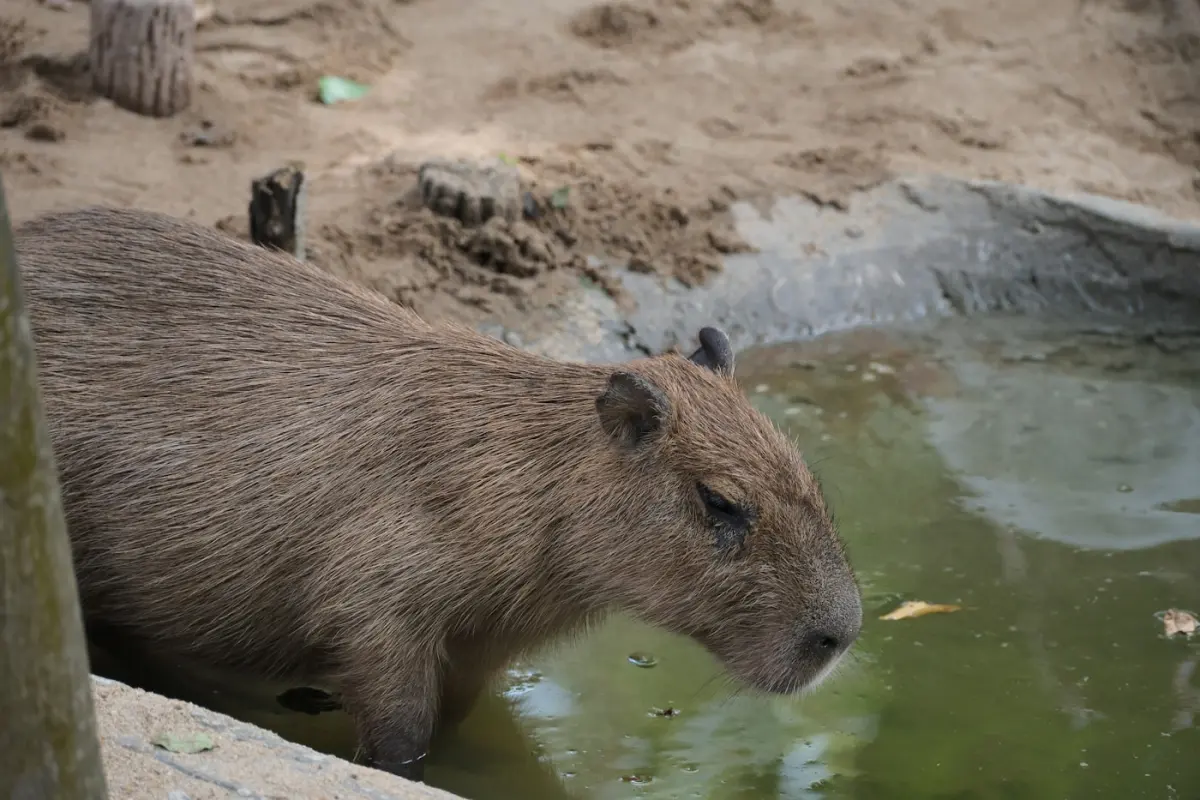
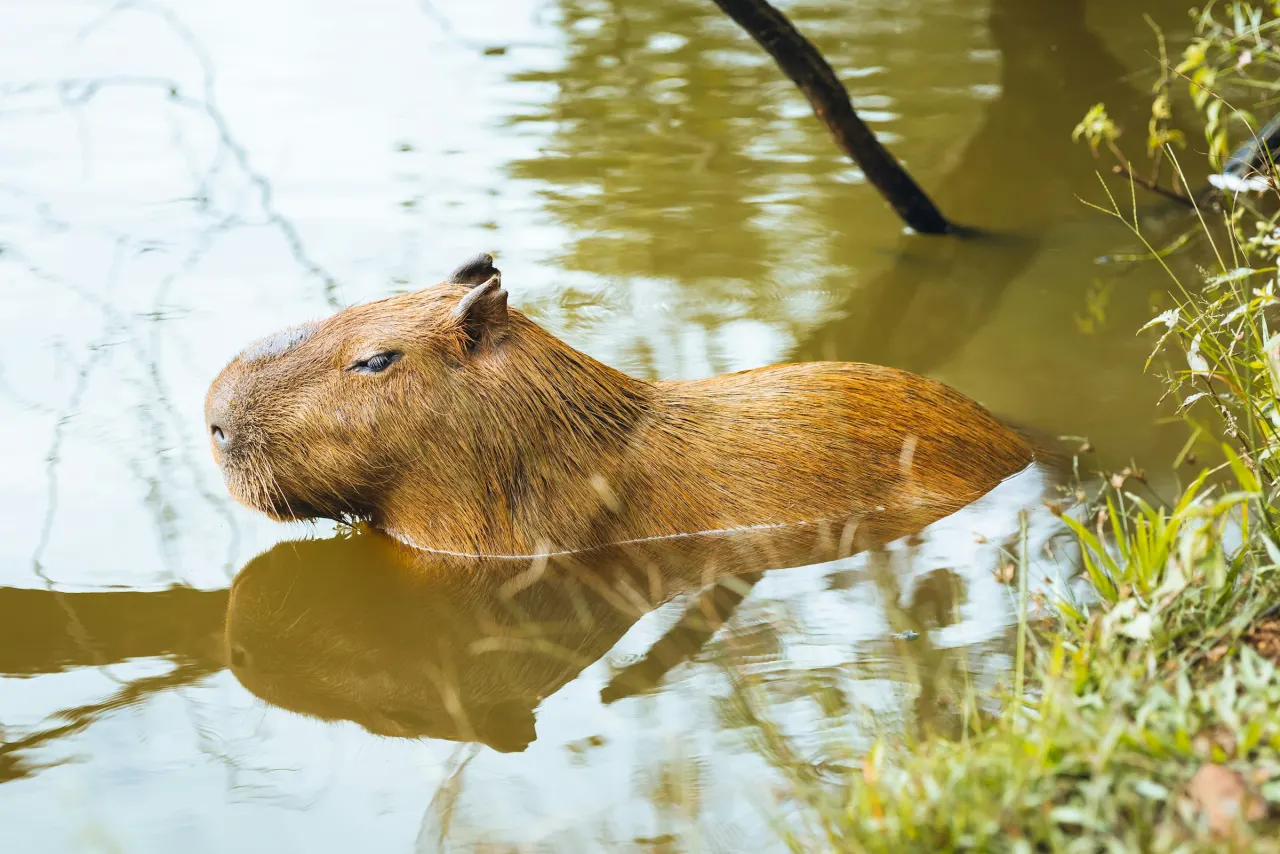
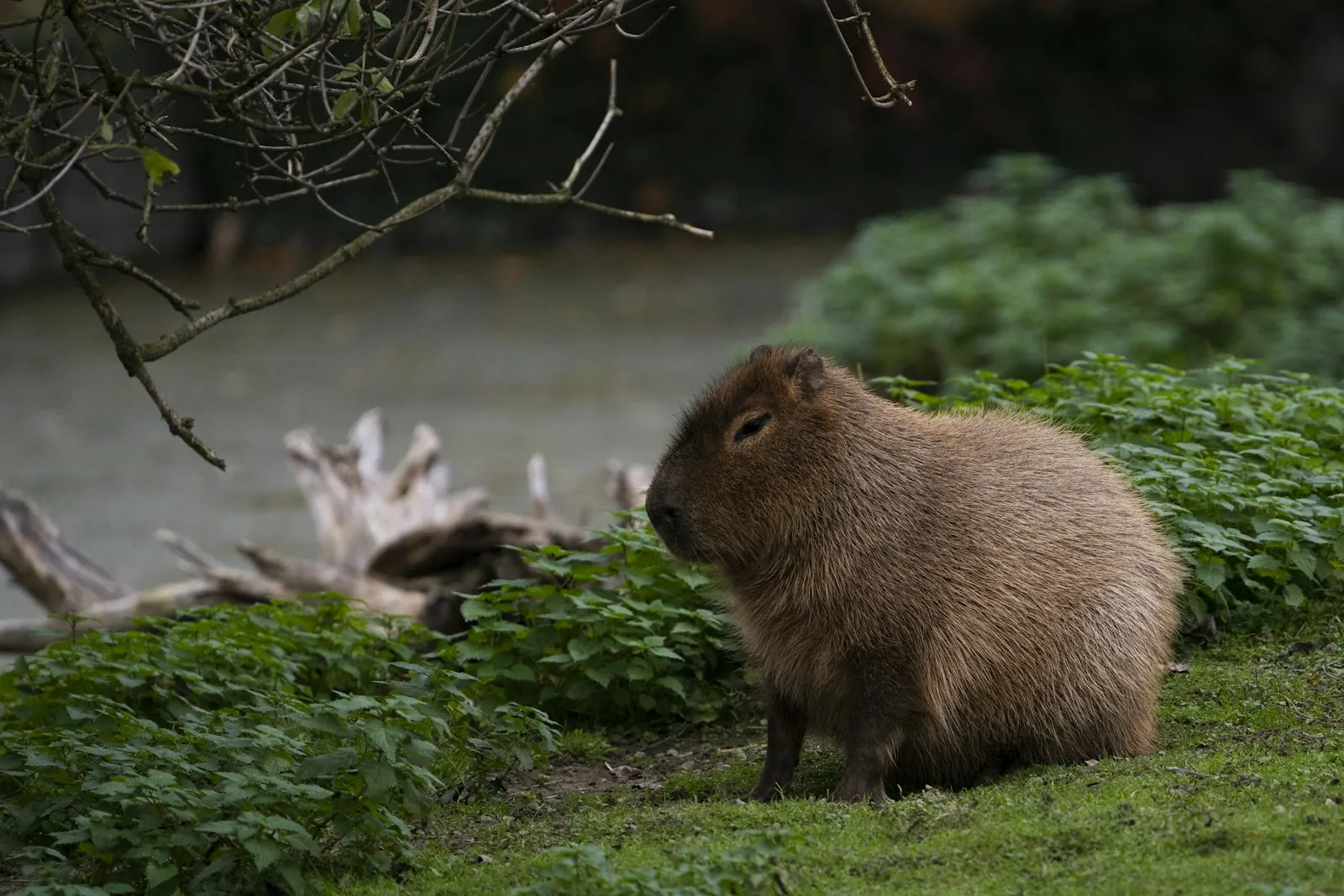
A 150-acre Pennsylvania wildlife park with capybaras that swim in their own lake. Viewing, not hand-feeding – but a genuinely nice place to watch them do nothing.
The Louisiana park that was Barn Hill Preserve, then Magnolia Wilds, and is now being rebuilt by its own staff as a nonprofit sanctuary. The capybaras are still there. The hands-on encounter probably is not.
A Tochigi park where you sit in a human hot spring and watch the capybaras sit in theirs. Genuinely the only venue in this directory where both species are bathing.
Half an hour meeting the capybaras in their own enclosure, between Cambridge and Royston, at a park that started life as a fish farm and became a rescue centre.
Fifteen minutes inside the enclosure in Kent, two people maximum, £140 for the pair — and unusually for Europe, park entry is bundled in rather than sold separately.
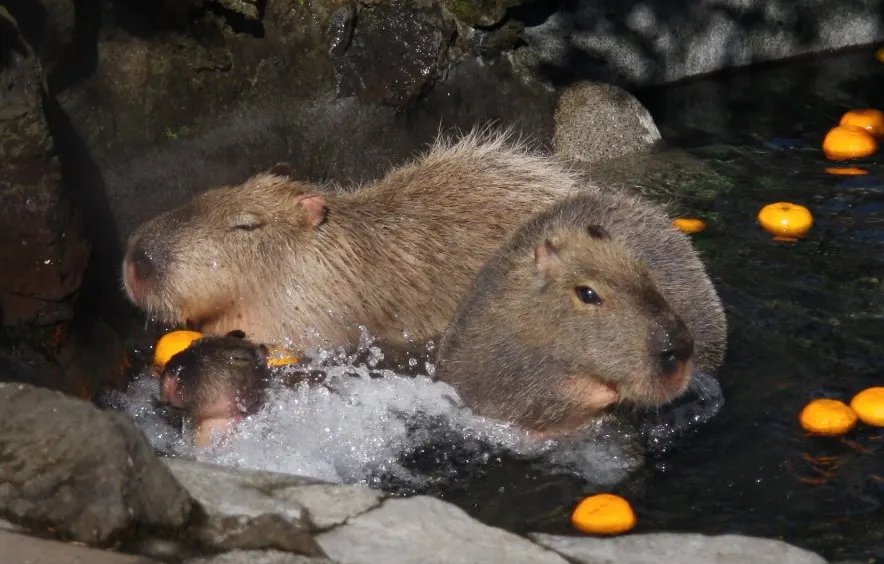
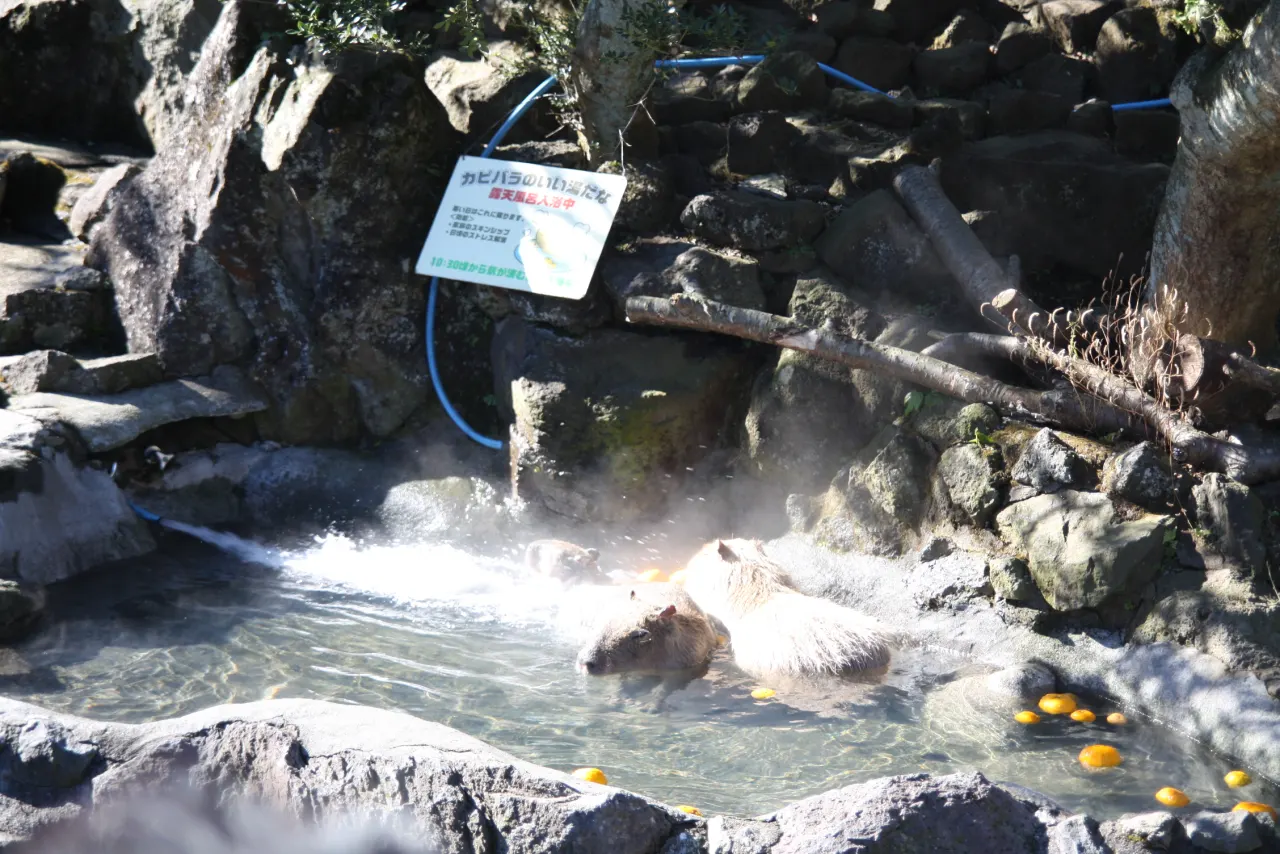
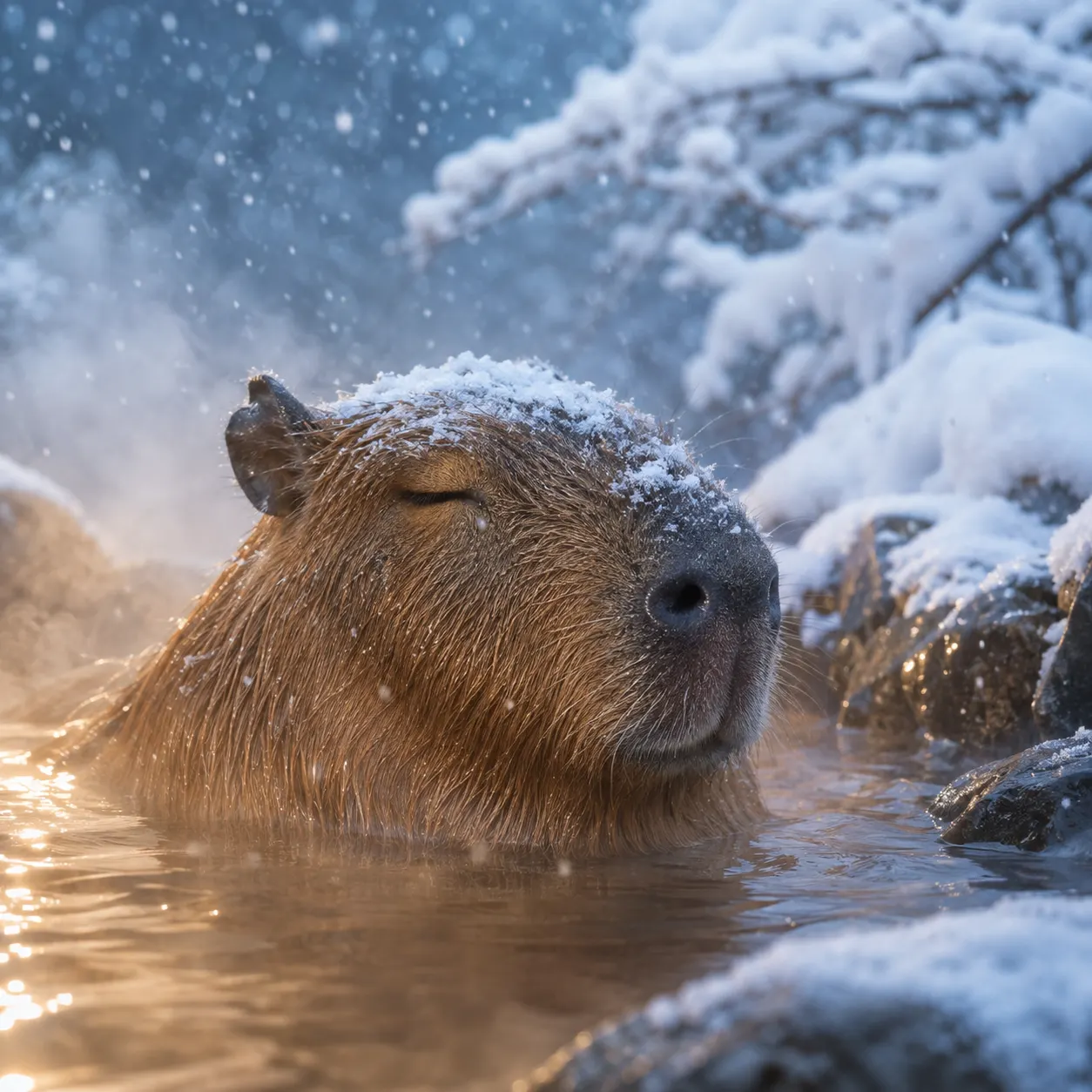
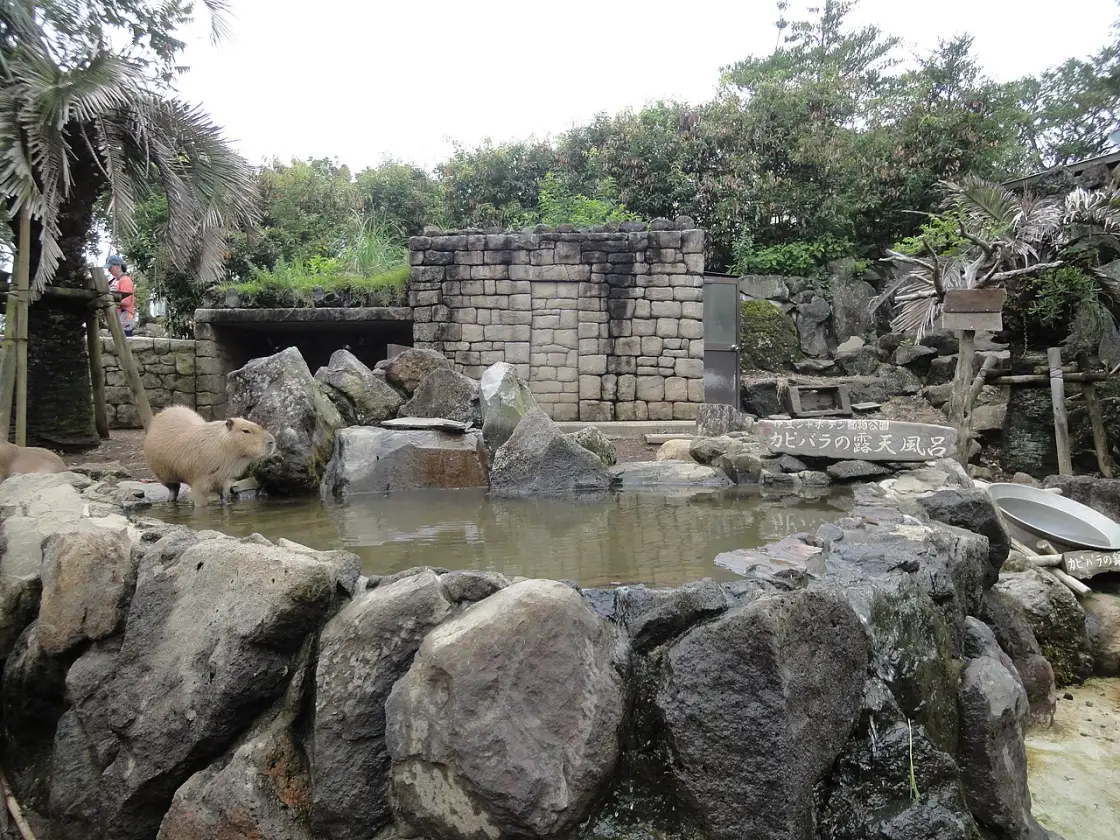
The zoo that invented the capybara hot spring. In winter you watch resident capybaras soak in an open-air onsen, steam rising, faces set to maximum indifference.
No spots match that combo yet. Loosen a filter – the capybara population is finite.
Quick answer: you can meet capybaras at zoos, farms and sanctuaries across the US and Canada. For hands-on feeding, the Toronto Zoo (ON), Wilderness Trails Zoo (MI), Busy B Ranch (TX), Liberty Acres (NC), Mitchell's Petting Zoo (TN) and Cape May County Zoo (NJ) run guided encounters. Kangaroo Creek Farm in Kelowna is the only walk-in capybara access we can find in Canada, and Nurtured by Nature in California is the one place you get in the water with them. In Britain – which has no capybara cafe at all – six parks sell encounters, and Wingham in Kent is the best value because park entry is included. For the famous winter hot-spring soak it's Izu Shaboten Zoo in Japan, and Nasu Animal Kingdom lets you watch it from a hot spring of your own.
At zoos, wildlife parks, and sanctuaries across both. Hands-on encounters run at the Toronto Zoo in Ontario, Wilderness Trails Zoo in Michigan, and Busy B Ranch in Texas; Lake Tobias Wildlife Park in Pennsylvania is a viewing exhibit.
Can you hand-feed capybaras at a zoo?
At some. Toronto Zoo, Wilderness Trails Zoo, and Busy B Ranch run guided hands-on encounters where you feed the capybaras under supervision; places like Lake Tobias are viewing-only. Check the hands-on vs viewing-only tag on each card.
Where is the capybara hot spring?
Izu Shaboten Zoo in Ito, Japan started the capybara onsen tradition. It is seasonal, running roughly November through April, so come in winter to catch the capybaras soaking in the open-air bath.
Do capybara encounters at zoos need booking?
The hands-on ones usually do, and the Toronto Zoo encounter sells out fast, with tickets released about two weeks ahead. Viewing exhibits just need general admission.
More To Browse
Latest From The Swamp
Guides, picks, and quizzes from the front page — because a good read shouldn't dead-end.
Capybaras and otters both love water, but that is where the easy comparison ends. One is a grazing rodent. The other is a carnivorous mustelid with aquatic chaos in its bones.
Missouri's answer gets messy because people jump straight to "Class III wildlife." The current path is more careful: check MDC classification, confined-wildlife rules, local ordinances, exhibition law, and welfare.
Capybara permits are not one neat form. Depending on where you live, state wildlife rules, local zoning, animal welfare law, import rules, and USDA exhibitor rules can all enter the chat.
Minnesota's famous regulated-animal statute does not neatly answer the capybara question. DNR permits, import rules, local ordinances, exhibition law, and brutal winter care still decide the real case.
Oklahoma has wildlife breeder, import/export, and exhibitor pathways on the books. That does not make a capybara a casual yard animal. Ask ODWC before the seller gets a deposit.
Wisconsin's answer is not just law; it is winter. Captive wildlife licensing, local rules, exhibition requirements, and frozen-water reality all show up before the capybara does.
Capybara Halloween decor should feel funny, cozy, and a little haunted by snack logic. Think hot spring pumpkins, ghost-capybara silhouettes, orange accents, and zero gore. The capybara is busy.
Utah does not treat capybaras like hamsters with better branding. The current bird and mammal rule lists capybaras as controlled, which means certificate-first, paperwork-first, seller-last.
Indiana is not a clean internet yes. The real answer runs through DNR captive-wild-animal rules, class categories, facility standards, local code, and a written answer before anyone buys a capybara.
Every other province in Canada answers this by omission. Quebec put Hydrochoerus in a schedule by genus, marked it as requiring a permit, and marked the cavies a few rows above it as needing none. It is the clearest provincial answer in the country, and it is a qualified yes.
The Netherlands uses a positive list for mammals kept as pets or hobby animals. Capybaras did not make the list. Dutch bureaucracy, for once, gives the internet a very short answer.
Oregon is one of the clearer states for this question. Capybara appears on the prohibited species list, which is a deeply efficient way for a dream to meet a wall.
Cookies, yes. The cookieless kind counts pageviews and
bothers no one. Analytics, heatmaps, and an ad pixel stay
off unless you say yes. Ads run either way — saying no keeps them
non-personalized. Full story in the
cookie policy.