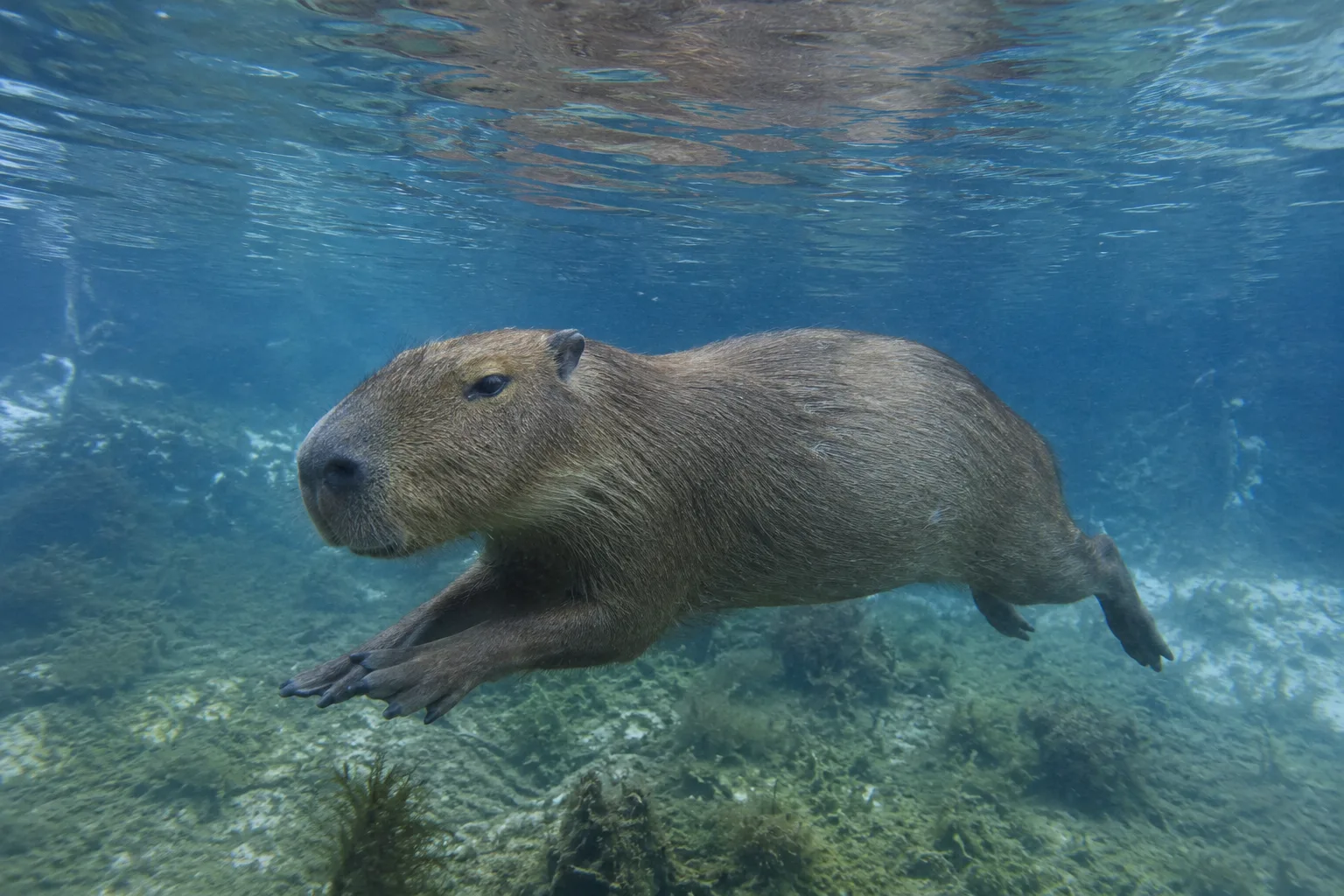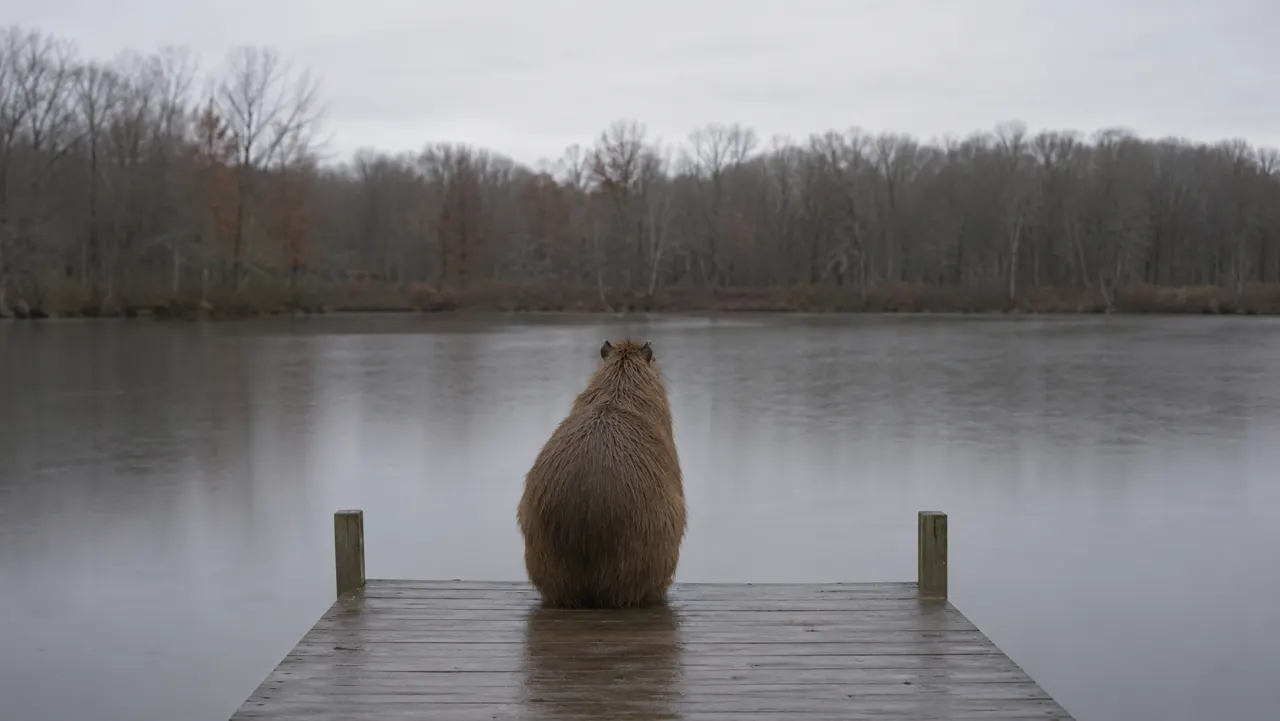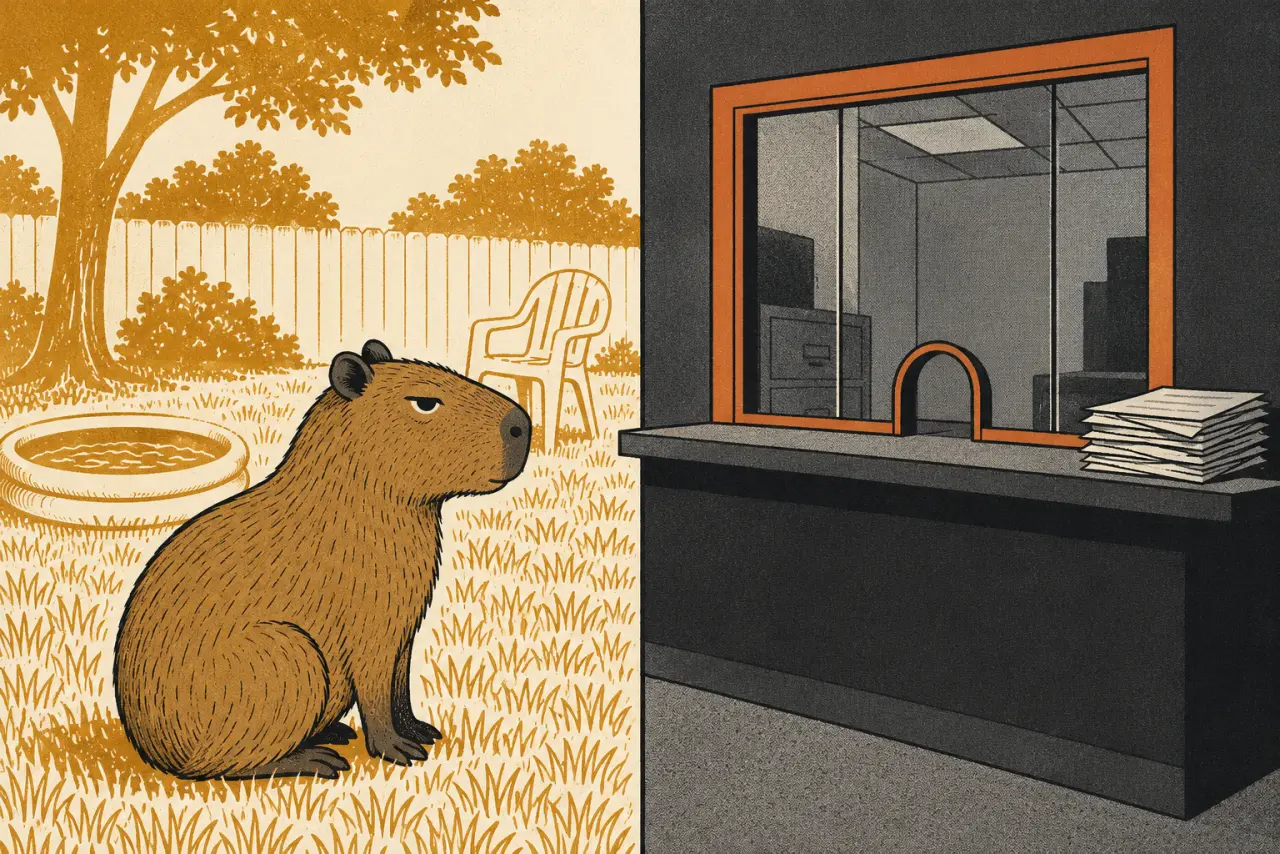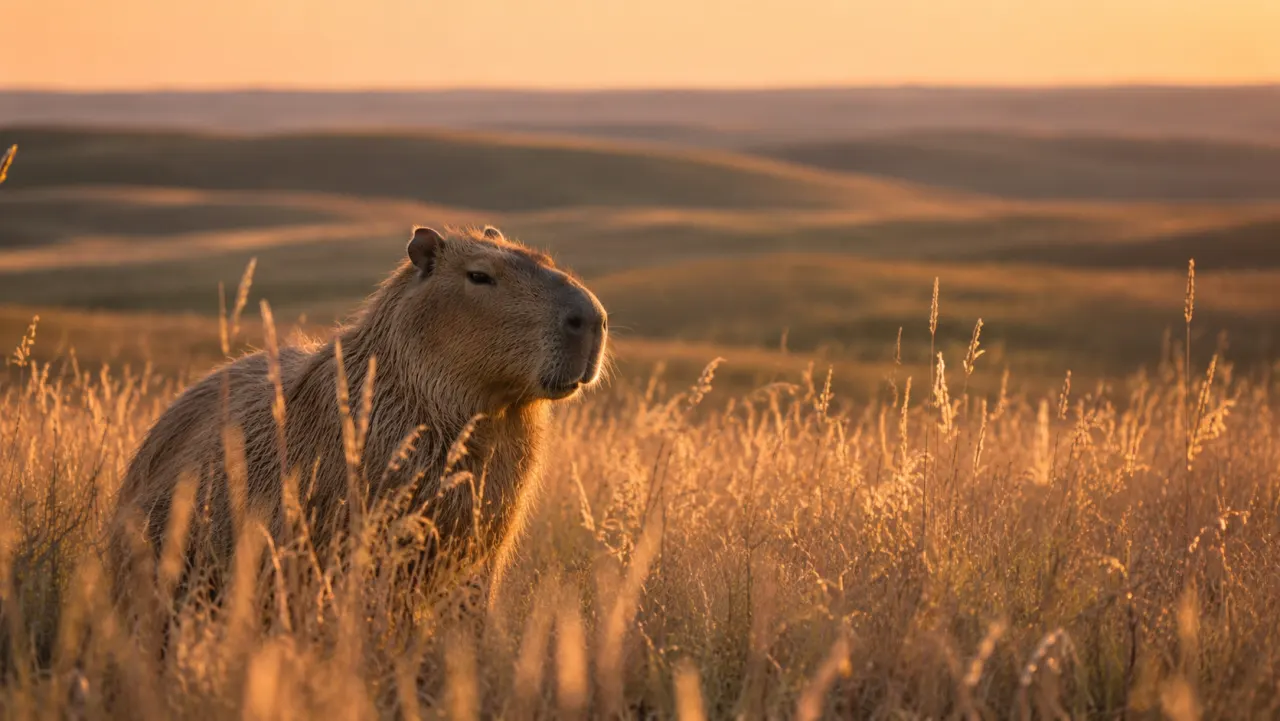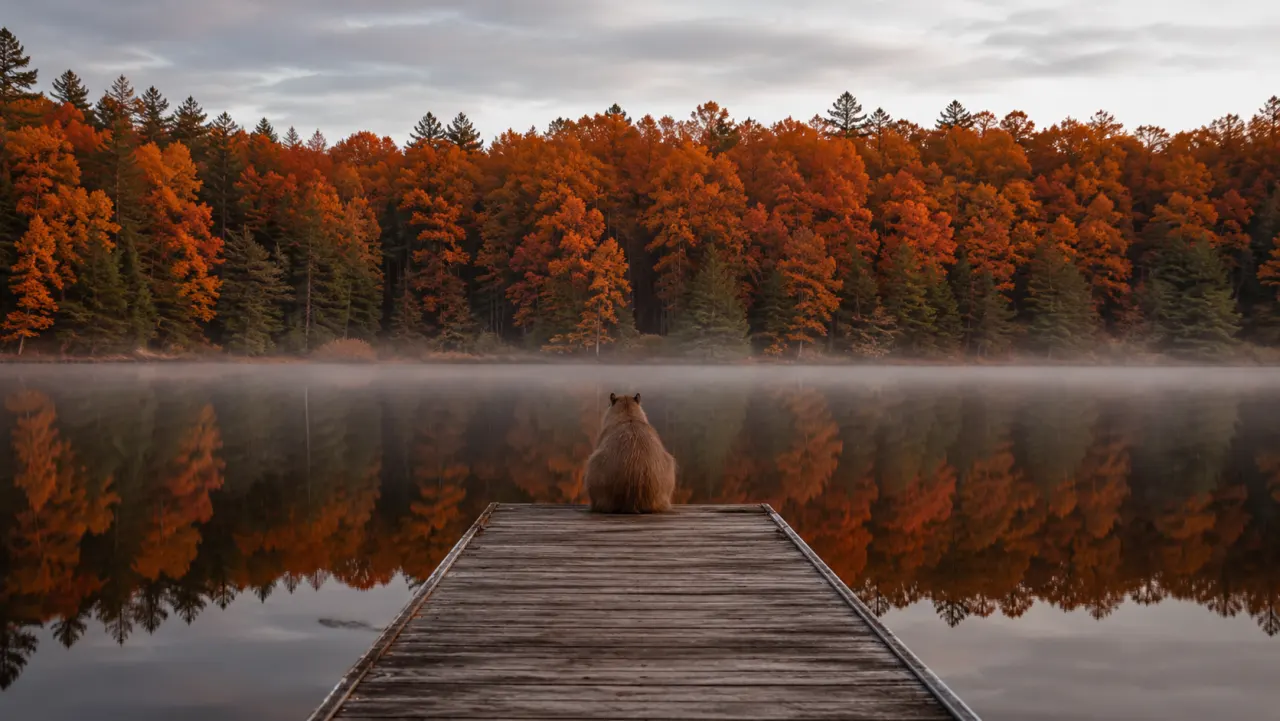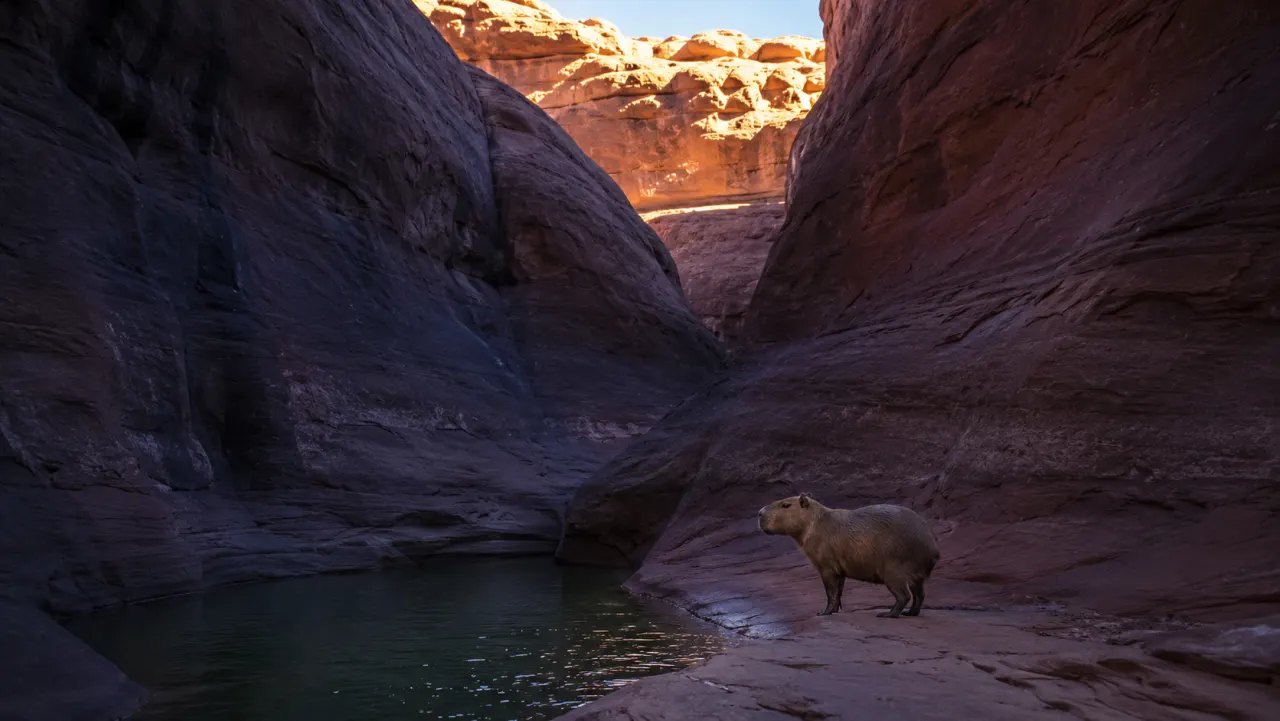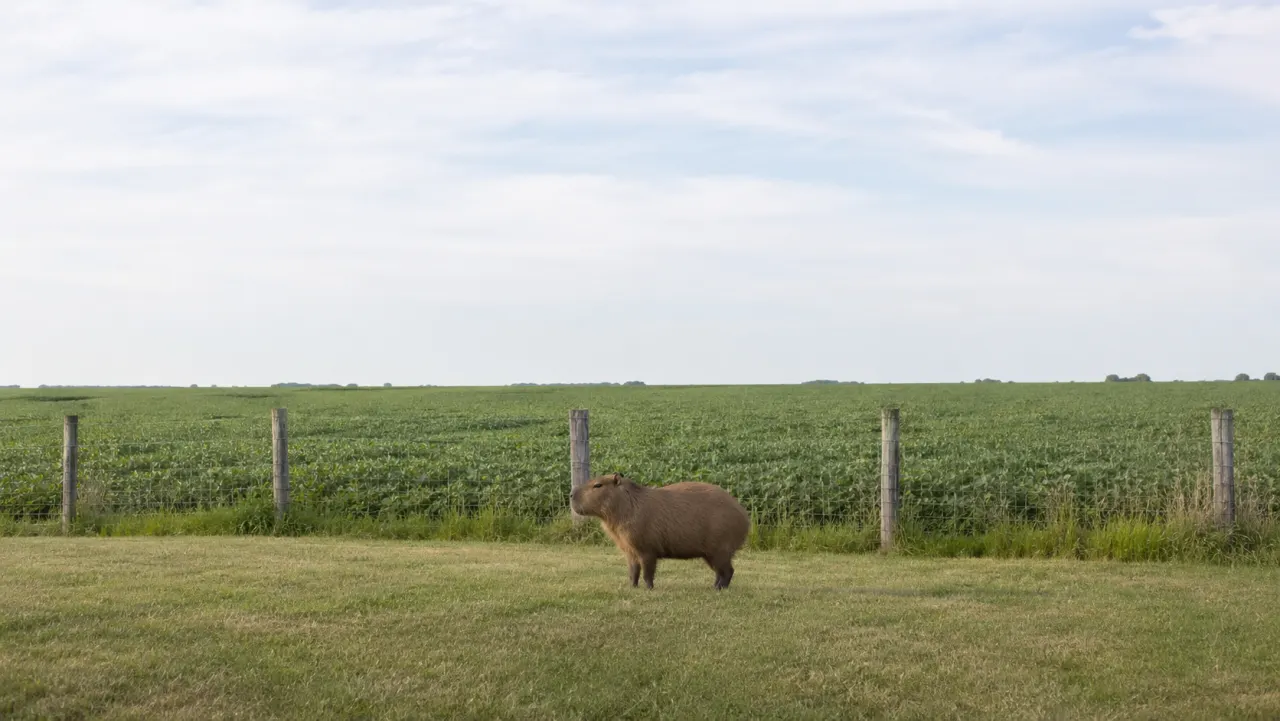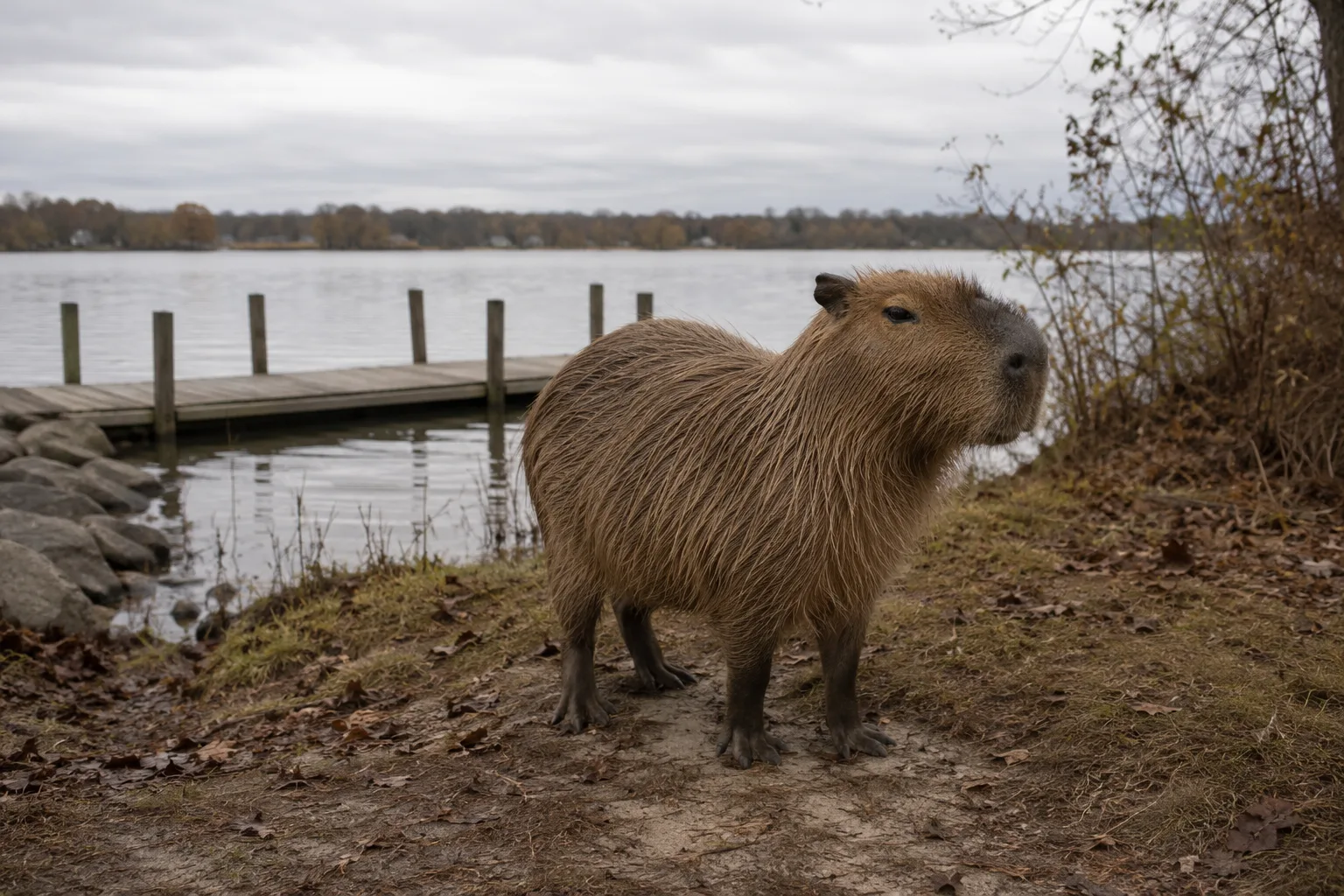
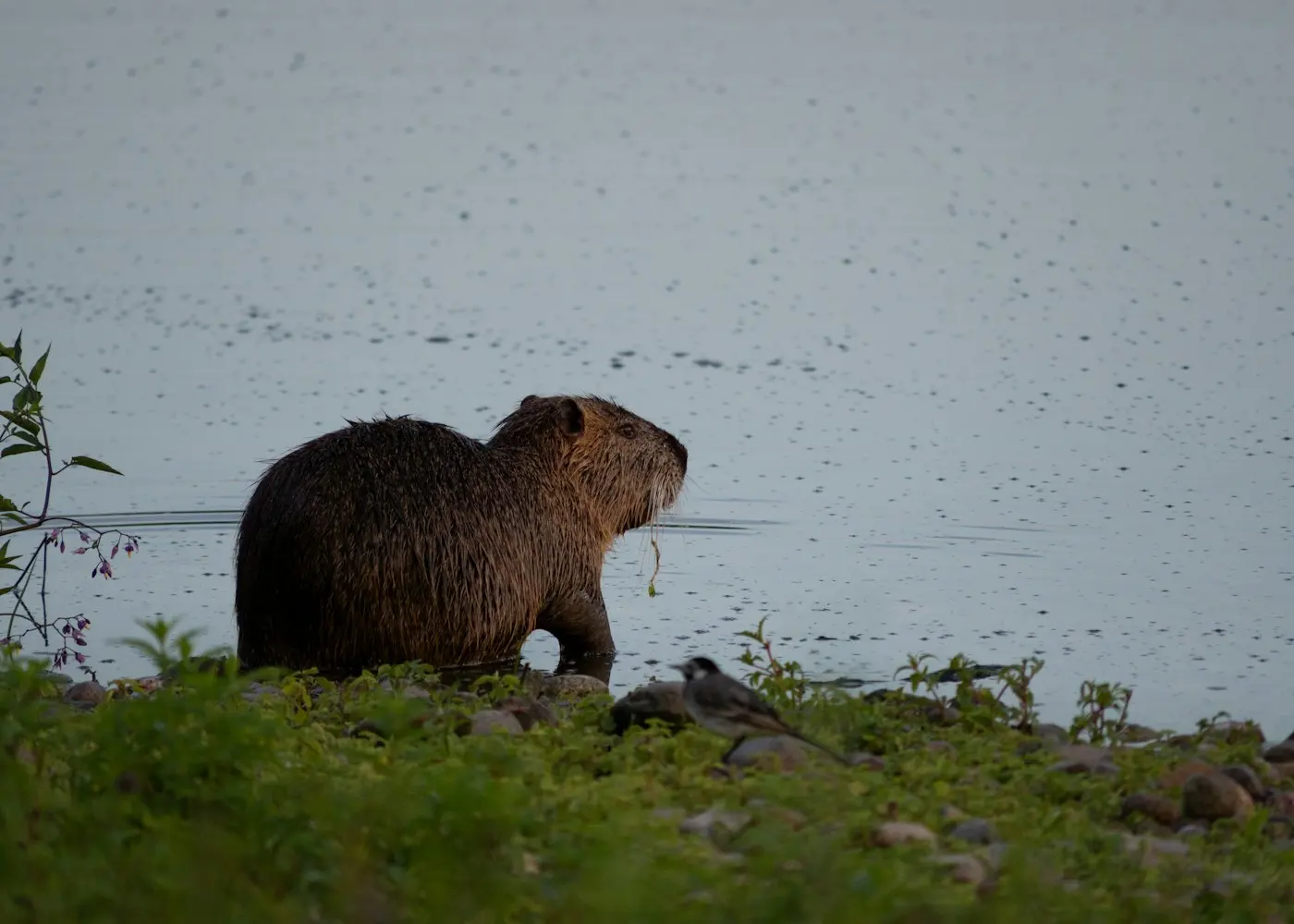
Capybaras love edges because edges solve problems. The bank of a pond, river, marsh, or flooded grassland gives them food, cooling, cover, visibility, and a quick exit into water. It is not a pose. It is a strategy with mud on it.
If you want to understand a capybara, stop staring only at the animal and look at the boundary it chose. Half in water, half on land is not indecision. It is good risk management.
The Shoreline Is Capybara Headquarters
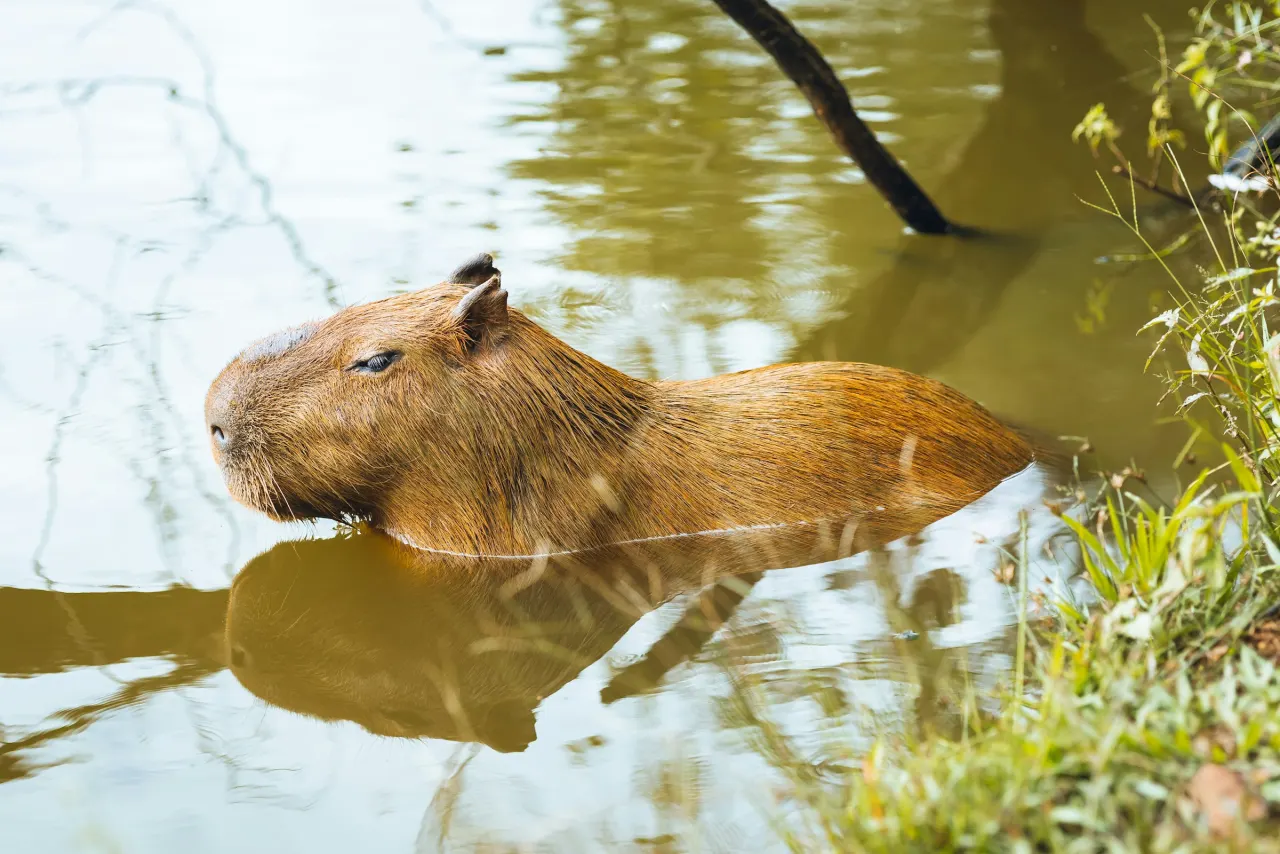
San Diego Zoo Wildlife Alliance describes capybaras as semi-aquatic rodents that use water for feeding, cooling, and predator escape. Animal Diversity Web places them around water bodies across South America, often in grasslands, marshes, and forested river edges.
That is the whole trick. A capybara wants grass nearby and water closer. Too far inland, and it loses the escape route. Too deep in water, and it loses the grazing. The edge lets it keep both tabs open.
The Edge Does Four Jobs At Once
Good capybara habitat is a multi-tool. It does not have to look dramatic. It has to work.
| Edge job | Why capybaras use it |
|---|---|
| Grazing | Grass and aquatic plants are close enough to feed efficiently |
| Cooling | Water helps manage heat during warm parts of the day |
| Escape | A quick plunge can break the line between predator and prey |
| Social spacing | Groups can spread along a bank without leaving each other |
The edge also gives capybaras a better view. A flat bank lets the group graze while someone watches. If a warning bark happens, the water is not a future plan. It is right there.
The Biology Underneath The Habit
The edge preference is not a quirk. It runs straight out of how the animal is built. Capybaras are the world’s largest rodent, with adults landing somewhere around 35 to 66 kilograms (roughly 77 to 145 pounds), so they are not small enough to vanish into a burrow when something goes wrong. Water is their disappearing act instead. Their feet are semi-webbed, which is a body designed for a life that crosses the bank constantly, not one that visits water as a treat.
They are also grazers. Animal Diversity Web and San Diego Zoo Wildlife Alliance both describe them as herbivores feeding heavily on grasses and aquatic plants. A grazer needs a lot of low-quality plant matter and a calm place to process it, and the bank delivers both. As hindgut fermenters they even re-ingest soft morning feces to pull more nutrients out of yesterday’s grass, which is the kind of detail that ruins the “majestic spa animal” branding but explains why a quiet, defensible edge matters so much. You cannot do slow digestion in the open with no exit.
Two more facts tie the knot. Their teeth grow continuously, so the steady grinding of tough wetland grasses is maintenance, not just feeding. And like guinea pigs, their close relatives in family Caviidae, capybaras cannot make their own vitamin C and have to get it from diet. A rich, varied plant edge is not a nice backdrop. It is the pharmacy.
Wild Edge Versus Captive Edge
The same logic shows up whether the capybara is in the Pantanal or behind a fence in Ohio. What changes is who maintains the edge.
| Edge feature | In the wild | In a good captive habitat |
|---|---|---|
| Water | Rivers, marshes, seasonal floods | A real pool or pond they can fully enter |
| Grazing | Native grasses and aquatic plants | Managed grass, browse, and vitamin C in diet |
| Cover | Reeds, banks, dense vegetation | Plants, logs, terrain to retreat behind |
| Group | Self-organizing herds | Social housing, never a lone animal |
That last row matters more than people expect. Capybaras are highly social herd animals, and solitary housing is a recognized welfare stressor, not a lifestyle preference. The bank that one capybara likes is the same bank twenty of them can share without crowding, which is part of why the edge works at all.
What Good Zoo Habitats Copy From Wetlands
The AZA care manual is more detailed than a fan needs for casual viewing, but the visible lesson is easy: good captive habitats need real water access, land space, shade, appropriate surfaces, and social management.
At a zoo, look for a pool or pond the capybara can actually enter, not a token puddle. Look for a bank with space to rest. Look for shade. Look for plants, logs, or terrain that make the habitat feel usable instead of stage-like. A capybara habitat should not read as “brown animal in empty rectangle."
"Always Near Water” Is Not A Personality Trait
Fans often turn biology into personality. A capybara beside water looks calm, wise, and maybe a little tired of your group chat. But the water is not there for aesthetics. It is safety, temperature control, and daily routine.
This is why pet fantasies get shaky fast. If someone says a capybara could be fine with a kiddie pool and vibes, ask what happens in heat, winter, quarantine, cleaning, fencing, social housing, and veterinary emergencies. The edge is not optional decor. It is part of the animal.
A few of the most common edge mix-ups, with the better answer next to them:
| Common claim | Closer to the truth |
|---|---|
| Capybaras just like swimming | They use water to feed, cool down, hide, and escape; swimming is one tool among several |
| Any water bowl will do | They need water they can enter and submerge in, not a decorative dish |
| The calm look means a calm animal | The calm comes from having an exit nearby, not from temperament |
| One capybara with a pool is enough | They are herd animals; alone is a stressor regardless of pool quality |
My honest take: the shoreline capybara is the most over-read animal on the internet. People project serenity onto it and miss that the pose is just a prey animal sitting exactly where its odds are best. That is more interesting than zen, not less.
How To Spot Good Edge Design
Next time you see capybaras at a zoo, watch where they choose to stand. Are they tucked into shade near water? Resting on a dry bank? Grazing within a few steps of the pool? Those choices tell you more than the facial expression does.
A capybara at the shoreline is keeping options open. Honestly, that may be the most relatable thing about it.