
Minnesota’s capybara answer begins with a surprise: the state’s well-known “regulated animal” statute does not obviously name capybaras. That is useful. It is not permission.
The safer 2026 answer is: Minnesota does not appear to ban capybaras under the main regulated-animal statute, but DNR permits, import rules, local ordinances, exhibition law, zoning, and winter care still need written confirmation.
Not obviously named, which is useful but not permission
Minnesota's well-known regulated animal statute does not obviously name capybaras. That is useful information. It is not permission, and the DNR is the office that can turn one into the other.
The Minnesota Answer Starts With A Limited Statute
Minnesota Statute 346.155 defines “regulated animal” around certain big cats, bears, nonhuman primates, and hybrids. Capybaras are rodents, not cats, bears, or primates. So the statute people usually cite for exotic pets does not neatly answer the capybara question.
That is where casual internet answers go wrong. They stop at “not listed.” Minnesota law does not become “yes” just because one statute is aimed elsewhere.
| Layer | Capybara relevance |
|---|---|
| Minnesota Statute 346.155 | Capybaras are not in the core regulated-animal definition. |
| DNR animal permits | May matter depending on wildlife, exhibition, import, possession, or movement. |
| Local ordinances | Cities and counties can restrict exotic animals independently. |
| USDA Animal Welfare Act | Applies to many public exhibition or commercial encounter uses. |
| Winter welfare | A practical barrier even if legal layers clear. |
The DNR And Permit Layers Still Matter
Minnesota DNR’s animal permit pages and state wildlife permit statutes are the next place to check. Public exhibition of wildlife can require permits under Minnesota Statute 97A.041, and special permits under 97A.401 can apply to specific animal activities. Import, transport, display, sale, or commercial use may change the answer.
Here is the trap people miss. Statute 346.155 is the one everyone Googles, and because it is built around big cats, bears, and primates, it reads like a clearance for everything else. But Minnesota’s wildlife permit statutes sit in a different part of the code entirely, and they are organized around what you do with an animal, not whether the animal is scary. A capybara can be outside 346.155 and still land inside a permit requirement depending on how you acquire, move, or display it.
If you plan a private pet, ask that exact question. If you plan a petting experience, social media encounter, school event, breeding operation, or rescue holding, ask those exact questions too. The legal answer changes when the use changes, and “I just want one as a pet” is a different filing than “I want to charge for photos with it.”
For public exhibition, USDA APHIS may also require Animal Welfare Act licensing. A Minnesota permit and a federal exhibition license are separate. One does not substitute for the other, and APHIS runs its own inspections and minimum-care standards regardless of what the state says.
Minnesota Winter Is Not A Footnote
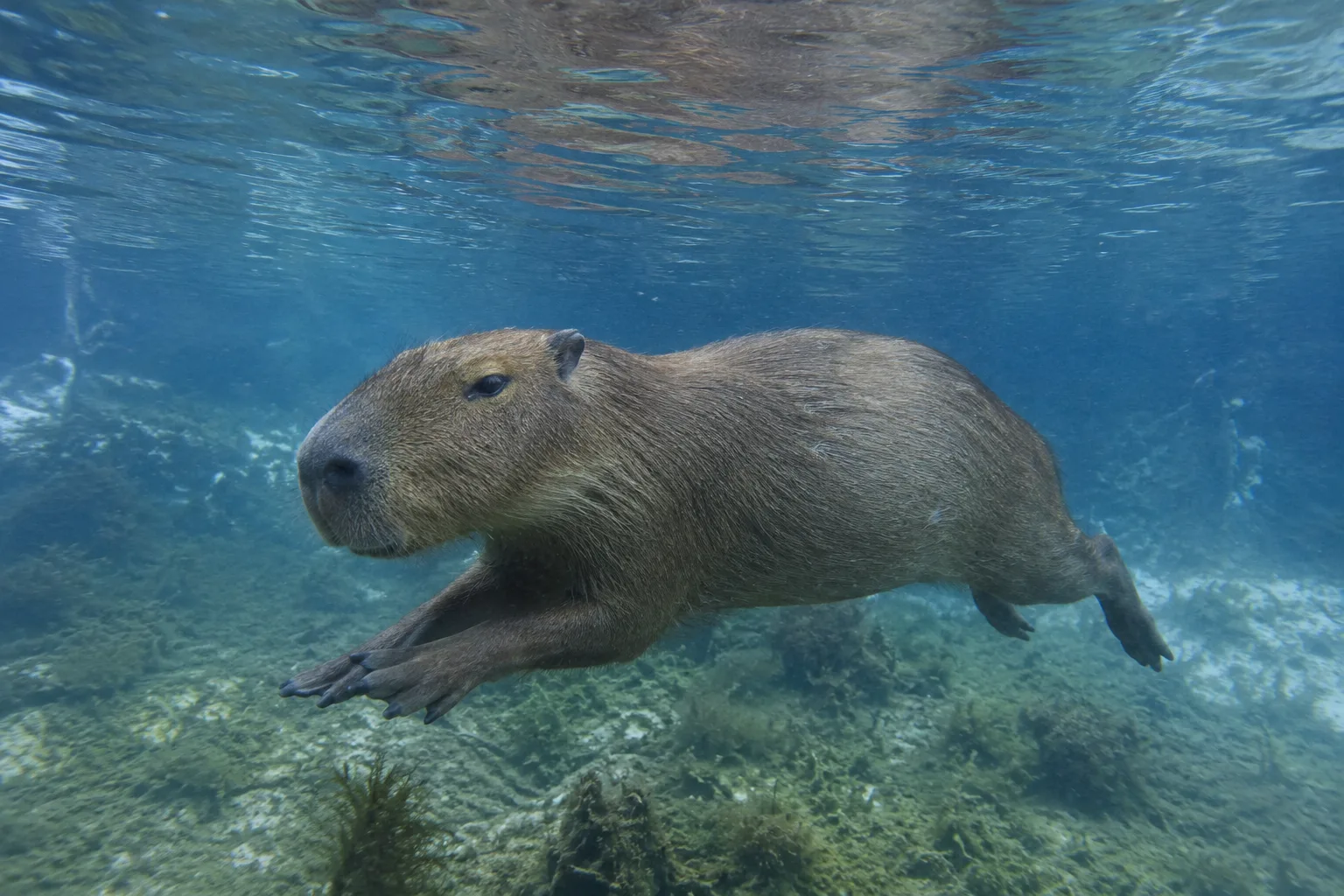
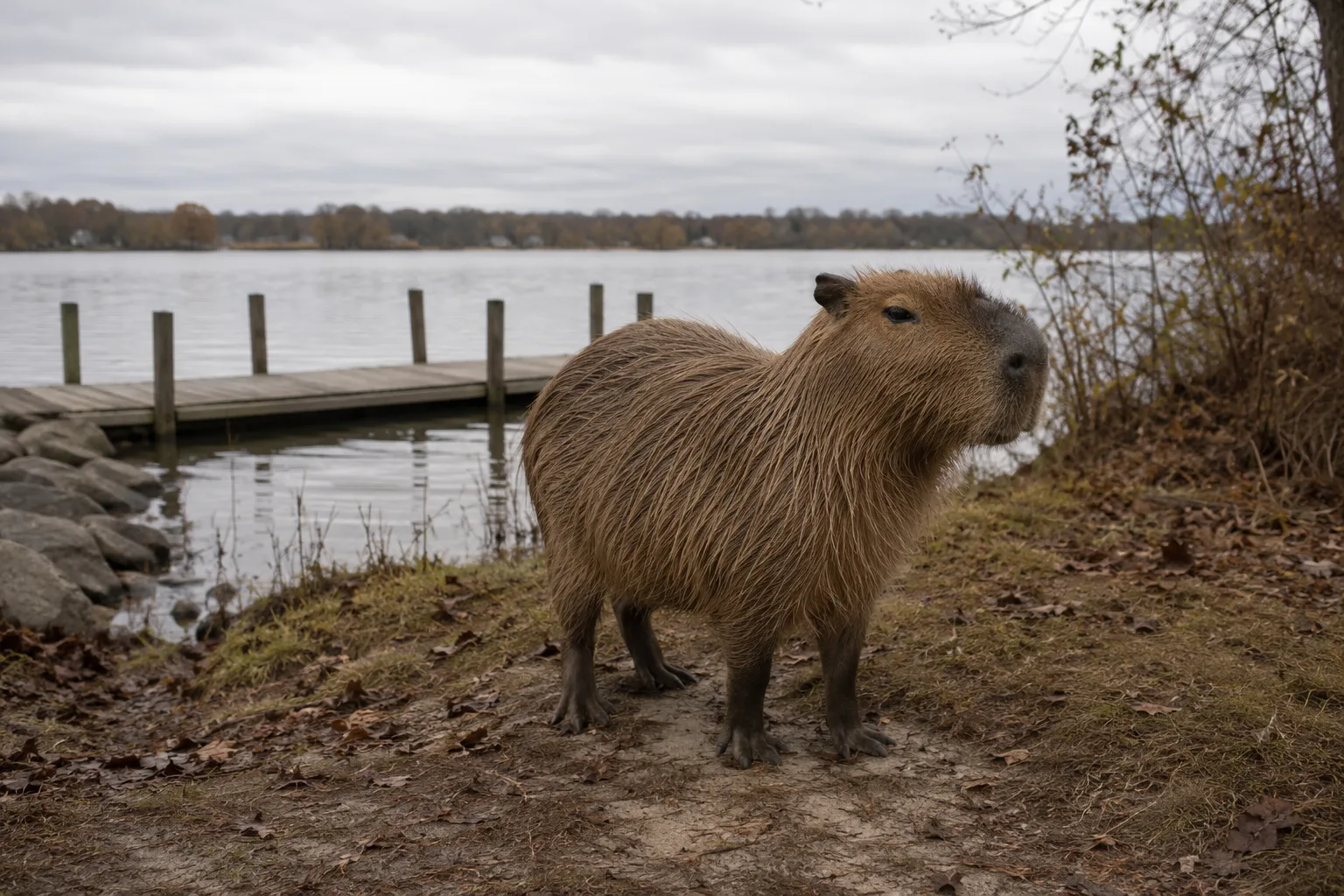
Capybaras are large semi-aquatic South American rodents. Animal Diversity Web describes their water-linked grazing life. The AZA Capybara Care Manual treats water, social housing, shelter, diet, enrichment, and veterinary planning as core care needs.
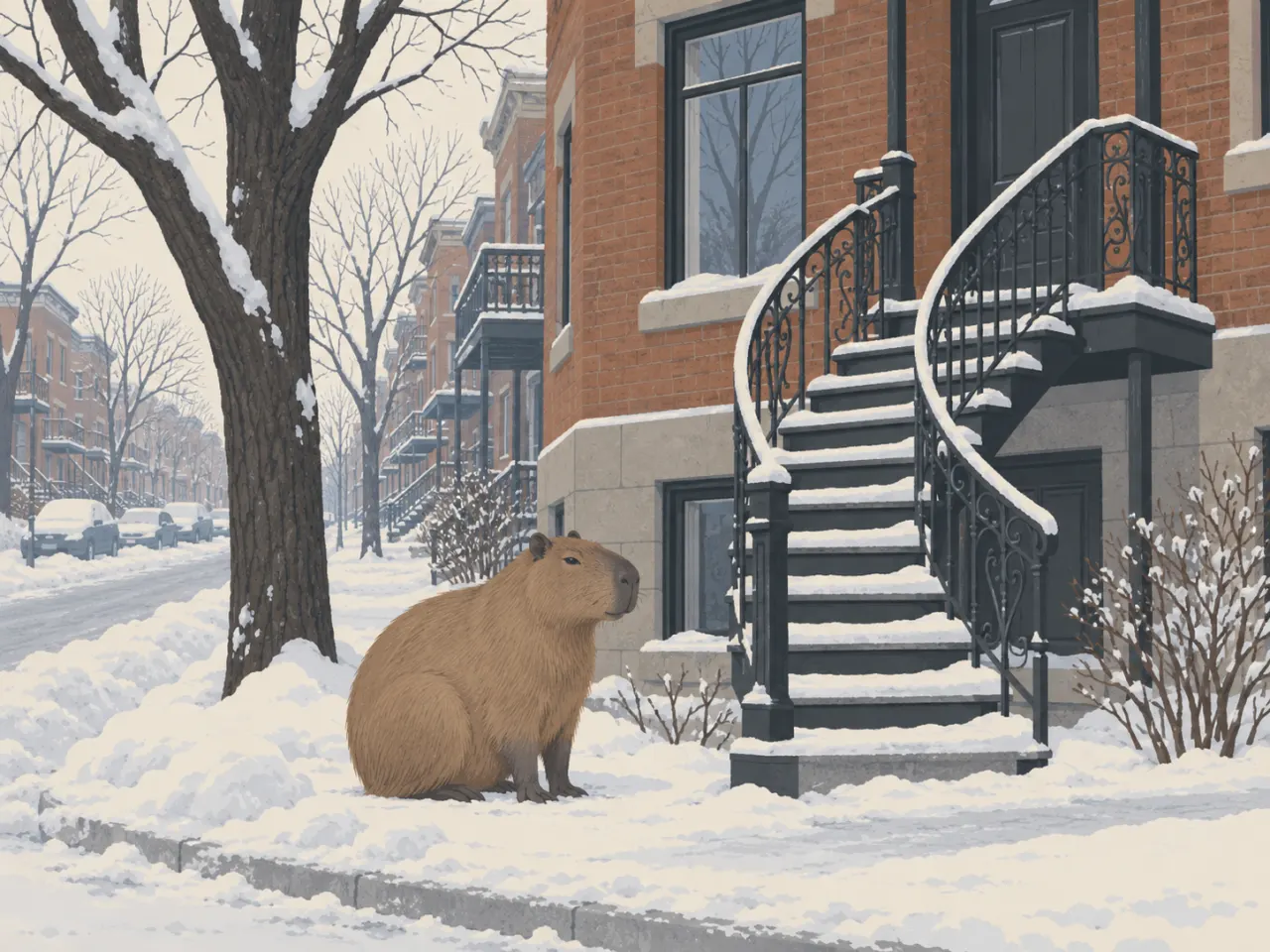
Minnesota makes that brutally practical. Outdoor water freezes. Ground freezes. Pipes freeze. Transport during emergencies gets harder. A real plan needs heated indoor shelter, full-body water access that does not ice over, safe footing, drainage, backup heat, and at least one exotic-animal veterinarian who will treat capybaras.
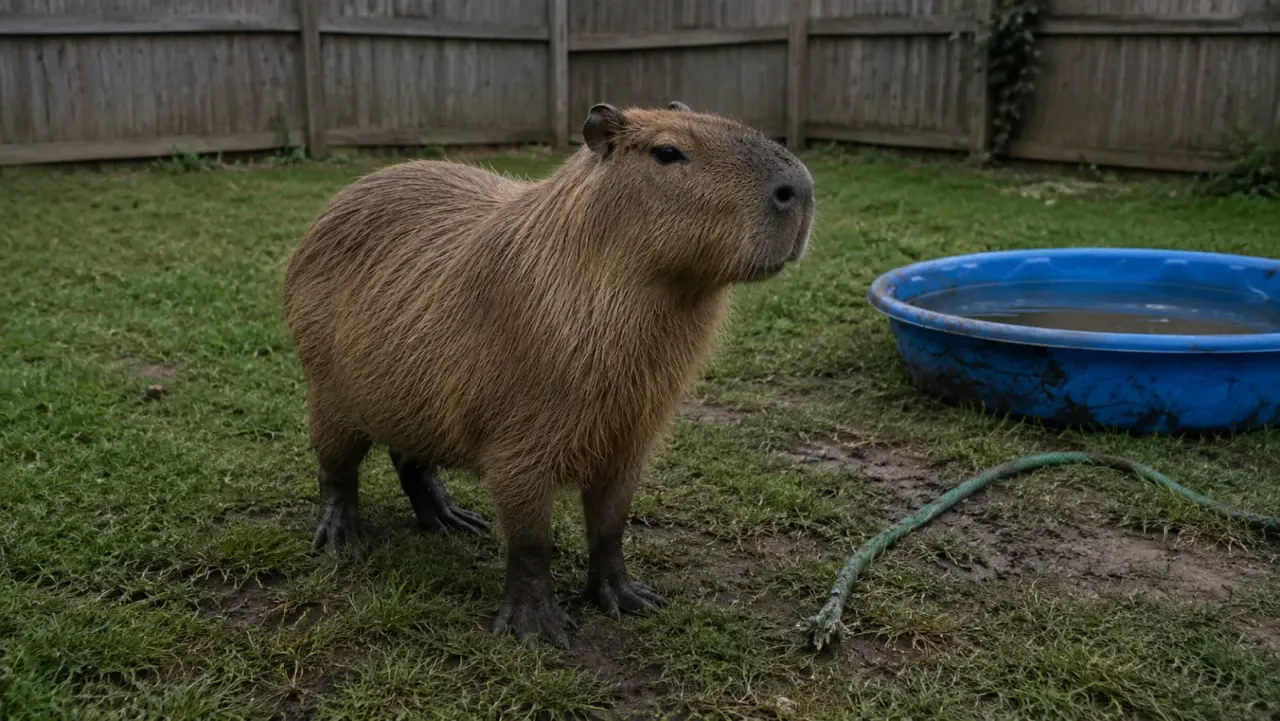
The water requirement is not a luxury. Animal Diversity Web describes capybaras as tightly bound to water, and the AZA care guidance treats pool access as a core welfare need, not a perk. A capybara uses water to thermoregulate, to protect its skin and eyes, and to feel safe enough to rest. In a Minnesota winter, that means a heated, filtered, drained indoor pool you build and maintain, which is closer to a small exhibit than a backyard pond.
What A Minnesota Capybara Actually Costs
Legality is only the entry fee. Capybaras are large, long-lived, social animals, and Minnesota adds a winter tax to every line of the budget. These animals can live well past eight years in captivity, grow past 100 pounds, and need a high-fiber, grass-forward diet supplemented with vitamin C, because like their guinea pig relatives they cannot make their own.
That vitamin C point is a genuine veterinary risk, not a fun fact. Get the diet wrong and you get a sick animal and a bill from one of the few clinics in the state that will see an exotic rodent at all. Then add a heated building, a winterized pool and filtration, secure fencing built for a heavy animal, and a backup heat plan for the night the power fails at minus 20.
And because capybaras are herd animals, the honest plan is at least a pair. Double the feed, double the enclosure, double the animals you have to evacuate in an emergency. A solitary capybara in a cold climate is two welfare problems stacked on top of a legal one.
Minnesota Capybara Myths Worth Killing
| Myth | Better answer |
|---|---|
| ”It’s not in 346.155, so it’s legal.” | That statute targets cats, bears, and primates. Capybaras can still be caught by permit, import, exhibition, or local rules. |
| ”A DNR permit beats my city ordinance.” | No. Local code applies on top of state rules and can prohibit what the state would allow. |
| ”I’ll keep it inside all winter.” | Indoor housing without a real pool, a companion, and an exotic vet is a welfare failure, not a solution. |
| ”One capybara is fine.” | Capybaras are social herd animals. Solitary housing is a recognized stressor in welfare guidance. |
There is a version of this that exotic vets see every winter. Someone calls in January because the outdoor water froze, the animal stopped eating, and the nearest clinic that treats capybaras is a long, icy drive away. The 346.155 question was never the hard part. The hard part was a wetland mammal trying to make it through a Minnesota cold snap in a setup designed for a summer video.
Import Is Its Own Checkpoint
A lot of capybara deals involve an animal coming from another state, and that is where a Minnesota plan can quietly fail before it starts. Bringing an animal across state lines can pull in transport documentation, health certificates, and acquisition-source questions that have nothing to do with whether you can keep one once it arrives.
So ask about the journey, not just the destination. Where is the animal now, who bred it, what paperwork travels with it, and does moving it into Minnesota trigger any health or import step. A seller who can produce records is a different risk than one who answers in adjectives. The animal is the easy thing to want. The documentation is the thing that keeps a hopeful owner out of a seizure file.
The Minnesota Paper Trail Checklist
Before buying, importing, reserving, or building, collect written answers and keep them on file.
| Agency / document | What to ask | Why it matters | What changes the answer |
|---|---|---|---|
| Minnesota DNR | Does private possession, import, transport, or exhibition of a capybara require a state permit? | DNR administers the wildlife permit statutes that 346.155 does not cover. | Pet vs. exhibition vs. breeding; import vs. in-state; number of animals. |
| City or county animal control | Does local code prohibit exotic mammals, large outdoor enclosures, or non-domestic animals? | Local ordinances can ban what the state would permit. | Municipal limits, nuisance rules, lot size. |
| Zoning or HOA | Are ponds, heated animal buildings, fencing, or exotic animals allowed at this property? | Land use and covenants control what you can build and keep. | Zoning district, HOA covenants, lease or mortgage terms. |
| USDA APHIS | Does any public display, paid encounter, or commercial use require federal AWA licensing? | Federal exhibition licensing is separate from the state permit. | Any paid public contact, photos for money, or commercial sale. |
| Exotic-animal veterinarian | Will you treat capybaras, including winter emergencies? | Care and licensing both assume a real vet relationship. | Distance to clinic, after-hours coverage, exotic-rodent experience. |
The Minnesota Bottom Line
Minnesota is not an obvious statutory ban, but it is not a fantasy clearance aisle either. The regulated-animal statute most people cite is aimed elsewhere, which means the real work is permits, local code, and a winter care system that would make a small zoo nod. If your plan cannot survive DNR confirmation, your city, and the February water math, the answer is no for you.
Minnesota’s answer is spread across 346.155, the DNR wildlife-permit statutes, import rules, and local code, and any of them can be revised. This reflects what was on the books as of June 2026. Before you act, confirm the current rules with Minnesota DNR, your city or county animal control office, and a qualified attorney. Treat this as a starting point, not legal advice, and treat the AZA care standard, not a viral clip, as the welfare bar.