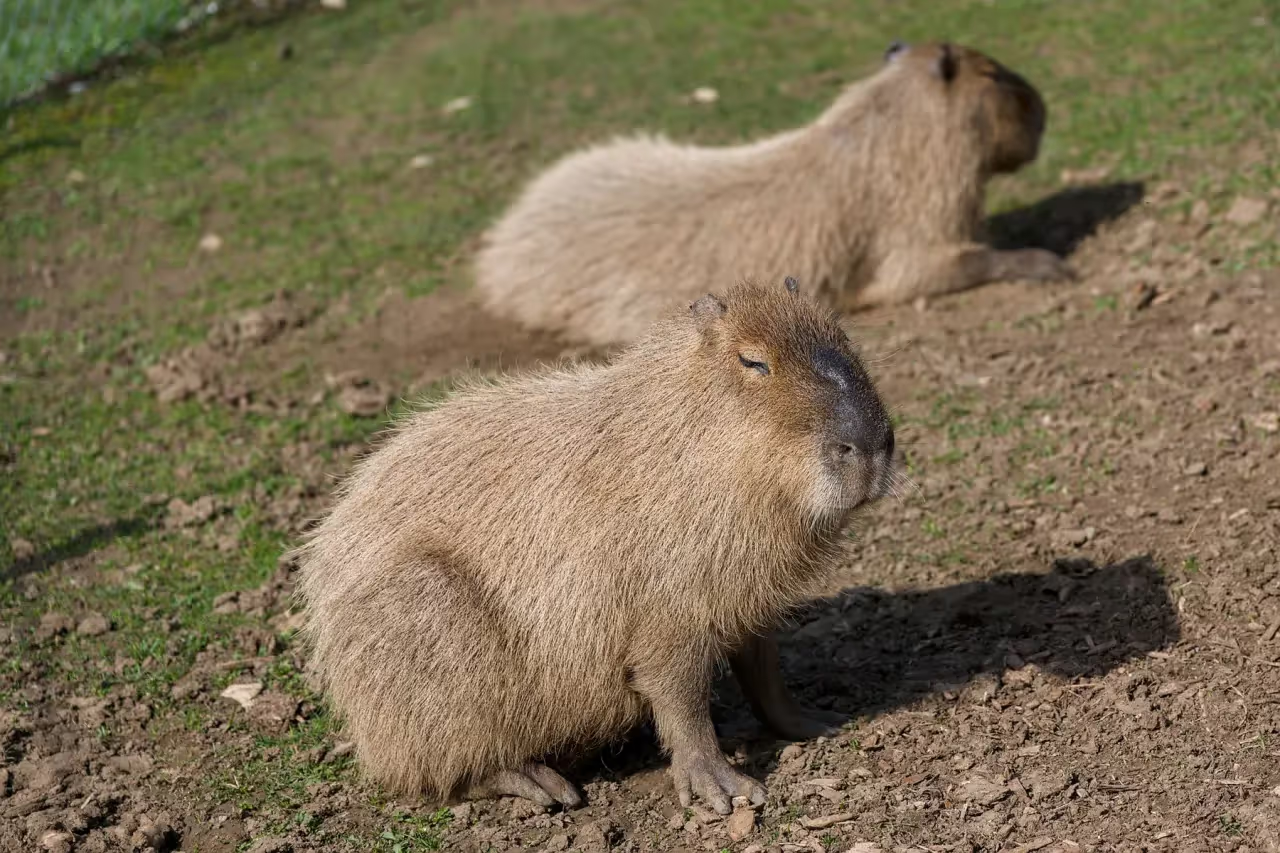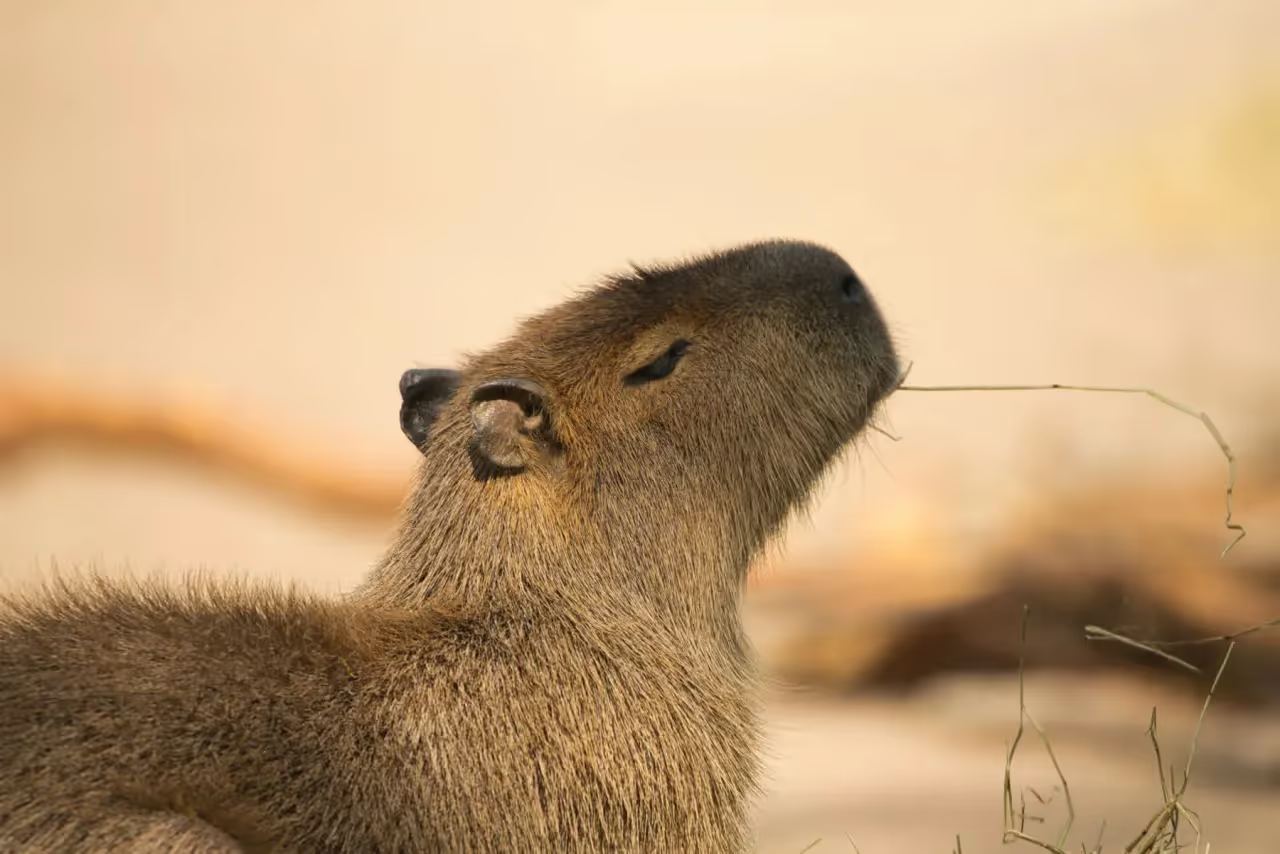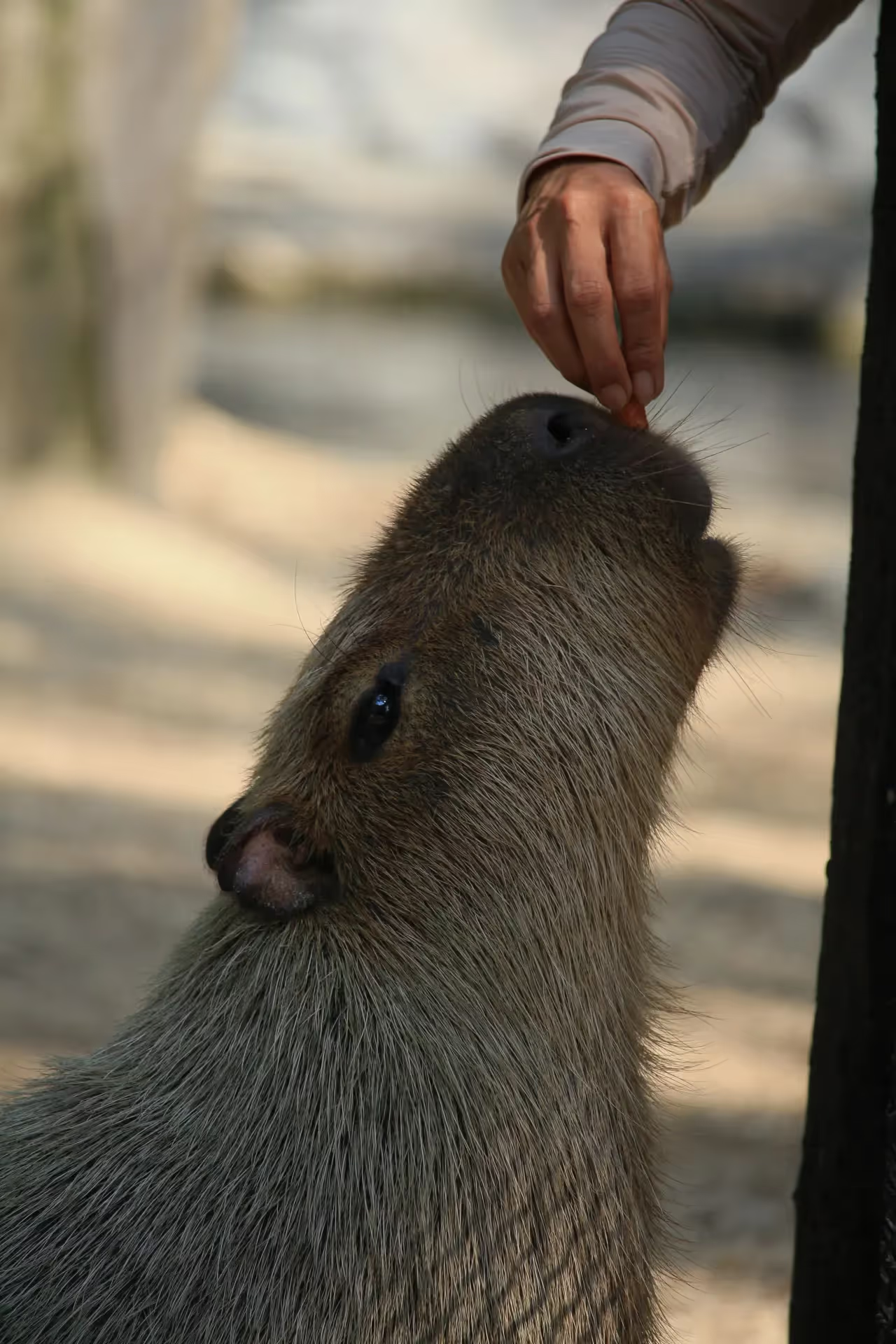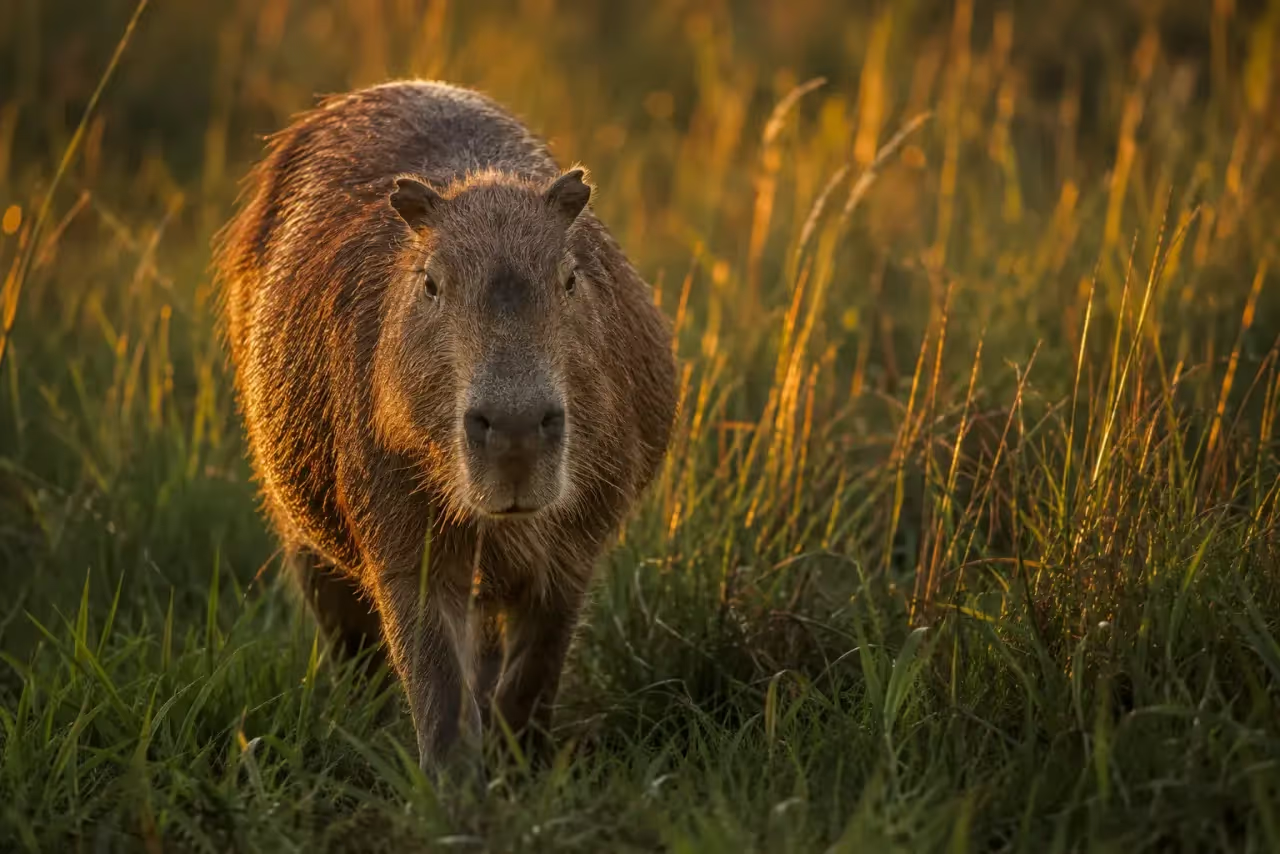
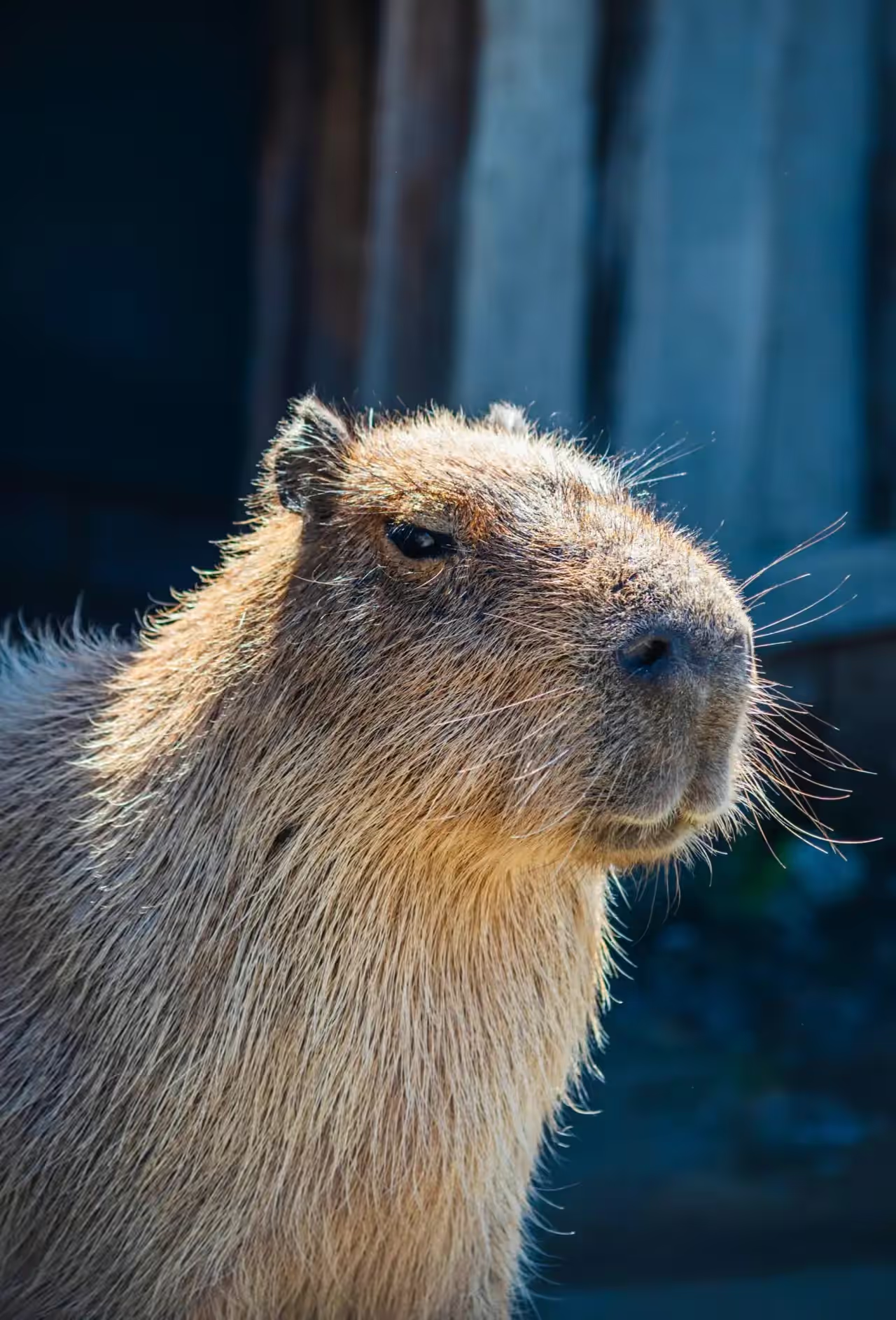
Every viral capybara photo is secretly a social skills demonstration. A bird stands on its head. A monkey drapes across its back. A duck moves in. The capybara does nothing, says nothing, and somehow ends up looking like the most beloved animal in the frame.
That’s the trick worth stealing two days before Thanksgiving. The capybara is the most popular animal on the internet precisely because it has opted out of social performance. It doesn’t entertain. It doesn’t perform agreement. It just tolerates, stays present, and keeps its communication to a minimum. That is, accidentally, a complete survival kit for a long dinner with relatives.
To be clear, this is a coping toolkit, not a license to be cold. Capybaras aren’t antisocial. They’re low-effort social, which is a different and much more useful thing.
The Capybara Social Cheat Code
The strange part is how successful the strategy is. Capybaras aren’t tolerated despite being passive. They’re popular because of it.
Animal Diversity Web describes capybaras as highly social animals living in stable groups that average around ten adults and can climb to thirty or more near water in the dry season. Group living is so essential that, as ADW puts it, without a group an individual is shut out of most grazing habitat. So capybaras have every reason to stay in the room. They just refuse to make it harder than it needs to be.
No performing. No forcing. Maximum belonging for minimum output. Around a Thanksgiving table, that ratio is the entire goal.
The Five Techniques, Table-Tested
Each of these maps to a real, documented capybara behavior. I’ve matched them to the dinner-table situations where they earn their keep.
1. Tolerate, don’t engage. Capybaras let birds perch on them. The cattle tyrant rides along eating insects and parasites in a cleaning relationship documented in a 2024 study in Frontiers in Ecology and the Environment. The capybara doesn’t host the bird or make small talk with it. It allows. When a cousin launches a monologue about crypto, you don’t need to debate it. You need to allow it, like a capybara allows a bird.
2. Strategic stillness. A still capybara reads as calm, not awkward. Stillness is a feature. When the table tension rises, the move is to get quieter and slower, not to fill the gap. Half the social damage at Thanksgiving comes from people who couldn’t leave a silence alone.

3. The slow exit to water. When a capybara is overwhelmed, it doesn’t make a scene. It slips into the pond. Capybaras are semi-aquatic and use water to cool off, escape, and reset. Your pond is the kitchen, the porch, or the dog. No announcement, no “well, I should probably.” You just drift, quietly, toward calmer water and come back when the heat drops.
4. Parallel presence over conversation. Capybaras live in groups and spend huge amounts of time simply resting near each other, not interacting. Being together is the point, not talking. You’re allowed to sit beside your aunt, peel a vegetable, and say nothing for ten minutes. That’s not failure. For a capybara, that’s the whole relationship.
5. The vocal minimum. Here’s the part people miss. Capybaras communicate constantly, just quietly. The San Diego Zoo Wildlife Alliance notes that young capybaras emit an almost continuous guttural purr, and adults use barks, whistles, and tooth-clicks. They’re never silent, they’re just low-volume. You don’t have to go mute to survive Thanksgiving. You just keep it to the soft, steady contact sounds and skip the big speeches.
When To Deploy Each Technique
| Situation at the table | Capybara technique | Deploy when |
|---|---|---|
| Cousin’s 20-minute crypto theory | Tolerate, don’t engage | He wants a debate, not a conversation |
| Sudden tense silence after a comment | Strategic stillness | Anyone else is about to make it worse |
| You feel the social battery hit zero | The slow exit to water | You need five minutes, not a discussion |
| Long stretch with nothing to say | Parallel presence | Sitting near people is enough |
| Pressure to “join in” and perform | The vocal minimum | A quiet “mm” does the whole job |

Why The Capybara Approach Actually Works
The reason this isn’t just cute is that the capybara’s whole social life runs on it.
Capybaras stay famously calm in chaotic mixed-species settings precisely because they don’t try to manage the chaos. They co-exist with it. The birds, the chaos, the loud relative theorizing about the economy, none of it requires a response. It requires patience and the occasional quiet move toward water.
You’re not trying to win Thanksgiving. Nobody wins Thanksgiving. You’re trying to be the unbothered one in the photo with a duck on your head, present and fine, having said almost nothing. The capybara figured this out a long time ago. The least we can do is take notes.