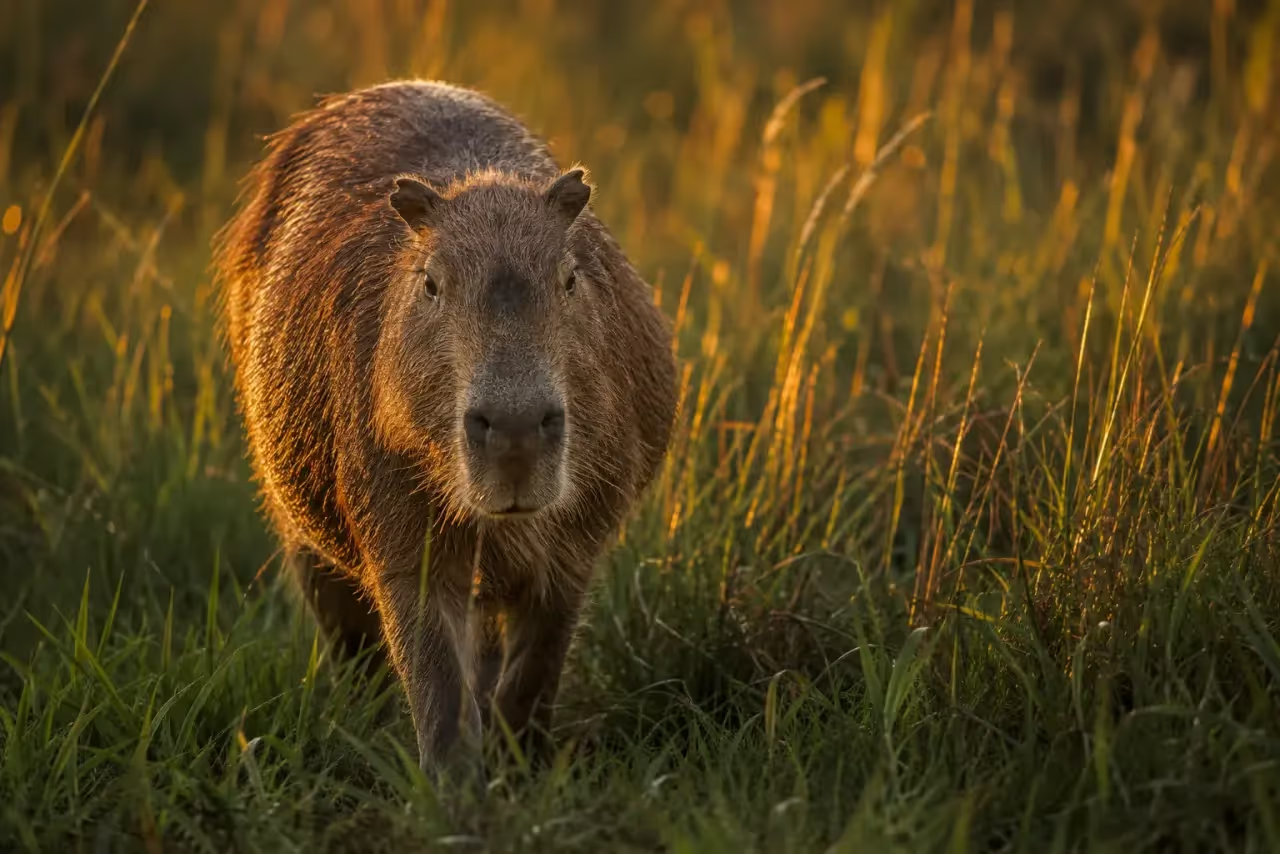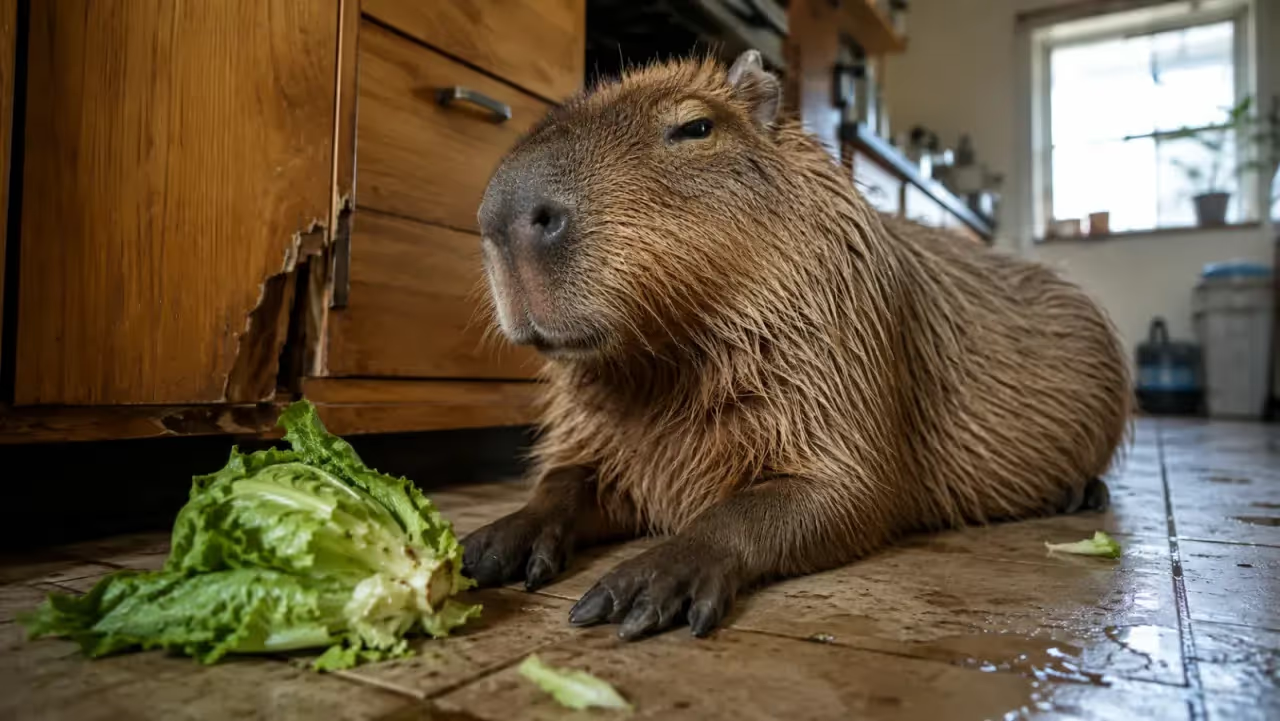

Capybaras do not eat meat. The world’s largest rodent did not wander out of a wetland hoping someone had spare brisket.
They are herbivores: grazers, plant processors, hay enjoyers by biological obligation rather than personality. The confusing parts are pellets, protein, and one deeply unglamorous digestive behavior that we will discuss with dignity and then move on.
Do Capybaras Eat Meat? The Direct Answer
No. Capybaras are herbivores. Animal Diversity Web describes their diet around grasses and aquatic plants, and San Diego Zoo frames them as grazing animals. In managed care, the AZA Capybara Care Manual centers hay, browse, pellets where appropriate, vegetables in controlled ways, and water access.
This is a good place to be annoyingly precise. “Herbivore” does not mean “can eat any plant.” It means the normal diet is plant-based. Caretakers still have to manage fiber, mineral balance, vitamin needs, dental wear, calories, water, and which plants are safe. A capybara is not a compost bin with charisma.
| Food type | Capybara answer |
|---|---|
| Grass | Yes, core diet |
| Aquatic plants | Yes, natural diet |
| Hay | Yes, managed-care staple |
| Meat | No |
| Fish | No |
| Protein pellets | Sometimes, as herbivore feed |
The “protein pellets” row is where people get confused. Protein is a nutrient, not a steak.
What Capybaras Actually Eat
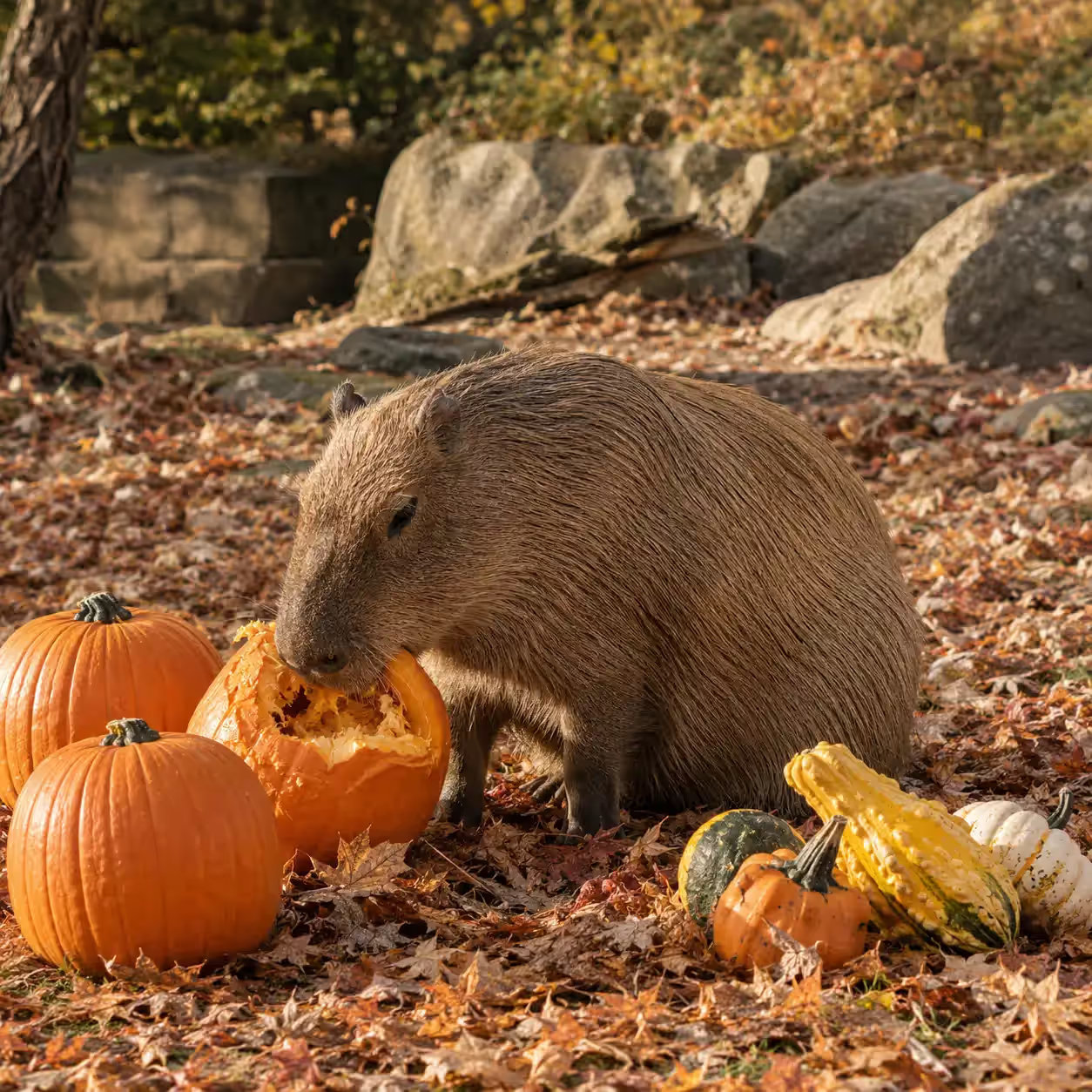
Capybaras are built to process high-fiber plant material. In the wild, that means grasses, aquatic plants, and other vegetation around wetlands and water edges. In zoos or qualified care settings, it usually means hay, browse, pasture access where appropriate, formulated herbivore pellets, and limited produce.
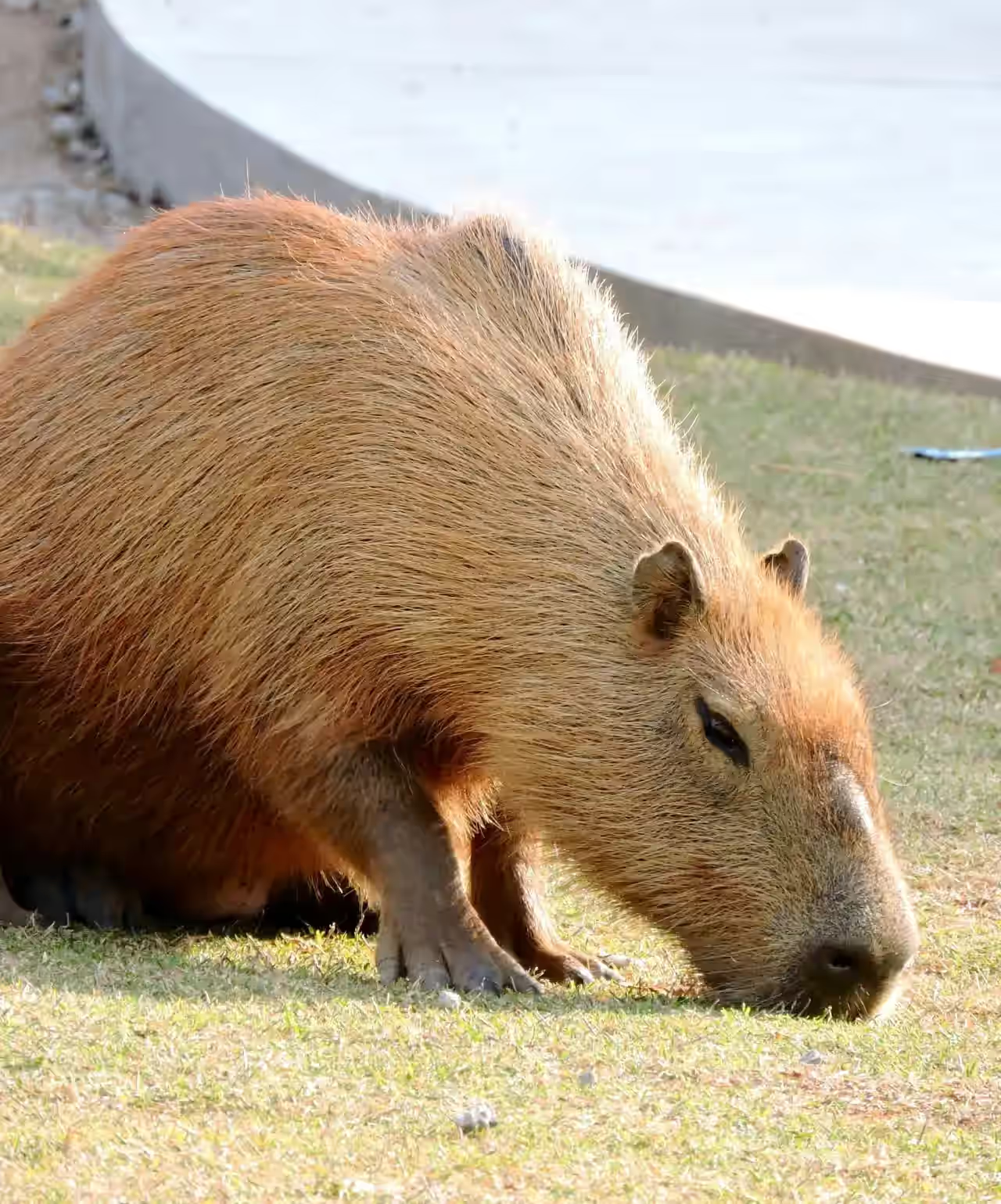
The full diet guide gets more specific, but the big picture is not subtle. If the food plan looks like human snack chaos with lettuce nearby, it is not a serious capybara diet.
Why Protein On A Feed Label Confuses People
Herbivores still need protein. They just get it through plants, microbes, and managed feeds rather than hunting. A capybara pellet may contain protein because animals need amino acids. That does not mean the animal is omnivorous.
The other confusion is coprophagy. Capybaras can eat certain fecal material as part of digestion and nutrient recovery. The poop-eating explainer covers that without making anyone’s lunch worse than necessary. It is not meat eating. It is hindgut-fermentation bookkeeping, which is somehow less pleasant but more accurate.
There is a small keeper-style lesson hiding here: diet labels are not vibes. “High protein” does not mean carnivore. “Natural” does not mean safe. “They liked it” does not mean it belongs in the diet. A capybara that accepts a strange food is not giving nutritional consent; it is being an animal near an opportunity. That is why serious feeding plans are boring on purpose.
| Confusing thing | What it actually means |
|---|---|
| Protein in pellets | Nutrient balance, often plant-based |
| Eating feces | Digestive nutrient recovery |
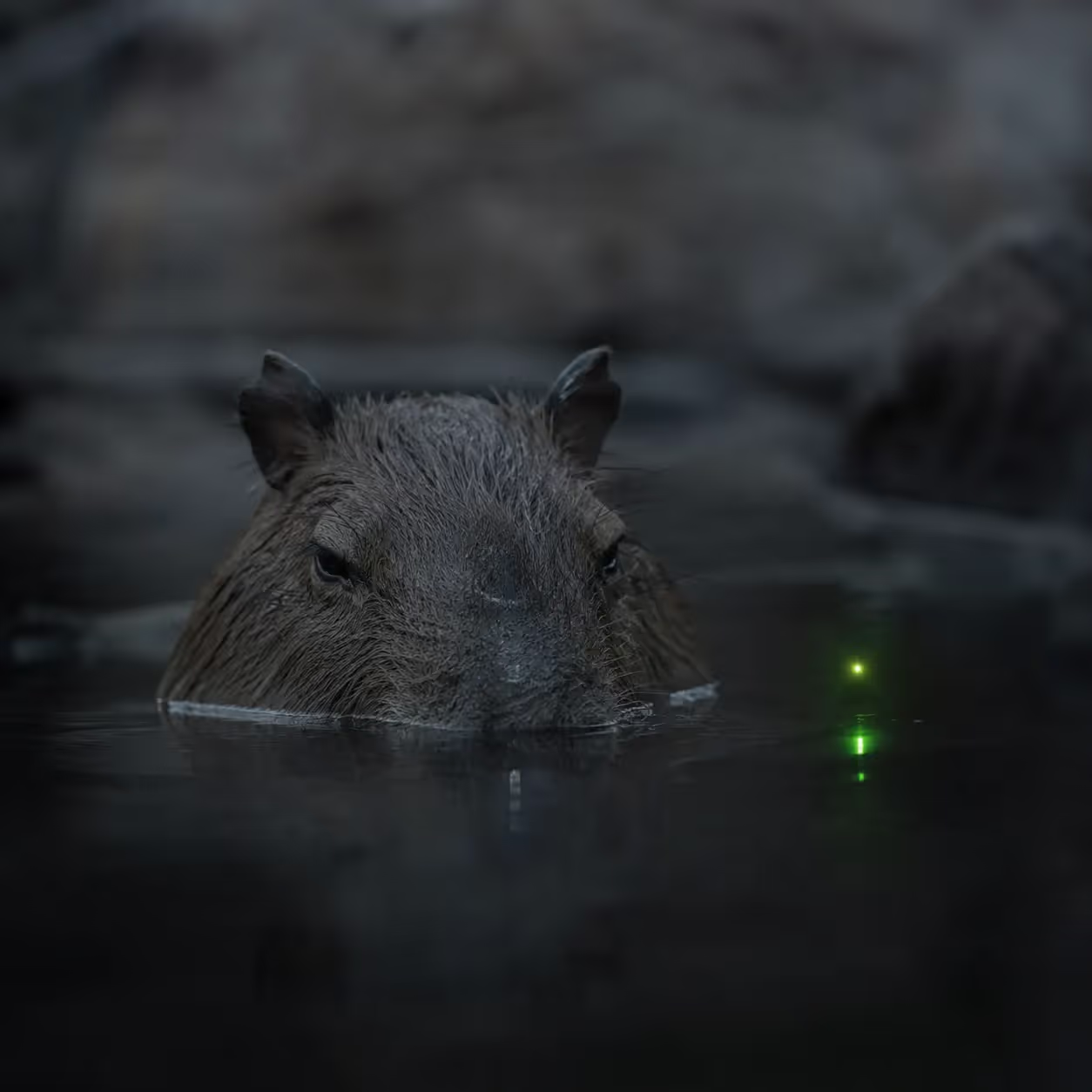
| Grazing near water | Aquatic plants, not fish hunting |
| Strong teeth | Cutting and grinding plants |
| Rodent label | Does not mean “eats everything” |
Common Meat And Diet Myths
| Myth | Better answer |
|---|---|
| Capybaras eat fish because they swim | They swim and graze; they do not fish |
| Rodents are scavengers, so capybaras eat meat | Capybaras are specialized grazers |
| Pellets mean animal protein | Pellets can support herbivores without meat |
| Fruit is natural, so it can replace hay | Treat foods do not replace fiber |
The mistake underneath all of this is treating “rodent” like one diet. Beavers, rats, guinea pigs, porcupines, and capybaras are not one buffet club. Same order, very different habits. This is where internet confidence gets ahead of biology and starts waving a burger around.
This is especially useful for parents and students. If the homework question says “Do capybaras eat meat?” the answer is no, but the better sentence is: capybaras are herbivorous semi-aquatic rodents that mainly graze on grasses and aquatic plants. That wording survives a worksheet, a search snippet, and a dinner-table fact correction from a child who has become briefly unbearable.
For owners, the stakes are higher than trivia. Meat, rich human food, and random kitchen leftovers do not belong in a capybara plan. If a feed question gets more complicated than hay, forage, browse, produce limits, and formulated herbivore support, the next person in the conversation should be an exotic-animal vet or qualified keeper, not a comment thread.

It Is Not Planning Seafood
Do capybaras eat meat? No. Capybaras are herbivores built around grasses, aquatic plants, hay, browse, and managed high-fiber diets.
If you are watching a capybara near water, it is not planning seafood. If you see protein on a feed label, do not assume meat. And if someone says capybaras eat anything because they are rodents, please confiscate their confidence until further notice.