Yes, capybaras need vitamin C in managed diets. No, that does not mean your supplement drawer should get involved.
The AZA Capybara Care Manual says capybaras need a dietary source of vitamin C. It also warns that fruit, while vitamin-rich, is high in sugar and should not be the sole way managed capybaras receive it. That is the entire article’s adult supervision in two sentences.
Yes, Managed Capybaras Need Dietary Vitamin C
Capybaras are herbivorous hindgut fermenters with diet needs that are easy to oversimplify. In the wild, they graze heavily on plants. In managed care, diets have to be planned around fiber, gut health, vitamin C, weight, teeth, and individual health.
AZA guidance is clear that vitamin C matters. A PubMed-indexed study on captive capybaras and scurvy is a reminder that this is not trivia. Deficiency can become a real health issue.
The Guinea Pig Comparison Is Useful But Dangerous
Capybaras and guinea pigs are relatives, and the comparison helps people remember the vitamin C issue. It also creates trouble because people then start thinking of capybaras as oversized guinea pigs with better PR.
They are not. A capybara is a large semi-aquatic animal with different space, water, social, diet, and veterinary needs. The cousin comparison gets you to the door. It should not write the care plan.
Fruit Is Not A Complete Vitamin Plan
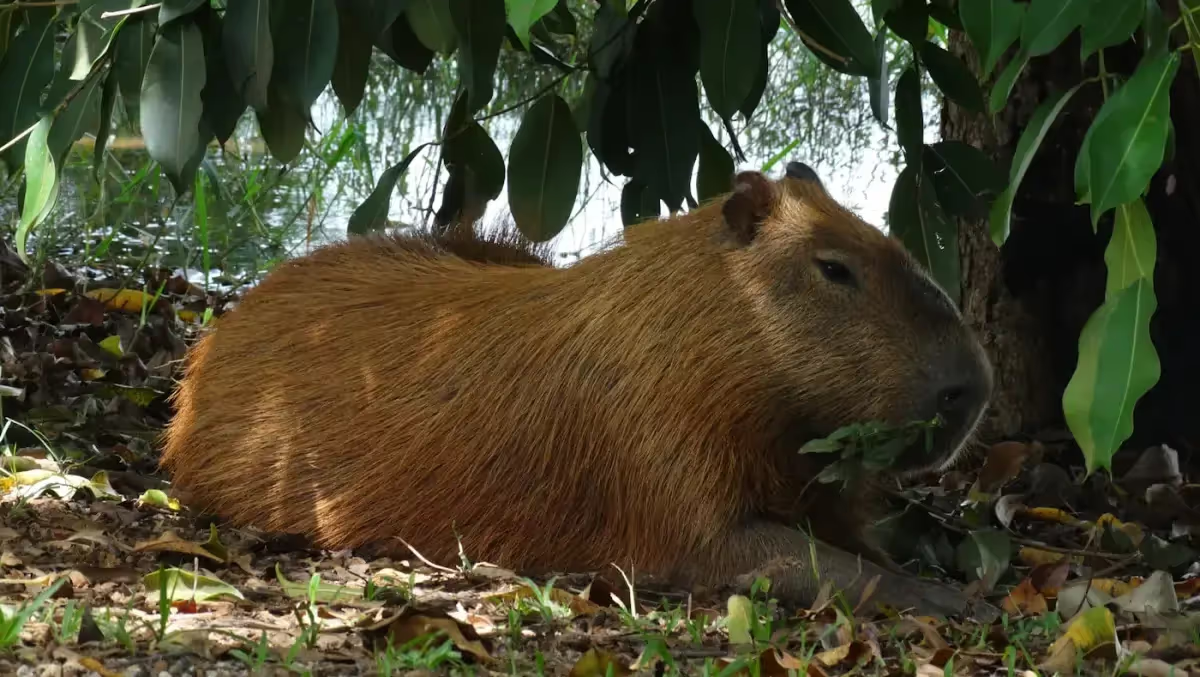
This is the sneaky part. Fruit sounds natural, friendly, and safe. The AZA manual says fruit is common in capybara diets because it contains vitamin C, but cultivated fruit is high in sugar and can disrupt gut microbial populations.
That is why “just give more fruit” is bad internet medicine. The goal is not a fruit salad with feet. The goal is a managed diet.
| Bad shortcut | Better care framing |
|---|---|
| More fruit fixes vitamin C | Fruit sugar can be a problem; diet needs planning. |
| Use guinea pig advice | Ask a capybara-qualified vet or zoo nutrition source. |
| Supplements are harmless | Dosing and form should be professionally directed. |
| If it eats it, it is fine | Palatability is not the same as nutrition. |
Signs The Diet Advice Is Sketchy
Be suspicious when advice gives a dose without context, ignores hay or forage, treats fruit as a main food, says “they’re basically guinea pigs,” or comes from someone selling an animal before explaining water access.
Also be suspicious of confidence. Capybara care advice should sound a little boring and cautious because the animal is large, specialized, and not common household furniture.
Why Capybaras Cannot Make Their Own Vitamin C
Most mammals build vitamin C in the liver and never think about it. Capybaras, like guinea pigs and a few other caviomorph rodents, lost that ability somewhere back down the family tree. The enzyme that finishes the job in other animals does not work in them, so the vitamin has to arrive in the diet, every day, from outside the body.
That is the whole reason this question exists. A dog or a horse can eat a vitamin-C-poor diet for a long stretch and stay fine. A capybara cannot. The animal has no internal reserve to coast on, and the body does not store much of it either, so a gap is not a slow drift toward a problem. It is the problem, fairly quickly.
This is also why the guinea pig comparison keeps coming back even though it is clumsy. The shared trait is real. The scale, the housing, the water needs, and the veterinary picture are not. Borrow the metabolic warning, leave the rest of the guinea pig manual on the shelf.
Vitamin C in feed is also less stable than people assume. It degrades with heat, light, moisture, and time. A bag of pellets that listed a fine number on the label months ago may not be delivering that number by the time it reaches the bottom of the bin. Storage and freshness are part of the plan, not an afterthought, which is one more reason this sits with people who track feed properly rather than with a comment thread.
What Vitamin C Deficiency Actually Looks Like
The clinical term is scurvy, and it is the same broad failure you would recognize in any species that cannot make the vitamin. Vitamin C is needed to build and maintain collagen, the connective tissue that holds joints, gums, skin, and blood vessels together. Without it, that scaffolding starts to fail.
A PubMed-indexed study documented scurvy in capybaras bred in captivity in Argentina, so this is recorded in the literature, not folklore. Real animals, real deficiency, real consequences.
| Area | What can show up | Why it happens |
|---|---|---|
| Joints / movement | Stiffness, reluctance to move, lameness | Collagen failure in connective tissue |
| Mouth / gums | Swollen, bleeding, or sore gums | Vitamin C is needed to maintain gum tissue |
| Skin / coat | Poor coat, slow-healing wounds | Collagen is central to skin repair |
| General | Low appetite, lethargy, weight loss | Knock-on effects of a sick animal |
None of that is something to diagnose from a webpage. The honest version is that by the time a fan notices the obvious signs, the animal has been short for a while. This is exactly why managed capybara care leans on routine, planned diets and a vet who knows the species, instead of waiting for symptoms to announce themselves. Prevention here is boring and constant, which is precisely the point.
Ask The Exotic Vet, Not The Comments
If you are a normal fan, the takeaway is simple: capybaras need vitamin C, and that is one more reason private ownership is not casual.
If you are involved in actual care, this article is not a diet prescription. Work with a qualified exotic-animal veterinarian or zoo nutrition professional. The comments section has never met your animal, your forage, your pellets, your water system, or your veterinary records, and yet it is very brave.