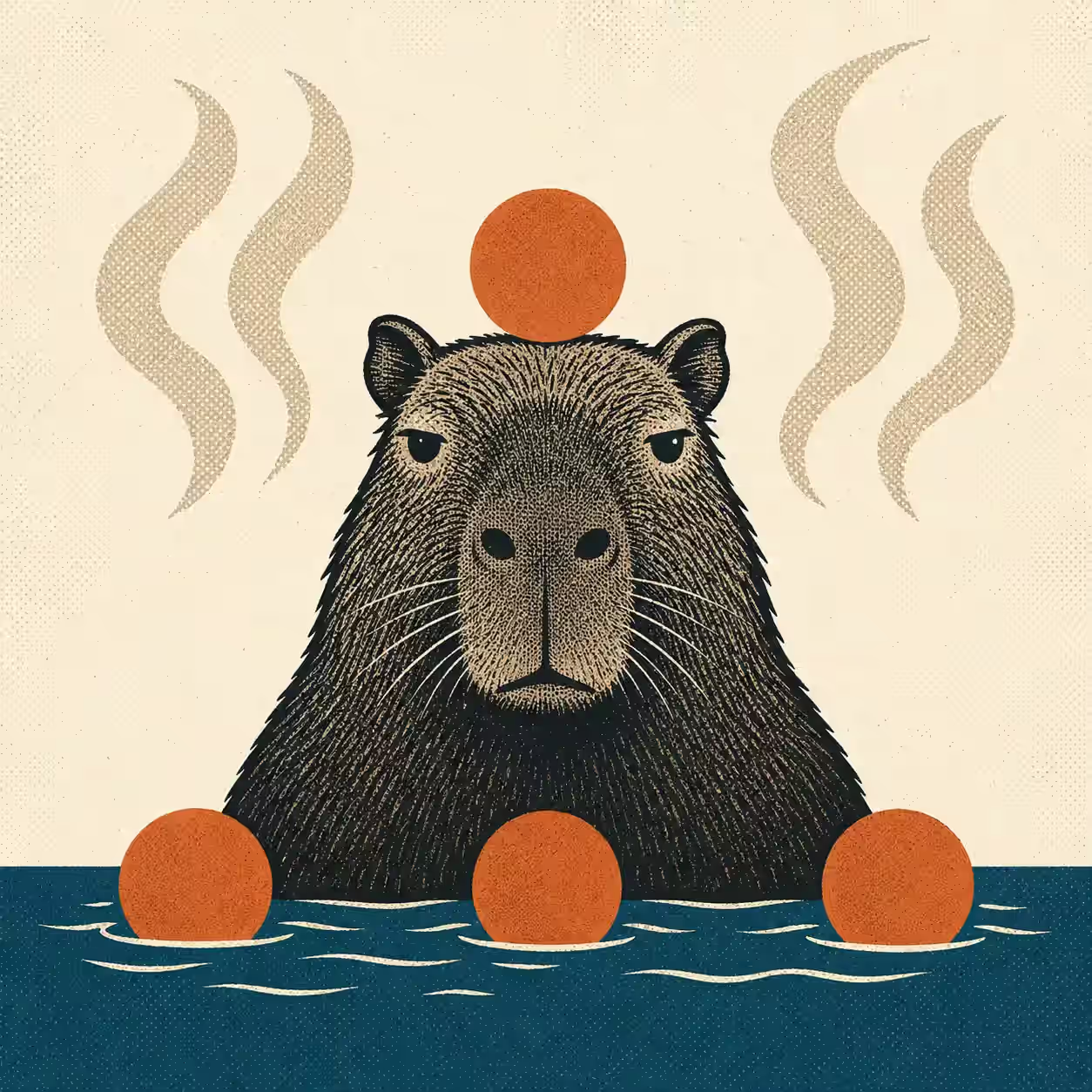
Japan loves capybaras because Japan found the scene that explains them best: a large, calm, water-loving rodent sitting in a hot bath while winter gives up around it.
That is not the whole story, but it is the image that made the story travel. The yuzu bath is cozy, strange, seasonal, and extremely easy to understand even if you know nothing about capybara biology.
The Short Answer on Japan Capybara Culture
Japan’s capybara culture is built around managed zoo and park experiences, especially winter outdoor baths. Izu Shaboten Zoo calls itself the birthplace of the original capybara outdoor bath and describes the event as a winter tradition held from November to the following April.
The capybara did not become beloved in Japan by acting flashy. It became beloved by doing the most capybara thing possible: sitting in water with a face like an exhausted civil servant.
| Japanese capybara hook | Why fans care |
|---|---|
| Outdoor baths | The clearest visual: warm water, winter air, calm animal. |
| Yuzu citrus | Connects capybaras to a recognizable winter bathing custom. |
| Zoo rituals | Seasonal events give fans a reason to return and photograph. |
| Long-soak contests | Absurdly specific, deeply on-brand. |
| Cafe and petting stops | More direct interaction, with welfare questions attached. |
The Bath Tradition Is the Main Character
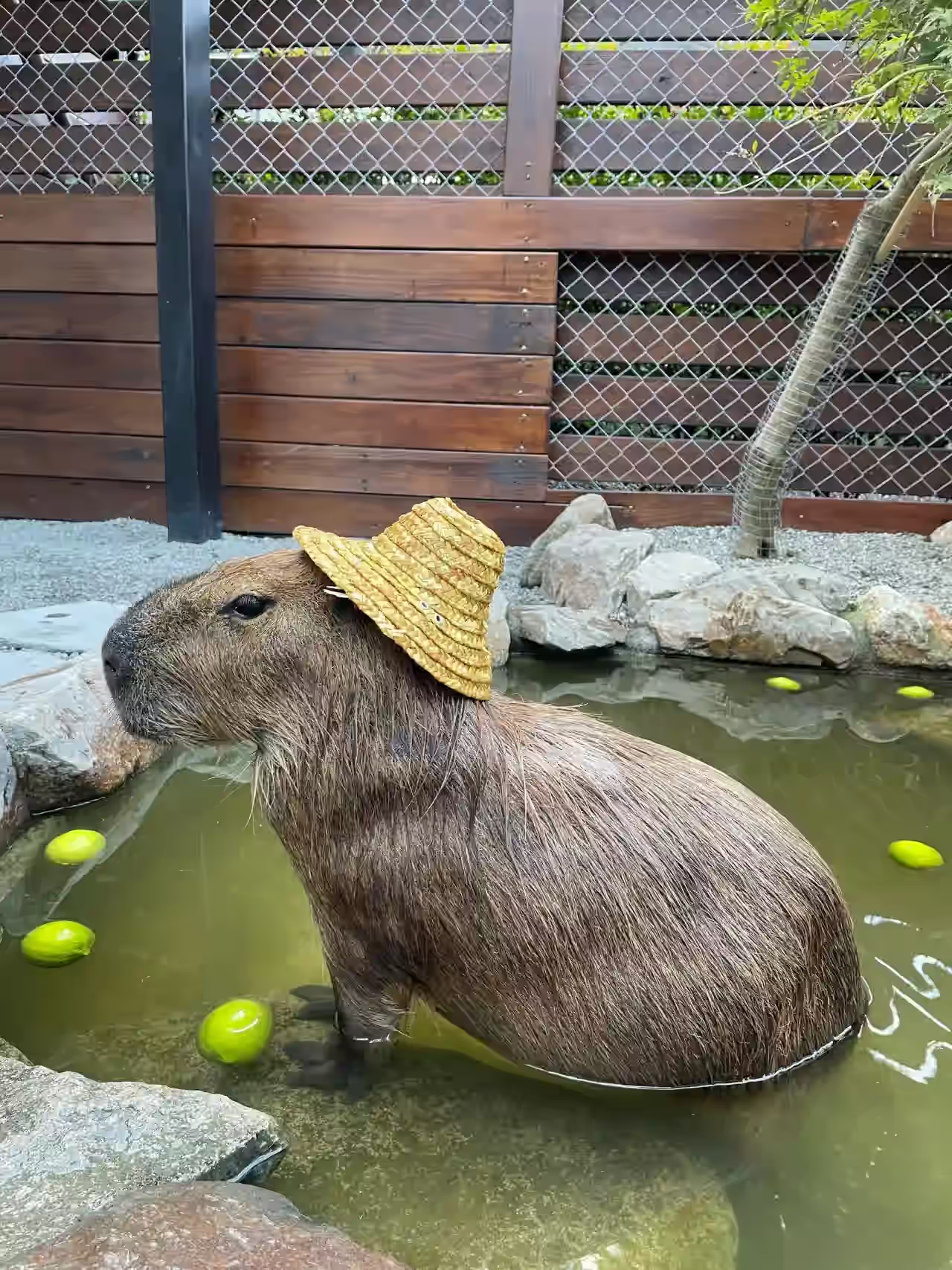
The yuzu bath is the engine. Izu Shaboten Zoo’s official English page says the original capybara outdoor bath became an Izu winter tradition and is famous nationwide. The story works because capybaras are already semi-aquatic animals, and a warm bath in cold weather reads as comfort rather than performance.
A 2021 Scientific Reports study on capybaras and hot spring bathing found measurable benefits tied to winter bathing, specifically improvement in the rough skin that cold Japanese winters cause. That does not mean wild capybaras are out there requesting spa packages. It means the managed zoo tradition has a biological logic beneath the spectacle.

Why the Image Works So Well in Japan
The yuzu bath scene has three layers. First, it is funny: the world’s largest rodent appears to be having a better winter than you. Second, it is culturally legible: yuzu baths are tied to seasonal bathing customs. Third, it is gentle enough for family zoo marketing without sanding off the weirdness.
That last part is the magic. A capybara in a bath is not just cute. It is specific. It gives the animal a ritual without asking the animal to become a circus act.
My honest read: Japan did not make capybaras popular by making them louder. It gave them a stage where being quiet was the whole performance.
Where Japanese Capybara Culture Shows Up
Izu Shaboten Zoo is the classic stop for the original outdoor bath story. Nagasaki Bio Park also advertises capybara interaction and open-air bath experiences, including petting and feeding opportunities. Other Japanese zoos have joined the seasonal bath tradition too, and national long-bath contests have turned soaking time into a very gentle sport.
That does not make every interaction equal. A good capybara venue should provide water access, rest space, no forced handling, clear staff rules, and a way for the animals to opt out. A capybara cafe or petting area deserves more scrutiny than a large habitat with controlled viewing.
The Biology Doing the Heavy Lifting
A capybara in a hot bath is a good photo. It is a better photo once you know the animal is the world’s largest rodent, native to South America, and built around water in a way most zoo animals are not. Per San Diego Zoo Wildlife Alliance and Animal Diversity Web, capybaras are semi-aquatic grazers with partly webbed feet, eyes and nostrils set high on the head, and a body shaped for sitting in shallow water for long stretches. The bath is not a costume forced onto an unwilling animal. It is closer to letting a fish swim.
Their calm reads as personality, but a lot of it is plain physiology. Adults run roughly 35 to 66 kilograms, somewhere around 77 to 145 pounds, which is a lot of animal to move quickly, so they mostly do not. They are herd animals, and group life is not optional. Solitary housing is a recognized welfare stressor, which is one reason Japanese venues that show capybaras in clusters tend to look more relaxed than a single animal on display. When you see four of them stacked in a tub like commuters who gave up, that grouping is doing real work, not just composition.
A few quieter facts feed the same image. Capybaras are hindgut fermenters that re-ingest soft morning feces to pull more nutrients from grass, which is unglamorous and exactly the kind of thing the bath photos never mention. Like guinea pigs, their close relatives in family Caviidae, they cannot make their own vitamin C and need it from diet. Their teeth grow continuously, so steady grazing is not laziness, it is dental maintenance. None of this fits on a postcard, and that is fine. The postcard already did its job.
Clearing Up A Few Things
The fame outran the facts a while ago, so a quick correction pass helps.
| Myth | Better answer |
|---|---|
| Capybaras love hot baths because they enjoy spas | There is a real effect: a 2021 Scientific Reports study found warm bathing improved the rough winter skin of zoo capybaras. But “enjoy a spa” is a human read laid over an animal that simply suits warm water. |
| The yuzu bath is just an internet stunt | It is a managed zoo tradition tied to real Japanese winter bathing customs, not a one-off photo gag. |
| Japan invented capybara fame | Japan did not invent the animal’s appeal, it found the clearest scene for it and built seasonal events around it. |
| Any capybara cafe is a fine place to meet one | Interaction venues vary a lot; petting and feeding setups deserve more scrutiny than a large habitat with controlled viewing. |
| They sit still because they are tame | The stillness is mostly physiology, a heavy-bodied grazer conserving energy, not a trained behavior. |
Go As A Respectful Fan
Japan’s capybara culture works because it understands the animal’s visual strengths: water, stillness, group life, and a face that refuses to explain itself. The yuzu bath is not a random internet costume. It is a managed zoo tradition that turned real capybara biology into a winter ritual people could love at a glance.
If you go, go as a respectful fan. Watch the soak. Take the photo. Do not turn the capybara into a prop just because it has better spa discipline than anyone you know.