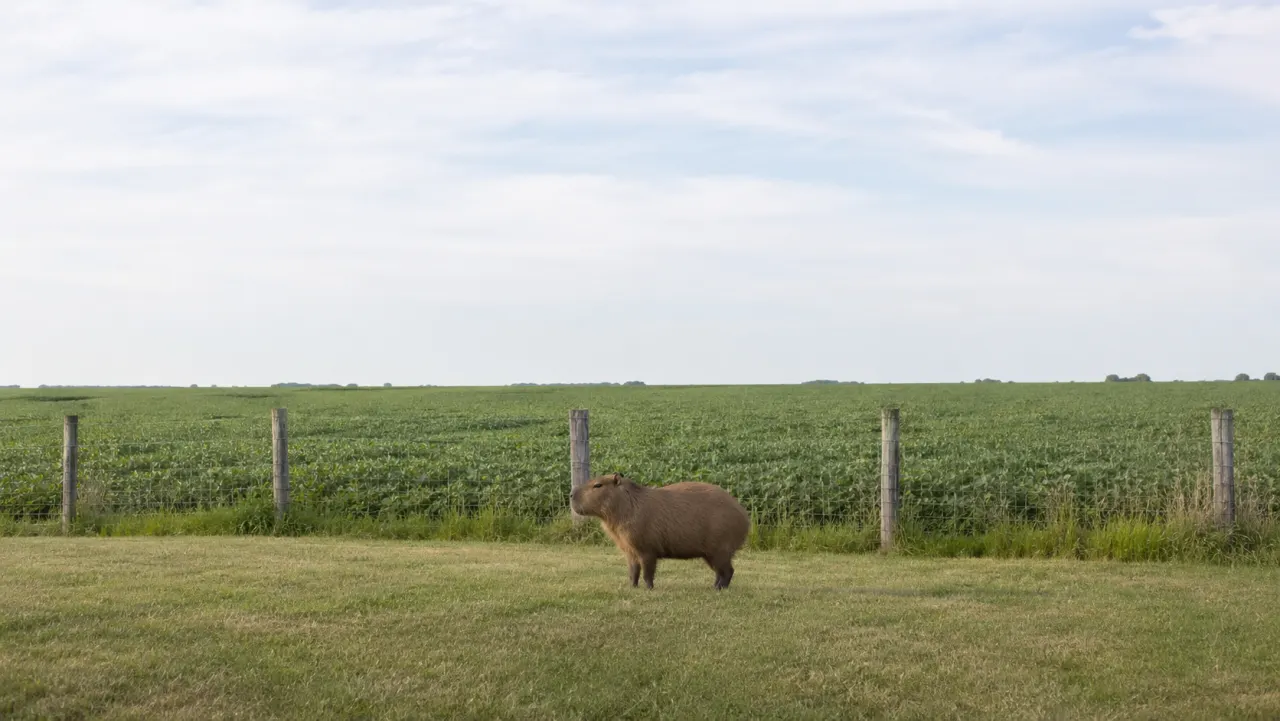
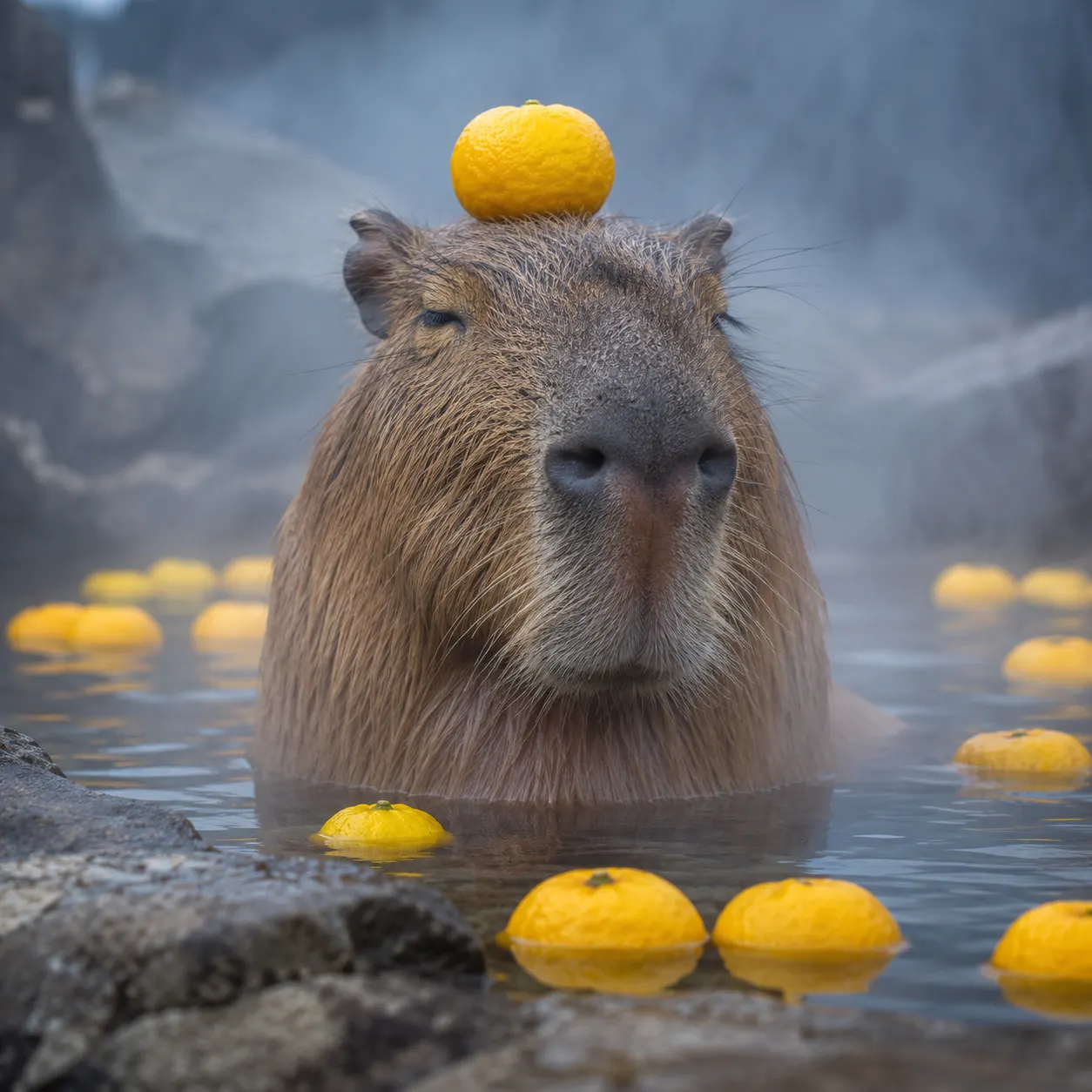
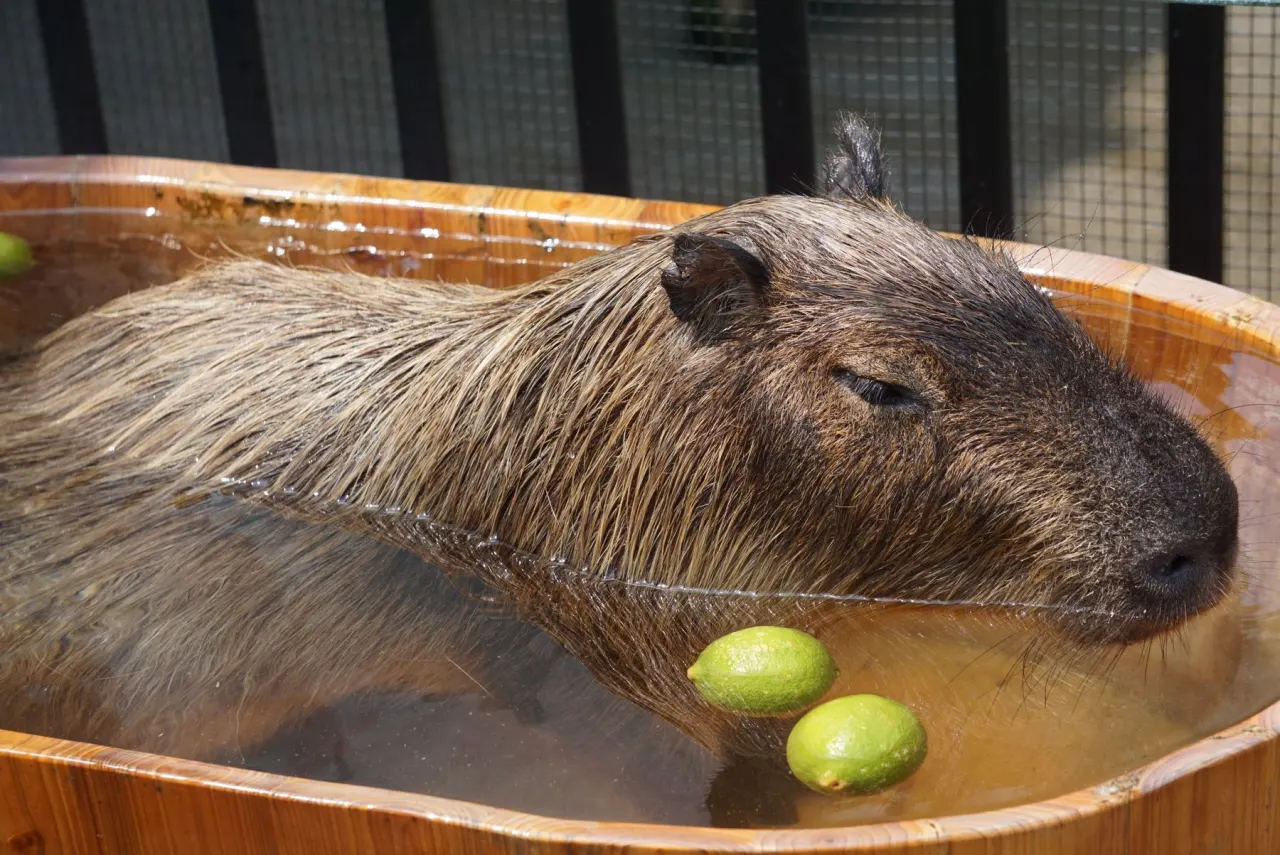
The photo is always the same. A capybara up to its chin in steaming water, eyes at half mast, a knobbly yellow fruit parked on top of its head like a hat nobody asked for.
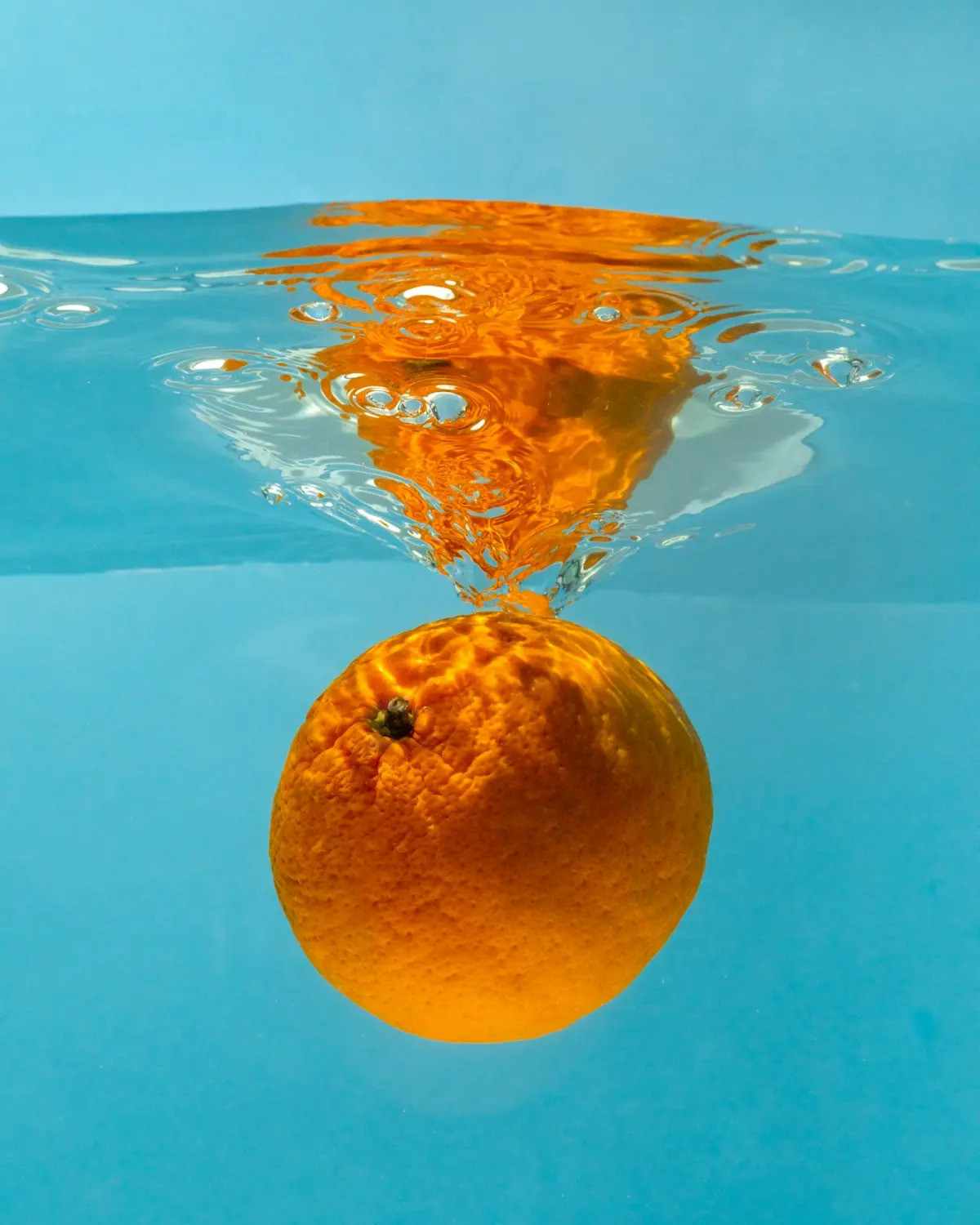
Two things about that photo are true at once. The bath is real. The orange is not an orange.
The bath is winter animal care. The fruit is a Japanese solstice custom, and it is yuzu.
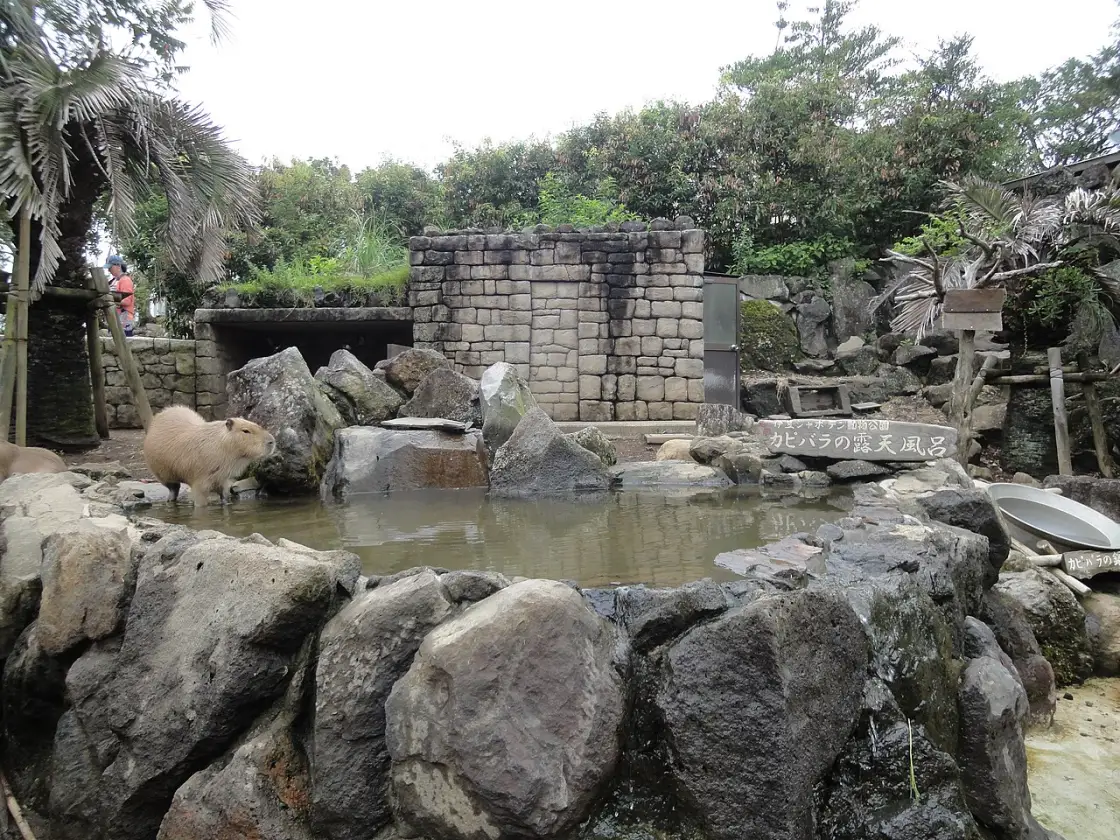
Japanese zoos run open-air baths in winter because capybaras are South American wetland animals having a cold time in Japan. The citrus floating in the water is yuzu, borrowed from yuzu-yu, the winter solstice bath Japanese households have taken for generations.
Nobody balances the fruit on the capybara. It floats at head height, and the head is flat.
Why Do Capybaras Have Oranges on Their Head?
Because the fruit is in the water and the head is the flattest thing in the water.
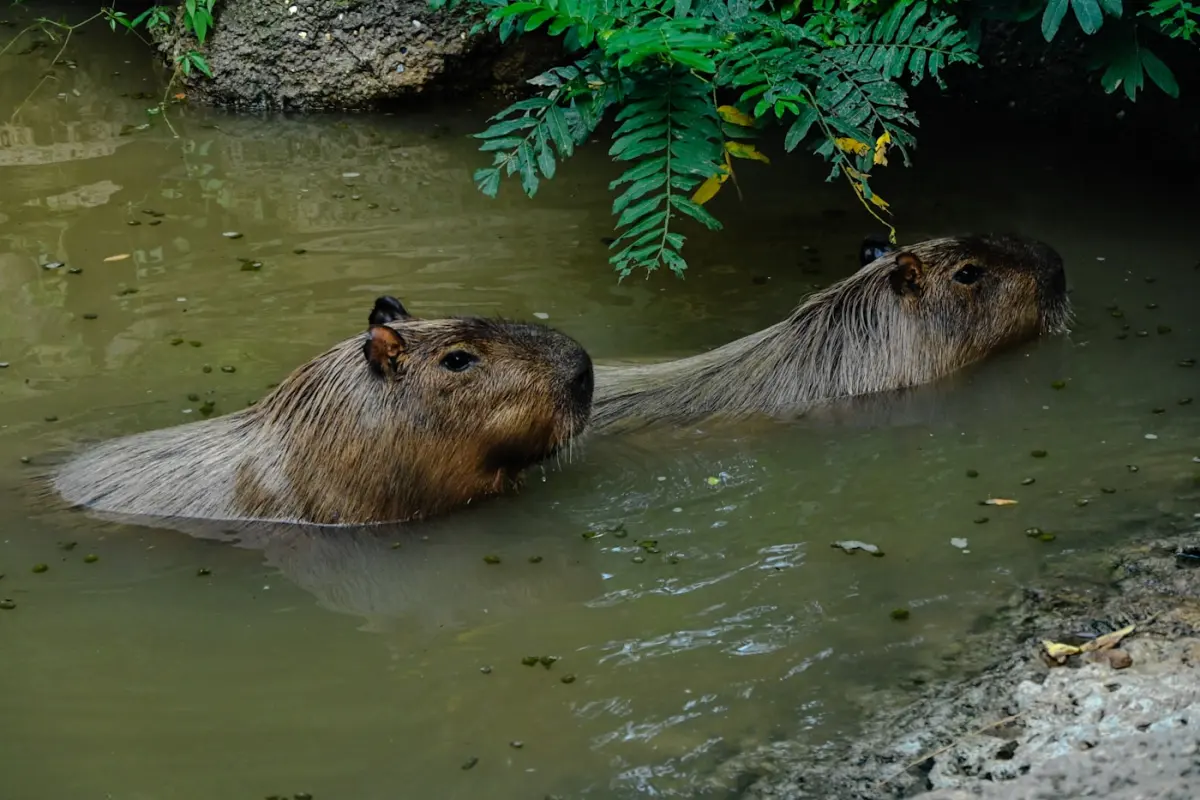
A capybara swims with its eyes, ears and nostrils lined up just above the surface, which is a wetland animal’s whole design brief: stay submerged, stay breathing, stay watching. Everything else sits under the waterline. What is left showing is a broad, almost level slab of skull. Float two dozen pieces of citrus into that bath and a few of them will drift into the one horizontal surface available and stay there.
Keepers float the fruit. They do not issue hats.
Worth saying plainly, because it is probably why this question gets typed at all: a lot of the head-balanced images circulating in English are staged product shots, plush toys, or AI renders. Actual onsen footage mostly shows fruit bobbing around the animals, with the occasional lucky frame where one landed and the capybara could not be bothered to shake it off. That frame is the one that travels.
The questions people actually arrive with, answered short:
| The question | The short answer |
|---|---|
| Are they oranges? | Usually no. They are yuzu, a bumpy East Asian citrus that reads orange in photos. |
| Why is it on the head? | It is floating, and the top of a swimming capybara’s head is the only flat surface above water. |
| Do capybaras like oranges? | Some will eat citrus as a treat. It is not a staple and not why they get in the bath. |
| Is this wild behavior? | No. Wild capybaras use water constantly, but a heated citrus bath is a zoo tradition. |
| Where did it start? | Izu Shaboten Zoo, Shizuoka Prefecture, winter 1982, entirely by accident. |
| When does it run? | Winter. Roughly November to April, depending on which zoo. |
| Is the fruit good for them? | It is atmosphere, not nutrition. The diet underneath is grass and hay. |
The Fruit Is Yuzu, and That Changes the Story
Yuzu is a fragrant East Asian citrus, roughly tangerine-sized, with thick bumpy skin and a smell far bigger than its juice. In Japan it is mostly a seasonal object rather than a snack.
On toji, the winter solstice around December 22, households float whole yuzu in the bath. Nippon.com gives the reasoning: the strong aroma freshens the air and was believed to drive off bad air and prevent colds. That is the custom the zoos borrowed.
Read the photo as “orange” and it is a cute accident. Read it as “yuzu” and it is a household ritual with a large rodent sitting in it.
Not every zoo uses yuzu, either. Nagasaki Bio Park calls its version a citrus bath and describes floating large citrus fruits in the water for the solstice, which is the same custom with a regional accent. JETRO lists yuzu baths among the winter uses that made yuzu a signature Japanese ingredient in the first place, alongside the peel that ends up in ponzu and marmalade.
Honestly, the yuzu correction gets deployed online like a gotcha, and it does not deserve that. Nobody who says “orange” is wrong about the important part. The bath happened, the tradition is real, and the only inaccurate thing in the sentence is one English noun.
Do Capybaras Like Oranges, and Should They Eat Them?
Some do, some ignore it, and either way it is a treat rather than a food group.
Capybaras are grazing herbivores. Animal Diversity Web and San Diego Zoo Wildlife Alliance both frame the diet around grasses and aquatic plants, with hay and high-fiber forage doing the work in managed care. Their teeth grow continuously and need abrasive fiber to wear down, which is a job grass does and fruit does not.
What actually feeds a capybara
- Grasses, grazed most of the day
- Aquatic and marsh vegetation
- Grass hay in zoo and managed settings
- Browse and other high-fiber forage
What the bath photos imply
- Citrus as a daily staple
- Fruit sugar in volume
- An animal that eats what it floats in
So when the search box asks “do capybaras like oranges,” the honest answer is that a capybara will happily take one and should not be given many of them. What capybaras actually eat is a grassier and far less photogenic list.
Why a Hot Bath Actually Makes Sense for a Capybara
Warm water is not indulgence here. It is thermoregulation for an animal in the wrong climate.
San Diego Zoo Wildlife Alliance describes a capybara as needing regular access to water partly because its skin is dry and prone to cracking. Animal Diversity Web describes the species as semi-aquatic and web-footed, using water for cooling, wallowing, escape from predators, and ordinary daily life. That is a warm, humid, year-round arrangement in the Pantanal and the Llanos. It is why water is not optional for them anywhere.
Japan in January is a different spreadsheet entirely.
Nagasaki Bio Park puts the reasoning in one flat sentence: because it is cold for them in winter in Japan, they love the bath. And then the same page adds the detail that makes the whole tradition credible. The capybaras will not bathe on warm days.
Picture the operational reality of that. Staff heat and fill an outdoor bath in the morning. The forecast turns mild. The capybaras look at the steam, look at the weather, and decline. There is no override, no cue, no keeper willing to carry a soaking adult capybara into a tub to keep a crowd happy. If the bath were purely a show, the animals would be in it every day the gates opened. They are in it when they are cold. That is the tell.
What the Hot Spring Study Actually Measured
Somebody put thermography on this, and the numbers held up.
A 2021 Scientific Reports paper studied nine capybaras aged two to twelve at Akiyoshidai Zoological Park Safari Land. The spring itself comes out of the ground at 74.5 degrees Celsius and is cooled to roughly 35 for the animals, which is alkaline at pH 9.30. The capybaras soaked for at least 30 minutes a day for 21 consecutive days in winter.
That middle number is the interesting one. Winter dries capybara skin badly, and 21 days of bathing brought moisture back to nearly the summer reading. The researchers also tracked heat retention with thermography and found skin temperature stayed elevated for a full 30 minutes after the animals got out, with the extremities warming fast and staying warm. Measured comfort during bathing rose significantly against the pre-bath baseline.
Nobody measured the yuzu. The yuzu is for us.
How a Cleaning Shift in 1982 Started All of This
The origin is an accident, which is the best kind of origin.
-
1966
Izu Shaboten starts breeding capybaras
On the Izu Peninsula, back when the species was still unusual in Japan and nobody had a reason to point a hose at one.
-
Winter 1982
A keeper cleans the exhibit with hot water
The capybaras settle into the warm puddles, feet and backsides in the water, in no hurry to leave. The zoo builds a bath.
-
Every winter since
The bath becomes a season
November to early April, with yuzu added for the solstice. Nippon TV has reported roughly seven kilograms of locally grown fruit going in.
-
2015
Five zoos sign an agreement about it
Izu Shaboten, Nagasaki Bio Park, Saitama Children's Zoo, Nasu Animal Kingdom and Ishikawa Zoo commit to running outdoor baths annually.
-
2021
Somebody measures it
A Scientific Reports paper puts thermography on nine capybaras at Akiyoshidai and finds the skin-moisture and heat-retention effects hold up.
Izu Shaboten Zoo on the Izu Peninsula began breeding capybaras in 1966, back when the species was still unusual in Japan. In the winter of 1982 a keeper was cleaning the capybara exhibit with hot water and noticed the animals settling into the warm puddles with their feet and backsides in the water, apparently in no hurry to leave. The zoo built a bath.
It is now a fixed season, running November to early April. And in 2015 the thing acquired paperwork: a Capybara Outdoor Bath Agreement between Izu Shaboten Zoo, Nagasaki Bio Park, Saitama Children’s Zoo, Nasu Animal Kingdom and Ishikawa Zoo, committing all five to running outdoor baths annually and promoting the practice. Somewhere in Japan there is a signed multi-party document whose subject is large rodents sitting in warm water. Humanity has had worse meetings.
The solstice version is the escalation. Nippon TV has reported Izu Shaboten adding roughly seven kilograms of locally grown yuzu to the bath for the winter solstice, which is the frame every English-language account eventually reposts. If you want the wider context for why this landed so hard in Japan specifically, Japan’s relationship with capybaras started well before the internet did.
The Orange Myths, Removed From the Bath
| Myth | What is actually going on |
|---|---|
| ”They are oranges.” | Usually yuzu, tied to Japan’s winter solstice bath custom. Some zoos use other large citrus. |
| ”Someone balances the fruit on their head.” | The fruit floats. The head is the only flat surface above the waterline. Physics, not staging. |
| ”The fruit is why they get in the bath.” | The warm water is the reason. Remove the fruit and the capybaras still bathe. |
| ”Wild capybaras do this.” | Wild capybaras use water constantly, but heated citrus baths are a managed zoo tradition. |
| ”Oranges are a capybara food.” | Occasional treat. The real diet is grass, aquatic plants, hay, and high-fiber forage. |
| ”It is just a zoo marketing stunt.” | It started as an accidental observation in 1982 and has a peer-reviewed skin and thermography study behind it. |
| ”The calm face means bliss.” | The study used facial cues as comfort indicators, which is measurable comfort, not enlightenment. |
What US Capybara Fans Should Take From This
You are not going to see this at your local zoo, and that is fine.
The capybara onsen is a Japanese winter institution tied to a specific climate, a specific custom, and five specific accredited zoos. In the US you are looking at zoos, wildlife parks, sanctuaries, and the occasional encounter program. Cold-weather American zoos do solve the same winter problem, just less photogenically, with heated shelters and indoor access rather than an outdoor bath. If that is the version you can actually go see, capybaras in winter at a US zoo is worth knowing about before you turn up in February.
A zoo onsen is a managed system: monitored water temperature, filtration, keeper supervision, veterinary oversight, and animals that are free to walk away. The AZA Capybara Care Manual treats water access as fundamental husbandry with conditions attached, not as an enrichment idea you improvise.
Hot water, citrus oils, and an animal that cannot tell you it is overheating is a bad combination. Talk to a qualified exotic-animal vet before any of it.
The Short Version
Capybaras sit in hot springs because Japanese zoos found that warm water suits a wetland animal stuck in a cold country, and because one keeper in 1982 was paying attention while cleaning a pen. The fruit floating around them is yuzu, and it is there because Japanese people have been putting yuzu in their own baths on the solstice for generations. It lands on their heads because a swimming capybara’s head is a flat surface at exactly fruit level.
That is the whole thing. No enlightenment, no spa philosophy, no secret citrus nutrition. Just a species that runs at a lower idle than the rest of us, doing the sensible thing about being cold, with a piece of seasonal produce resting on its skull because it had nowhere better to be.
Order at the capybara cafe and we'll diagnose your toxic trait
Seven small decisions — a drink, a pastry, a seat, a table neighbour, and how you handle the bill. Not therapy. Adjacent to therapy.