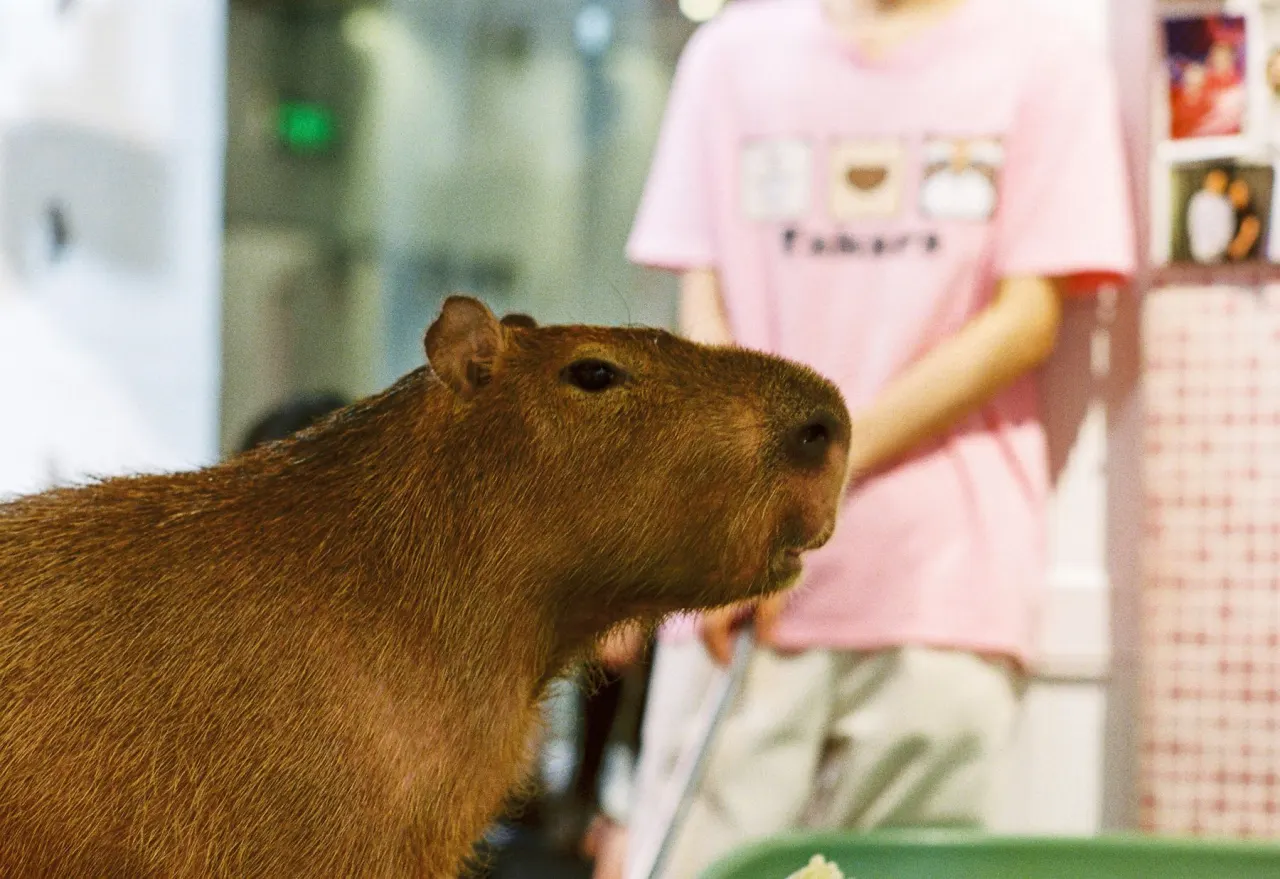
Can a capybara live indoors? Not as a normal house pet. An indoor room can be part of a managed setup, especially for warmth and shelter, but a capybara cannot be reduced to a living-room animal without making the care plan collapse into wet chaos.
The direct answer: capybaras need water, outdoor space, social housing, secure fencing, drainage, sanitation, shade, shelter, and exotic veterinary care. If your living room cannot pass as a marsh, the capybara has notes.
Why Indoor Life Sounds Tempting
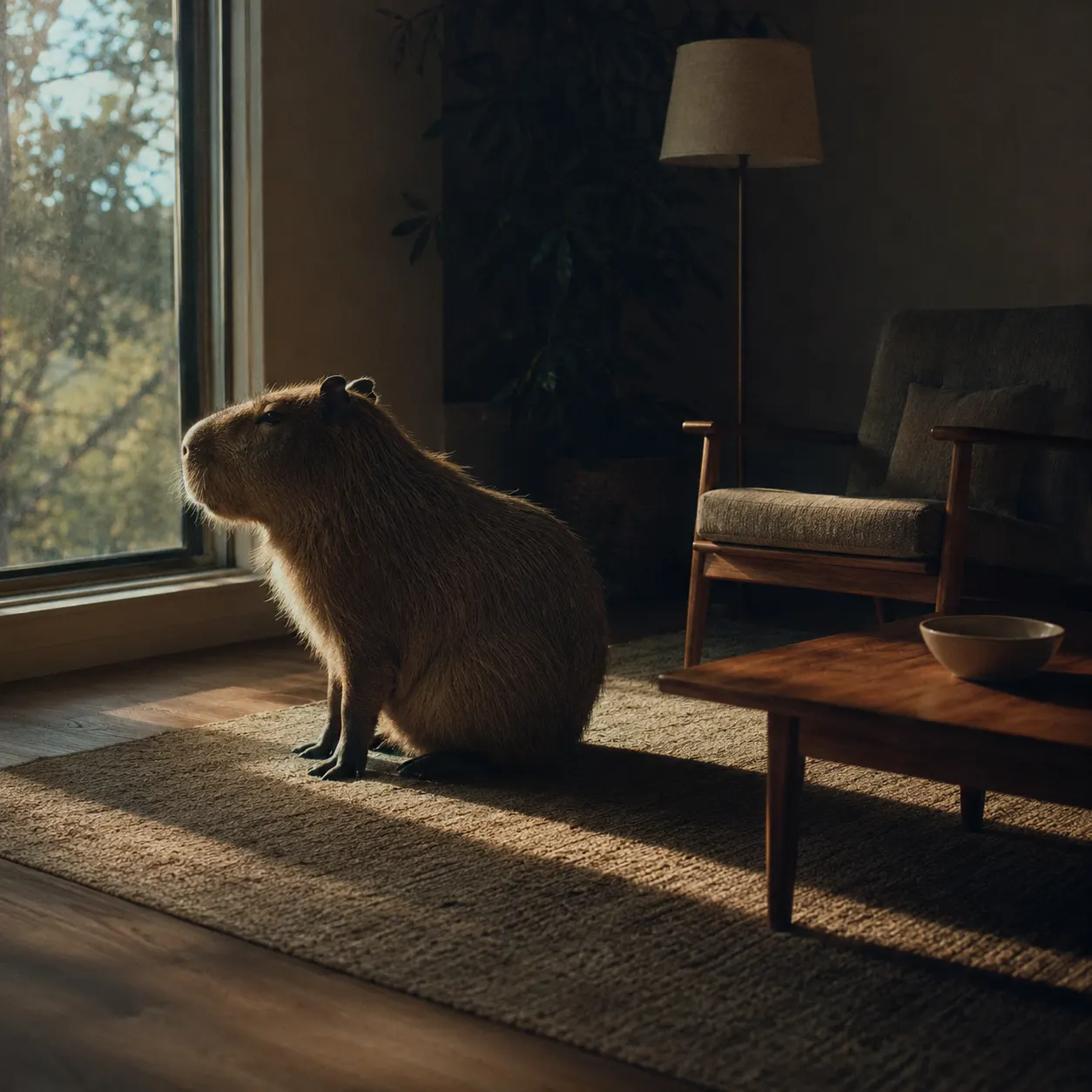
The fantasy is obvious. A calm capybara near the couch. A little snack. A little scratch. Everyone online says your home has good energy. The animal looks peaceful, and the flooring has not yet been informed.
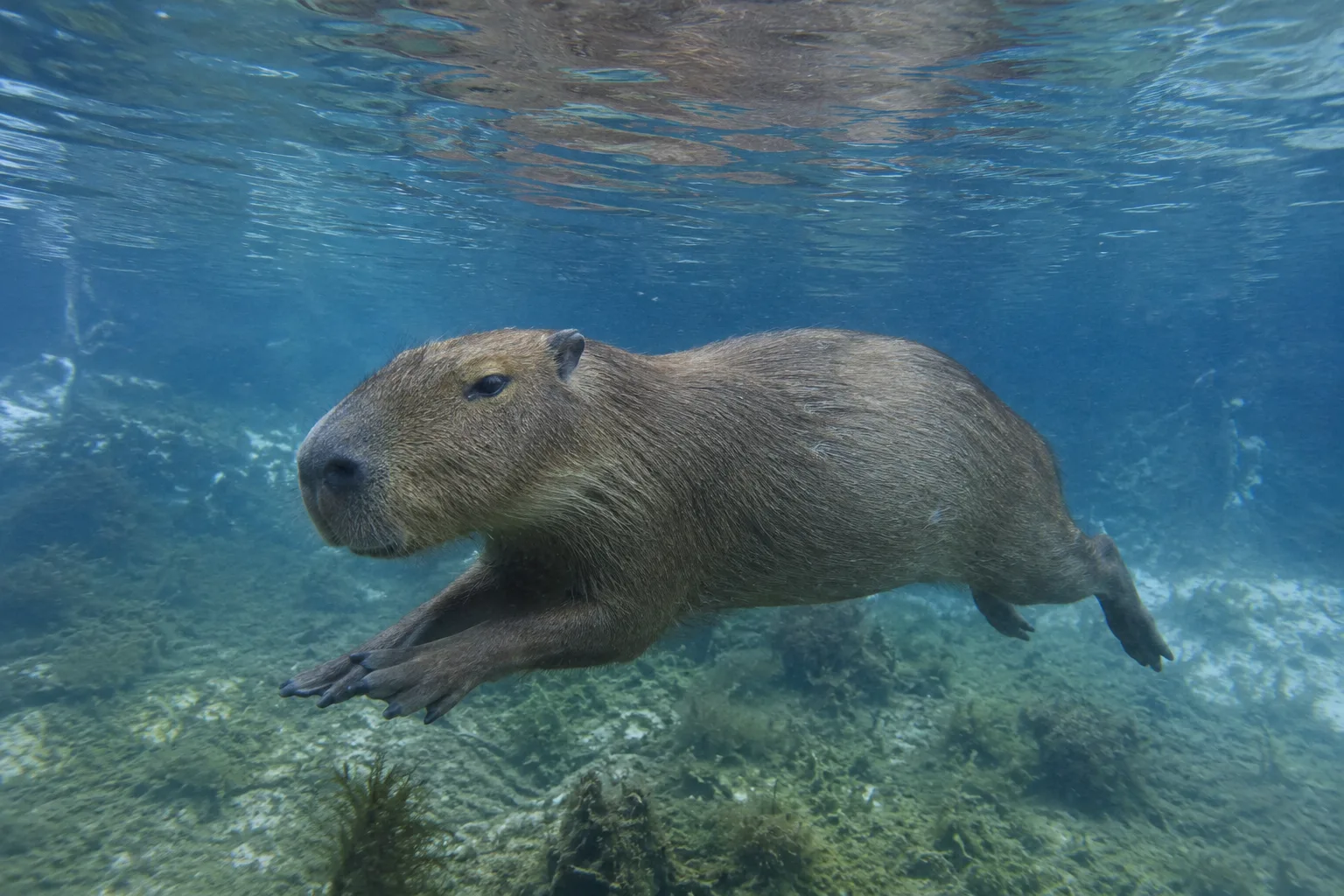
But capybaras are not oversized guinea pigs. San Diego Zoo Wildlife Alliance lists adults at 60 to 174 pounds and describes them as semi-aquatic animals that need a swimming hole as part of their lifestyle. That is where the cozy fantasy starts leaking.
What Capybaras Actually Need
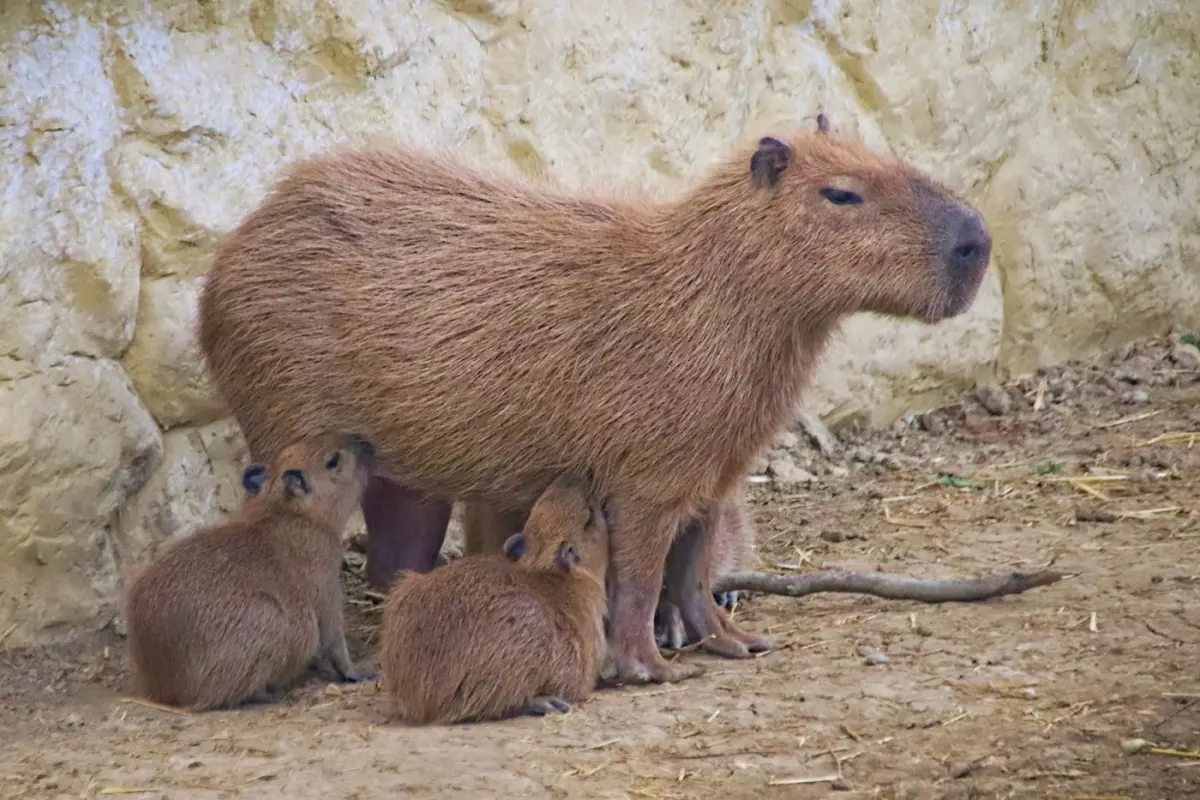
Animal Diversity Web describes capybaras as social animals that live in groups and spend hot parts of the day in water. The AZA manual says capybara behavior revolves around water and includes feeding, mating, escape, and hiding. A house can provide walls. It cannot provide the whole system unless the house has become a facility.
| Need | Normal home answer | Capybara answer |
|---|---|---|
| Water | Bathtub, maybe | Pool or pond-style access with cleaning |
| Space | Rooms and furniture | Outdoor habitat, grazing, movement |
| Social life | Human attention | Compatible capybara companionship |
| Waste | Household cleaning | Drainage, substrate, sanitation routines |
| Chewing | Please no | Rodent behavior continues |
The Water Problem
Water is the first hard stop. A capybara needs reliable access to water deep and safe enough for normal behavior. That means entry and exit, cleaning, drainage, temperature, and enough space for a large animal to use it without turning every room into a moisture experiment.
People ask if a bathtub works. For a soak? Maybe briefly under controlled care. For a life? No. A bathtub is a human appliance, not a capybara habitat. The capybara did not request hotel accommodations with worse grazing.
There is also the part nobody pictures while looking at the cozy photos: a semi-aquatic animal moving between water and dry living space carries that water with it. Wet fur, splash zones, humidity, and damp substrate become a permanent feature, not an occasional event. Indoors, that is not a charming quirk. It is mold, warped flooring, and a cleaning schedule that does not stop.
The Diet Detail Most People Miss
Capybaras are grazers. The San Diego Zoo Wildlife Alliance and Animal Diversity Web both describe them as herbivores built around grasses and aquatic plants, eating large volumes of fibrous, low-quality forage throughout the day. A house does not naturally contain that. You are committing to a steady supply of grass and grass hay, not a bowl of pellets twice a day.
Two biological facts make the diet harder than it looks. Like guinea pigs, capybaras cannot make their own vitamin C, so it has to come from diet, and a deficiency causes real disease. And as hindgut fermenters they practice coprophagy, re-ingesting soft morning feces to pull nutrients from fiber a second time. That is normal, healthy, and necessary. It is also a thing that happens on your floor. The honest version of indoor capybara life includes that detail, not just the napping.
Common Myths, Sorted Out
Most of the indoor-capybara fantasy runs on a few specific wrong assumptions. Here is the cleaner version of each.
| Myth | Better answer |
|---|---|
| It’s basically a big guinea pig | Same family (Caviidae), but adults reach roughly 77 to 145 lb. Scale changes everything. |
| One capybara is the easy-mode pet | Solitary housing is a welfare stressor. They are herd animals by default. |
| A bathtub or kiddie pool covers the water need | A soak is not a habitat. Water has to be deep, clean, drainable, and always available. |
| It can be litter-trained like a cat | Some routines help, but you cannot opt out of drainage, substrate, and serious sanitation. |
| A regular vet can handle it | Capybaras need an exotic-animal vet, and those are not on every corner. |
What Indoor Time Actually Looks Like In Real Care
To be fair to the question: indoor space is not banned from capybara care. The AZA Capybara Care Manual treats shelter as part of a managed system, used for warmth, safety, and getting out of weather. A sanctuary or zoo might bring an animal inside in winter or for medical reasons.
The difference is what that indoor space connects to. In real care it is one room in a larger setup that already includes a pool, grazing land, drainage, group housing, and trained staff. In the house fantasy, the indoor room is the whole plan. That is the gap. Indoors can be a part. It cannot be the entirety.
My honest take: for the overwhelming majority of people asking this question, the answer is a flat no, and that is not a sad ending. It is the responsible one. The animals that look most content in those viral clips are usually living in proper habitats with water and a herd, which is exactly the thing a living room cannot fake.
The Space, Chewing, And Social Problems
Capybaras chew because they are rodents. Their teeth grow continuously. They also graze, move, rest in groups, and use scent and sound. A house full of baseboards, cords, rugs, stairs, and furniture is not enrichment. It is a risk buffet.
Social housing is the other hard stop. A single indoor capybara is not the simpler version. It is usually the welfare-problem version. Human attention cannot replace species-appropriate social life.
Better Ways To Love Capybaras
For most people, the answer is not a better indoor setup. It is a better boundary. Visit capybaras at reputable zoos or well-run encounters. Support facilities that show water, space, group life, and staff rules. Buy the plush version for the couch. The plush version is legally and hygienically superior.
If someone is genuinely considering ownership, the next step is not shopping. It is checking state and local law, finding an exotic-animal vet, designing a proper enclosure, pricing water systems, and asking whether the animal’s life would be good, not just whether the photos would be excellent.
Most houses are not wetlands. This is good news for the house.