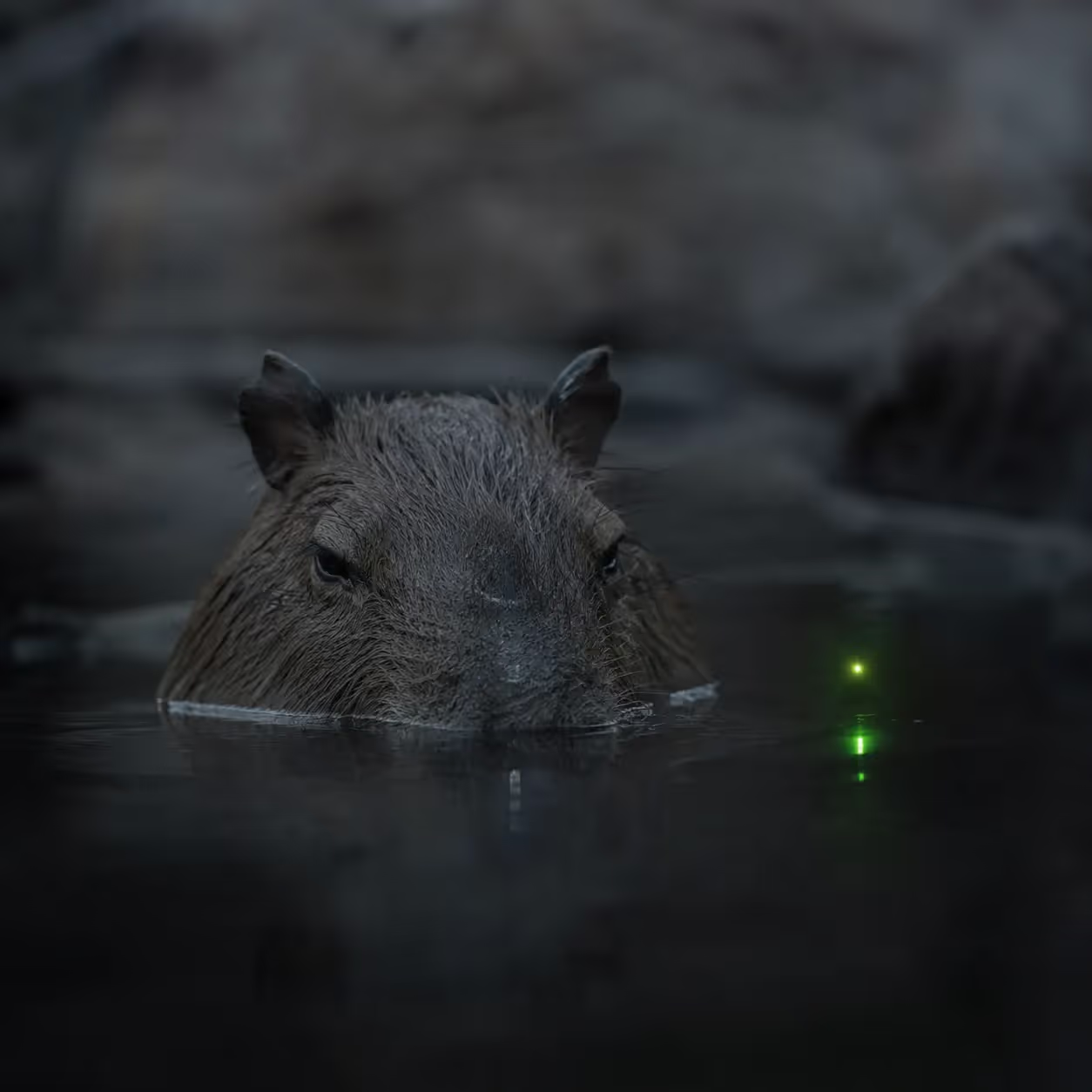

Capybaras can run faster than they look like they should. This is rude, because the animal’s resting shape suggests a loaf of bread that has achieved tenure.
The commonly cited top speed is around 35 km/h, or roughly 22 mph, in short bursts. Treat that as a practical estimate, not a stopwatch-certified promise from every individual capybara. The real point is simpler: yes, capybaras can move.
That number also needs context. A healthy adult on decent footing is a different situation from a youngster, an older animal, a muddy edge, a crowded enclosure, or a slippery zoo path. Speed facts are fun; welfare facts are the part that keeps people from treating animals like carnival tests.
How Fast Can A Capybara Run? The Short Answer
Many capybara references cite a short-burst speed around 35 km/h. That is fast enough to surprise a human, especially one who assumed the animal’s entire skill set was soaking and looking unimpressed.
| Speed question | Practical answer |
|---|---|
| Can capybaras run fast? | Yes, in short bursts |
| Common cited top speed | About 35 km/h or 22 mph |
| Are they endurance runners? | No, not the point |
| Main escape strategy | Reach water and regroup |
| Should people test it? | Absolutely not |
Capybaras are not built for athletic branding. They are built to graze, stay near water, move with the group, and leave quickly when the situation gets teeth-shaped.
Why Capybaras Run At All
Running is usually information. A capybara may run because it is startled, chased, separated, pressured by visitors, moving with the group, or escaping toward water. It can look funny because the body is large and low, but the reason is often serious.

Animal Diversity Web and San Diego Zoo both frame capybaras around group life and water. That matters because the run is rarely a solo sports moment. It is part of a bigger safety pattern: move, regroup, reach water, disappear if needed.
Water Is The Real Exit Strategy
The capybara’s speed makes more sense when you remember the destination. Water is not decoration. It is cooling system, food zone, escape route, and social hub. A capybara does not need to win a long race if it can reach the pond.
The swimming guide covers that aquatic side in more detail, and the webbed-feet guide explains the anatomy behind it. The short version: the run gets it to the water; the water does the rest.
| Adaptation | Why it matters |
|---|---|
| Short burst speed | Gets away from immediate pressure |
| Semi-webbed feet | Helps on wet ground and in water |
| High-set eyes and nostrils | Useful while partly submerged |
| Group behavior | Others respond when one animal bolts |
| Water access | Turns escape into cover |

The Human Mistake Is Making A Capybara Run For Content
Do not chase capybaras for video. Do not make them run for content. Do not treat a startled sprint as proof they are happy, playful, or “zooming” unless the context actually supports that read.
Visitors often laugh when a large calm animal suddenly accelerates. Fine, humans laugh at movement. But if the animal is running from people, noise, crowding, dogs, or lack of escape space, the correct response is to back off, not narrate the clip like sports commentary.
| What you see | Better read |
|---|---|
| Sudden sprint | Startle, escape, or group movement |
| Group bolts together | One warning can move the herd |
| Run toward water | Normal escape strategy |
| Repeated pacing or bolting | Possible stress |
| Visitor chasing | Human failure, not animal content |
The funny part is that capybaras can look slow even while being fast. Their bodies stay low, their legs do serious work underneath, and the whole animal seems offended that acceleration was required. That is charming from a respectful distance. Up close, it is a sign you may have crossed a line.
If you want movement at a zoo, ask about active times instead of provoking it. Early, late, cooler weather, feeding routines, and enrichment schedules are better bets than becoming the reason a prey animal runs.
This is the tiny etiquette test: if your plan requires the capybara to react to you, it is a bad plan. A good viewing plan lets the animal keep doing capybara things while you quietly notice them.
If You See One Run, Ask Why
Capybaras can run surprisingly fast, with a commonly cited short-burst speed around 35 km/h or 22 mph. That does not make them race animals. It makes them large wetland rodents with enough acceleration to reach safety.
If you see one run, ask why. If the answer is “because people got too close,” the next move is not filming harder. It is giving the capybara room to be less interesting.