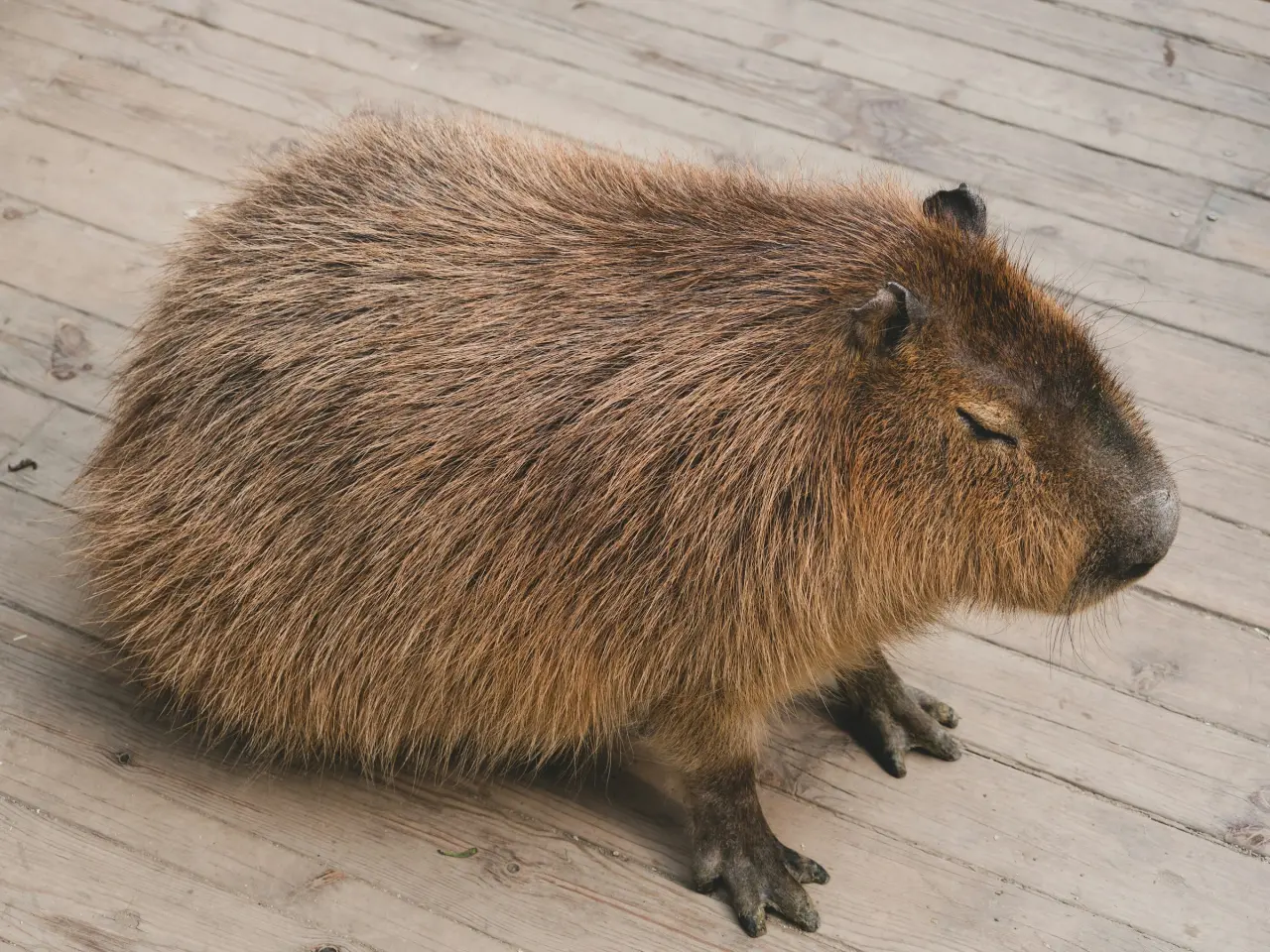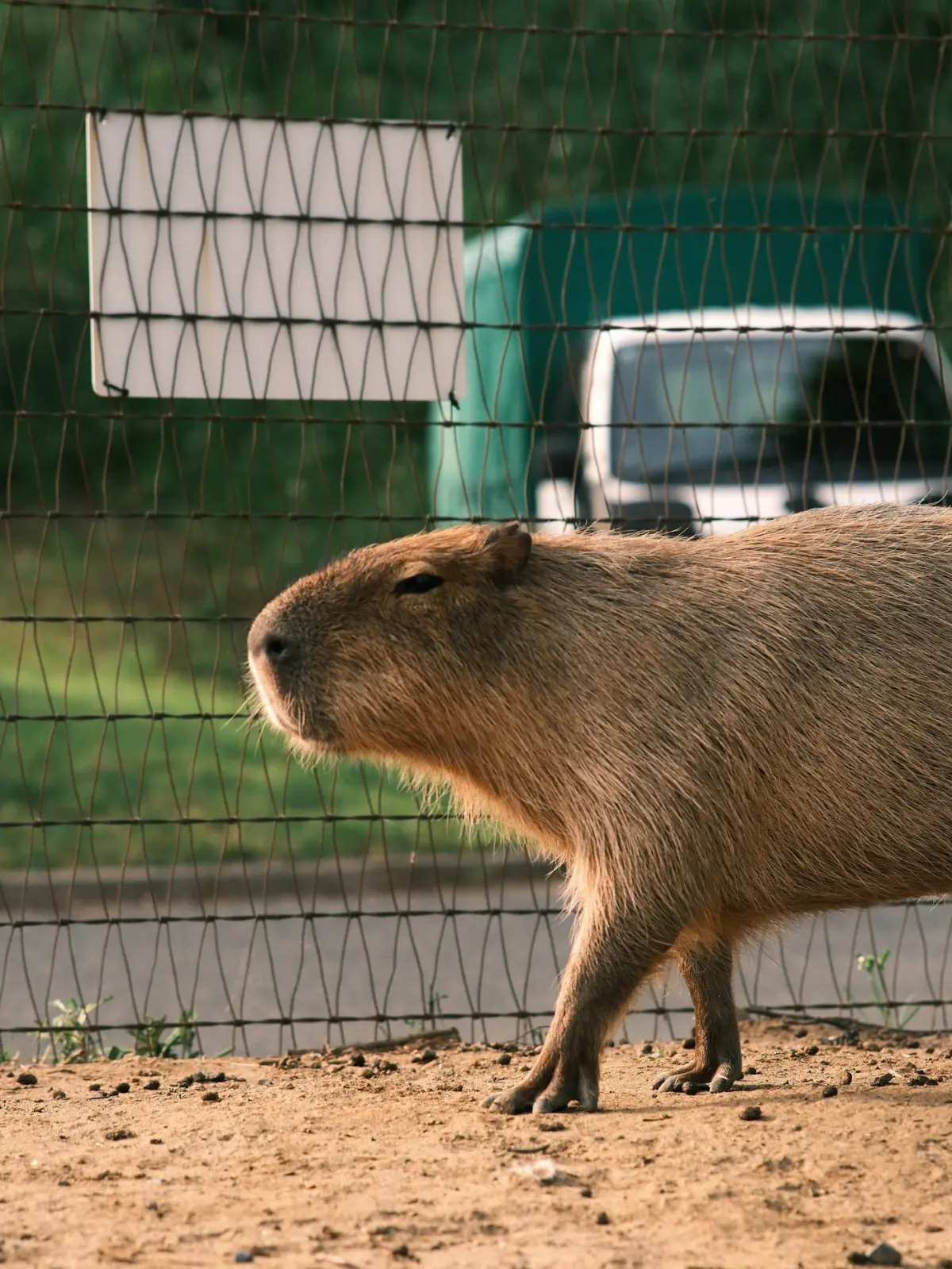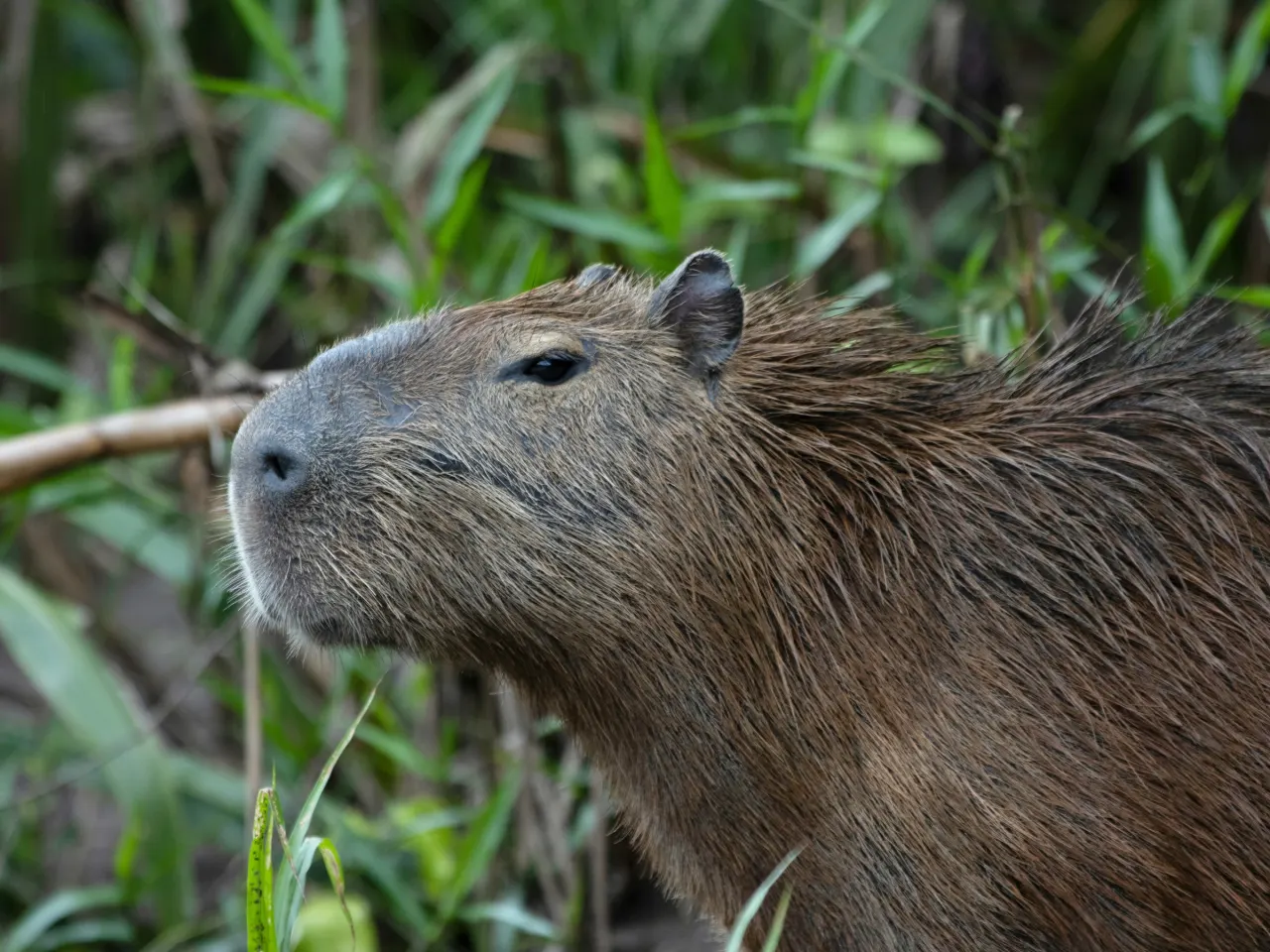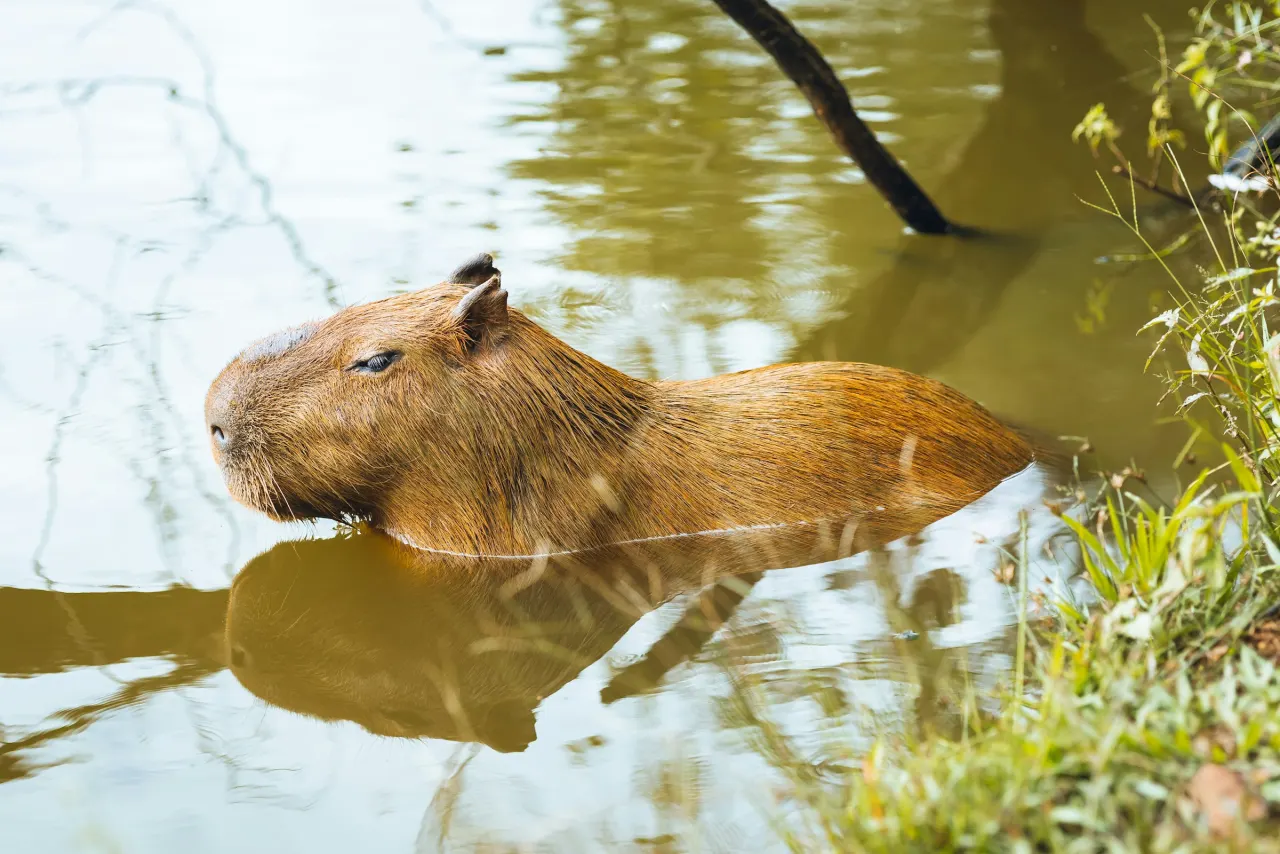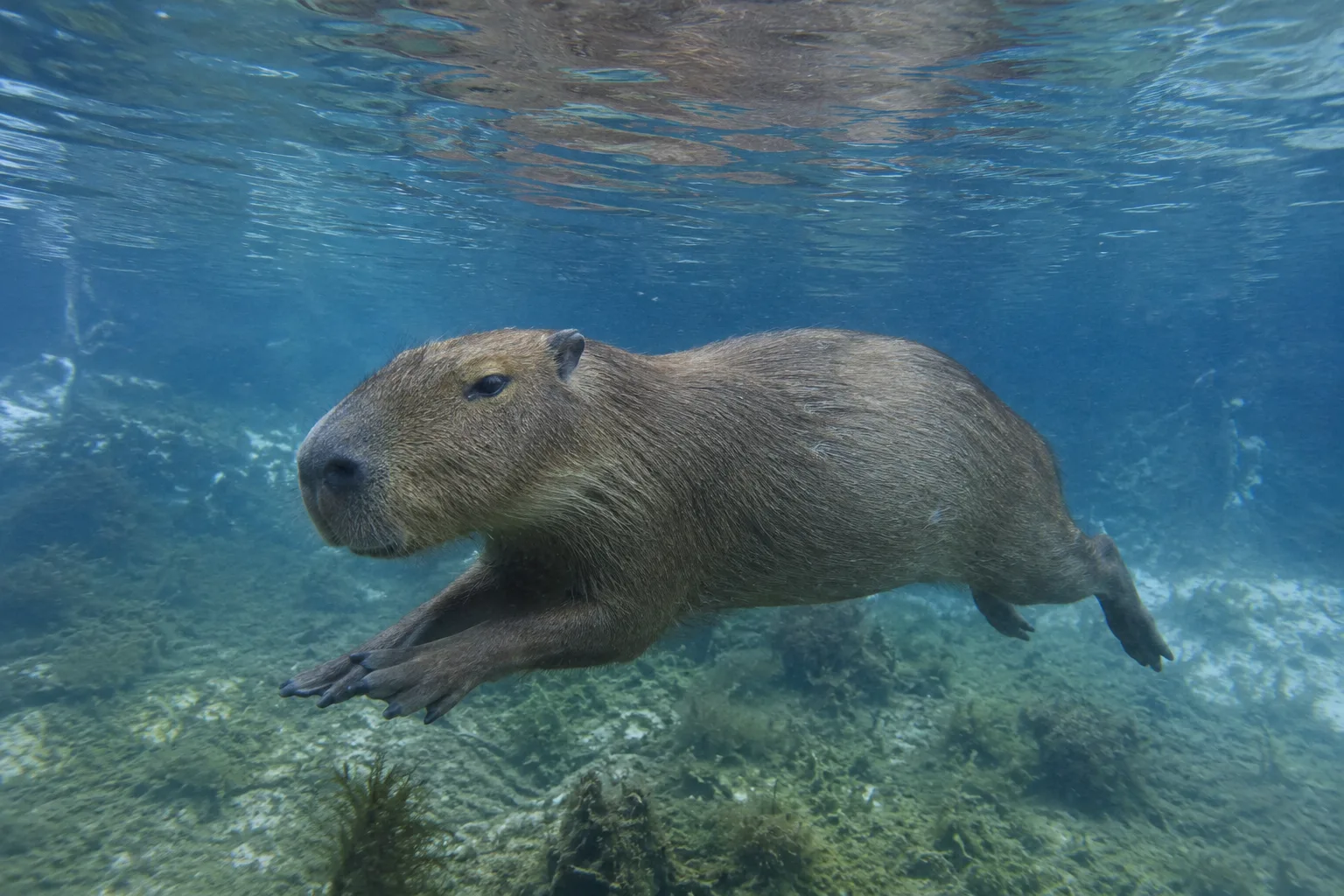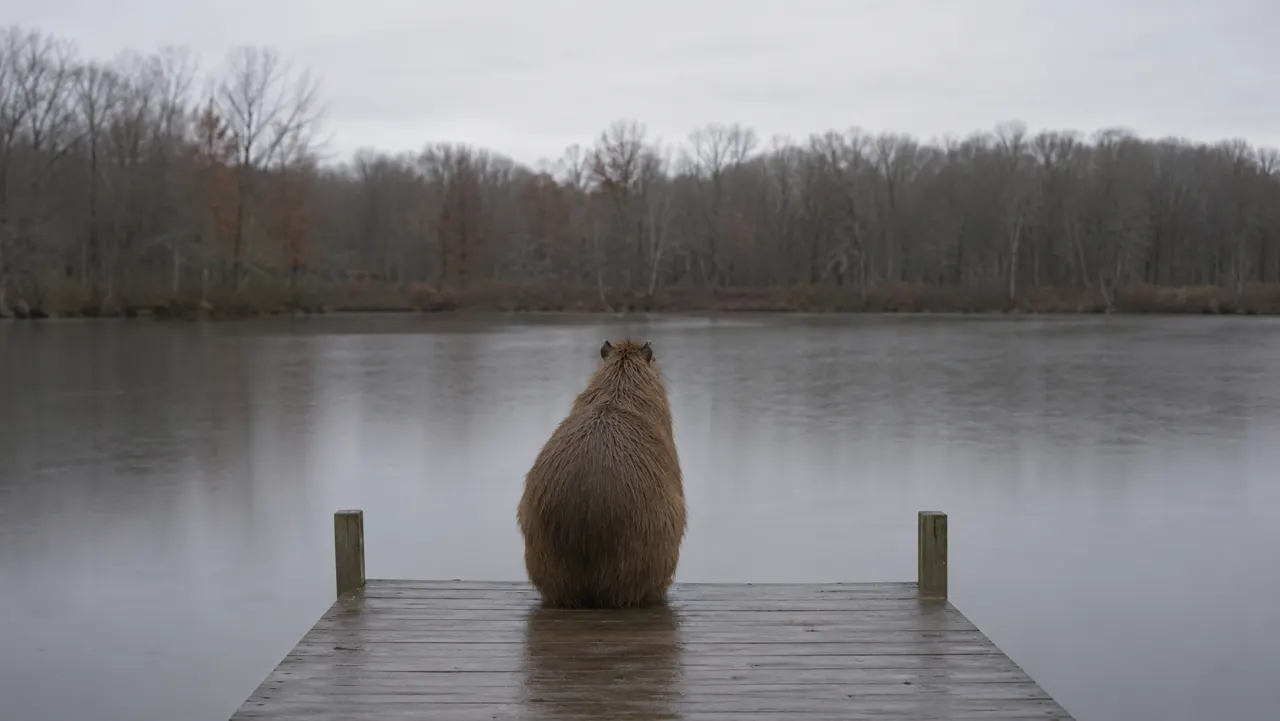

Capybaras can get what people call zoomies: sudden bursts of running, play, or chaotic little sprints that make the animal look like a loaf of bread with legal urgency.
Yes, capybaras can run and play. But not every sprint is cute excitement. Sudden movement can also mean alarm, crowding, chasing, or an animal heading for water. The word “zoomies” is fun. The context still has to do its job.
Yes, Capybaras Can Sprint
Capybaras are heavy, but they are not slow by law. Animal Diversity Web describes them as semi-aquatic animals that use water for safety and can move as a group when alarmed. San Diego Zoo notes water is a key escape route. A capybara that needs to move can move.
That matters because the internet often edits capybaras into one personality: still, calm, unbothered. Real animals have more tabs open. They graze, rest, swim, warn, play, jostle, and occasionally run like the grass sent a calendar invite.

Play Is Not The Same As Panic
Play tends to look loose, social, and recoverable. The animal may run, turn, bounce, rejoin others, and settle quickly. Panic looks different: alarm calls, stiff posture, fleeing to water, crowding, repeated escape attempts, or humans pushing too close.
| You see | Could be | Check this |
|---|---|---|
| Short loose sprint | Play or excitement | Does the body relax after? |
| Group rush to water | Alarm response | Was there a bark, dog, or crowd? |
| Young capybara darting | Play or exploration | Are adults calm nearby? |
| Running from visitors | Stress | Are people blocking or chasing? |
The capybara does not owe you a cute interpretation. Sometimes the funny run is funny. Sometimes the animal is trying to leave.
Why Young Capybaras Look More Chaotic
Young capybaras are more likely to look bouncy, experimental, and lightly unhinged. San Diego Zoo’s report on capybara babies notes newborns can walk and swim early. That early competence gives baby capybaras a lot of small-body confidence.
It also makes them irresistible online, which is where the caution comes in. Baby animal clips get stripped of setting quickly. A young capybara running near family in a habitat is one thing. A young capybara being chased for a clip is another. One is adorable. The other is homework for the adults.

What A Capybara Body Is Actually Built To Do
It helps to remember what kind of animal you are watching. Capybaras are the world’s largest rodent, family Caviidae, the same branch as guinea pigs and maras. Adults run roughly 35 to 66 kg, which is a lot of animal to get moving. The legs are short, the body is barrel-shaped, and the feet are semi-webbed. None of that screams sprinter.
But the design is not built around speed on land. It is built around water. San Diego Zoo Wildlife Alliance and Animal Diversity Web both describe capybaras as semi-aquatic grazers that treat water as the main escape route. So the fastest, most committed running you will ever see from a capybara is usually a straight line toward a pond, not a happy lap around a yard. That distinction matters when you are reading a clip. A capybara that explodes into motion and aims for water is often telling you something, and it is rarely “I am having a great time.”
Day to day, the animal mostly grazes. It is a hindgut fermenter that re-ingests soft morning droppings to pull more nutrients out of grass, and it cannot make its own vitamin C, so a lot of its waking life is slow, deliberate, food-focused work. Against that baseline, any sudden burst stands out. The loaf has a resting state, and the resting state is most of the day.
Sorting The Myths From The Read
Most of the confusion around capybara zoomies comes from a few sticky ideas that get repeated in comments sections. Here is a cleaner version of each.
| Myth | Better answer |
|---|---|
| Capybaras are too lazy to run | They graze and rest most of the day, but they can move fast when motivated, usually toward water. |
| Every sudden sprint is happy zoomies | Running can mean play, but it can also mean alarm, crowding, or escape. The cause is in the setup, not the speed. |
| Babies running means a fun environment | Young animals are naturally bouncy and explore more. Activity alone says little about whether the setting is good. |
| A calm-looking capybara is always fine | Capybaras are herd animals. One housed alone may look settled and still be under real stress. |
| You can judge welfare from a 10-second clip | You cannot. You need the surrounding scene, the social group, and what happened right after. |
My honest opinion: “zoomies” is a fine word for the funny five seconds, but it has quietly become an excuse to stop asking questions. The label does a lot of work that the viewer should be doing.
Why Viral Videos Misread The Run
Short videos reward the most dramatic second. They rarely show the setup: Was the animal startled? Was a handler nearby? Was water available? Was another capybara chasing playfully or aggressively? Did the animal settle right after?
There is also the social piece that clips almost always cut. Capybaras are strongly herd animals, and the AZA Capybara Care Manual treats social housing as a baseline welfare need rather than a nice extra. A single capybara filmed alone in a living room can look perfectly content and still be missing the thing that keeps the species regulated. None of that fits in a fifteen-second edit, so it gets dropped, and the run gets a caption it may not deserve.
Without those answers, “zoomies” is a cute label, not a conclusion.
Sometimes The Loaf Has Momentum
Capybaras can sprint, play, and have sudden bursts of movement. They are not furniture with a pulse. Just read the whole scene before calling every run adorable.
The best capybara fan can enjoy the zoom and still ask, “Was the animal okay?”