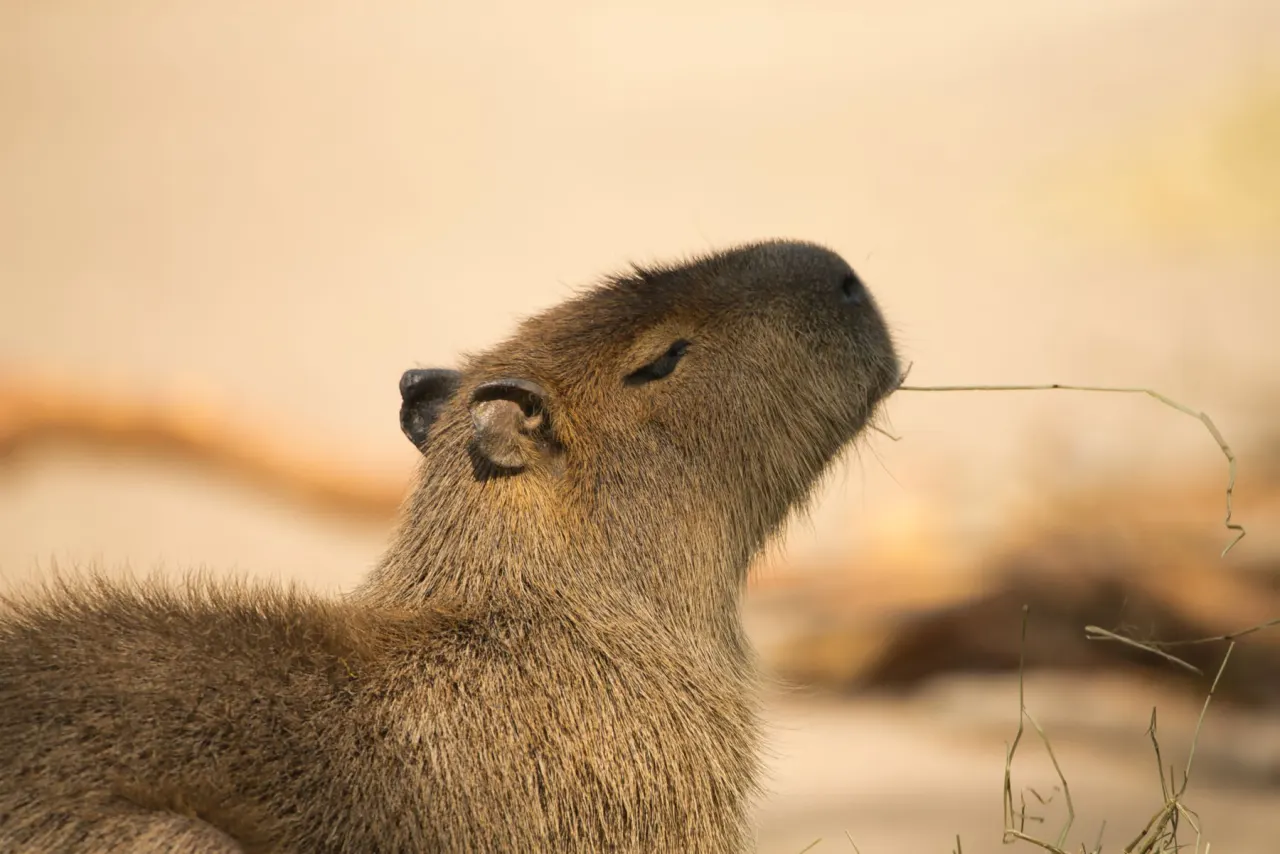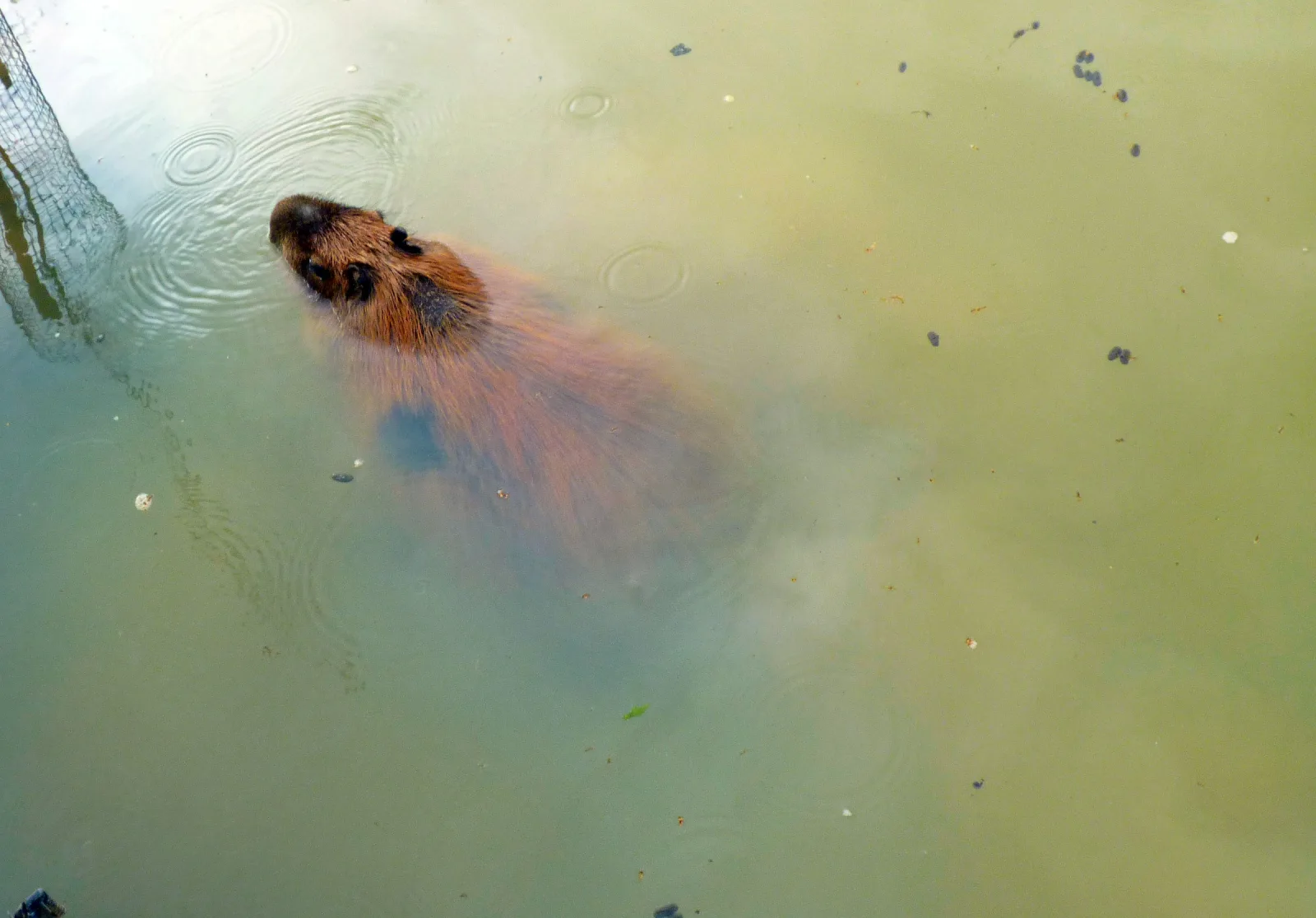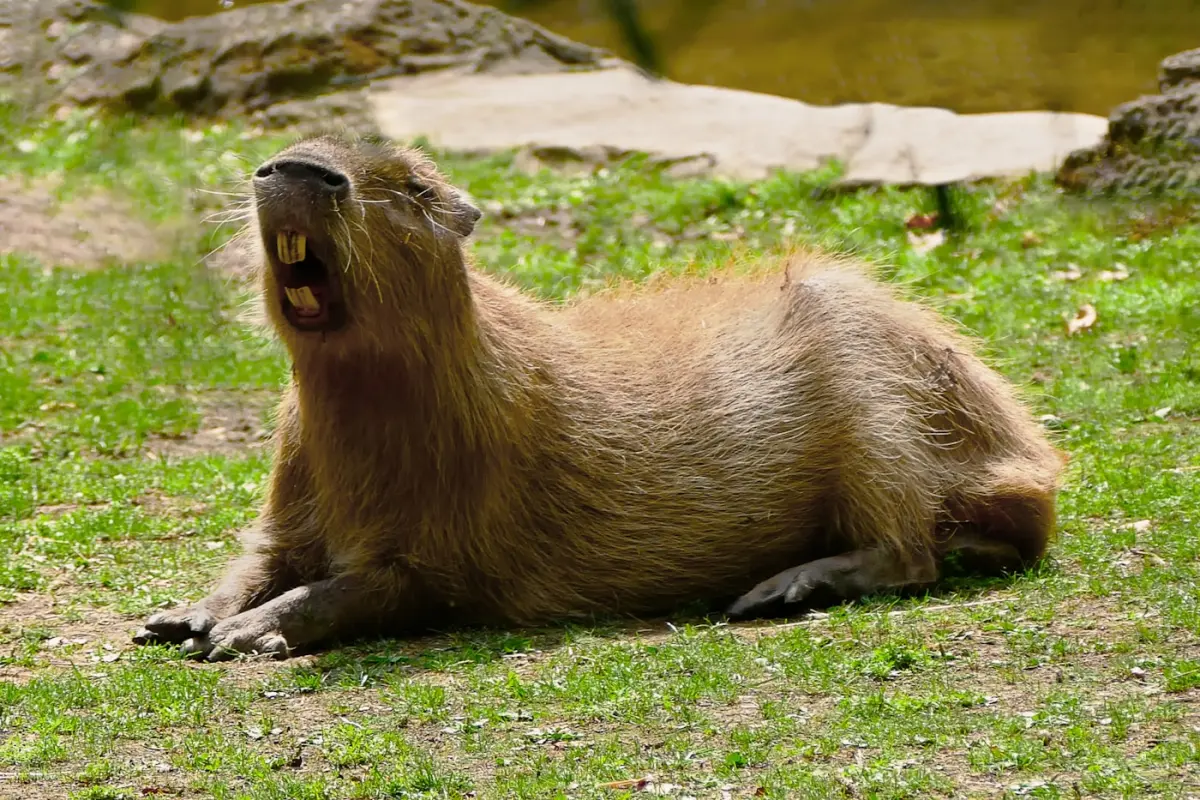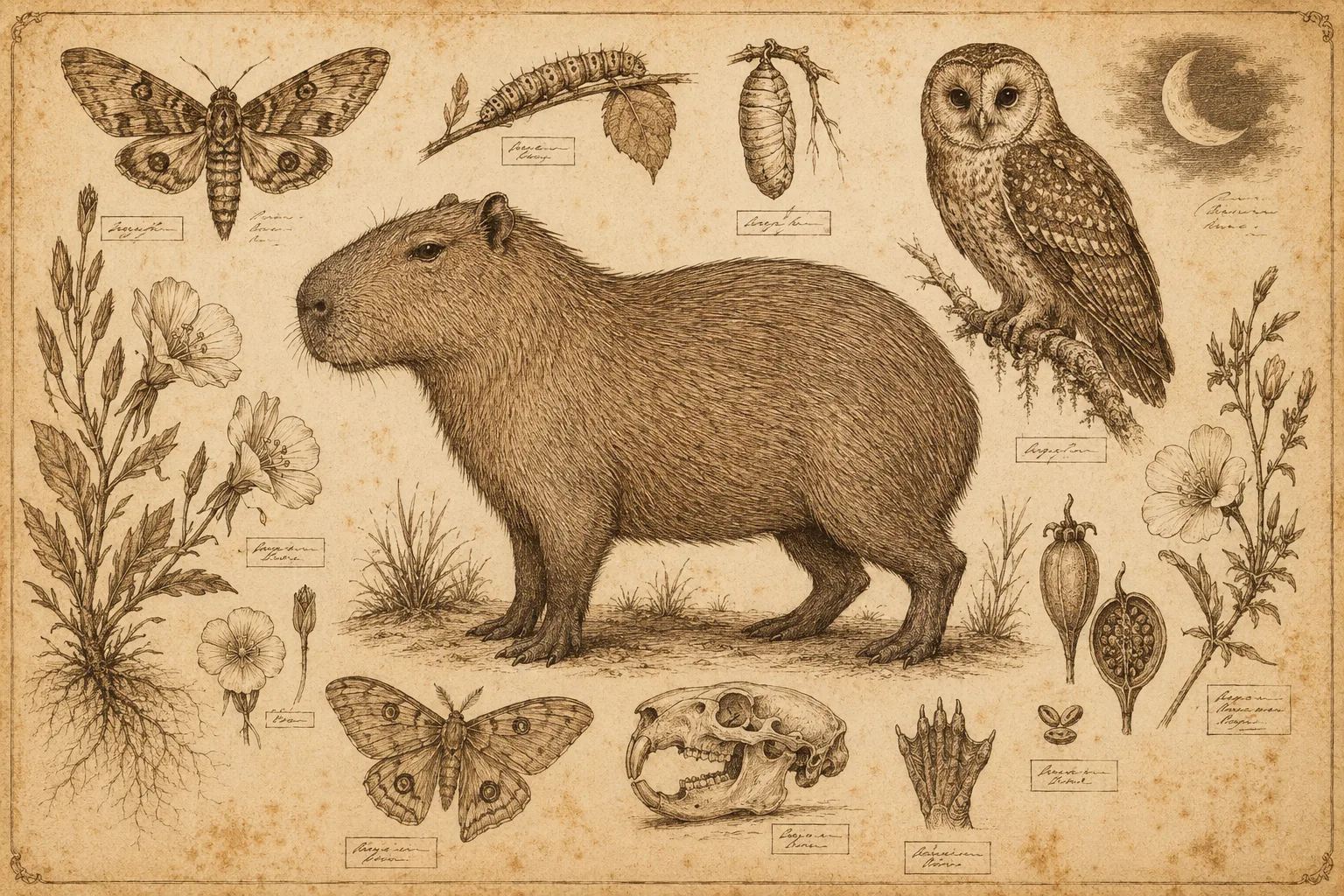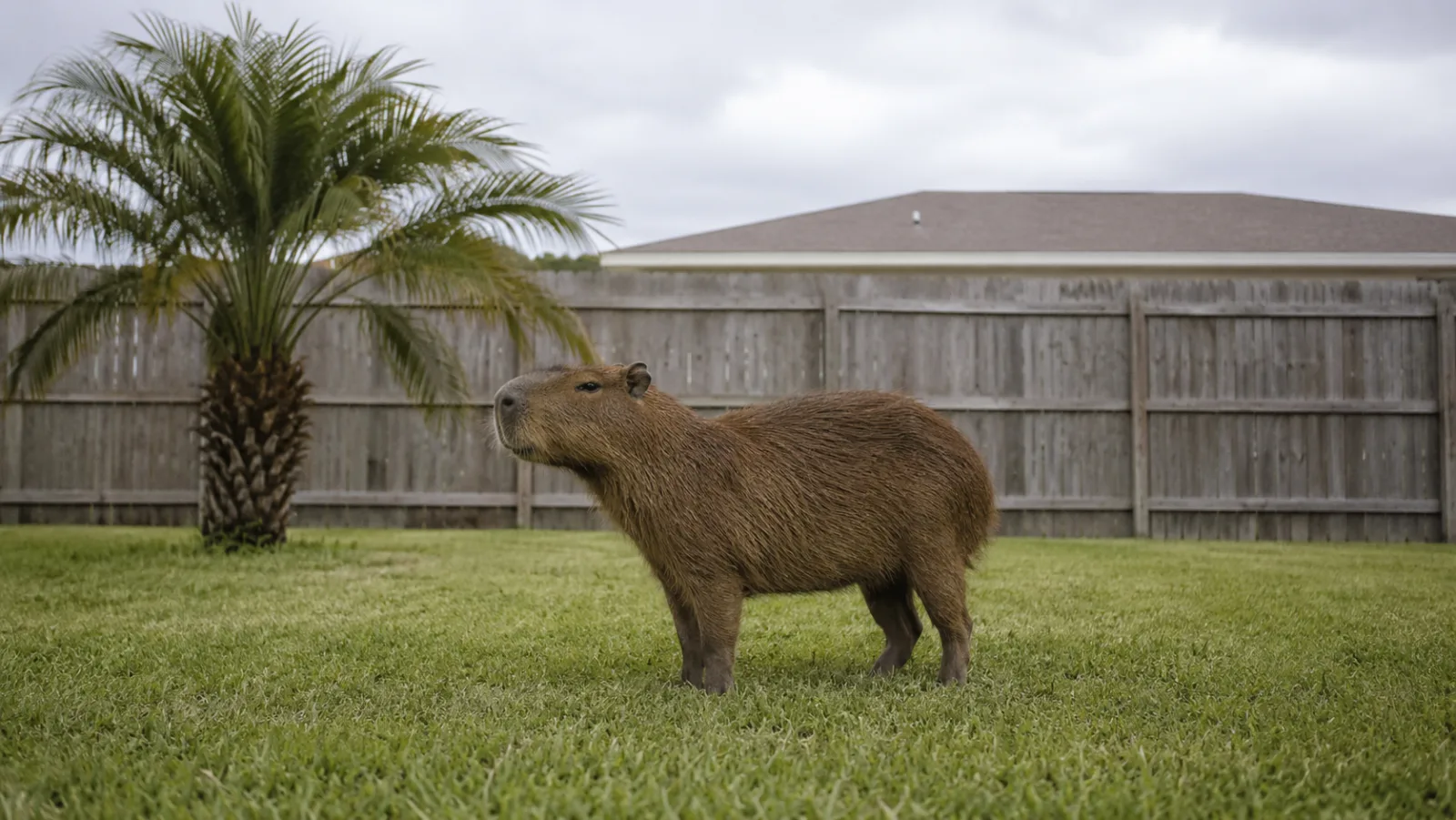
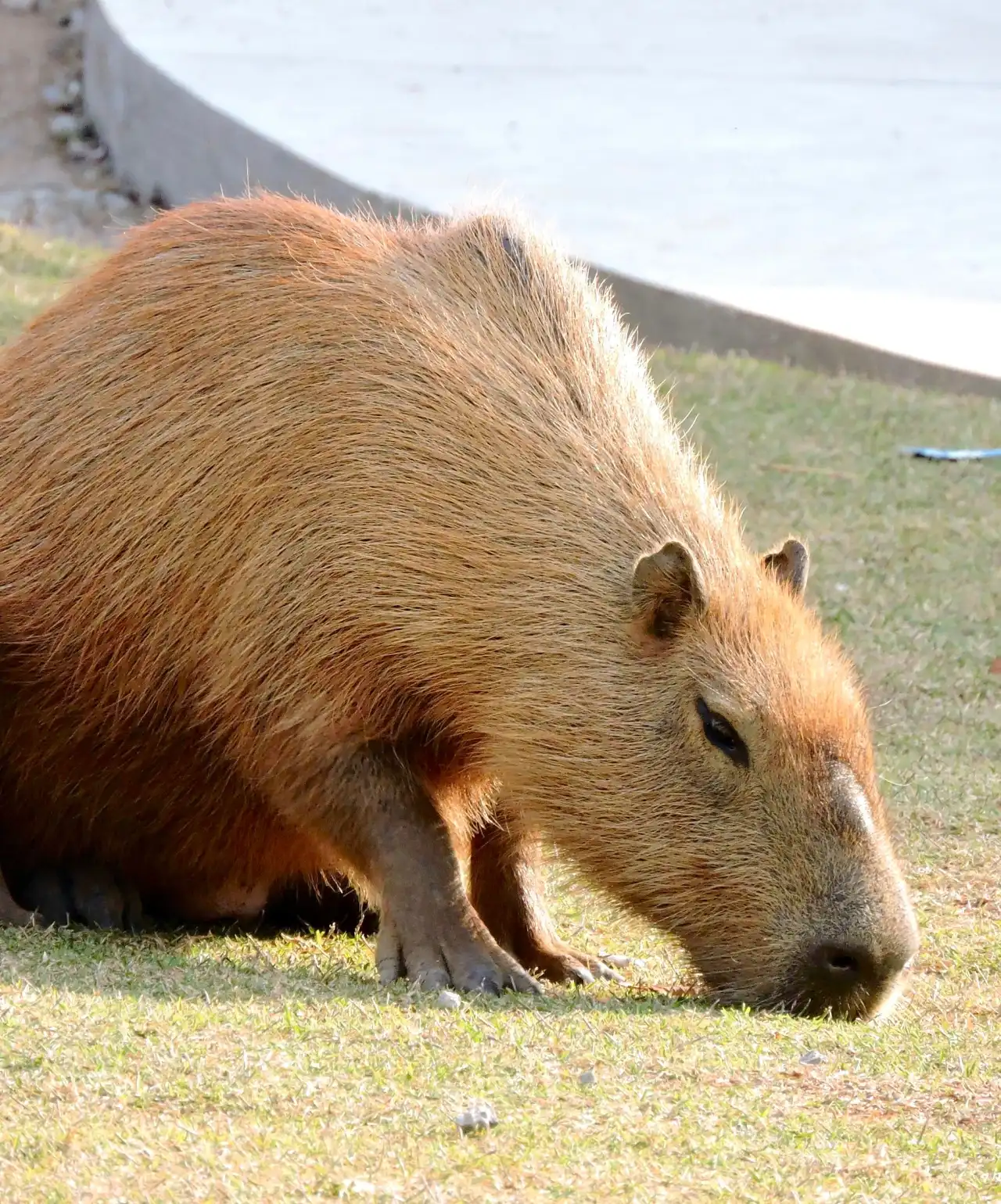
Capybaras spend the day grazing, resting, swimming, watching, socializing, digesting, and staying near water. They are not doing nothing. They are doing wetland mammal work at a pace that makes email look embarrassing.
A capybara day is mostly food, water, group life, and rest. The exact rhythm changes with habitat, season, heat, predator risk, and zoo routines.
A Day Of Eating, Resting, And Staying Near The Group
San Diego Zoo says capybaras tend to eat around dawn and dusk. That makes sense for a large herbivore living in warm habitats: cooler periods are better for moving and grazing, while hotter periods invite shade, water, and rest.
Animal Diversity Web describes capybaras as group-living animals that use vocalizations and water for safety. So “what do they do all day?” is not just a food question. It is a group question.
Grazing Takes More Time Than The Face Suggests
Capybaras are herbivores, and herbivores have to put in hours. Grasses and aquatic plants are not calorie-dense fast food. They require time, chewing, and digestion that takes the scenic route.
Research on foraging in a seasonally flooded Venezuelan savanna found capybaras changed feeding patterns by season and plant availability. The casual version: the menu shifts, but the schedule still belongs to plants.
| Activity | Why it matters | What visitors may see |
|---|---|---|
| Grazing | Main food intake | Slow chewing, moving through grass |
| Resting | Digestion and heat management | Loaf mode, side lying |
| Swimming or soaking | Cooling, safety, movement | Head above water, quiet soaking |
| Watching | Group safety | Stillness, raised head |
| Vocalizing | Group contact or warning | Barks, chirps, whistles |
The Digestion Shift You Never See
Here is the part of the day that does not photograph well, and it might be the most important shift on the schedule. Capybaras are hindgut fermenters. They break down tough plant fiber in a large cecum, and that process is slow by design. A lot of what looks like “doing nothing” is the body quietly turning grass into something usable.
There is also a habit that sounds rude and is actually clever. Capybaras practice coprophagy. They re-ingest soft morning feces to pull a second round of nutrients and vitamins out of food that already passed through once. Animal Diversity Web notes this is normal for the family. It is the same trick guinea pigs use, which tracks, because they are relatives in family Caviidae.
One more wrinkle: capybaras, like guinea pigs, cannot make their own vitamin C. They have to get it from diet. In the wild, a varied plant menu covers that. In managed care, the AZA Capybara Care Manual treats it as a real diet-planning concern rather than a footnote. So part of “the daily routine” is just chemistry the animal has to keep topped up by eating the right things.
My honest opinion: the digestion stretch is the most underrated hour of a capybara’s day. People want the swimming clips. The fermentation is where the actual living happens.
Water Breaks Are Part Of The Schedule
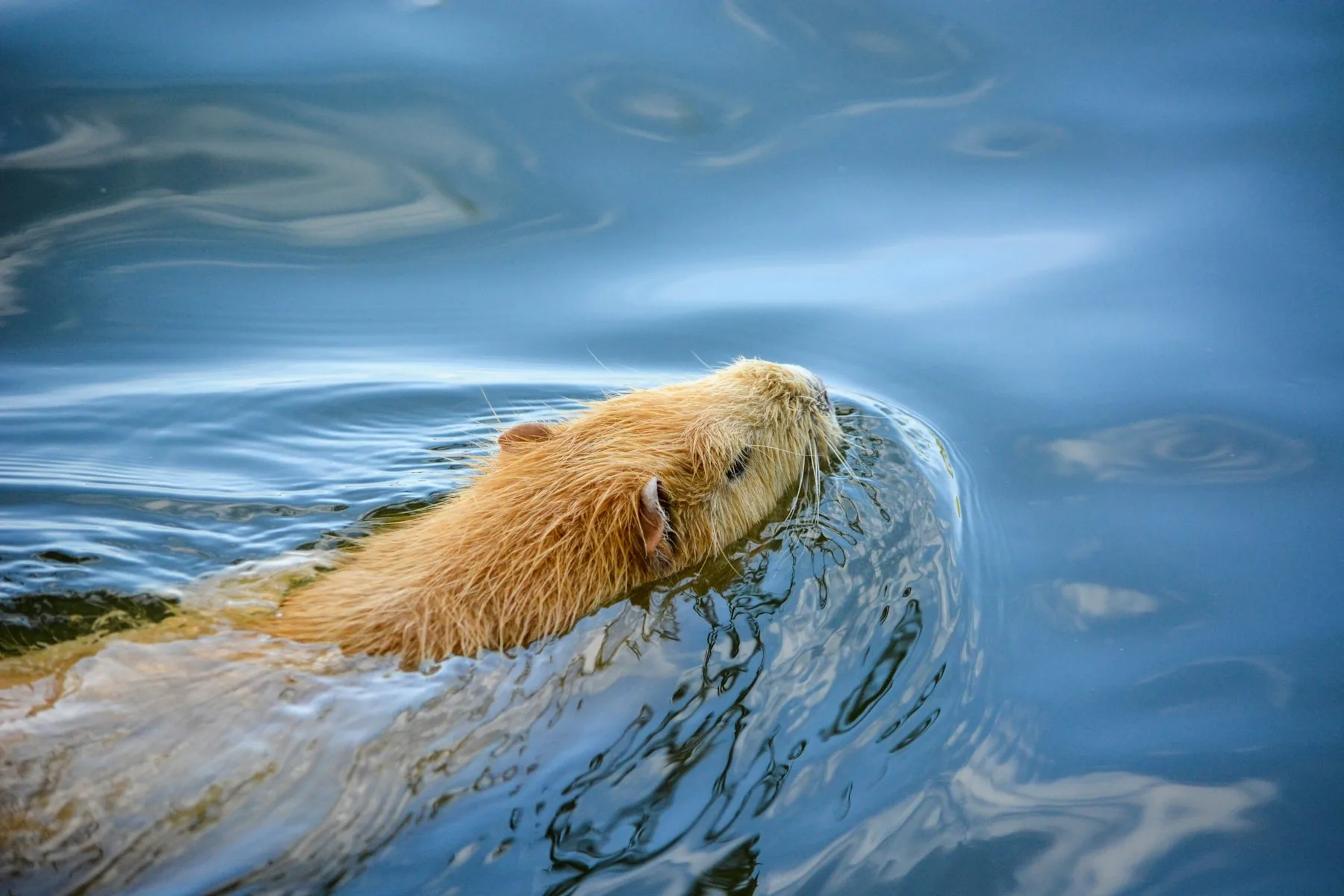
Water is not a bonus feature. San Diego Zoo says capybaras eat water plants and grasses and use water to escape danger. They can stay underwater for up to five minutes. That is not lazy. That is a safety plan with bubbles.
Wild Routine Vs Zoo Routine
Wild capybaras respond to predators, flooding, plant growth, hunting pressure, weather, and group dynamics. Zoo capybaras respond to keeper schedules, managed diets, enrichment, visitor hours, shade, heated areas, and the fact that nobody is trying to be a jaguar at 2 p.m.
That is why zoo capybaras may look calmer or more predictable. They are not “less real.” They are living under managed conditions with different pressures.
What People Get Wrong About The Capybara Day
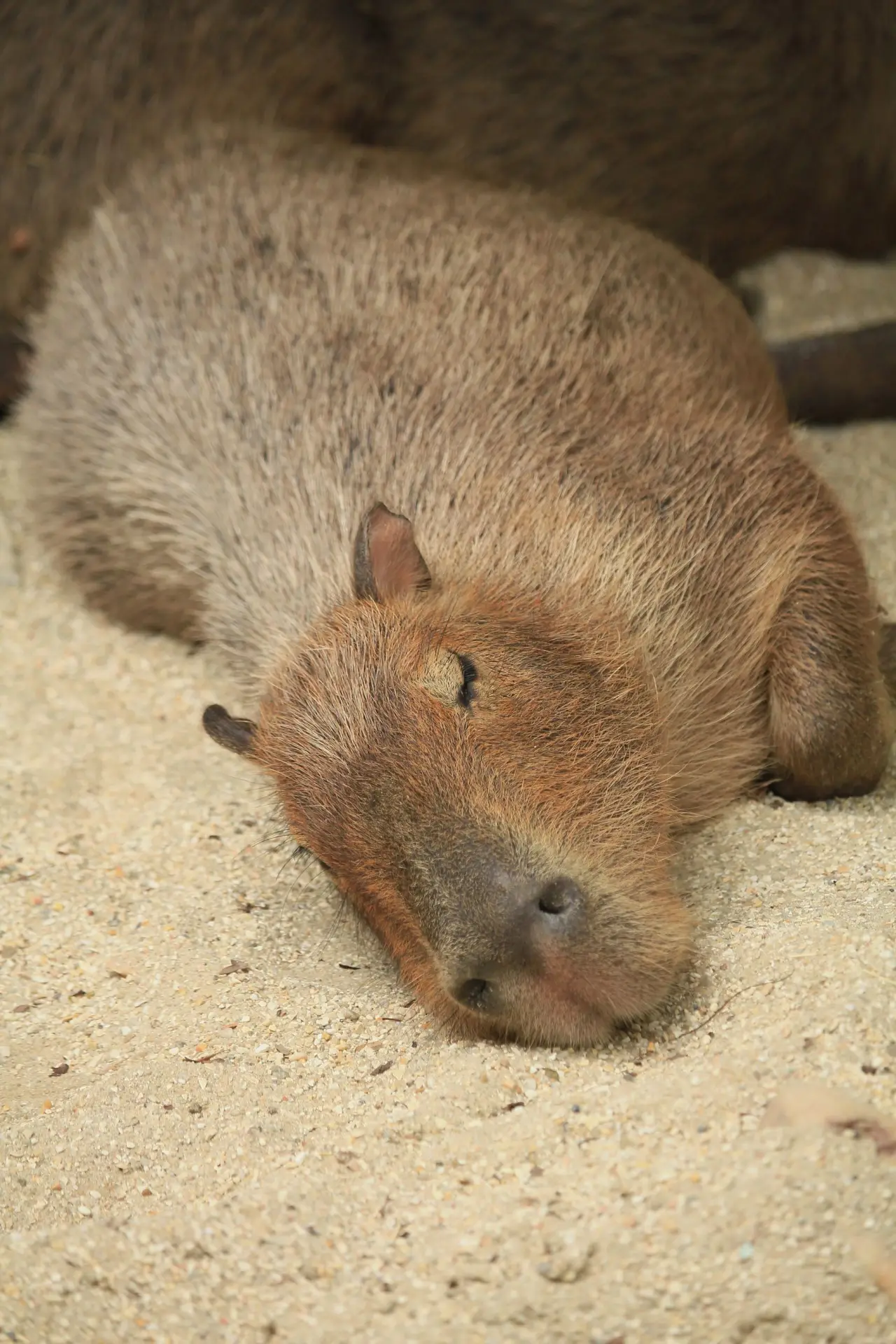
Most of the confusion comes from reading a calm animal as a bored or broken one. A capybara that is lying down with half-closed eyes is usually mid-task, not off the clock.
| Myth | Better answer |
|---|---|
| It sleeps all day, so it’s lazy | Rest is digestion, cooling, and predator-avoidance behavior, not idleness |
| It only cares about food | Group safety, water access, and social position fill big parts of the day |
| It’s nocturnal | It shifts toward dawn and dusk in heat, but it is not strictly a night animal |
| A solo capybara is fine | They are herd animals; solitary housing is a known welfare stressor |
| Swimming is just for fun | Water is cooling, travel, and an escape route; it can stay under for minutes |
How To Read A Capybara’s Day Yourself
If you ever watch one at a zoo or sanctuary, you do not need a biology degree to follow the schedule. A few honest tells:
- Posture. A side-lying “splat” usually means heat management or deep rest. An upright loaf with the head up means it is still on watch.
- Distance to water. Capybaras rarely drift far from it. If the group moves, the water is almost always the reason or the destination.
- The group, not the individual. They take cues from each other. One head pops up, several follow. That ripple is the social safety system working in real time.
- Time of day. San Diego Zoo notes the dawn-and-dusk feeding lean. Midday stillness in warm weather is expected, not a sign something is wrong.
Watch for ten minutes and the “boring” animal turns into a fairly busy one. The work is just quiet.
A Normal Day, If Your Office Has A Pool
A capybara’s calendar is mostly grass, water, group management, rest, and watching the world with the expression of someone who has declined all optional meetings.
If you see one doing nothing, look again. It may be digesting, cooling, listening, or simply demonstrating a healthier relationship with time than the rest of us.