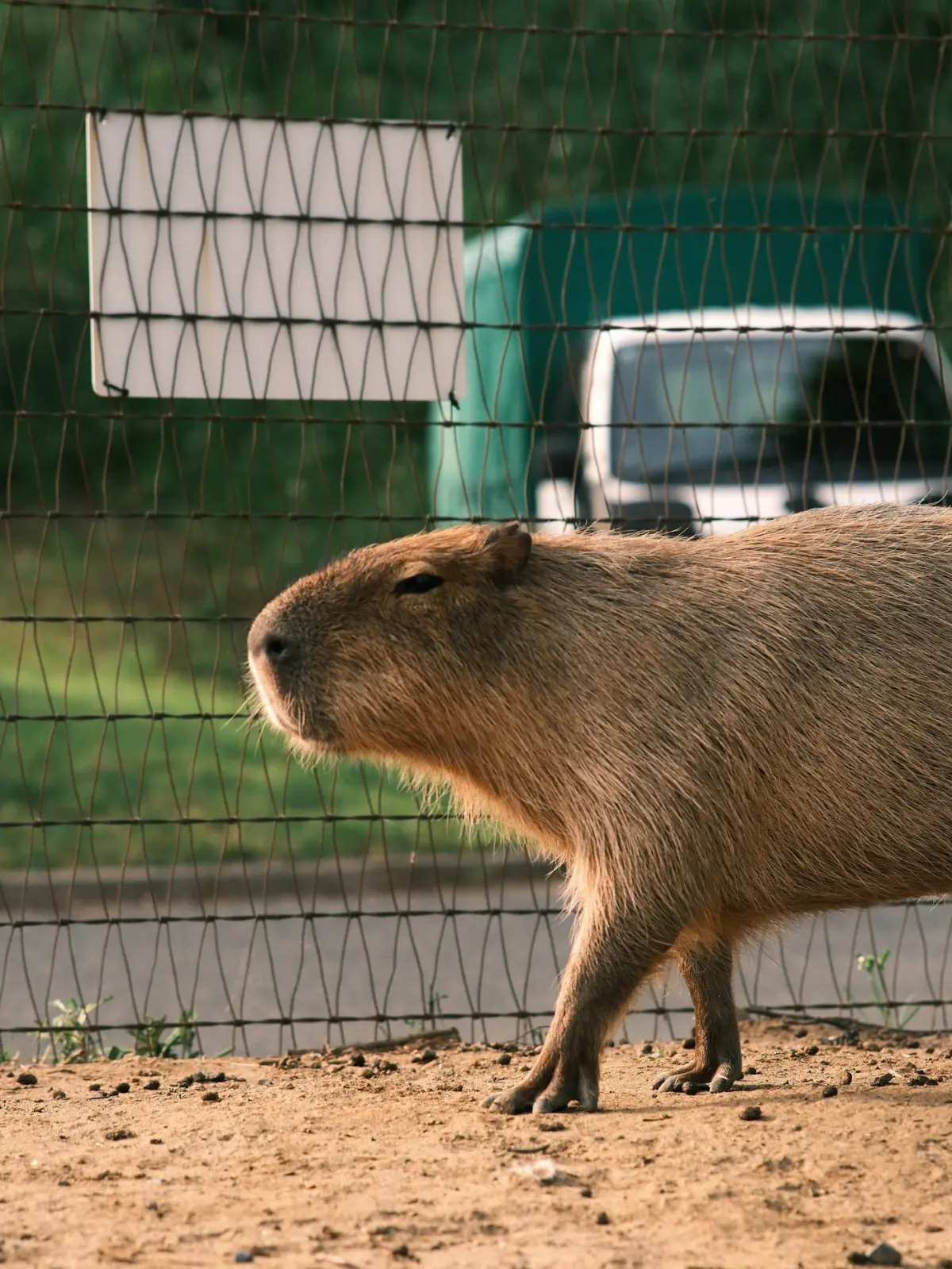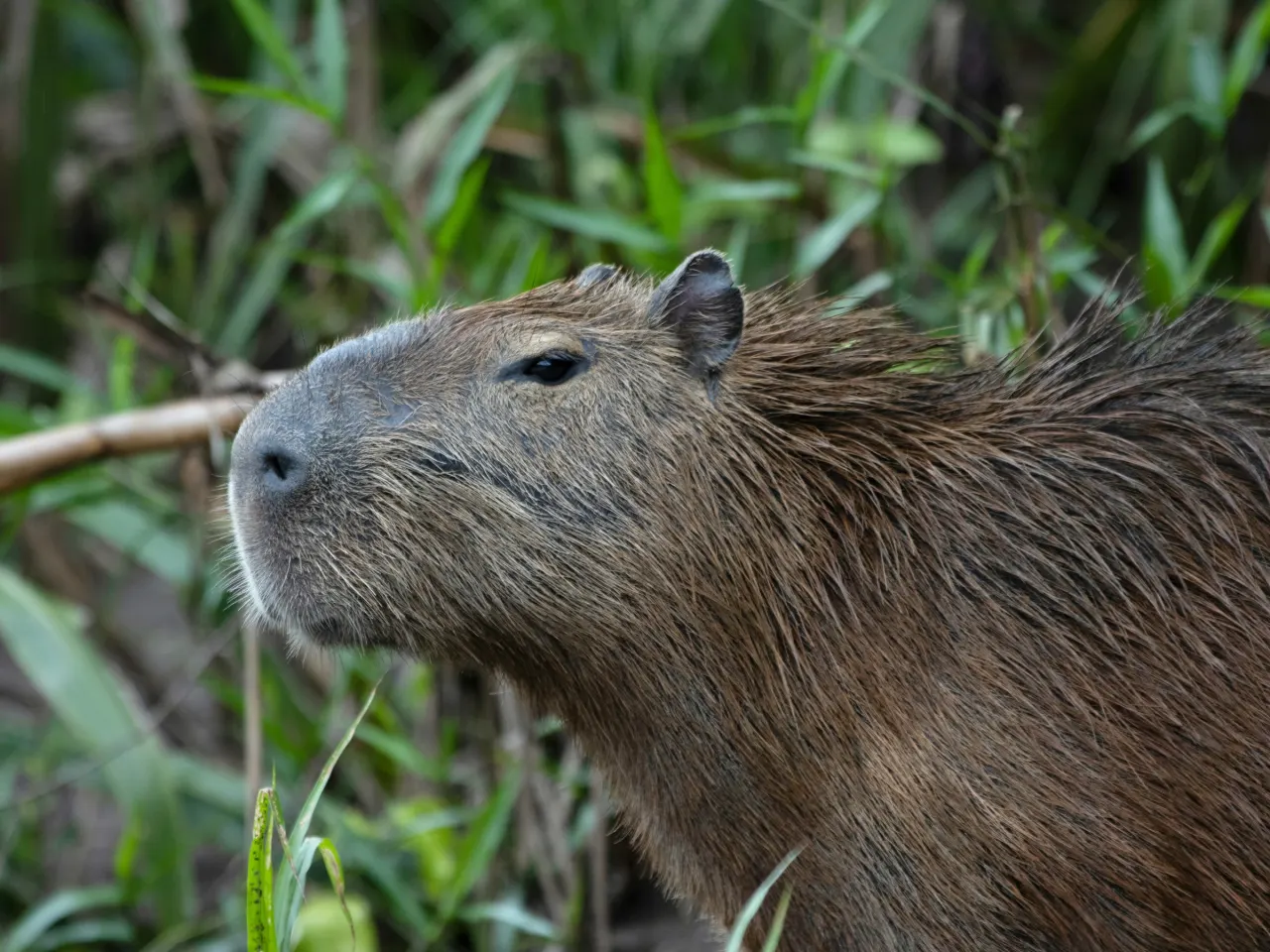
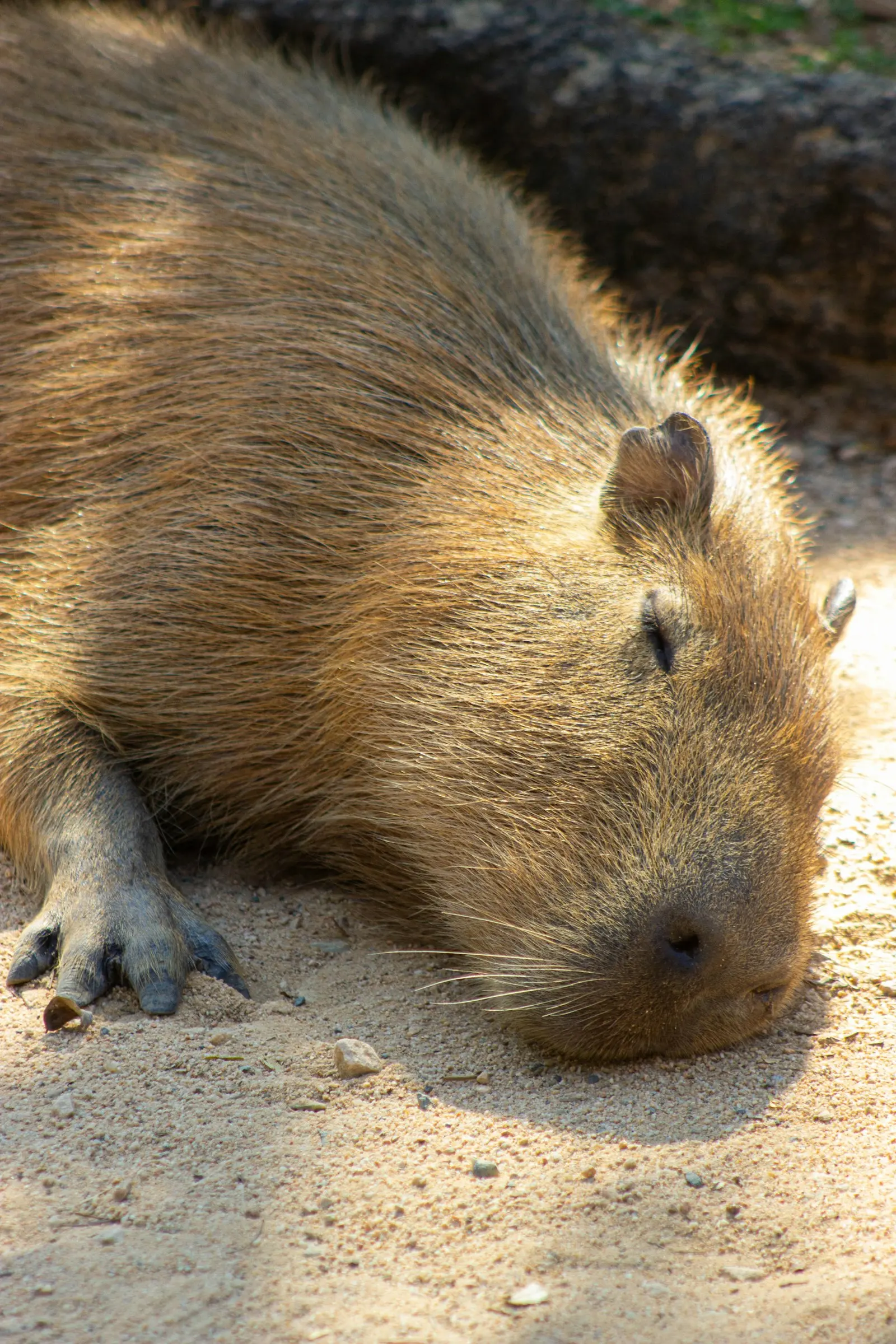
Capybaras are not an aggressive species, and the question most people are really asking is a different one: what makes a specific capybara, on a specific afternoon, decide that something is a problem? The answer is nearly always social. A herd runs on a strict male ranking order, and the aggression inside it is mostly one dominant male managing the males below him. Breeding season, newborn pups, a stranger walking in: those are variations on the same theme, not separate mysteries.
Aggression is a role in the herd, not a trait in the animal
Capybaras rely on detection and escape, not confrontation, and their default answer to a threat is water. But inside the group there is a strictly linear male dominance hierarchy, and enforcing it is a daily job. Almost every aggressive capybara you will ever read about was doing that job, defending pups, or meeting a stranger.
Why “Not Aggressive” Is a Statement About Context
Capybaras are prey. Animal Diversity Web lists them as food for a long roster of South American predators, and the behavioral kit matches: constant vigilance, a coughing alarm bark, and a group that either stands alert or rushes into the water when it hears one. Nothing in that toolkit is built for winning a fight with something larger.
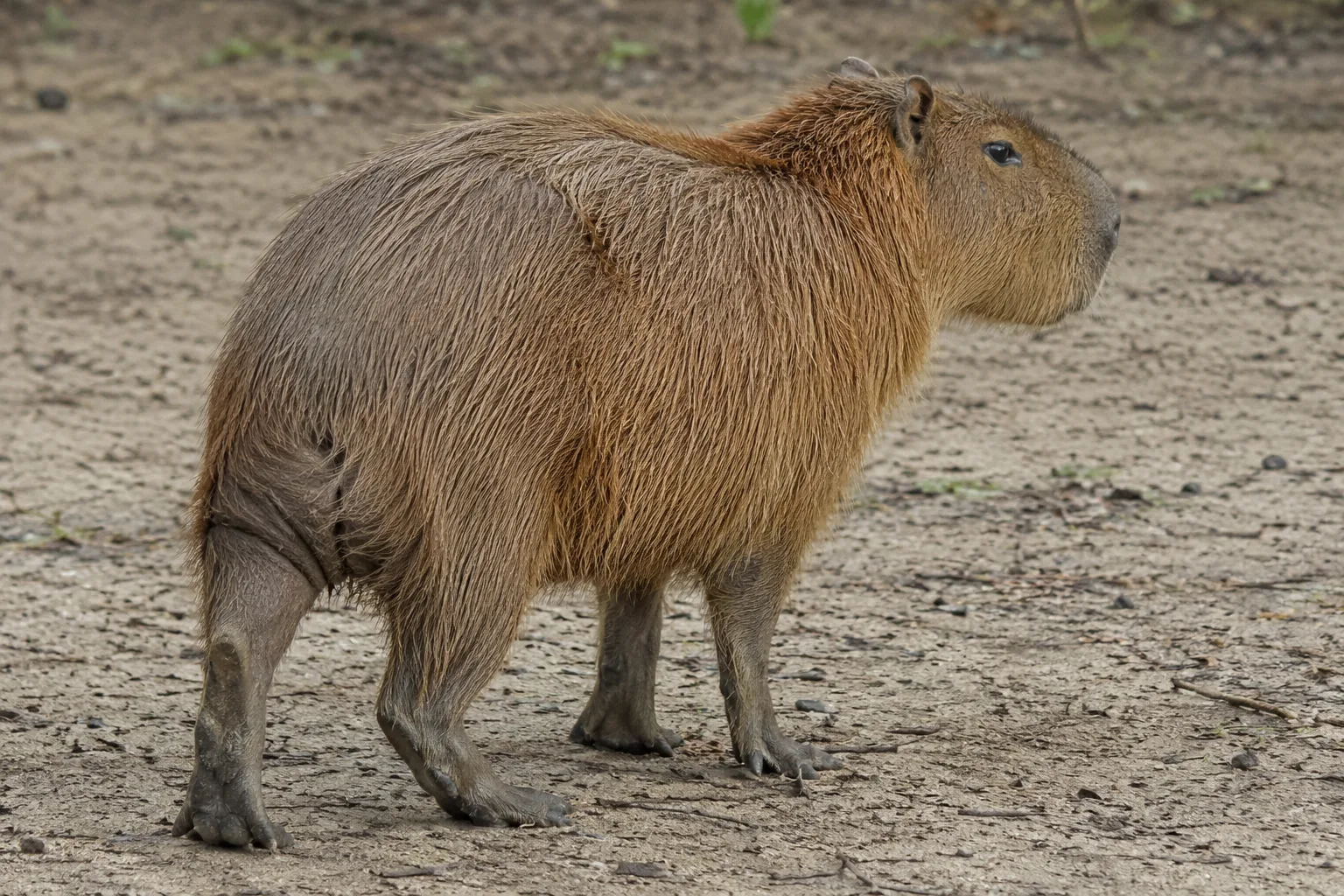
Turn the camera on the herd itself and the picture changes. Herrera and Macdonald recorded 2,911 interactions inside wild capybara social groups and found that 34% of them were between adult males, and that those male-male interactions were invariably aggressive. A capybara group that looks placid from a boardwalk is running a continuous, low-grade negotiation about rank.
The asymmetry is the interesting part. The same body of work found no evidence of dominance relations among females at all. So “are capybaras aggressive” has two honest answers depending on which capybara you mean, and most articles only ever give you one of them.
The Dominant Male Is the Whole Story
A typical herd is one dominant male, several adult females, their young, and a handful of subordinate males who live at the edges rather than in the middle. The AZA Capybara Care Manual describes those subordinates plainly as “peripheral members of the herd.” The San Diego Zoo Wildlife Alliance puts a breeding group at one male and four to fourteen females.
The ranking is strictly linear and it is durable. Dominance positions can hold for years, and if the dominant male is removed, the top-ranking subordinate simply moves up. The dominant male is significantly heavier than any subordinate. Below him, weight stops predicting anything.
Rank buys real things: the best water, the birds that pick parasites off your back, and first access to females in estrus. It also shows up in scent. Males carry a raised gland on the snout, the morillo, whose secretions differ enough between individuals to work as an olfactory fingerprint, and the amount of scent-marking a capybara does tracks its rank.
What Breeding Season Actually Changes
Capybaras breed year-round, with a peak in May and June in South America at the start of the rainy season. When a female comes into estrus, a male follows her closely, sometimes for a long stretch, and is regularly driven off by a more dominant male before anything happens.
Here is the part that explains the constant harassment. Herrera and Macdonald found that each dominant male secured significantly more matings than each subordinate, but that subordinate males as a class accounted for more matings than any single dominant. Monopoly is the goal and it does not work, especially in a bigger group. So the enforcement never finishes, which is why breeding periods look less like a burst of aggression and more like a long argument with no end date.
Age matters too. Capybaras reach sexual maturity at around 15 months, and in the wild the dominant male expels maturing males from the group at roughly that point. In a managed facility nobody gets expelled, which is why AZA guidance says bachelor groups are not advised and that males should not be housed together, particularly with females nearby.
The Warning Ladder: What Happens Before a Bite
Watch a mixed herd at a zoo for twenty minutes and the thing you will most likely see is not a fight. It is a large male standing up, walking unhurriedly across the enclosure, and pressing his shoulder into a smaller male until the smaller one drifts toward the fence. Visitors read it as a nudge between friends. Somebody usually says the word “cuddle.” It is the most common agonistic interaction capybaras have, and the whole exchange takes about eight seconds. The subordinate does not argue, because the ranking was settled months ago and re-testing it costs more than it pays. Then both of them go back to eating grass, and the family with the stroller moves on to the otters having seen a complete dominance display without knowing it.
The signals below run in escalation order. Each rung tells you something the previous one did not.
-
Tooth-chatter
A rapid dental clatter, one of seven call types in the capybara vocal repertoire, used in agonistic and threatening contexts. The earliest and quietest rung, and the one people miss.
-
The escort
A dominant male walks over, nudges, and steers the other animal to the edge of the group. Low cost, no contact worth the name, and usually the end of it.
-
Stiff direct approach and stare
Purposeful movement toward another animal with no grazing, no browsing, no detour. Subordinates avoid the dominant male's eyes; a capybara holding yours is not being curious.
-
The chase
Animal Diversity Web describes the male hierarchy as enforced by chasing and, rarely, fights. Most disputes end here, with the loser leaving.
-
Rearing and grappling
Both animals face off, rush each other, rear onto the hind legs and grapple. This is the rare rung, and the fleeing loser often takes bites to the rump on the way out.
There is a counter-signal worth knowing, and it is the detail capybara people tend to keep. Subordinate males under pressure emit the same guttural purr that infants use to stay in contact with their mothers. An adult male, losing an argument, makes a baby noise at his opponent. Researchers read it as appeasement.
| Signal | What it means | What to do |
|---|---|---|
| Tooth-chatter | Annoyance or threat. The animal is telling you it has noticed something it does not like. | Stop whatever changed. Add distance before the next rung. |
| Nudge or escort | Rank being reasserted between two animals. Usually not about you. | Nothing. Do not step in, and do not read it as affection. |
| Stiff approach, direct stare | Assertion, not curiosity. The animal has picked a target. | Give it a clear exit route and stop closing distance. |
| Alarm bark | A predator or a perceived threat, repeated as a cough. | Back off. The herd is about to stand alert or head for water. |
| Chase or rearing | The dispute has gone physical. | Be out of the space already. Bystanders get caught in the exit path. |
Pups Change the Rules for the Whole Herd
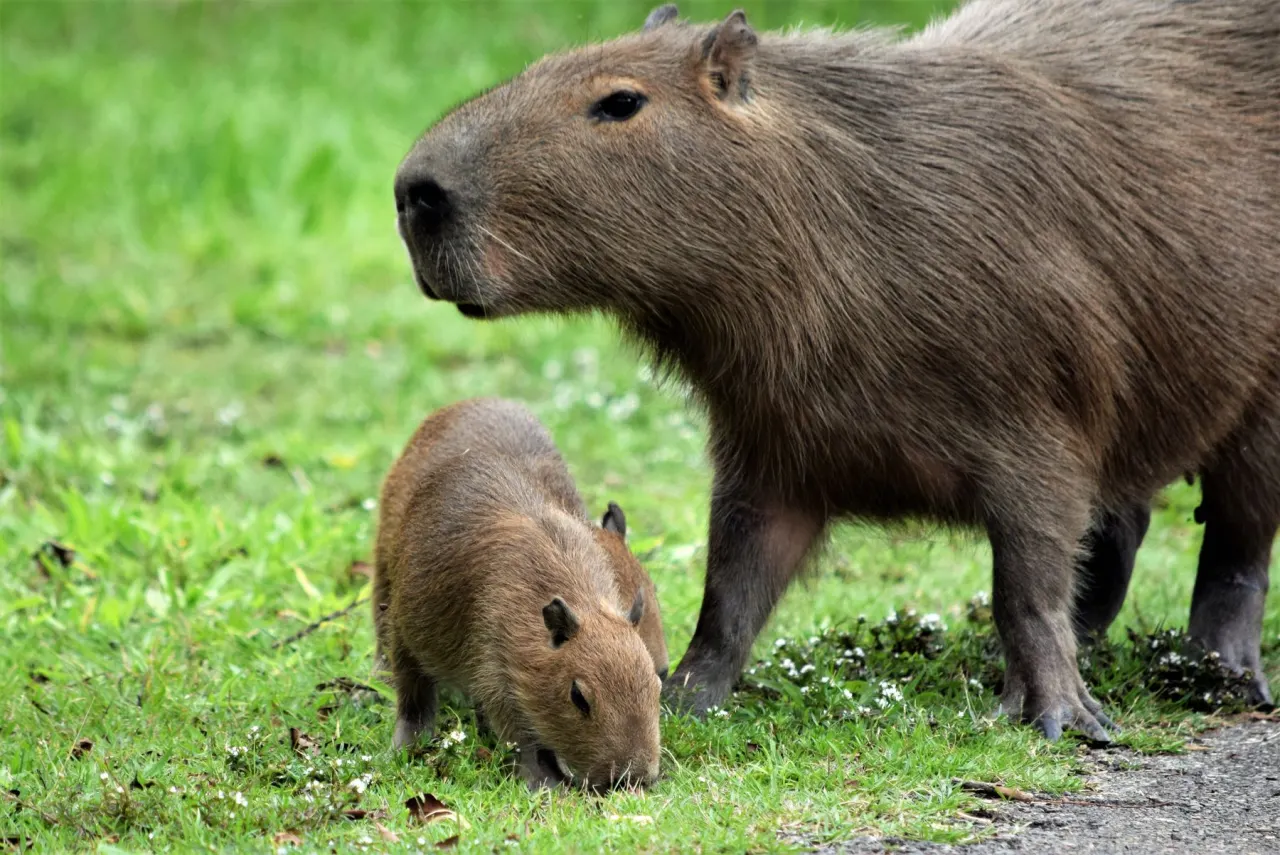
The common version of this is “watch out for the mother.” The actual finding is broader and more useful: a capybara territory is defended by all adult members, and aggression may be shown by both males and females, particularly when newborns are present.
Females share the work. Pups nurse for about three months and take milk from their own mother and from other females in the group, and those nursery clusters are read as protection from predators in the wild and from infanticidal males in managed care. That last phrase comes straight out of the research literature, and it is a blunter description of capybara social life than the internet usually offers.
Keeper protocol follows from it. AZA guidance tells staff to stay alert to warning calls and barks and to always know where the pups are, and to separate an individual from the herd before restraining it, specifically to avoid counterattacks from the rest of the group when pups are being handled. That is not a species with a temper. That is a species with a defended perimeter.
Whistles, incidentally, are infants calling to their mothers. If you hear one and then hear the adults go quiet, you are watching the perimeter get drawn.
Strangers Are the Real Flashpoint
A herd's social order is very stable and the dominant position rarely changes, so unfamiliar individuals are often attacked. AZA guidance is direct about the worst case: bonded adults may attack or kill strange adults, and reintroducing a capybara that has been removed is very difficult.
This is the part that surprises people who arrive expecting the friendliest animal on earth. Stability is exactly what makes a newcomer a problem. There is no vacancy, and the group has no mechanism for creating one.
The method that works in accredited facilities is not gradual. Everything gets replaced first, then everybody moves in at once: all the furniture, the enrichment, the food and water bowls and the substrate are swapped so the space carries nobody’s scent, and the whole herd plus the new animal go in together. Some chasing is expected, and it should be brief. If the group shows no sign of accepting the newcomer, the answer is to pull it out and rehome it, not to wait and hope.
That is a high bar, and it is worth reading properly before introducing capybaras to each other in any setting.
Where the “Friendliest Animal on Earth” Story Breaks Down
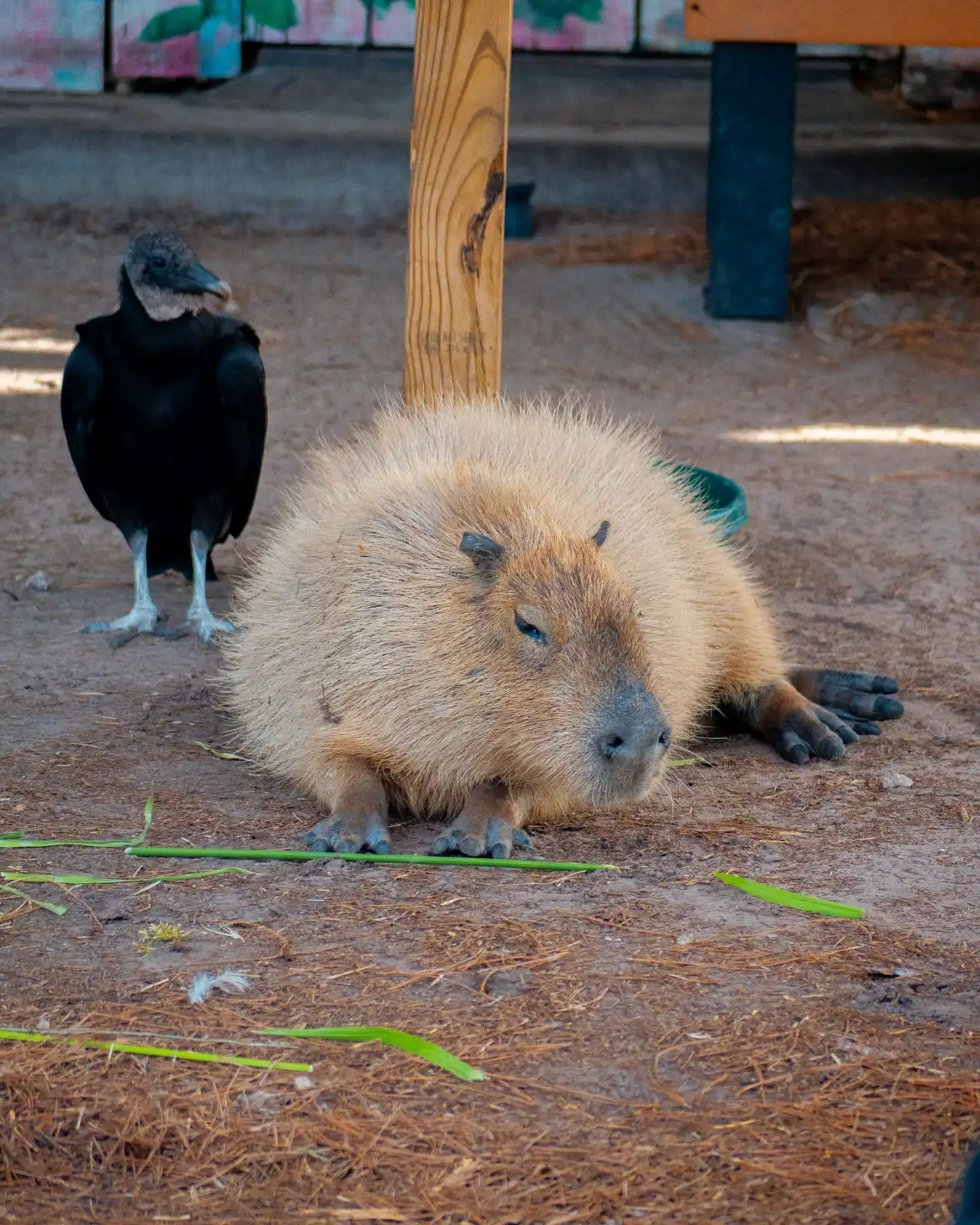
The reputation is earned, and it is worth defending. Capybaras genuinely do cohabit with an absurd range of other species; the AZA manual’s list of suitable mixed-exhibit companions runs from agoutis and tapirs to howler monkeys and scarlet macaws. A bird landing on a capybara’s back produces no reaction because there is nothing in it worth reacting to.
What the meme flattens is that the tolerance points outward. Capybaras are relaxed about other species and structured about their own. The animal that will let a bird stand on it will also walk a rival to the fence line, and both of those are normal.
Food-conditioning is where the two stories collide. AZA keepers work with the idea that every individual capybara has its own safe distance, and that it is the keeper’s job to learn what that distance is. Hand-feeding deletes it. A fed capybara has learned that people are a resource, so it closes a gap it would otherwise hold, and it now has an expectation that can be disappointed. Nothing about its temperament changed. Only the distance did.
That is the honest read on the urban capybara stories out of Brazilian parks and Argentine developments like the Nordelta herd. They are not evidence of a species turning aggressive. They are evidence of what happens when you remove an animal’s reasons to keep its distance and leave everything else in place.
Misconceptions Worth Dropping
| What people believe | What is actually true |
|---|---|
| ”Capybaras are so friendly they never bite” | The tolerance is interspecific. Within the herd, one third of all recorded adult-male interactions were aggressive. |
| ”A hand-raised capybara is a safe capybara” | Socialization lowers stress responses. It does not remove rank behavior, defense of pups, or a startle response. |
| ”Aggression is random” | It is one of four contexts: rank, estrus, pups, or a stranger. Outside those, capybaras are strikingly non-confrontational. |
| ”Females are the calm ones” | Females show no dominance hierarchy among themselves, but they defend territory and young alongside the males. |
| ”Two capybaras are better company than one” | Two males are worse. Bachelor groups are advised against, because males turn on each other at sexual maturity. |
| ”Urban capybaras have become aggressive” | They have become undistanced. Feeding changed the approach rule, not the animal. |
What to Do With Any of This
If you are watching capybaras rather than living with them, the whole guide collapses into one habit: look at what the body is doing, not at the face. Capybara faces are famously uninformative, which is most of why the meme exists. The information is in posture, direction of travel, and whether the animal is still eating. A capybara that has stopped grazing to look at you has changed the subject.
Give a resting animal room, never hand-feed one outside a staffed program, and treat tooth-chatter as the sentence “that is enough” rather than background noise. If you are around pups, assume the entire group is paying attention to you, because it is.
For a proper read on posture and signals, the capybara body language guide goes deeper than the ladder above. And if what you actually want to know is how much damage a capybara bite does, that is a separate question with a separate answer.
How much damage a capybara bite actually does
Twenty teeth, four of them chisel-like incisors, on an animal that can pass 170 lb — and the one detailed human case in the medical literature, read slowly.
None of this is handling or veterinary guidance. If you work with capybaras professionally, your facility’s protocols and an exotic-animal vet outrank anything on this page.