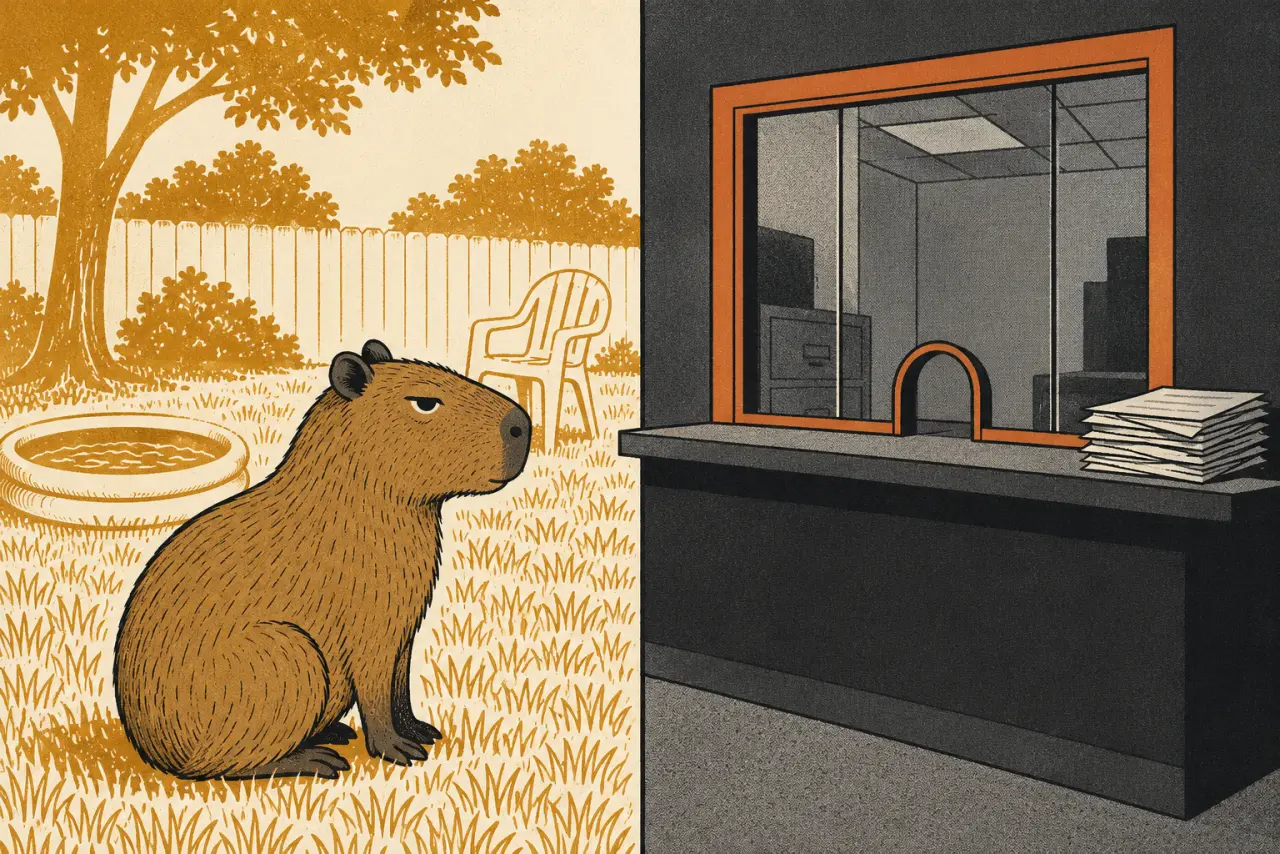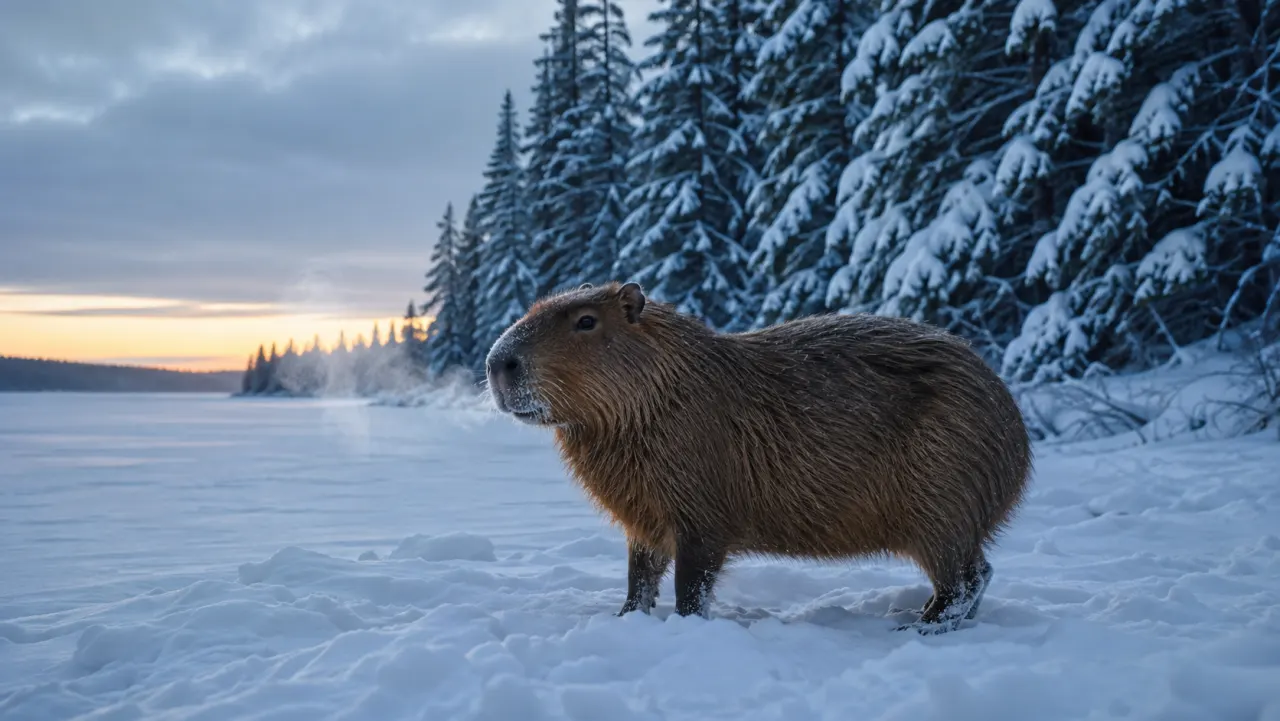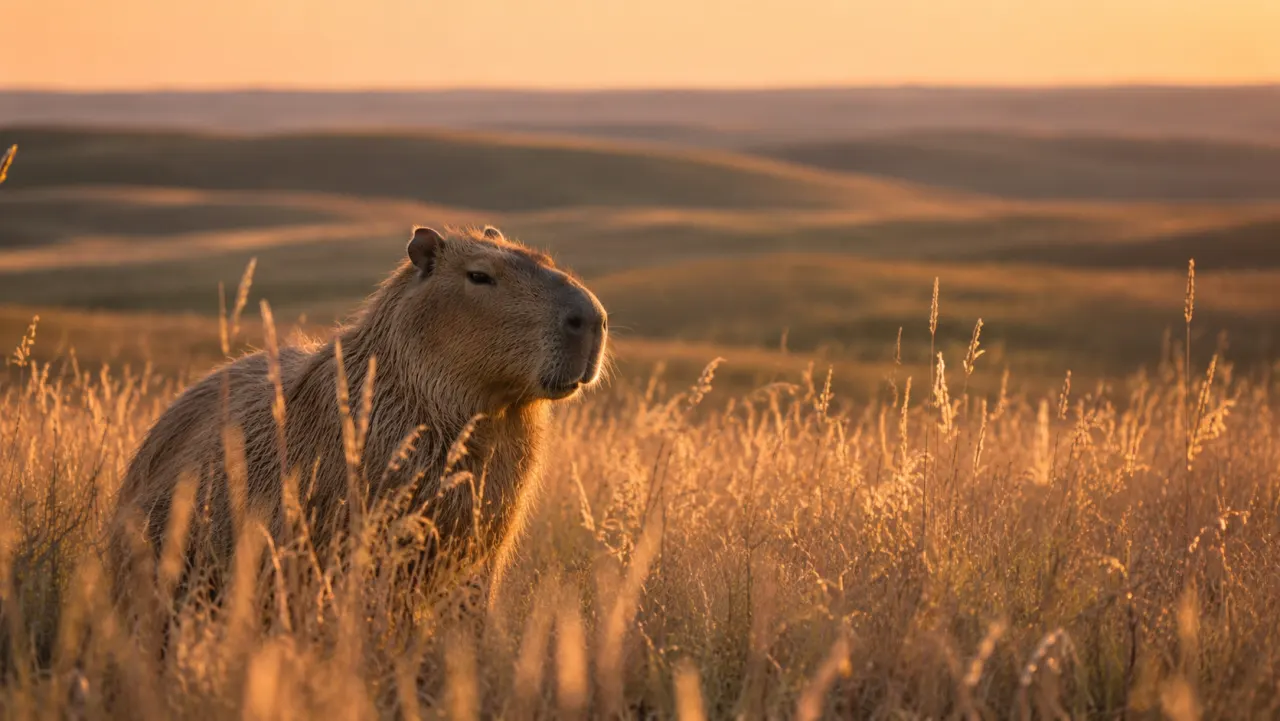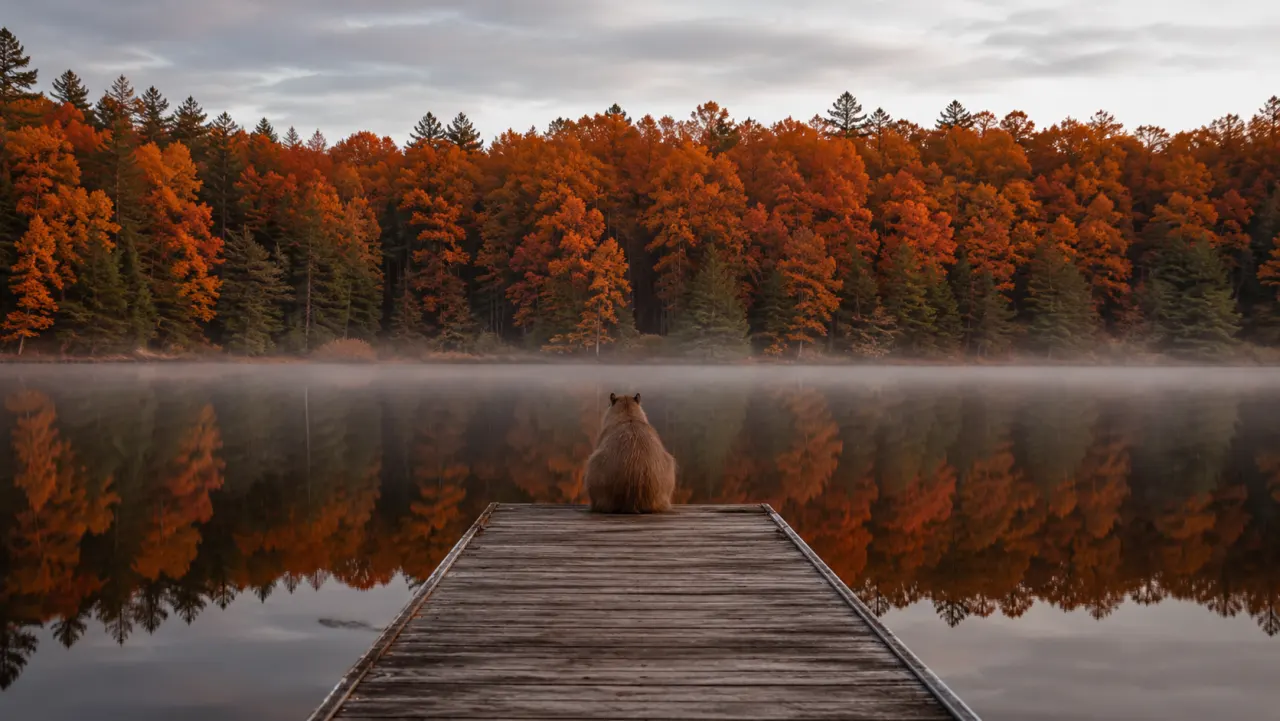
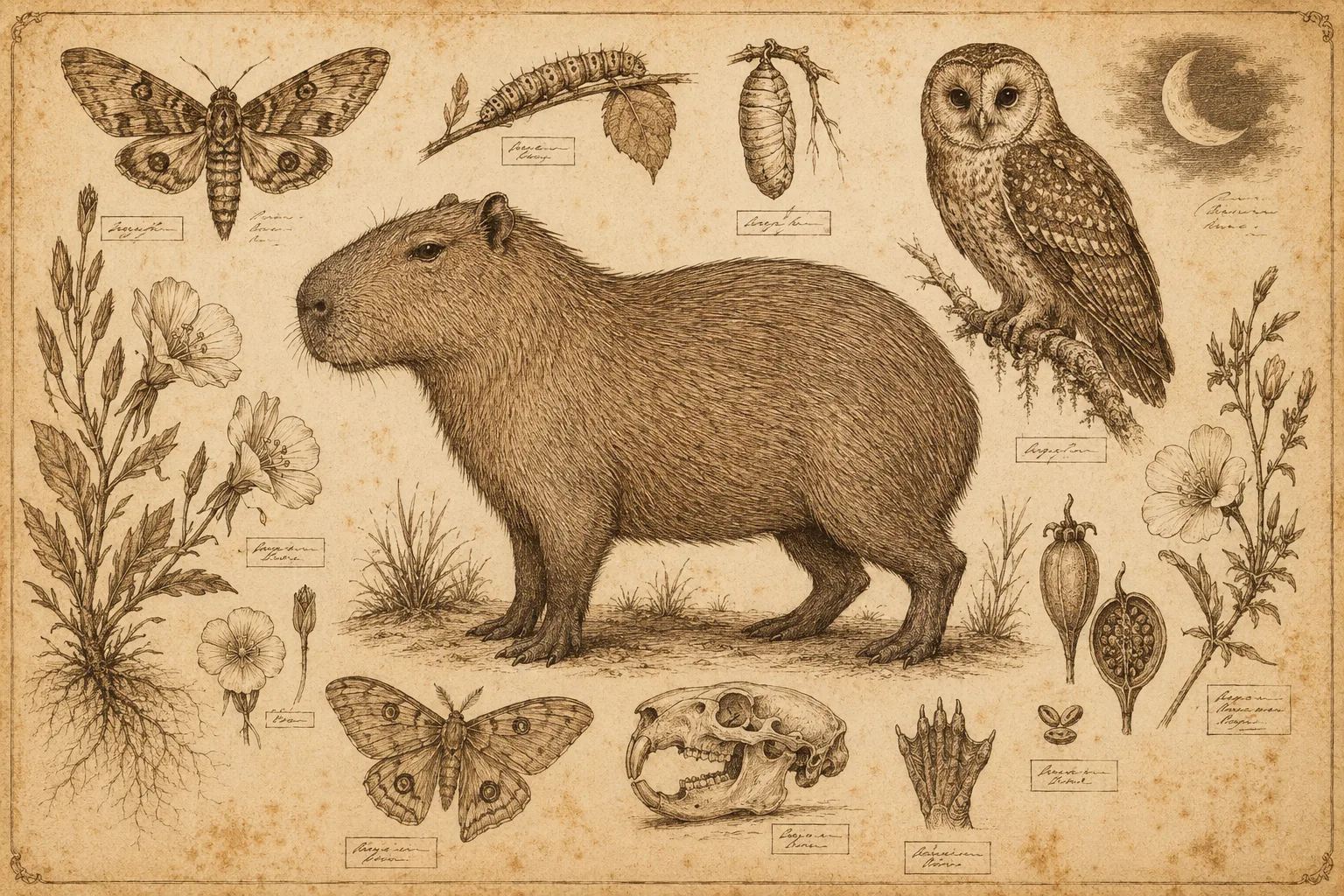
To draw a capybara, start with a long heavy barrel, add a blunt sloped head, place the eyes and ears high, keep the legs short, and do not give it a visible tail. The drawing should feel like a wetland mammal, not a guinea pig that joined a gym.
Start with the silhouette: the capybara is mostly body and attitude. Get the big shape right before you worry about fur.
Start With The Barrel, Then Fix The Face
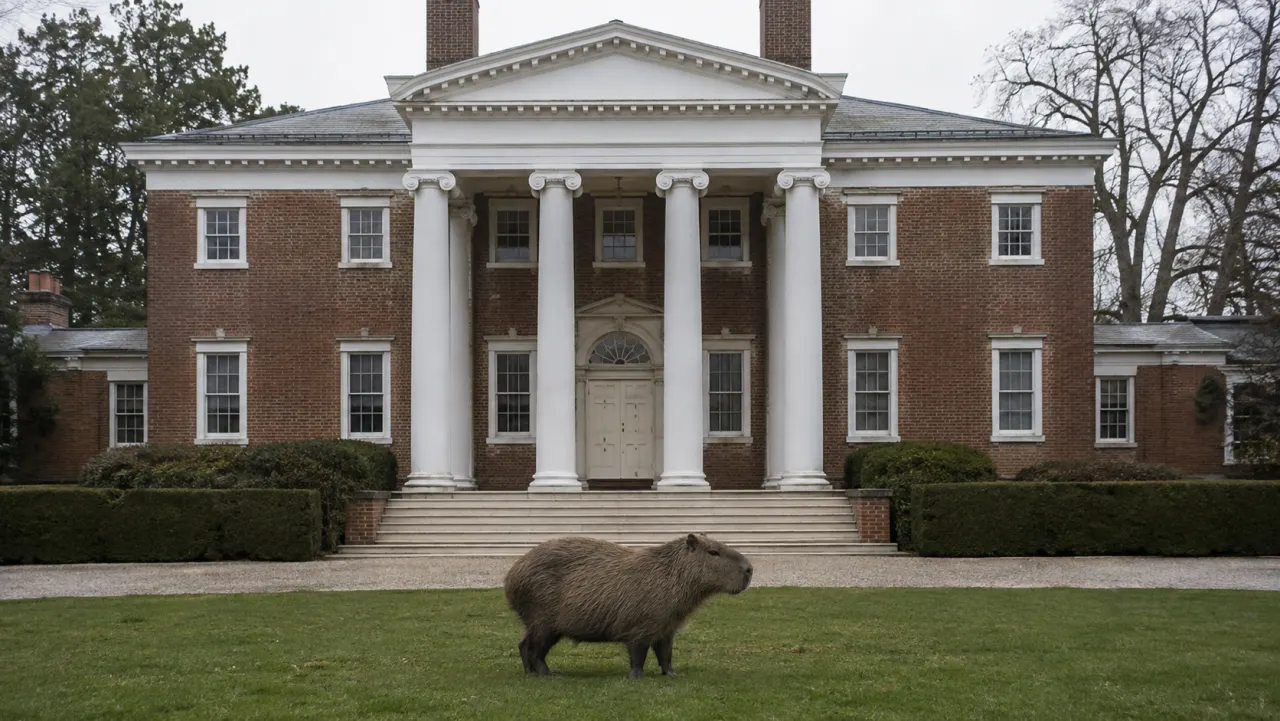
Draw a long oval body first. Make it low, heavy, and slightly rectangular. Capybaras are the world’s largest rodents, and San Diego Zoo describes them as barrel-like with legs. That barrel is your anchor.
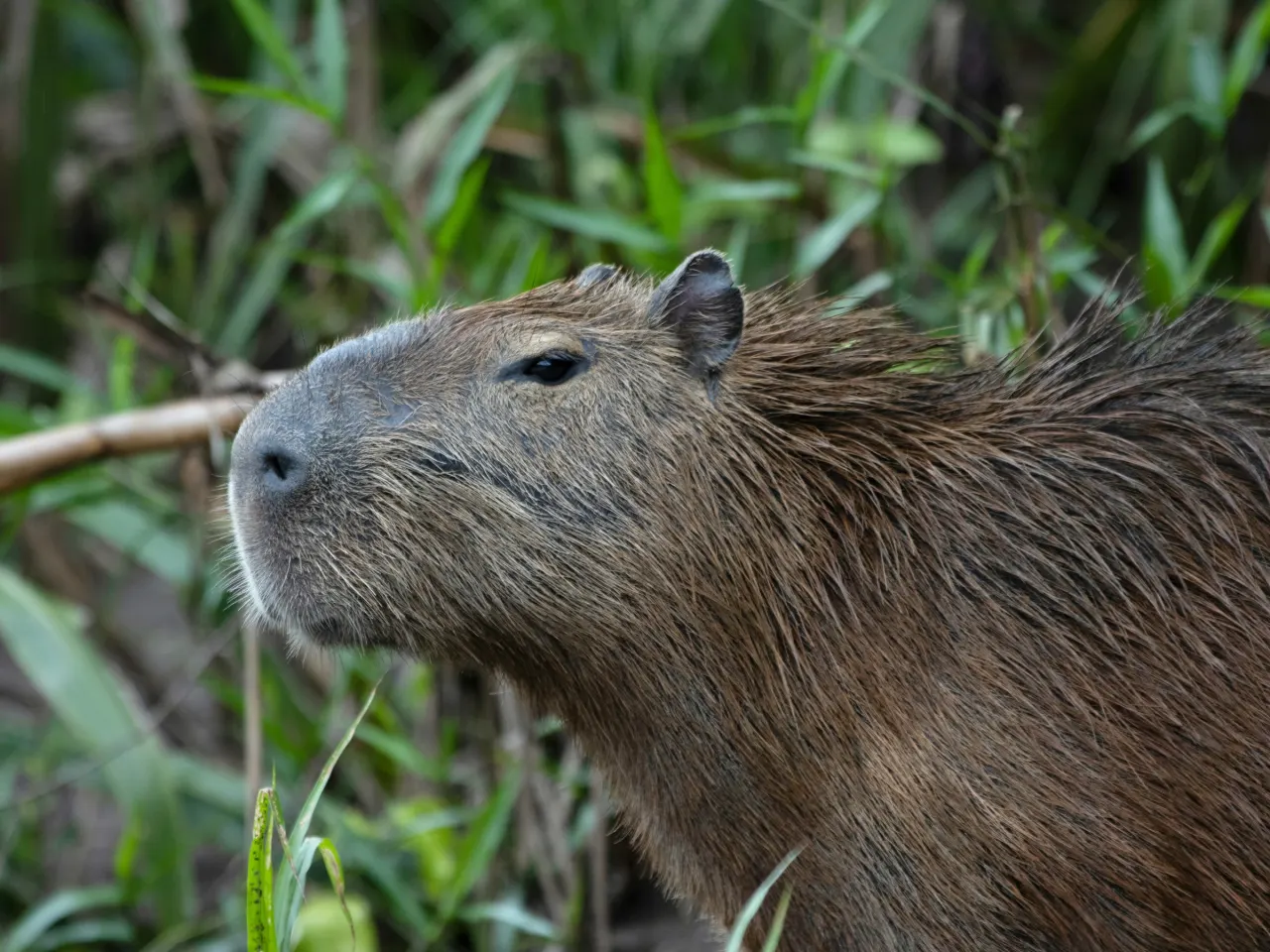
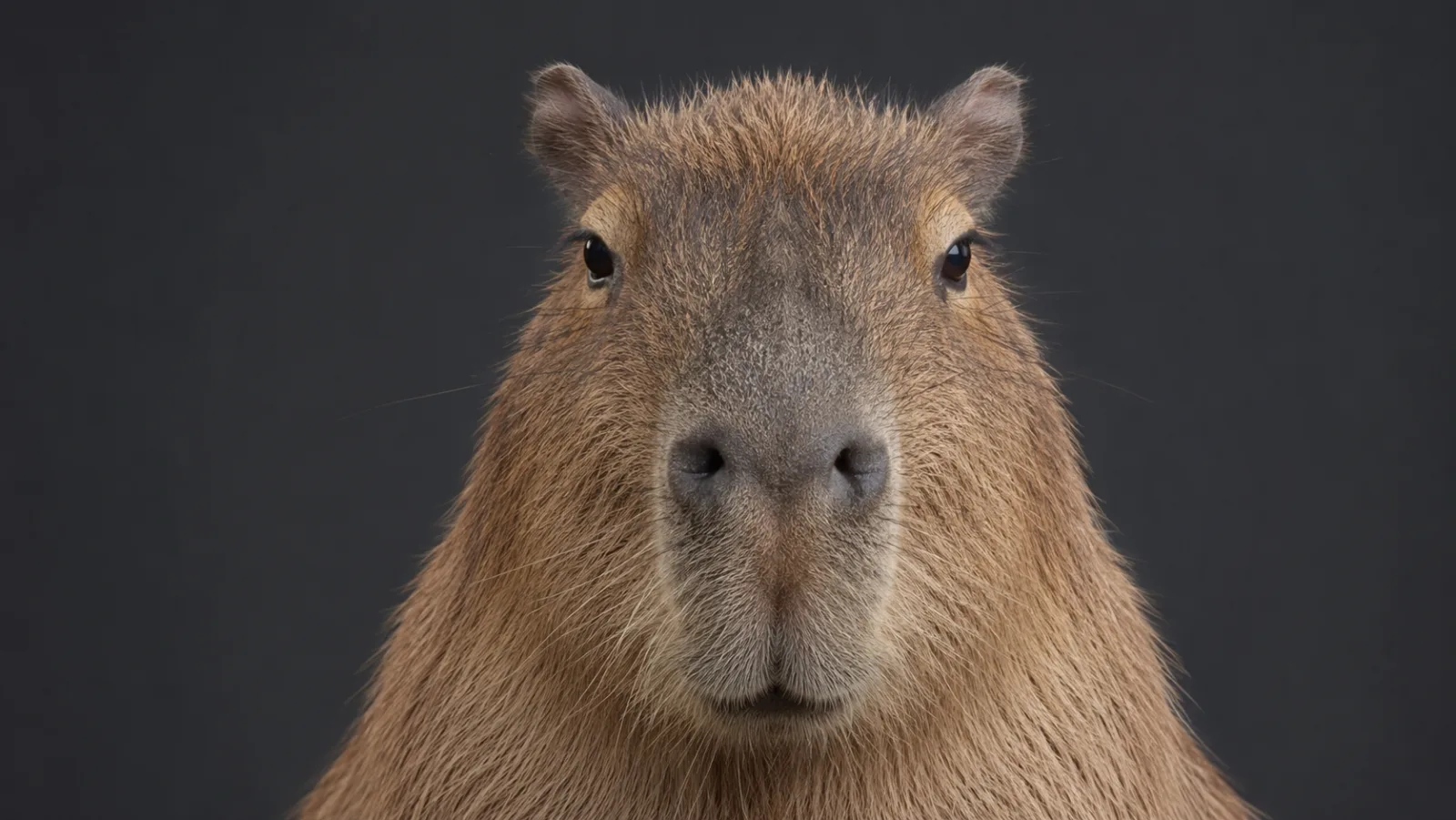
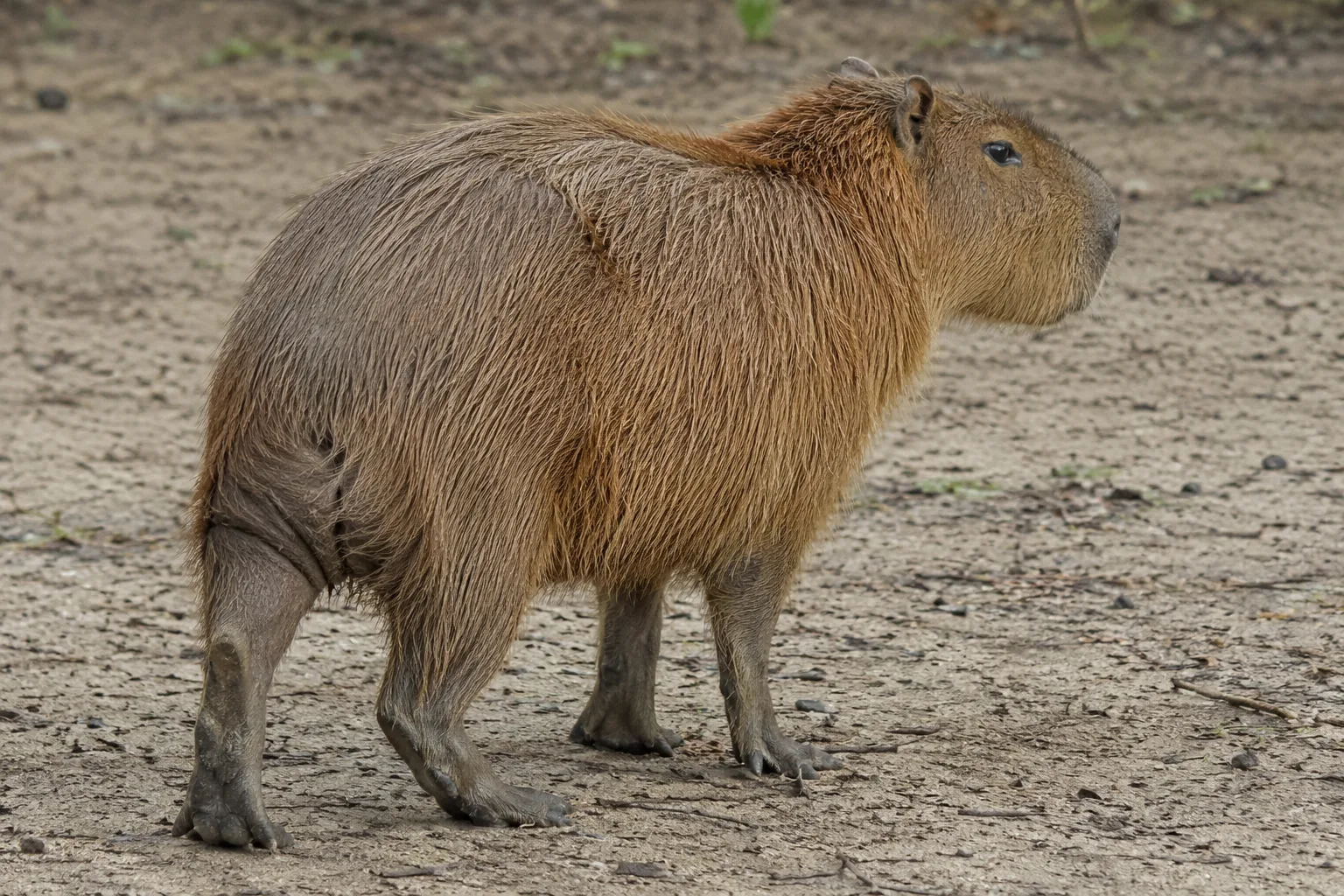
Next, attach a wedge-shaped head at the front. The forehead slopes down into a blunt muzzle. Avoid a pointy nose. Avoid a round hamster face. A capybara face is less “cute button” and more “small loaf arguing with gravity.”
The Face Is Where Drawings Go Wrong
The face needs tiny rounded ears, high-set eyes, and a blunt nose. Animal Diversity Web and San Diego Zoo both connect capybaras with water-edge life, so those high facial features matter. They are not random dots.
| Detail | Draw it like this | Avoid |
|---|---|---|
| Ears | Small rounded bumps high on head | Big rabbit ears |
| Eyes | High and calm | Huge cartoon eyes |
| Nose | Blunt, broad front | Pointy dog snout |
| Neck | Almost hidden | Long graceful neck |
| Tail | Not visible | Beaver tail, rat tail, any tail drama |
Legs And Feet Should Look Sturdy, Not Fancy
Capybara legs are short and practical. Put them under the barrel like table legs that have accepted mud. The feet can be simple, but they should look sturdy enough to walk through grass and shallow water.
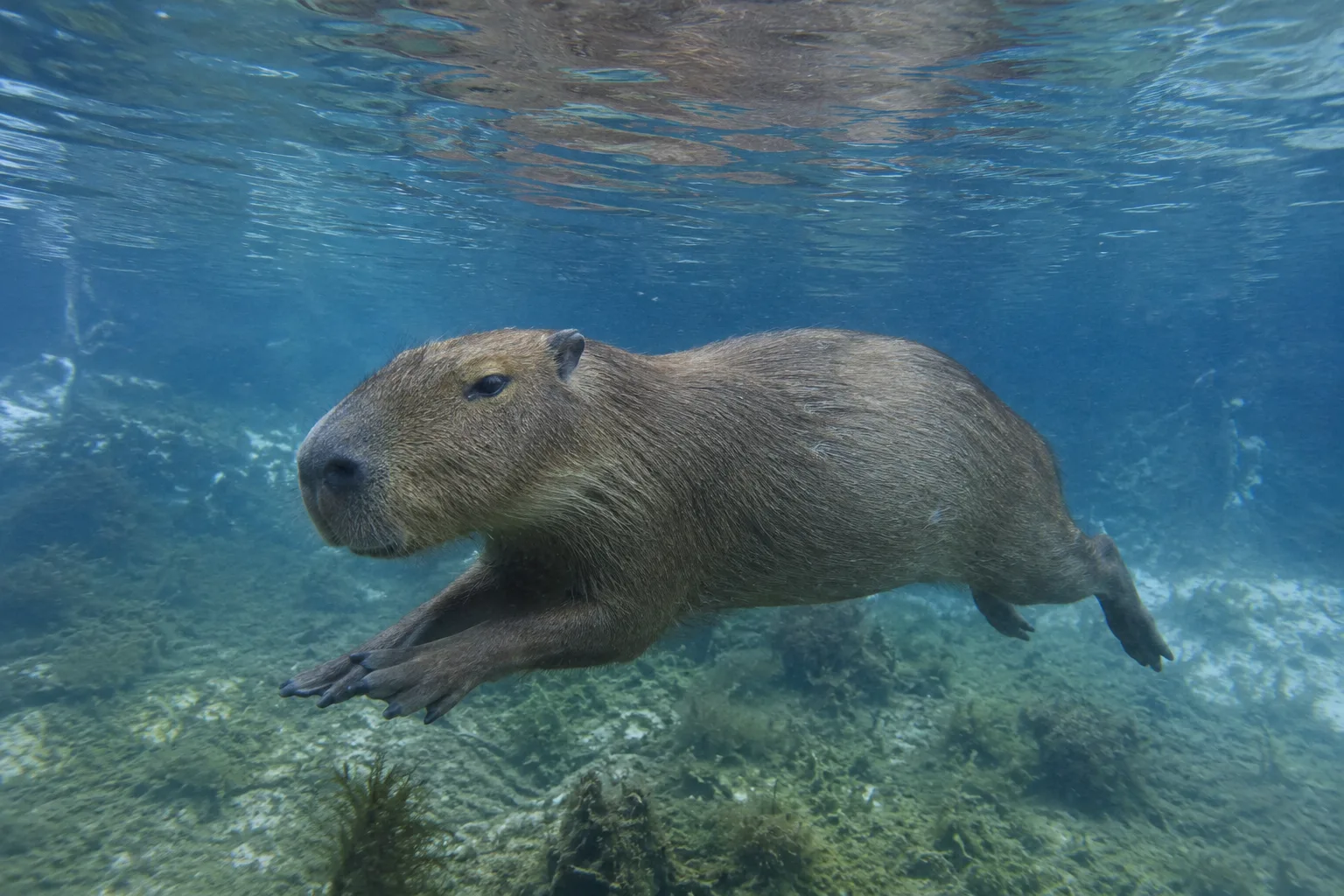
San Diego Zoo notes capybaras have slightly webbed feet, with four toes on the front feet and three on the back. You do not need to draw every toe in a simple sketch, but that fact helps you avoid dainty little paws. The feet are swamp tools.
Get The Proportions From The Animal
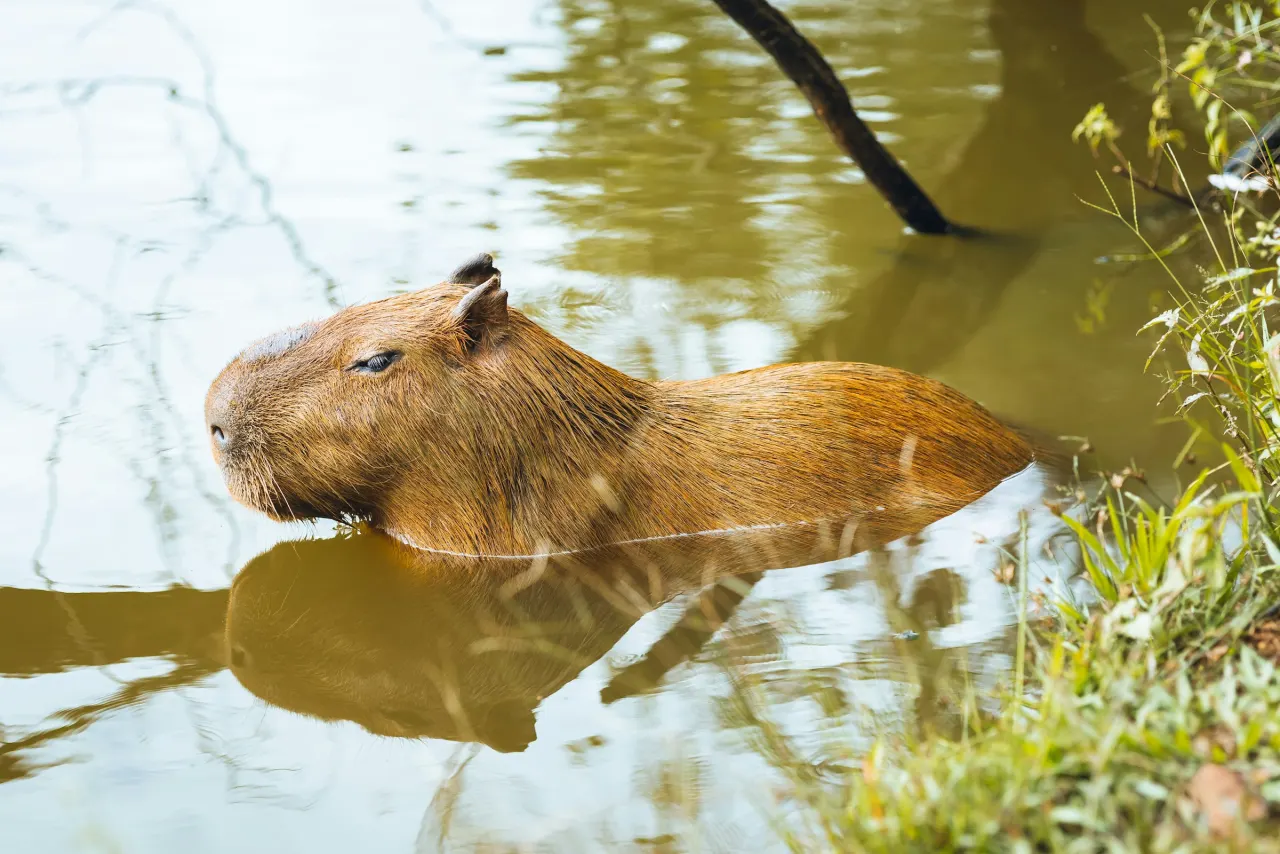
Most drawings that “look wrong but I can’t say why” are wrong by ratio, and the ratio is published. Animal Diversity Web records capybaras at 35 to 66 kg, standing up to 0.6 metres at the shoulder, with a length of about 1.2 metres.
Two to one is the whole fix. Draw the barrel twice as long as it is tall and almost everything else falls into place; draw it at three to two and you have made a very large guinea pig, no matter how good the face is.
Two details on top of that, both from the same source. ADW notes the front legs are slightly shorter than the hind legs — which is why a capybara standing still looks faintly like it is about to walk downhill, and why a perfectly level back reads as stiff. And the eyes, ears and nostrils sit on top of the head rather than on the front of the face. That is not a stylisation. It is the arrangement that lets the animal float with only the top of its head above water, and copying it is most of what makes a sketch read as capybara rather than as generic rodent.
Three Poses That Read As Capybara
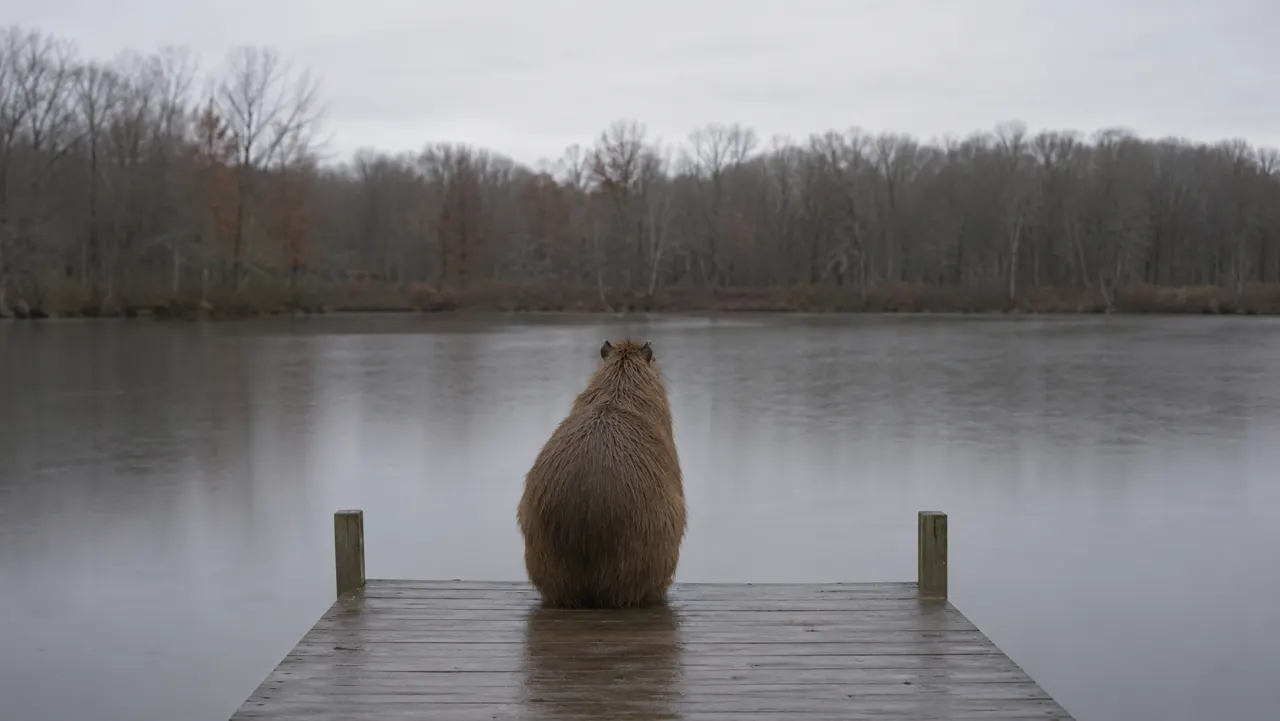
Start with a side profile: long body, short legs, sloped head. Then try a sitting loaf, where the legs mostly disappear and the capybara becomes a judgmental cushion. After that, draw a waterline pose with just the head and upper back showing.
The waterline pose is useful because it teaches the high face. The eyes and nostrils belong near the top. If they sit too low, your capybara looks like it is losing a submarine argument.
The Three Animals You Are Probably Drawing Instead
Almost every failed capybara is a recognisable other animal, and each one fails on a single feature. Checking those three is faster than redrawing.
| If it looks like | The tell | The fix |
|---|---|---|
| A guinea pig | Body too short for its height | Stretch the barrel back to two to one |
| A beaver | You gave it a flat paddle tail | ADW calls the capybara “barrel-shaped, sturdy, and tailless” — erase it |
| A nutria | A long rope of a tail, pointed muzzle | Same fix, plus blunt the nose off |
The tail is the one that catches people most often, because every other large semi-aquatic rodent has a memorable one and the brain helpfully supplies it. A capybara does not have a small tail or a hidden tail. It has none, and a drawing with one is not a capybara with a stylistic flourish — it is one of the three animals it keeps getting mistaken for.
Draw The Shape, Then Add The Attitude
Draw the big shapes first. Barrel body. Sloped blunt head. Tiny ears. High eyes. Short legs. No visible tail. Add grass or water, then texture the fur with short, uneven strokes.
Most capybara drawings fail because the artist starts with cuteness. Start with the animal. The cuteness will arrive late, damp, and very calm.