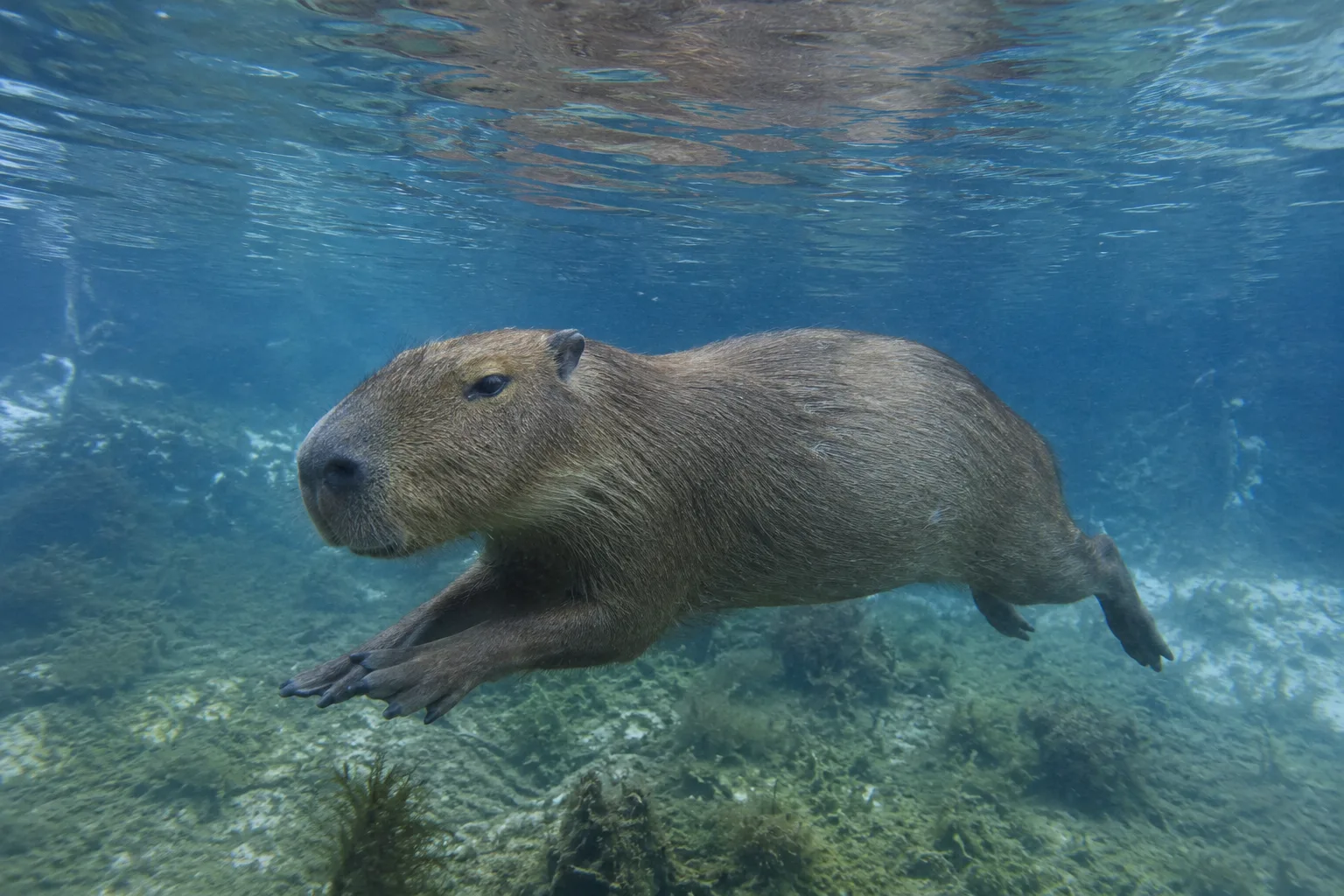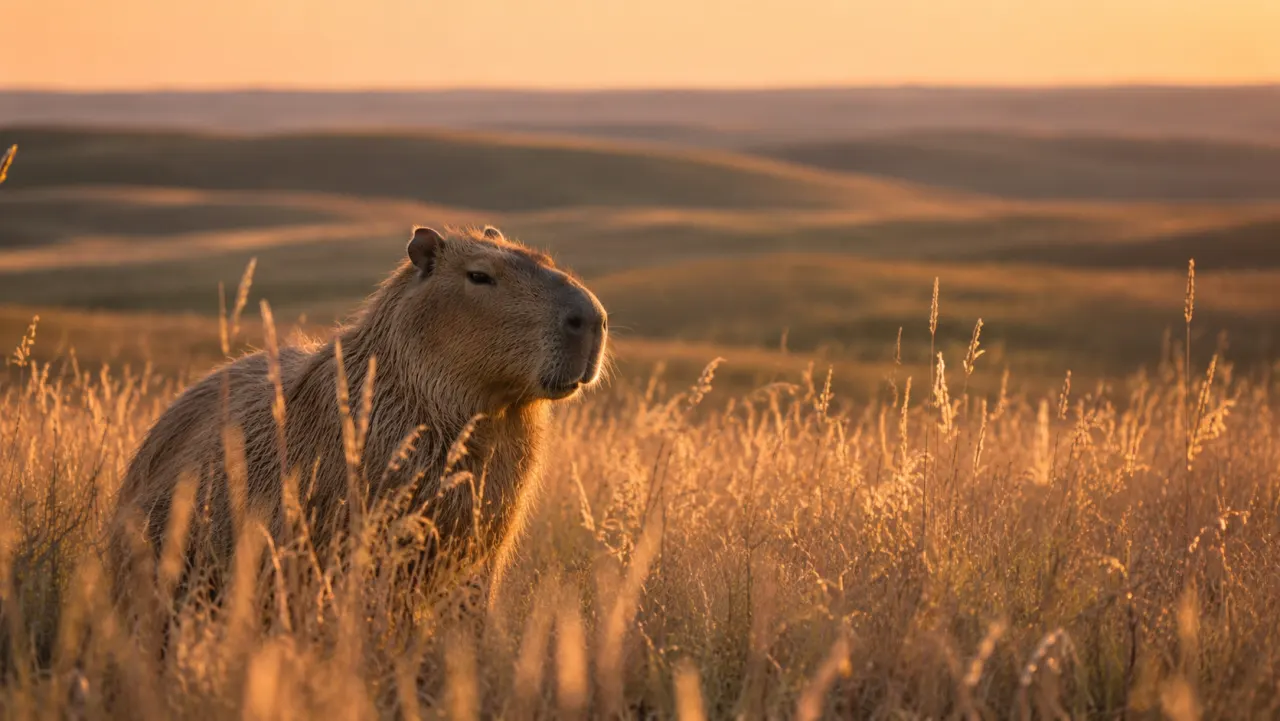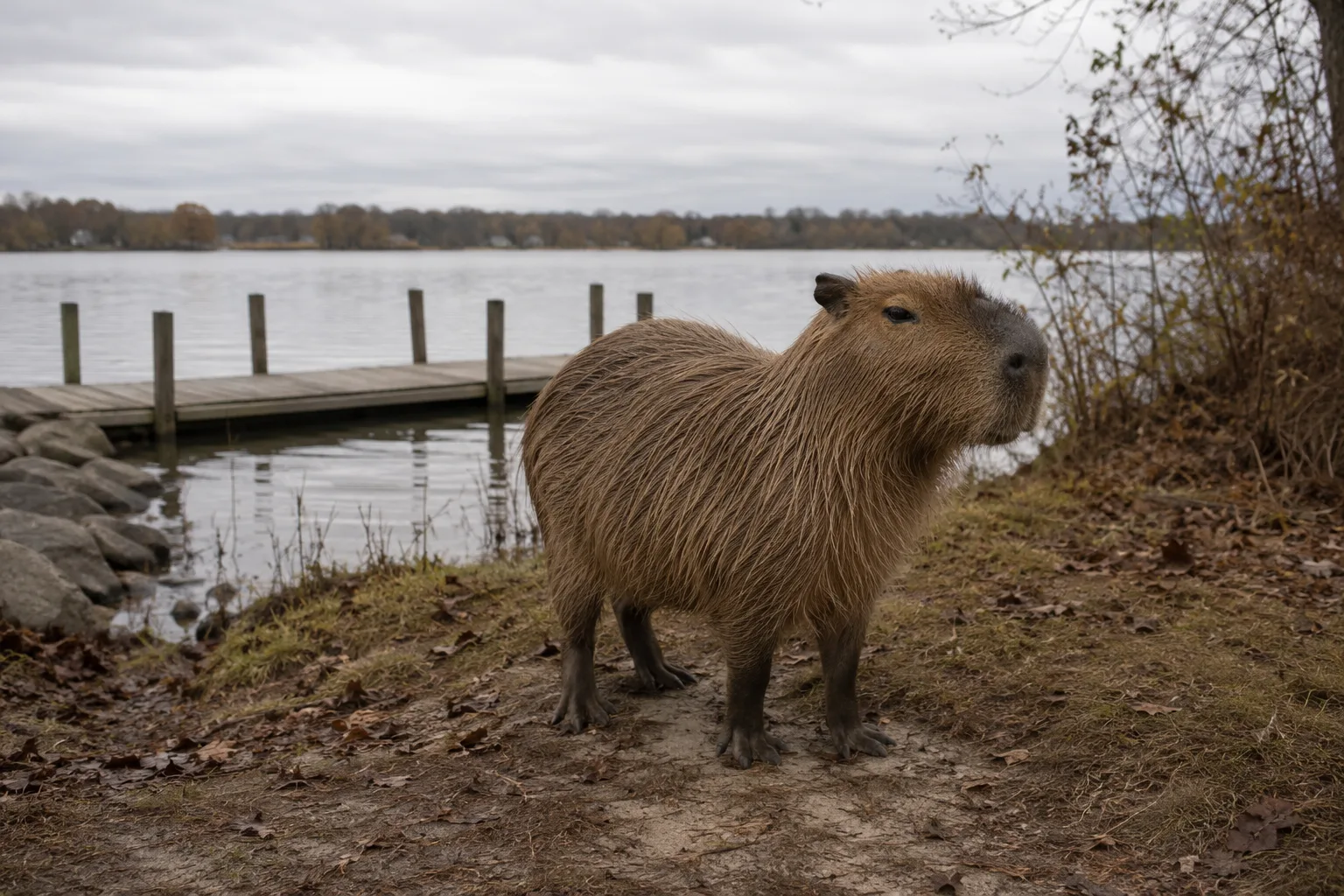
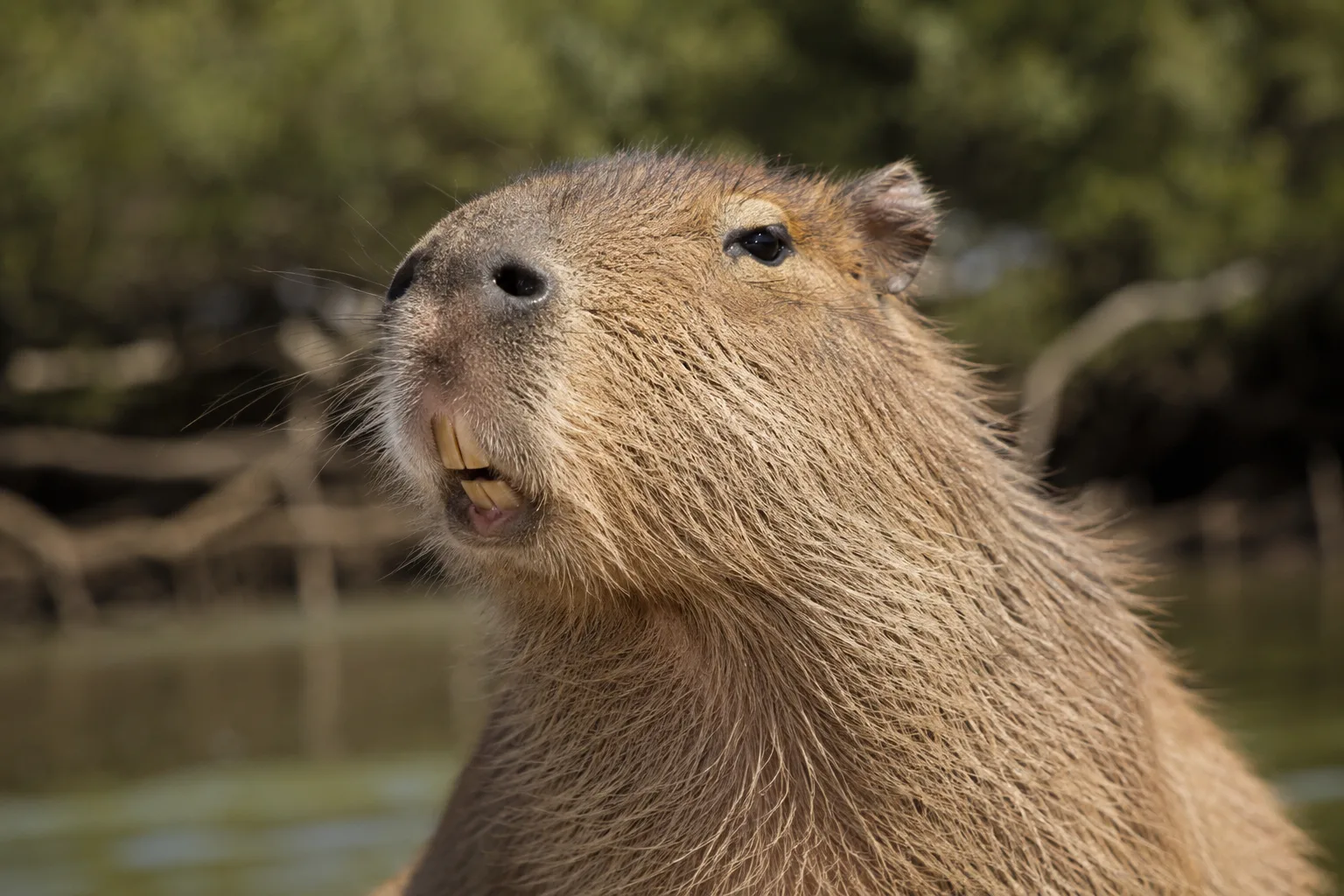
A capybara’s morillo is the raised scent gland on the top of the snout, most obvious in adult males. It is not a tumor, a beauty mark, a tiny helmet, or evidence that the capybara has been thinking too hard.
It is social equipment. The morillo helps capybaras leave scent on plants, ground, and objects, which is how a large wetland rodent says, in effect, “I was here, I matter, please process this memo.”
The Morillo Is A Scent Gland, Not A Hat
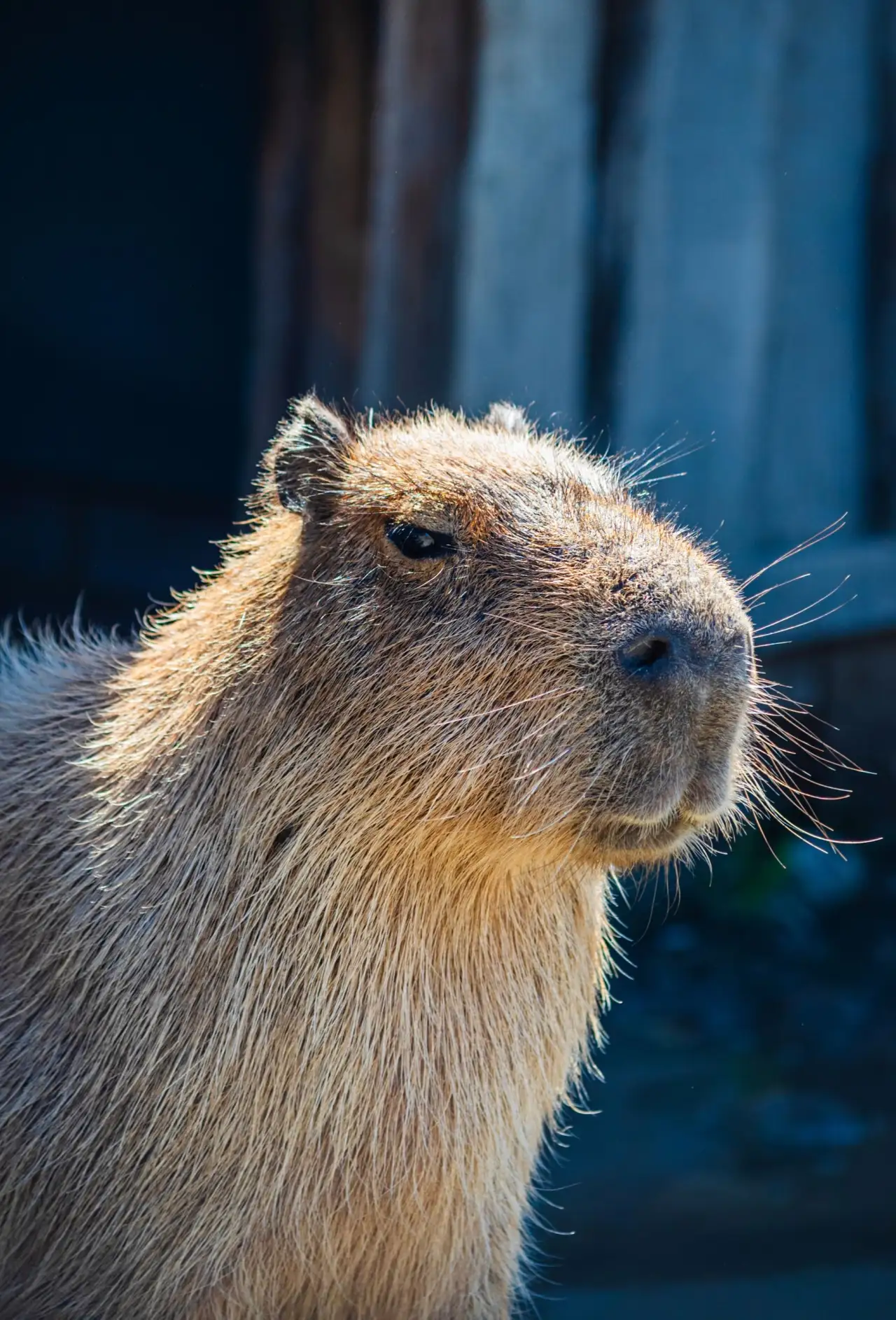
Look at an adult male capybara from the side and you may see a raised, darkish bump above the nose. That is the morillo. Oxford’s publication record for research on capybara scent marking describes the enlarged nose gland in males and the way secretions are smeared on vegetation.
The Nature Conservancy gives the simple version: mature males have a large scent gland on the snout. Fans notice it because it changes the face shape. Once you see it, you start checking every capybara like a tiny customs officer.
| Feature | What it means |
|---|---|
| Raised bump on snout | Likely morillo, especially in an adult male |
| Flat snout on young animal | Normal; juveniles are not finished adults |
| Subtle bump on female | Possible variation, not a clean sex ID |
| Swelling or wound | Veterinary issue in captive care, not a fan diagnosis |
How Capybaras Use The Morillo
Capybaras scent-mark by rubbing gland secretions onto surfaces. The morillo is one part of the system. They also have anal glands, which is where the article politely looks at its notes and moves on.
The point is communication. The JSTOR-indexed work on scent marking treated it as socially significant, not random mess. Scent can carry information that other capybaras read long after the marker has walked away. For an animal living in groups around water, reeds, mud, and trails, that matters.
The morillo is basically a scented business card with terrible placement.
Why Adult Males Usually Show It Most
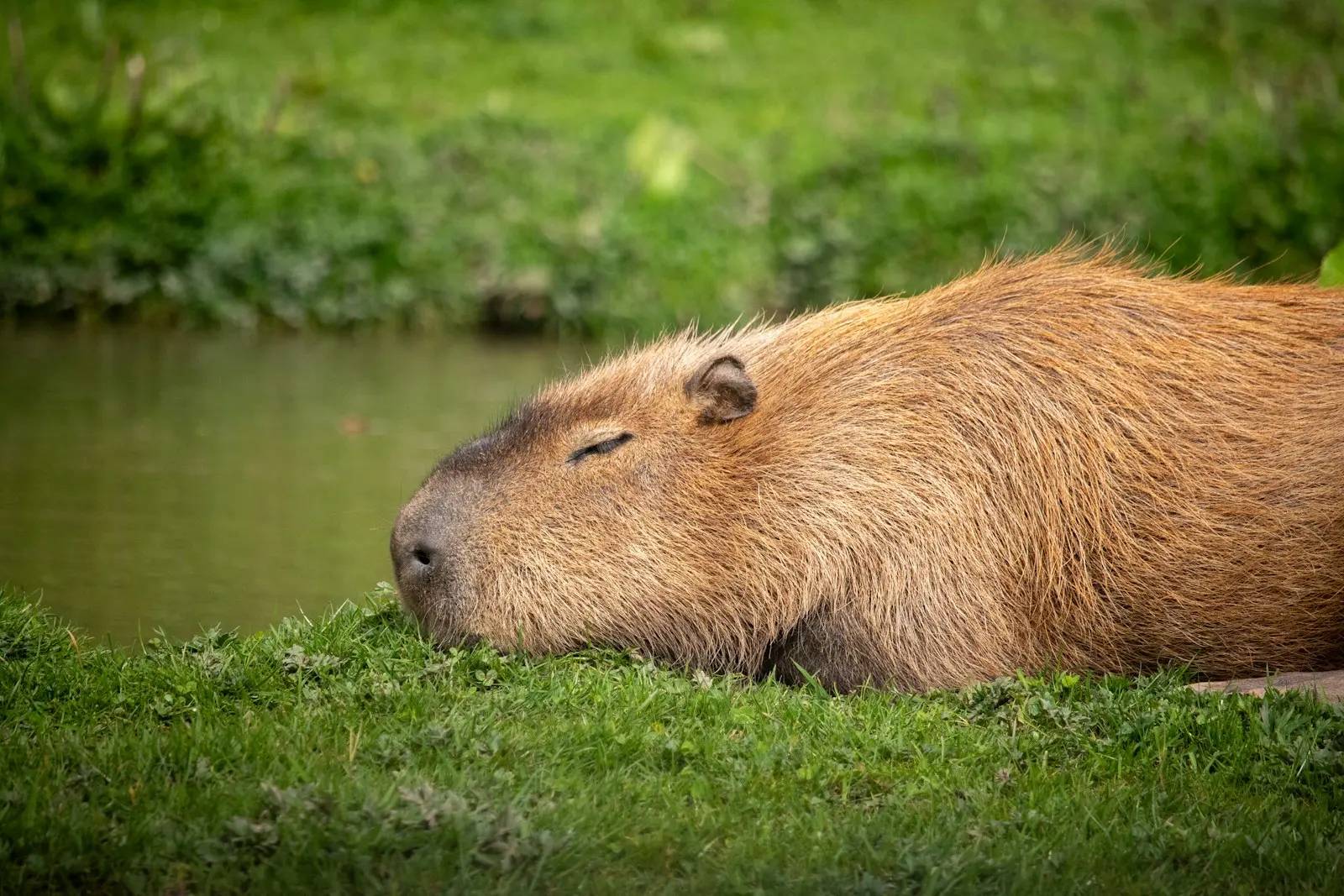
The enlarged morillo is mainly a male feature, and it becomes more obvious with maturity. That fits the broader pattern of scent marking tied to social and reproductive communication.
Do not turn that into a perfect sexing system from one blurry zoo photo. Age, angle, lighting, wet fur, individual variation, and simple wishful thinking can all interfere. A flat-looking snout does not prove the capybara is female. A bump does not make you the enclosure genealogist.
Keepers have better records. Your group chat has zoom.
What Fans Usually Misidentify
Fans often mistake the morillo for a nose, a scar, a swollen face, or a mysterious second forehead. The easiest fix is to look at placement. The morillo sits on top of the snout, not at the nostrils. It can make the face look blockier, especially in profile.
| Fan guess | Better answer |
|---|---|
| ”Is that its nose?” | The nostrils are lower; the bump can be the morillo |
| ”Is it sick?” | Normal morillo is not sickness |
| ”Is that how you tell males?” | It helps, but it is not foolproof from photos |
| ”Why does it rub its face on stuff?” | It may be scent marking |
Where The Morillo Fits In Capybara Communication
Scent marking is only one channel a capybara uses, and the morillo is only one gland feeding into it. These are deeply social animals. Animal Diversity Web describes capybaras living in groups, often with a dominant male, several females, young, and subordinate males sorting out their place. A herd like that runs on constant, low-key information exchange, and a lot of that information is chemical.
The morillo’s job is to deposit a personal signature on the landscape. A capybara drags or rubs its snout across a stem or a log, and the secretion stays behind after the animal moves on. Other capybaras passing the same spot can read it. Think of it as leaving notes on shared surfaces in a place where nobody can talk but everyone keeps records.
There is a reasonable opinion to state here, since the brief allows one: the morillo is probably the most under-appreciated thing about capybara biology. People obsess over the calm face and the orange-on-a-capybara photos, and they walk right past the fact that the animal is running a working scent network out of a bump on its nose. That bump is doing more social labor than most of the cute content ever credits it for.
The dominant male tends to mark the most. That tracks with the wider literature treating scent marking as tied to status and territory rather than idle habit. A high-ranking male has the most reason to keep saying who he is and where his group’s space begins.
Morillo, Snout, And The Rest Of The Face
It helps to separate the morillo from the other things crowded onto a capybara’s face, because fans mix them up constantly. The snout is large and blunt, the nostrils sit low and forward, and the eyes, ears, and nostrils line up high so the animal can stay mostly submerged and still see, hear, and breathe. The morillo sits apart from all of that, on top.
| Face part | Where it sits | What it does |
|---|---|---|
| Nostrils | Low and forward on the snout | Breathing, kept above water when swimming |
| Morillo | Raised on top of the snout | Scent gland for marking, prominent in adult males |
| Eyes and ears | High on the head | Set up for a semi-aquatic life |
| Continuous teeth | Inside the blunt muzzle | Hypsodont, keep growing for a life of grazing |
None of these are guesses you should make from a single phone photo. A wet capybara, a backlit one, or a young one will scramble all four of these cues at once. The morillo is real and readable, but it rewards a calm side-on look, not a snap judgment.
How To Look For A Morillo At The Zoo
Pick a calm viewing moment. Look at adult capybaras from the side, especially when they are standing near logs, rocks, or plants. If one rubs its snout on vegetation, you may be watching scent marking rather than a random itch.
Do not tap glass, call, whistle, or try to make the capybara face you. The whole joy is noticing the detail while the animal continues its day. A morillo sighting should feel like solving a tiny biology puzzle, not conducting an interrogation.