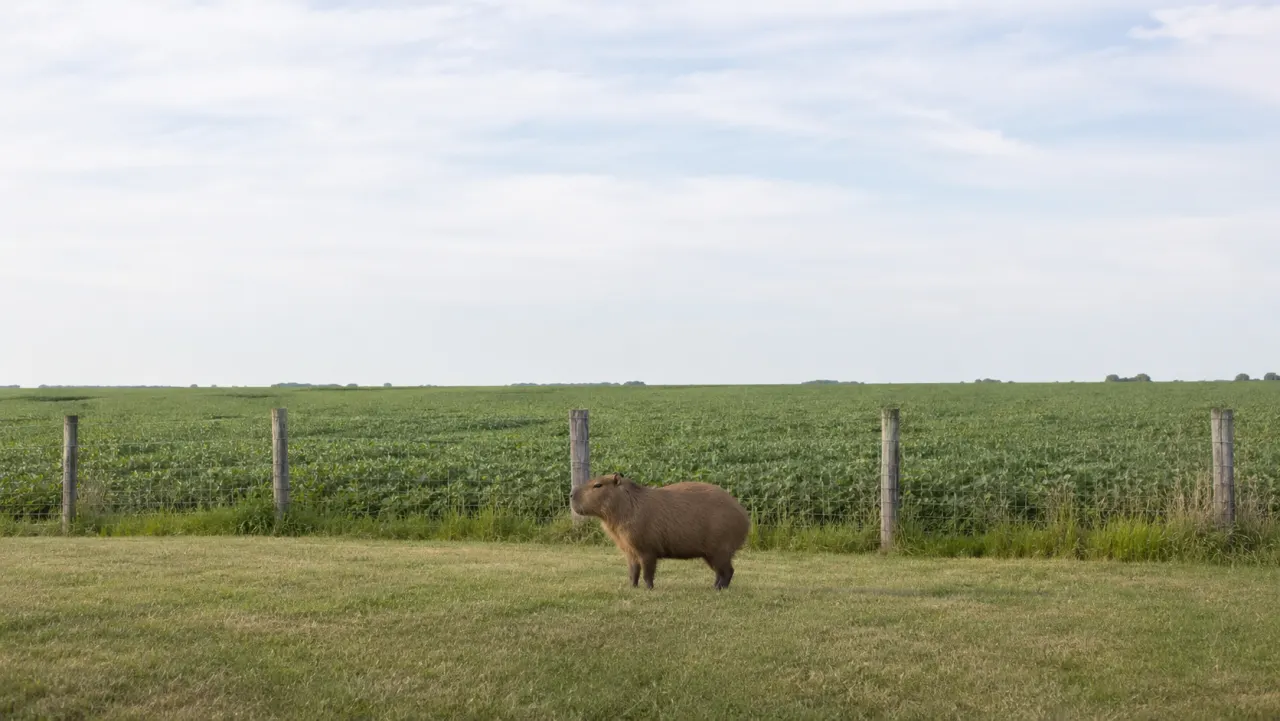
Indiana is one of those states where the internet wants a cute green dot and the law hands you a form. The safe 2026 answer is: capybaras may be possible in Indiana only after Indiana DNR and local authorities confirm the exact rules for your address and use.
That is not as snackable as “legal” or “illegal.” It is better.
Possible, only after DNR and local confirmation
Indiana is a state where the internet wants a green dot and the law hands you a form. Capybaras may be possible in Indiana only once the Indiana DNR and your local authority confirm the rules for your specific address and intended use.
The Indiana Answer Is Not A Clean Green Light
Indiana does not appear to publish a simple pet-capybara sentence for ordinary owners. Instead, the question lives inside Indiana Department of Natural Resources captive-wild-animal rules, permit materials, facility standards, import or acquisition facts, and local animal ordinances.
The important distinction: not seeing “capybara” in one public list is not permission. Indiana DNR is the agency that can tell you whether a privately possessed capybara needs a wild animal possession permit, which class or standard applies, and what paperwork must exist before the animal enters the state or property.
| Internet question | Indiana reality |
|---|---|
| ”Are capybaras legal?” | Ask DNR for a species-specific written answer. |
| ”Do I need a permit?” | Treat it as a permit question until DNR says otherwise. |
| ”Can I keep one in Indianapolis?” | Local ordinances and zoning may stop the plan. |
| ”Can I do paid encounters?” | USDA Animal Welfare Act licensing may apply. |
How Indiana’s DNR Permit System Enters The Chat
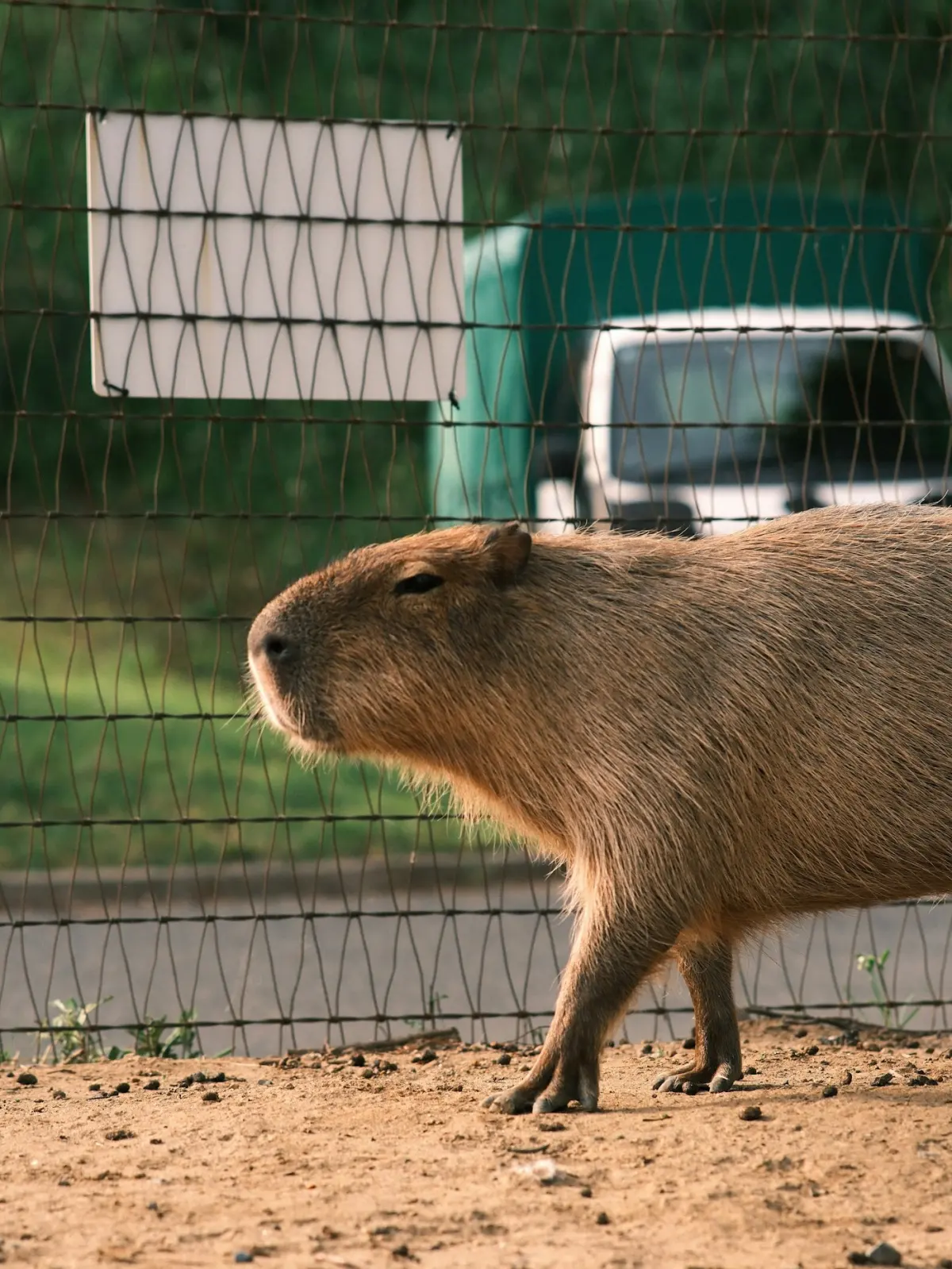
Indiana DNR’s wild animal possession materials describe class categories, application steps, fees, inspection rules, and facility standards for regulated captive wildlife. The permit information tells applicants to submit a completed application before taking possession and lays out requirements such as secure housing, perimeter barriers, and DNR inspection.
That system is exactly why “my friend said Indiana allows capybaras” is not enough. The next question is not whether the internet can pronounce Hydrochoerus. The next question is whether DNR classifies your intended possession as regulated, what facility standards apply, and whether your enclosure passes inspection.
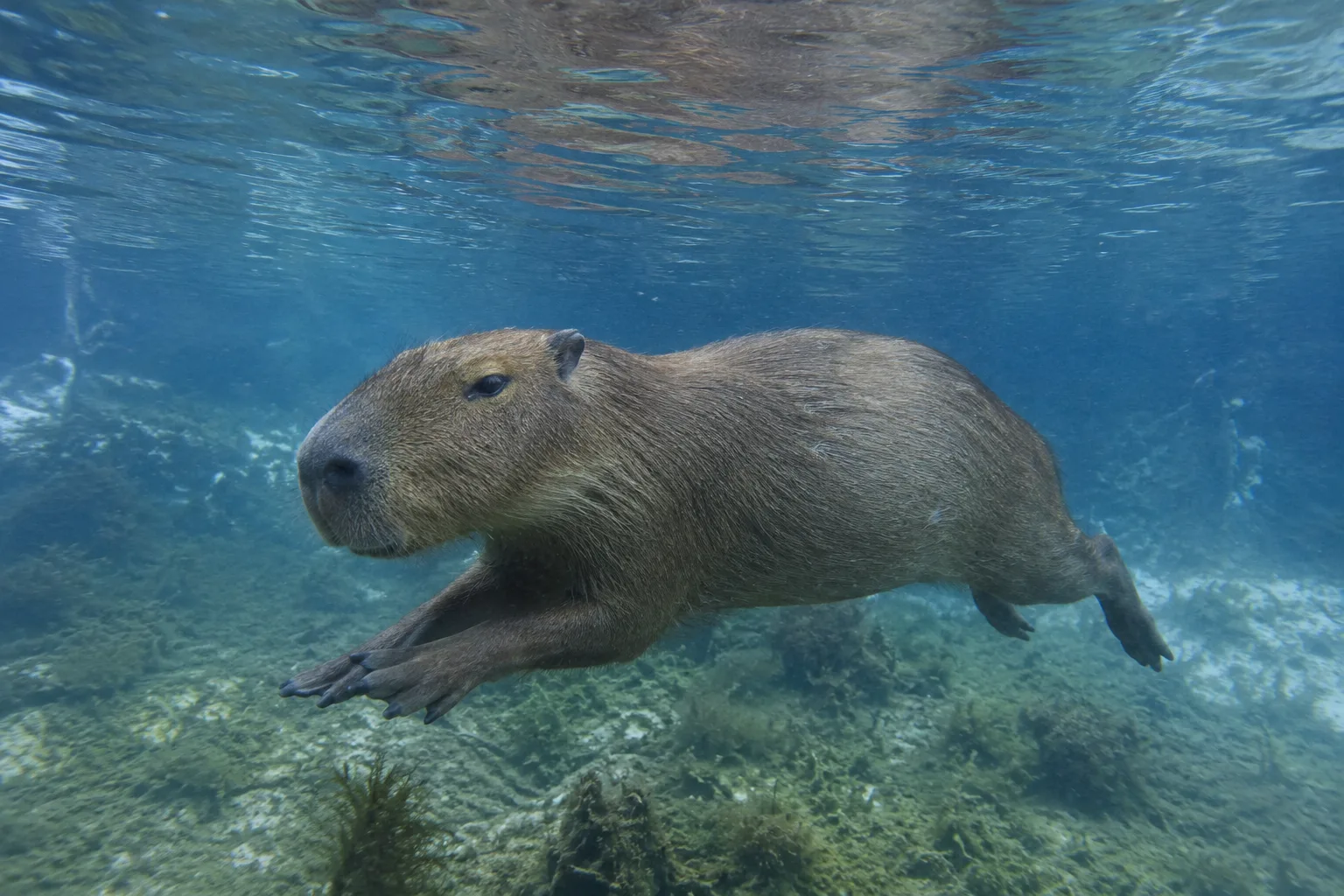
For a capybara, facility reality is not a footnote. San Diego Zoo Wildlife Alliance describes them as the world’s largest rodents, and Animal Diversity Web describes their social, water-linked grazing life. A compliant plan starts with secure space, water access, social housing, diet, veterinary care, drainage, and winter shelter.
The Facility Standards Are The Real Test
The part people skim is the part that sinks most plans: the enclosure. Indiana’s wild animal possession laws describe perimeter barriers, secure housing, and inspection for regulated captive wildlife. That is a built-and-checked standard, not a vibe. You do not get to possess the animal and sort the fence out later.
For a 100-plus-pound semi-aquatic rodent, “secure” is a real engineering ask. Capybaras dig, swim, chew, and lean on weak points, so a barrier built for a dog will not do. A serious plan has a perimeter the animal cannot push under or through, a real pool with filtration and drainage, shade and shelter, and a layout an inspector can walk and approve.
The honest version of the Indiana question is therefore not “can I legally want one.” It is “can I build and maintain a facility that passes inspection, and keep it that way for a decade.” If the answer to that is shaky, the permit question is academic.
The Local Layer Can Still Say No
Indiana cities and counties can have their own animal codes. Indianapolis, Fort Wayne, Evansville, South Bend, suburban towns, county zoning boards, and HOAs can all restrict exotic mammals, outdoor enclosures, nuisance animals, or water features.
A state permit path does not erase local law. If your city says no exotic mammals, your DNR call is not a magic key. If your HOA bans livestock, exotic animals, large outdoor pens, or ponds, the capybara does not become a legal loophole because it looks serene in a video.
What An Indiana Capybara Actually Costs
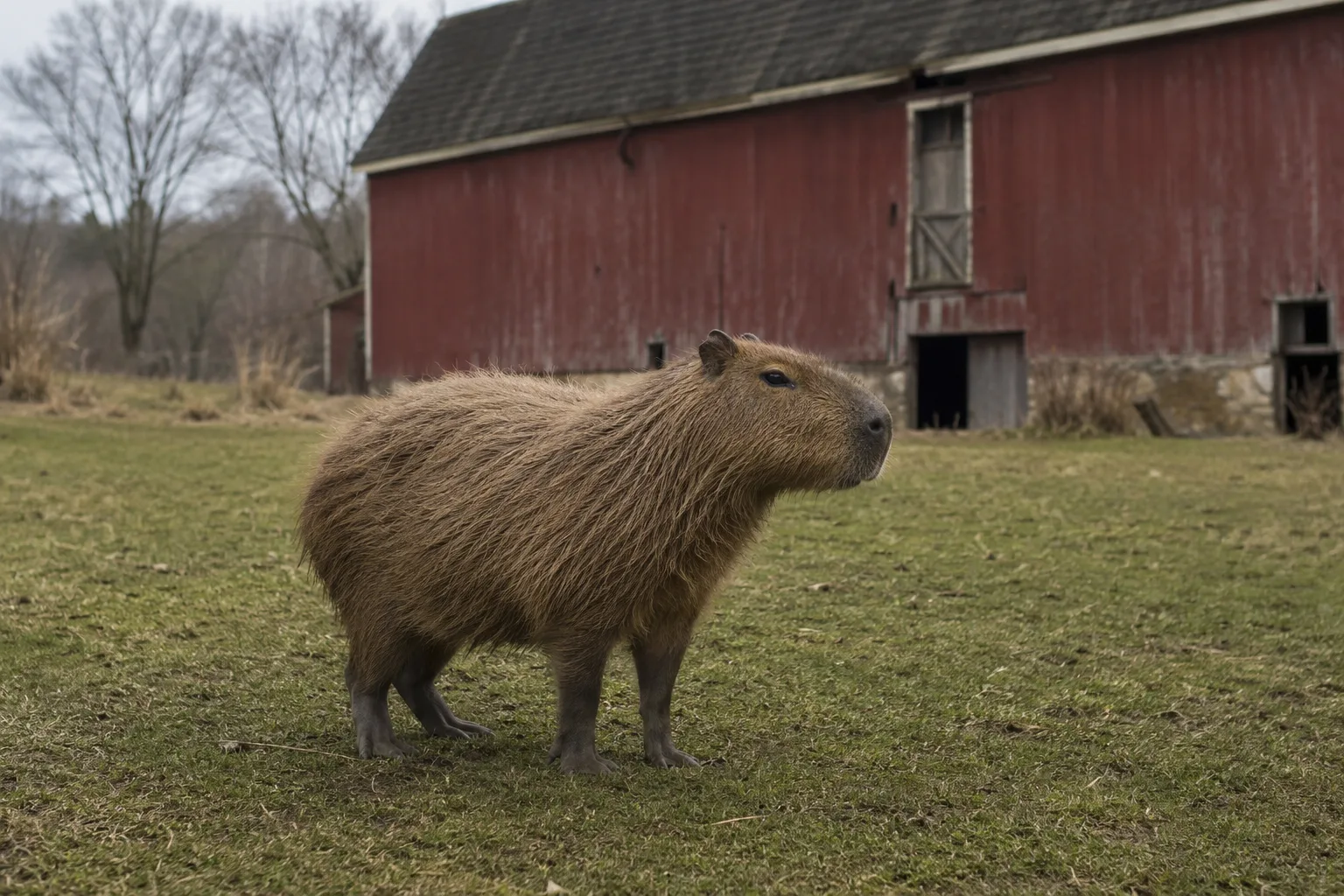
Clearing the permit and the fence is the entry fee, not the whole bill. Capybaras can live well past eight years, push past 100 pounds, and need a high-fiber, grass-forward diet supplemented with vitamin C, because, like their guinea pig relatives, they cannot make their own. Get the diet wrong and you get a sick animal and a vet bill from one of the few clinics in the state that will see an exotic rodent at all.
Then there is the build and its upkeep: a winterized pool with filtration and drainage, heated shelter for an Indiana January, secure fencing, and the ongoing maintenance that keeps the enclosure inspection-ready year after year. None of that is one-time.
And because capybaras are herd animals, the responsible plan is a pair. Double the feed, the enclosure, the water volume, and the animals you have to move in an emergency. A lone capybara is cheaper on paper and worse for the animal, full stop.
Indiana Capybara Myths To Let Go
| Myth | Better answer |
|---|---|
| ”Indiana is easy on exotics, so capybaras are fine.” | Indiana’s permit system is real, with class categories, facility standards, and inspection. Get a species-specific DNR answer. |
| ”I’ll build the enclosure after I get the animal.” | Permitted possession assumes a compliant, inspectable facility first. The fence is part of the legal step, not a later project. |
| ”A DNR permit beats my town’s code.” | No. Local ordinances, zoning, and HOA rules apply on top and can still say no. |
| ”One capybara is fine if it’s spoiled.” | Capybaras are social herd animals. Solitary housing is a recognized welfare stressor. |
There is a familiar way this goes wrong. Someone reads that Indiana is friendlier than most states to exotic animals, takes that as a green light, and buys a young capybara before calling DNR. Then the questions arrive all at once: which permit, what facility standard, has it been inspected, does the town allow it. The animal is already home. The order of operations was backwards, and the capybara is the one who pays for the optimism.
The Indiana Paper Trail Checklist
Do these in order, get written answers, and keep the file.
| Agency / document | What to ask | Why it matters | What changes the answer |
|---|---|---|---|
| Indiana DNR Fish & Wildlife | Does a privately kept capybara require a wild animal possession permit, and what class or standards apply? | DNR administers the captive wild animal permit and facility rules. | Pet vs. exhibition vs. breeding; class category; inspection result. |
| County animal control or health department | Does the county restrict exotic mammals, outdoor animal housing, or large water features? | County rules can prohibit what the state would permit. | County limits, zoning, nuisance and pond rules. |
| City or town code office | Does municipal code prohibit non-domestic mammals or exotic pets at your address? | Municipal code applies independently of the state permit. | City limits, lot size, HOA covenants. |
| USDA APHIS | If there is public exhibition, paid encounters, breeding, sale, or transport, does AWA licensing apply? | Federal exhibition licensing is separate from the state permit. | Any paid public contact, photos for money, commercial sale. |
| Exotic-animal veterinarian | Will you treat capybaras, including emergencies? | Care, permitting, and inspection all assume a real vet relationship. | Distance to clinic, after-hours coverage, exotic-rodent experience. |
Keep the species name, address, intended use, number of animals, enclosure plan, and seller or import source in every request. If any one layer says no, the answer for that plan is no.
The Indiana Bottom Line
Indiana is a “call first, buy never until cleared” state. The reputation for being permissive is exactly what gets people in trouble, because permissive is not the same as automatic, and the facility standard is a real wall. Get a written DNR answer, confirm your local code, design an enclosure that can pass inspection, and line up an exotic vet before you ever put money down.
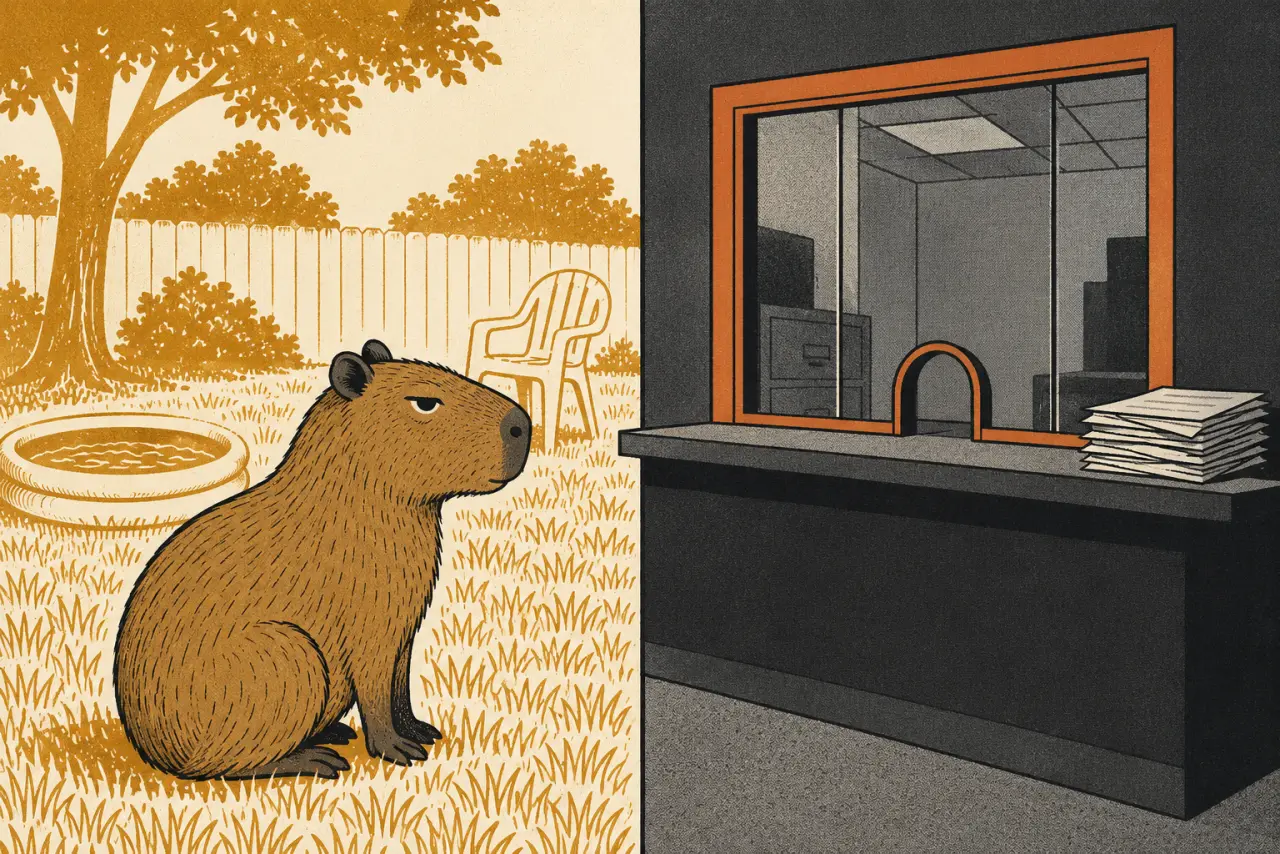
Indiana’s answer is stitched together from DNR permit rules, county and city code, and HOA covenants, and any of them can change. This reflects what was on the books as of June 2026. Before you act, confirm the current rules with Indiana DNR Fish & Wildlife, your county and city offices, and a qualified attorney. Treat this as a starting point, not legal advice, and treat the AZA care standard, not a viral clip, as the welfare bar. The capybara may look unbothered. Indiana paperwork is not.