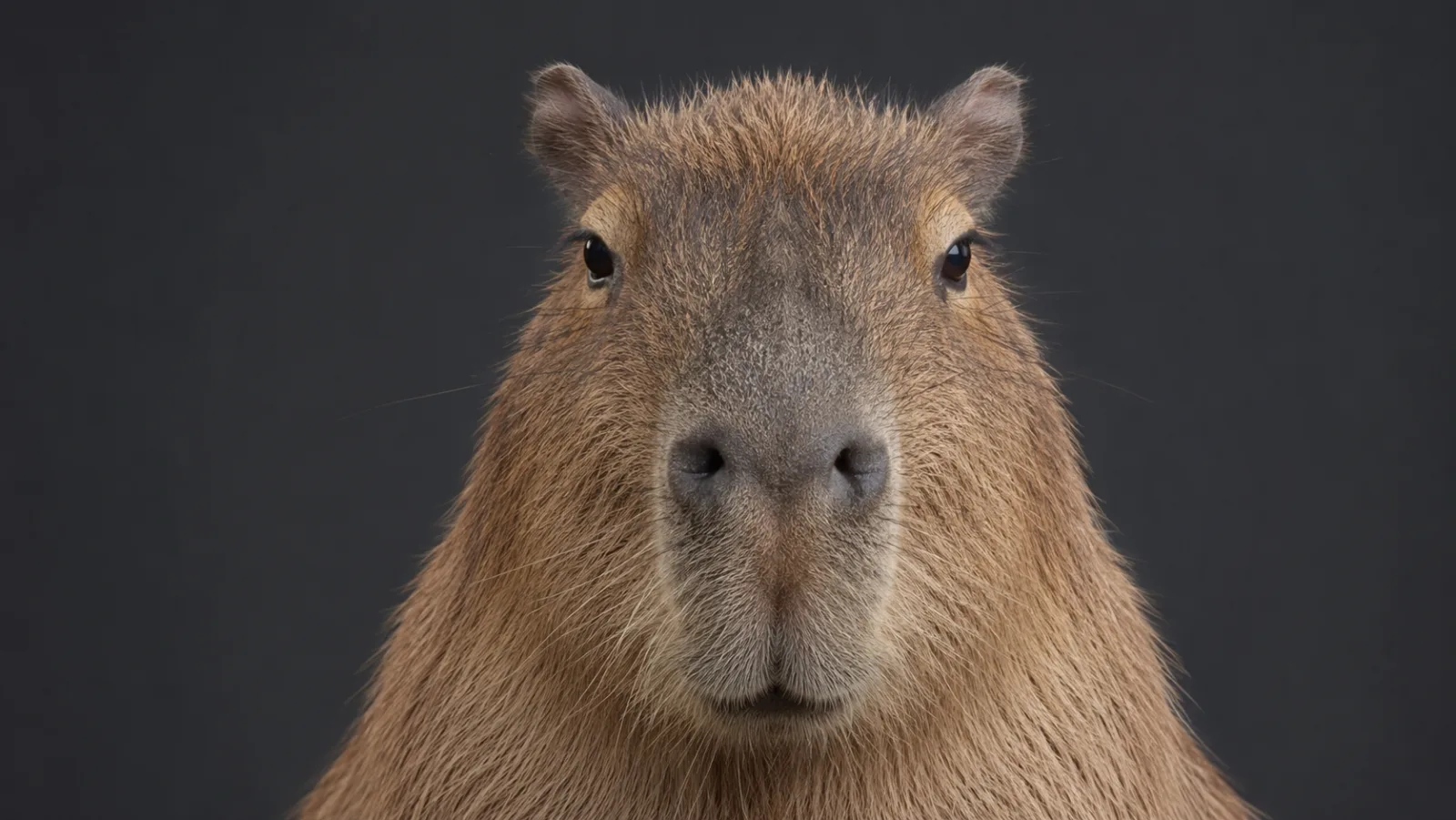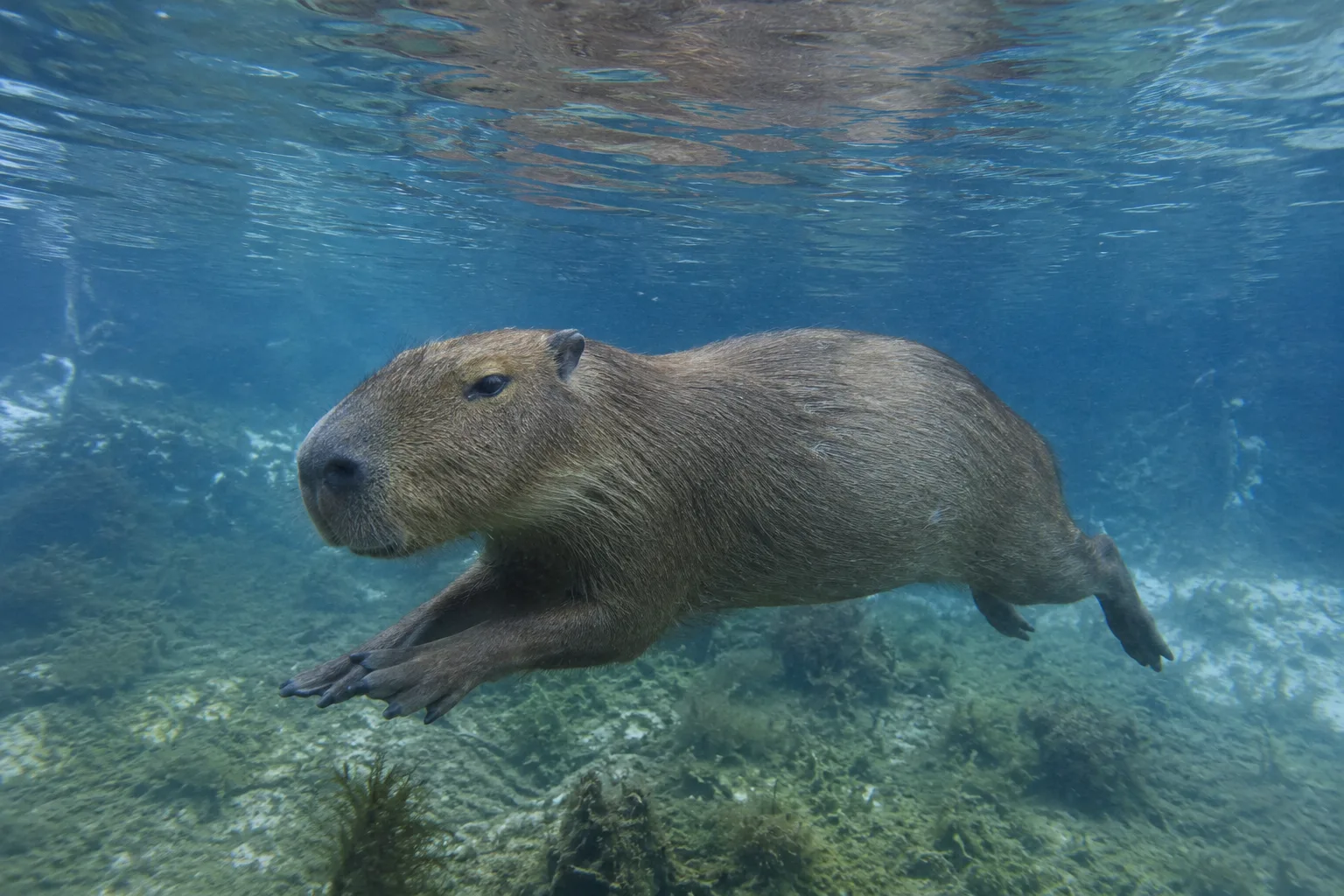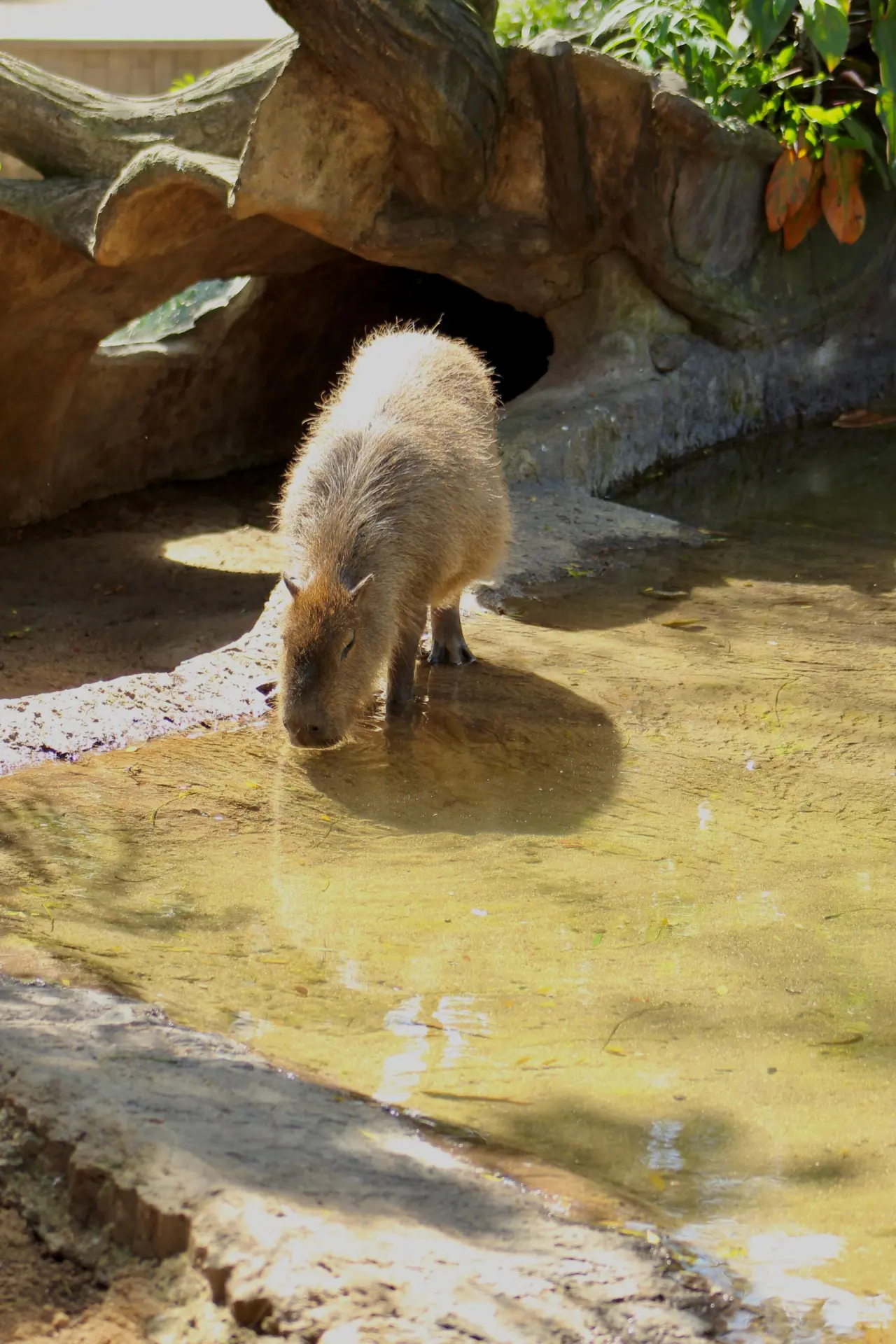
Texas did not decide that a capybara is fine. Texas never considered one.
That sounds like a technicality and it is not. The state wrote three separate rulebooks for animals that are not ordinary pets, and a capybara falls outside all three, for three unrelated reasons, none of which is a judgment about capybaras. What is left is the city, and the cities do not agree with each other.
No state permit exists, because no state scheme reaches the animal
Health and Safety Code §822.101(4) names 19 animals and no rodent. Agriculture Code §161.001(a)(4) wants hooves. Parks and Wildlife runs on indigenous species. Nothing to apply for, and nothing that says yes.
§822.116(b) then hands the question to your municipality in so many words. Get that city's answer in writing before money moves.
The Dangerous Wild Animal List Is a List of Things That Can Kill You
Subchapter E of Chapter 822 is the statute most people find first, and it is narrower than its reputation. §822.101(4) does not describe a kind of animal. It names nineteen, one at a time, and then stops:
a lion; a tiger; an ocelot; a cougar; a leopard; a cheetah; a jaguar; a bobcat; a lynx; a serval; a caracal; a hyena; a bear; a coyote; a jackal; a baboon; a chimpanzee; an orangutan; a gorilla; or any hybrid of an animal listed in this subdivision.
Eleven cats. Two canids. One bear, one hyena, four primates. Every one is a carnivore or an ape. And the subdivision closes with hybrids rather than with the “including but not limited to” phrase that lets a definition grow. Unlike Houston’s ordinance below, this list cannot stretch.
§822.103(a) is the operative rule: a person may not own, harbor or have custody or control of a dangerous wild animal for any purpose unless he holds a certificate of registration for that animal, issued by an animal registration agency. The registration scheme exists only for the listed animals. A capybara is not one, so there is nothing to register and no fee to pay. The caps in §822.103(c), $50 per animal and $500 per person however many you keep, never come into play.
§822.103 is a registration requirement, not a license to keep everything it omits. It simply has nothing to say about a capybara, which is exactly why the answer moves down a level.
The Exotic Livestock Rule Misses by One Word
The second place a large non-native herbivore would plausibly land is agriculture, and Texas has a real scheme there. It also does not reach a capybara, and the reason is almost funny.
Agriculture Code §161.001(a)(4): “Exotic livestock” means grass-eating or plant-eating, single-hooved or cloven-hooved mammals that are not indigenous to this state and are known as ungulates, including animals from the swine, horse, tapir, rhinoceros, elephant, deer, and antelope families.
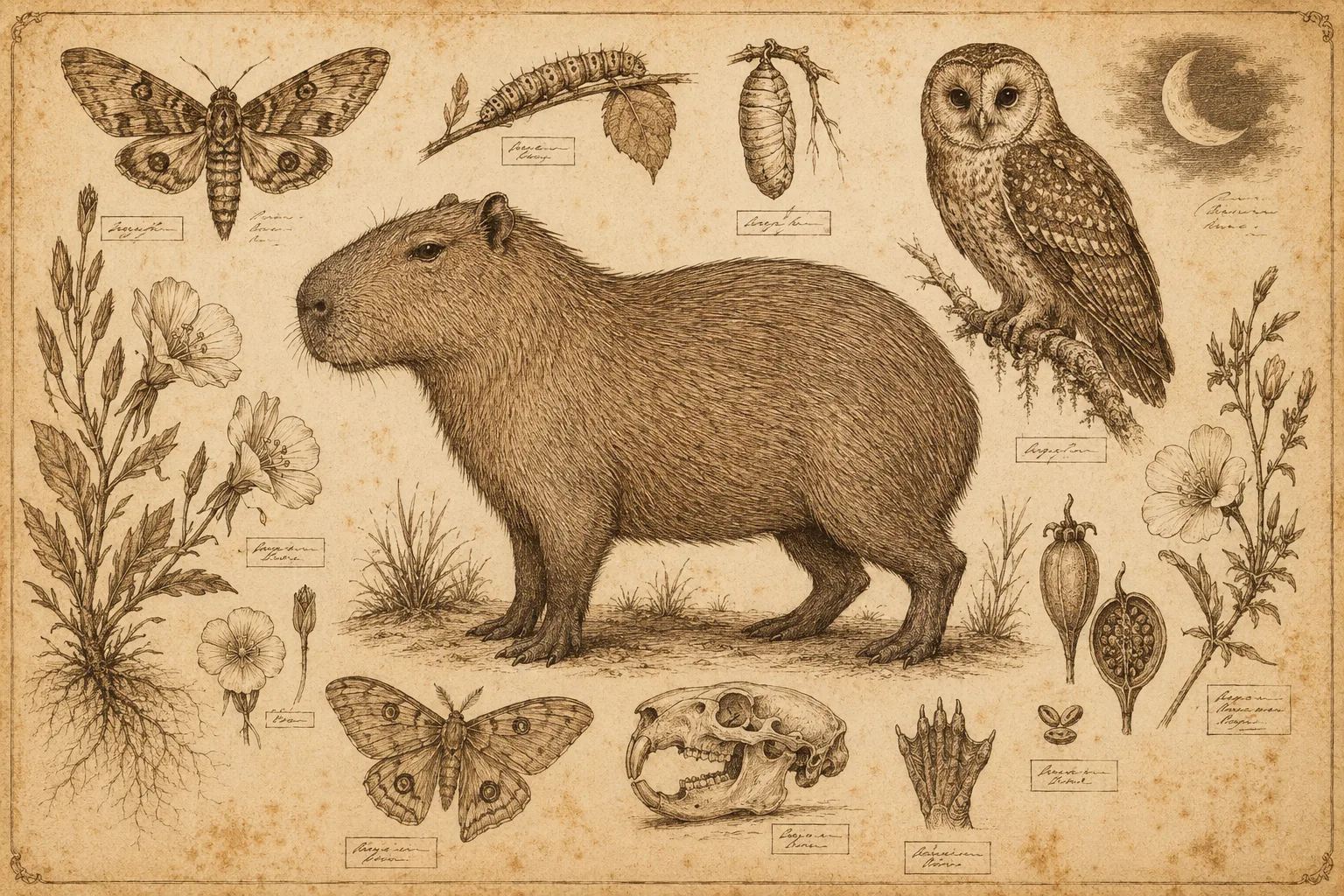
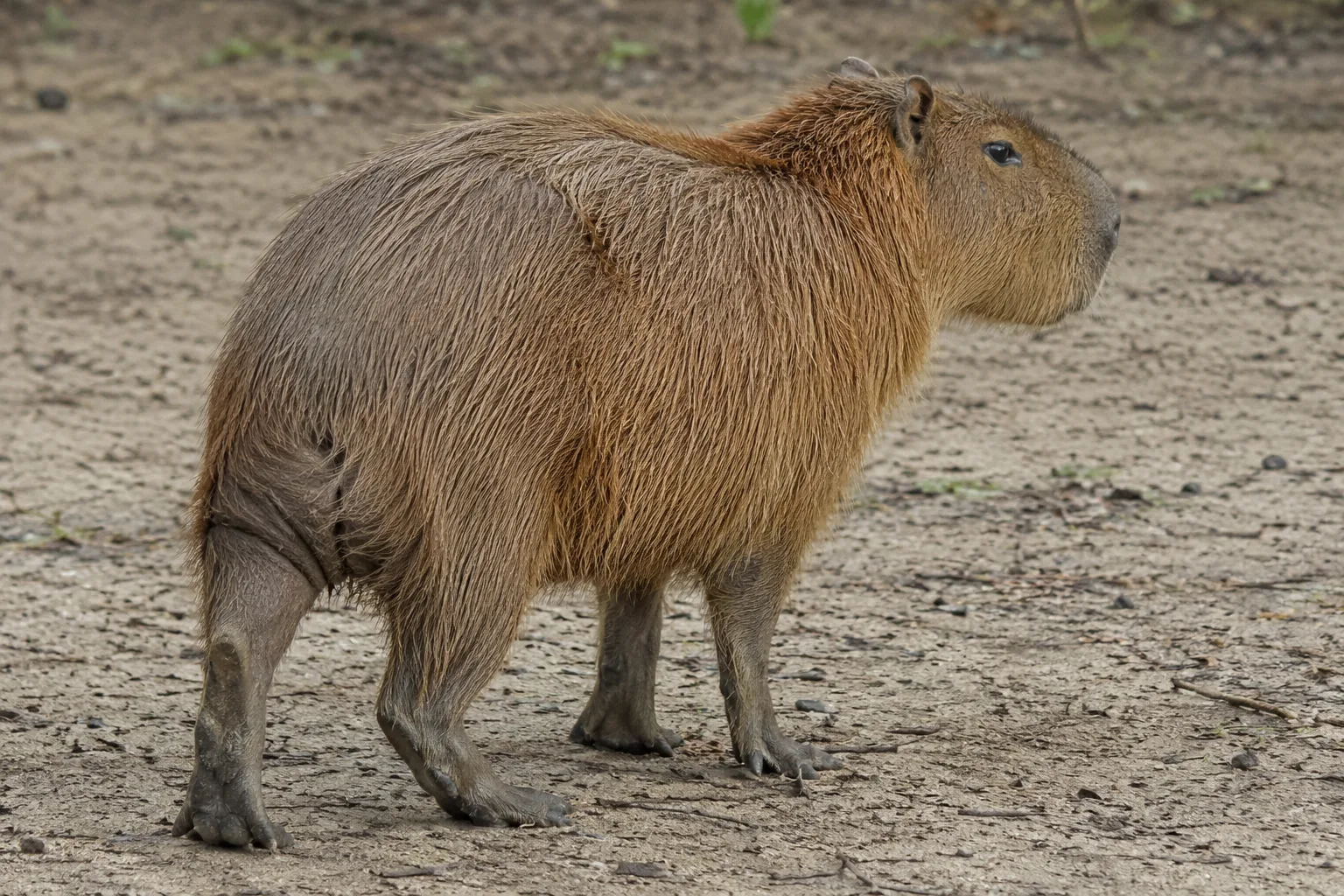
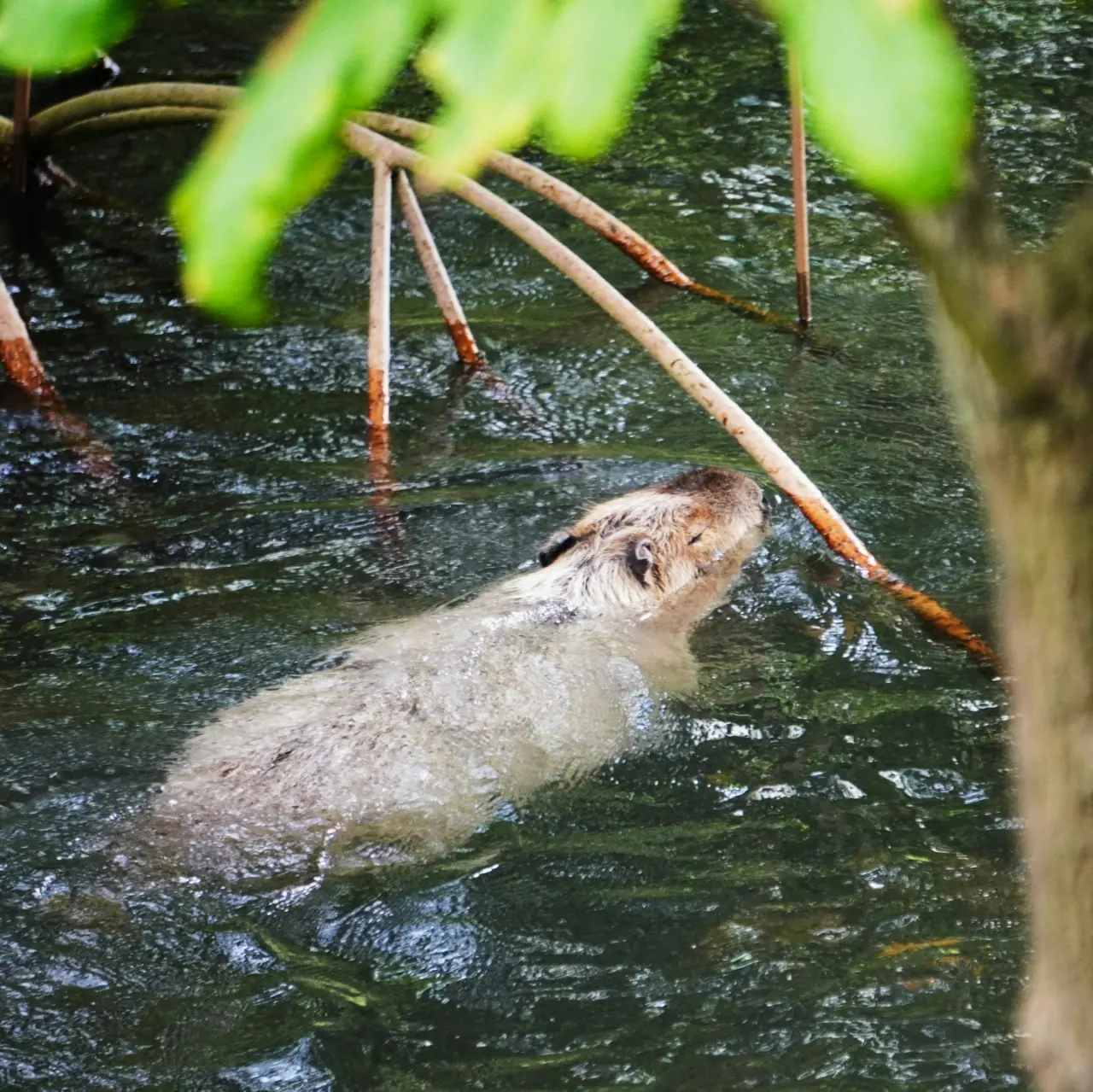
Read the test in pieces. Grass-eating or plant-eating: a capybara qualifies, emphatically. Not indigenous to Texas: qualifies. Single-hooved or cloven-hooved, known as ungulates: it does not. The AZA care manual describes the foot: four digits in front, three behind, partially webbed and armed with short, strong claws. That is a semi-aquatic rodent’s foot, and it is not a hoof.
So the definition catches a tapir, a South American forest herbivore roughly a capybara’s neighbor in range and habit, and misses the capybara on the strength of what its feet are made of.
That matters more than one statute, because Parks and Wildlife Code §62.015(a) does not write its own definition. It borrows: “in this section, ‘exotic animal’ means exotic livestock or exotic fowl as defined by Section 161.001(a), Agriculture Code, aoudad sheep, or elk.” One drafting choice in the Agriculture Code therefore removes the capybara from the Parks and Wildlife scheme as well.
Three schemes, one animal, and only two clean misses:
| The scheme | What it catches | Why the capybara falls out |
|---|---|---|
| Health and Safety Code §822.101(4) | 19 named animals plus hybrids | Closed list. No rodent, and nothing to stretch |
| Agriculture Code §161.001(a)(4) | Plant-eating hooved ungulates | Right diet, wrong feet |
| Parks and Wildlife Code §62.015(a) | Whatever §161.001(a) catches | Borrows the definition, inherits the gap |
| Agriculture Code §161.001(a)(1) | “Livestock, exotic livestock, domestic fowl, and exotic fowl” | Says “includes,” not “means” — open at the end |

The Animal Health Statute Is the Weakest of the Three, and Worth Reading Carefully
The third scheme is the one that would catch an import, and it closes the loop in the most Texas way available.
Chapter 161 of the Agriculture Code is the Texas Animal Health Commission’s authority, and §161.081(a) is the import power: the commission may regulate the movement “of livestock, exotic livestock, domestic animals, domestic fowl, or exotic fowl into this state from another state, territory, or country.” That is the authority behind entry requirements and certificates of veterinary inspection.
Now read the chapter’s own definition. §161.001(a)(1): “Animal” includes livestock, exotic livestock, domestic fowl, and exotic fowl.
A capybara is not livestock, is not exotic livestock (see above), and is plainly not fowl. So on a first read, the chapter that governs bringing animals into Texas does not appear to cover it.
Read the verb before relying on that. §822.101(4) says “means.” §161.001(a)(1) says “includes.” One of those closes and one does not, and the difference is the whole section: the dangerous-wild-animal list cannot be stretched to reach a capybara, and the Chapter 161 definition has simply never been asked to.
It is thinner still than that. §161.081(a) reaches “domestic animals” as well, and Chapter 161 never defines that term at all. So the import power is written in words wider than the definitions underneath it.
Two schemes shut the door in their own words. This one left it open and never looked.
Treat it as the question to put to the Texas Animal Health Commission rather than as an answer you already have. Two clear misses and one open verb is still a state with nothing to sell you. But it is not three clean misses, and anyone telling you otherwise has not read the subsection.
What the State Hands to the City, and In Writing
Most state pages have to infer the municipal layer. Texas states it.
§822.116(b): This subchapter does not prevent a municipality or county from prohibiting or regulating by ordinance or order the ownership, possession, confinement, or care of a dangerous wild animal. And §822.116(a) goes wider still: the subchapter “does not affect the applicability of any other law, rule, order, ordinance, or other legal requirement of this state or a political subdivision of this state.”
Texas is a home-rule state with hundreds of home-rule cities. The practical consequence is that “are capybaras legal in Texas” is not a question with one answer, and anyone who gives you one has skipped this section.
Houston Wrote a Test Instead of a List
Houston is the largest city in the state, and its ordinance is a test rather than an enumeration, which is what makes it genuinely uncertain rather than simply strict.
Houston’s definition does not name animals. It describes a risk:
any mammal, amphibian, reptile or fowl of a species that is wild by nature and that, because of its size, vicious nature or other characteristics, is dangerous to human beings.
Then §6-51 gives twenty-five examples, prefaced with “shall include, but not be limited to” — lions, bears, wolves, cougars, coyotes, raccoons, skunks, apes, elephants, alligators, wild cat-domestic cat hybrids up to the third generation, “monkeys of a species whose average adult weight is 20 pounds or more,” fowl larger than a macaw, “any snake that will grow to a length greater than eight feet.” It also sweeps in anything listed as an endangered species under the federal Endangered Species Act of 1973, or protected by the Migratory Bird Treaty Act.
The list is illustrative. The test is the sentence above it.
§6-52(a): It is unlawful for any person to be in possession of a wild animal. Not a permit. A prohibition, with seven affirmative defenses in §6-52(d): an animal hospital operated by a veterinarian, an accredited zoo, a licensed carrier in transit, and so on.
No rodent appears in that list. But §6-51 does not stop there, and the sentence it ends on is the one that matters:
The term wild animal shall not include gerbils, hamsters, guinea pigs, mice and domesticated rabbits.
Four of those five are rodents. Houston did think about rodents. It named five small ones and excluded exactly those, and it did not exclude the capybara. When Ordinance 2022-44 re-enacted Chapter 6 in January 2022, §6-51 was carried forward with that carve-out unchanged.
So the list is not the definition, the definition is the “size, vicious nature or other characteristics” test, and the one place the ordinance talks about rodents is a carve-out a capybara does not fit in. The AZA puts an adult capybara at 27 to 79 kg, or 60 to 174 pounds, and “size” is the first word in the test. Whether BARC reads that as reaching a capybara is not something a statute answers; it is something an email to BARC answers, in writing, before you buy an animal.
San Antonio Prohibits It, and Not in the Section You Would Look In
San Antonio is the second-largest city, and it reaches the opposite answer from Houston by a route that is easy to miss.
Chapter 5 defines “wild animal” in §5-1, and the definition is enormous: any nonhuman primate, raccoon, skunk, fox, wolf, leopard, panther, tiger, lion, lynx, bobcat, or other warm-blooded animals, or any poisonous or dangerous snake which can be found in the wild state. Read literally that catches a capybara without trying. But no article of Chapter 5 bans keeping a “wild animal,” so a reader who stops at that definition concludes there is no prohibition. We did, on a first pass.
The prohibition is under a different heading. §5-1 separately defines “Prohibited animals” as an eleven-item list, and item (11) is the one that matters:
All other mammals that live in a natural state of undomesticated freedom including the opossum, raccoon, armadillo and squirrel.
Items (1) through (10) are the usual suspects: primates, canids, felids, mustelids, skunk, venomous reptiles, crocodilians, swine, ratites, bear. Item (11) is the sweeper, and it sweeps by habit rather than by taxonomy: any mammal that lives wild. A capybara does.
From there the chain is short and it ends in a criminal offence:
- §5-150(6): “An owner or keeper creates an animal nuisance by the keeping, frequent feeding or harboring of any venomous or inherently dangerous or prohibited animal.”
- §5-152(a): “An animal owner commits a misdemeanor offense if by act, omission or possession he creates an animal nuisance.”
So San Antonio does not license a capybara and does not ban it in a section called anything like “prohibited possession.” It defines it as a prohibited animal, makes keeping a prohibited animal a nuisance, and makes creating a nuisance a misdemeanour. Three hops, in three different articles.
Animal Care Services publishes visitor-facing material saying that keeping wild animals in the city is unlawful. That material turned out to be right, and the code backs it, just not where the phrasing suggests.
Houston: a narrow list, a wide test
- No rodent named anywhere in §6-51
- But the list is only illustrative — "include, but not be limited to"
- The real test is size, vicious nature or other characteristics
- §6-52(a) is a flat ban, not a permit
- So: probably turns on what BARC says "size" means
San Antonio: prohibited, three hops away
- §5-1 "Prohibited animals" item (11): all other mammals that live wild
- Sweeps by habit, not taxonomy, so a capybara is caught
- §5-150(6): keeping one is an animal nuisance
- §5-152(a): creating a nuisance is a misdemeanour
- So: no, and the word "prohibited" never appears in a possession section
Dallas and Austin Are Not Checked Here, and We Will Not Guess
Houston took four attempts. San Antonio took six, and the answer turned out to be three articles away from where the word “prohibited” appears in a heading. Dallas took eleven and produced nothing at all: American Legal Publishing bounces every deep link back to a code overview, and the section text never renders. Austin’s own portal did the same. At some point you stop, and the honest thing is to say where you stopped.
So we are not paraphrasing a summary of a city ordinance and calling it a finding. This site has had to remove invented citations once already, and a made-up section number in a page like this is worse than an empty row. If you are in Dallas or Austin, that layer is unchecked here: call the city, ask for the section number, and read it yourself. It is a ten-minute phone call and it is the only version of the answer that is actually about your address.
The Calls, and Exactly What to Ask
-
Your city's animal services department
Ask: "Does your wild animal or prohibited animal definition include Hydrochoerus hydrochaeris, the capybara? Which section?" Ask for the answer by email. A phone answer that is not written down is worth nothing when an officer arrives.
-
Your county, if you are outside city limits
§822.116(b) names counties too. Unincorporated land is not automatically freer, just governed by a different office.
-
Texas Animal Health Commission, before the animal crosses the state line
Even though a capybara appears to sit outside the Chapter 161 definition of "animal," the commission is the body that says so, not a website.
-
USDA APHIS, the moment anyone pays to look
Charging for encounters, exhibition or breeding crosses into federal Animal Welfare Act licensing regardless of what Texas thinks.
-
Your HOA, and your deed restrictions
In the Texas suburbs these stop more animals than the Health and Safety Code ever has.
The same thing as a paper trail, since a phone call you cannot produce later is not evidence of anything:
| Who to ask | What to ask | Why it matters | What changes the answer |
|---|---|---|---|
| City animal services | Does your wild animal or prohibited animal definition include Hydrochoerus hydrochaeris? Which section? | Houston and San Antonio reach opposite answers from the same state silence | Which city, and sometimes which officer reads the definition |
| County, if unincorporated | Do you have an animal or exotic ordinance reaching non-domestic mammals? | §822.116(b) names counties as well as municipalities | Whether the parcel is inside a city’s extraterritorial jurisdiction |
| Texas Animal Health Commission | Do your §161.081 entry rules reach this species, and what certificate is required? | §161.001(a)(1) says “includes,” so the commission decides, not the reader | Origin state, and whether the animal moves commercially |
| USDA APHIS | Does this use need an Animal Welfare Act licence? | Any paid encounter, exhibition or breeding crosses into federal licensing | Whether money changes hands, in any form |
| HOA or deed restrictions | Is there a covenant on animals, livestock or exotic pets? | In Texas suburbs this stops more plans than the statutes do | The subdivision, not the city |
Misconceptions Texas Readers Should Drop
“Texas allows anything.” Texas allows what it never regulated, which is a different thing and lasts only until the city regulates it. §822.116 exists to preserve exactly that power.
“It is livestock, so agricultural zoning covers it.” It is not livestock. §161.001(a)(4) is an ungulate definition and a capybara fails it. Agricultural zoning may still help you, but not through that door.
“They already live wild in Texas, so it must be fine.” Free-ranging capybaras have been reported in Texas for decades and that is a separate subject. See wild capybaras in Texas. An escaped or released population says nothing about whether you may keep one, and if anything it is the argument a legislature reaches for when it finally writes the rule.
“There is a Texas capybara permit.” There is not. If someone offers to sell you one, that is the tell.
The Practical Takeaway
Texas is the largest state on this site with no state-level answer at all, and the honest version of the finding is that nobody in Austin has ever sat down and decided what a capybara is. Two schemes were written for other animals and shut the door behind them: once because the list is closed, once because of hooves. The third simply never mentions it, which is weaker and worth saying out loud.
So the work is entirely local, and it is real work: get the city’s section number in writing, get the county’s if you are outside a city, and assume the AZA care standard (water, company, shelter, a pair rather than one animal) is the floor whatever the ordinance says. The care guide and the cost guide are where that part starts, and the 50-state screening table is where the rest of the country sits.
Current as of September 29, 2026. Ordinances are amended on someone else’s schedule, not yours, and two of the four largest cities in the state could not be read at all from here. Confirm the section number with your own city’s animal services department, and with the Texas Animal Health Commission before an animal crosses the state line. This is a screening path, not legal advice.