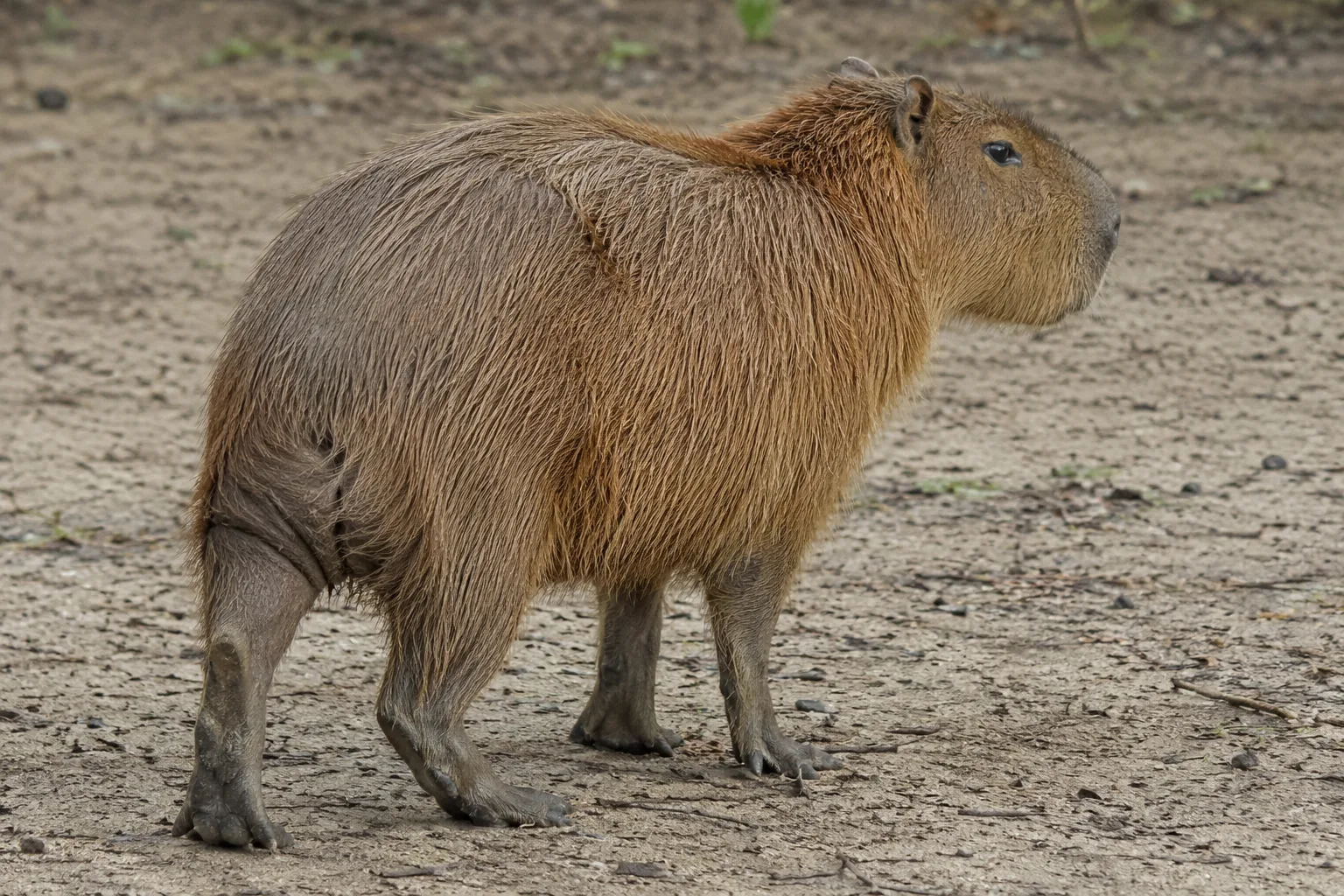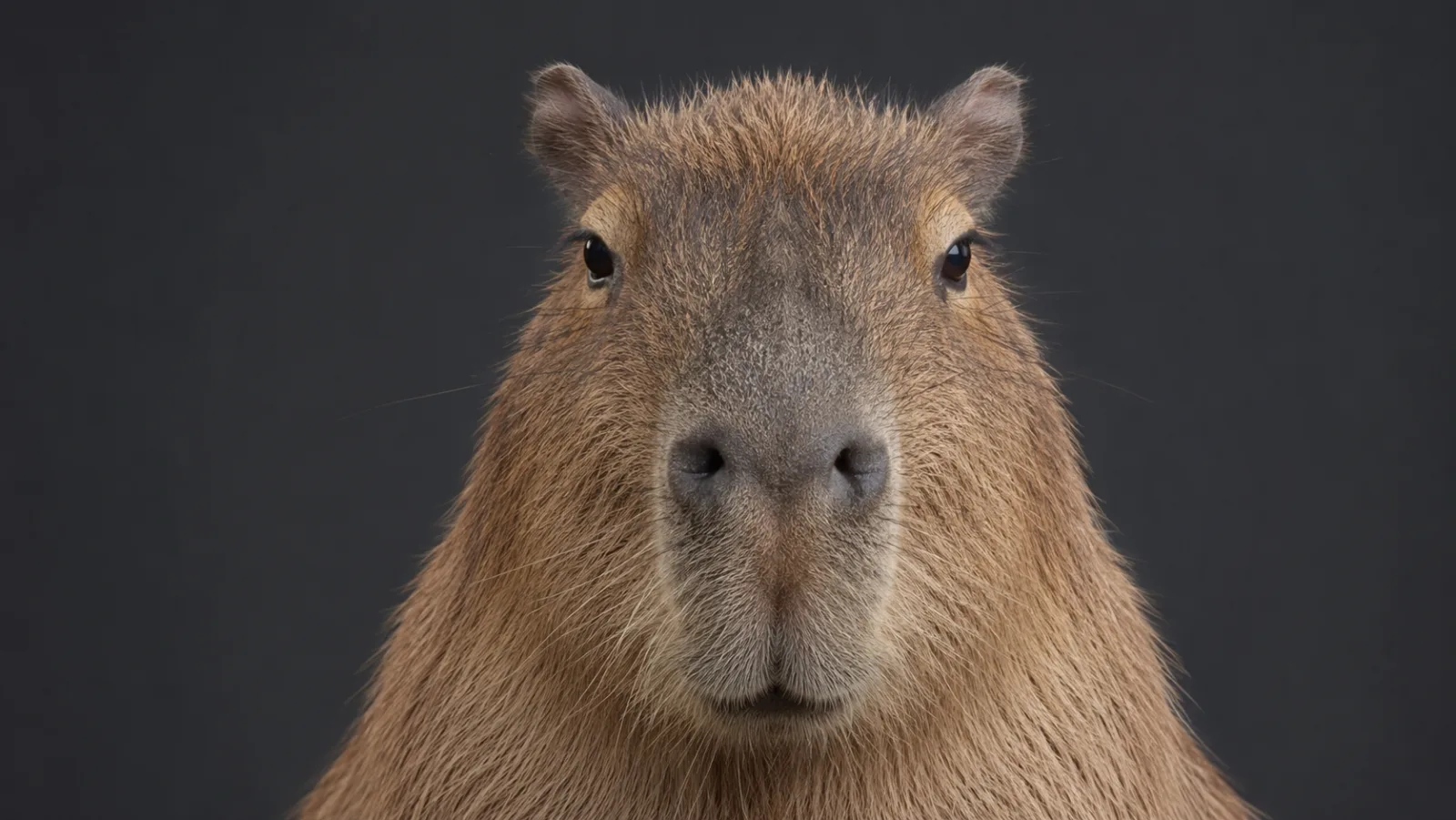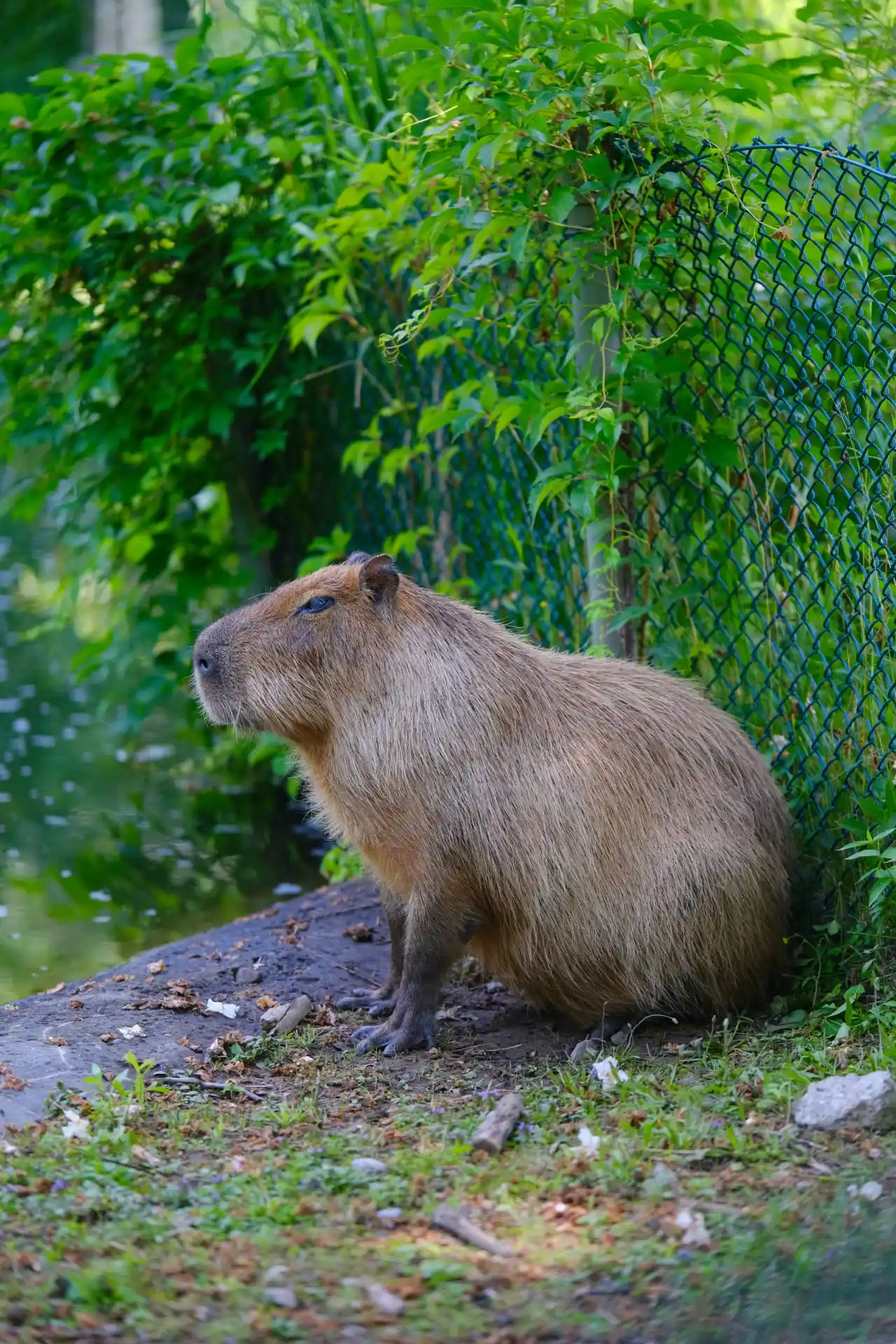
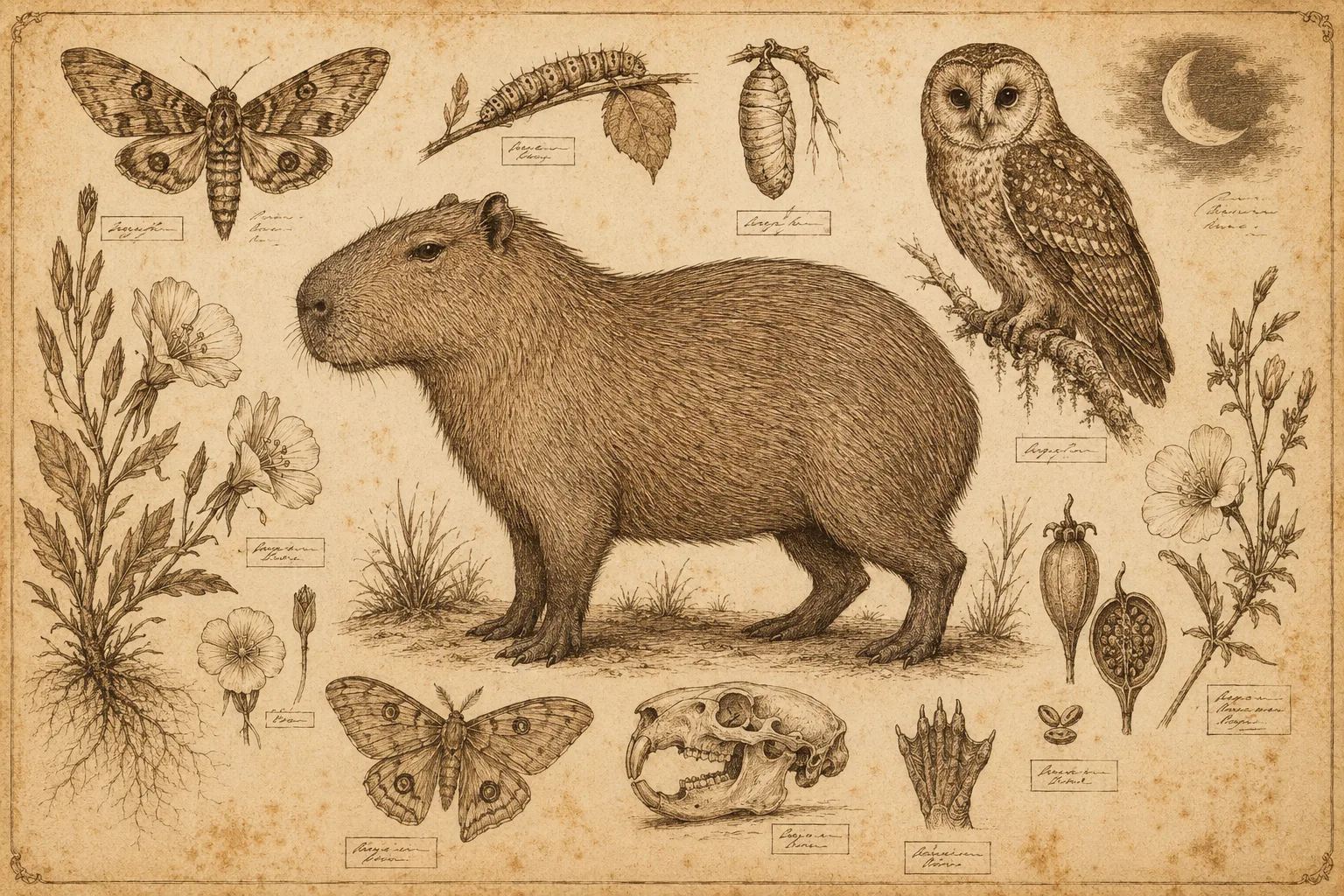
No, the common capybara is not globally endangered. That is the fast answer.
The better answer is that “not endangered” is not the same as “nothing can go wrong.” Capybaras depend on freshwater habitat, interact with farms and roads, and live in places where human decisions shape what happens next.
No, The Common Capybara Is Not Globally Endangered
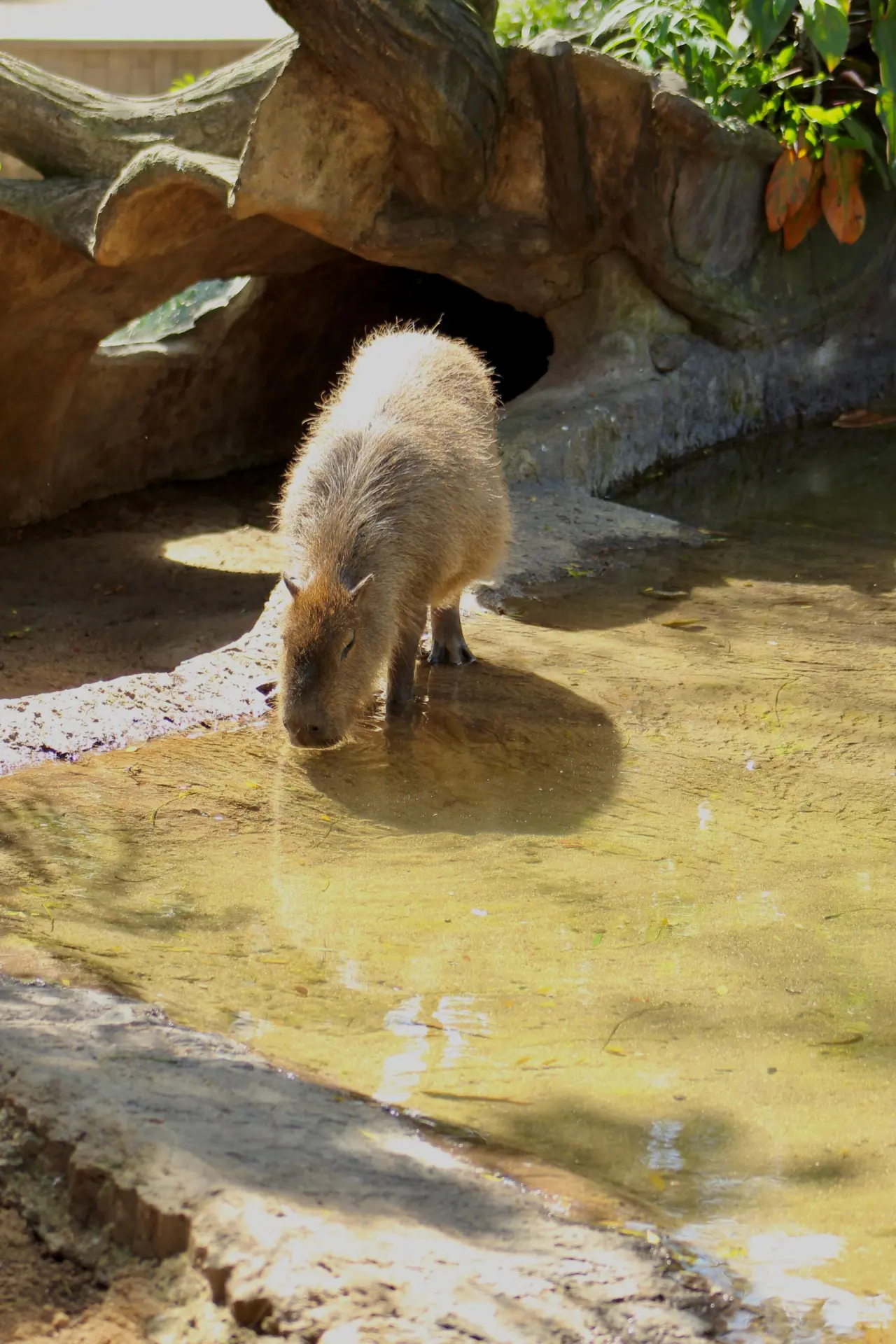
The capybara most people mean is the common capybara, Hydrochoerus hydrochaeris. San Diego Zoo’s population and conservation-status page lists its population trend as stable and separates that from the lesser capybara, whose trend is listed as unknown.
So if someone asks “Are capybaras endangered?” the clean answer is no for the common capybara.
Why People Assume Capybaras Are Threatened
Capybaras feel rare to many US readers because they are not backyard wildlife in most of the country. Add zoo encounters, exotic-pet discourse, and a flood of memes, and people start treating the animal like a fragile celebrity.
The irony is that some capybara problems come from abundance, not scarcity. In modified landscapes, capybaras can become involved in crop damage, road conflict, or local management disputes.
Not Endangered Does Not Mean No Pressure
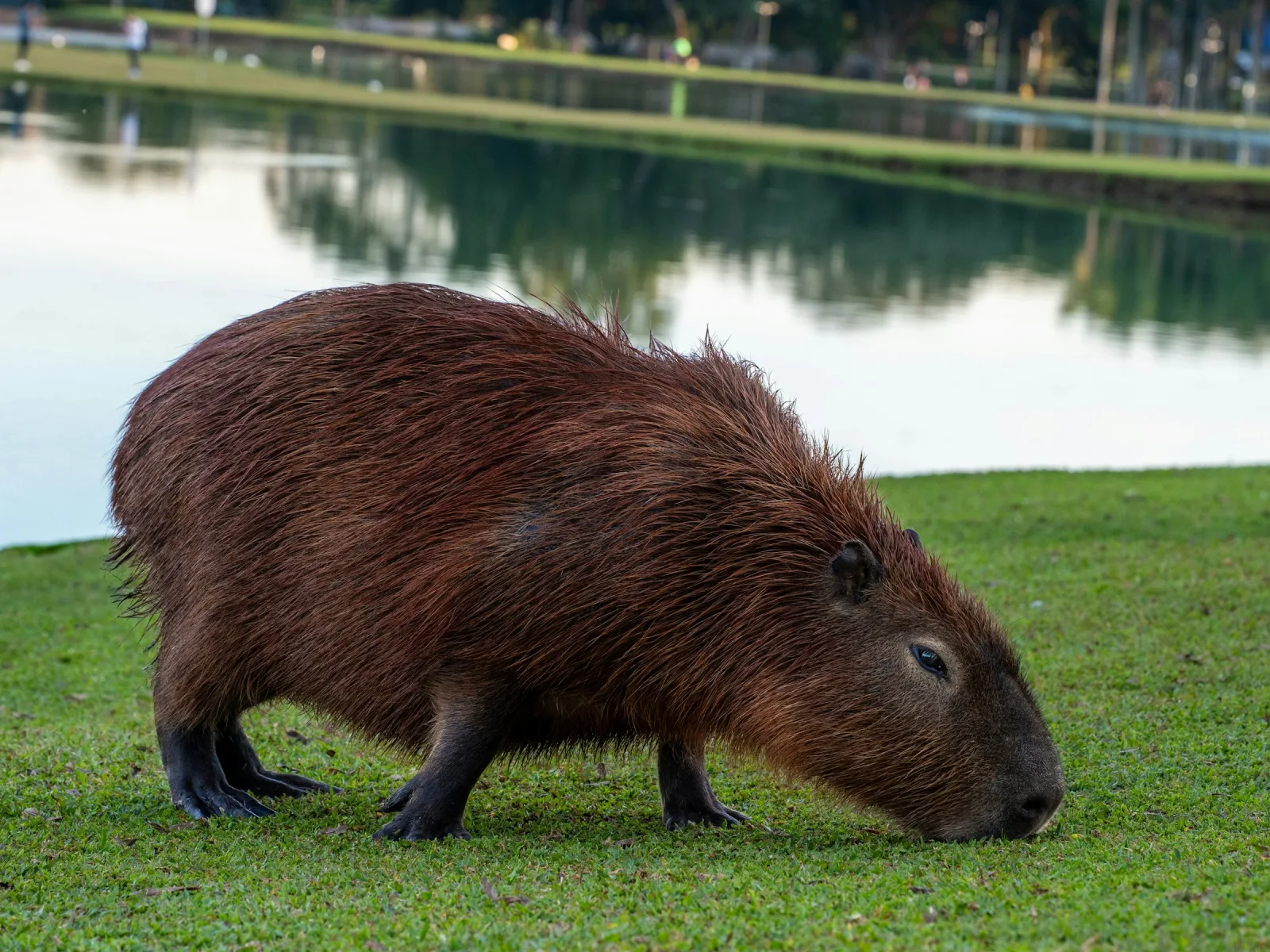
Animal Diversity Web describes capybaras as freshwater-associated herbivores that use water for escape. Habitat still matters. Hunting still matters. Roads, farms, dogs, and human crowding can still matter locally.
| Claim | Better wording |
|---|---|
| Capybaras are endangered | The common capybara is not generally considered globally endangered. |
| Capybaras are totally fine everywhere | Local habitat and conflict issues can still affect populations. |
| Internet fame protects them | Fame can raise interest, but it does not protect wetlands. |
| Rare means important | Common species can still be ecologically and culturally important. |
The Two Capybaras People Mix Up
Part of the confusion is that “capybara” is not one animal in the strict sense. There are two living species. Almost every photo, meme, and onsen video you have seen is the common capybara, Hydrochoerus hydrochaeris, the giant grazer of South American wetlands and the world’s largest rodent at roughly 35 to 66 kg. The other one, the lesser capybara, is smaller, less famous, and far less studied.
That gap in attention matters when people start quoting status. San Diego Zoo Wildlife Alliance lists the common capybara’s population trend as stable, while the lesser capybara’s trend is listed as unknown. “Unknown” is not the same as “fine,” and it is not the same as “endangered” either. It mostly means nobody has counted carefully enough to say. So when a headline flattens both into one tidy answer, it is usually talking about the famous one and quietly ignoring the obscure one.
| Species | What it is | Status framing |
|---|---|---|
| Common capybara | The famous wetland giant in most photos | Widespread, trend listed as stable |
| Lesser capybara | Smaller, less-studied relative | Trend listed as unknown, less data |
| ”Capybara” in a meme | Almost always the common one | Don’t read meme fame as a status report |
What Actually Keeps Them Around
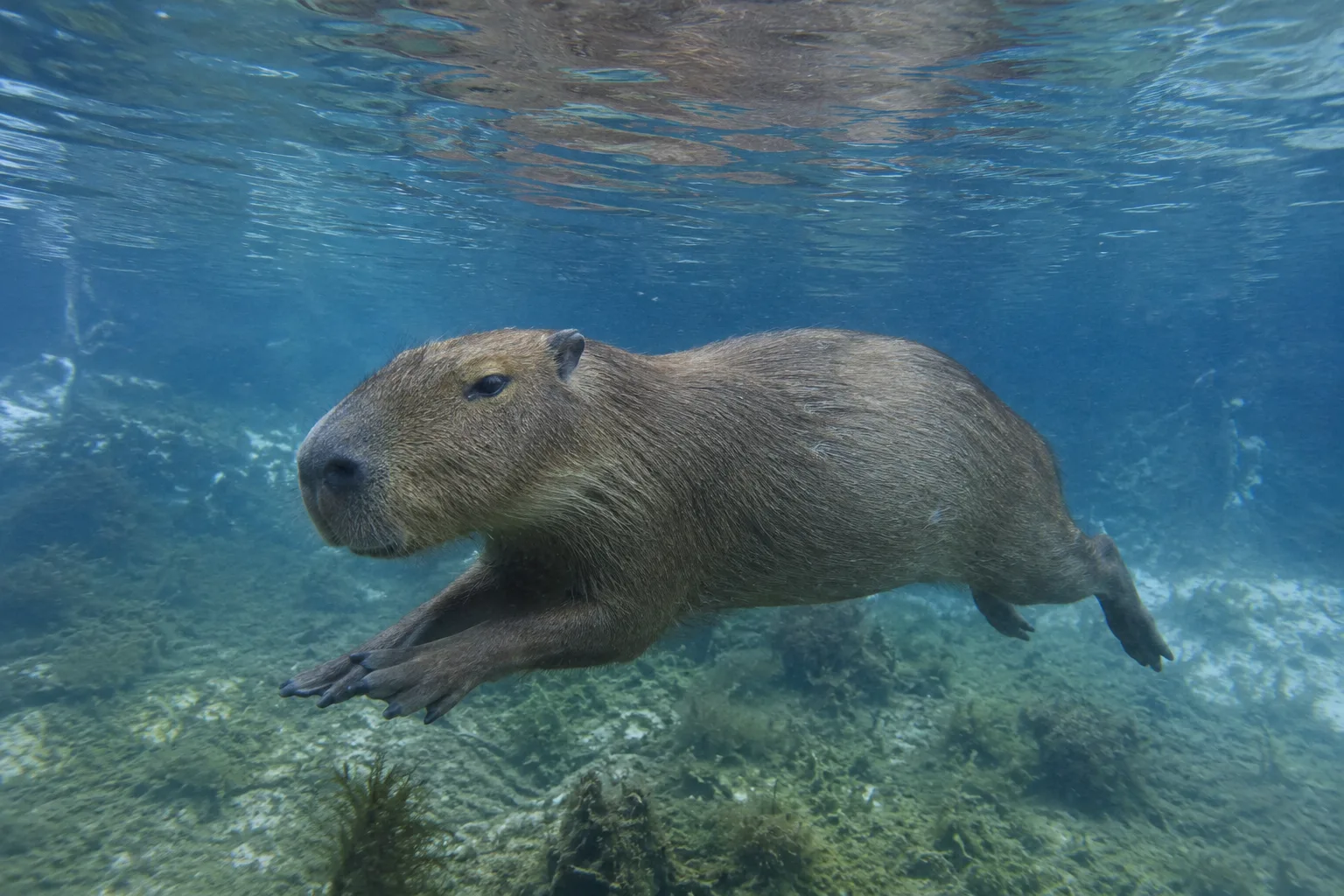
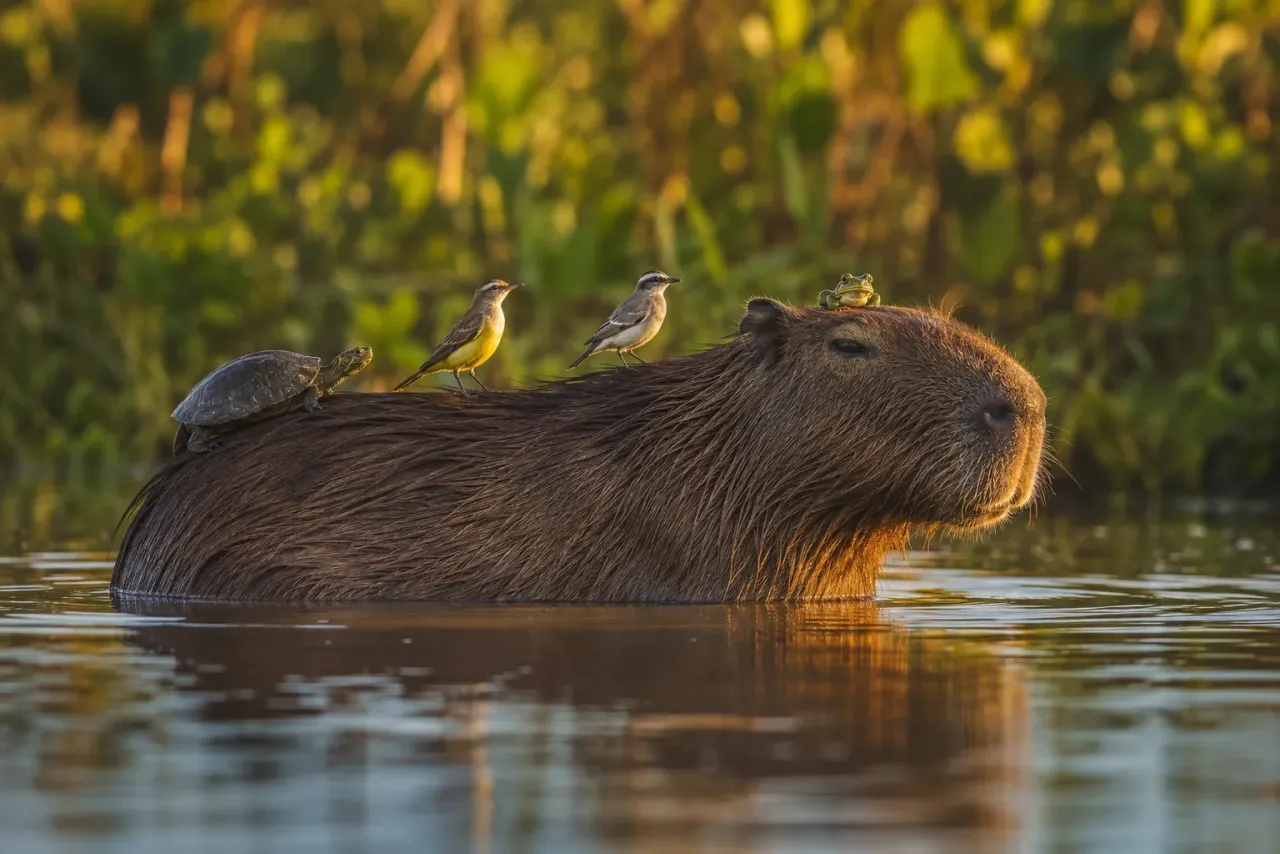
The reason the common capybara stays common is not luck. It is biology that happens to fit a lot of landscapes. They are semi-aquatic grazers with semi-webbed feet, so the same water that feeds them also doubles as an escape route, which Animal Diversity Web notes when describing how they use water to evade predators. They are hindgut fermenters that re-ingest soft morning feces to pull more nutrition from rough grasses, which means they can live on cheap, abundant plant matter. They breed well in good conditions and live in herds, and a social grazer that tolerates wet, edge habitat is exactly the kind of animal that does fine near rivers, ranch land, and managed wetlands. Animal Diversity Web describes them as strongly tied to water and grasses, and that combination is forgiving: where there is a freshwater edge and something green to eat, a capybara population can usually hold on. None of this guarantees any single herd survives a drained marsh or a new highway, but it does explain why the species as a whole keeps showing up across so much of South America.
Here is the honest opinion: the “are they endangered” question is almost the wrong frame for this particular species. The common capybara’s story is not a rarity story. It is a habitat-and-conflict story. The interesting risk is not that they vanish globally, it is what happens to the freshwater edges they depend on, and how people in a given valley decide to treat a large rodent that eats crops and crosses roads.
Where Local Pressure Actually Shows Up
“Local pressure” is vague until you picture it. In practice it tends to look like a few recurring situations. Wetlands get drained or converted for agriculture, and the grazing edge the herd depended on shrinks. New roads cut through habitat, and capybaras, which move between water and grazing land, end up as roadkill or as a hazard. Where capybaras share space with crops, they can get treated as pests and hunted or managed accordingly. Dogs, fragmentation, and dense human settlement add friction on top of all of that.
None of those add up to a global extinction risk for the common species. They add up to populations that can thin out, disappear from one wetland, or come into sharper conflict with people, even while the species as a whole stays widespread. That local-versus-global distinction is the whole point, and it is the part a one-word answer erases.
The Clean Answer-Engine Version
The common capybara is not globally endangered. It is widespread in much of South America and closely tied to freshwater habitat. Local conservation concerns may include wetland change, hunting, roads, agriculture, and human-wildlife conflict, so “not endangered” should not be read as “irrelevant.”
Say It Correctly In The Group Chat
If someone says capybaras are endangered, correct them gently. The common one is not. Then be annoying in a more useful way: talk about wetlands, local conflict, and responsible wildlife tourism.
“Not endangered” is an answer, not a permission slip to stop paying attention.