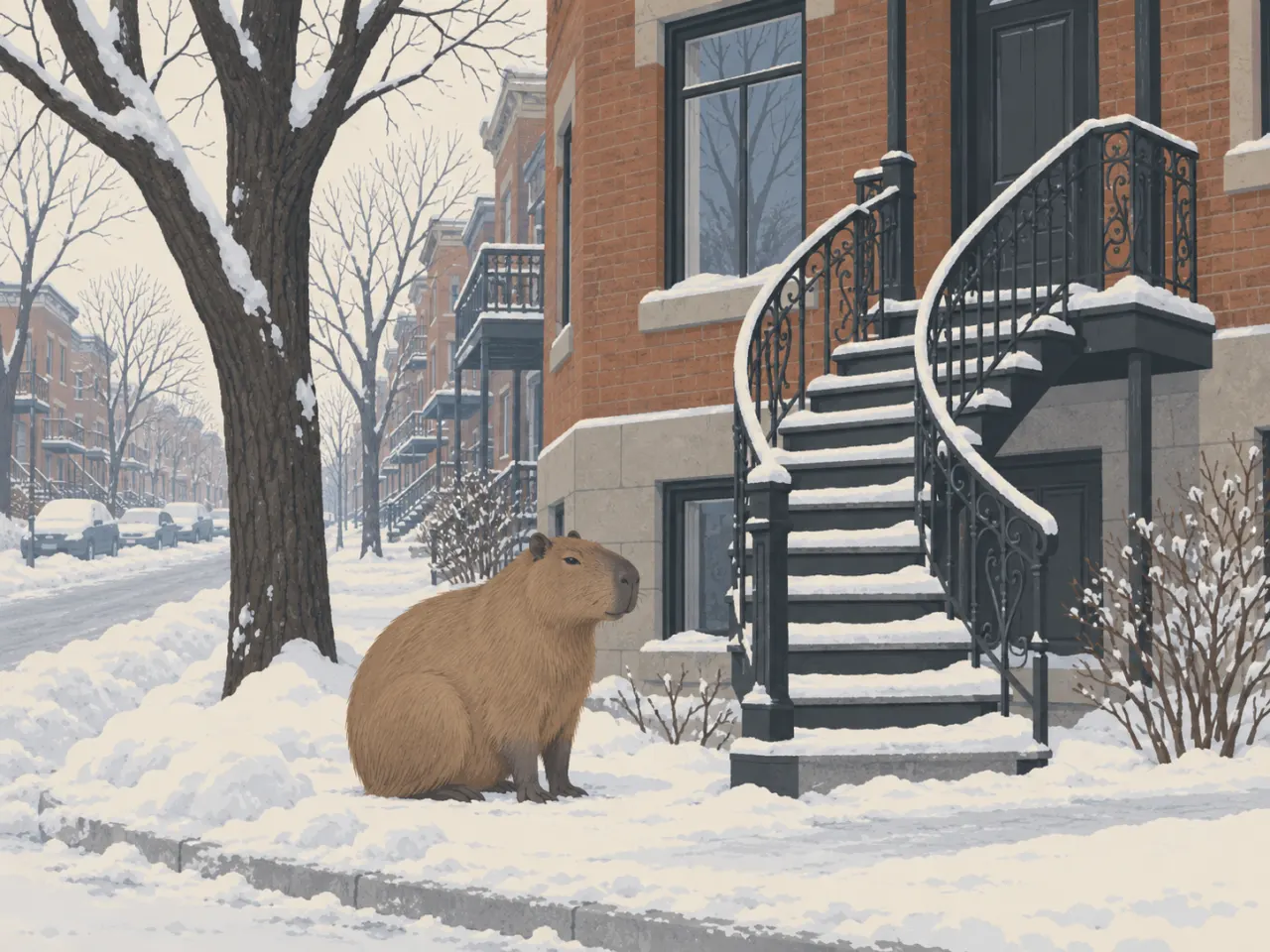
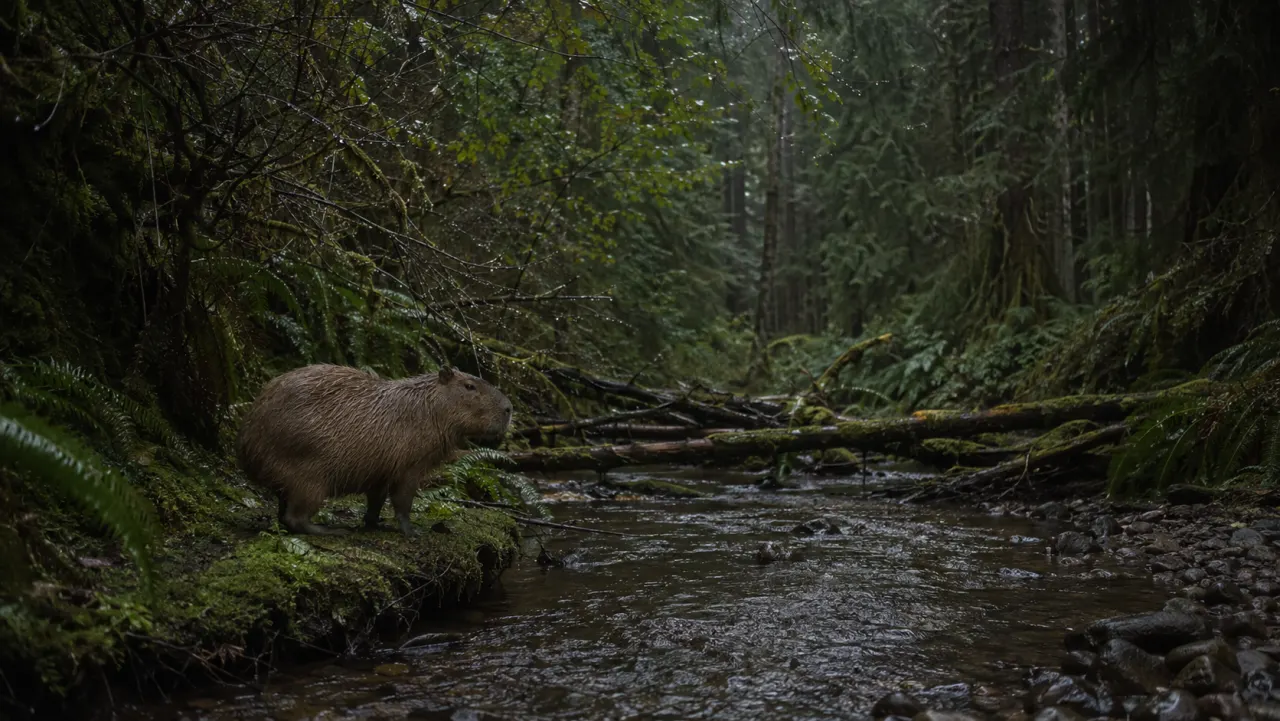
Washington bans a long list of animals. This is not one of them. Both of the statutes that could plausibly have caught a capybara were written for other problems, and neither of them mentions a rodent.
That is not the same as a green light. It moves the question to a different building.
Not banned, but nothing gets in without a permit
Capybaras appear on neither RCW 16.30's potentially dangerous wild animal list nor WAC 220-640-200's deleterious exotic wildlife designation. The live rule is agricultural: WAC 16-54-180 requires every wild or exotic animal entering Washington to carry a certificate of veterinary inspection and an entry permit, issued in advance by the state veterinarian.
Arrive without both and the animal is subject to a quarantine or hold order at your expense.
Nobody in Washington Bans the Animal
Two statutes could have caught this. Neither does.
RCW 16.30 defines a “potentially dangerous wild animal,” and it reads like a predator inventory: lions, tigers, leopards, cheetahs, captive-bred cougars, bears, wolves, hyenas, every nonhuman primate, elephants, rhinoceroses, a run of venomous snake families, and the whole order Crocodilia. Nothing in it is a rodent.
WAC 220-640-200 is the other candidate, and it is the stranger of the two. Deleterious exotic wildlife is Washington’s list of non-native species it considers dangerous to the state’s environment: mute swans, mongooses, wild boar, javelina, then a long procession of non-native sheep, goats, antelope and deer. Also no rodents.
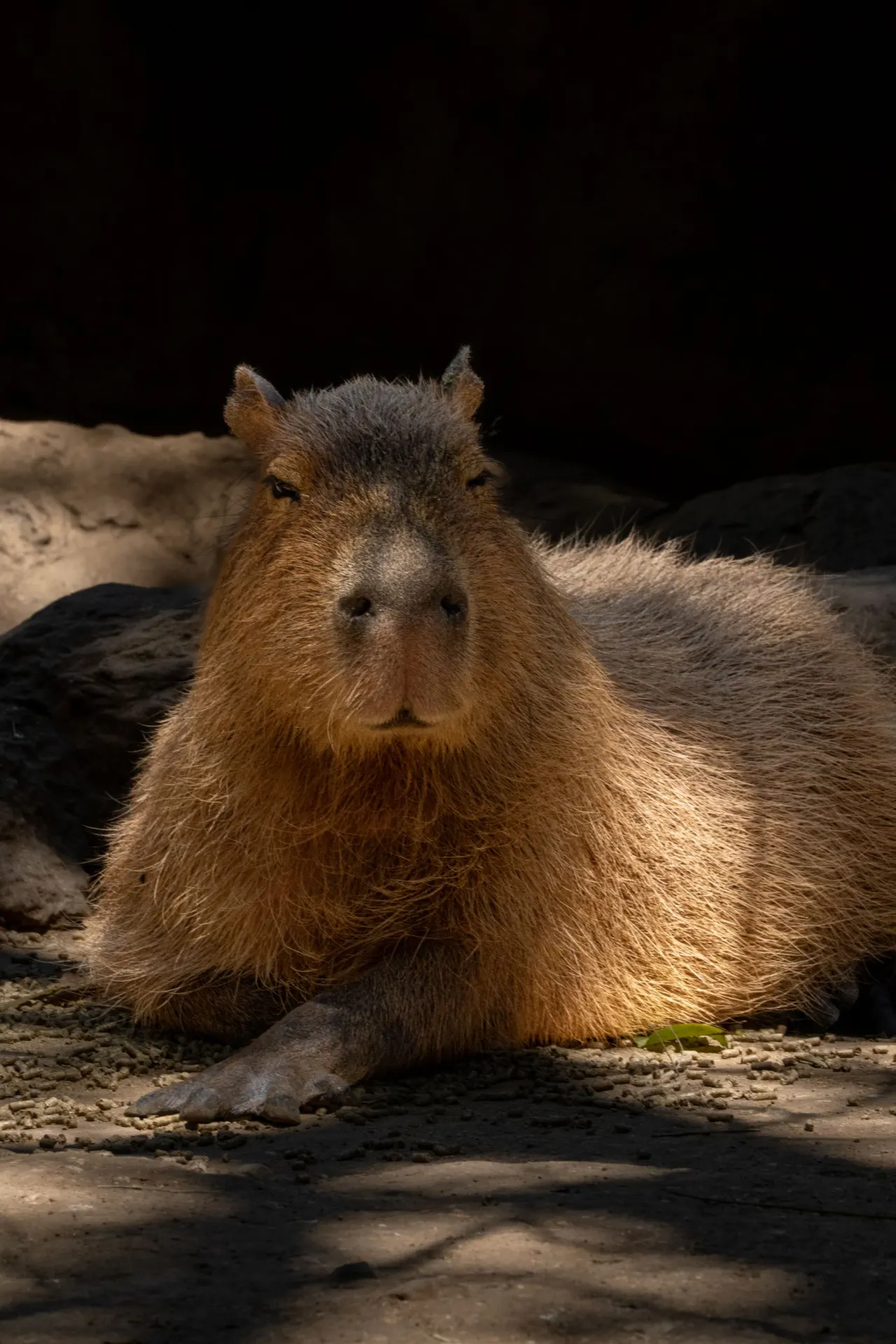
Most pages about Washington stop here, and that is the mistake. “Not on a banned list” and “you can bring one home” are separated by an entire second agency, and the second agency is the one with the form.
Why Fish and Wildlife Probably Is Not Your Agency
The definitions do the work, and they are worth reading slowly.
RCW 77.08.010 defines “wild animals” as “those species of the class Mammalia whose members exist in Washington in a wild state.” “Wildlife” gets the same construction: species “whose members exist in Washington in a wild state.” Take that literally and a captive-bred capybara is not Washington wildlife, because no capybaras live wild in Washington. Chapter 220-450 WAC, the department’s captive-wildlife chapter, is built on top of that definition.
The one hook WDFW keeps for genuinely non-native species is the deleterious exotic wildlife designation. That is a designation, not a default. A species has to be added to the list by rule. Capybaras have not been.
This is the opposite of how several other states are built, and it is why borrowed advice travels badly. New Mexico, for instance, sorts unlisted species into its most restrictive category automatically. Washington’s silence is closer to actual silence.
"Are capybaras legal here" produces a shrug and a callback. Ask instead: "Does a captive-bred Hydrochoerus hydrochaeris meet the RCW 77.08.010 definition of wild animal, and is it designated deleterious exotic wildlife under WAC 220-640-200?"
That version has a yes or no attached to it, and somebody's job is that sentence. Get the reply in writing and note the date.
The Real Gate Is at the State Line
Washington State Department of Agriculture defines things the other way round, and this is where the answer actually lives.
Under WAC 16-54-010, an “exotic animal” is a species “not native to Washington state but exist[ing] elsewhere in the world in the wild state.” A capybara fits that sentence exactly, with nothing left over. Where the wildlife code’s definition pushes the animal out of scope, the agriculture code’s definition pulls it straight in.
WAC 16-54-180 then sets two conditions, and both are mandatory:
- A certificate of veterinary inspection issued by an accredited veterinarian licensed in the state of origin, or an international certificate of health.
- An entry permit, which WAC 16-54-010 defines as “prior written permission issued by the director to admit or import animals” into the state. Prior means before the trailer moves.
Captive wild and exotic animals also carry an owner-signed statement on the certificate confirming, to the owner’s knowledge, that the animals are not infected with tuberculosis and have not been exposed to it in the past twelve months.
Chapter 16-54 WAC is blunt about arriving unprepared: an animal entering Washington without a required certificate of veterinary inspection or entry permit "shall be subject to a quarantine order or a hold order at the owner's expense."
The deposit is paid, the trailer is already over the line, and now the state decides where a 100-pound semi-aquatic rodent sits while somebody sorts it out. You are paying for that.

Picture the veterinarian who has to sign it. They are USDA-accredited, they are in Oregon or Idaho or Texas, and the form in front of them is built around cattle, horses and poultry. Chapter 16-54 WAC lists brucellosis and tuberculosis testing requirements for camelids, cervids, giraffids, bovids, wild sheep and goats, and wild swine. It does not list a capybara, because almost nobody has ever asked. So the vet has to decide what “wild and exotic animal” means for this specific patient, write a species onto a line meant for livestock, and be comfortable defending it. That call is easier if somebody phoned the Washington state veterinarian’s office first and got the requirements in writing. It is very unpleasant on a Friday afternoon with a trailer idling outside.
What Washington Can Ask You to Produce Years Later
The import rules bite once. The records requirement does not stop.
WAC 220-450-030 requires anyone holding live wildlife to be able to prove lawful acquisition on request, and it is specific about what “prove” means. A department employee can ask for documentation showing:
- the species, and the animal’s age and sex
- where it came from
- the name of the receiving party
- the name and address of the source
- the date of the invoice or statement
- documentation of any prior transfers
That is a file you build at purchase or never. Nobody reconstructs a two-year-old chain of custody from memory and a text thread, and a seller who was happy to take cash rarely gets more responsive with time.
King County Bans Less Than People Think
Here is the part that surprised me, and it is the opposite of what this site said about Washington before.
King County Code 11.04.234 is short: “A person may not harbor, keep, or maintain an exotic animal, unless an exception in RCW 16.30.020 applies.” So the question is what King County means by exotic animal, and the county defines it as a closed list: snakes capable of inflicting serious physical harm or death, nonhuman primates and prosimians, bears, non-domesticated felines, non-domesticated canines and their hybrids, and any species within the order Crocodylia.
No rodents. The county everyone assumes slams the door does not, on the face of its own code, reach a capybara at all.
Seattle is a separate jurisdiction with its own animal control chapter, and its exotic-animal language is broader than the county’s, so a Seattle address is genuinely a different question from an unincorporated King County one. The same goes for Tacoma, Everett, Spokane, and any homeowners association with an opinion. Ask about your address, not your region.
The Wet Side Is the Easy Side
Western Washington is one of the better American climates for this animal, and that is not nothing. Animal Diversity Web notes capybaras are susceptible to heat stress because of their body size, and that they spend the hottest part of the day in water. A Puget Sound summer asks much less of a cooling plan than a Phoenix one does.
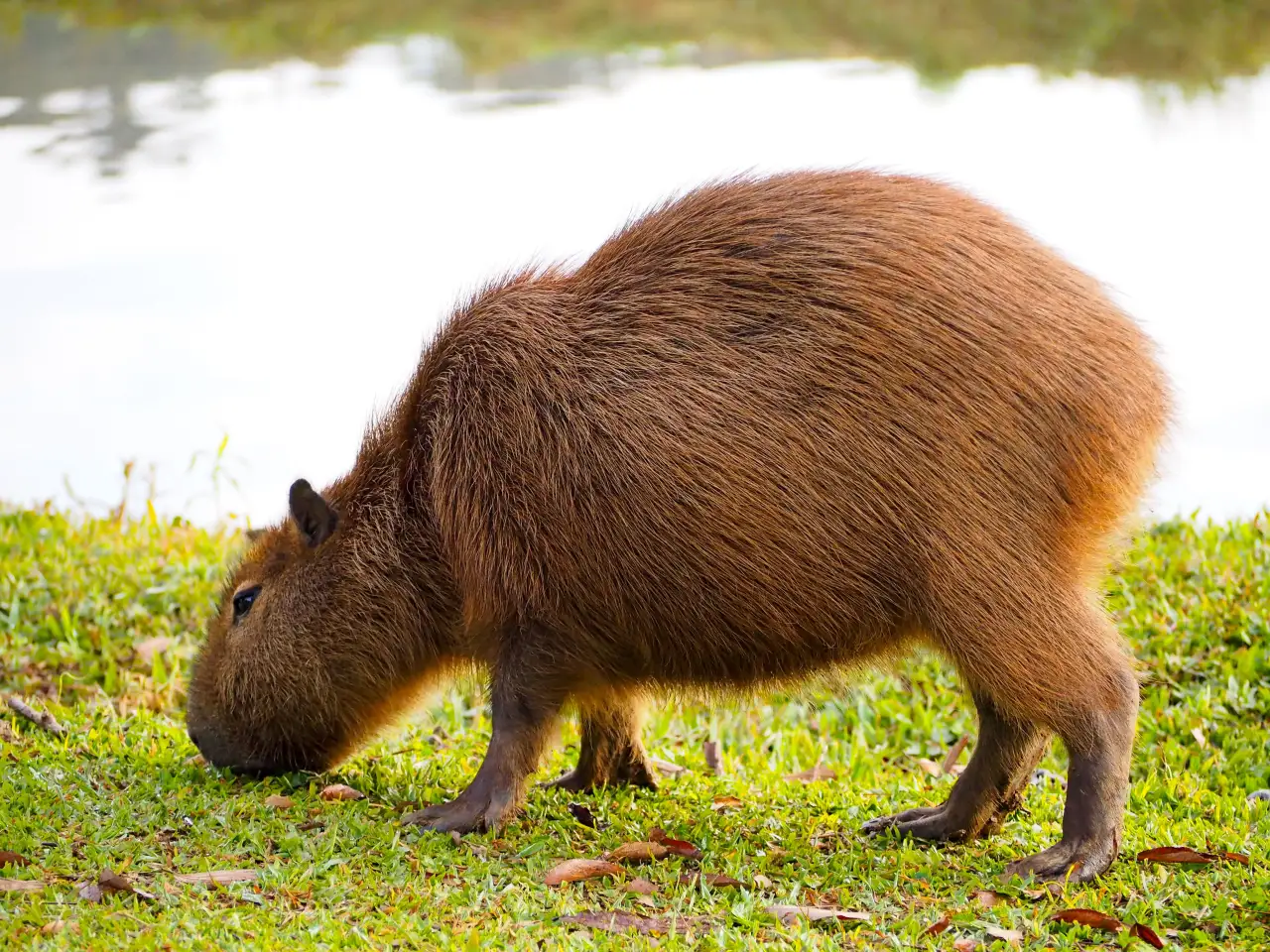
The rain is a red herring, though. Water management is about depth, filtration, drainage and temperature, and Washington’s contribution is mostly to keep the ground wet and the mud interesting. In January a cold outdoor pool is not a wallow, it is a hypothermia risk, so the heated shelter question does not go away just because it rarely snows in Olympia. East of the Cascades you get both problems in the same calendar year, hot dry summers and hard winters, and the setup has to cover both.
Then there is the vet. Somebody has to sign that certificate of veterinary inspection, and somebody separate has to answer the phone at 11pm when a large rodent stops eating. Confirm both before the deposit, not after.
The Entry Permit Is Free, and It Is Still the Thing That Stops You
Washington’s answer is unusual: the permit that governs the whole question does not cost anything.
Those three numbers are the whole Washington argument. The document is free and prior; the penalty for skipping it is open-ended and lands on you. A permit that costs nothing is not a permit that can be obtained afterwards, and “prior written permission” is the definition WAC 16-54-010 actually uses.
The entry permit is issued against a certificate of veterinary inspection number, so the sequence is: accredited vet in the origin state, certificate, then permit, then transport. The paid step is the vet, and it has to happen first.
Everything after the state line — the enclosure, drainage on the wet side, the exotic veterinary reserve — is in the capybara cost guide.
Washington Beliefs Worth Retiring
| What Washington buyers believe | What is actually true |
|---|---|
| ”It is not on the banned list, so I can just get one” | Neither ban applies, but WAC 16-54-180 still requires a vet certificate and an advance entry permit before the animal crosses the line. |
| ”WDFW is the agency to call” | Washington defines wild animals as mammals existing in the state in a wild state. The agriculture department’s exotic-animal definition is the one that clearly catches a capybara. |
| ”Seattle and King County ban exotics, so western Washington is closed” | King County’s list is snakes, primates, bears, wild cats, wild dogs and crocodilians. Seattle’s own code is broader. They are two separate answers. |
| ”I can sort the paperwork out at the border” | An entry permit is prior written permission. Arriving without one exposes the animal to a quarantine or hold order at your expense. |
| ”The rain does the water management” | Rain does not filter, drain, heat or refill anything. It only makes the yard worse. |
| ”One is fine if it bonds to me” | Capybaras live in groups of roughly ten in the wild. One animal is a welfare failure whatever the climate. |
Where to Start, and in What Order
| Who to contact | What to ask | Why it matters | What changes the answer |
|---|---|---|---|
| WSDA state veterinarian’s office | Whether a capybara requires an entry permit and CVI under WAC 16-54-180, and what testing conditions attach | This is the clearance that governs the state line, and it must be in hand before transport | Origin state, transport route, number of animals |
| WDFW, in writing | Whether Hydrochoerus hydrochaeris is wildlife under RCW 77.08.010 or designated under WAC 220-640-200 | Settles whether the captive-wildlife chapter applies to you at all | A future rule change adding the species to the designation |
| City code enforcement | Whether your municipal code restricts exotic or non-domestic mammals at a residence | Cities are broader than counties here, and Seattle is broader than King County | Incorporated vs unincorporated, zoning class, HOA covenants |
| The seller, before any deposit | Licensing, bill of sale, prior transfers, and who signs the CVI | WAC 220-450-030 lets the department ask for all of it later | A cash sale, a broker, an out-of-state rehome |
| Two exotic veterinarians | Whether they treat capybaras and what the after-hours arrangement is | One writes health certificates, one answers at midnight; they are rarely the same practice | Distance, species experience, emergency coverage |
| USDA APHIS, only if commercial | Whether public exhibition or paid interaction triggers Animal Welfare Act licensing | Federal licensing sits on top of everything above | Photo sessions, paid encounters, breeding, sale |
Work it in that order and the cheapest possible outcome is an email that says no, which costs you nothing. The expensive outcome is the one where a trailer is already in Washington.
Washington’s honest summary: nobody here has banned the animal, and nobody here has cleared it either. What the state has done is put a document at the border and a records requirement behind it, which is a quieter kind of gate than a ban and a much easier one to walk into by accident.
Then read the capybara cost guide, the care requirements, and the state-by-state map. The neighbouring Oregon rules go the other way and name the animal outright, which is worth knowing before you drive anything north. And if the answer is that you would rather just look at one, there is a capybara cafe in Washington.
This guide is current as of September 5, 2026. Statutes, WAC rules and city codes all change on their own schedules. Treat this as a screening path rather than legal advice, and confirm with the Washington State Department of Agriculture, WDFW and your local jurisdiction before acting.