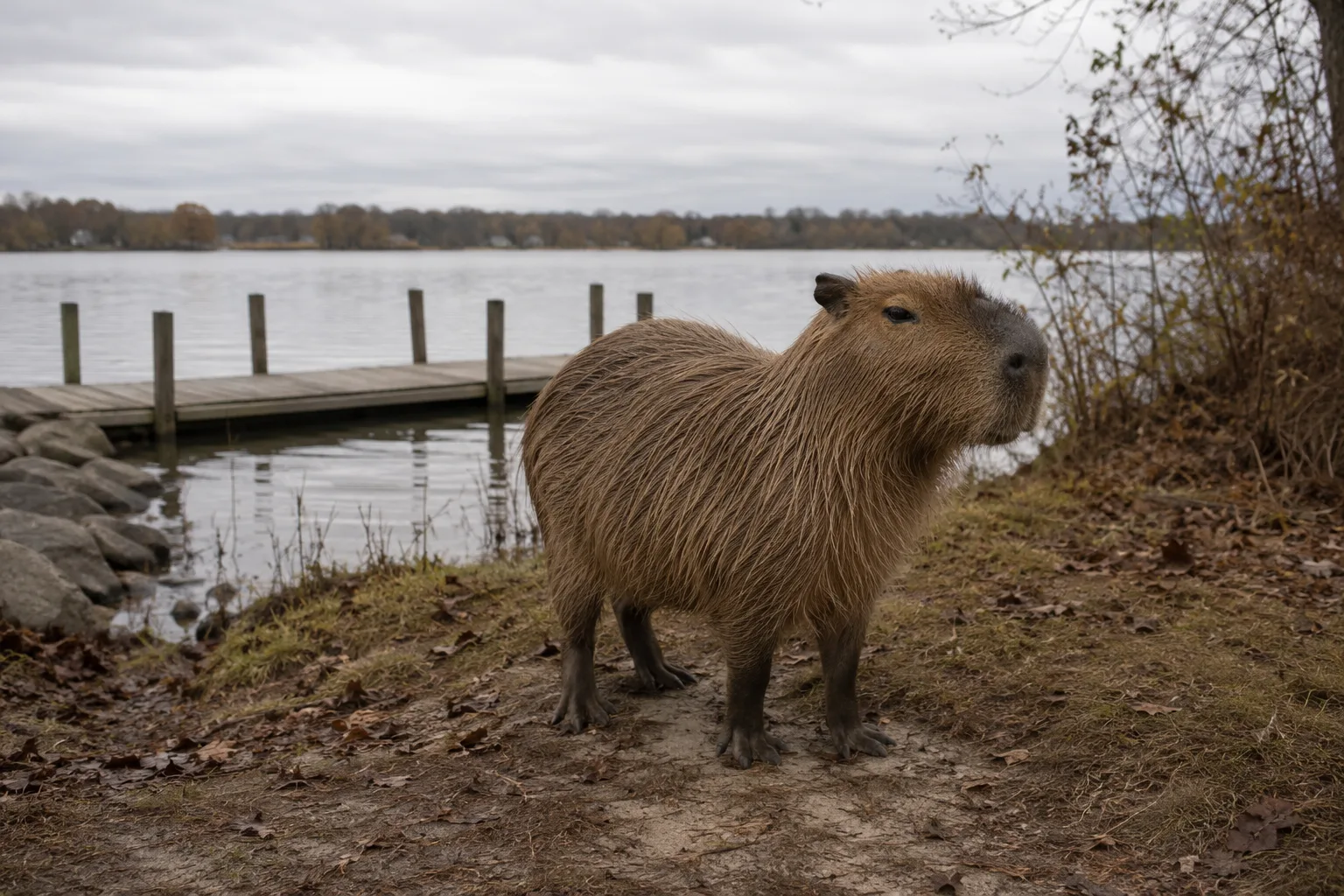
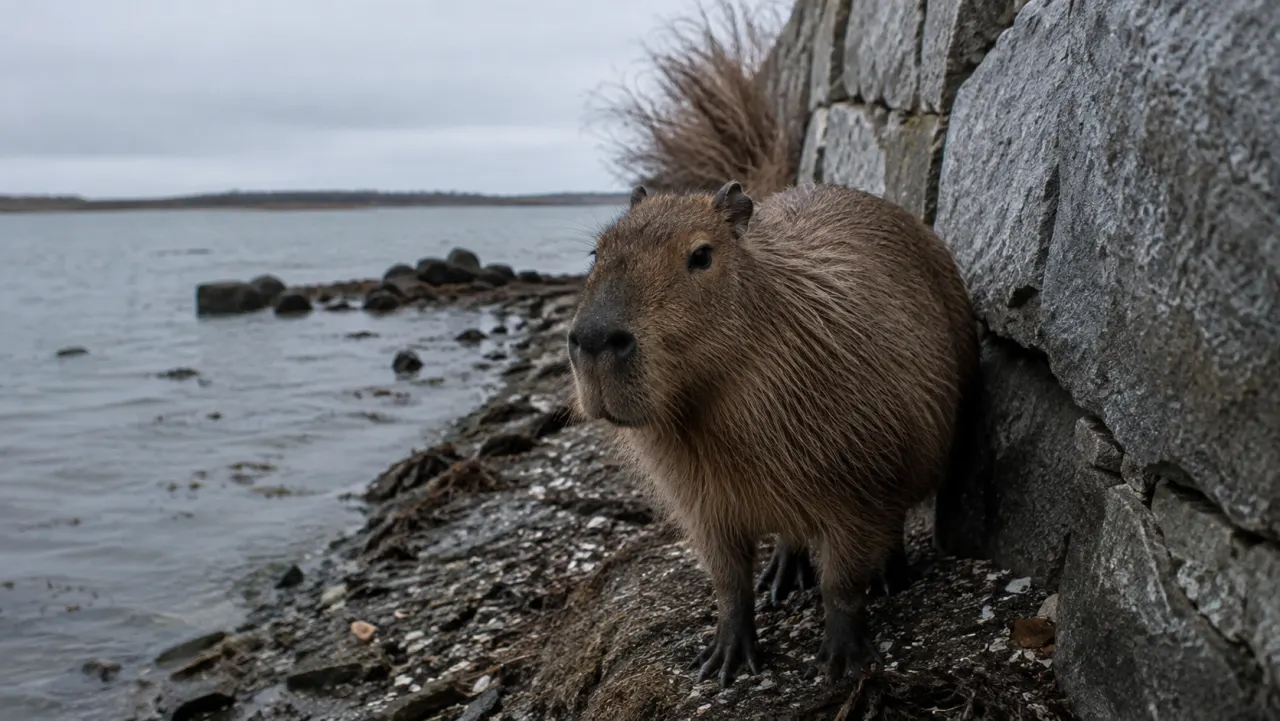
Short answer: a capybara in Rhode Island needs a state possession permit, and that is a definite answer rather than a hedge. Rhode Island regulates exotic animals under 250-RICR-40-05-3, the DEM rules on importation and possession of wild animals. The regulation carries an exempt list at Appendix A, and anything not on it requires a permit.
The capybara is not on the exempt list.
That makes Rhode Island unusual among the states we have covered. Most run a banned list, where silence means allowed. Rhode Island runs the inverse, and silence means permit.
Permit required — the capybara is not on the exempt list
Rhode Island regulates exotic animals under 250-RICR-40-05-3, which carries an exempt list at Appendix A. Anything not on that list requires a DEM possession permit, and the capybara is not on it. Notably, the paca is.
Can You Own a Capybara in Rhode Island Without Getting Burned?
The safest answer is conditional. A capybara plan in Rhode Island needs written confirmation from Rhode Island Department of Environmental Management or the relevant state office, plus a separate import or animal-health answer from Rhode Island animal-health and import officials. If the animal crosses state lines, transport can trigger paperwork even when possession is not clearly prohibited.
The question people type into Google is simple, and Rhode Island is one of the few states where it has a clean answer: permit required. What people get wrong is the direction of the rule. Capybaras are large, social, semi-aquatic rodents, and in a positive-list state the question is never “is it banned” but “is it exempt.”
The most useful framing is this: Rhode Island capybara legality is not a single permission slip. It is a stack of permissions, each one tied to a different risk. State wildlife rules answer one question. Animal-health import rules answer another. Your town, zoning district, landlord, HOA, and nearest exotic veterinarian may decide whether the plan can function at your address. If any layer says no, the internet’s favorite rodent does not get a vote.
| Legal layer | What it decides in Rhode Island | Status for a capybara |
|---|---|---|
| 250-RICR-40-05-3, Appendix A exempt list | Whether the species can be kept without a DEM permit | Not exempt. A possession permit is required |
| DEM possession permit review | Whether your property, fencing and vet arrangements pass | Applies, and is the main hurdle |
| Certificate of veterinary inspection | Whether the animal can lawfully enter the state | Applies, from a federally accredited vet in the origin state |
| Municipal code | Whether the animal is allowed at your address | Applies, and in a state this dense it is rarely generous |
| Zoning, covenants, insurer | Whether the enclosure, pool and fencing fit the lot | Applies, and lot sizes here are small |
| USDA APHIS | Whether exhibition, paid interaction or breeding needs a federal licence | Applies to any public-facing or commercial use |
Rhode Island Runs a Positive List, and the Capybara Is Not on It
This is the single most important thing to understand about Rhode Island, and it is the opposite of how most state exotic-animal law works.
Iowa, Ohio and Mississippi all operate negative lists: the statute names dangerous species, and an animal that is not named falls outside the scheme. Rhode Island’s 250-RICR-40-05-3 does the reverse. It sets out a list of exempt animals at Appendix A, section 3.17, and states that species not listed, or explicitly identified as requiring a permit, are not exempt and require a valid possession permit from the Department of Environmental Management.
The exempt mammals are a short list:
| Exempt in Rhode Island | Notes |
|---|---|
| Four-toed (African pygmy) hedgehog | |
| Chinchilla | Captive stock only |
| Degu | |
| Egyptian spiny mouse | |
| House mouse | |
| Jerboas | |
| Norway rat | |
| Paca | A large South American rodent — a capybara relative |
| Hamsters | Captive bred, common pet-trade species |
| Sugar glider | A marsupial rather than a rodent |
| Ferret | Exempt here, but needs a separate ferret possession permit |
The capybara is not on that list. Neither is any other member of Hydrochoerus.
The paca entry is the one worth pausing on. Cuniculus paca is a South American rodent that can reach around 12 kilograms — nowhere near a capybara, but plainly in the same neighbourhood of the family tree and the same continent. Rhode Island exempted it and did not exempt the capybara. Whether that reflects a size judgment, an established pet-trade history, or simply the order in which someone wrote the list, the regulation does not say. The practical consequence is unambiguous: one needs no permit and the other does.
What the Permit Actually Requires
DEM issues permits for importation and possession of exotic or native wild animals that are free of disease and do not pose a threat to humans, livestock, other domesticated animals, or native wildlife. That last clause is the standard the application is judged against.
An application asks for:
- Property detail, including dimensions and fencing, so the department can assess containment.
- Proof of specialised veterinary care for the species — not a general small-animal practice, but a vet who can actually treat a capybara.
- A certificate of veterinary inspection issued by a federally accredited veterinarian licensed in the animal’s state of origin.
Those requirements are the reason the honest version of this guide is not “yes, get a permit.” The vet requirement in particular is a screening question about whether you should own the animal at all, and in a state the size of Rhode Island the number of practices that qualify is small.
The Rhode Island State Check Starts With the Scientific Name
Start with Rhode Island Department of Environmental Management. Ask about private possession of Hydrochoerus hydrochaeris, not just “a capybara.” Scientific names keep the conversation precise. Then ask whether any permit, license, registration, inspection, or import clearance applies to a privately kept animal at a residential address.
For importation, ask Rhode Island animal-health and import officials. Many private buyers would be bringing a capybara from another state. That can require a certificate of veterinary inspection, import permission, or species-specific health paperwork. A seller saying “we ship to Rhode Island” is not the same as a state official saying the shipment is lawful.

This guide is current as of September 5, 2026. Laws, agency interpretations, and local ordinances can change, so treat it as a screening path, not legal advice.
Why a Small State Makes Local Rules Feel Bigger
A DEM permit does not put a capybara in your yard either. Rhode Island municipal codes restrict exotic animals, outdoor enclosures, standing water features, setbacks and fencing on their own terms, and the state’s lot sizes make the space question sharper here than almost anywhere else.
Rhode Island’s small-state trap is density. A capybara enclosure that looks “private” on a listing can still put water drainage, smells, noise, fencing, and escape risk near another person’s fence line. If you are in Providence, Warwick, Cranston, Pawtucket, Newport, or a beach-town neighborhood with tight lots, local code may matter more than the state-level answer.
Ask for an address-specific answer. “Rural-ish” is not a legal category, and “my neighbor has goats” does not prove anything about a semi-aquatic exotic rodent.
My honest read: if the local office cannot answer quickly, that is not permission. It is homework.
The Paper Trail Before Any Money Changes Hands
Make the calls before you send a deposit. Keep written replies.
| Who to contact | What to ask | What changes the answer |
|---|---|---|
| Rhode Island Department of Environmental Management | Is private possession of Hydrochoerus hydrochaeris allowed, and is a permit required? | Personal pet, breeding, exhibition, sale, or rescue use |
| Rhode Island animal-health and import officials | What paperwork is required to import a capybara into Rhode Island? | Origin state, health certificate, age, transporter, disease rules |
| City or county animal control | Are capybaras or large exotic rodents allowed at this address? | Incorporated area, zoning district, nuisance code |
| Zoning or planning office | Can the enclosure, fencing, pool, and animal use exist on this parcel? | Lot size, setbacks, water feature rules, HOA covenants |
| Exotic veterinarian | Do you treat capybaras and handle emergencies? | Distance, experience, after-hours availability |
| USDA APHIS | Does public exhibition, paid interaction, or breeding require a federal license? | Any commercial or public-facing use |
Save the replies as PDFs or screenshots with dates and names. If an official will only answer by phone, send a polite follow-up email summarizing what you heard and ask them to correct it if you misunderstood. That little paper habit is boring. It is also the difference between “I thought it was fine” and “Here is the answer I received before purchase.”
Five Dollars an Animal, and the Costs That Follow It
Rhode Island sets its permit fee inside the regulation itself, which is unusually direct.
The gap between those first and last numbers is the whole point. A five dollar permit and a three hundred dollar penalty per offence tells you the state is not trying to raise revenue here. It is trying to know where the animals are.
Rhode Island runs a positive list. The money is trivial; whether the department will issue at all for a species that is not on the exempt list is the question, and that is decided on the application and the facility, not the cheque.
For the costs the permit does not touch, the capybara cost guide covers enclosure, water, feed and veterinary access. It does not quote a purchase price, because the private exotic market does not publish one that survives checking.
The Welfare Reality That Should Kill the Impulse Buy
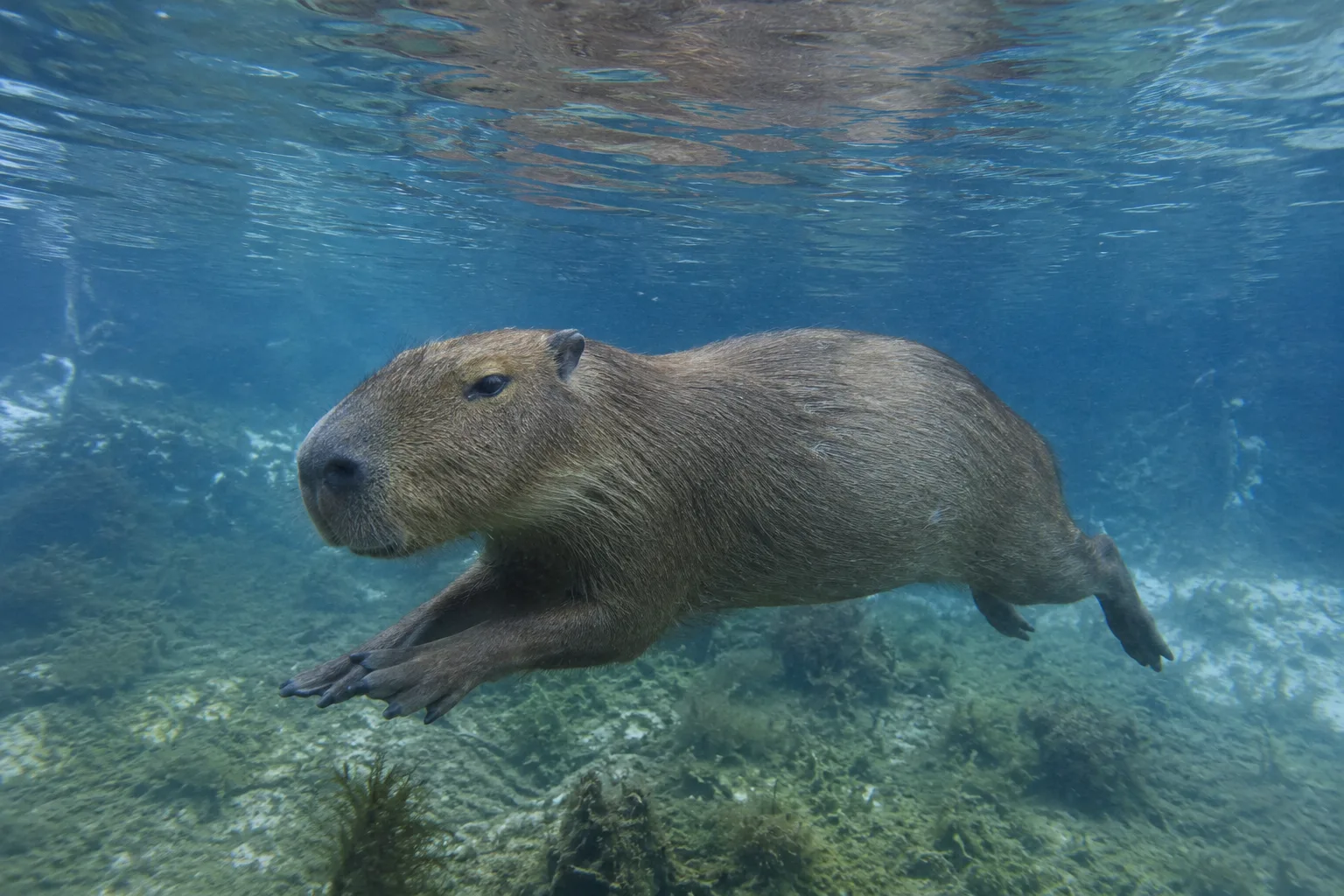
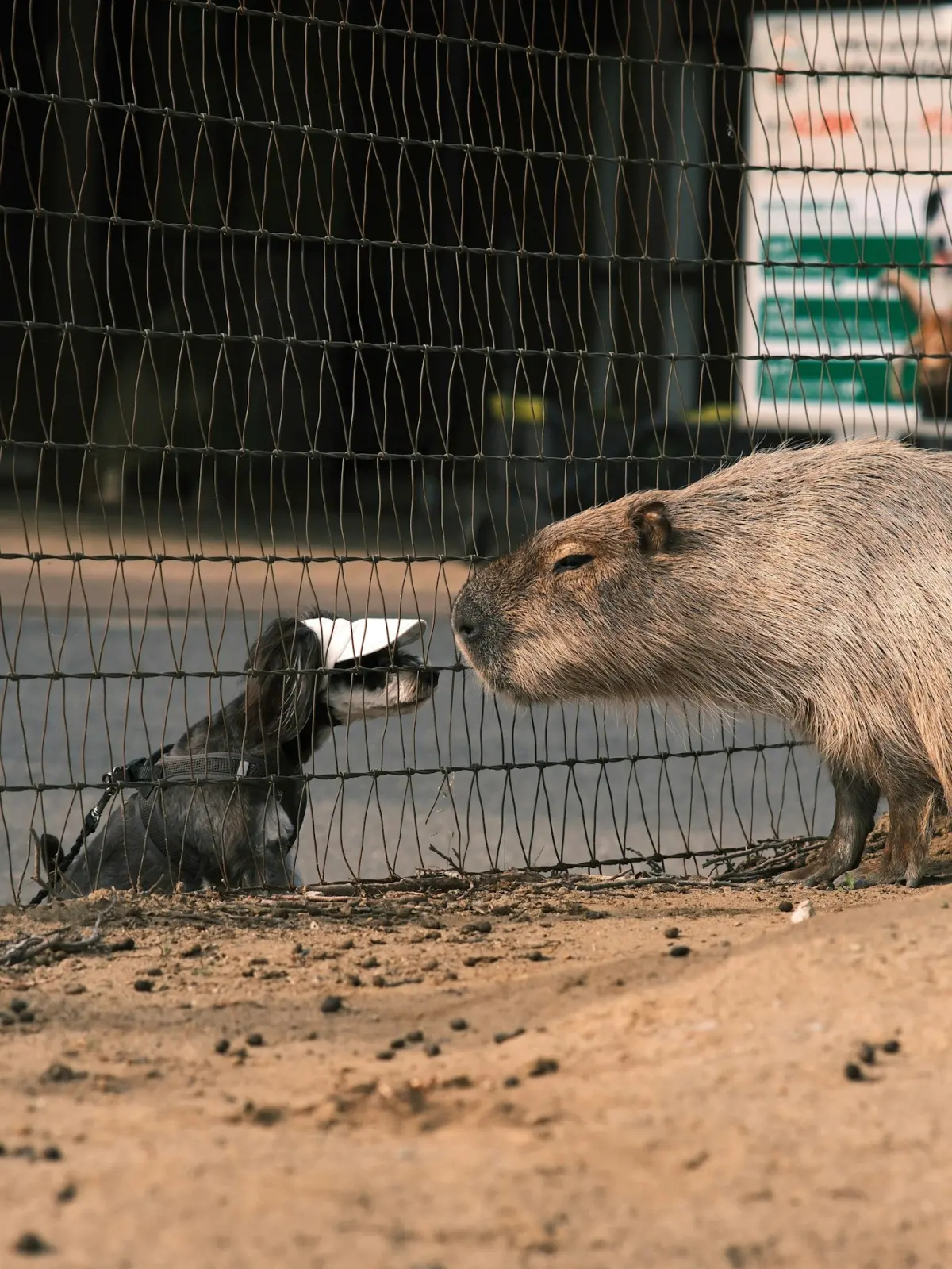
The AZA Capybara Care Manual describes an animal built around water, grazing, group life, and secure space. Animal Diversity Web describes capybaras as social mammals. A single capybara in a backyard pen is not a quirky pet plan. It is a welfare problem wearing an internet-famous face.
Capybaras need a real pool or pond, not a plastic tub. They need at least one compatible capybara companion. They need fencing that anticipates panic, strength, digging, and weather. They need hay, forage, veterinary care, and a plan for heat, cold, mud, parasites, and waste. In Rhode Island, winter planning is not optional either. A South American wetland rodent still needs safe shelter when the yard turns cold and slick.
| What Rhode Island buyers believe | What is actually true |
|---|---|
| ”It’s not on a banned list, so it’s legal” | Rhode Island has no banned list. It has an exempt list, and not being on it means a permit is required. |
| ”The paca is exempt, so capybaras must be too” | The paca is named at Appendix A. The capybara is not. Related species, opposite outcome. |
| ”I’ll apply and sort the vet out later” | Proof of specialised veterinary care is part of the application, not a follow-up. |
| ”A big yard is enough” | DEM asks for property dimensions and fencing detail specifically because a yard is not a containment plan. |
| ”One capybara is easier” | One capybara is usually a welfare failure. They are herd animals. |
What To Do Next if You Are Still Serious
If you are asking whether capybaras are legal in Rhode Island, start with written confirmation. Use the scientific name. Ask state, import, city, county, zoning, HOA, vet, and USDA questions before paying anyone.
Then read the capybara cost guide, the care guide, and the legal states map. If the plan still seems reasonable after the paper trail and the pool math, you are at least asking the adult version of the question.
A capybara does not need your optimism. It needs water, another capybara, a vet, and a paper trail that survives a bored official with a clipboard.