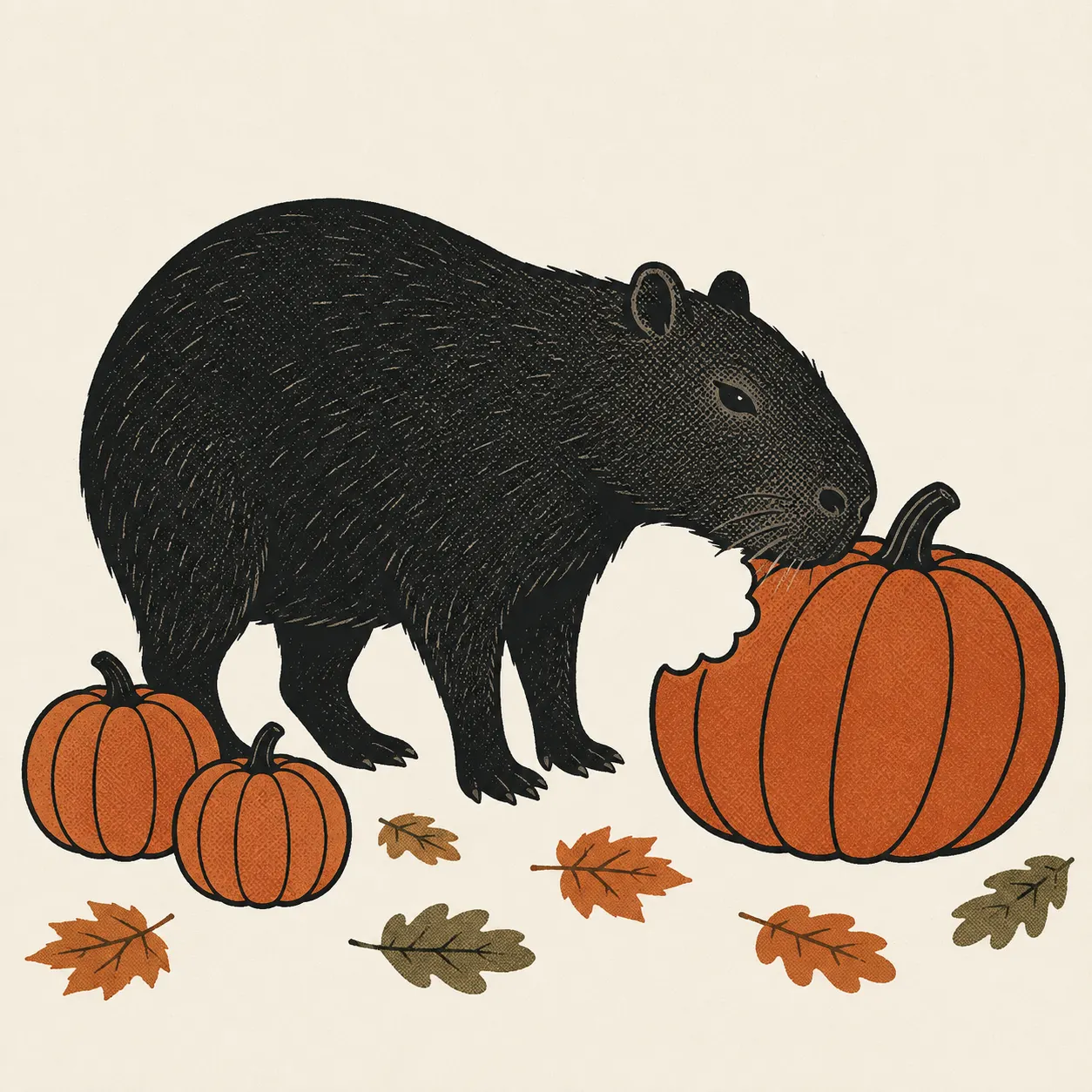
Every October, the same clip makes the rounds: a capybara, deeply unbothered, demolishing a pumpkin while a small crowd films it on their phones. It looks like seasonal filler. It is actually husbandry.
Zoos give capybaras pumpkins because of enrichment, a standard animal-care practice: the pumpkin is a safe, novel, gnawable object that prompts natural foraging and gives those ever-growing rodent teeth something useful to do. The cuteness is a side effect. The point is behavioral welfare.
What Pumpkin Enrichment Actually Is
Enrichment is the part of modern zoo care that keeps animals busy and curious instead of bored. The Smithsonian’s National Zoo lists food enrichment as one of its core categories, built to make animals forage and work for meals the way their wild relatives do.
Pumpkins are a seasonal version of that. Around Halloween, accredited zoos run pumpkin events: the Smithsonian folds them into its Boo at the Zoo celebration, and Brookfield Zoo hands them out across species. The split is funny in person. Rodents gnaw and eat the shells, big cats bat them around like a ball, and elephants just step on them.
The framing matters. Accredited zoos treat this as behavioral husbandry, not decoration. Enrichment sits alongside diet and veterinary care as part of basic welfare, which is why a pumpkin shows up on a written care plan rather than on a whim, and why the keeper handing one over is doing a job, not a bit.
Why A Pumpkin Is Perfect For A Giant Rodent
For a capybara specifically, a pumpkin lands on three needs at once.
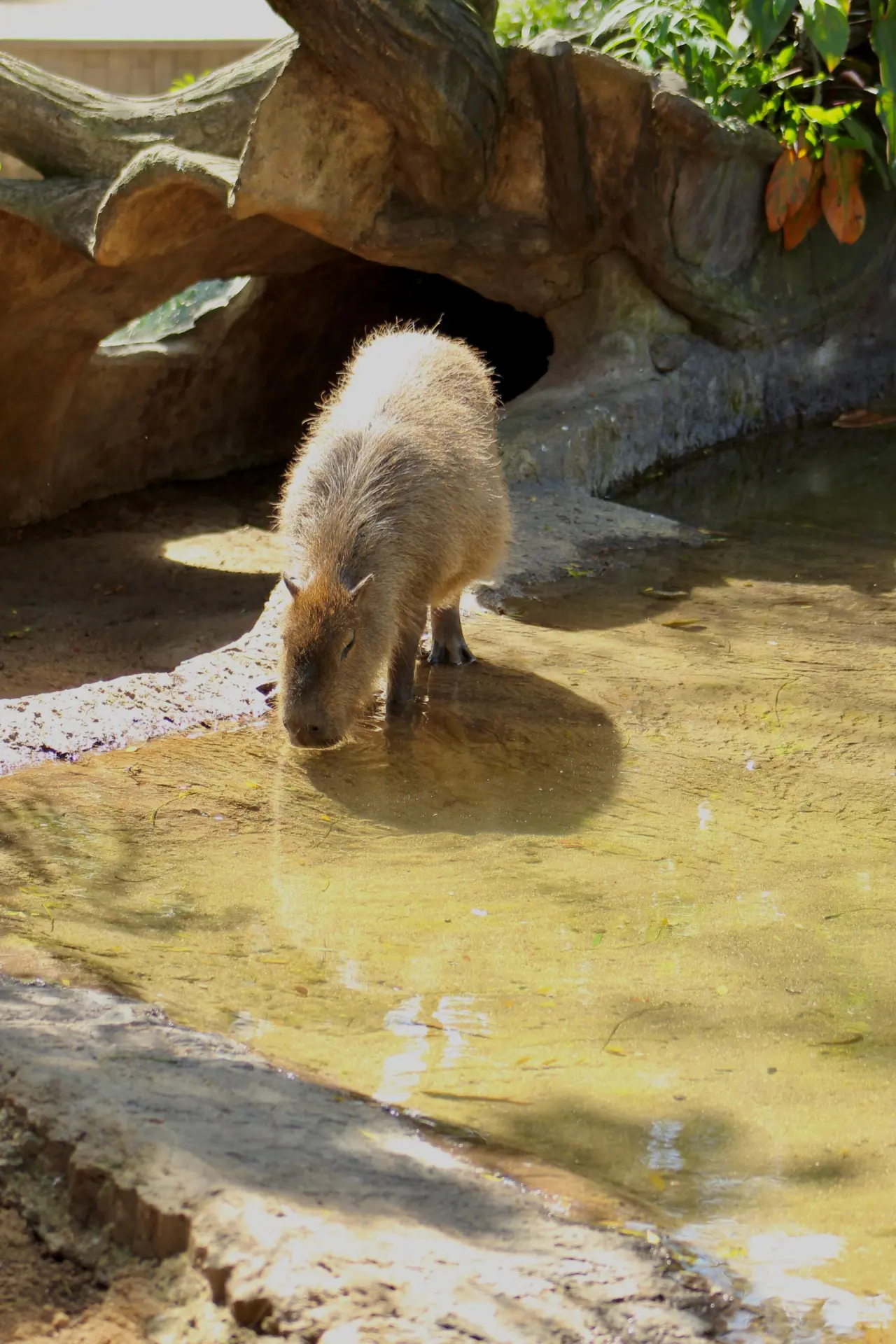
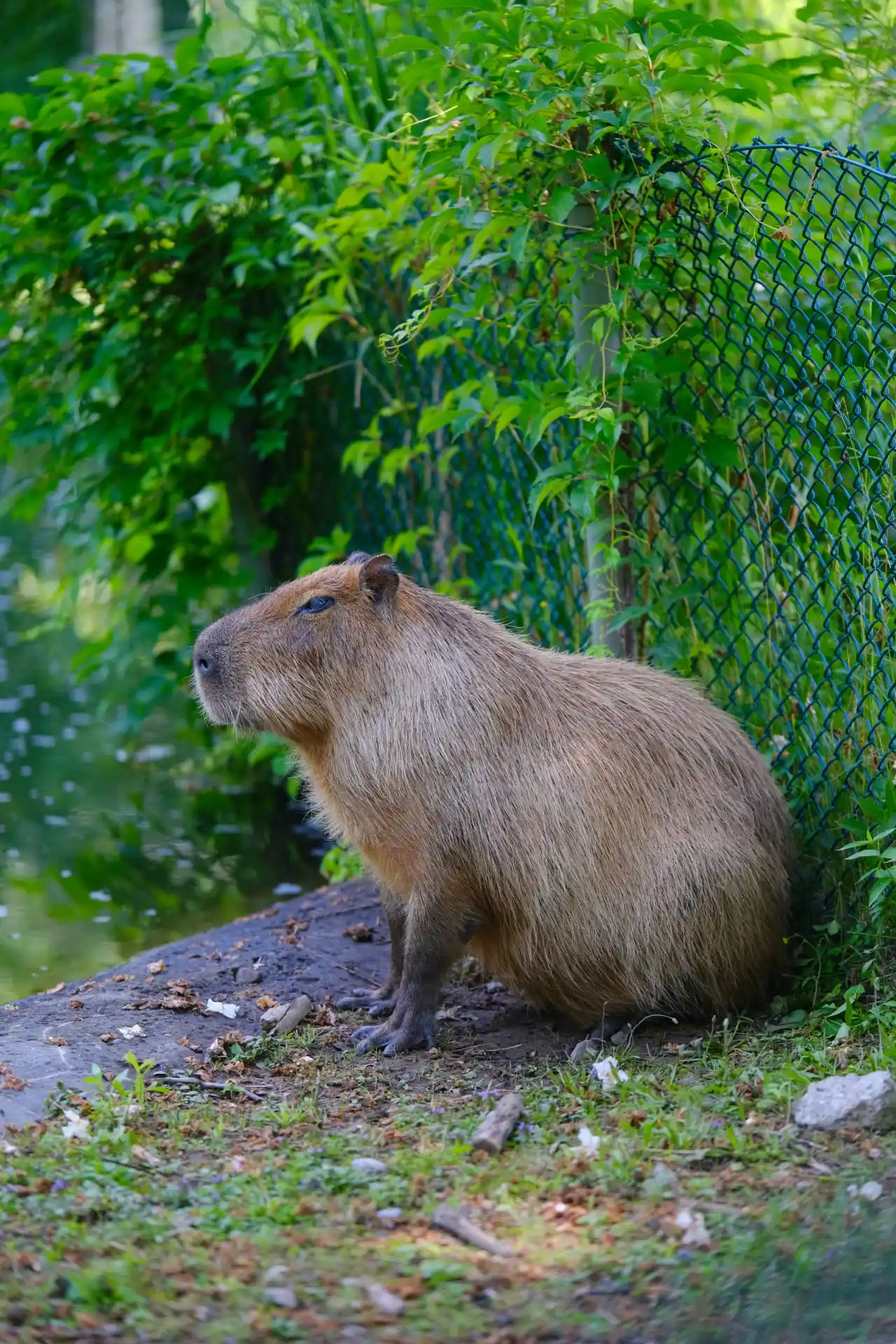
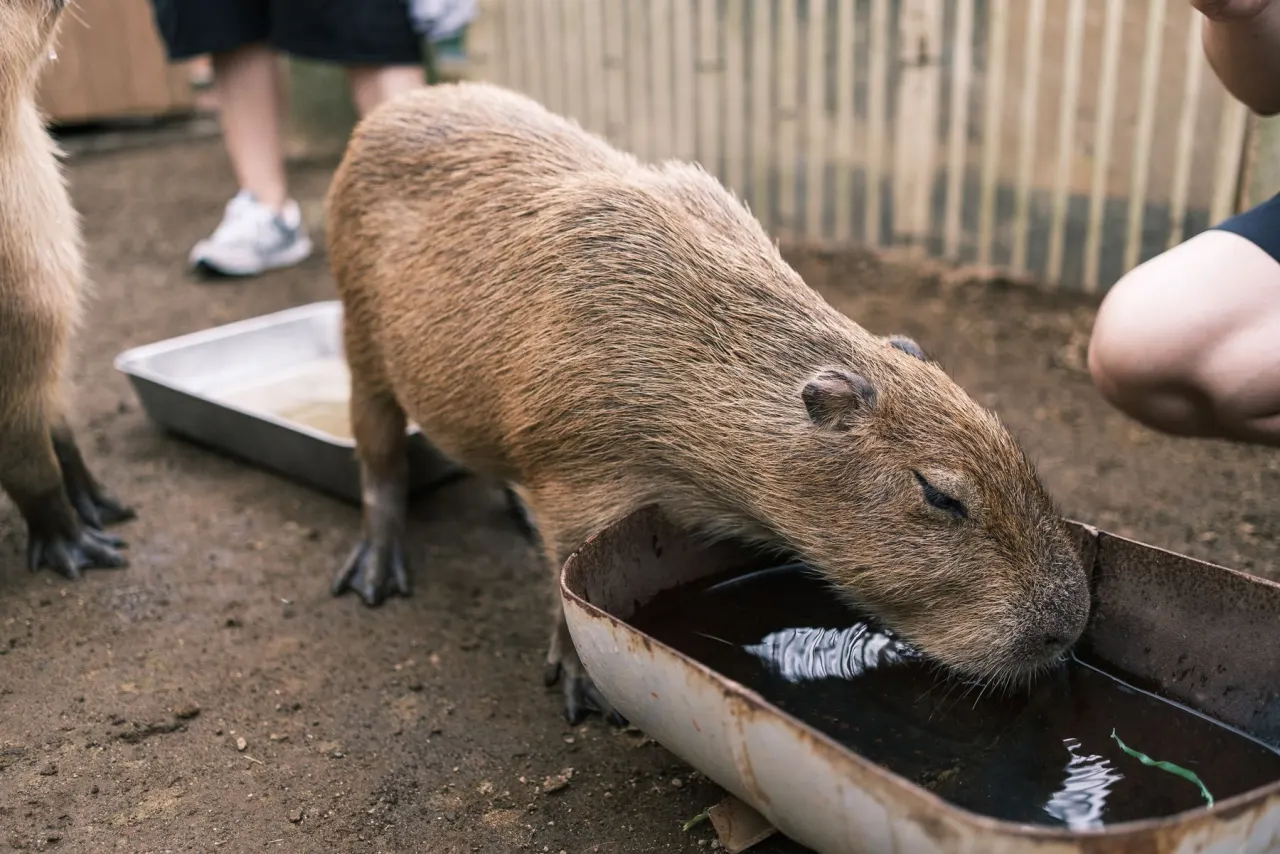
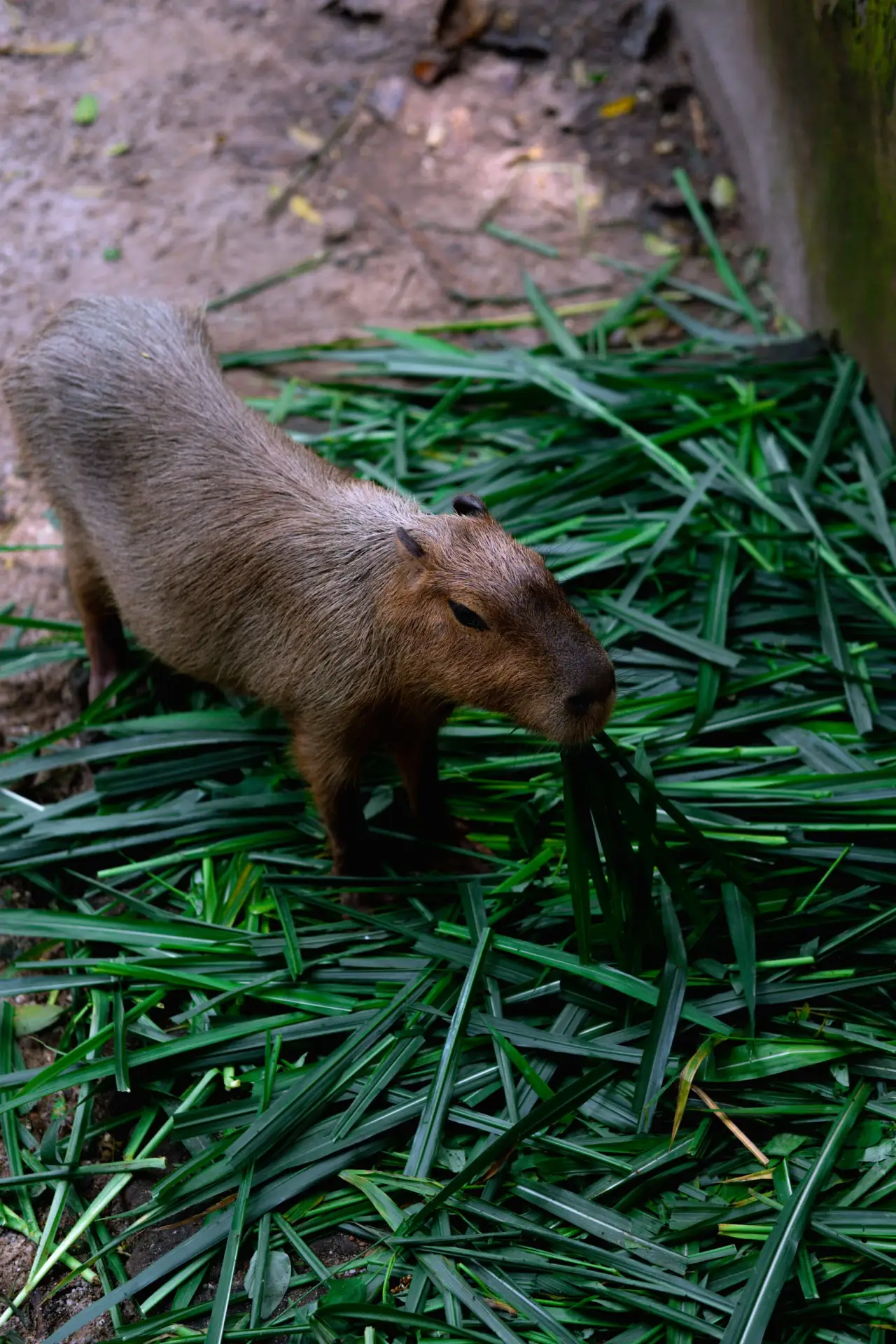
Capybaras are the world’s largest rodent, and like every rodent they have, in San Diego Zoo’s words, ever-growing front teeth. Those incisors never stop, so something hard to gnaw isn’t a treat, it’s dental maintenance. A firm pumpkin shell is exactly the kind of resistance those teeth are built to wear down. Then there’s novelty: a strange new object in a familiar enclosure pulls out investigating, sniffing, and foraging, which is the whole behavior the enrichment is designed to trigger.
Watch one work a pumpkin and the appeal is obvious. A capybara doesn’t pounce on it. It investigates the thing, gnaws a corner, rotates it, and settles in to grind through the shell with the patience of an animal that has nowhere else to be. That slow, absorbed focus is the entire point. A bored capybara is a welfare problem; a capybara methodically dismantling a gourd is a care plan working exactly as written.
| What the pumpkin does | The biology behind it |
|---|---|
| Gives the teeth something to grind | Rodent incisors grow continuously and need wear |
| Hides flesh and seeds inside a shell | Prompts natural foraging and problem-solving |
| Shows up only once a year | Novelty drives investigation in a curious animal |
| Smells and tastes unlike grass | Sensory variety breaks the daily diet routine |
| Is big enough to shove around | Encourages active handling, not passive eating |
Can Capybaras Actually Eat Pumpkin?
Yes, in moderation. Pumpkin flesh and seeds are safe for a capybara as an occasional treat, not a diet staple. San Diego Zoo even notes that in the dry season wild capybaras will eat squashes and melons alongside their usual plants, so the pumpkin isn’t some alien food.
The everyday diet is much less photogenic. It’s roughly 6 to 8 pounds of grass a day, plus aquatic plants and hay, which is what capybaras actually eat when no one is filming. A pumpkin interrupts that maybe once a season, closer to dessert than dinner. Too much sugary squash would upset a gut tuned for high-fiber grass, which is exactly why the pumpkin is an event and not a meal plan.
Where To See It (And What To Do With Your Leftovers)
If you want to watch it live, aim for an accredited zoo with capybaras in late October. Plenty of US spots qualify, and we’ve mapped where to see capybaras in the US if you need a starting point.
The genre is bigger than capybaras. The Nature Conservancy points out that pumpkins go to tortoises, bears, big cats, and rodents across the country each fall, all under the same enrichment logic.
There’s also the post-Halloween move. Many zoos accept donated uncarved, unpainted, mold-free pumpkins for animal food and enrichment. Oakland Zoo, for one, repurposes leftover Halloween pumpkins for its animals. Check your local zoo’s policy first, because carved, painted, or candle-scorched pumpkins usually get turned away on safety grounds.
We’ll round up the best capybara pumpkin feasts of 2026 in November. For now the point is simpler: that viral gnawing video is a welfare program for the world’s largest rodent, briefly wearing a costume.