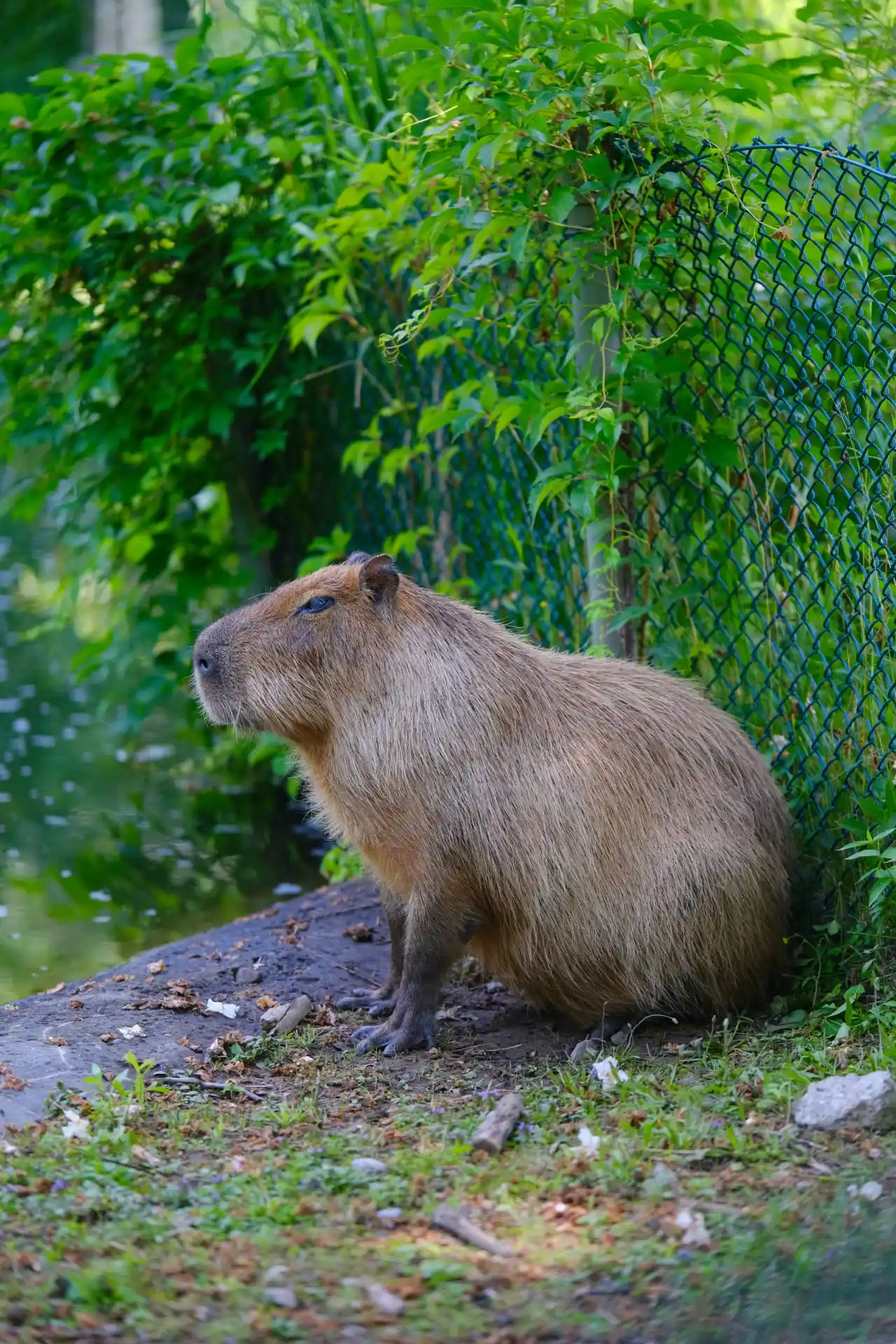
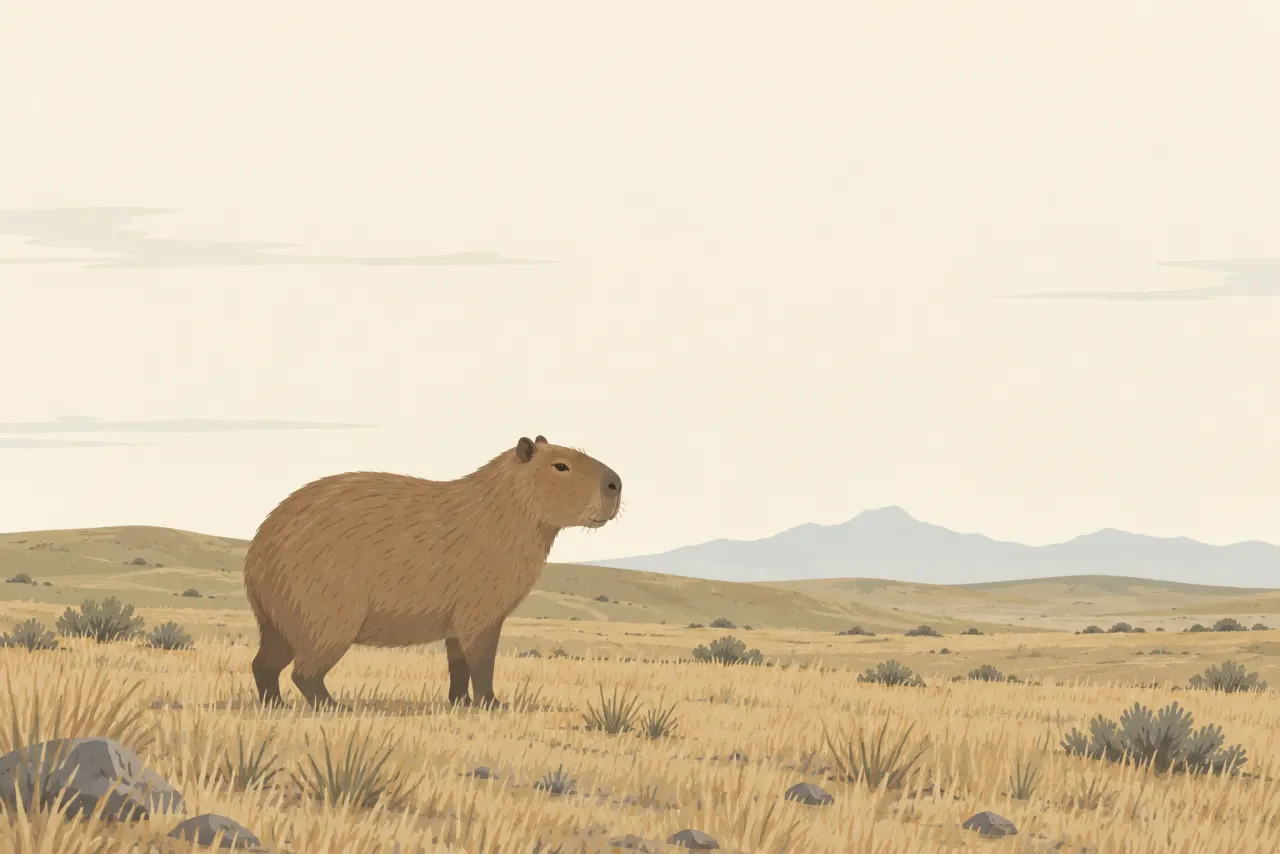
Alberta is the province where the provincial layer stops being the obstacle. In most of Canada the research goes: check the province, find silence, discover the city has a hard rule. In Ontario the province is silent and the cities are hard. Alberta runs it the other way. The province keeps a long, specific, maintained list of controlled animals, and the capybara is not on it, in a way that looks deliberate once you read the two lines around where it would sit.
Not a controlled animal provincially. Edmonton licences it, Calgary says nothing.
Schedule 5 item 26 lists two cavies, both Dolichotis. Item 27 lists the nutria. Neither reaches Hydrochoerus hydrochaeris.
Edmonton treats anything over 10 kg as a Large Animal requiring a licence. Calgary has no exotic-animal scheme at all. Neither of those is a yes, and only one of them is a process.
The Short Answer for Alberta
Provincially, you do not need a controlled-animal permit for a capybara, because the species is not controlled.
Municipally, it depends entirely on which Alberta city you are in, and the two largest ones are not merely different in degree. They are structurally different. Edmonton has a mechanism that could in principle say yes. Calgary has no mechanism at all, which is a worse position than it sounds.
What Alberta’s Schedule 5 Actually Says
The instrument is the Wildlife Regulation, AR 143/97, and Schedule 5 is its list of controlled animals. It is long, it is organised by family, and it is more carefully drafted than most provincial schedules in Canada.
Item 26 reads:
“26. CAVIES (Family Caviidae) — Patagonian ‘Hare’ Dolichotis patagonum; Mara Dolichotis salinicola”
That is the entire entry. Two species, both in the genus Dolichotis, both long-legged and mid-sized, both from Argentina.
Modern taxonomy places the capybara inside Caviidae, in the subfamily Hydrochoerinae. If Alberta had written “CAVIES (Family Caviidae)” and stopped, the capybara would arguably be captured. It did not stop. It named two species underneath the family heading, and the schedule’s own convention is that the scientific names in the right-hand column govern where common and scientific names conflict.
A family name at the top of an entry followed by an enumerated species list is a narrowing device, not an expanding one. "CAVIES (Family Caviidae)" plus two named Dolichotis species is a much smaller category than "all Caviidae" would have been.
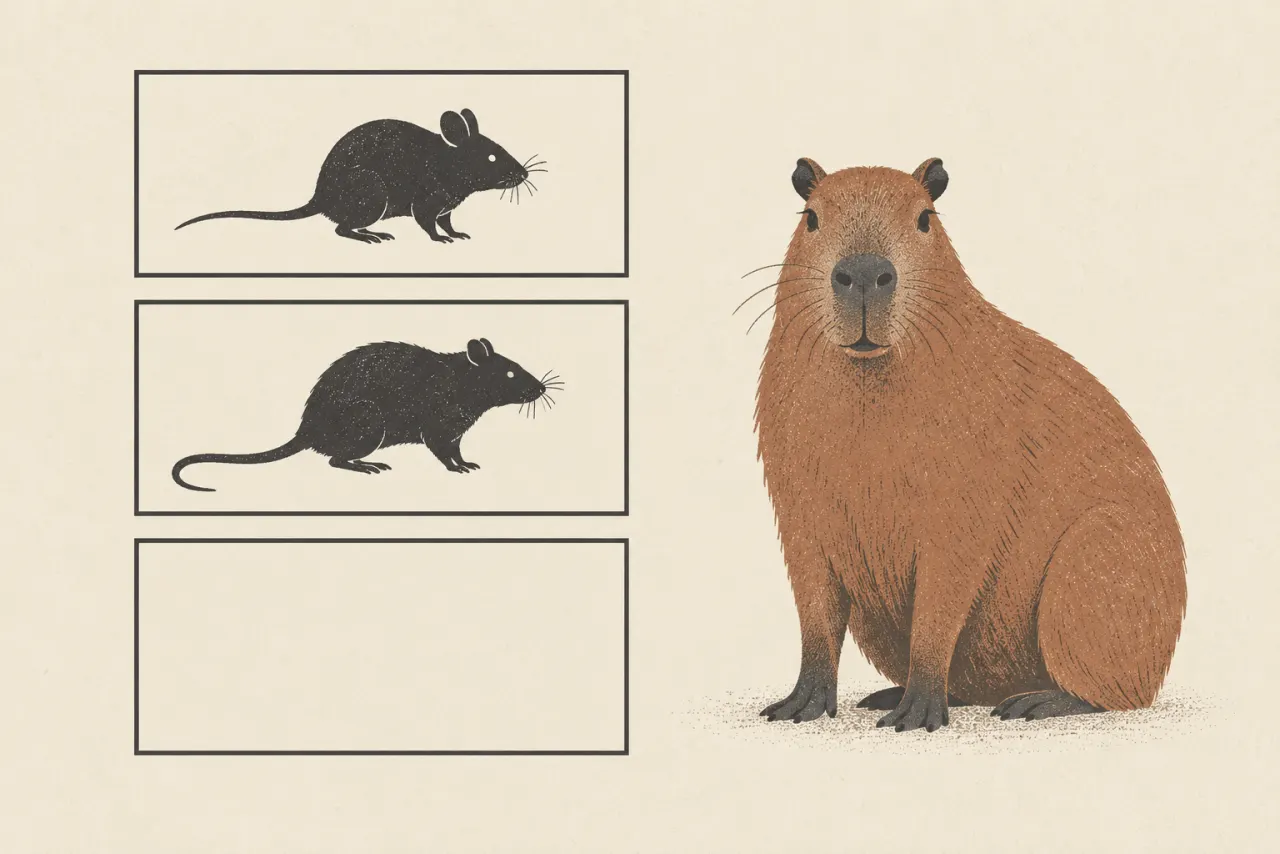
Searching the full regulation for Hydrochoerus returns nothing. Searching it for “capybara” returns nothing. The animal is simply not in the document.
The Nutria Sitting One Line Below
This is the detail that makes Alberta’s schedule interesting rather than merely permissive. Item 27, the very next entry, reads:
“27. ALL NUTRIA AND COYPU (Family Capromyidae) — Nutria Myocastor coypus”
So Alberta named one large semi-aquatic South American rodent as a controlled animal and did not name the other one, and it did so in adjacent items on the same page.
That is not an oversight of the sort where nobody thought about big rodents. Somebody was thinking about big rodents for at least two consecutive entries. Nutria and capybaras are confused for each other constantly, including in news coverage and by people selling them, and Alberta’s drafters told them apart.
The likely reason is what the schedule is actually for. Nutria is one of the most destructive invasive wetland rodents on the planet, established across three continents, and it survives cold. A capybara cannot overwinter unassisted anywhere in Alberta. As an escape-and-establish risk it does not register, and the schedule is largely a risk instrument.
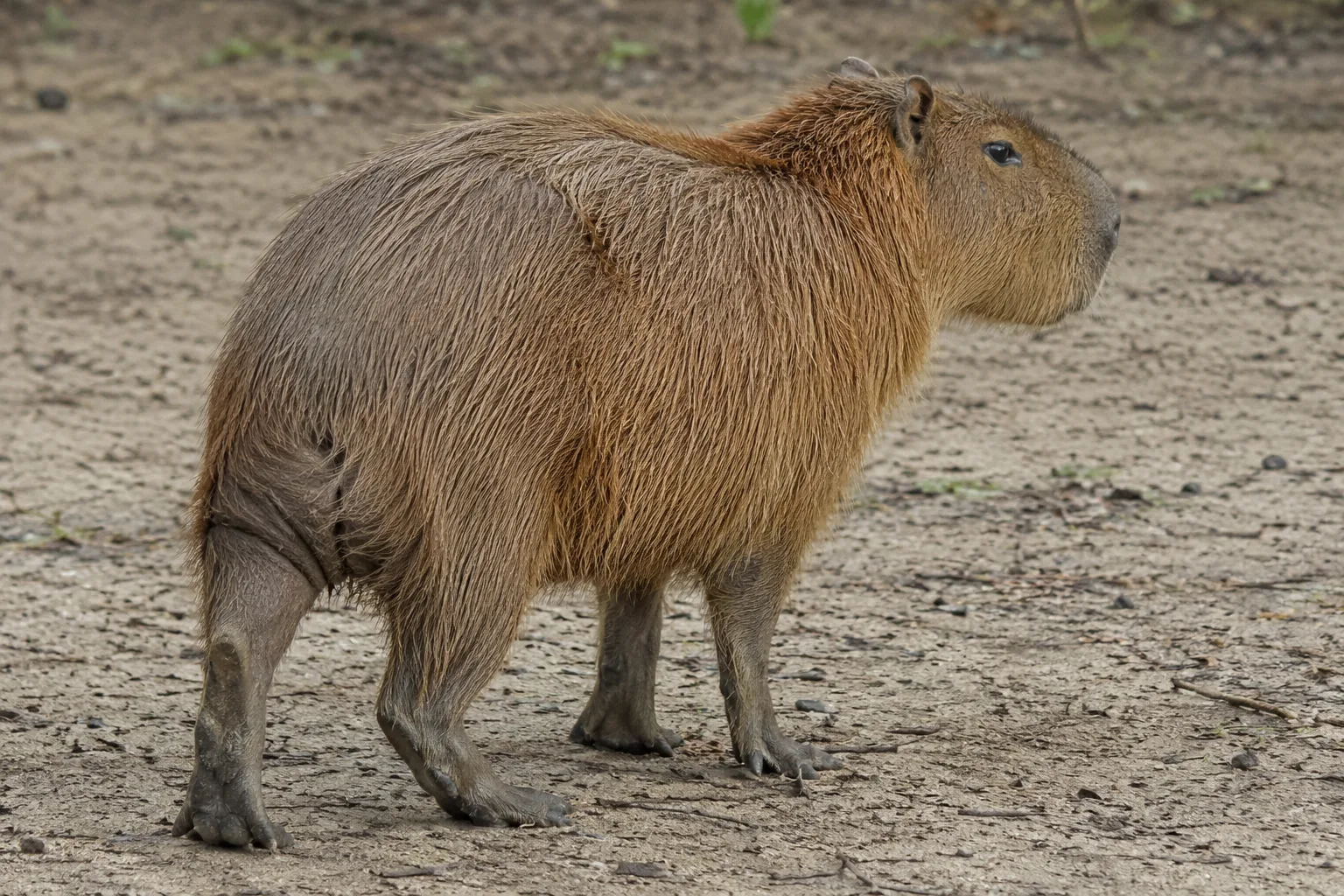
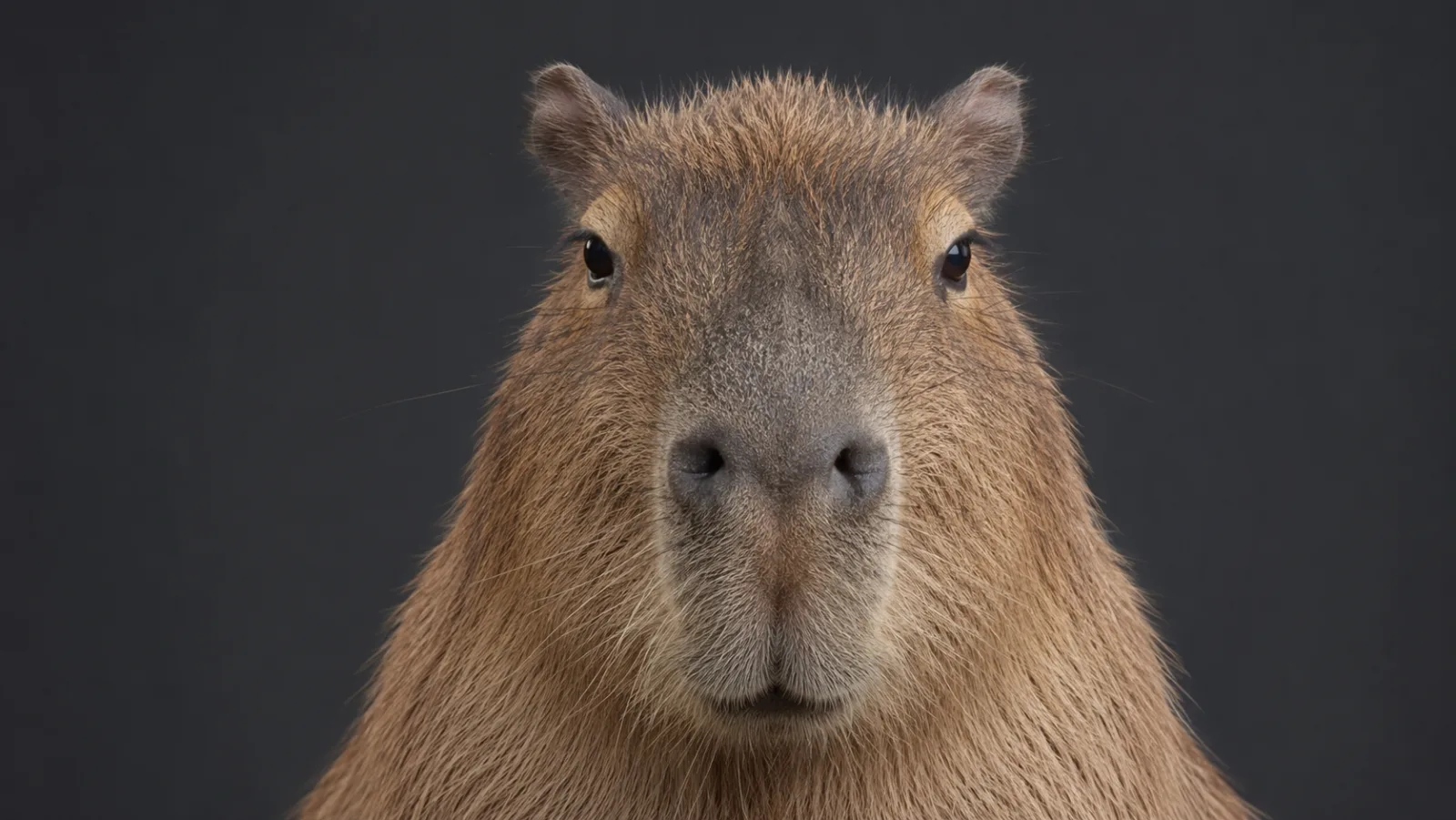
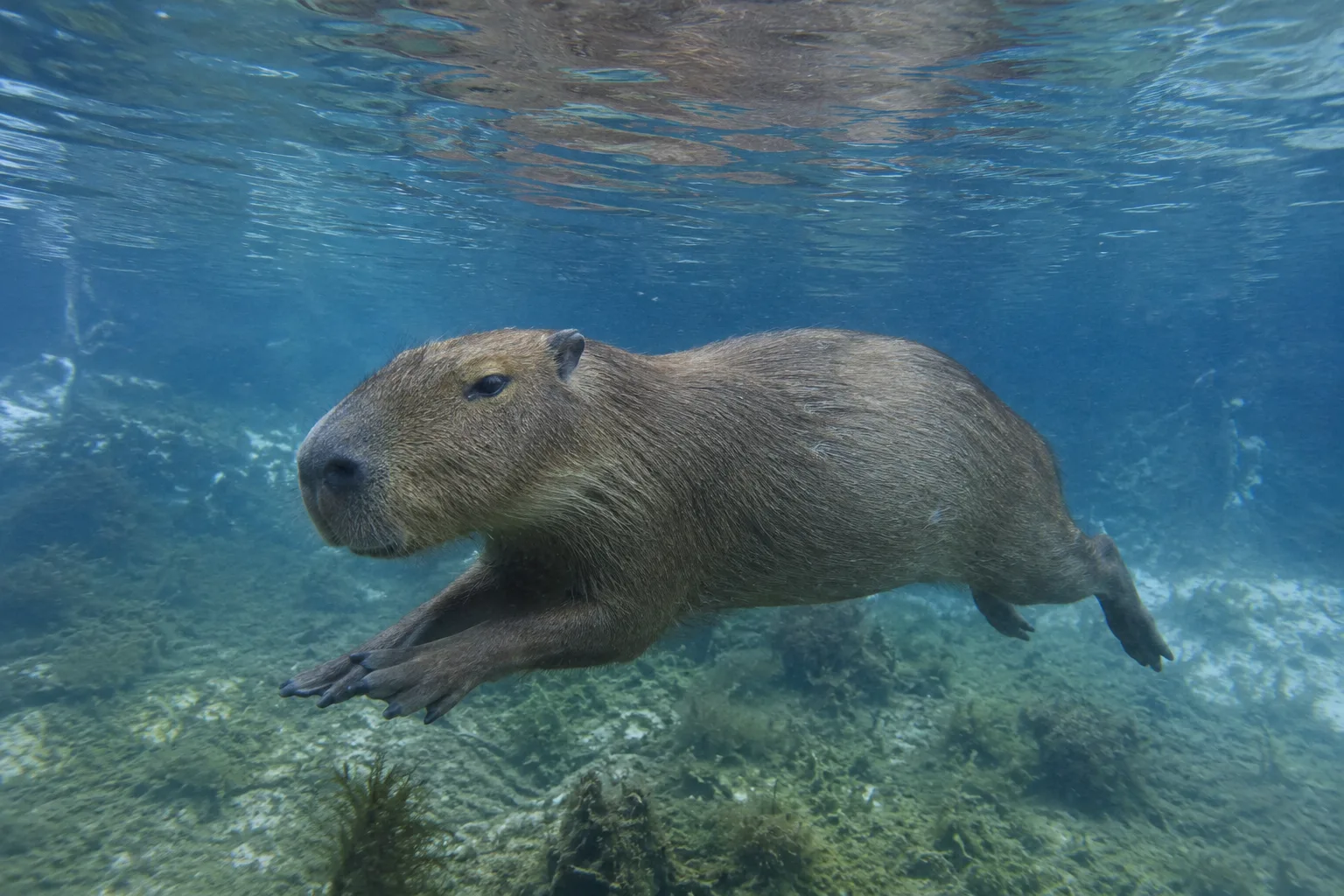
Can you pick the capybara out of a lineup?
Seven photo lineups: capybara, wombat, beaver, nutria, guinea pig. Alberta's Schedule 5 got it right. Most people do not.
Edmonton Turns It Into a Licence Question
Edmonton does not have a prohibited-species list in the way Toronto or Ottawa do. It has a weight threshold, and it is remarkably low.
Bylaw 13145, section 2(f):
“‘Large Animal’ means any animal other than a human being, Dog, Nuisance Dog, Restricted Dog, or Cat which in the adult form regularly weighs more than 10 kg.”
Section 27(1) then provides:
“No person shall keep or have any of the following on any premises with a municipal address in the City: (a) a Large Animal or the young thereof; (b) poultry; (c) bees; or (d) poisonous snakes, reptiles or insects. unless that person has a Licence issued by the City Manager to do so.”
First, this is a licence, not a ban. The City Manager may issue one, may attach conditions covering location, number, husbandry training and “any other matter the City Manager determines is in the public interest,” and may refuse or revoke. That is genuine discretion, exercised case by case. Compared with Toronto’s flat prohibition it is an open door, but it is a door somebody has to decide to open for you, and nothing obliges them to.
Second, “or the young thereof” closes the juvenile argument in advance. A capybara pup is well under 10 kg. It is still the young of a Large Animal, and the bylaw says so explicitly. Hamilton achieved the same result in Ontario with a species-level maturity test; Edmonton got there with four words.
Third, agricultural zoning changes the answer. Section 27(6) provides that the section, other than the poisonous snakes, reptiles or insects paragraph, “does not apply in the case of a premises with a municipal address in the City on land zoned AG, AGU, or AGI.” Within Edmonton’s boundaries there is agricultural land, and on it the Large Animal licensing requirement falls away.
Note how much lower Edmonton’s line sits than Ontario’s. A 10 kg threshold catches a mid-sized dog’s worth of animal. It was written to bring livestock and large exotics into a licensing regime, not to exclude them outright, and the capybara lands squarely inside it.
The Two Cities, Side by Side
| City | Instrument | Mechanism | Capybara outcome |
|---|---|---|---|
| Edmonton | Bylaw 13145, s. 2(f) and s. 27 | ”Large Animal” — anything over 10 kg in adult form, including “the young thereof” | Licence from the City Manager, discretionary. Land zoned AG, AGU or AGI is exempt under s. 27(6) |
| Calgary | Responsible Pet Ownership Bylaw 47M2021 | No exotic or prohibited-species scheme exists in the by-law at all | Unaddressed, which is not the same as permitted |
Calgary Simply Does Not Address It
Calgary’s Responsible Pet Ownership Bylaw 47M2021 runs to 48 pages. Read end to end, it contains no exotic-animal scheme, no prohibited-species schedule, and no controlled-animal provision. Its subject matter is dogs, cats, urban livestock, hens, bees and pigeons.
For a prospective capybara owner that is the least useful possible answer, and it is easy to mistake for the most useful one.
What Calgary's silence does mean
- No municipal prohibited-species list catches the animal
- No municipal exotic licence exists to apply for
- The provincial controlled-animal question is still the main legal gate, and it is clear
What it does not mean
- That land use permits it at your address
- That nuisance and property-standards provisions do not apply
- That a landlord, condo board or covenant cannot say no
- That council cannot address it after you already have one
That last point is the real Calgary risk. An unregulated question is not a settled question; it is a question nobody has been forced to answer yet. Bylaws get written in response to incidents, and they do not reliably grandfather animals acquired before them.
The Part No Schedule Covers
Alberta is the coldest place in Canada where the law does not stop you. The AZA Capybara Care Manual describes capybaras as suitable for outdoor housing where lows reach about 4°C, and then only with heated shelter and bedding. Edmonton and Calgary both spend months well below that, with sustained deep-winter periods that have no equivalent anywhere in the species’ natural range.
What that means practically is that the enclosure is not a yard with a shelter in it. It is a heated indoor space with a heated water body, sized for an animal that swims and for the companion it must have, running through an Alberta winter. The legality question is the cheap part of this project.
There is also the veterinary problem. A capybara needs an exotics vet willing to take it, and the number of practices in Alberta equipped for a 50 kg rodent is small. Confirm one before purchase, not after.
The Order the Calls Should Go In
-
Alberta Fish and Wildlife, to confirm the schedule
Ask whether Hydrochoerus hydrochaeris appears on the current Schedule 5. This page reflects the schedule as read on the date above; schedules are amended.
-
Your municipality
In Edmonton, ask about a Large Animal licence under Bylaw 13145 s. 27 and confirm your parcel's zoning. In Calgary, ask whether any provision reaches the animal and get the answer in writing.
-
Land use and whoever controls your building
Zoning, covenants, condo declarations and landlords each operate independently of the bylaw.
-
The border, if the animal is coming from outside Canada
Import is federal and separate from ownership. See the Canada overview.
-
An exotics vet who will commit in advance
Before money changes hands. This is the step Alberta buyers skip most often.
The Paper Trail, and What Moves Each Answer
| Ask this | Ask them for | Why it matters | What changes the answer |
|---|---|---|---|
| Alberta Fish and Wildlife | Written confirmation that Hydrochoerus hydrochaeris is absent from the current Schedule 5 | The provincial gate, and the one this page reads as favourable | A schedule amendment, which is how nutria got listed |
| Edmonton — City Manager’s office | The Large Animal licence process under Bylaw 13145 s. 27, and your parcel’s zoning | The licence is discretionary; nothing obliges anyone to grant it | Zoning to AG, AGU or AGI removes the requirement under s. 27(6) |
| Calgary — by-law services | Written confirmation that no provision reaches the species | Silence is not permission, and it is not durable | Council addressing exotics after an incident |
| CFIA import office | Import requirements for a live non-traditional pet | Federal, and separate from ownership | Origin-country status, health certification rules |
| An exotics vet | Written confirmation they will accept the species | Alberta has few practices equipped for a 50 kg rodent | The practice’s caseload, or the vet leaving |
The Alberta Bottom Line
Alberta gives the clearest provincial answer of any province covered here, and it is a favourable one: the capybara is not a controlled animal, and the schedule’s own structure — two named Dolichotis species, nutria one line below — suggests that is a considered position rather than an accident.
Everything after that is municipal and climatic. Edmonton will make you ask, and can say no. Calgary has not thought about it, which means the answer could change while you own the animal. And the winter does not negotiate with either of them.
For the other provinces and the federal import layer, start with the Canada overview. If the goal is to be near one, Alberta has nothing. The nearest is Kangaroo Creek Farm in Kelowna, over the mountains in BC, and that gap is its own kind of answer.
Current as of September 26, 2026. Statutes and by-laws are amended on someone else’s schedule, not yours. Confirm the text with your municipality and Alberta Fish and Wildlife before money changes hands or an animal moves. This is a screening path, not legal advice.