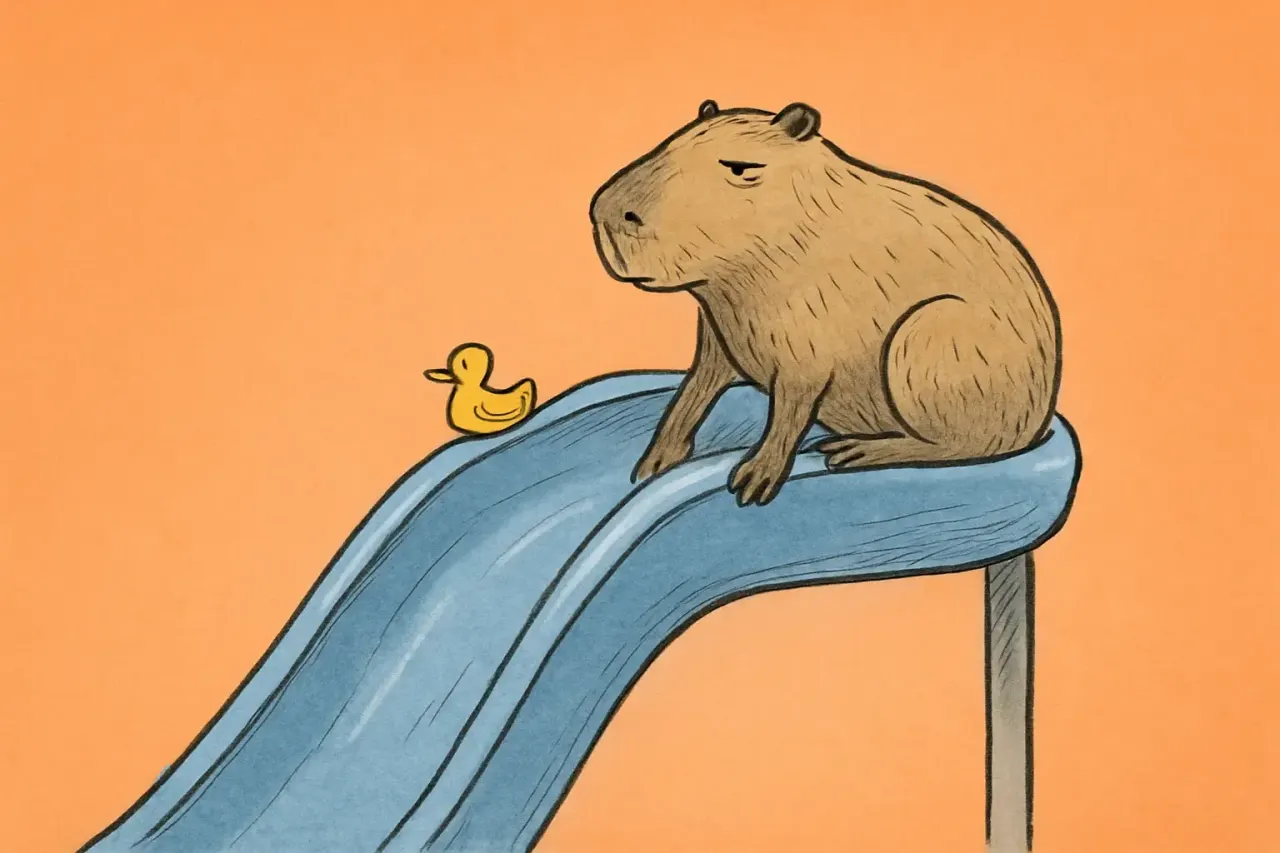

Capybara vs hippo is one of those comparisons the internet reaches for because both animals look like they have strong opinions about water and office politics. The resemblance is mood-based. Biology is less sentimental.
The short answer: a capybara is a South American rodent, and a hippo is a massive African mammal. Both are herbivores that use water, but the overlap mostly stops there.
The Fast Answer Is Rodent Vs Hippo
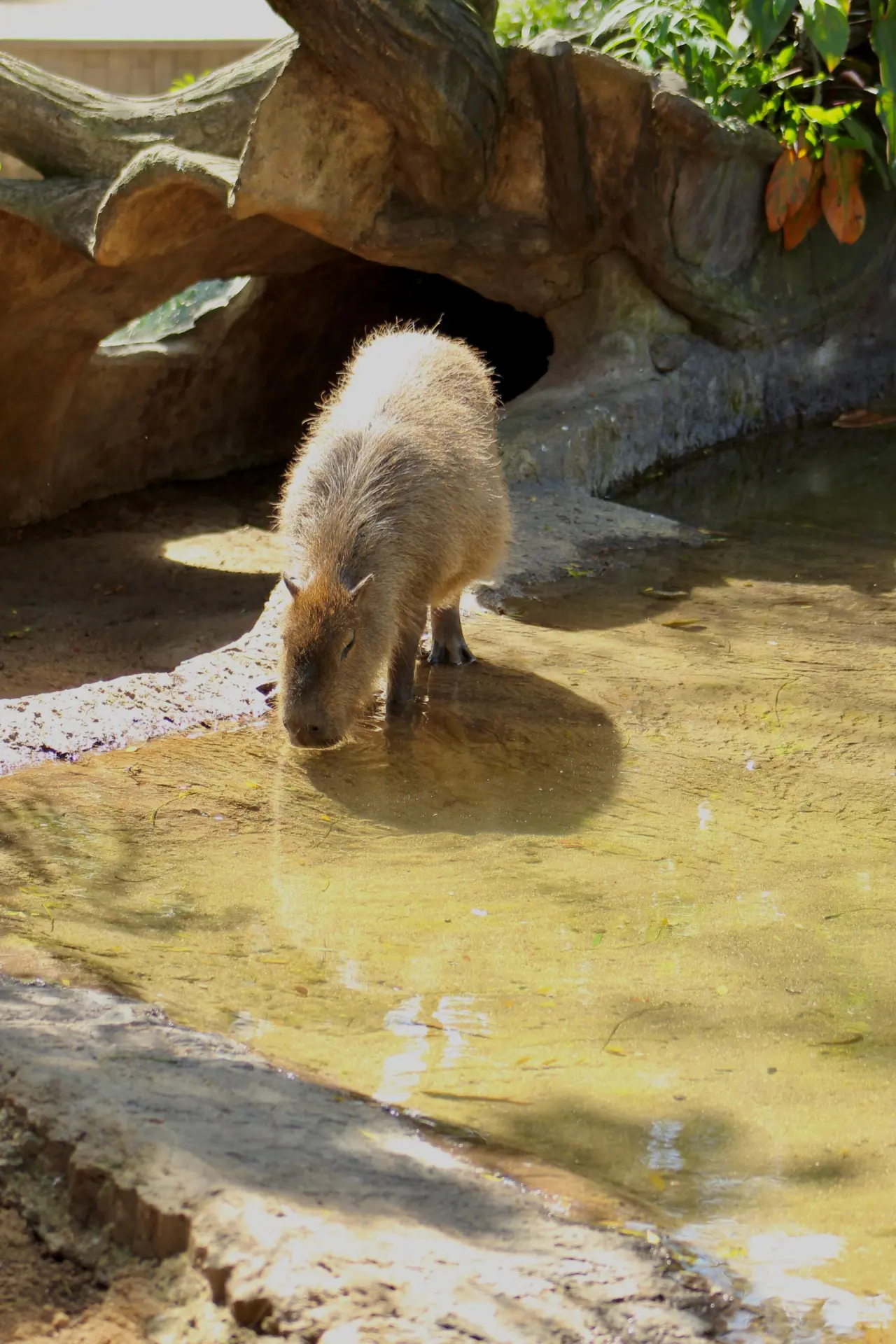
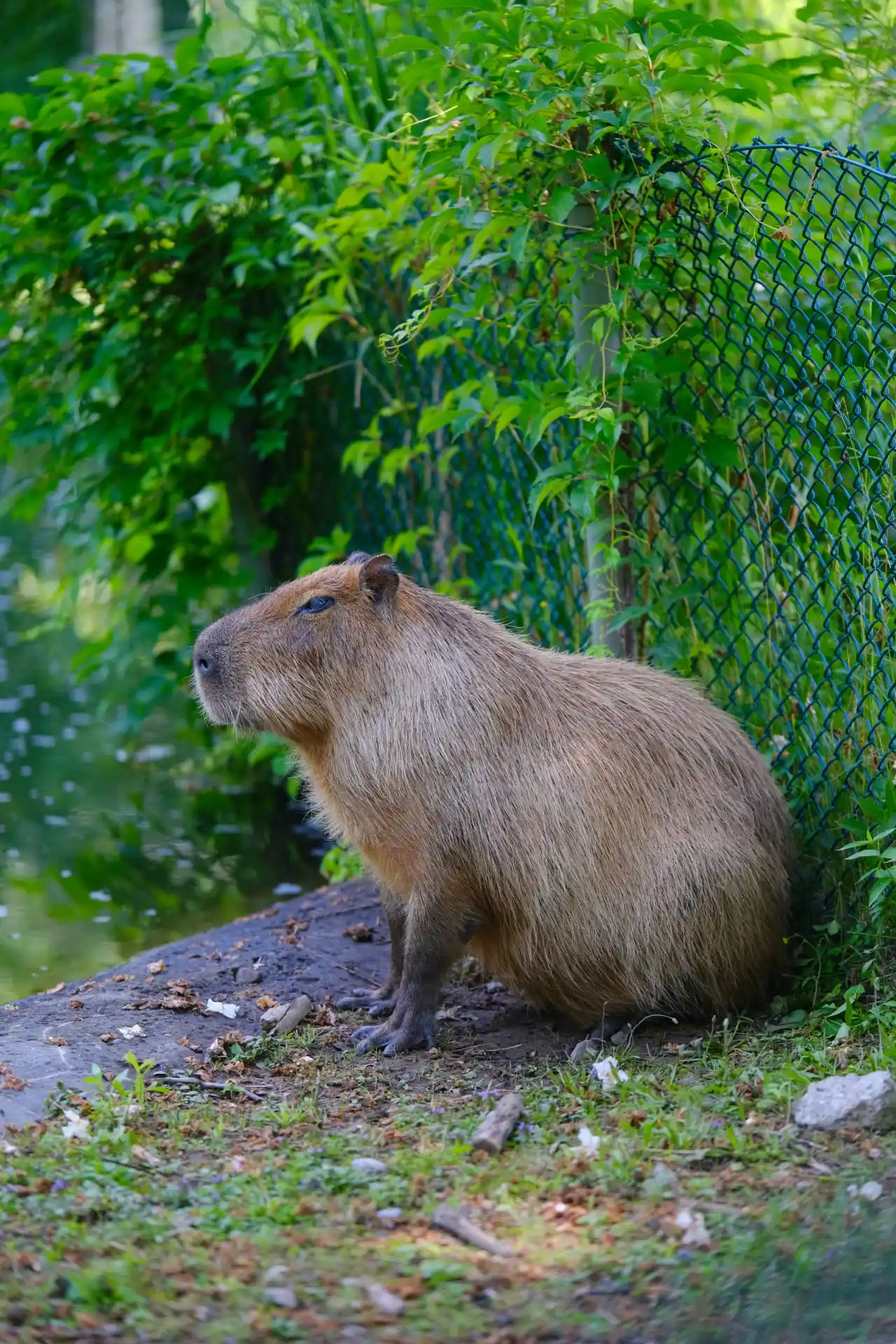
San Diego Zoo Wildlife Alliance calls the capybara the world’s largest rodent. It has a blunt head, no real tail to speak of, slightly webbed feet, and a life arranged around freshwater edges.
A hippopotamus is not a rodent in any useful sense. San Diego Zoo describes river hippos as rotund land mammals that spend daytime hours in lakes, pools, mudholes, or rivers. That sounds capybara-adjacent until you remember the hippo is operating at “small car with opinions” scale.
| Feature | Capybara | Hippo |
|---|---|---|
| Group | Rodent | Hippopotamid mammal |
| Native range | Central and South America | Sub-Saharan Africa |
| Typical scale | Large dog to small person weight range | Thousands of pounds |
| Water role | Escape, cooling, travel, feeding edge | Resting, cooling, social territory |
| Internet error | ”Tiny hippo" | "Just a big river loaf” |
The Size Gap Is Not Subtle
Britannica lists the larger capybara at up to about 1.3 meters long and up to 79 kilograms, or 174 pounds. That is a serious rodent. It is also not remotely hippo territory.
San Diego Zoo Wildlife Alliance says adult male river hippos can weigh more than 9,000 pounds, while females average around 3,000 pounds. Even the much smaller pygmy hippo sits around 350 to 600 pounds according to Smithsonian’s National Zoo. The “tiny hippo” joke collapses the moment numbers enter the room, which is often what numbers are for.
Why The Water Comparison Sticks
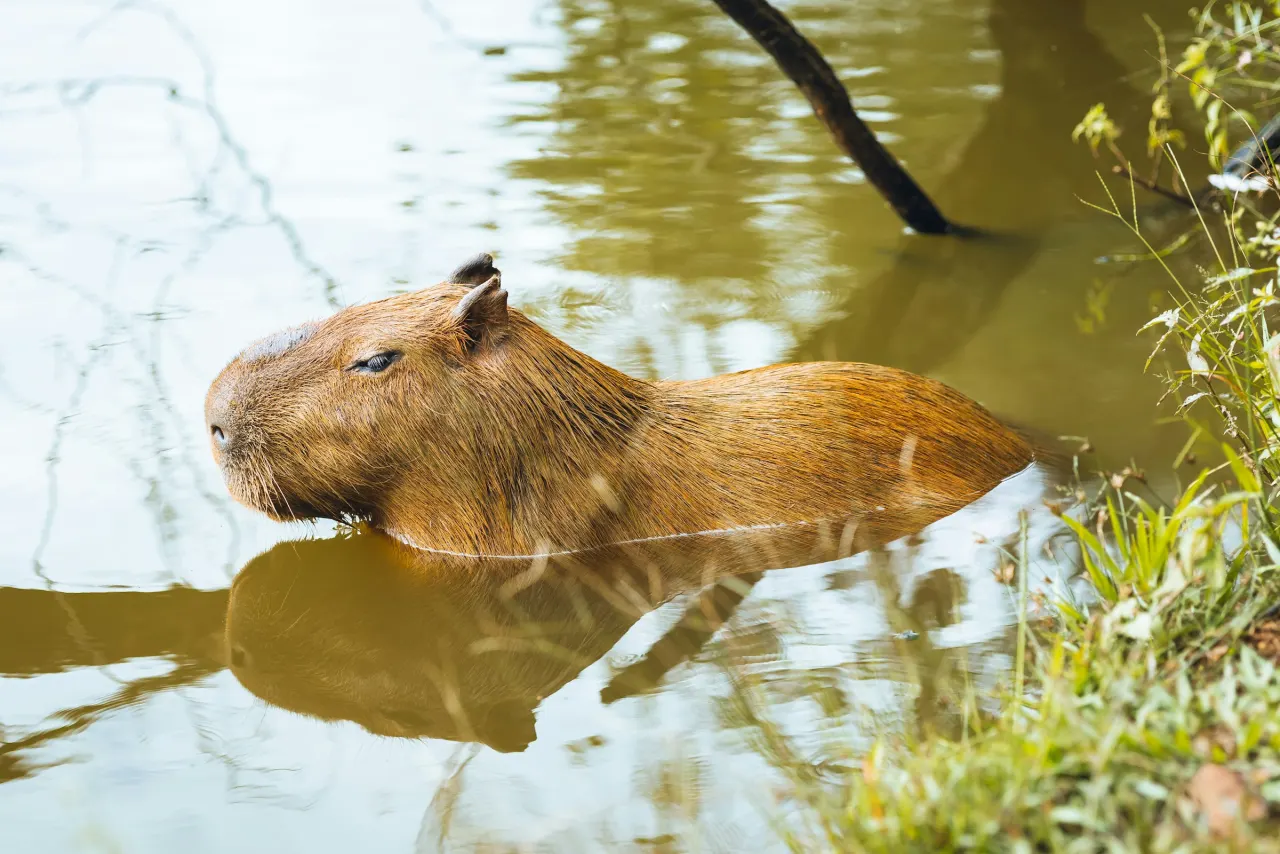
The comparison survives because water really does shape both animals. Capybaras use water as an escape route, cooling system, travel lane, and food neighborhood. Their eyes, ears, and nostrils sit high, which helps the classic half-submerged look.
Hippos also spend much of the day in water, but the behavior carries a different weight. A capybara slipping into a pond is a prey animal choosing the emergency exit. A hippo in a river is a large territorial animal occupying a social space. Same liquid, very different meeting agenda.
Where The Family Trees Actually Split
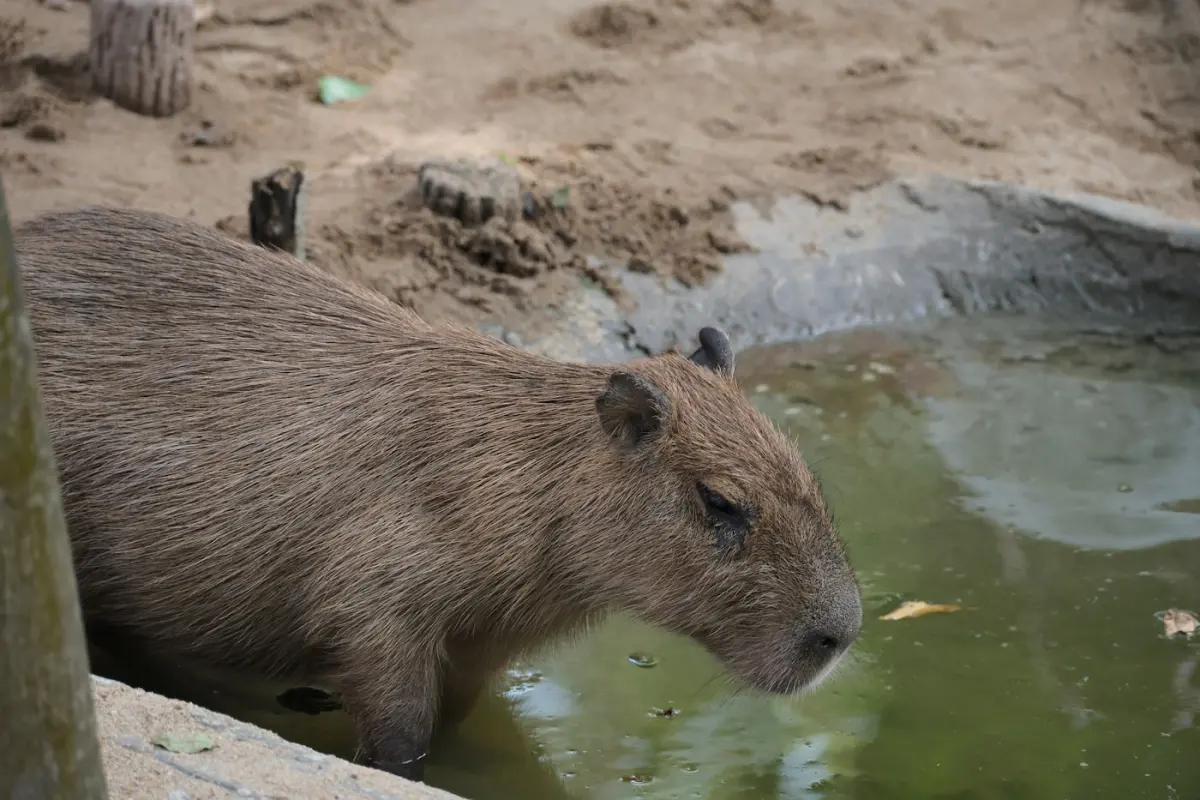
The fastest correction to the “tiny hippo” idea is the family tree. A capybara belongs to family Caviidae, the same broad group as guinea pigs and maras, and it carries the standard rodent toolkit: ever-growing front teeth, a hindgut built for fermenting tough plant matter, and the unglamorous habit of re-ingesting soft morning feces to pull more nutrients out of a low-quality diet. Like guinea pigs, capybaras cannot make their own vitamin C, so it has to come from food. None of that is hippo biology.
A hippo sits in a completely different branch of the mammal map. It is not a rodent and does not share the rodent dental or digestive setup. Its closest living relatives are not capybaras at all, but whales and dolphins, which is a stranger fact than anything the meme is reaching for. So the comparison is not “small version of the same thing.” It is two animals that arrived at a water-loving lifestyle from opposite ends of the mammal world.
Here is where people usually go wrong, and the version worth keeping instead:
| Common assumption | Better answer |
|---|---|
| A capybara is a baby or dwarf hippo | It is a fully grown rodent; the largest one alive |
| They are close cousins | Different orders entirely; capybara kin are guinea pigs and maras |
| Both are African | Capybaras are South American; hippos are sub-Saharan African |
| Same water behavior, different size | Capybara water use is mostly escape and feeding; hippo water use is territory and rest |
| Both are gentle herbivores | Both eat plants; only one of them rearranges your travel plans |
Diet And Danger Are Where The Joke Breaks
Both animals are herbivores, but they do not invite the same human behavior. Capybaras graze grasses and aquatic plants, and they are usually conflict-avoidant prey animals. They can bite, especially if cornered, stressed, or hand-fed badly. They are not plush furniture.
Hippos are famously dangerous because size, territory, jaw strength, and water-edge surprise do not combine into a customer-service personality. The meme flattens that difference. A capybara can hurt you. A hippo can ruin the entire calendar.
The care lesson is useful too. If a person looks at a capybara and thinks “small hippo,” they may understand the water requirement but miss the rodent diet, social group, tooth wear, vitamin C, and real capybara care burden. If they look at a hippo and think “big capybara,” please take away their wildlife opinions.
How Each One Lives, Day To Day
Strip away the size shock and the two animals still run on different logic. A capybara is a herd animal. Animal Diversity Web describes them living in social groups around water, and that grouping is not optional decoration. Solitary housing is a genuine welfare stressor for them, the way isolation would be for any animal whose whole nervous system expects company. They graze, they rest, they slip into water when something spooks them, and in captivity they tend to live somewhere around eight to ten years or a bit more.
A hippo’s day is organized around holding ground. The water it sits in is not just a cooling pond, it is contested territory, and a bull hippo will defend a stretch of river the way it defends nothing else. That is most of why hippos read as dangerous and capybaras do not. One is managing real estate; the other is avoiding becoming lunch.
My honest take: the meme is fine as a vibe and bad as a fact, and the part that actually bothers me is the care confusion it breeds. “Tiny hippo” makes a capybara sound like a low-effort water pet, when the real animal needs a herd, constant access to water, a grazing diet, dietary vitamin C, and steady tooth wear. The joke is funnier than the responsibility, which is usually how these things go.
The Practical Takeaway
Capybaras and hippos both belong in the “large herbivore near water” mental folder. They do not belong in the same family tree. A capybara is a rodent. A hippo is a hippo. The water mood is real; the biological shortcut is not.
For quick identification, use the numbers and the geography. South American wetland rodent with webbed feet and social grazing? Capybara. African river giant measured in thousands of pounds? Hippo. If you still cannot tell, move farther away from both animals and let a guide handle it.