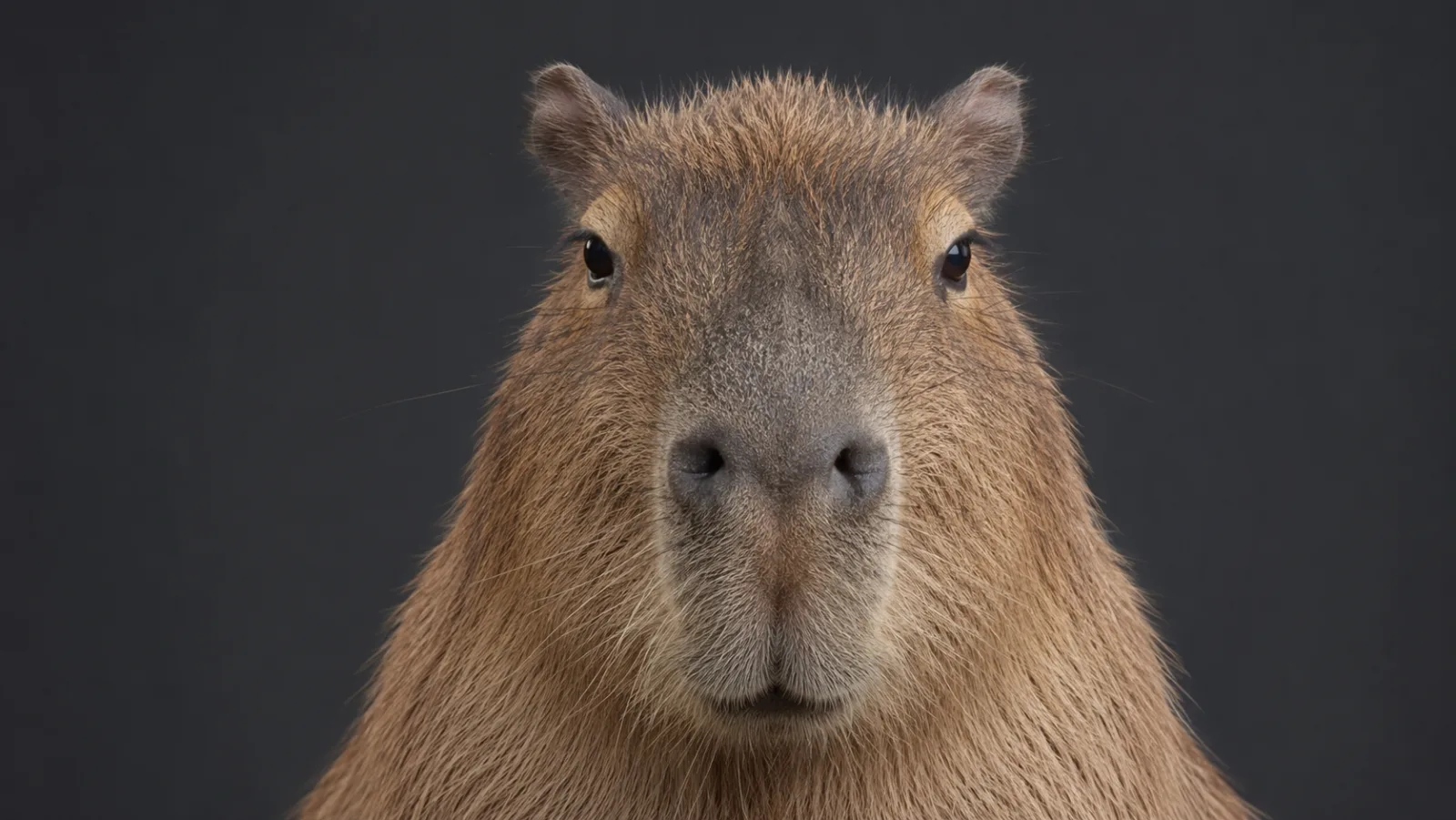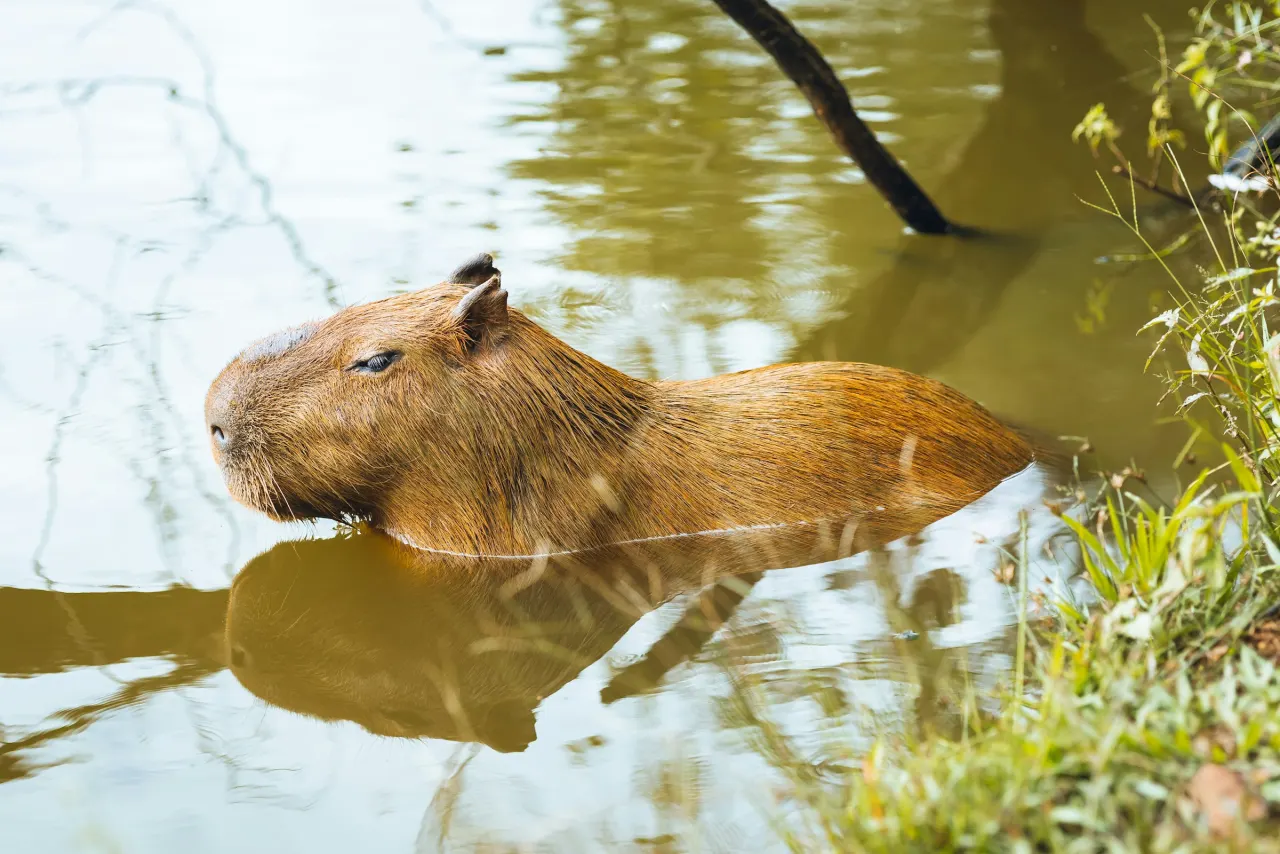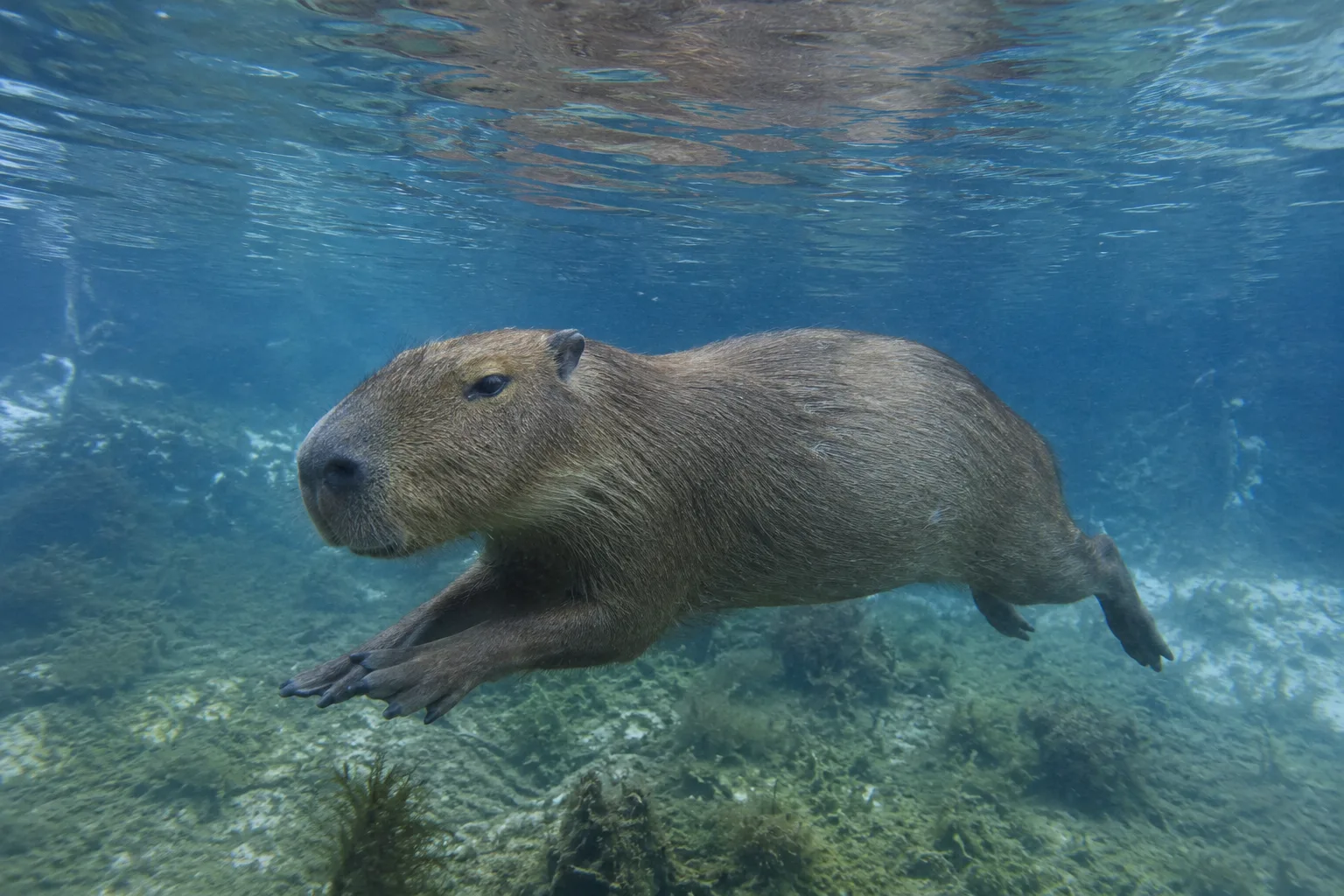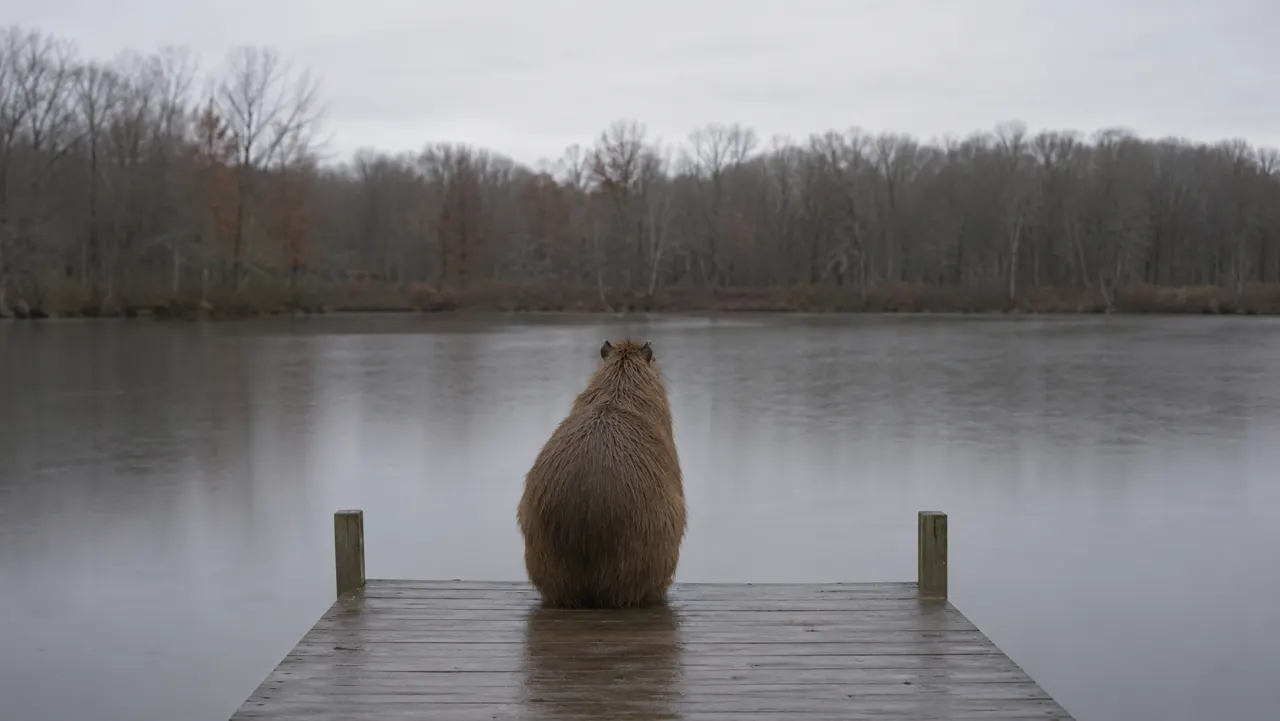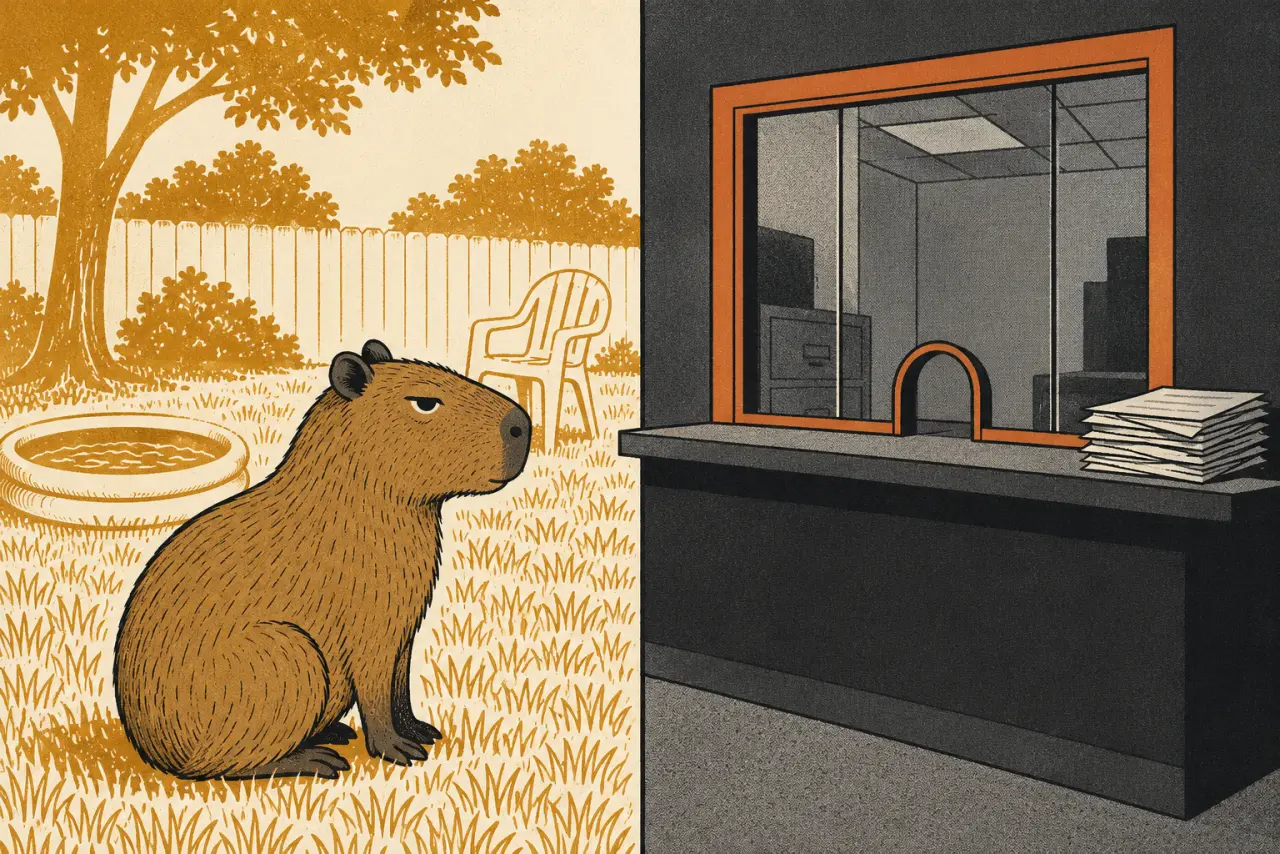
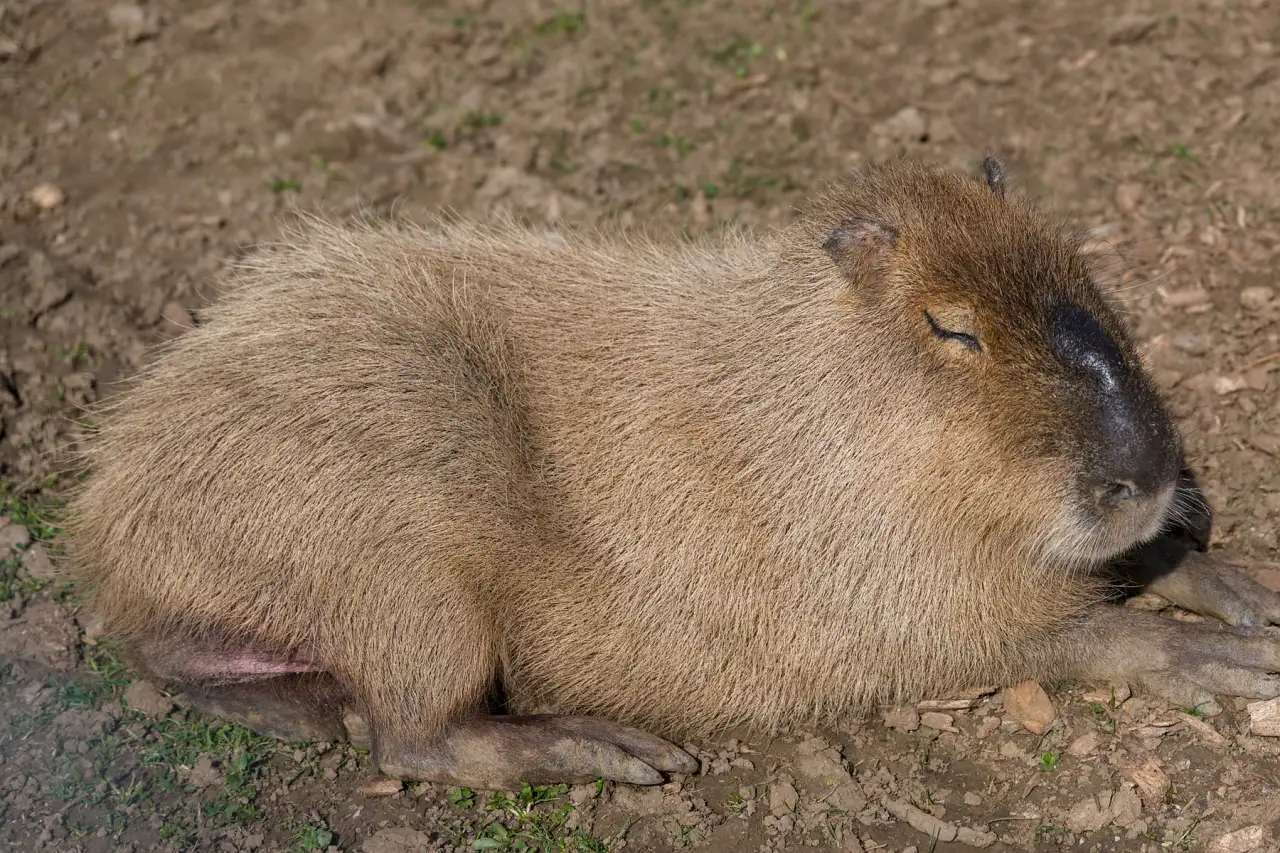
Capybaras rest in short bouts spread through the day and night, never in one long block, and nobody has published a total. The hour figures you will find online are repeated, not measured. What has actually been documented is the schedule, and it is the more useful answer anyway: two feeding peaks, one at dawn and a longer one from late afternoon into the evening, with the hottest part of the day spent lying in water.
If you came here to find out when a capybara is awake rather than how many hours it is out, that is the better question and the rest of this page is built around it.
Crepuscular by default, nocturnal near people, and rest broken into pieces all day
Animal Diversity Web puts capybara activity as "primarily crepuscular," with the hottest part of the day spent in the water. The AZA Capybara Care Manual adds the part that matters most in the real world: capybaras "have become nocturnal in areas populated by humans in order to avoid contact." The schedule is not fixed. It moves with heat and with people.
Why There Is No Real Number for Capybara Sleep
Search “how long do capybaras sleep” and you will get confident hour counts. Follow any of them back and the trail ends at another blog. There is no capybara sleep study in the literature that establishes a daily total, which is an unsatisfying thing to say and also the accurate one.
Roughly eight hours, sometimes twelve, occasionally "most of the day." None of these is attached to a source. Capybara rest is polyphasic, meaning it is split across several intervals rather than consolidated, so a single total would be a poor description of the behavior even if somebody had measured it.
The thing that is measurable, and measured, is when the animal is up and what it is doing. That is what field researchers actually record, and it is what the zoo and husbandry literature describes.
When Capybaras Are Actually Active
Here is the day as the sources describe it. Dawn and the late afternoon are the two peaks; the middle is water and the night is broken.
| Time of day | What they are doing | Why |
|---|---|---|
| Dawn | First feeding peak, grazing on open ground | Cool enough to work, light enough to spot a predator early |
| Mid-morning | Resting close together at the water’s edge | Heat climbing, and the bank is the cheapest place to stop |
| Midday | Resting in water or mud, largely still | Thermoregulation. Open grazing in peak heat is not worth the calories |
| Late afternoon | Second and longer feeding peak begins | Temperature drops and the daily intake target is substantial |
| Dusk into evening | Peak grazing continues into low light | Cool air plus cover, the best combination of the day |
| Night | Short grazing sessions between rest bouts | Rest is split, not consolidated. Nobody is out for eight hours |
The AZA manual estimates an adult capybara needs around 2,500 kilocalories a day from high-fiber, low-energy food, and says plainly that the animal “should occupy much of its day eating and chewing.” That constraint is what shapes everything above. An animal with that much chewing to do cannot afford a single long sleep, and it cannot do the chewing in the worst heat either. The schedule falls out of the diet.
One detail that stuck with me, because it reframes what resting even means here: capybaras can bring food back up to chew it again, and the manual notes this is normally done while resting. A capybara lying still with its eyes half shut is not necessarily idle. It may be on the second pass.

For a wider view of the non-sleeping parts, what capybaras do all day covers the grazing and digestion side in more detail.
The Nocturnal Shift Happens Where People Do
This is the part that makes capybara activity genuinely interesting rather than trivia, and it is well sourced.
The AZA Capybara Care Manual states it in one sentence: capybaras “are naturally crepuscular; however, they have become nocturnal in areas populated by humans in order to avoid contact.” The San Diego Zoo Wildlife Alliance fact sheet records the same thing from the field side, noting that after human disturbance capybaras become “more nocturnal and shy.” The San Diego Zoo’s species page puts it in plainer language still: capybaras tend to eat around dawn and dusk, but if they feel threatened they wait for the cover of night.
The field research backs it with numbers. Lopes and colleagues, writing in the Journal of Mammalogy in 2021, tracked GPS-collared capybaras across six human-modified landscapes and two natural ones in Brazil. Animals in the modified landscapes were more nocturnal and moved shorter distances, and their home ranges were 2.43 times smaller than those of animals in natural landscapes. A separate PLOS ONE study by Dias and colleagues found capybaras feeding mainly during the day in the Brazilian Pantanal and mainly at night across human-modified landscapes, and selecting forested cover more heavily during daylight hours where people were around.
Put together, that is a species compressing its range and moving its working hours to whenever we are not there. It is the same low-reactivity logic that makes capybaras look so calm in the first place: given a choice between confrontation and rescheduling, a capybara reschedules.

They Rest in Water and They Rest in Cover
Both happen, and which one you see depends on what the animal is solving for. Heat sends them to water. Perceived risk sends them to cover.
Resting in water or mud
- The heat-of-day default, per the San Diego Zoo Wildlife Alliance
- Body still, nostrils and eyes clear of the surface
- Thermoregulation first, insect relief second
- Also the escape route, already occupied
Resting in cover on land
- AZA requires hides in every enclosure, because capybaras are flight animals
- Soft substrate spots for resting and sleeping, not the whole exhibit
- Morning rest happens close together at the water's edge
- Chosen when the pressure is disturbance rather than heat
Neither version is deep sleep. A capybara resting in water surfaces and reorients in a second or two, and a capybara in cover is still listening. That is not a knock on the animal. It is the correct setting for something that anacondas, caimans, and jaguars all consider food.
Why Zoo Capybaras Look Like They Sleep All Day
I went to a zoo specifically to test this once, and the honest result was that the schedule beat me twice before it worked.
Arrive at eleven, which is when most people arrive, and you get a horizontal brown loaf near a pool and a small crowd deciding the exhibit is broken. Come back at four and the same animals are up, moving between the grass and the water, working through browse with the single-mindedness of something with 2,500 calories to find. Nothing about the enclosure changed. The visitors changed, and so did the temperature. The eleven o’clock crowd had been shown a completely accurate picture of capybara behavior and had read it as an animal doing nothing.
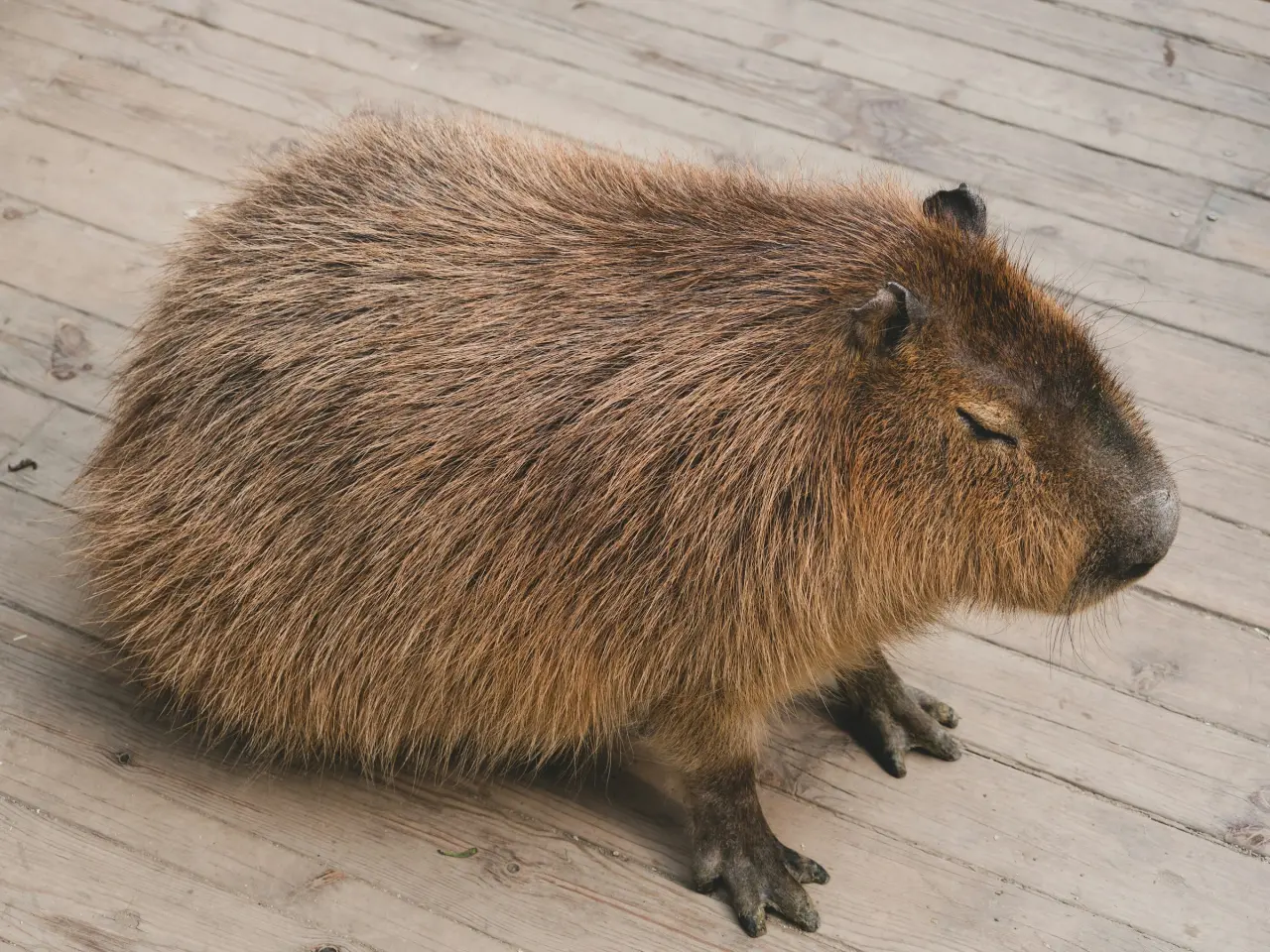
The photographic record makes this worse. Resting capybaras are easy subjects: still, close, and comically flat. A grazing capybara is a moving brown shape in tall grass. So the internet’s entire visual archive of this species is skewed toward the one window where it is lying down. Timing a zoo visit properly is mostly about refusing to visit at noon.

What People Get Wrong About Capybara Sleep
| What people believe | What is actually going on |
|---|---|
| Capybaras sleep about eight hours a night | No published study establishes a total, and the rest is split across several intervals anyway |
| Capybaras are nocturnal | Naturally crepuscular. They shift to night where humans are present, which is a different claim |
| They sleep in the water | They rest in it. The body is still, the nostrils stay clear, and they respond within seconds |
| A sleeping capybara is hard to wake | AZA treats them as flight animals and requires hides. Resting capybaras stay responsive |
| Zoo capybaras are lazy | Zoo hours and the midday rest window overlap almost exactly. You are seeing a sampling problem |
| Resting means doing nothing | They re-chew regurgitated food while resting, which is part of how the fiber budget works |
The nocturnal question specifically gets asked a lot, and it deserves its own answer rather than a row in a table. Are capybaras nocturnal takes the label apart properly.
How to Actually Catch One Awake
Go early or go late. Dawn and the last two hours before dark are the two windows where the animal is reliably up and doing something, and every source in this guide agrees on that. Cool, overcast days widen both windows. Hot, bright days narrow them to almost nothing and push everything into the water.
If you are visiting a managed habitat, ask a keeper when the animals are usually moving rather than when feeding is scheduled. Those are not always the same hour, and keepers watch the same individuals every day.
And if you find yourself standing in front of a completely motionless capybara at noon, that is the exhibit working. You have arrived during the one part of the day the animal has spent its whole evolutionary history arranging to spend lying in water.