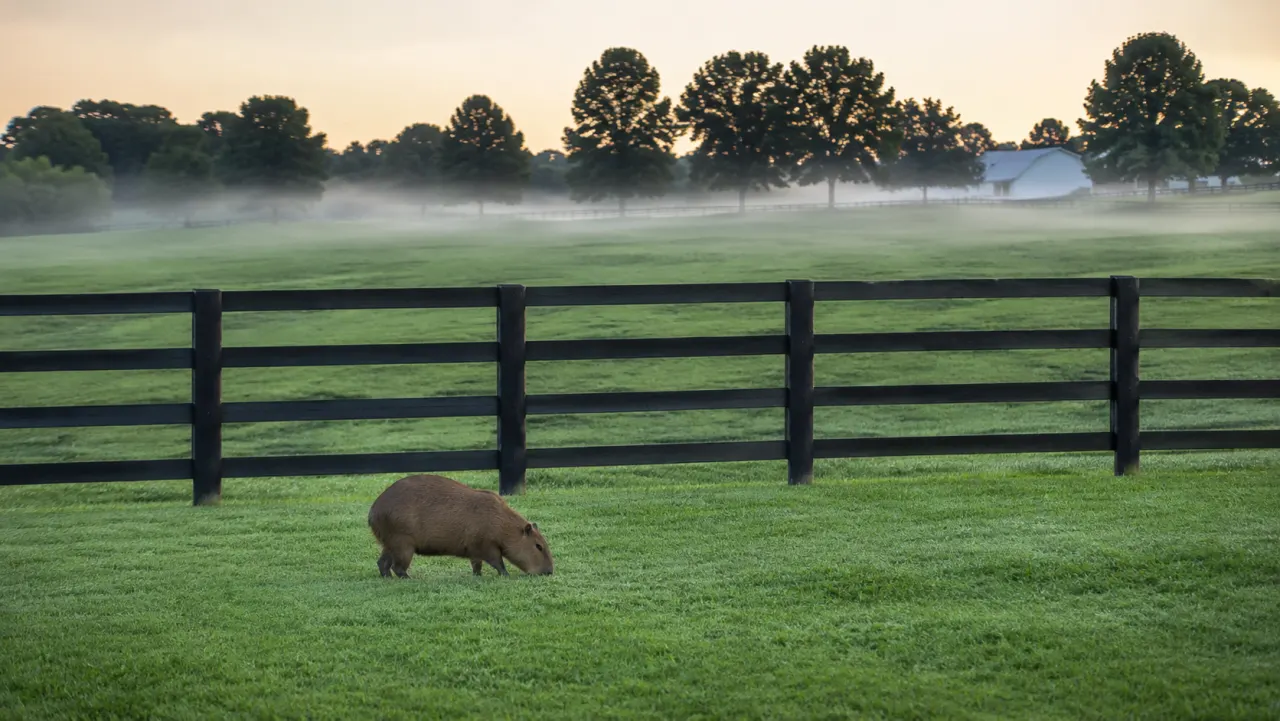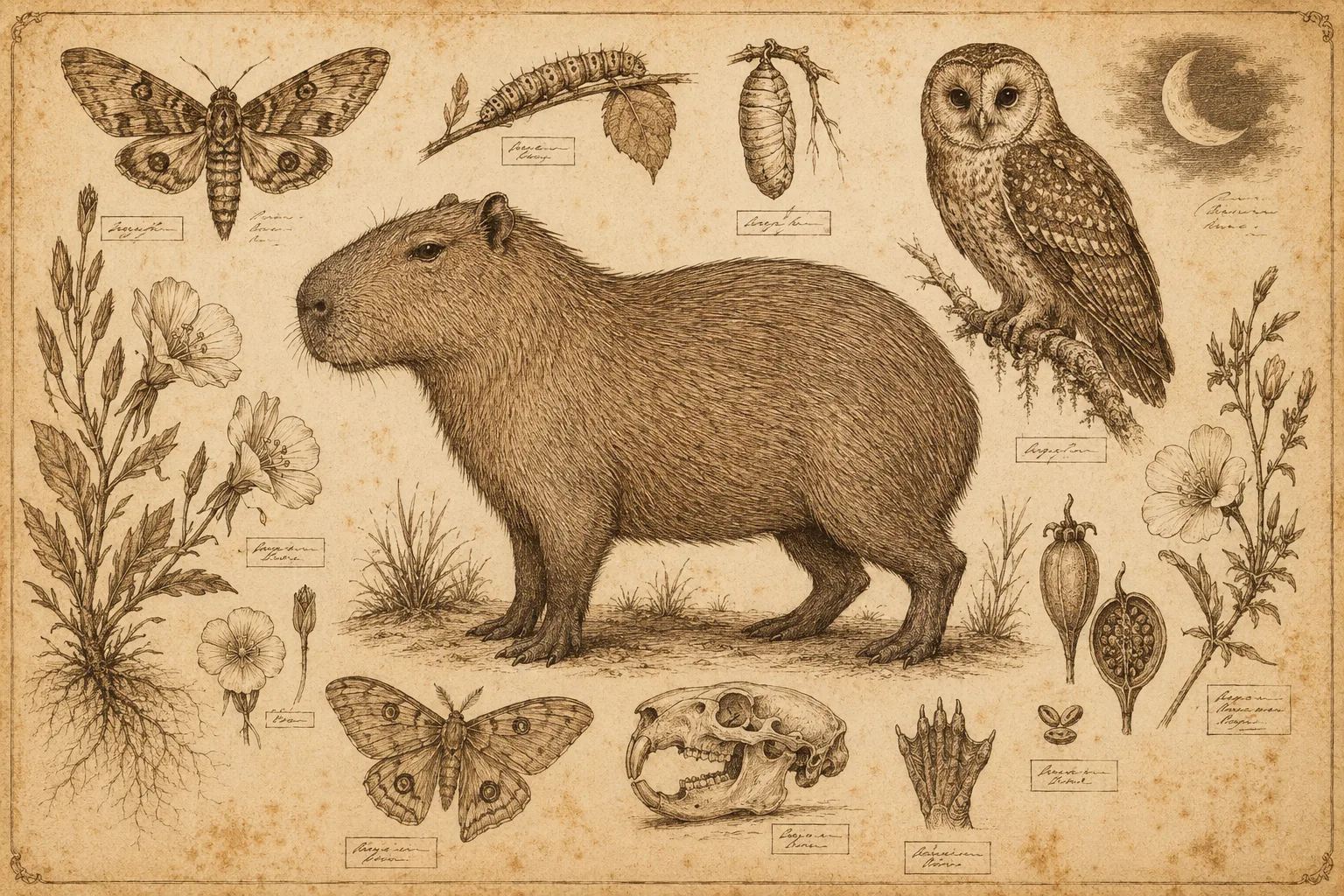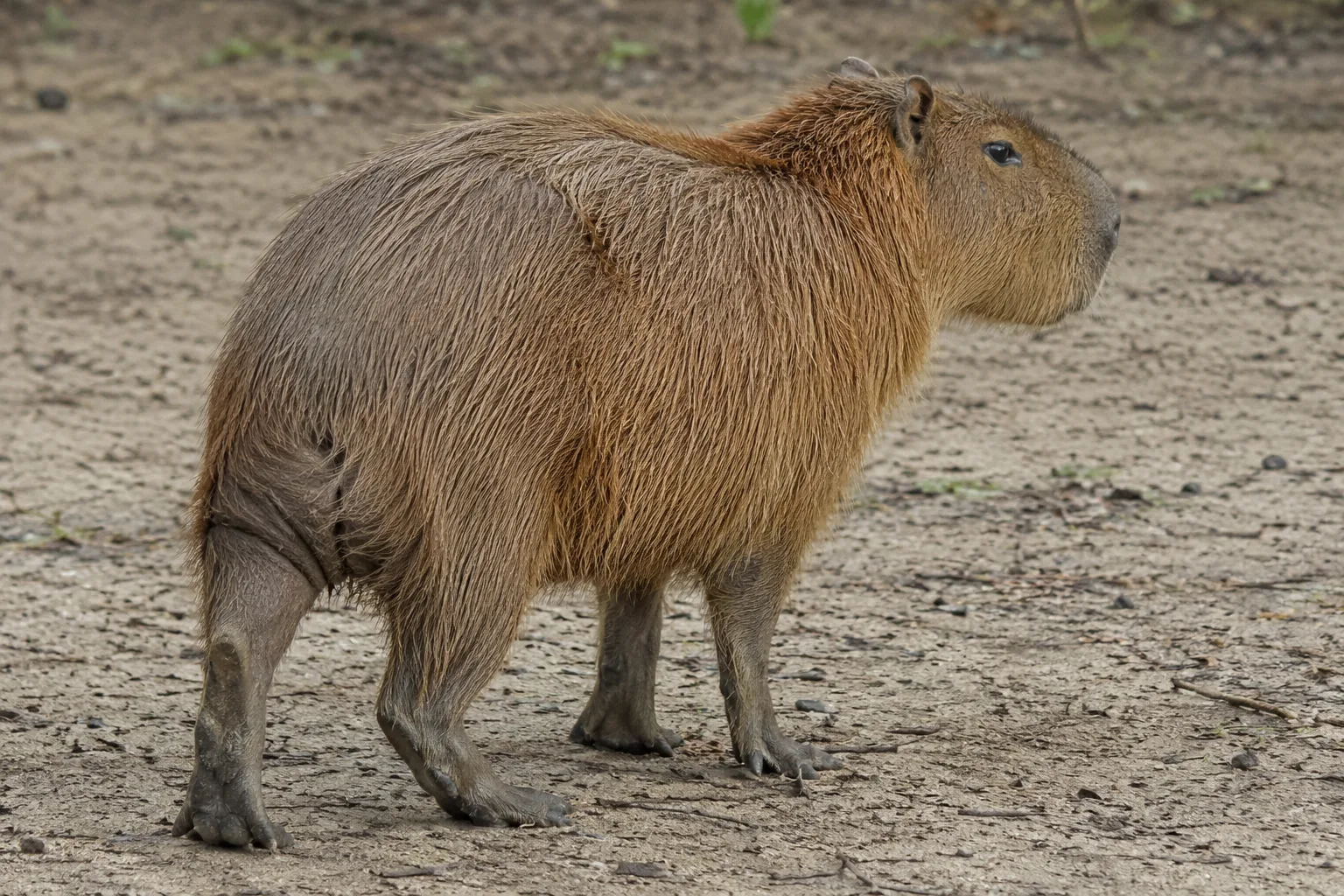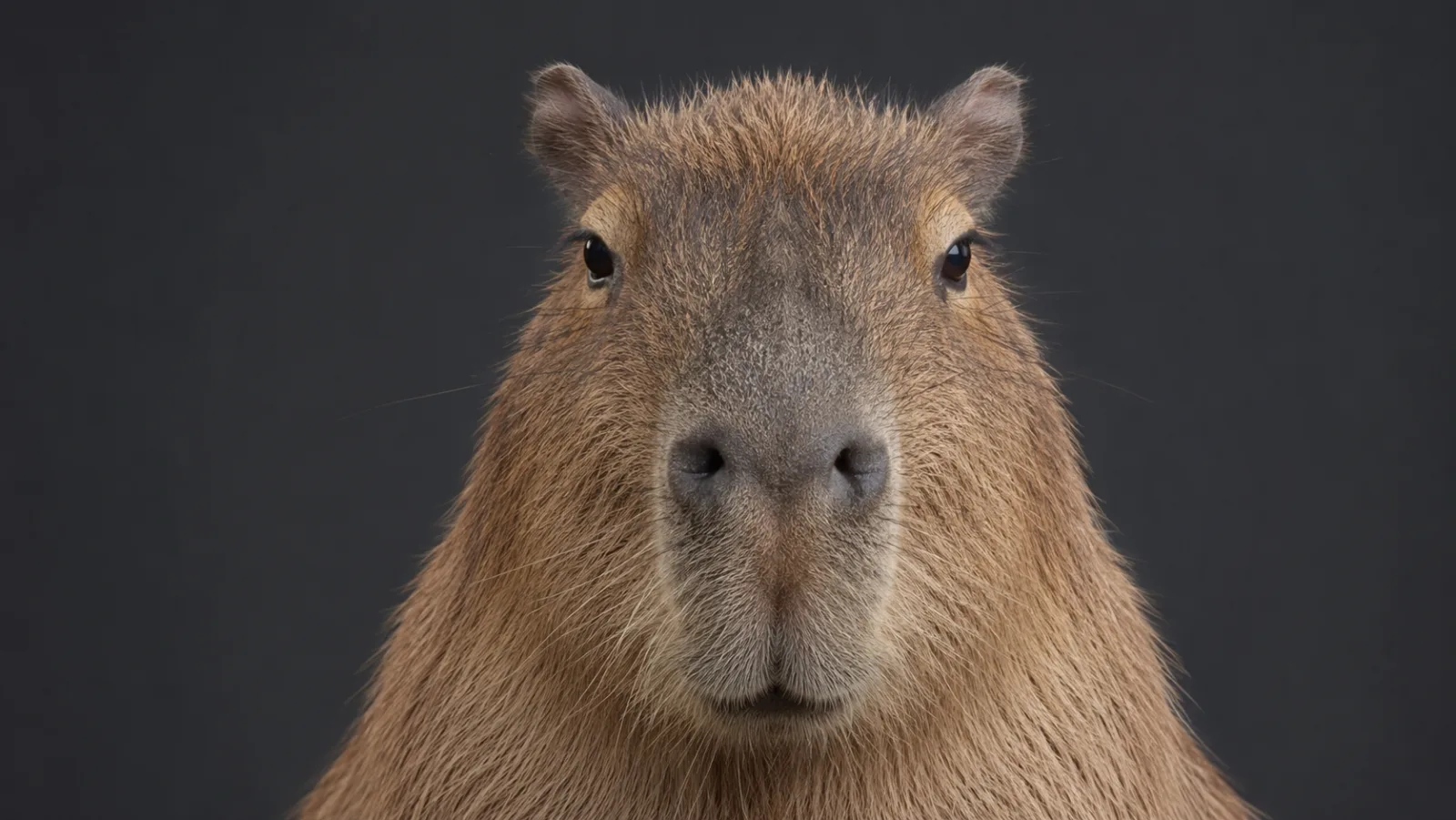
A group of capybaras is called a herd. That is the boring winner.
You can also say “group of capybaras” and no serious person should tackle you into a pond. The internet may prefer “meditation,” “committee,” or “meeting,” but those are jokes. Useful jokes, maybe. Still jokes.
The Normal Answer Is Herd
For everyday use, herd is the safest answer. Capybaras are large social grazers, and herd fits the way people commonly talk about groups of hoofed or grazing animals, even though capybaras are rodents and not livestock.
If you are writing a school report, use herd. If you are texting a friend, use whatever keeps the friendship alive.
Group Is Also Fine And Less Theatrical
“Group” may be less charming, but it is scientifically safe. The Journal of Mammalogy review uses group language because researchers are often immune to whimsy for professional reasons.
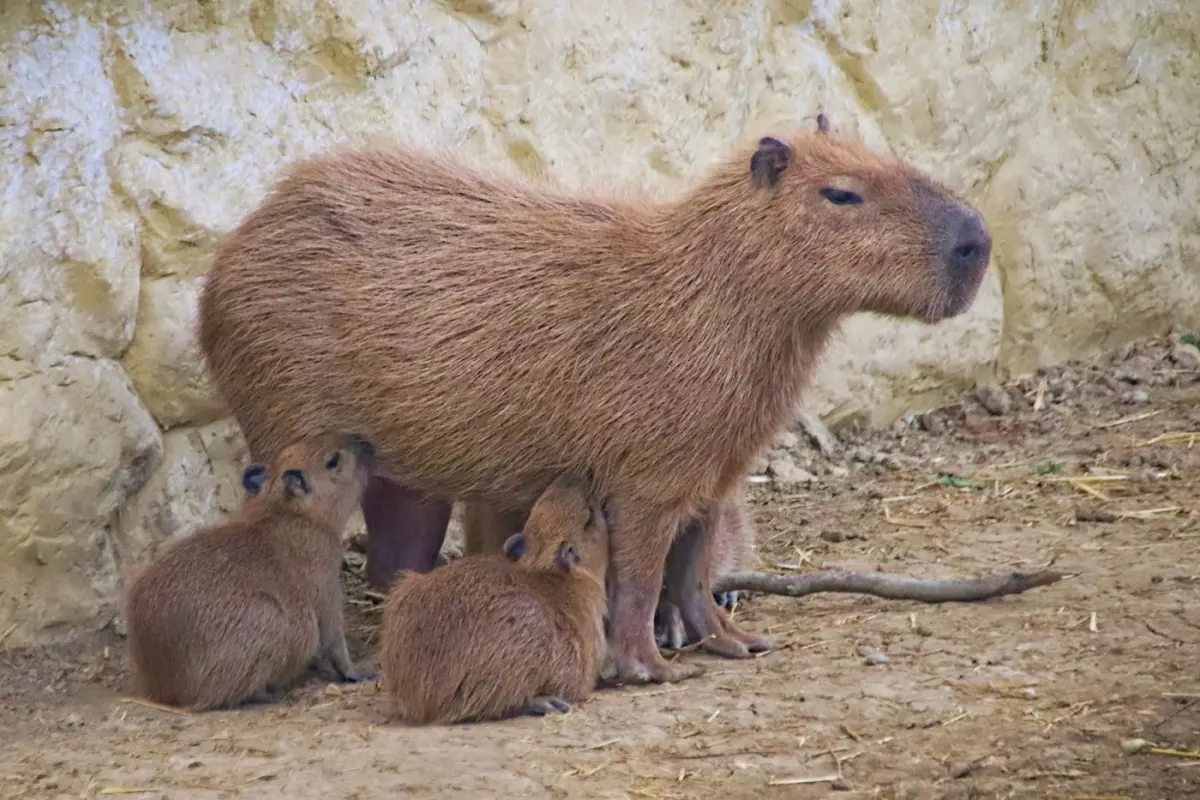
The review describes capybara groups as stable social units composed of adult males, adult females, and young. Group sizes in studied populations range from 6 to 16 adults and vary with habitat and density.
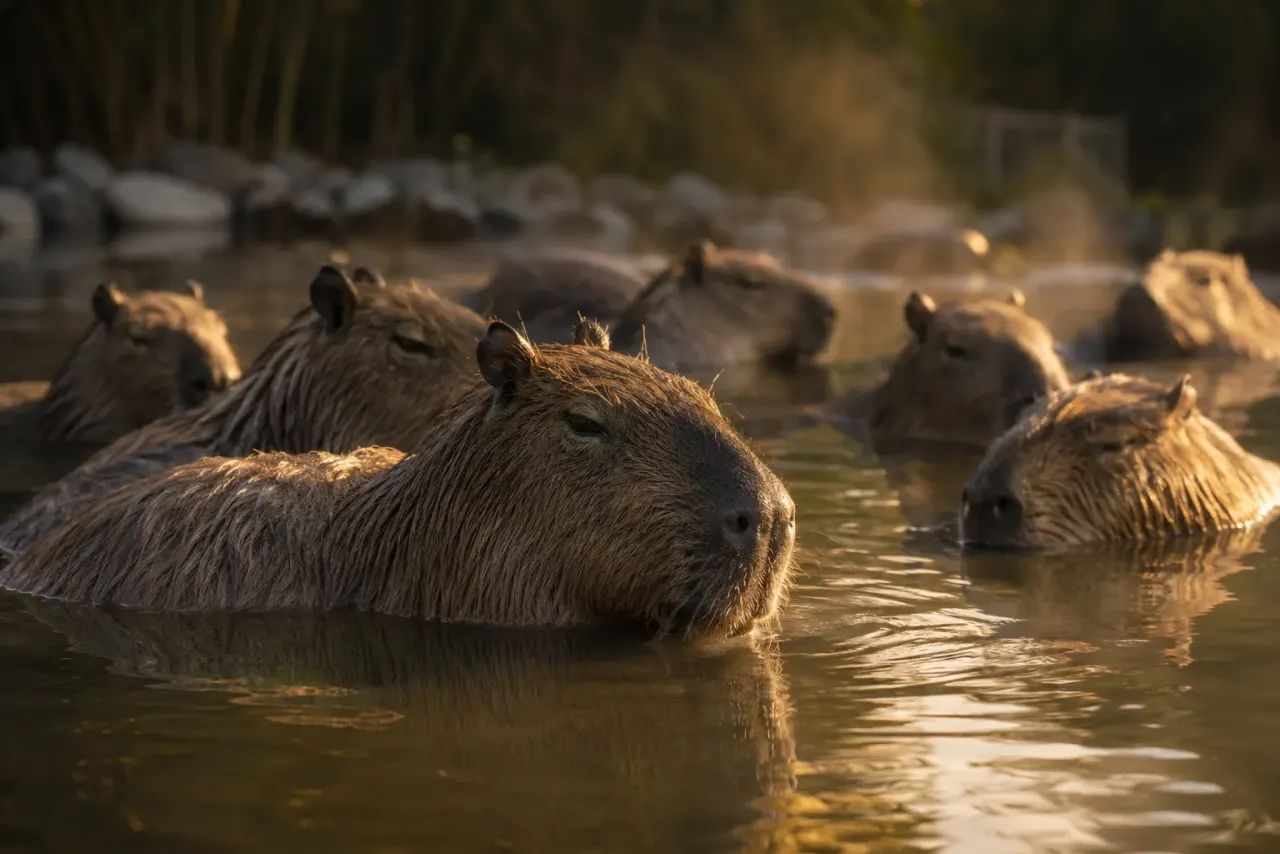
Capybara Groups Are Real Social Units
This is not just a pile of damp rodents. Capybara groups have social structure, vocal communication, dominance relationships, young, and shared vigilance. San Diego Zoo’s behavior fact sheet notes high sociality, likely tied to predation risk and resources.
That means the group has a job. More eyes, better warning, shared space, social learning, and the occasional argument because even calm animals have coworkers.
A typical stable group has a dominant male, several females, their young, and a few subordinate males who tolerate the arrangement until they don’t. Animal Diversity Web describes this pattern of mixed-sex groups built around females and offspring, with males sorting themselves into a rough hierarchy. The dominant male gets priority, but he also does more of the watching and more of the chasing, so the top job is not pure vacation.
Group size is not a fixed number, and that is the part most “fun fact” posts get wrong. The Journal of Mammalogy review puts studied groups in the range of 6 to 16 adults, but the real driver is the season. In the dry season, when water and grazing shrink to a few good spots, animals pack closer and groups can swell. In the wet season, when food and water are everywhere, the same animals spread out. So “how many capybaras live together” has the deeply unsatisfying but correct answer of “depends on the water.”
What Actually Shapes A Herd
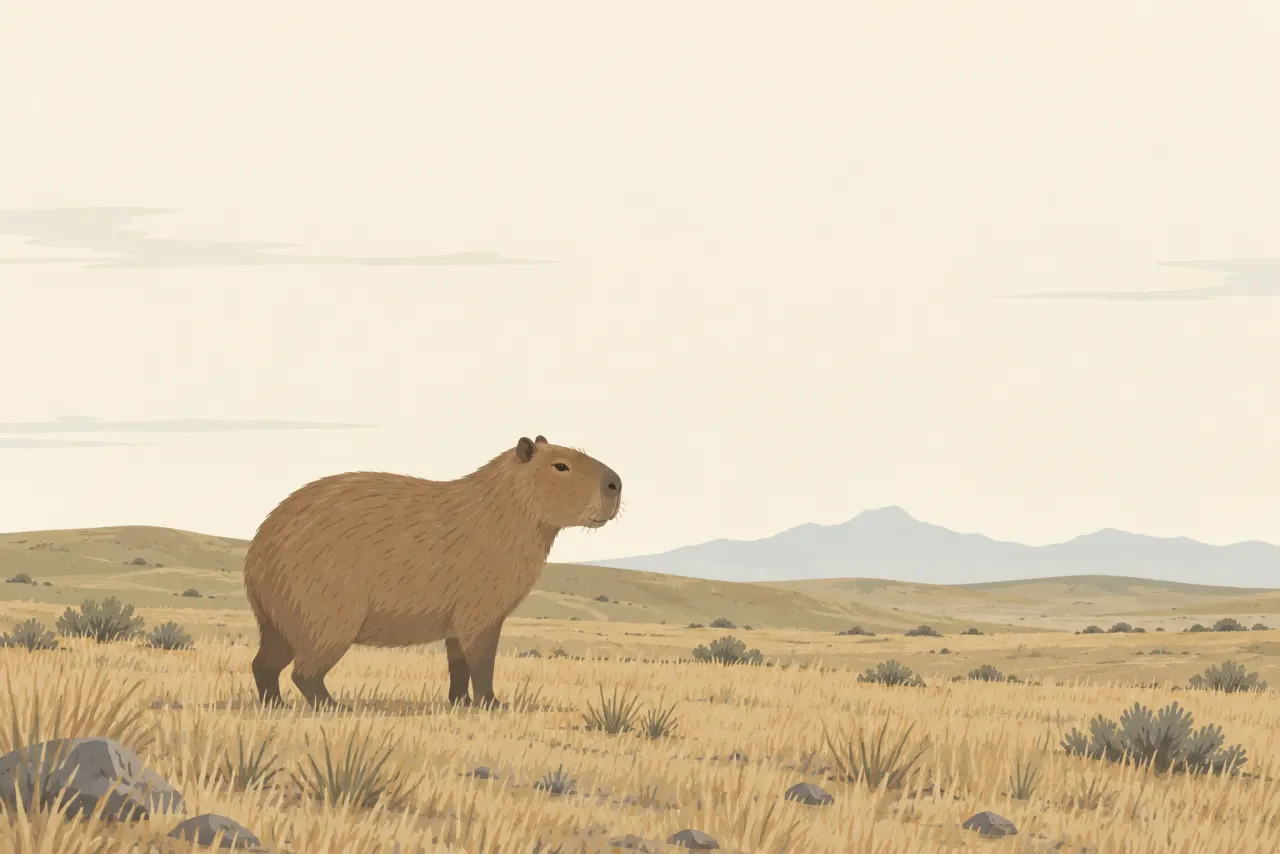
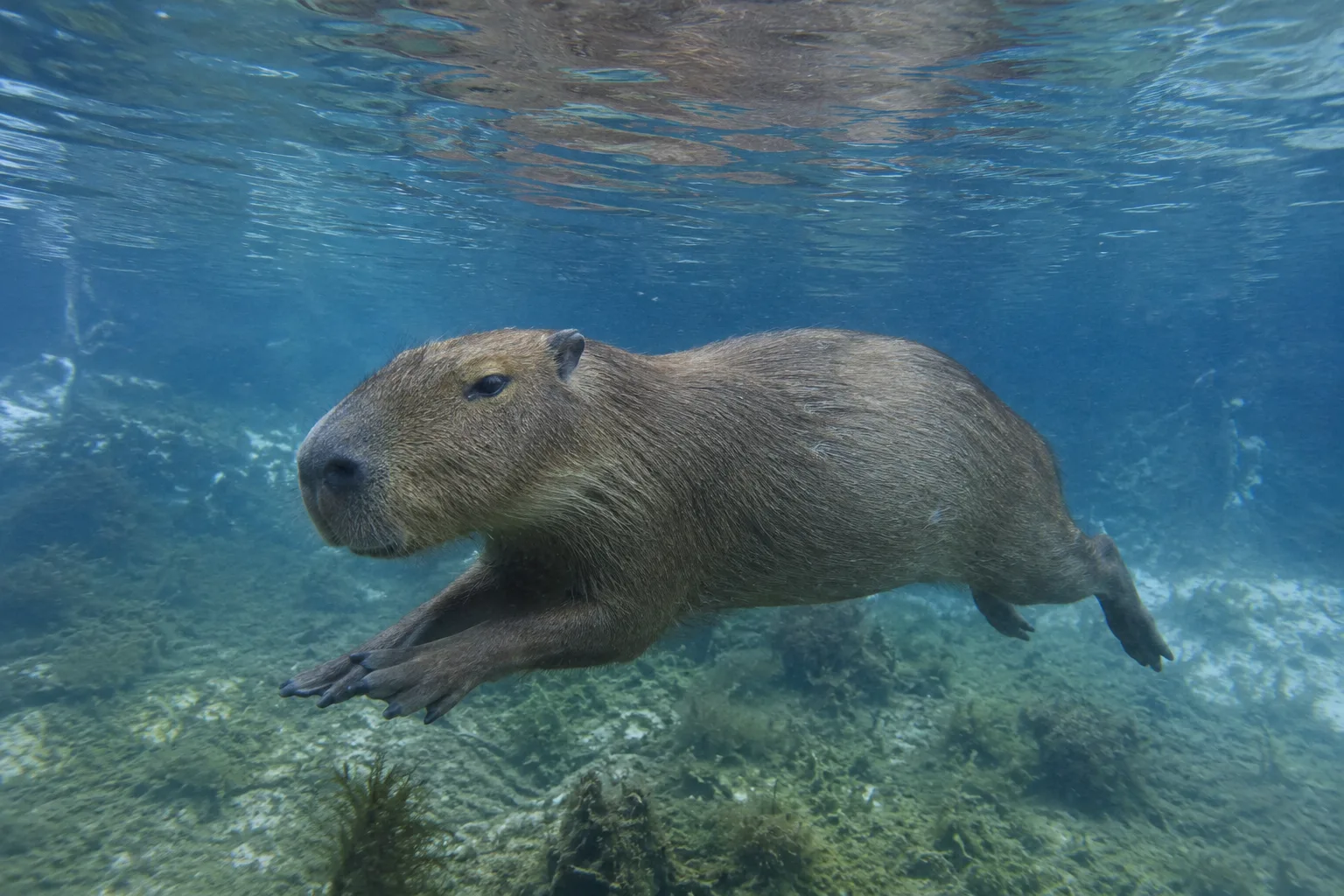
If you want to understand a capybara group, look at the landscape before you count the animals. Capybaras are semi-aquatic grazers, roughly 35 to 66 kg, and they live where grass and water sit close together. Everything about the group follows from that.
| Pressure | What it does to the group |
|---|---|
| Dry season scarcity | Animals crowd around the remaining water and forage, so groups get larger and denser |
| Wet season abundance | Food and water spread out, so groups loosen and split into smaller clusters |
| Predation risk | More members means more eyes on the bank, which lowers each individual’s vigilance load |
| Dominant male presence | One male defends the core group; surplus males drift to the edges or leave |
This is why a single “official” group size is a fiction. The herd is a response to conditions, not a fixed institution with a roster.
Clearing Up The Common Mix-Ups
Most confusion about capybara groups comes from treating internet captions as biology, or from borrowing rules that belong to other animals.
| Myth | Better answer |
|---|---|
| The official term is a “meditation” of capybaras | It’s an internet nickname, not field language. Researchers say group or herd |
| A herd is always the same size | Group size shifts with season, water, and density, from a handful to well over a dozen |
| They cluster because they’re cuddly | They cluster mainly for safety and shared resources, not affection in the human sense |
| Big rodents must be loners | Capybaras are strongly social, and keeping one alone is a known welfare stressor |
| The group is leaderless chaos | There’s a real dominance structure, usually anchored by one dominant male |
The honest opinion buried in all of this: the made-up collective nouns are charming, and I’d rather people remember “meditation of capybaras” than nothing at all. But it’s worth knowing the joke is a joke. The actual social system, the shifting group size, the watching, the hierarchy, is more interesting than any cute label someone invented for a caption.
Internet Names Are For The Group Chat
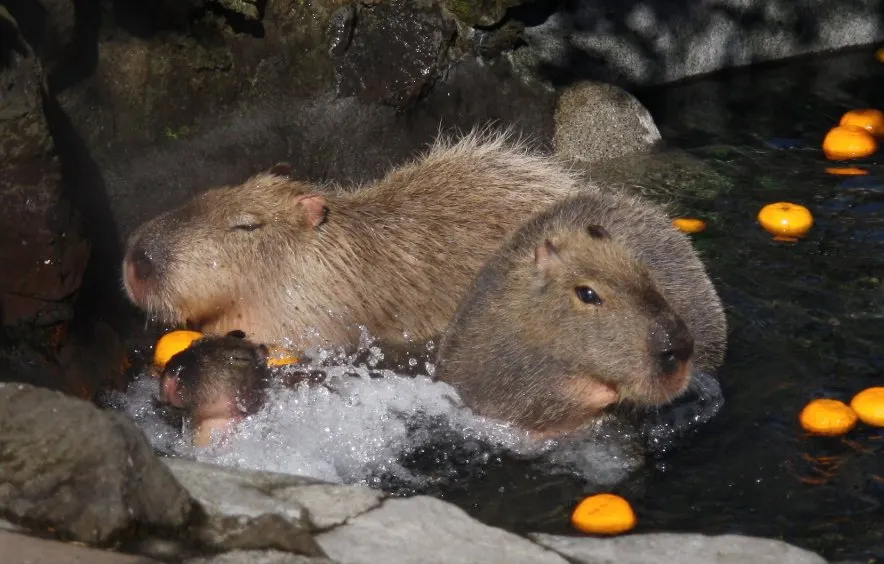
The internet wants a better collective noun because “herd” feels too normal for an animal that sits in hot springs with citrus and looks like it has a tiny municipal job.
| Name | Use it where? |
|---|---|
| Herd | School, article, normal explanation |
| Group | Any factual context |
| Meditation | Joke, caption, group chat |
| Committee | Joke, especially if they look judgmental |
| Council | Joke, if they are sitting in a suspicious circle |
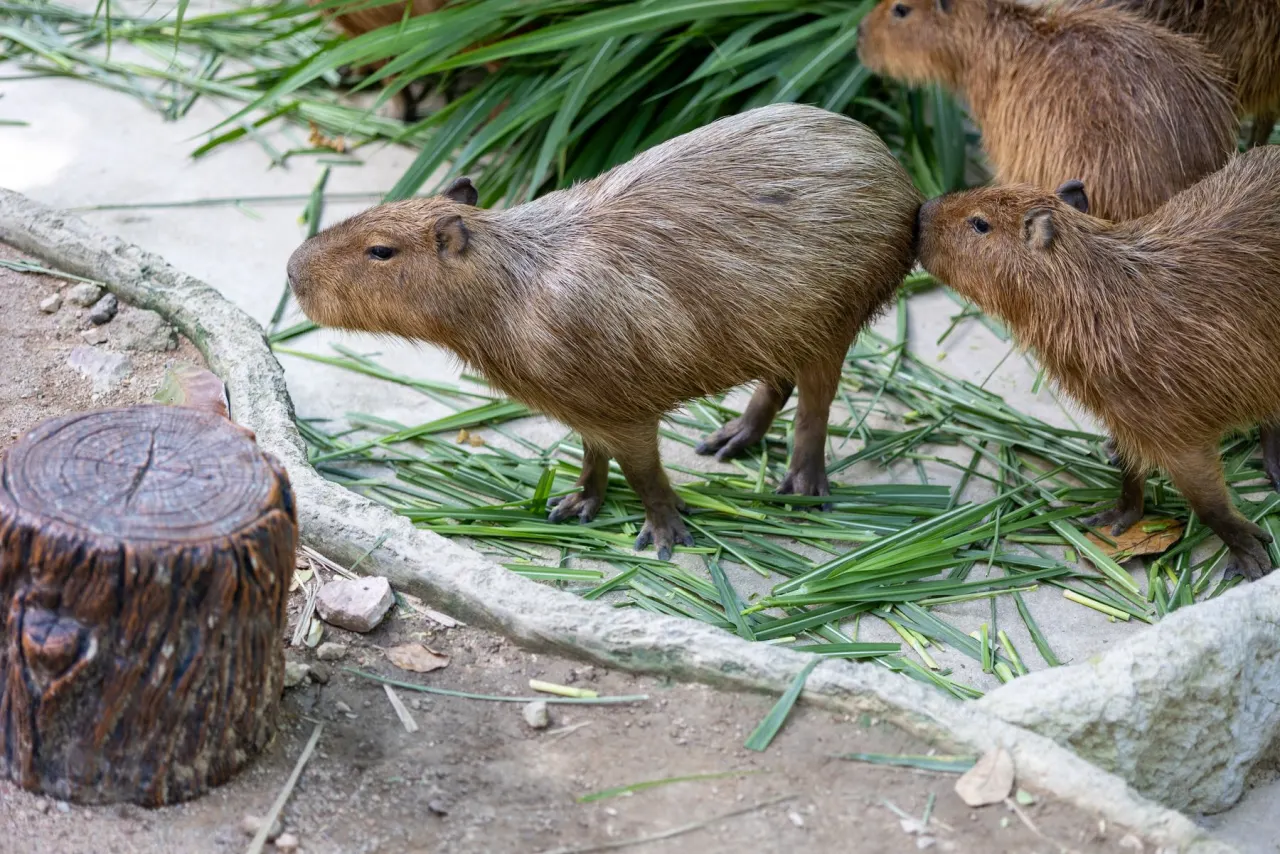
What To Call Them Without Being Weird
Use herd when you want the answer. Use group when you want no arguments. Use “committee of wet ottomans” only with people who have already accepted you.
The capybaras do not care. They are busy being a herd, which is apparently enough.