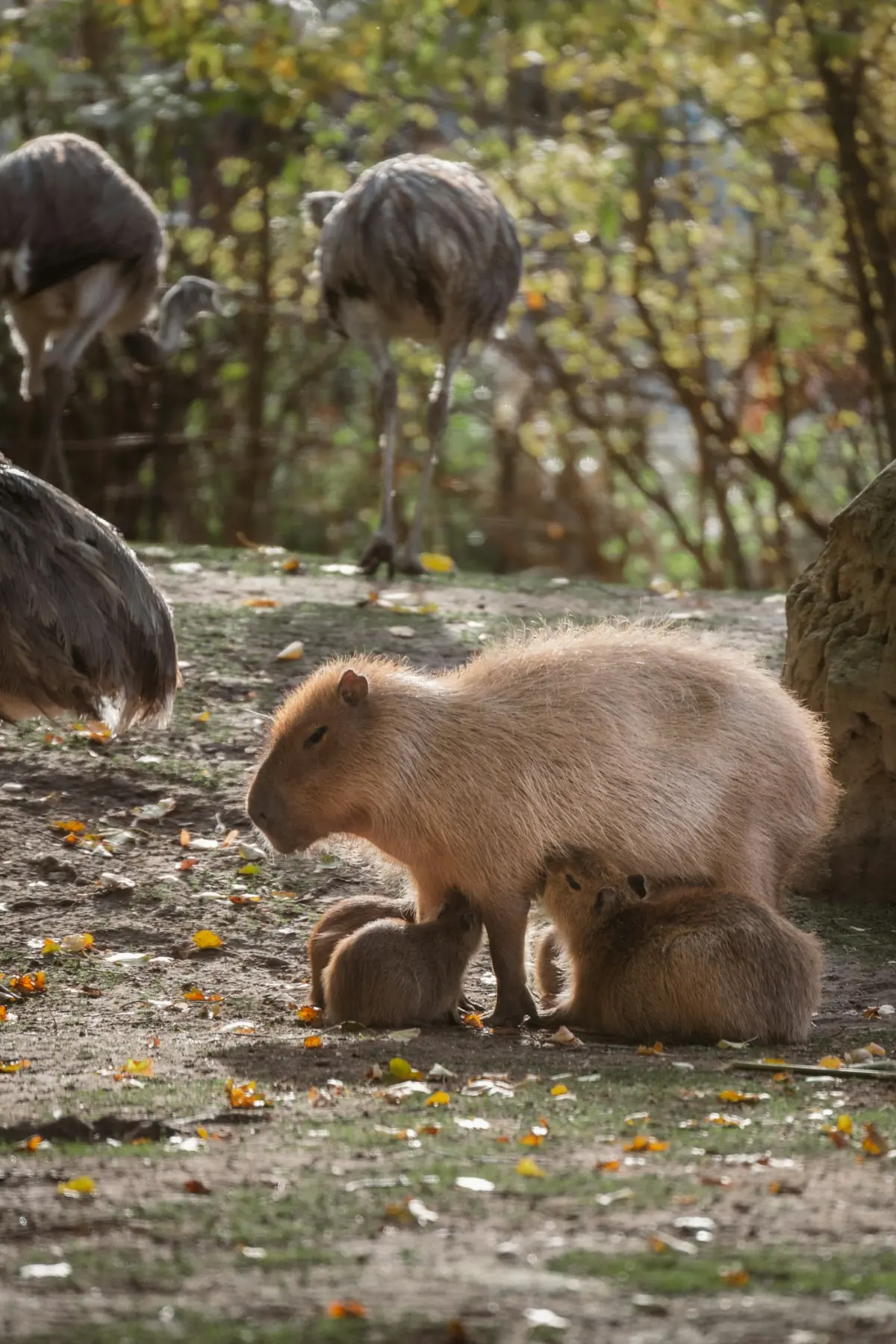
Baby capybaras are often called pups, and they are born ready in a way that makes most newborn mammals look slow on the uptake. They arrive with fur, open eyes, working senses, and the ability to follow the group almost immediately. That is not aesthetic. That is wetland engineering.
The capybara fan part of you will melt slightly looking at them. The biology part should appreciate that those tiny rain-boot feet are running a small survival résumé from day one.
What Baby Capybaras Are Actually Called
In English, “pup” is the most common term — used by zoos, fans, and many care references. You will also see “young” or “juveniles” in scientific writing. Spanish-language sources sometimes use “cría,” and Portuguese uses “filhote.” None of those are wrong; they are just registers. “Pup” is the convenient meme-friendly term that also happens to be acceptable in animal-keeping contexts.
The important part is the strategy, not the label. Capybara babies are born relatively developed because the group lives in open, predator-heavy wetlands. A baby that needs three weeks in a hidden nest is a baby that does not exist as a capybara. Evolution picked precocial. Cuteness is a side effect.
Why Capybaras Are Born Ready
Animal Diversity Web puts capybara gestation at around 150 days, which is long for a rodent. The trade-off is well-developed pups instead of jelly-bean newborns. San Diego Zoo Wildlife Alliance describes pups as able to move with the group quickly, with adult-like body coverage of fur and full sensory function.
In their native range, capybara groups live in habitat shared with jaguars, caimans, anacondas, and other predators. The Sacramento Zoo capybara page underlines the same wetland reality. A pup that cannot keep up with a fleeing group has a short story. Precocial development is how the species writes the story differently — pups can follow, can react to alarm calls, can enter shallow water, can stay near a defending adult.
the part that hits hardest in person is how quickly the pup looks like a small adult, not a different animal. Within weeks they are recognizably capybara-shaped, not “baby-shaped.” The species skips the awkward phase.
The First Weeks Look Like This
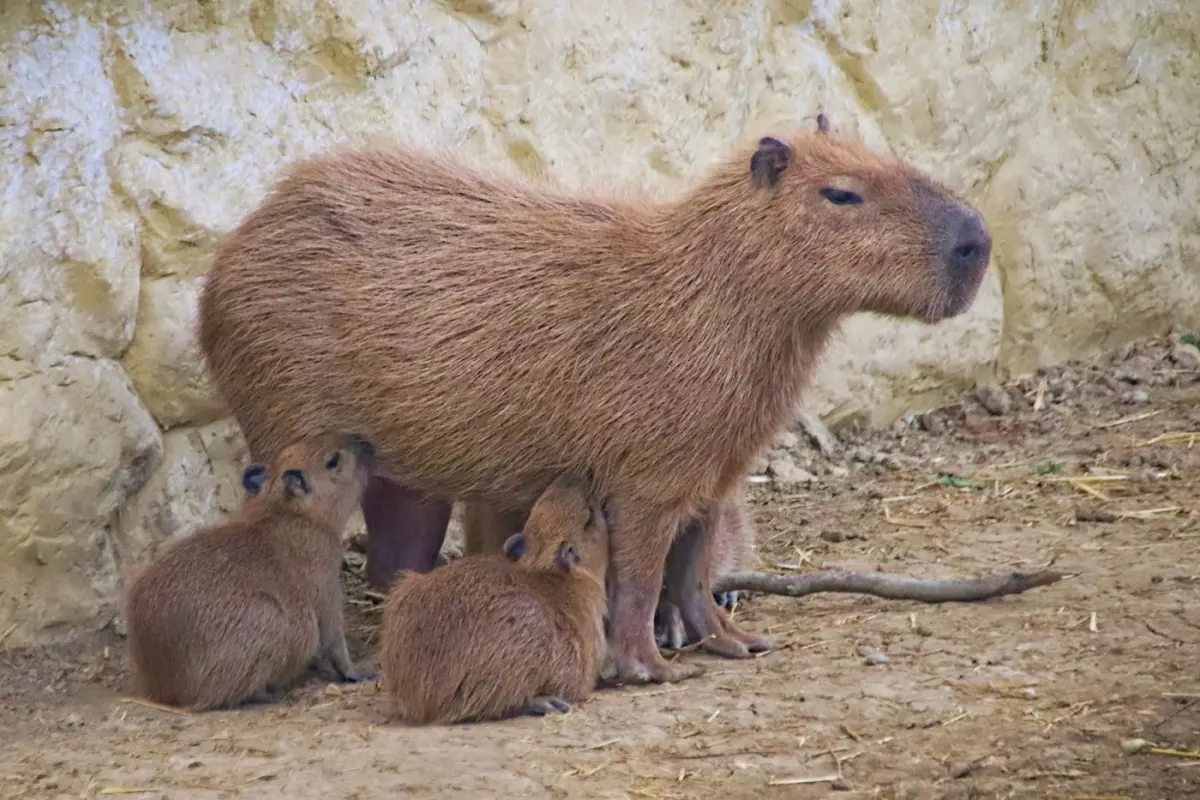
The first weeks of a capybara pup are practical, not photogenic in the Disney sense. They nurse frequently, start sampling vegetation early, follow adults near water, listen for alarm calls, and stay in close physical contact with the group. Animal Diversity Web notes weaning can begin within a few weeks but extends across several months as the pup transitions to grazing.
| Stage | What’s happening | Why it matters |
|---|---|---|
| Days 0–7 | Pup is furred, open-eyed, mobile; nurses frequently; stays near mother | Establishes survival contact and feeding |
| Weeks 1–4 | Begins sampling vegetation, follows group routes, joins shallow water entry | Builds grazing habit and water comfort early |
| Months 1–3 | Continues nursing while shifting to high-fiber grasses; learns alarm calls | Diet transition + early predator awareness |
| Months 3–6 | Mostly grazing; integrates with juveniles; learns group dominance and spacing | Social training inside the natal group |
| Months 6–12 | Approaching juvenile size; full forage diet; gradual independence | Becomes a full group member |
The reason this matters for understanding capybaras is straightforward: nothing about the species makes sense without the group. The pup is not raised as an individual project. It is raised inside a social system that does much of the work in the background.
Animal Diversity Web’s reproductive numbers help explain the trade-off: a long gestation of about 150 days, litters often around four pups, and young that can move almost immediately. Capybaras are not playing the tiny-helpless-rodent game. They invest more time before birth so the pup can participate after birth. Nature looked at open wetlands full of predators and chose “arrive with shoes on.”
How Capybara Groups Actually Raise Pups
Capybara groups, based on the long-running work by Herrera and Macdonald on group stability, are stable, mixed-age, female-biased units. Pups grow up surrounded by adults, juveniles, and other mothers. In some observed populations, females share nursing — a pup may suckle from a non-mother female in the group. That is not “babysitting” in a human sense; it is communal care patterns common in some social rodents.
This is what makes “I’ll just buy one baby capybara and hand-raise it” such a quietly bad plan. The pup is built for group life. Taking it out of that context is removing the whole curriculum. The full ownership picture covers this in detail, but the short version is: a single pup is not the same animal as a group pup, and the welfare cost shows up later.
What To Watch At A Zoo With Capybara Pups
If you are lucky enough to see pups at a reputable zoo, resist the urge to treat the moment like a baby-name reveal. Watch the system. A pup usually stays near adults, follows group movement, samples food while still relying on milk, and reacts fast when the group shifts. The tiny animal is not freelancing. It is reading the room.
Good signs are boring in the best way: barriers keep visitors back, staff keep the area calm, pups can retreat with adults, and the habitat has water, dry rest spots, shade, and enough space for the group to decide where it wants to be. The AZA Capybara Care Manual’s emphasis on social housing and aquatic access becomes very visible when pups are present. The baby is cute; the infrastructure is the point.
The zoo scene that tells you the most is not the perfect photo. It is the little shuffle when an adult moves and the pup follows, or when a juvenile pauses near water because the group has noticed something. That is the curriculum in motion. No one needs to tap the glass to improve it.
For U.S. fans, this is also where private ownership fantasies should cool down. A baby capybara is not a shortcut to bonding. It is a social learner at the most important stage of its life. Removing it from capybara company because it is cute is the exact kind of human decision that feels affectionate in the moment and looks selfish under husbandry lighting.
Misconceptions About Baby Capybaras
“They are guinea pigs that grow up.” No. They are members of a different rodent family with a different body plan, social structure, and water requirement. Cute juvenile resemblance is misleading. The full species comparison is worth reading.
“You can bottle-raise one and skip the group.” You can keep one alive that way. You cannot give it normal capybara social development. The pup grows up imprinted oddly, often anxious or aggressive at maturity, and unable to integrate with other capybaras later.
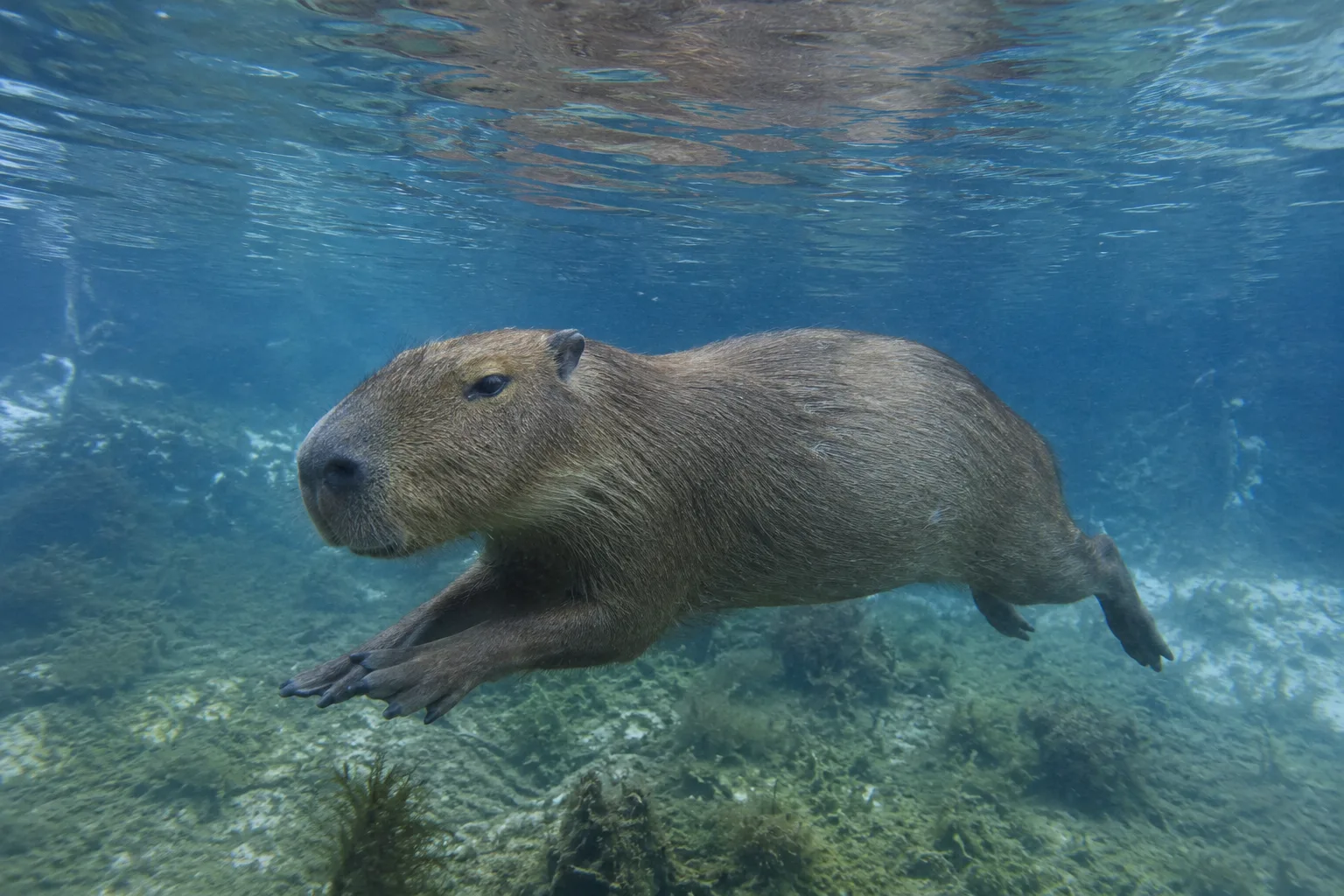
“Babies are too small to swim.” They are not. Capybara pups enter water young, though they stay close to adults. The overall picture of capybara swimming explains why water access matters at every age.
“The ‘pup’ name means they are like puppies.” “Pup” is just the term. Capybara pups are nothing like dog puppies in development. They are precocial, group-raised, and aimed at independence in months, not years. The label is convenient, not informative.
What Fans Should Not Do
If you see baby capybaras at a zoo or wildlife park, give them space. Do not tap glass, lean over barriers, feed, shout, or try to summon them for content. Mothers and groups need calm. Pups need normal social learning more than they need a stranger narrating their cuteness in portrait mode.
The U.S. zoo viewing guide covers what good viewing looks like. The short version applied to pups: stay back, stay quiet, watch how the pup tracks adults, watch how adults position around the pup, watch how the group reacts when a keeper appears. That is where the actual cuteness lives — in the small competent things they already know how to do.
The best baby capybara moment is the one where the animal gets to keep being a baby, not a prop. A pup wobbling after an adult is already doing something remarkable: joining a social system, learning a landscape, and staying alive while looking like a loaf that has not downloaded all its updates.
That is the fan contract. Admire the smallness, but do not shrink the animal into a toy. Baby capybaras are adorable because they are already capybaras: social, alert, water-aware, and built for a world that expects competence early. The cute part is real. So is the responsibility to let it stay real.