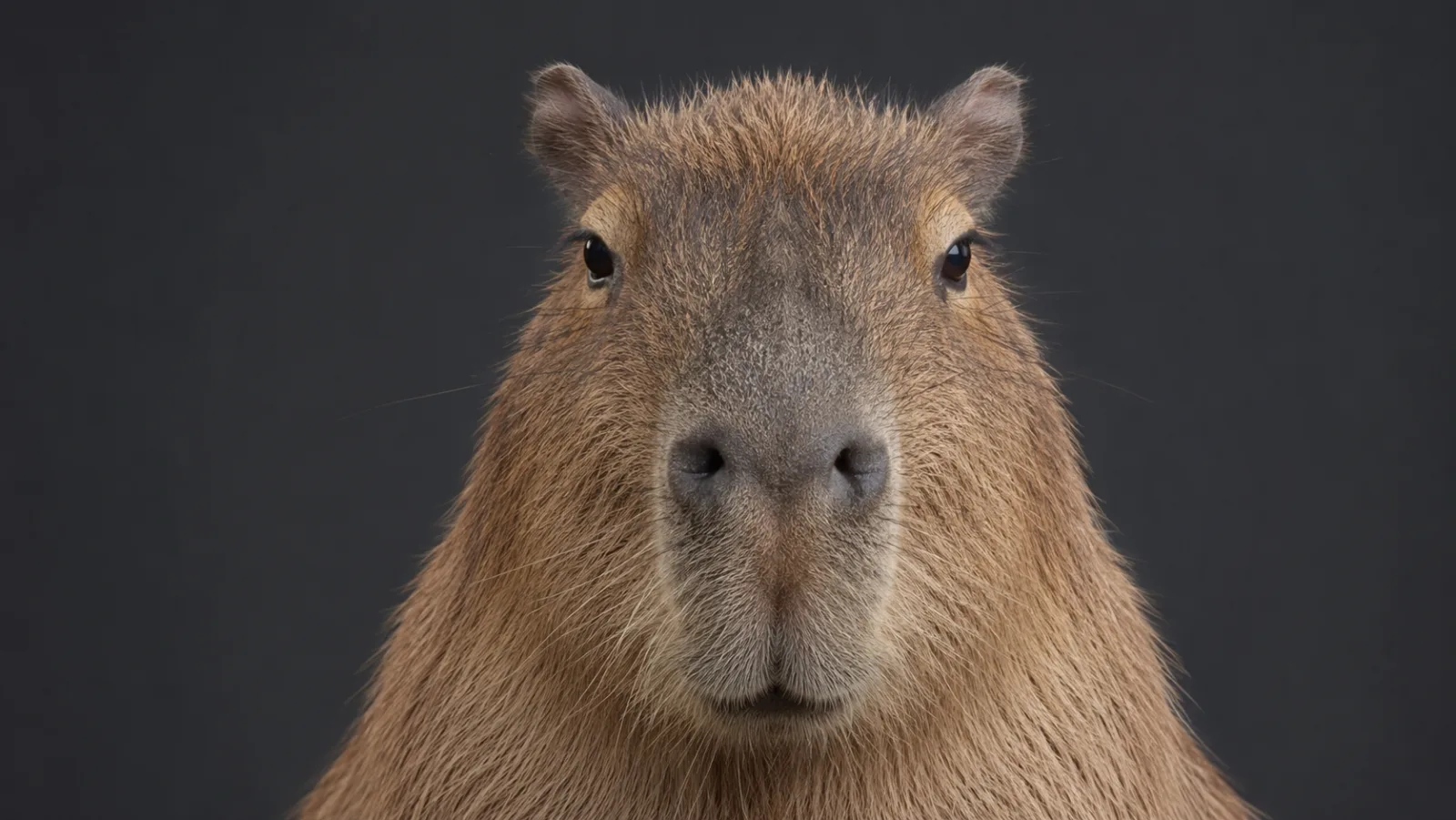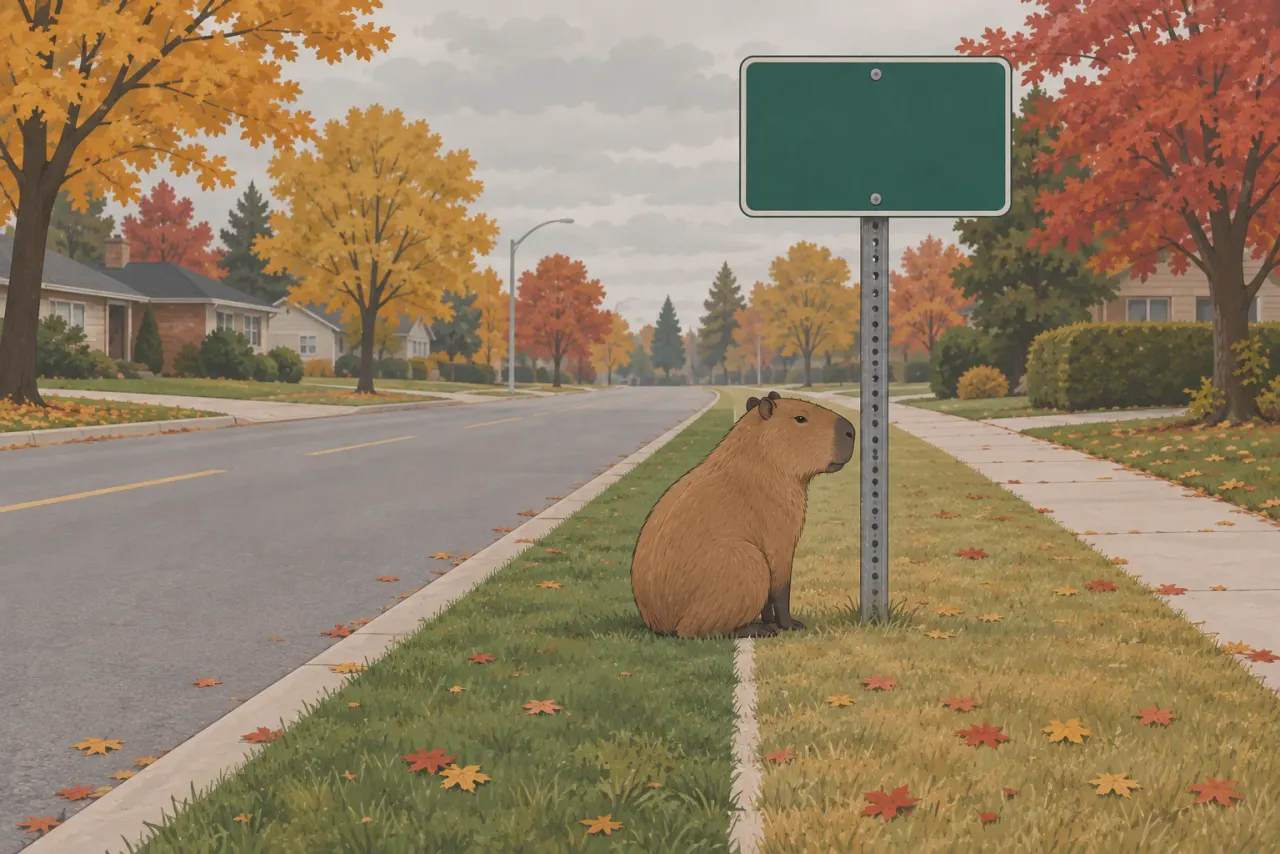
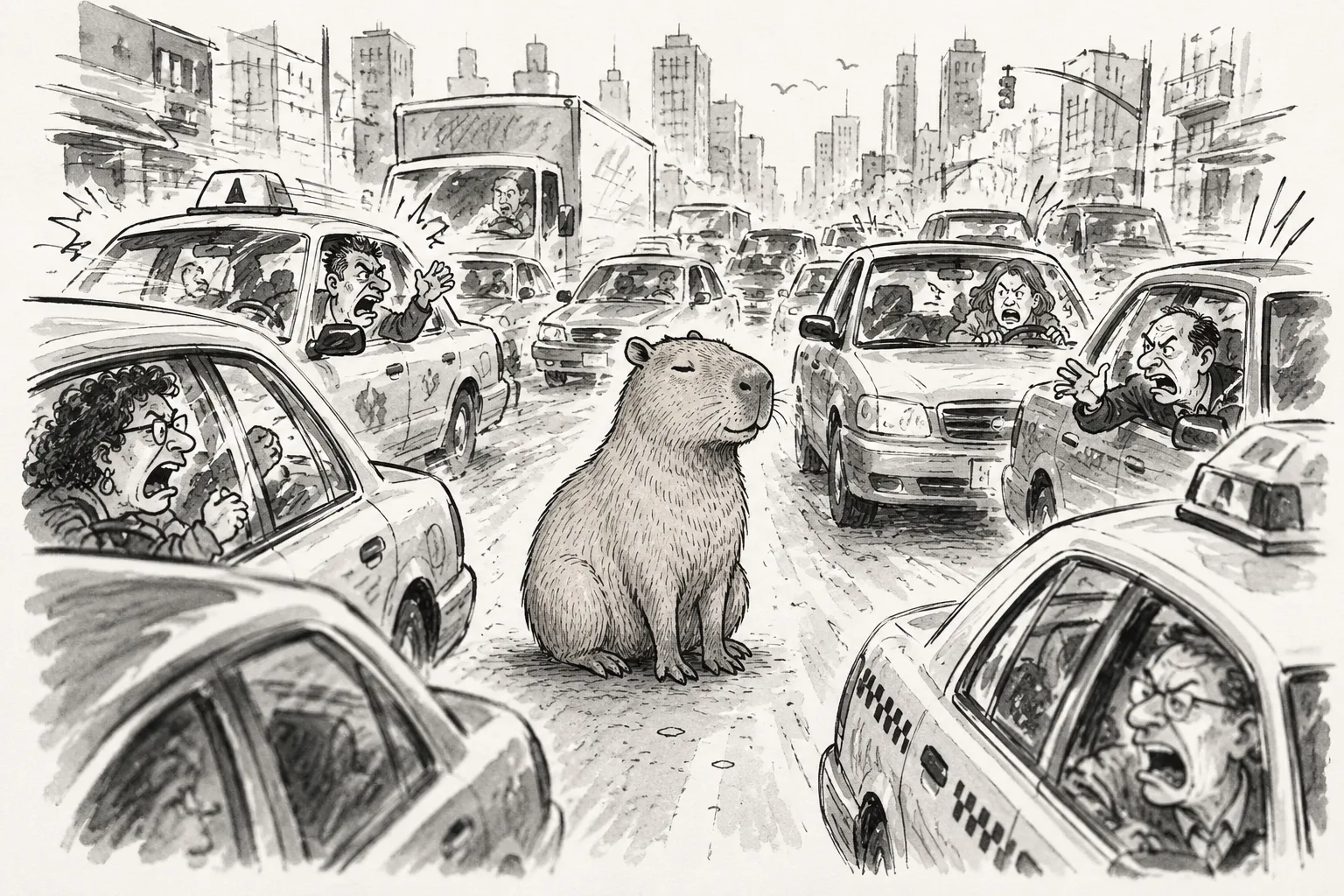
An escaped capybara is not a side quest. It is a wet, fast, 100-pound paperwork event.
The correct response is boring: keep distance, do not chase, do not feed, report the location, and let trained people handle capture. The exciting response is how animals end up in traffic, water hazards, or somebody’s deeply regrettable phone video.
Do Not Chase The Wet Paperwork Event
Chasing is almost always the wrong first instinct. Capybaras are prey animals. Animal Diversity Web describes their alarm behavior and tendency to flee into water when threatened. If a loose capybara is already stressed, a crowd of helpful strangers can make the situation worse fast.
Helpful does not mean closer. Helpful means quieter, farther away, and on the phone with someone responsible.
Why Escaped Capybaras Often Head For Water
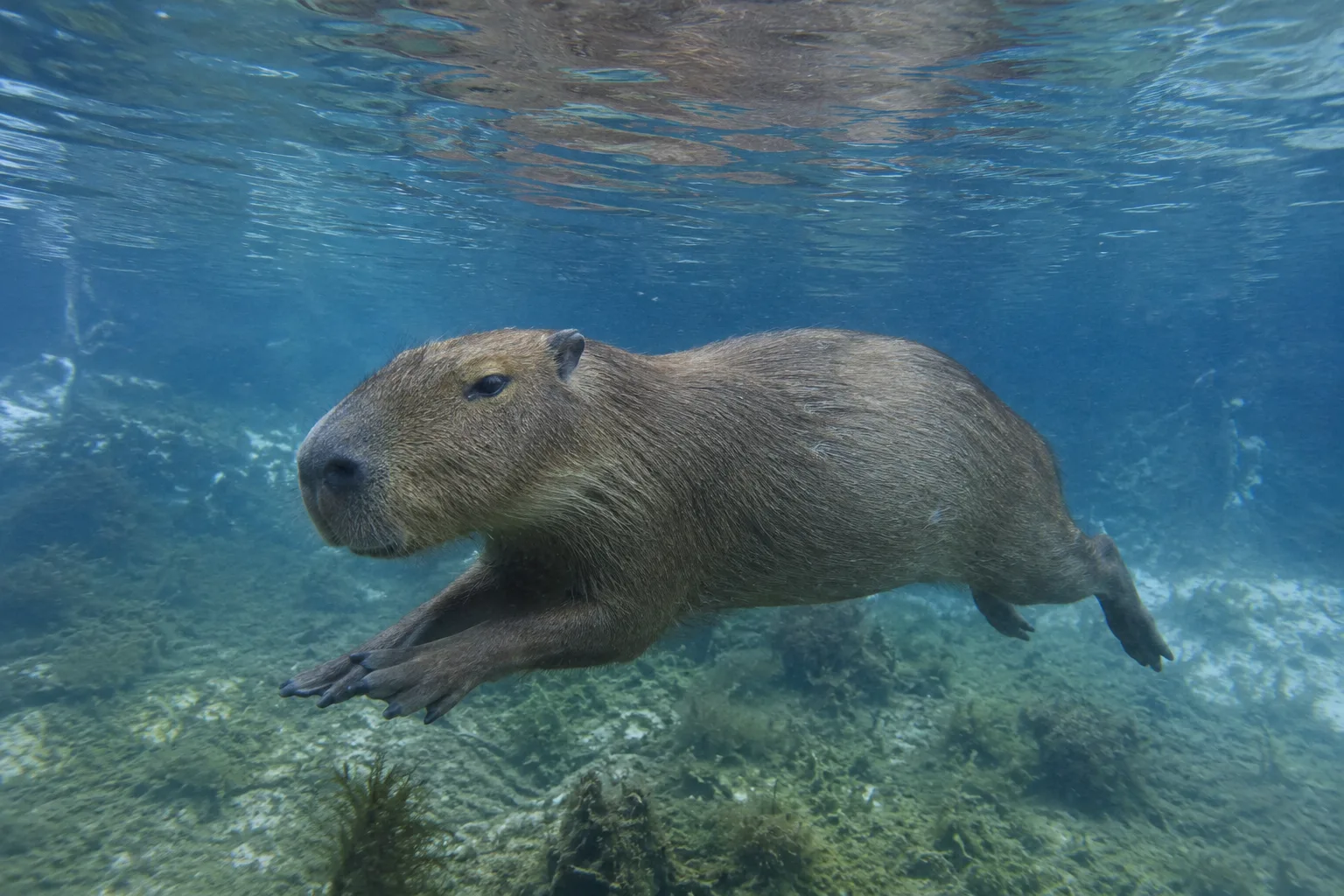
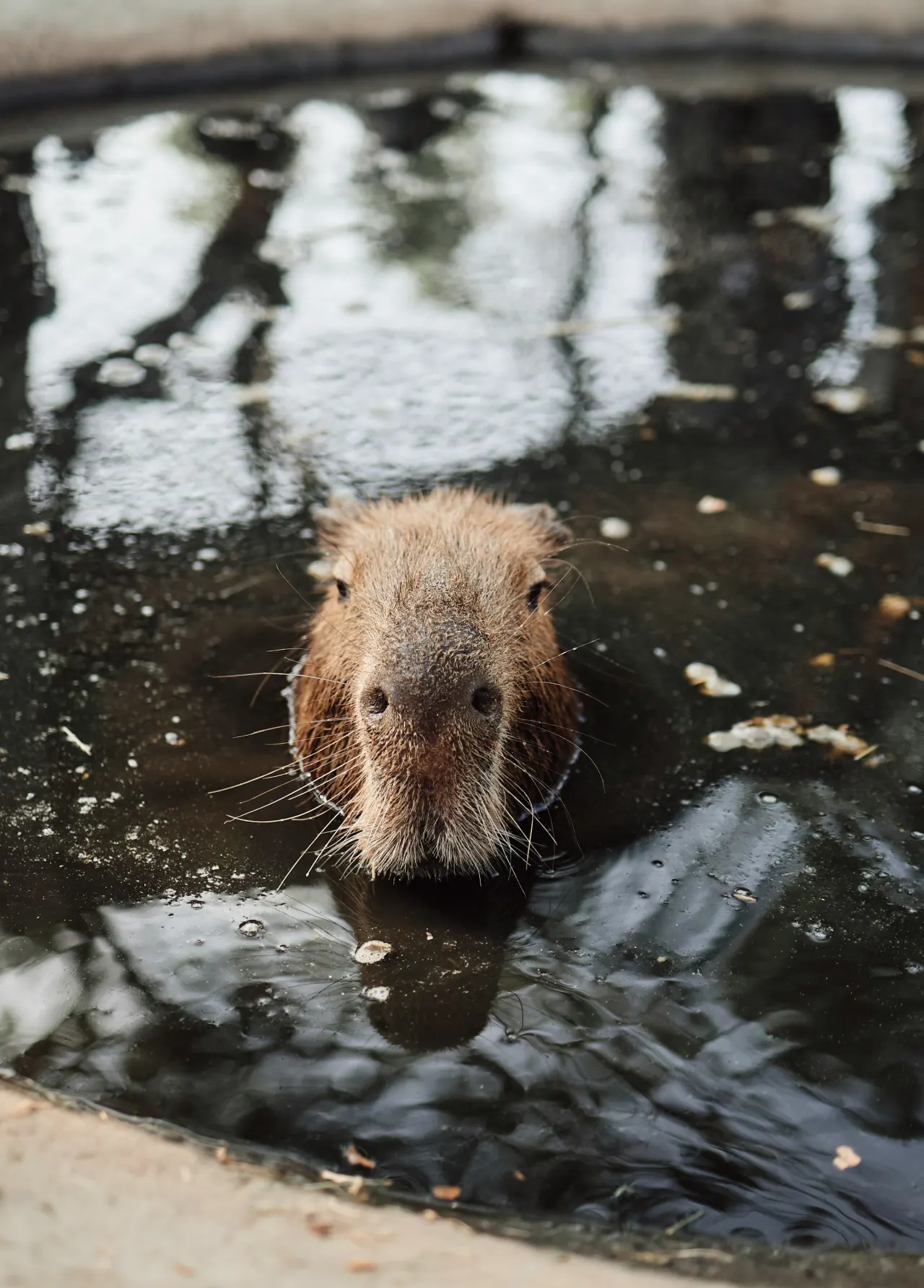
Water is not just comfort. It is safety, cooling, movement, and escape. San Diego Zoo notes that capybaras are strong swimmers and can stay underwater for several minutes. The AZA care manual ties major capybara behaviors to water access.
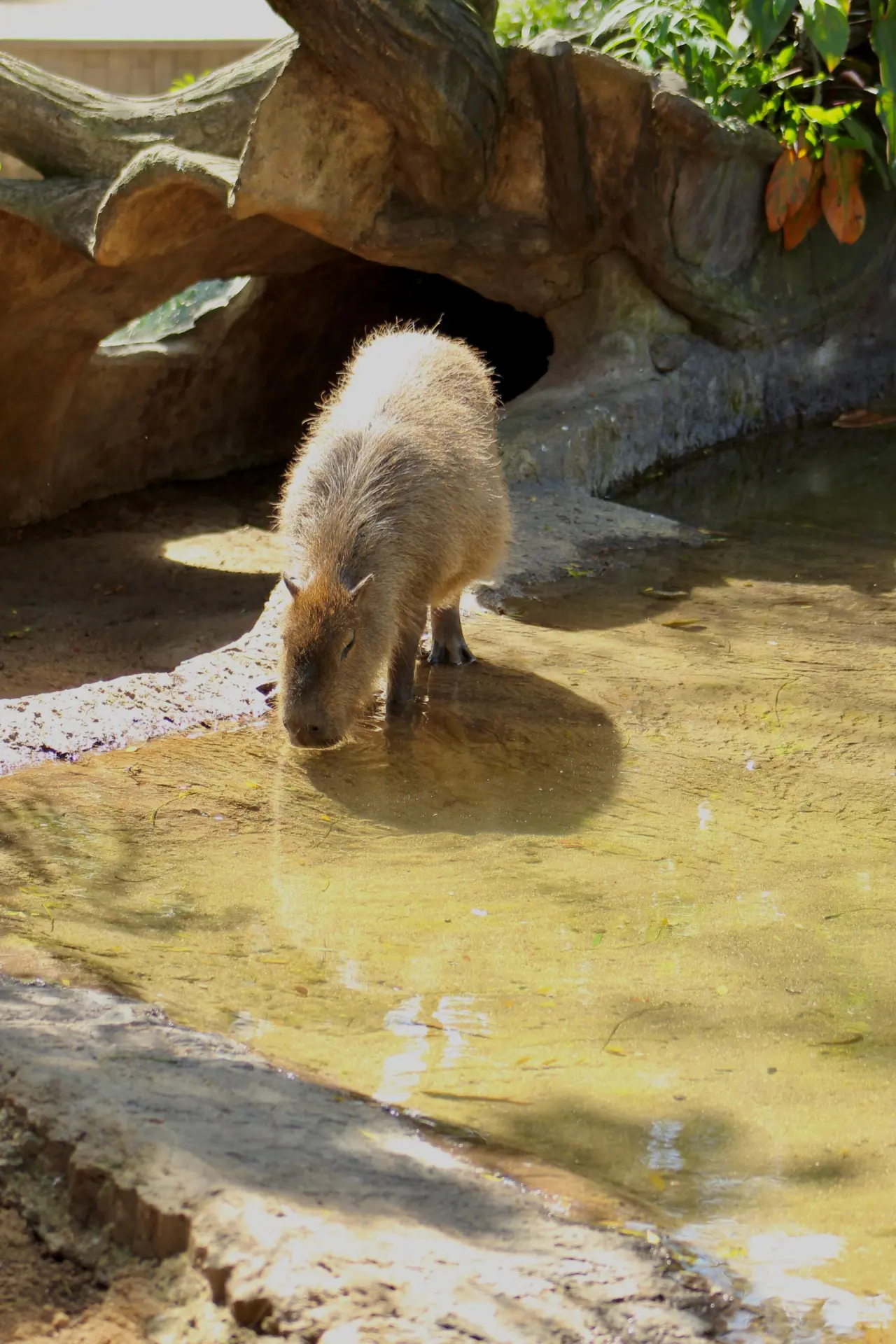
That means a loose capybara may head toward ponds, canals, drainage areas, lakes, marshy edges, or any place that feels like the emergency exit it evolved to understand.
Who Gets Called First
The answer depends on where the animal came from. A zoo, sanctuary, private owner, permitted exhibitor, or illegal pet situation all create different chains of responsibility.
| Situation | Who should be contacted |
|---|---|
| Known zoo or facility escape | Facility staff and local authorities |
| Unknown loose animal | Animal control or police non-emergency |
| Roadside sighting | Local authorities, with exact location |
| Private owner known | Owner plus animal control if public risk exists |
| Injured animal | Animal control or wildlife/exotic-animal responders |
What Bystanders Should Actually Do
Do not corner it. Do not offer food. Do not bring your dog closer for “tracking.” Do not try to herd it with a car, bike, stroller, kayak, or confidence.
Take a photo only if you can do it without moving closer. Note the time, direction of travel, nearby water, roads, fences, and whether the animal looks injured. Then back off. A calm report beats a chaotic rescue attempt every time.
Why A Loose Capybara Is Genuinely Hard To Recover
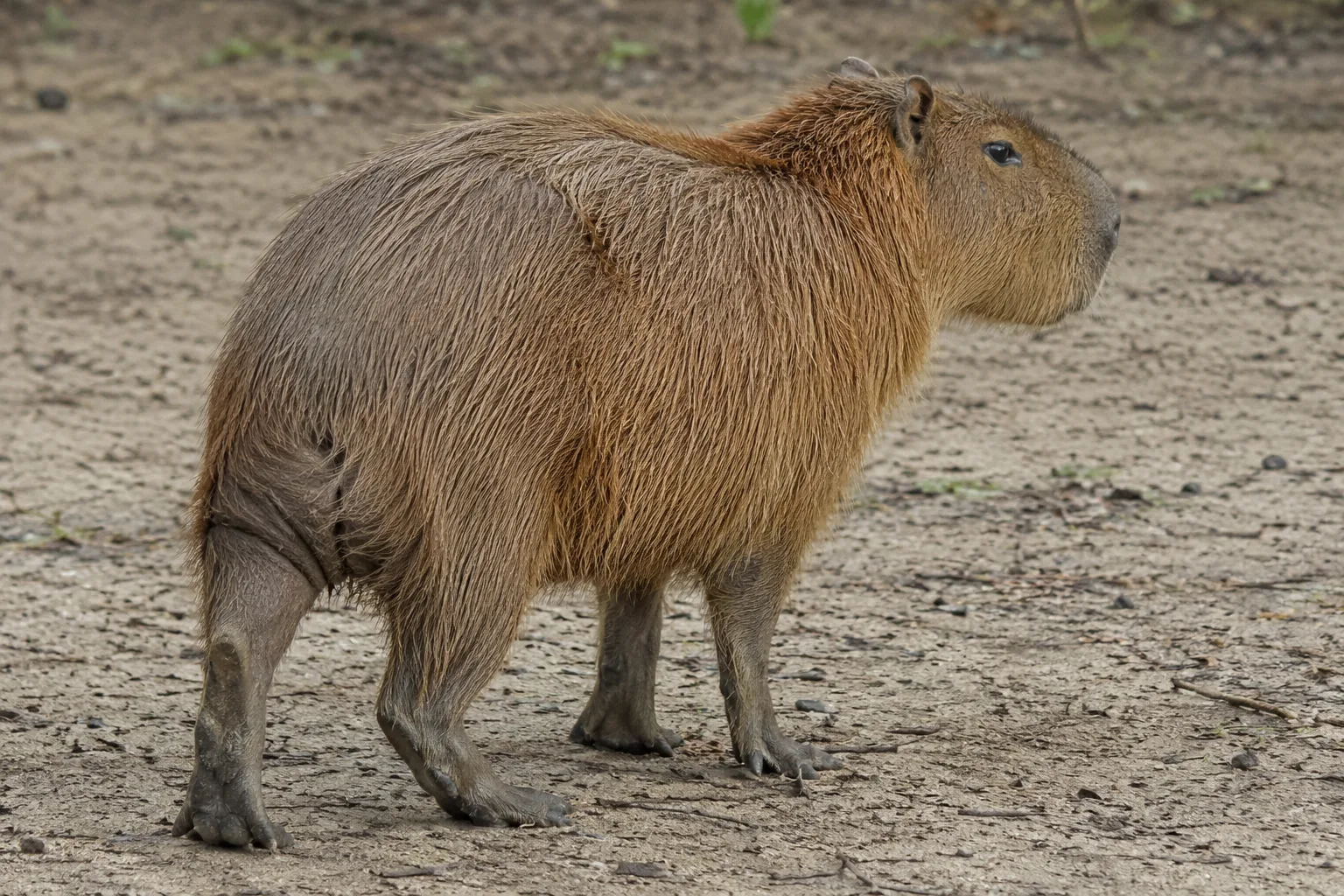
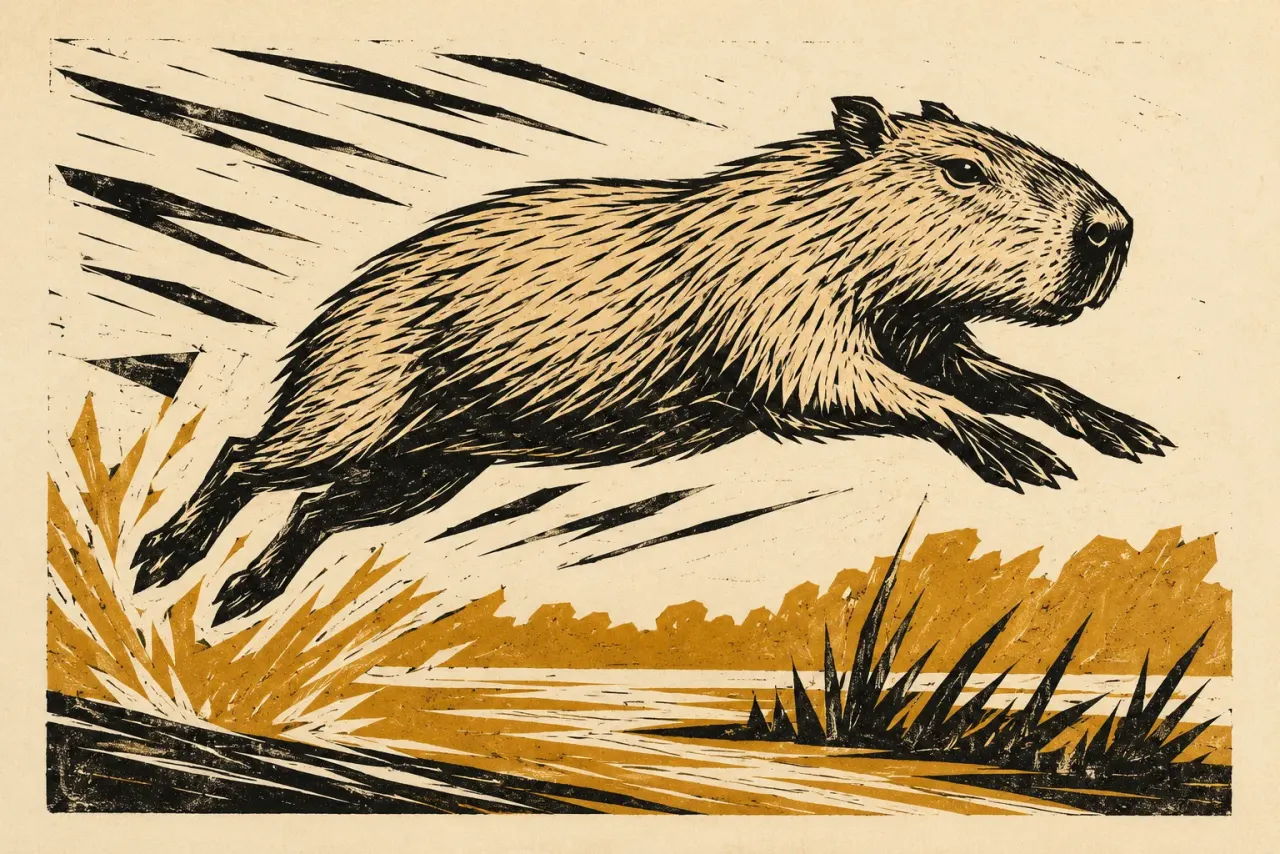
It helps to remember what you are actually dealing with. A capybara is the world’s largest rodent. Adults run roughly 35 to 66 kg, somewhere around 77 to 145 lb, which is the weight of a person crossed with the reflexes of a prey animal. They are native to South America, semi-aquatic, and built to disappear into water at the first sign of trouble. Animal Diversity Web and the San Diego Zoo Wildlife Alliance both describe them as strong swimmers that can submerge for several minutes.
So a “loose pet” is, in practice, a fast grazer with semi-webbed feet, continuously growing teeth, and an evolved instinct to head for the nearest body of water and wait you out. None of that is hostile. It is just very inconvenient for anyone hoping to scoop the animal up and carry it home.
There is also the welfare side, which tends to get lost in the excitement. Capybaras are herd animals. The AZA Capybara Care Manual treats social housing as basic care, not a nicety, because isolation is a real stressor for them. An escaped capybara is already alone, already alarmed, and already off its normal feeding routine. Add a crowd and the stress compounds.
My honest opinion: the videos are funny, and I will not pretend otherwise, but the cheerful “let’s all help catch it” energy is usually the worst thing that can happen to the animal. The kindest move is almost always the most boring one.
Sorting The Internet Capybara From The Real One
A lot of escape coverage runs on folklore. Here is where the popular version drifts from what the sources actually support.
| Myth | Better answer |
|---|---|
| Capybaras are slow and easy to grab | On land they are quick over short distances, and in water they outclass any pedestrian. |
| They are basically friendly dogs | They are social with their own herd, not domesticated. A stressed adult can bite and can injure itself bolting. |
| If it reaches water, it is “saved” | Water is where capture gets harder, not safer. Canals and storm drains carry their own dangers. |
| Anyone can lure one with snacks | Food draws a stressed animal toward people and roads. Animal Diversity Web ties their natural diet to grasses and aquatic plants, not handouts. |
| A loose capybara will just go home on its own | Sometimes. Often it follows water or cover instead, which is how they end up far from where they started. |
Case Study: Samba And The Five-Month Search
Everything above is easier to believe with one worked example, and Britain supplied a thorough one in 2026.
Samba, a capybara, escaped Marwell Zoo in Hampshire on 17 March 2026 — one day after arriving from Jimmy’s Farm & Wildlife Park in Suffolk with a companion, Tango. Tango was recovered within hours. Samba was not.
The last sighting supported by photographic evidence was 22 March 2026, near Colden Common. Five days in. Every report after that date has been unverified.
What the zoo threw at the problem is the part worth studying, because it was not a token effort:
- Coordinated ground searches by more than twenty staff
- Thermal imaging drones
- Scent-tracking dogs
- Camera traps, plus AI wildlife cameras originally built for African savanna work
- A public sighting line, and months of appeals through regional and national media
- Physical traps, laid on 17 August 2026 near a fresh reported sighting — five months in, and the first hardware commitment of the search
The strongest physical evidence in the entire operation was not a photograph or a thermal signature. It was a river bailiff’s report on 23 April of riverbank vegetation grazed at capybara height, in a bite pattern he did not recognise from local species. That is what “hard to recover” means in practice: five months of technology, and the best lead is a person who knows a riverbank well enough to notice that something had been eating it wrong.
Three things about this case generalise.
Water is not a barrier, it is cover. Samba went into a landscape of rivers and dense bankside vegetation, which is exactly the habitat a capybara is built to disappear into. Thermal drones work well over open ground and poorly under a canopy beside running water.
Public sightings are volume, not signal. The search generated a steady stream of reports and a national fan club. None of it produced a confirmed location. Most reports of a loose capybara in the British countryside are muntjac deer, which are the right size, the right colour, and far more numerous.
An escape that runs past the first day can run for months. Tango was back before lunch. Samba was not recovered in the period covered by any reporting we have been able to verify, through to 1 September 2026. The first few hours really are the whole game.
What Recovery Actually Looks Like
When trained responders show up, the work is slow on purpose. They read the animal before they move on it: is it grazing, hiding, or panicking? They limit the audience, because every extra body is another thing for a prey animal to track. They use containment and barriers rather than a sprint, and they think about where the animal is being pushed toward, not just away from.
Vitamin C matters here too, oddly enough. Like guinea pigs, capybaras cannot make their own and need it in the diet, so a long stint loose and off-routine is not just a public-safety problem, it is a small health clock ticking in the background. That is one more reason recovery teams prefer hours over days.
For the public, the useful contribution is information, not muscle. A clear, calm report — location, direction, nearest water, whether the animal looks hurt — does more for the outcome than any heroic lunge.
The Legal Mess Does Not End At Capture
After recovery, the questions start: How did the animal escape? Was the enclosure secure? Was the owner permitted? Did anyone get bitten? Did the animal cross roads, private property, or public water?
That is why prevention matters more than heroics. Secure fencing, gates, staff protocols, and legal ownership are not dull details. They are the part that keeps the capybara out of the group chat in the first place.