
No, and it is a firmer no than most guides admit. Massachusetts does not publish a list of banned animals. It publishes the reverse: under M.G.L. c. 131, § 23, keeping an undomesticated mammal requires a license from the Division of Fisheries and Wildlife, and the director maintains a short exemption list of species you may keep as a pet without one.
That list is 321 CMR 9.01. It runs to thirteen mammals. The capybara is not among them, and the license that would otherwise cover possession has to be refused for pet applications.
No — the species is off the list, and the license route excludes pets
321 CMR 9.01 exempts thirteen mammals from the licensing requirement of M.G.L. c. 131, § 23. Capybaras are absent, and 321 CMR 9.02 presumes any unlisted vertebrate taxon to be wild.
The Class 4 propagator's license under 321 CMR 2.12 is the only instrument that could authorize possession, and 2.12(9) requires denial when the application is to keep animals as pets.
Massachusetts Runs a White List, and the Capybara Missed It
Most state guides in this series work the same way: find the dangerous-animal statute, check whether the species is named, breathe out if it is not. Run that method in Massachusetts and you will get the answer exactly backwards, because absence here is the bad outcome.
Three documents do the work, and they stack.
| Document | What it does | Where the capybara lands |
|---|---|---|
| 321 CMR 9.02, List of Domestic Animals | Names the animals treated as domestic: dogs, cats, horses, cattle, sheep, goats, swine, llamas, alpacas, camels, rabbits, guinea pigs, hamsters, gerbils, laboratory rats and mice | Absent. Under 9.02(2)(c), any vertebrate taxon not listed is presumed wild |
| M.G.L. c. 131, § 23 | Requires a propagator’s or dealer’s license to possess undomesticated mammals, and directs the agency to keep a special exemption list of species allowed as pets without one | Applies. A wild mammal without an exemption needs a license |
| 321 CMR 9.01, Exemption List | The exemption list itself: thirteen mammals you may possess without a license | Absent. No exemption, so the licensing requirement stands |
The whole answer sits in those three rows, and none of them mention capybaras once. That is the point. A banned-list state has to name the animal to stop you. A white-list state stops you by never having named it at all.
321 CMR 9.01 exempts the paca (Cuniculus spp.), a Neotropical rodent from the same broad caviomorph group as the capybara. So the state is not squeamish about that branch of the family as a category. The capybara simply never got added, and thirteen entries is not a list anyone is in a hurry to extend.
The One License Route Closes on the Word “Pet”
If a species is not exempt, the fallback is a license, and 321 CMR 2.12 sets out the classes. The relevant one is Class 4, the propagator’s license, which authorizes a person to possess, maintain, propagate, buy, sell or otherwise lawfully dispose of specified birds, mammals, reptiles or amphibians.
Read the eligible purposes and you can see the shape of who it was written for: authentic scientific use certified by a recognized institution, educational use at an accredited school, commercial use integrated into a primary occupation, commercial propagation of approved species, zoo breeding programs, captive propagation of threatened and endangered species, aviculture, reptile propagation, training animals to assist people with disabilities, and animals lawfully held before July 1, 1980.
None of those is “I would like a capybara.”
Then 2.12(9) removes the ambiguity entirely. An application shall be denied when it is for a license to possess, maintain, propagate or cultivate animals as pets, and separately when the purpose is based purely on curiosity, impulse or novelty, or to provide for personal amusement or entertainment.
That is not an official exercising judgment about your fencing. It is a mandatory denial written into the regulation, which means the answer does not improve with a better property, a better vet or a better letter.
Boston, the Berkshires, and Why Neither Changes the Answer
Massachusetts is a home-rule state, and cities and towns write their own animal ordinances on top of everything above. Boston, Worcester and Springfield all regulate non-domestic mammals independently.
Here is the thing though: those ordinances are a second lock on a door the state has already bolted. In most states in this series the local layer is where a plan quietly dies. In Massachusetts the plan is finished before it gets there.
Which also disposes of the western-Massachusetts theory. The Berkshires and the Pioneer Valley genuinely do have fewer local restrictions and more land, and none of that matters, because 321 CMR applies from Provincetown to Williamstown without a rural carve-out. Fewer ordinances is not an exemption. It is just fewer ordinances.
The call to MassWildlife tends to make this obvious fast. You ask whether capybaras are legal, and the useful reply comes back as a question of its own: which license class are you applying under, and for what purpose. Answer “as a pet” and the conversation is over, politely, in about a minute. Answer honestly at all and you find there is no class that fits. People walk away from that call assuming they caught the agency on a bad day. They did not. They caught the regulation working exactly as written.
What You Can Legally Keep in Massachusetts Instead
If the appeal is a calm, blocky, grass-eating rodent that tolerates people, Massachusetts has not closed that off. It has closed off this one.
Named on the domestic or exemption lists
- Guinea pig, hamster, gerbil, laboratory rat and mouse (9.02)
- Chinchilla from captive stock (9.01)
- Degu, Egyptian spiny mouse (9.01)
- Southern flying squirrel, sugar glider (9.01)
- Four-toed African pygmy hedgehog (9.01)
Not on either list
- Capybara
- Any wild vertebrate taxon 9.02 does not name
- All of which 9.02(2)(c) presumes wild by default
- None of which 9.01 exempts
- Leaving only a license route that excludes pets
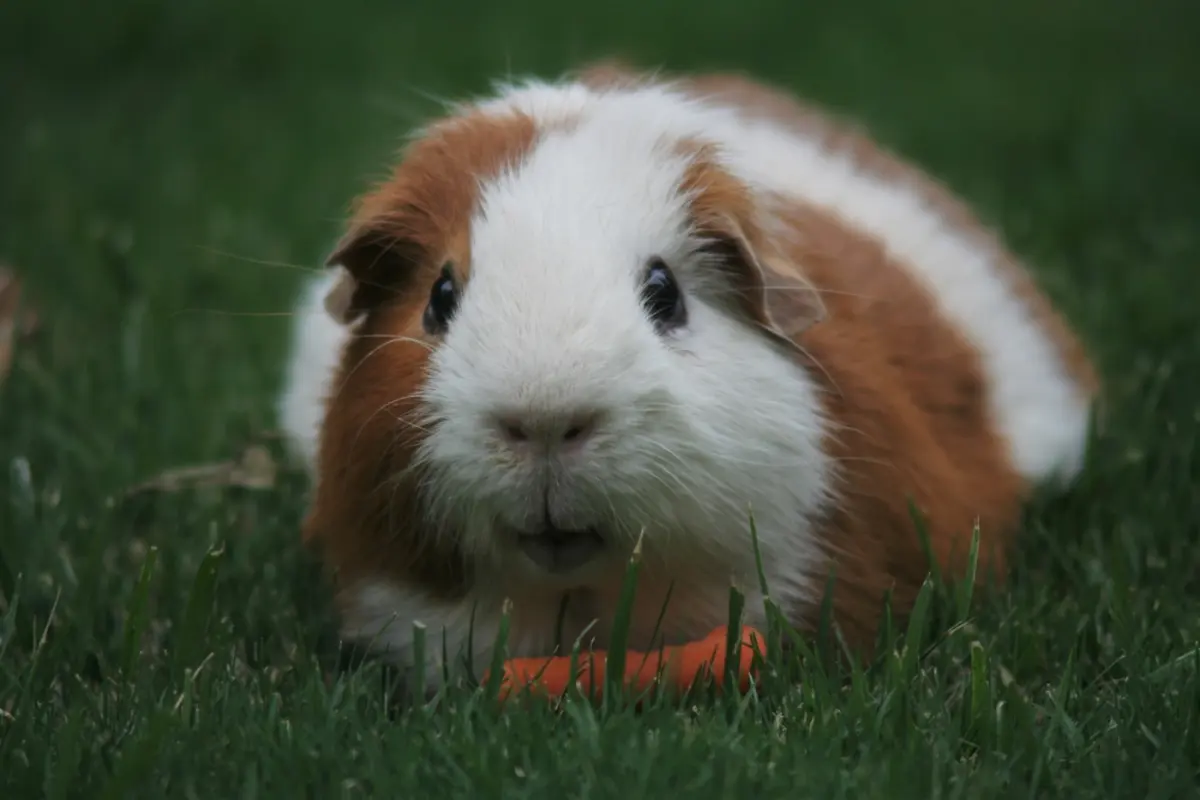
The guinea pig is the honest consolation prize, and it is a closer one than it sounds. Guinea pigs and capybaras sit in the same family, Caviidae. The capybara is what happens when that body plan is scaled up and moved into the water, which is precisely the part Massachusetts is not going to license into a back yard in Framingham.
Where Massachusetts People Actually Meet Capybaras
The regulation closes ownership. It does not close the animal off, and the honest read is that most people asking this question want proximity rather than possession anyway.
Zoos and wildlife parks are the route that works, and a growing number of US facilities and cafes run supervised paid encounters where you sit with the animals under staff rules. Our roundup of where to see capybaras in the US covers the zoo route, capybara cafes in the US covers the sit-down version, and ethical capybara encounters covers the screening question worth asking before you pay for any of it.
The screen matters more than the distance. A facility that gives the animals a route away from visitors, caps group sizes and has a posted policy on handling is a different experience from a photo line, even when the price is the same. New England residents will usually be looking at a drive either way, so it is worth choosing on setup rather than on mileage.
The Winter Bill You Are Not Going to Pay
Worth understanding what the regulation is standing between you and, because the care side of a Massachusetts capybara would have been the harder half even in a state that allowed it.
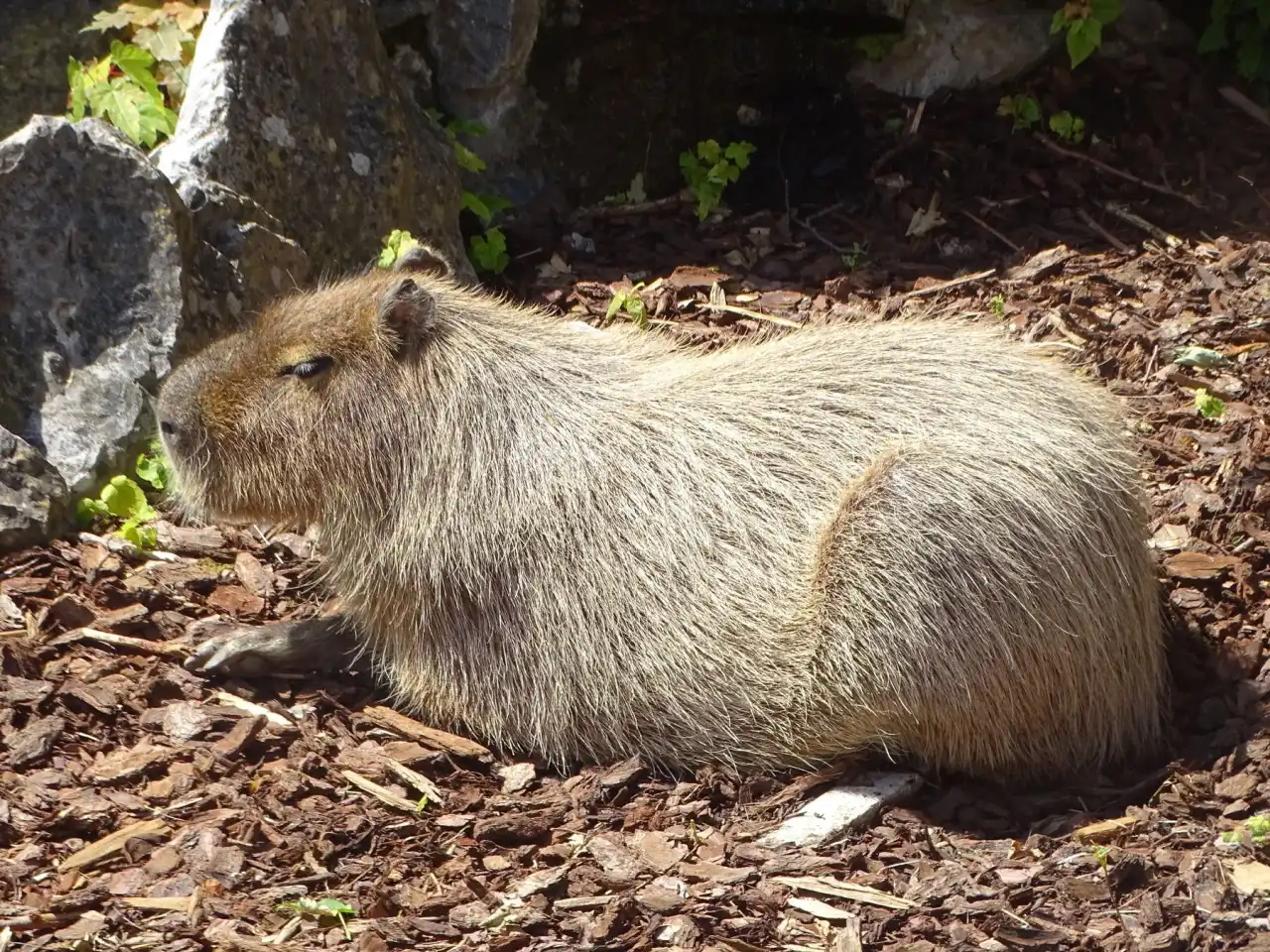
Those come from Animal Diversity Web, which also records that a capybara without a group is shut out of most grazing habitat and has no realistic chance of finding a mate. The AZA Capybara Care Manual treats water access as fundamental rather than enriching.
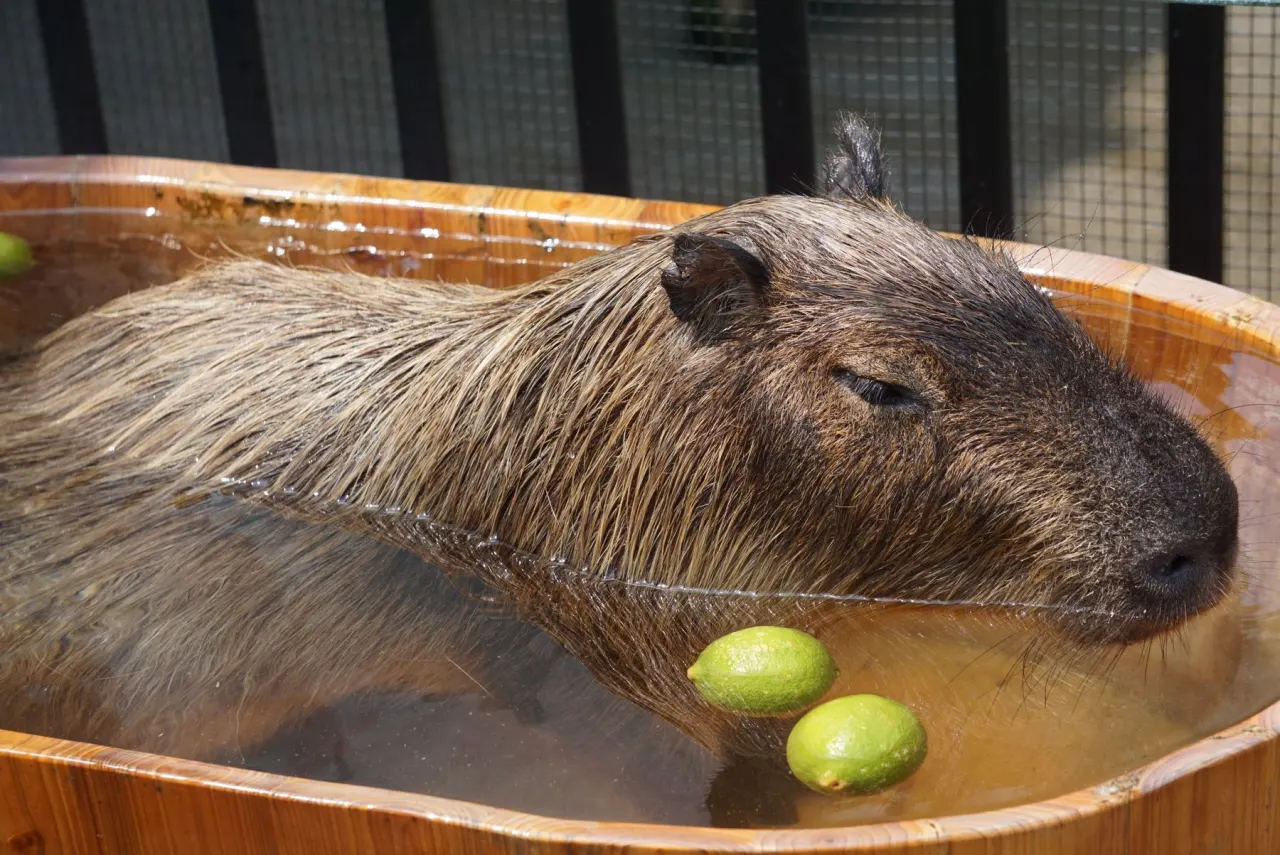
In a New England winter that means heated, filtered water that keeps working through a January cold snap, plus heated shelter, safe footing on ice and a transport plan for a drive to an exotic vet in weather that shuts roads. For two animals, because one is not an option. The photogenic version of this, capybara in a warm bath surrounded by citrus, is a managed facility with staff, filtration and a thermometer behind it. It is not a garden feature.
The One Licence With a Fee, and the Rule That Refuses It
Massachusetts is the rare state where the cost question has to be answered backwards. There is a licence with a fee on the application form. The regulation then instructs the Division to refuse it for your stated purpose.
The denial grounds are written into the rule rather than left to discretion, and they name the motives as well as the purpose: curiosity, impulse and novelty are listed alongside pet-keeping. That is a drafter deliberately closing the argument that a propagator’s licence is a technical route to the same outcome.
Under 321 CMR 9.02 any vertebrate taxon not listed is presumed wild. So the capybara does not have to be prohibited by name to be prohibited — it simply has to be absent, and it is absent from both lists that matter.
That closes the state layer before a single municipal ordinance is reached, and it makes the budget question moot. If the interest is in being near the animal rather than owning one, what it costs to meet a capybara prices the legal version of that in Massachusetts and nearby.
Misconceptions Massachusetts Readers Repeat
| What Massachusetts buyers believe | What is actually true |
|---|---|
| ”321 CMR 9.01 is a banned-species list” | It is an exemption list. It names the wild animals you may keep without a license, and it is short. |
| ”Capybaras aren’t on the list, so they must be allowed” | Absence is the restrictive result here. Not exempt means the licensing requirement of c. 131, § 23 applies. |
| ”I’ll apply for a permit and make a strong case” | 321 CMR 2.12(9) requires denial of pet applications. Property, references and intent do not change that. |
| ”Western Massachusetts is basically Vermont” | 321 CMR applies statewide. Fewer town ordinances is not a rural exemption. |
| ”It’s a blue state, so it will be relaxed about this” | Massachusetts conservation regulation is strict and ecologically driven, which cuts the other way on exotics. |
| ”I’ll import first and sort the paperwork after” | The import is itself the regulated act, not a step that precedes regulation. |
If You Want to Verify This Yourself
Do not take a website’s word for a legal answer, including this one. The regulation is public and the calls are short.
| Who to contact | What to ask | Why it matters | What changes the answer |
|---|---|---|---|
| MassWildlife, Division of Fisheries and Wildlife | Is Hydrochoerus hydrochaeris on the 321 CMR 9.01 exemption list, and is any license class available for private possession? | This is the gating question and the only one that can reopen the door | A regulatory amendment adding the species to 9.01 |
| MassWildlife licensing | Under 321 CMR 2.12, which class could cover this, and what purpose would it need? | Confirms the pet-application denial in 2.12(9) applies to your case | Genuine scientific, educational or zoological purpose |
| City or town clerk or animal control | Does the municipality restrict non-domestic mammals or outdoor enclosures? | A second, independent restriction layer | Municipal amendment, zoning district, deed covenants |
| USDA APHIS | Does any public exhibition or paid interaction need federal licensing? | Federal layer, separate from Massachusetts entirely | Commercial or public-facing activity |
| An exotic-animal veterinarian | Do you treat capybaras, and what is the after-hours arrangement? | Relevant if you are travelling to encounters or considering another state | Species experience, distance, emergency coverage |
Ask by scientific name, ask in writing, and note the date on the reply. Regulations are amended by regulatory action, and a screenshot from a forum in 2019 is not a current answer in either direction.
The bottom line has not moved: Massachusetts is a no, and it is a no you can verify in an afternoon rather than one you have to take on trust. If the goal was time with a capybara rather than title to one, that is still completely available, and it starts with the zoo and wildlife park guide rather than a breeder. If the goal really was ownership, the honest next read is do capybaras make good pets, which is unkind to the idea in a way that has nothing to do with Massachusetts.
This guide is current as of September 5, 2026. Massachusetts amends 321 CMR by regulatory action and municipalities amend their own ordinances, so treat this as a screening path rather than legal advice, and confirm the live classification with MassWildlife before acting.