
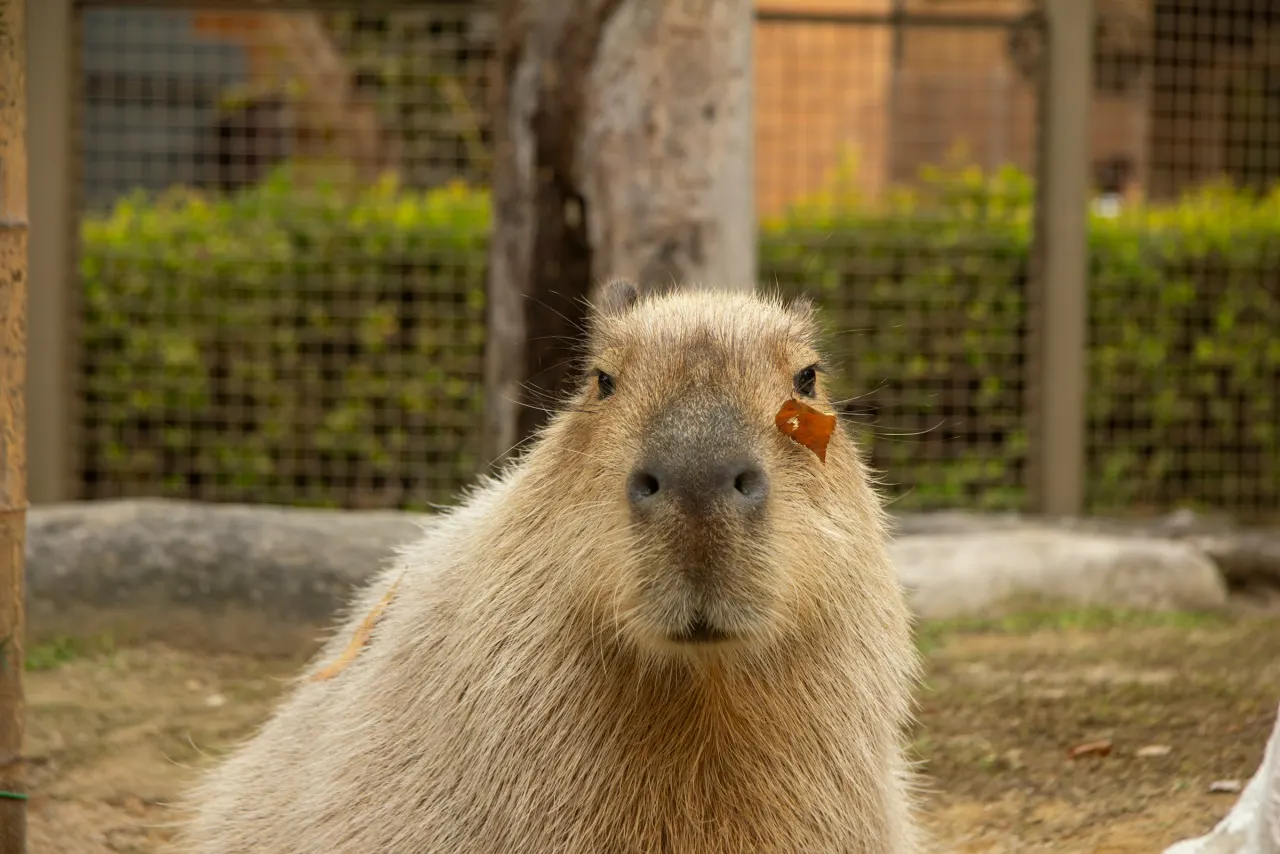
Capybaras are good at other capybaras. That is the honest one-line version. The published research describes a social and vocal animal: seven distinct call types, individual chemical signatures, stable herds of about ten. The other half of the test has barely been run. There is no published capybara maze study, no tool-use trial, no cognitive comparison against a dog or a pig. The trainability is real and well documented. The ranking everybody wants does not exist.
Socially documented, cognitively unmeasured
Capybara communication, scent recognition and husbandry training are described in the primary literature and in the AZA Capybara Care Manual. Capybara problem-solving has not been published at all, so the species has no measured place on any intelligence ladder.
What Capybaras Are Actually Good At
Three things, all of them social. Keeping track of who is in the group. Signalling with a small set of calls that mean specific things. Learning that a particular human plus a particular sound reliably produces food.
That last one is the part zoos exploit, and it is the reason a 120-pound rodent will walk onto a scale without being wrestled there.
Notice what is missing from that list. Nothing about extracting food from a puzzle box, nothing about remembering a route, nothing about understanding another animal’s intent. Those are the standard tests of animal cognition, and for capybaras they are simply blank. Animal Diversity Web’s species account, which is otherwise detailed on behaviour and communication, carries no learning or cognition section at all. That is not an oversight on their part. There is not much to summarise.
The Evidence Base Is Thinner Than the Internet Thinks
Capybaras are under-studied compared with rats, pigs and dogs, and it shows the moment you try to source a specific claim. Here is what survives the check, and what does not. The bar in the last column is how much evidence there actually is — five blocks means a published, cited finding, one means nobody has run the study.
| What people ask | What is actually documented | How solid the evidence is |
|---|---|---|
| Do they recognize each other? | Scent secretions differ in chemical proportion between individuals, described as an olfactory “fingerprint”; anal gland secretions help group members identify one another | Solid. Cited by both the AZA manual and Animal Diversity Web |
| Do they have calls that mean things? | Seven call types with separate functions. Barks signal a predator, whistles are infants calling to mothers, clicks keep a foraging group in contact | Solid. Barros et al. (2011), 2,069 calls from 28 animals |
| Do different groups sound different? | Adult click calls differed significantly between three captive groups | Suggestive. One study, captive animals, three groups |
| Do they learn their names? | Zoos train recall to a name or to another arbitrary sound | Documented in practice, never tested as name comprehension |
| Can they solve puzzles? | Puzzle feeders appear on AZA enrichment lists. No published problem-solving trials | Not measured |
| Are they smarter than dogs or pigs? | Nothing comparable has been run | No evidence in either direction |
Here is my honest read: the “capybaras are secretly geniuses” content going around is not supported by anything, and it is also less interesting than the truth. An animal with a seven-call repertoire and a chemical ID system is a better story than a fake IQ score.
Social Intelligence Is the Part That Holds Up
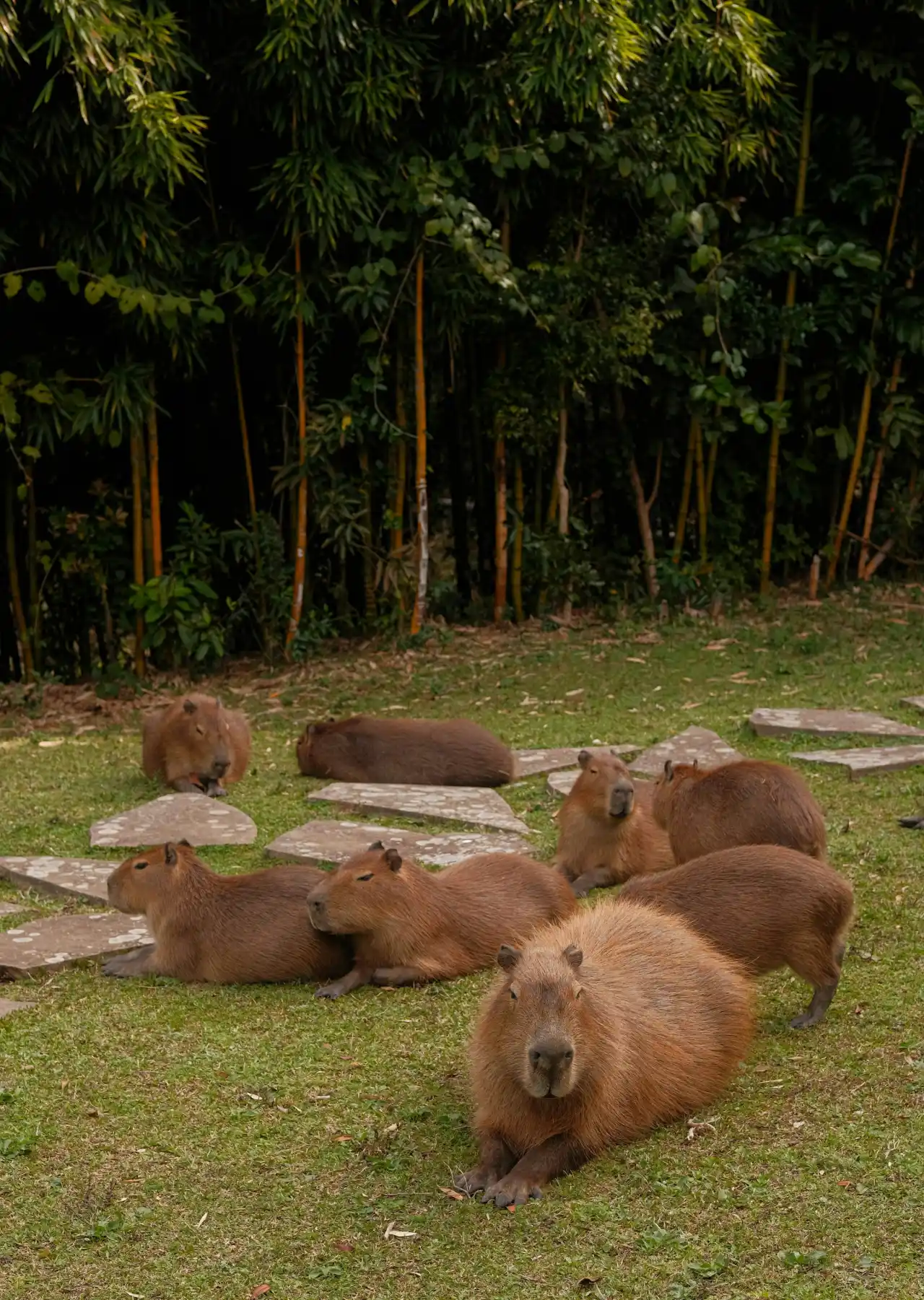
A wild capybara herd is small and durable. Animal Diversity Web puts typical groups at around ten adults, ranging from three to thirty, with larger aggregations forming around water in the dry season. Group membership changes rarely, and a single group can hold a territory for over three years. The AZA manual describes the same structure from the management side: one dominant male, several adult females and their young, subordinate males pushed to the edges, and a social order that is “normally very stable.”
Stable is the operative word. Male dominance is strictly linear, and when a dominant male is removed the top-ranking subordinate takes the position rather than the group re-fighting the whole ladder. Females show no dominance relations at all.
That last number is the one worth sitting with. Twenty-eight captive animals across three groups, 2,069 recorded calls, sorted into whistle, cry, whine, squeal, bark, click and tooth-chattering. It is a careful piece of work and it is also, essentially, the foundation of everything confidently said online about capybara communication. One study. Compare that with the literature on rat vocalizations, which runs to thousands of papers.
The click is the interesting one. It shows up during aggregating and foraging, which is why it reads as a contact call: a low-cost way for animals with their heads down in grass to keep tabs on each other without looking up. If you have ever heard a group of capybaras sound like a slow leak in a bike tyre, that is a herd running its own roll call.
What Zoos Have Actually Trained Capybaras To Do
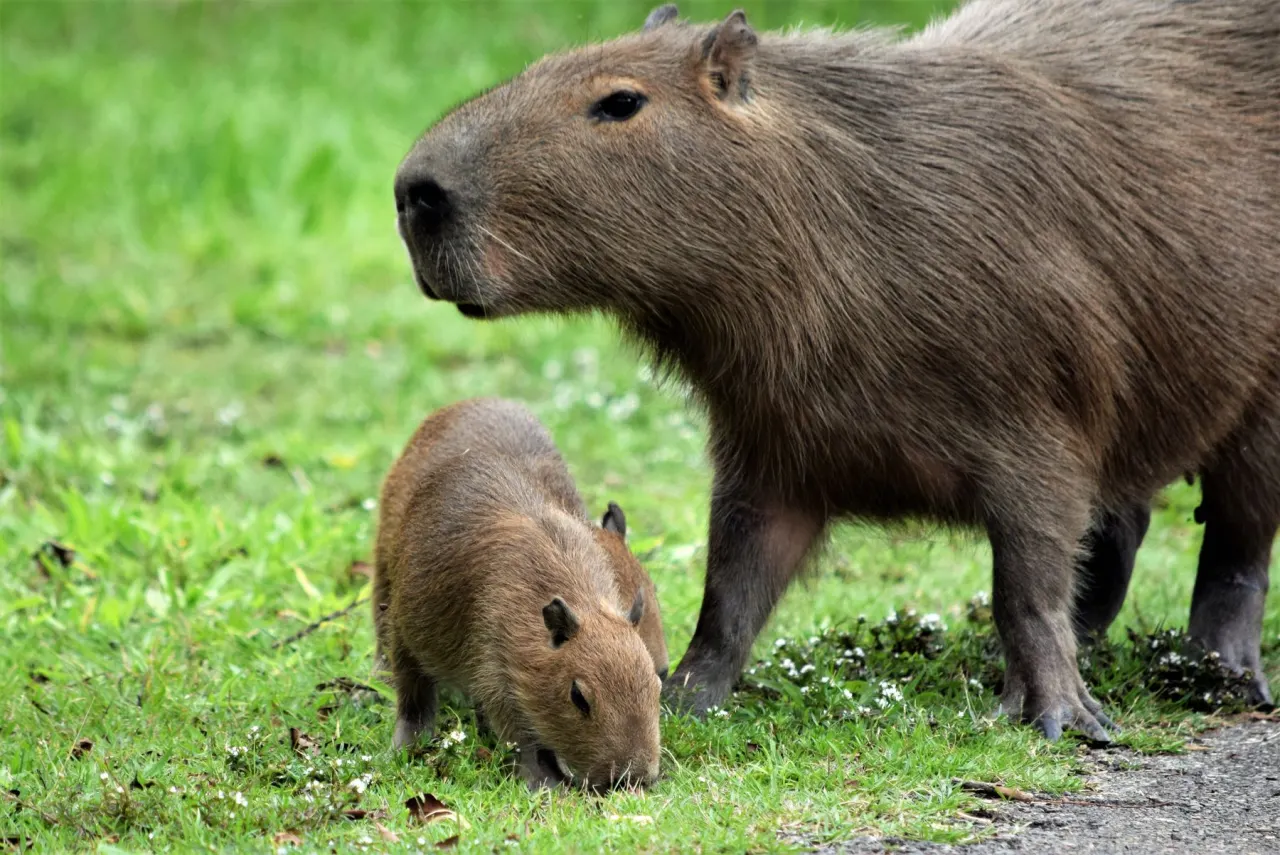
This is the most concrete evidence of capybara learning that exists, and it is not in a journal. It is in a husbandry manual. The AZA Capybara Care Manual lists the behaviors AZA facilities have successfully trained: crate training, scale training, target training, tactile work, halter, hand feeding, belly rubs, shifting between areas, station training, standing still for a microchip reader, standing on hind legs, voluntary injections, following, and opening their mouth on cue.
Voluntary injections. That is a prey animal choosing to stand still for a needle because the reinforcement history says it is fine. Whatever you want to call that, it is learning with real stakes attached.
The manual is also blunt about the other outcome. Facilities that run no training program at all reported that their capybaras “tend to stay away from keepers and never approach.” The friendliness in the videos is a trained relationship, not a species trait.
Every behavior above was trained by paid keeper staff, on a schedule, with veterinary and nutritional sign-off, inside an enclosure with a pool and a restraint chute. The AZA manual treats training as welfare infrastructure. It is not evidence that a capybara fits into a living room, and the pet question is a different question with a worse answer.
One more honest note on the source. The manual’s ambassador-animal section, the part covering capybaras that work with the public, is built on a survey of exactly two facilities. Two. When the sample is that small, “capybaras can be trained to respond to their names or another indiscriminate sound” is about as far as anyone should push it.
The Whistle, the Target Stick, and the Banana
Reid Park Zoo in Tucson runs regular target-training sessions with its capybaras, and the whole kit is three objects: a target stick, a whistle, and food. The animal touches the target, the whistle marks the moment, banana and lettuce arrive. Repeat until the capybara will follow the stick onto a scale and stand there long enough for a number.
That is the entire trick, and the reason it matters is medical. A capybara that steps onto a scale voluntarily gets weighed every week instead of every time somebody sedates it. Weight loss is one of the earliest signals that something is wrong in a large rodent, and a calm animal on a platform is worth more diagnostically than a stressed animal in a squeeze.
Watch a session and the cognition on display is unglamorous. There is no insight moment, no visible reasoning. There is an animal that has learned a chain: stick means touch, whistle means correct, hand means banana. It is the same machinery a pigeon runs. What is distinctive about the capybara is not the learning mechanism. It is that a 100-pound semi-aquatic rodent with a permanent expression of mild disappointment will show up for the session at all.
Why the Smarter-Than-a-Dog Comparisons Fall Apart
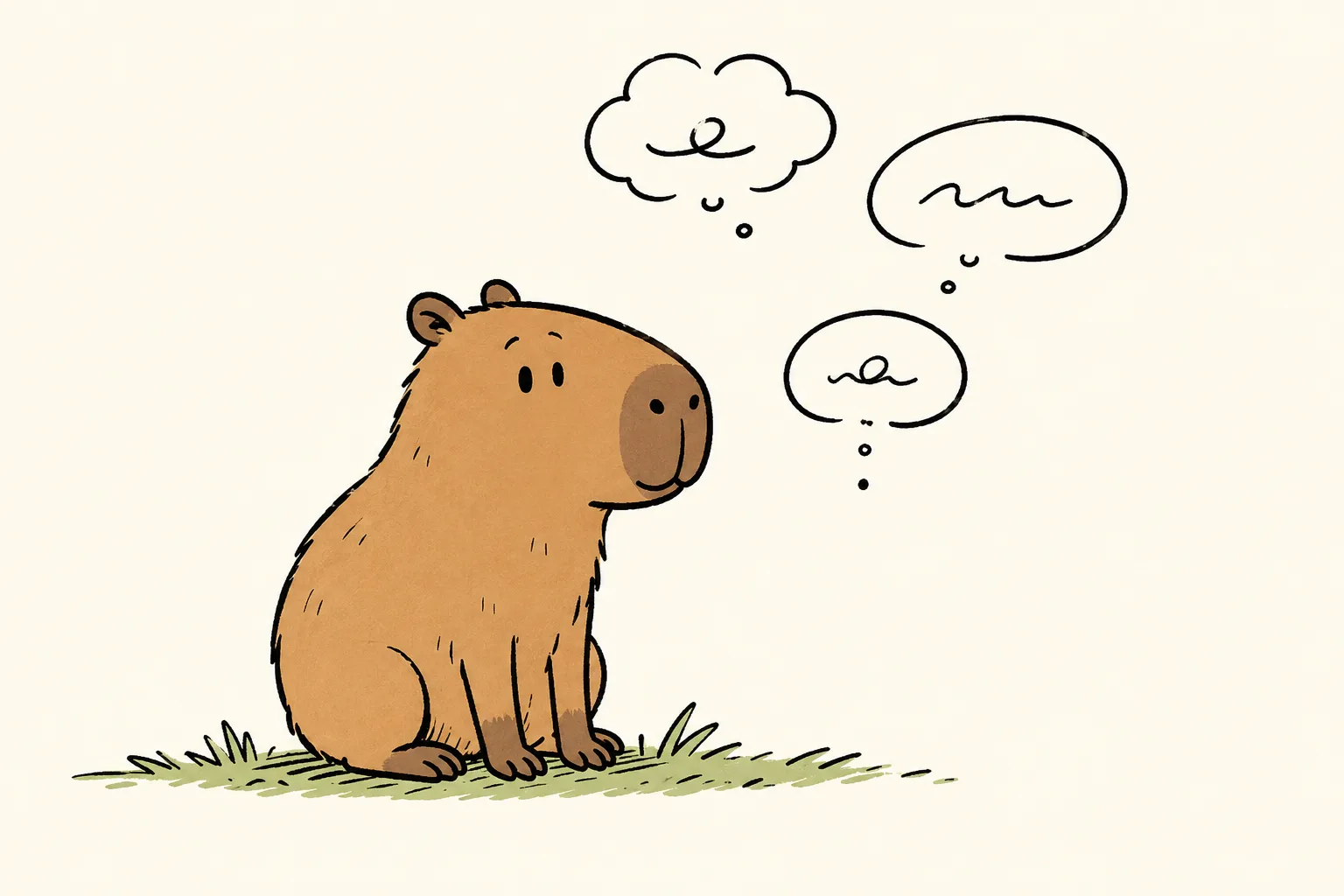
Every cross-species intelligence ranking you have seen for capybaras was written by someone who had the same problem I did: no data. The comparison tables circulating online are vibes formatted as research.
| Myth | Better answer |
|---|---|
| Capybaras are smarter than dogs | No study has compared them on any task. Dogs have a century of cognition research; capybaras have a vocal repertoire paper and a care manual |
| They’re just overgrown guinea pigs | Same family, different social system. Capybaras hold defended group territories with a linear male hierarchy, which guinea pigs do not |
| They recognize their owner’s face | Recognition between capybaras is documented and chemical. Human face recognition has not been tested |
| Trainability proves high intelligence | Operant conditioning works on almost every vertebrate. It measures reinforcement history, not reasoning |
| They understand what you say | They learn that a sound predicts an outcome. The AZA manual says a name works no better than any other arbitrary sound |
The framing problem underneath all of this is that “smart” is not one thing. A capybara that reads a shift in herd posture and moves toward water three seconds before anything visible happens is doing something a border collie cannot do. That does not make it smarter. It makes it a prey animal with a very good reason to stay calm and alert at the same time.
What This Means If You Want One in Your House
Take the intelligence question off the table entirely. It is not the constraint. The constraints are the herd, the water, the exotic vet, and the local law, and none of them get easier because the animal is bright.
If anything, the documented social cognition argues against solo ownership rather than for it. An animal whose communication system is built around group contact calls, and whose species is described as gregarious enough that AZA requires social housing, does not do well as the only capybara in a suburb. That is why the honest reading points toward keeping them in groups or not at all.
What the evidence supports
- Seven call types with distinct functions
- Individual chemical signatures
- Stable herds, linear male hierarchy
- Trained husbandry behaviors up to voluntary injection
- Enrichment as a documented welfare requirement
What is repeated but unmeasured
- Problem-solving or tool use
- Recognition of individual humans
- Any ranking against dogs, pigs or rats
- Understanding words rather than cues
- Emotional attachment to an owner
The practical version: if you are researching capybaras seriously, read the care requirements before you read another intelligence listicle, and learn what the calls actually mean before you assume a quiet animal is a content one. A capybara that has gone silent in a group is not relaxed. It has stopped running the contact call, and in a species built on group monitoring, that is information.
Can you actually tell a capybara from a wombat, beaver, nutria or guinea pig?
Seven photo lineups, four animals each. People who have just read three thousand words about capybara cognition do noticeably worse than they expect.