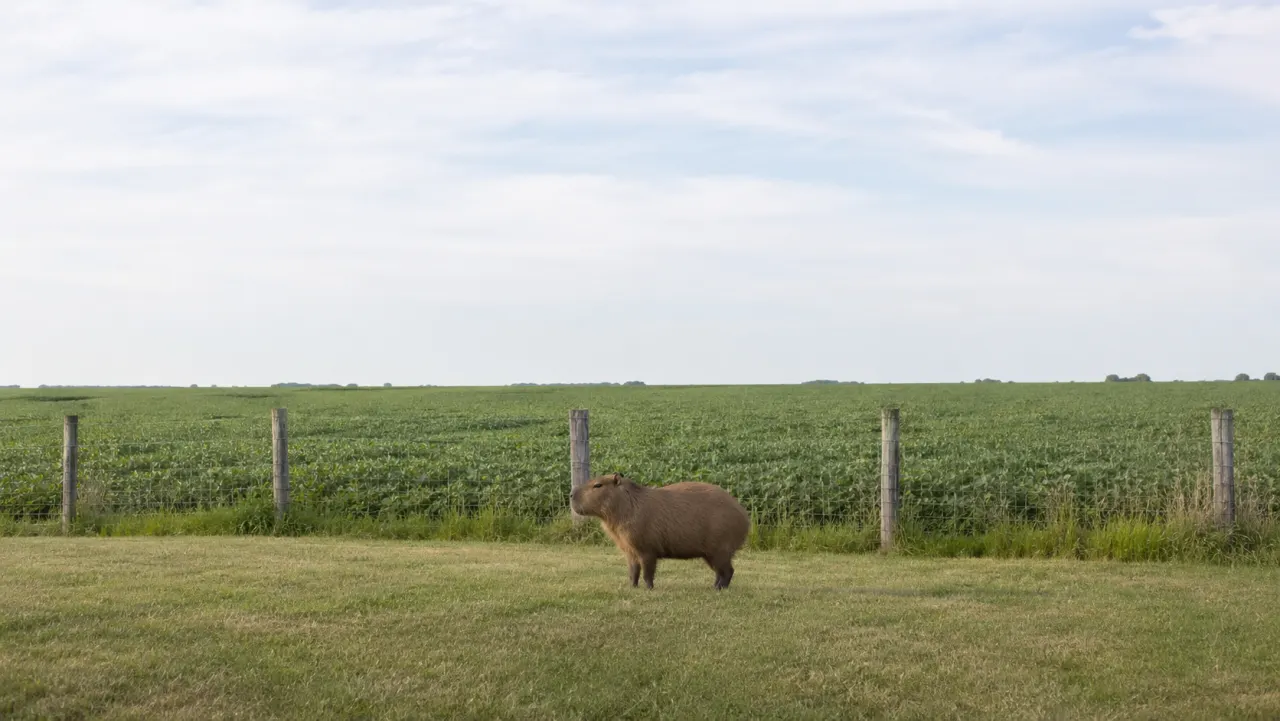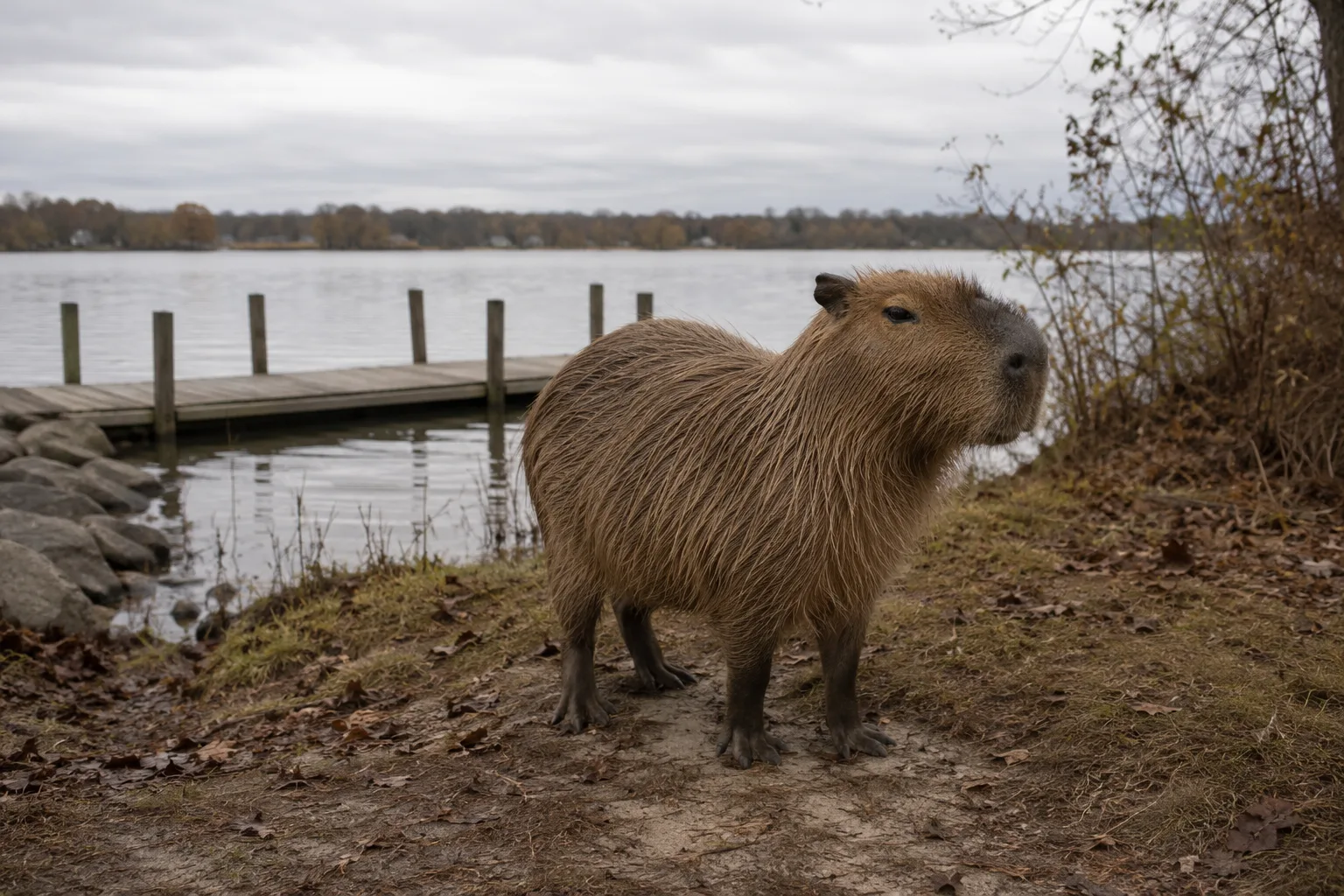
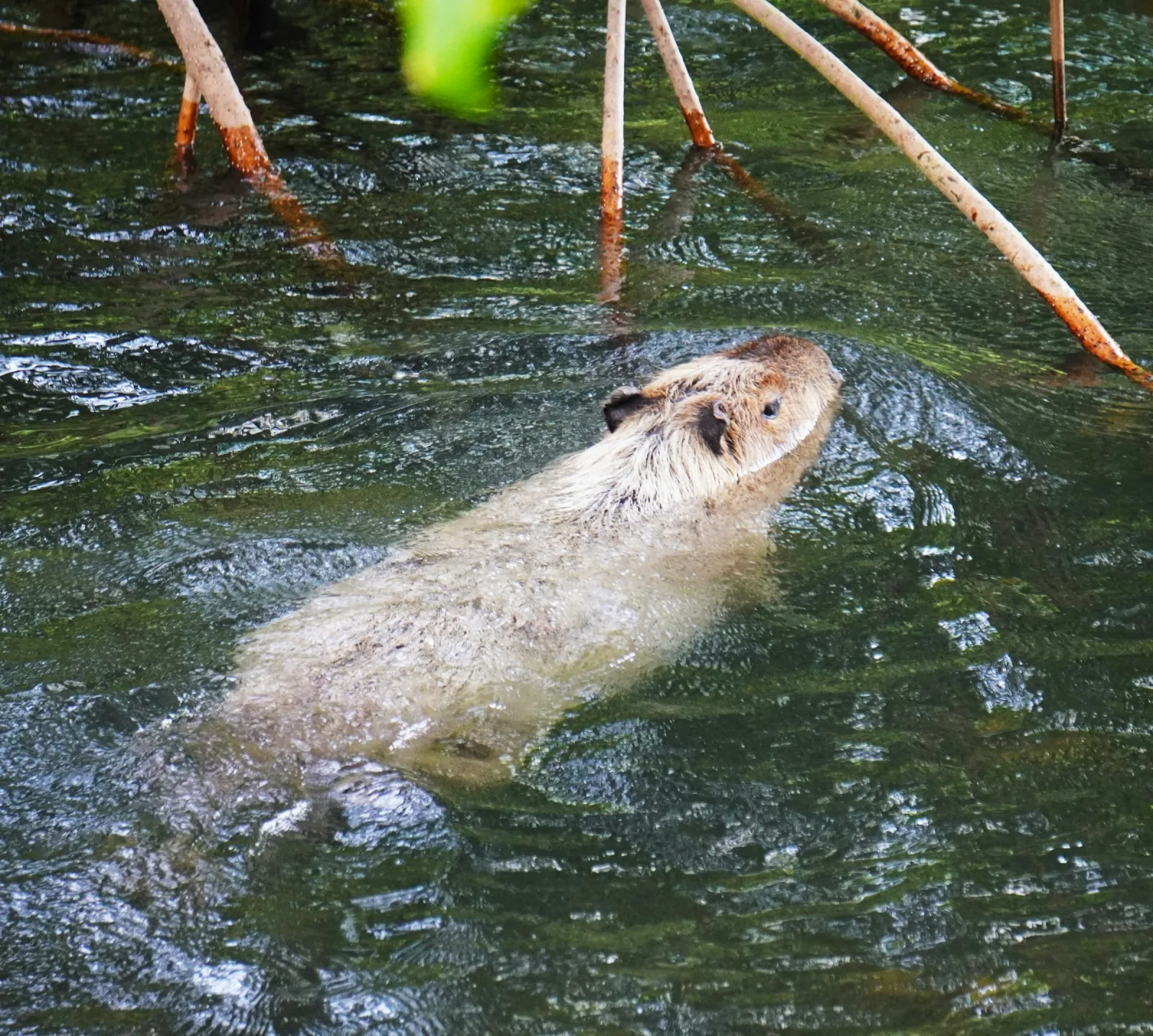
The Paraná delta is roughly 14,000 km² of river islands, reed beds, and slow brown water. It starts where the Río de la Plata begins to split, and it runs north into Buenos Aires province like a massive waterlogged maze. Carpinchos — the Argentine word for capybara, the world’s largest rodent — have been living in it without particular fanfare for as long as anyone has been paying attention.
Most visitors to Buenos Aires don’t know any of this is within reach. The delta doesn’t care.
Why the Tigre Delta Works as Carpincho Habitat (It’s Not a Coincidence)
The Paraná delta is close to ideal capybara habitat, and that’s not an accident of geography. According to the Animal Diversity Web, Hydrochoerus hydrochaeris needs three things above almost everything else: permanent access to water, dense grasses and aquatic vegetation for grazing, and cover from predators. The delta provides all three in industrial quantities.
The channels run slow and shallow in many sections. Reed beds grow dense along the banks. The flooded forest interior gives shade and shelter. And the large predators that would normally keep capybara populations in check — jaguar, puma, large caimans — are absent from the areas near human settlement. What you’re left with is essentially a very large wetland where the carpinchos have relatively little to worry about.
The IUCN Red List notes that capybaras are semiaquatic grazers strongly tied to water bodies throughout South America, and their range runs through exactly the kind of lowland river systems the Paraná delta represents. They’re not visiting. They live here.
There’s a famous downstream footnote: Nordelta, the gated community built on reclaimed delta land inside the Tigre municipality, made international news around 2021 when carpinchos moved through its streets and golf courses in visible numbers. It was framed as animals invading human space. The more accurate read is the reverse — the housing development was built on carpincho habitat, and the animals noticed. Nordelta is not accessible to tourists, but it sits a few kilometers from the same channels where you’ll be looking for them.
Getting There: Cheaper Than a Café Lunch, One Hour from Retiro
Tigre city is about 30 km north of Buenos Aires. The Mitre train line runs from Retiro station directly to Tigre, with trains departing throughout the day. The fare is under $1 USD at current exchange rates. The ride takes roughly 50–60 minutes.
From Tigre station, it’s a short flat walk to the river — you pass the Puerto de Frutos (a large artisan and produce market, worth a look if you’re staying the afternoon) and arrive at the wharf area where both lancha colectiva services and tour boats depart. You can also take a remis (radio taxi) from the station if you’re carrying gear or short on time.
That’s the whole logistical problem. It’s a commuter train and a short walk.
If you’re arriving in Buenos Aires and planning a Tigre day trip, the morning train timing matters more than anything else. See the timing section below.
Boat, Kayak, or Lancha Colectiva: What Actually Gets You to the Animals
You can walk the Tigre riverfront and occasionally spot carpinchos on the near banks, but the productive sightings happen deeper in the channels. The islands in the delta are privately owned. You’re staying on the water.
Lancha colectiva is the local water bus system, shared, cheap ($2–5 USD per leg), and surprisingly good for wildlife. The boats run scheduled routes through the channels and slow down at the bends. You’re sitting at water level, the engine is quieter than a tour boat, and the driver isn’t paid to narrate. Some of the best sightings happen incidentally on the colectiva, at the edges of reed islands where the bank drops into the water.
Private tour boats (lancha turística) cost more — $15–40 USD per person depending on duration and operator — but you can ask the guide to stop when you spot something. If your goal is specifically wildlife, it’s worth the premium. Look for operators advertising wildlife or naturaleza routes; some are specifically oriented toward bird and mammal sightings rather than general delta tourism.
Kayak is a third option from some waterfront rental operators. The silence helps. The trade-off is range — you can’t cover as much ground, and the channel network is large.
For capybara sightings specifically, the Segunda Sección and channels further from the Tigre town center tend to have denser animal activity, simply because human traffic is lighter there. Any operator familiar with the wildlife routes will know where to head.
Go at Midday and You’ll Miss Everything — Here’s the Window That Works
This is the single biggest variable in whether you actually see carpinchos.
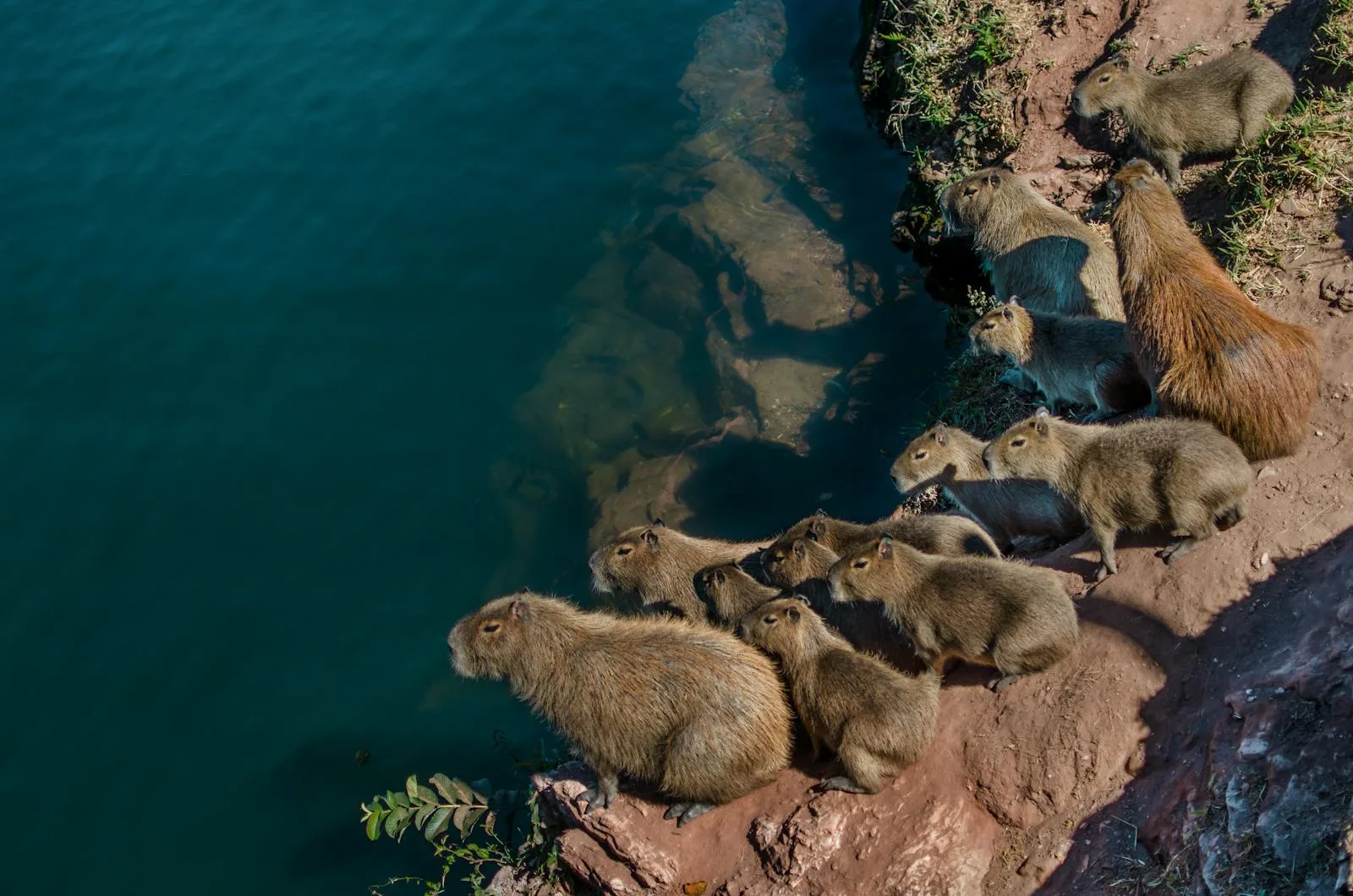
Capybaras are crepuscular. The AZA Capybara Care Manual documents peak activity during the low-light hours of early morning and late afternoon, with midday typically spent resting in shade or partially submerged in water. That pattern holds in the wild as reliably as anywhere. In the Paraná delta, the productive windows are roughly 6–8 AM and 5–7 PM.
A practical morning plan: take an early Mitre train from Retiro — the first trains run before 6 AM — and arrive at the Tigre wharves around 7:00–7:30. Board a lancha by 7:30. You’re in the channels during the tail end of peak activity, before the heat builds and the animals move into shade.
I’ll say directly: midday is mostly a waste for carpincho sightings. The animals aren’t gone — they’re just submerged up to their ears in some shaded inlet where you won’t find them from a boat. It’s not dramatic. They’re large rodents. They get hot.
The dry season months from May through September concentrate animals near permanent water sources as seasonal flooding recedes. That said, the delta holds water year-round in most of its channels, and sightings happen in every month. May–September is better; it’s not the only window.
You Came for Carpinchos. Here’s Everything Else the Delta Throws At You.
The delta is not a mono-species experience. Even on a trip where the carpinchos are quiet, the bird watching is good.
Herons — both the cocoi (similar to the great blue) and the striated — stand on nearly every bank. Roseate spoonbills move through in small flocks during certain seasons. Kingfishers, ibis, southern lapwings. The birdlife is thick enough that any wildlife-oriented guide will have a lot to work with even on a slow mammal morning.
Coypus (nutria) are common along the banks and are sometimes mistaken for juvenile carpinchos by first-time visitors. They’re smaller, with a rounder tail and less of the carpincho’s distinctive flattened snout. Smithsonian National Zoo notes that capybaras can be distinguished by their barrel-shaped body and the characteristic square, blunt muzzle — that flat face is the fastest field ID at distance. The coypu sits lower in the water and tends to move faster along the bank.
Caimans are present in the delta but rarely visible near tourist channels. They exist; don’t expect to see one.
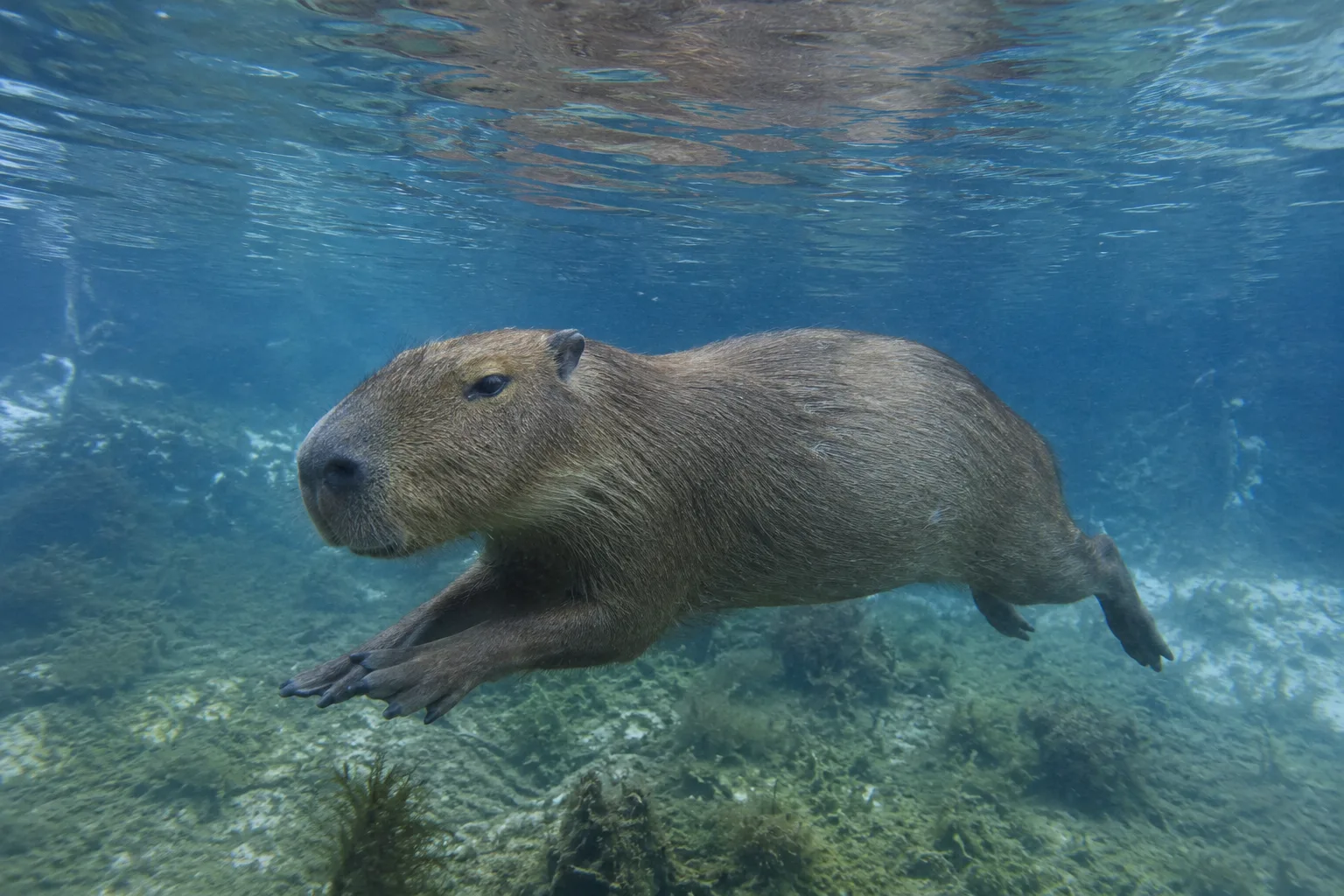
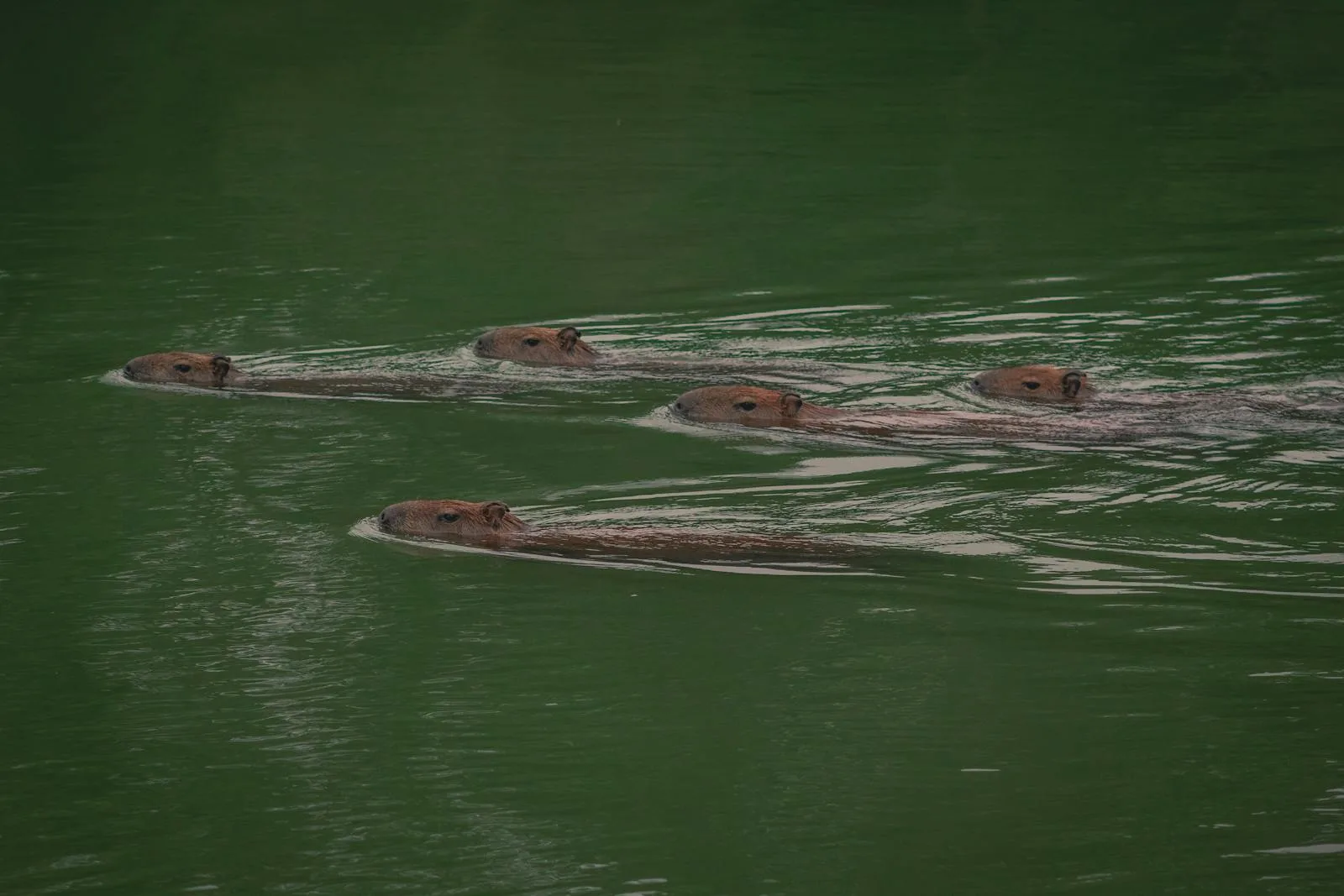
One detail that tends to stick with people who’ve done the morning boat: when a capybara decides it wants to enter the water from a reed bank, it commits completely and immediately. No hesitation, no testing the temperature. Straight in, and swimming competently before the ripples even settle. The San Diego Zoo Wildlife Alliance describes them as highly capable swimmers, able to stay submerged for up to five minutes. On the delta this reads less as a fact and more as a behavior — they move through water the way most animals move on land. Watching a group of five or six cross a channel is the kind of thing that’s hard to explain without sounding like you’re overstating it.
Practical Table: Costs, Timing, What to Bring
For reference: all costs reflect approximate rates as of mid-2026. Peso exchange rates shift; verify locally.
| Details | |
|---|---|
| Distance from Buenos Aires | ~30 km north via Mitre train line |
| Travel time | ~1 hour by train from Retiro station |
| Train fare | Under $1 USD at current rates |
| Best sighting window | 6–8 AM or 5–7 PM (crepuscular) |
| Lancha colectiva cost | $2–5 USD per leg |
| Private tour cost | $15–40 USD per person |
| Best months | May–September (dry season) |
| Minimum visit time | Half day (5–6 hours including travel) |
| What to bring | Sun protection, binoculars, waterproof bag for camera |
| Ethics | Stay on the water; don’t land on private islands; don’t feed animals |
A few notes on ethics that aren’t always obvious: the delta islands are private property. A large share of them have homes on them, some inhabited year-round. Boat tours stick to the channels for this reason, and you should too. Feeding carpinchos from boats happens and it shouldn’t — the AZA care guidance is explicit that capybaras require a specialized high-fiber diet, and random human food is not part of it. The animals look approachable because they are relatively calm around boats. That’s not an invitation to board a reed island and see how close you can get.
Compared to the Iberá wetlands in Corrientes, Tigre is less spectacular and orders of magnitude more accessible. Iberá is a dedicated reserve with high densities of wildlife and consistently close approach distances. Tigre is a working river delta with a ferry system and a produce market and people who commute on those same lanchas every day. The carpincho sightings are real and reliable, but you’re not getting the national-park experience. You’re getting the “wild animal in a landscape that’s also someone’s backyard” experience, which is its own thing.
The Tigre Municipal Tourism office maintains current information on operators and seasonal conditions. The Argentina Ministerio de Turismo y Deportes has broader delta and Paraná region resources if you’re planning a longer stay in the province.
For more context on capybara habitat and why the Paraná delta checks every box, see our guide to where capybaras live. If you’re planning a broader Argentina trip focused on wildlife, the full Argentina capybara travel guide covers Iberá, the Chaco, and the northeast in more depth. And if you’re wondering how to behave when you spot one, what to do if you see a capybara in Argentina covers the practical ethics and distance questions. For Buenos Aires-specific context, see capybaras walking in Buenos Aires.
One hour from the capital. Cheaper than a café lunch. The carpinchos don’t know you made a special trip.