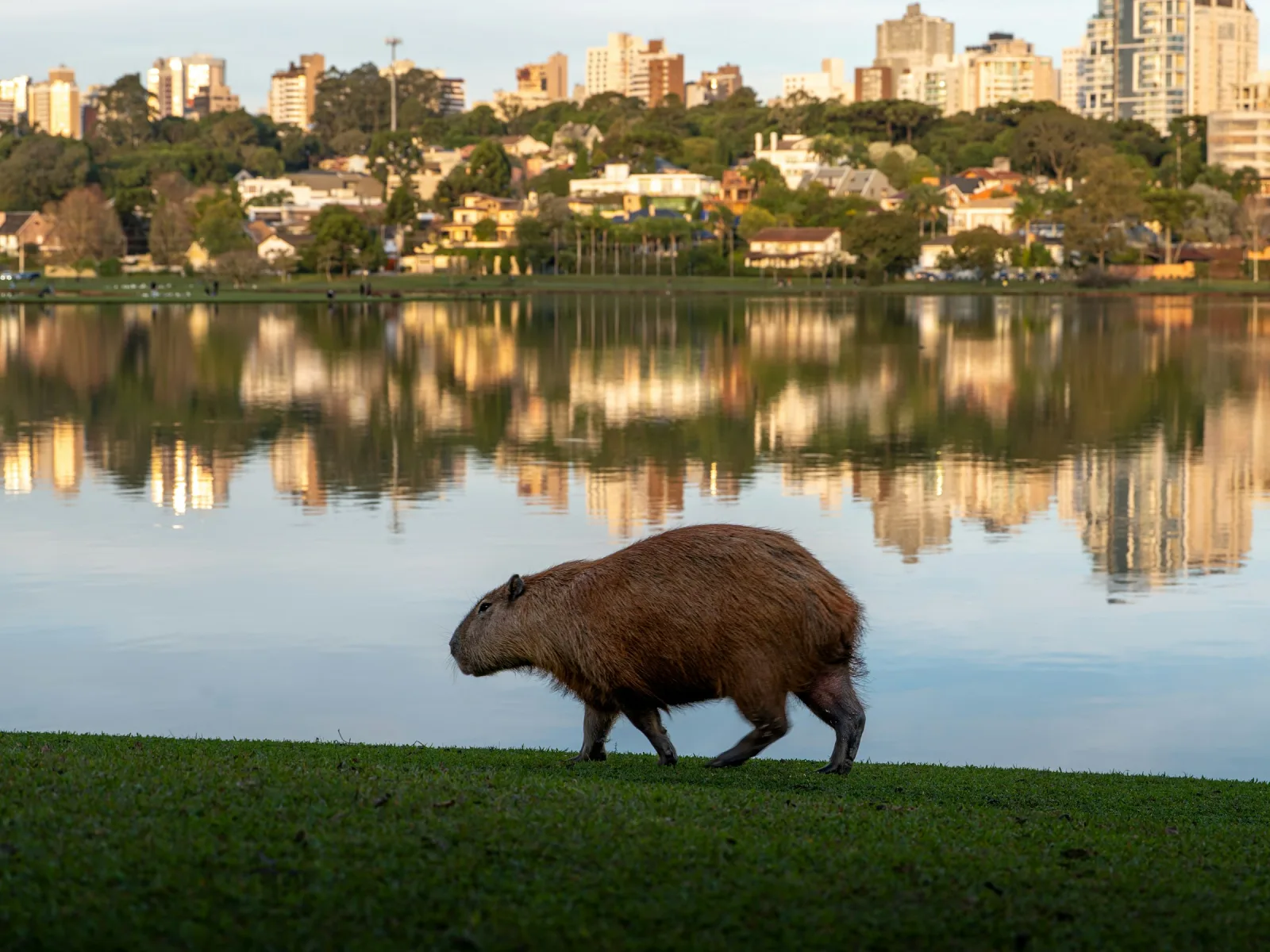
No, you will not see a carpincho crossing Avenida Corrientes. Buenos Aires is a concrete megacity of around three million people. That is not capybara habitat.
The longer answer, though, is more interesting than the meme-shaped summary most people arrived with. Within 30 km of the Obelisco, there are places where Hydrochoerus hydrochaeris — the world’s largest rodent, per the Animal Diversity Web — have become embedded in the urban fringe. The story of how that happened, and why it went viral in 2021, tells you something real about what capybaras are, where they actually live, and why the meme isn’t entirely wrong.
Not the Streets — But the Meme Wasn’t Completely Wrong
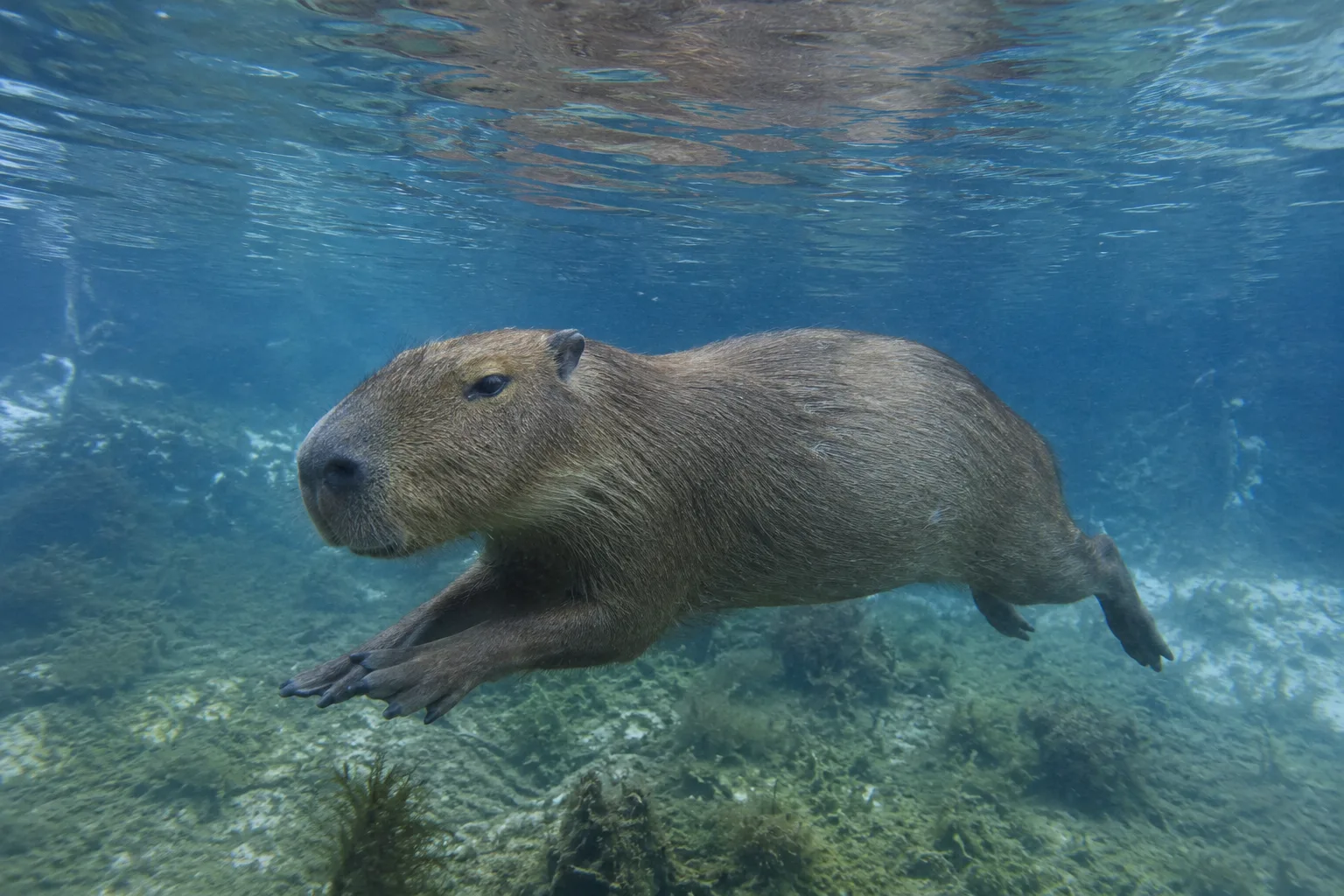
Capybaras are semi-aquatic. That is not an incidental detail — it is the single fact that determines where they can and cannot live. The Smithsonian National Zoo describes them as “highly dependent on water,” and the AZA Capybara Care Manual sets minimum pool specifications for captive animals precisely because removing water access isn’t a welfare adjustment, it’s incompatible with the species. They need it for thermoregulation, for escaping predators, for social behavior. No water, no carpincho.
Buenos Aires city (CABA) is essentially sealed: concrete, colonial grid, the Río de la Plata along one edge. A carpincho wandering down Corrientes or hanging around the Plaza de Mayo would be a stray animal in distress, not a sign of urban coexistence. It doesn’t happen.
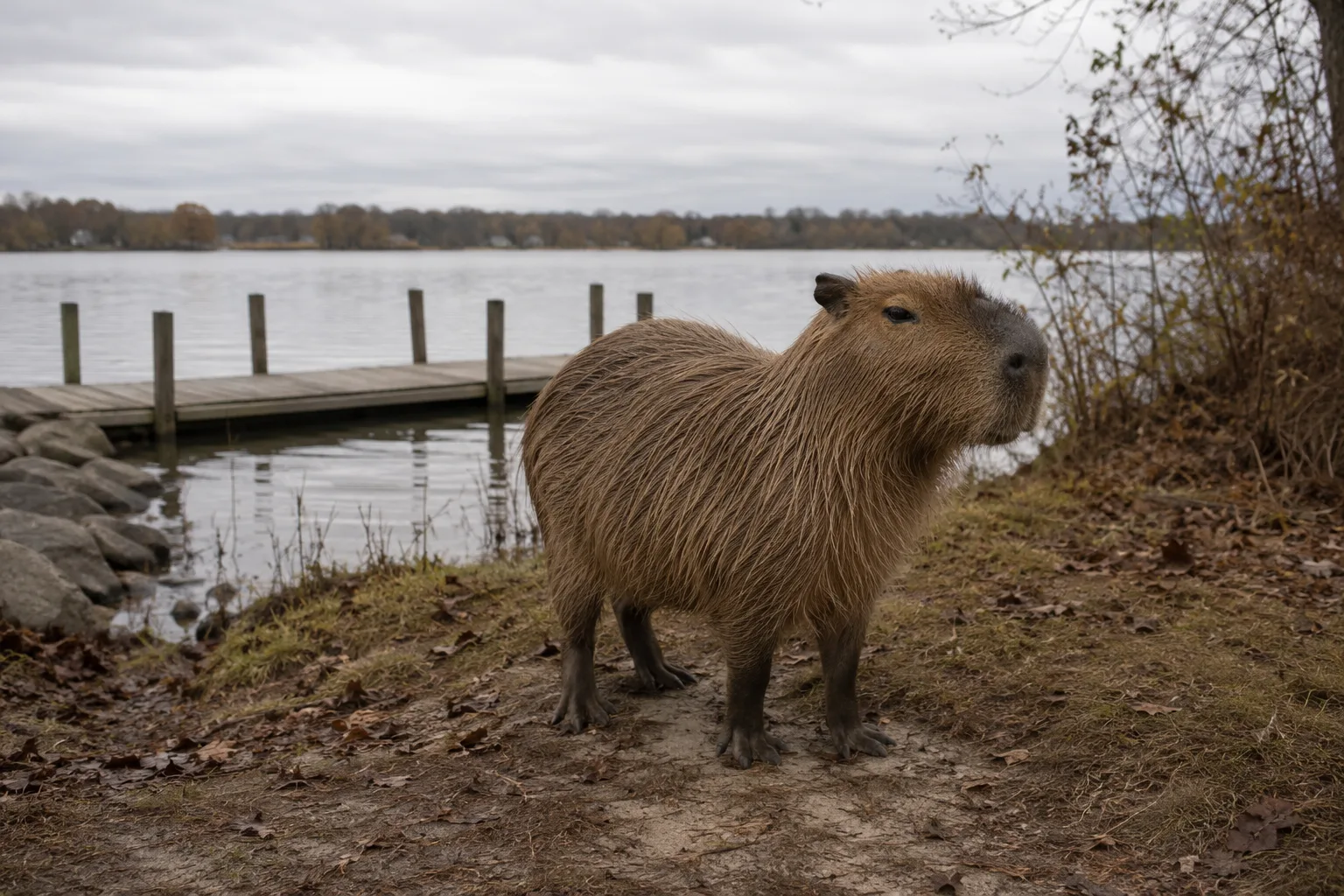
The province of Buenos Aires is a different thing entirely. The Paraná delta to the north, the Tigre wetlands, the marshy fringe around Nordelta — that is actual carpincho country. You can be in the Buenos Aires metro area, technically, and be standing in viable habitat for a 130-pound semi-aquatic rodent. The meme collapses this distinction. The internet said “Buenos Aires” and meant “Argentina.” Argentina and capybaras have a very long relationship. The city itself, less so.
The internet impression vs. the biological reality:
| The meme says | The reality |
|---|---|
| Carpinchos walk Buenos Aires streets | They appear in suburban wetland margins and gated communities, not city streets |
| Buenos Aires is a carpincho city | Buenos Aires proper has one small wetland reserve; the carpinchos live in the surrounding province |
| They go wherever they want | They’re semi-aquatic and need permanent water access within their territory |
| This is something new | Carpinchos have lived in the Paraná delta for as long as the delta has existed |
Why Nordelta Became Argentina’s Most Famous Capybara Story
In 2021, videos started circulating of carpinchos blocking residential streets, sitting poolside in suburban Buenos Aires, and apparently expressing zero interest in leaving. The location was Nordelta, a private gated community built in the late 1990s in Tigre municipality — about 30 km north of central Buenos Aires — on reclaimed wetland.
That last part matters. Nordelta was built on their habitat. The land was always theirs.
CONICET, Argentina’s national science council, weighed in as the story spread internationally. Their researchers confirmed what the biology already suggested: the animals weren’t invading. A combination of drought and flooding in the 2021 wet season had reduced predator pressure and pushed carpincho populations toward the suburban margins. The golf courses, the manicured lawns, the swimming pools — for a semi-aquatic grazing mammal, that’s just shorter grass near water.
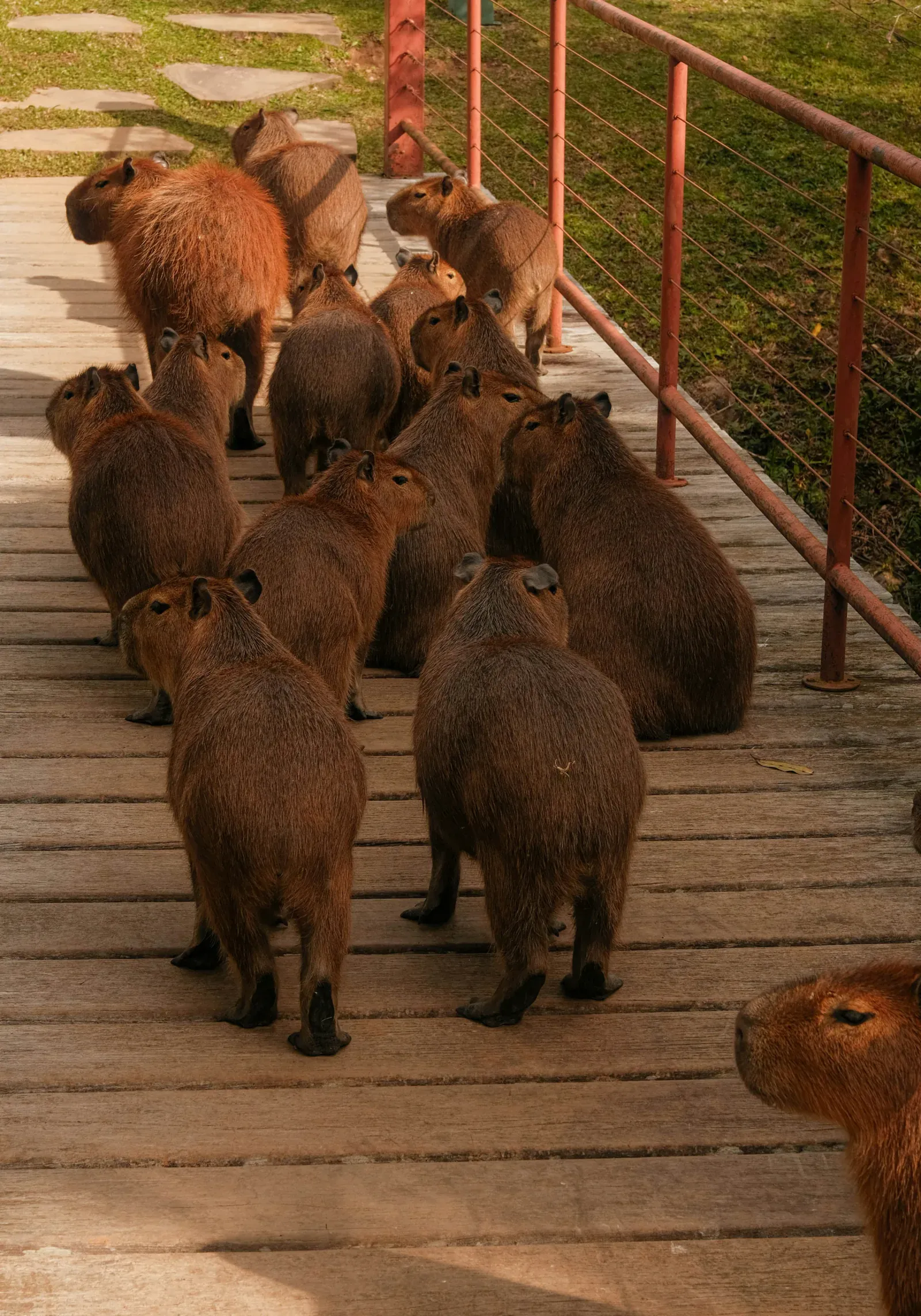
The fan-delight detail buried in the Nordelta coverage: residents described carpinchos sitting in inflatable pools. Not the ornamental ponds, not the river — actual plastic kiddie pools. They evaluated the options and made a choice. This is the animal’s personality expressed in suburban context.
The videos spread everywhere, and the global capybara internet moment of 2021 — the one that turned the species into a meme about pure, unbothered energy — was in significant part fueled by footage from a gated community in Tigre that had been built where the wetland used to be.
The One-Hour Train Ride That Actually Gets You to Carpincho Country
If you’re visiting Buenos Aires and want to see carpinchos without a private Nordelta contact, the Tigre delta is the practical answer.
Tigre is accessible by train from Retiro station on the Mitre line — roughly 50 to 60 minutes, cheap, reliable. From the Tigre port, commercial boat tours run into the delta proper. The delta is the Paraná’s outlet system, a slow-moving maze of channels and islands that the IUCN lists as part of the carpincho’s core South American range. They live there. You’re not hunting for a rare sighting; you’re going to their habitat and waiting.
The best time is early morning or late afternoon when carpinchos tend to be active near the water’s edge. Any experienced delta boat operator knows where they’re likely to be. This is not a curated wildlife experience — it’s a real wetland with real animals, so patience applies.
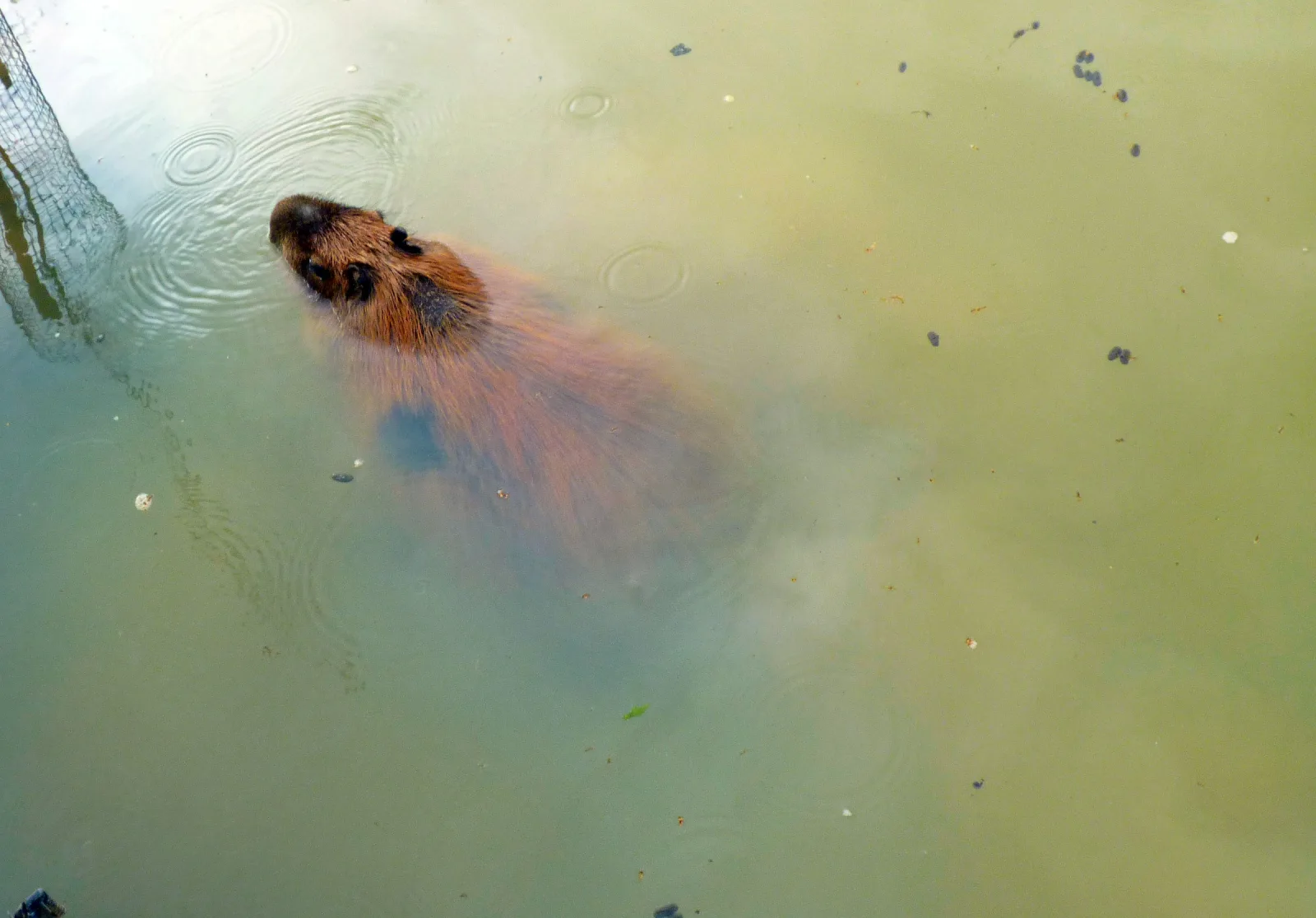
If you want the complete Argentine capybara experience, that’s a different trip: the Esteros del Iberá in Corrientes province, about 1,000 km north, is a UNESCO Biosphere Reserve and one of the most significant wetland ecosystems in South America. Carpinchos there exist at a scale that makes Nordelta look like an anecdote. But Iberá is a dedicated trip, not a Buenos Aires day excursion. For more on where capybaras actually live, the range is broader than most people expect.
The One Spot Inside Buenos Aires Where You Might Actually Get Lucky
The Costanera Sur Ecological Reserve sits on the Río de la Plata shore, inside CABA, and it is the only place within the city proper where a carpincho sighting is even conceivable. It’s a small wetland strip — reclaimed land that was originally intended for construction, abandoned, and colonized by native vegetation over the 1980s and 1990s.
The Buenos Aires city government lists it as a functioning ecological reserve. It has bird life, some small mammals, reed beds along the shore. Documented carpincho sightings there exist, but they are rare and not predictable. Don’t go to Costanera Sur expecting a carpincho. Go because it’s a strange and underrated piece of urban ecology in the middle of one of South America’s largest cities — and if you happen to see one, you’ve gotten lucky.
For anyone who wants to be realistic about their chances: the Tigre delta gives you probability; Costanera Sur gives you possibility.
What “Capybaras in Buenos Aires” Actually Means If You’re Going There
Picture the traveler who arrives in Buenos Aires having absorbed the meme — there’s a version of this trip where they walk around Palermo, check San Telmo, look at the Obelisco, and wonder where the carpinchos are hiding. The answer is: about an hour north by train, in a river delta that most tourists skip.
The Nordelta story is true and the Tigre delta is accessible, but Buenos Aires the city was never the habitat. The meme compressed “greater metro area built partially on reclaimed wetland that happens to be prime capybara range” into a punchline about animals walking city streets. That compression is funny and not entirely false, but it sets up the wrong expectation.
What you can actually do from Buenos Aires: take the Mitre line to Tigre, get on a delta boat, and go find them in their actual environment. That experience is better than the meme version, because the meme version requires a semi-aquatic 130-pound animal to cooperate with Avenida de Mayo’s traffic.
A practical note on approach: carpinchos are not aggressive animals, but they are wild, and feeding or cornering them is a bad idea anywhere they’re encountered. If you’re wondering about safety in more detail, the capybaras are dangerous guide covers it. For the full Argentina itinerary — Tigre, Nordelta context, Iberá — the Tigre delta guide has the specifics once it’s live.
One last thing: the local name is carpincho, from Guaraní, not capybara. Using “capybara” in Argentina is a reliable signal that you learned the word from an English meme account. Fine. Just know the difference.