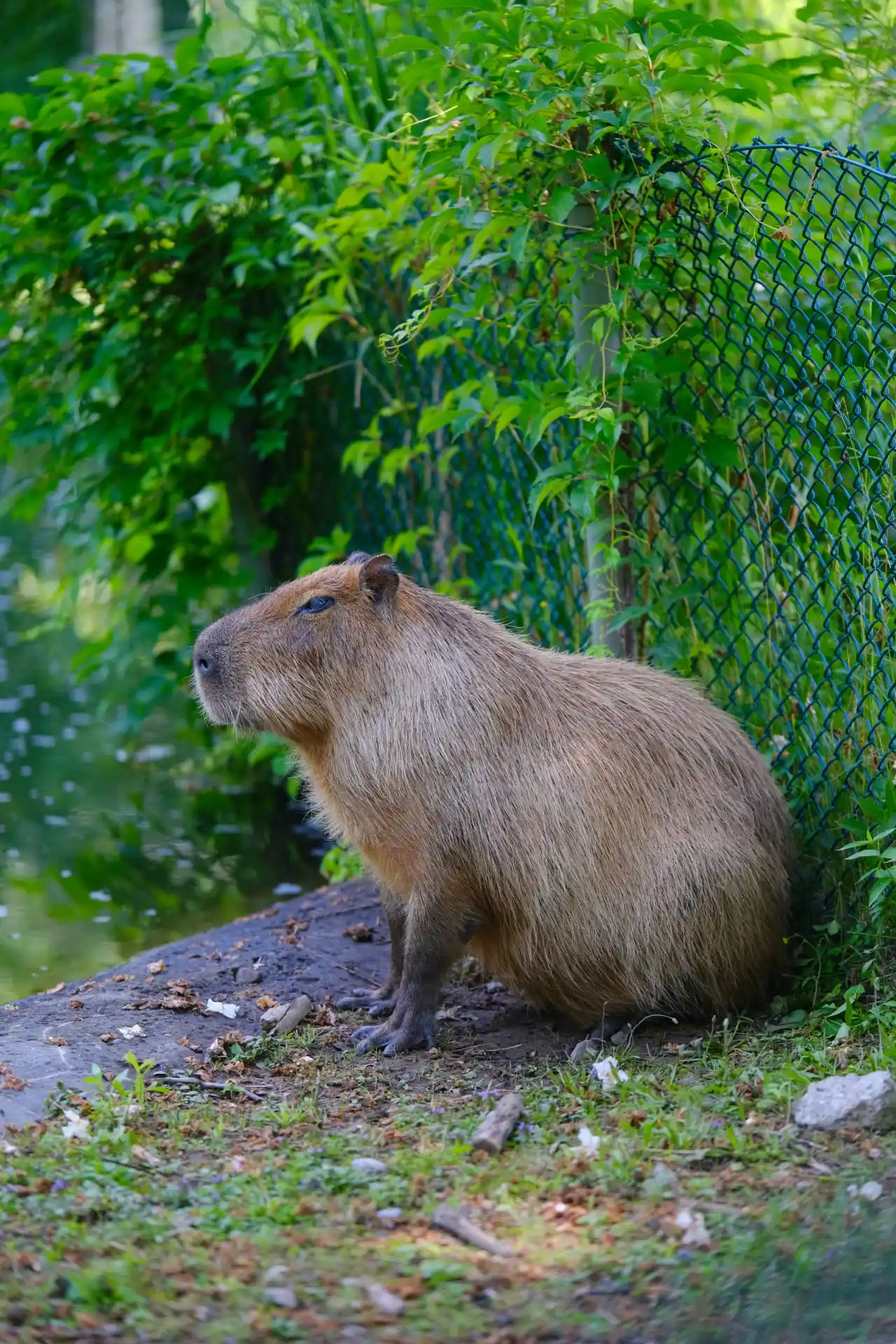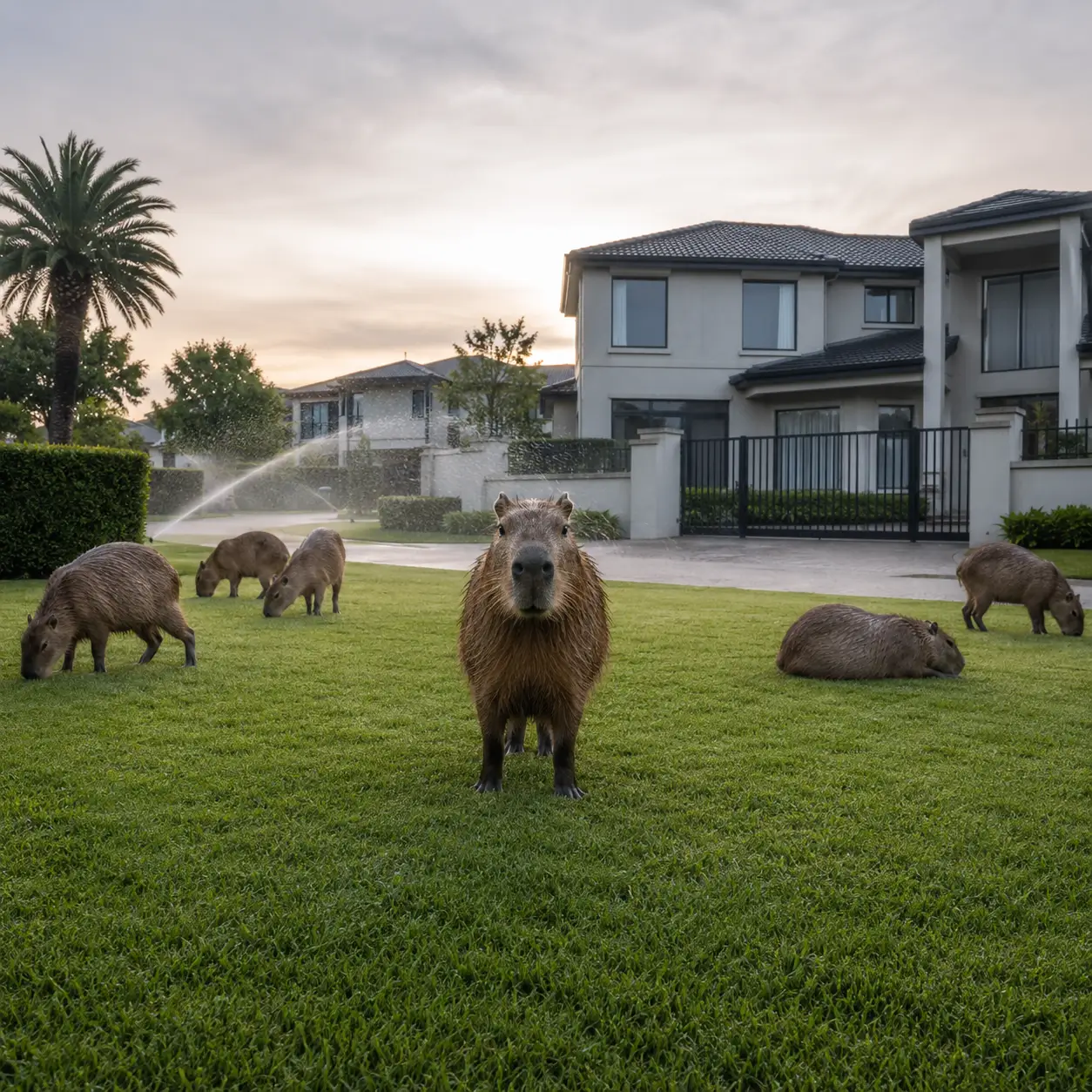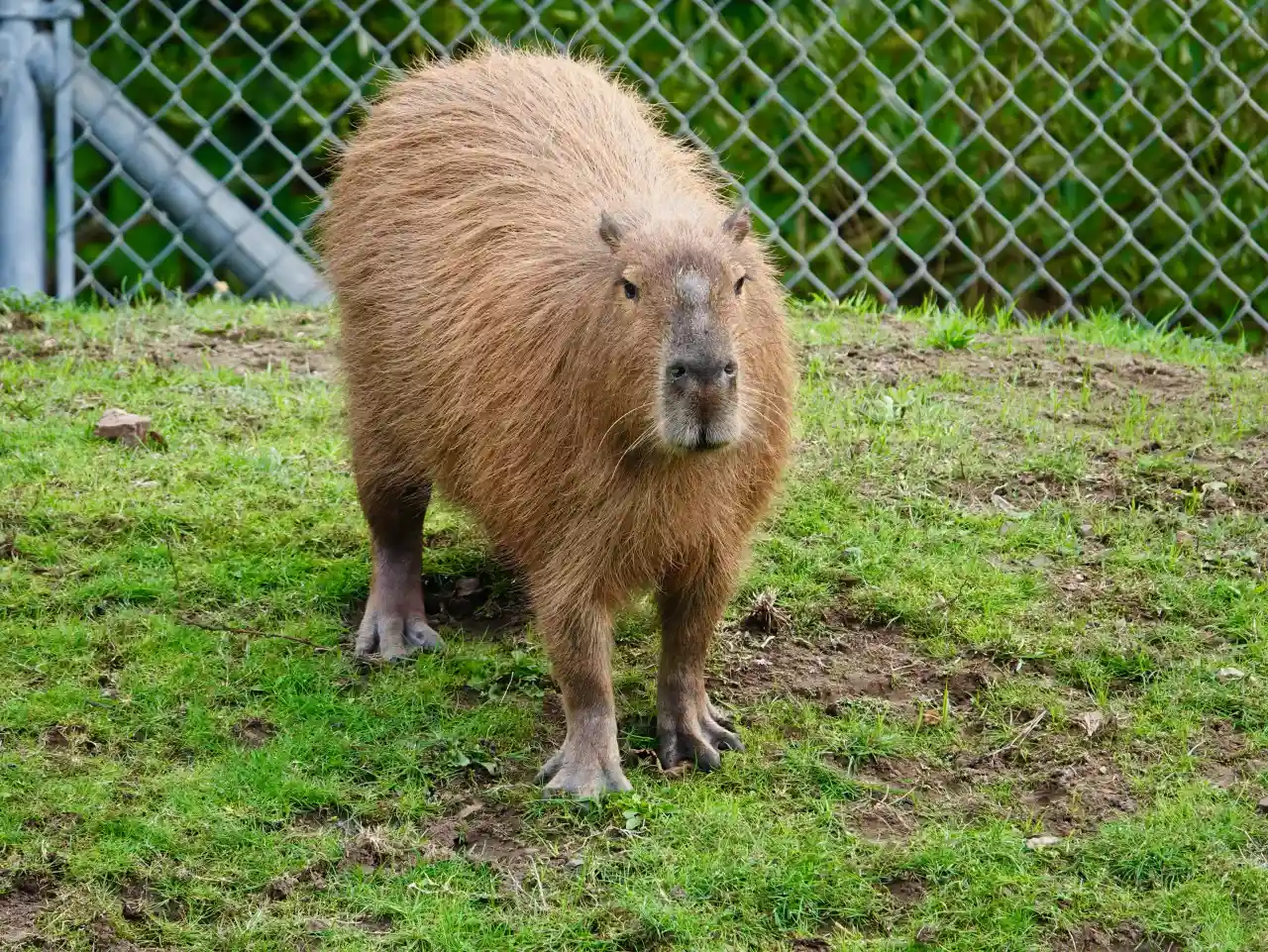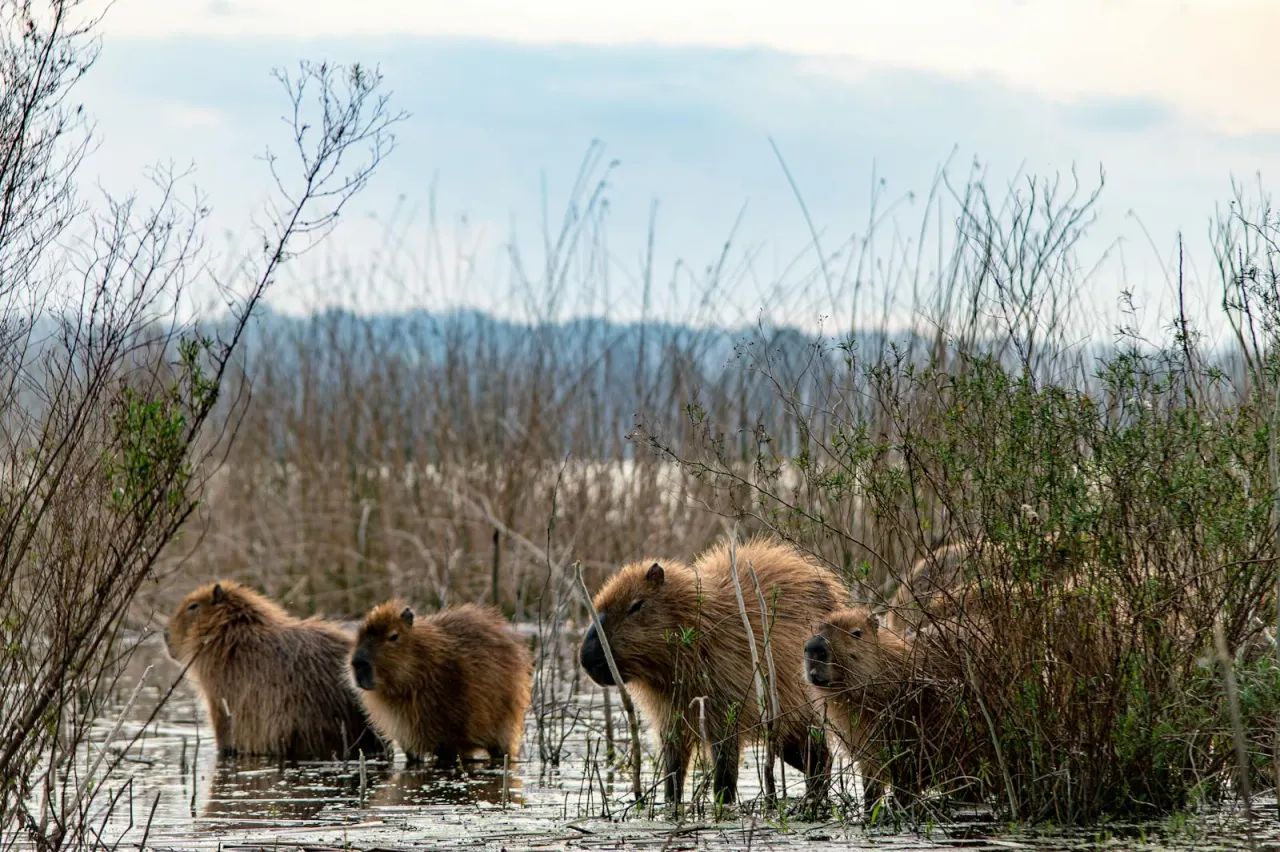
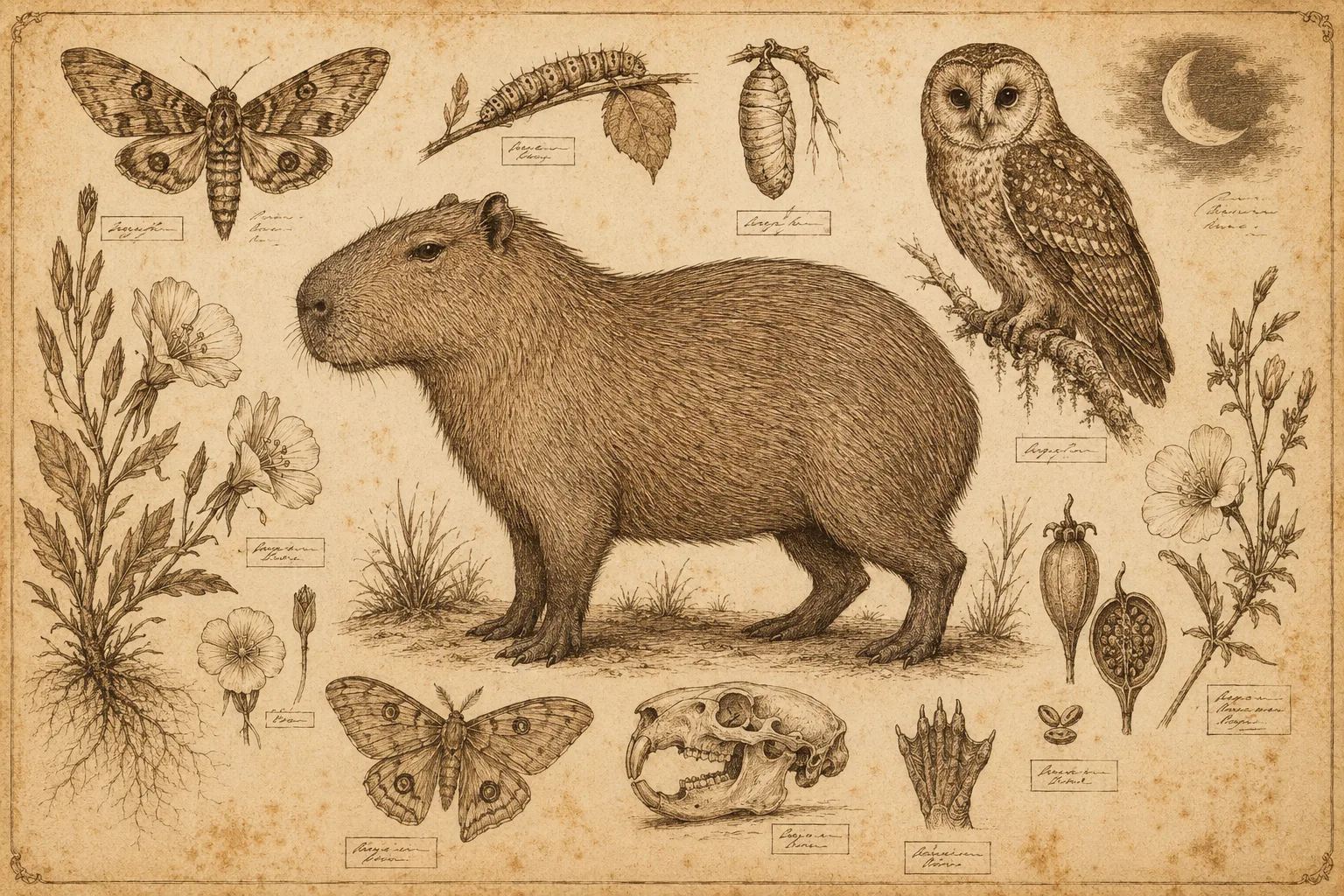
Hydrochoerus hydrochaeris. Two words, repeated twice with minor variation, that have been the capybara’s formal identity since Carl Linnaeus published Systema Naturae’s 12th edition in 1766. Linnaeus was efficient. He described the capybara he had been given information about, reached for the most obvious characteristic, and named it “water pig” in Greek. The translation is accurate, even if “pig” is misleading. Capybaras are rodents, not swine.
The name has stayed. The taxonomy around it has evolved considerably, but Hydrochoerus hydrochaeris remains the accepted binomial, and the capybara is still officially the world’s largest rodent.
Hydrochoerus Hydrochaeris: What It Means
Breaking down the name:
- Hydro (Greek: water). Straightforward. Capybaras are semi-aquatic.
- Choiros/choeros (Greek: pig). Less accurate, but descriptive. The animal’s heavy, barrel-shaped body and grazing habits apparently read as pig-like to 18th century European naturalists.
- Hydrochaeris (species epithet). A slight variation of the same root, reinforcing the water-pig compound.
The common name “capybara” has a separate origin. It derives from “kapiyva” in Tupi, an indigenous language of Brazil, meaning “master of the grass” or “lord of the grass.” That captures the animal’s role as a dominant grazer in South American wetlands and grasslands. Tupi was widely spoken across coastal Brazil when Portuguese colonizers arrived in the 16th century, and many Brazilian animal names in common use today have Tupi roots.
The contrast between the two names is interesting. Linnaeus saw the animal and thought: water pig. The Tupi speakers who lived alongside capybaras saw something different: master of the grass. The Tupi name arguably captures the animal’s ecological role better; the Latin name captures the visual impression better.
| Taxonomic rank | Classification |
|---|---|
| Kingdom | Animalia |
| Phylum | Chordata |
| Class | Mammalia |
| Order | Rodentia |
| Suborder | Hystricognathi |
| Infraorder | Caviomorpha |
| Family | Caviidae |
| Genus | Hydrochoerus |
| Species | H. hydrochaeris |
The Family Tree: Where Capybaras Actually Sit
Capybaras belong to Caviidae, a South American rodent family that evolved largely in isolation on the South American continent during the period when the Americas were separated. The Caviidae radiation produced an unusual variety of body forms: small, guinea-pig-sized cavies; large, hare-like maras; and the capybara, which took the body-plan to its logical extreme and became the largest rodent alive.
The Caviidae family’s notable living members:
- Cavia porcellus (domestic guinea pig): the most familiar member globally, descended from Cavia aperea, the Brazilian guinea pig
- Hydrochoerus hydrochaeris (capybara): largest in the family
- Dolichotis patagonum (Patagonian mara): looks like a rabbit-gazelle hybrid and runs rather than swims
- Kerodon rupestris (rock cavy): lives in rock outcrops in northeast Brazil and looks like a tailless squirrel
The broader context: Caviidae sits within Caviomorpha (cavy-like rodents), which includes Caviidae, Dasyproctidae (agoutis), Cuniculidae (pacas), Erethizontidae (New World porcupines), Dinomyidae (pacarana), and others. Caviomorpha is part of the suborder Hystricognathi, which includes both the South American Caviomorpha and the Old World porcupines.
One fact that surprises people: capybaras are more closely related to guinea pigs than to any North American or European rodent. The common ancestor between a capybara and a guinea pig is much more recent than the common ancestor between a capybara and a North American beaver or a European rat. The visual similarity between capybaras and small hippos is entirely convergent evolution. They share no close lineage.
The Other Capybara: Hydrochoerus Isthmius
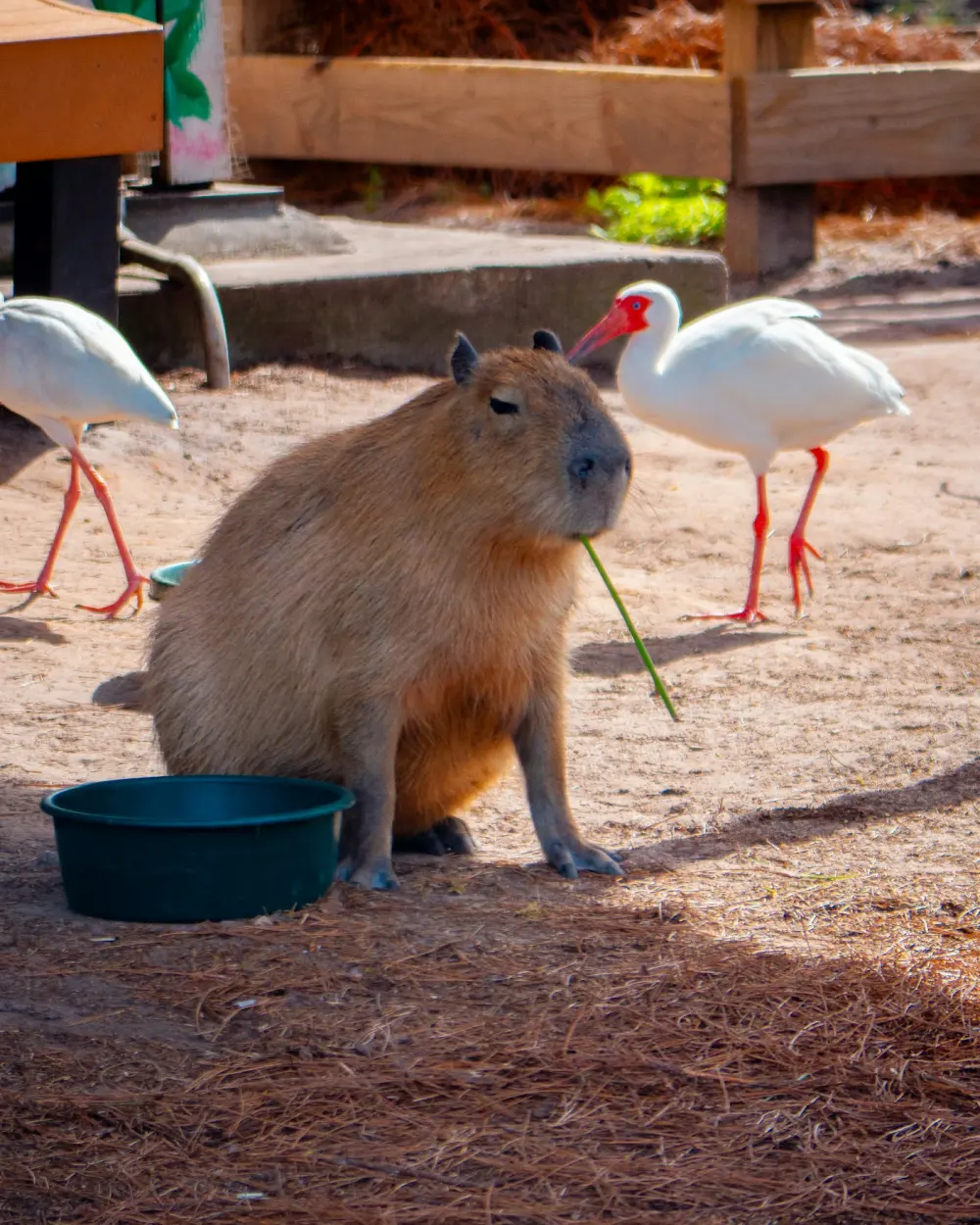
This one is consistently overlooked in popular capybara coverage. Hydrochoerus isthmius, the lesser capybara, is a second species in the same genus, found in Panama, northern Colombia, and the Gulf of Darién region. It was formally described by Joel Asaph Allen in 1902.
The lesser capybara is smaller than the common capybara. Adults typically reach 30-45 kg (66-99 lb) compared to the common capybara’s 35-65 kg range. Its geographic range is more restricted, and its habitat preferences overlap with those of H. hydrochaeris where ranges approach each other. The IUCN Red List treats the two species separately; H. isthmius is classified as Vulnerable, reflecting its smaller range and greater habitat pressure.
Most capybara content, including most zoo animals, most captive breeding populations, and most English-language writing, refers to H. hydrochaeris. When someone says “capybara” in English, they almost certainly mean the greater capybara.
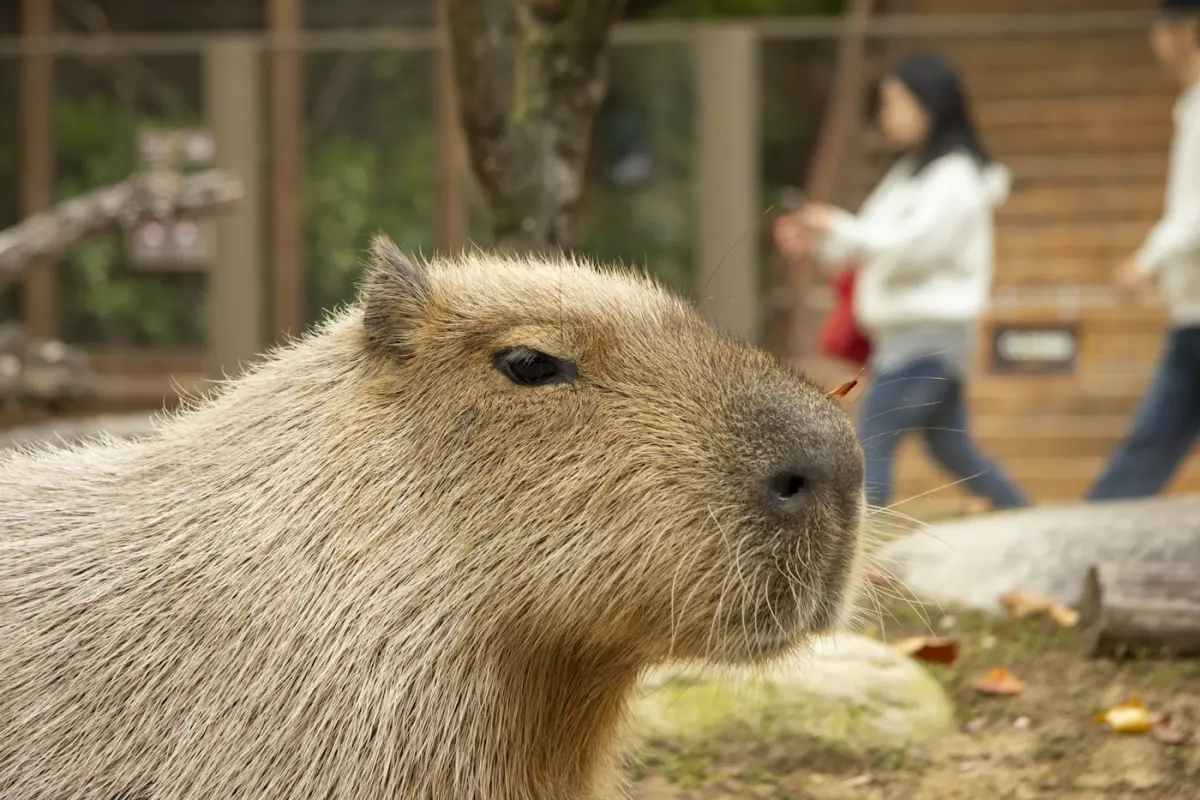
Misconceptions About Capybara Classification
“Capybaras are related to hippos.” Not closely. Both are large, semi-aquatic, and temperamentally tolerant of other species, but that is convergent evolution (similar pressures producing similar adaptations), not shared lineage. Hippos are in the order Artiodactyla (even-toed ungulates), most closely related to cetaceans (whales and dolphins). Capybaras are Rodentia. The last common ancestor of these two animals was a generalized mammal around 90 million years ago.
“Capybaras are basically giant guinea pigs.” They share a family and some anatomical features, but the divergence between the Cavia and Hydrochoerus lineages occurred millions of years ago. A capybara is to a guinea pig roughly what a human is to a monkey: related, but a different animal.
“The name means ‘big rat.’” No. It means “water pig” in Greek, and “master of the grass” in Tupi. Neither translation involves a rat.
Why The Taxonomy Matters For Capybara Facts
This is the part that reads as dry until you realize how much confusion it clears. Capybara husbandry requirements, dietary needs, social behavior, and veterinary care all follow from what kind of animal the capybara actually is. It is a Hystricognathi rodent in the Caviidae family, not a scaled-up guinea pig and not a water-adapted pig.
Its close relationship to guinea pigs is why vitamin C deficiency is a known welfare risk in captivity. Caviidae rodents cannot synthesize vitamin C internally the way most mammals do, so they have to get it from food. The shared family connection is the source of that vulnerability. Its Caviidae membership is also why the vestigial tail, the social group structure, and the hypsodont (high-crowned, continuously erupting) teeth are all family-level traits rather than species-specific quirks.
Knowing the family tree is how capybara facts stop being a random collection of interesting details and start fitting into a coherent picture of what kind of animal is actually in front of you. And it puts the internet’s favorite “world’s friendliest animal” in its proper context: Hydrochoerus hydrochaeris, a large South American Hystricognathi rodent, master of the grass, water pig, and the capybara. In that order.