Capybaras shed hair gradually throughout the year, but this is not the dramatic blowout experience that dog owners dread. The capybara coat is coarse, relatively sparse, and lacks the dense undercoat of many domesticated mammals. The shed hair is real but manageable.
How Capybaras Shed: Gradual, Not Seasonal
The capybara’s native climate — tropical and subtropical South America — does not have the dramatic seasonal temperature shifts that drive the heavy spring/fall shedding cycles in temperate-zone domesticated mammals. There is no biological pressure to produce a heavy winter undercoat and then shed it massively in spring.
Shedding is a continuous, gradual process. At any time, some hair is being lost and replaced. The rate may vary slightly with season or ambient conditions in captive settings, but it does not produce the concentrated shedding events that characterize dogs like Huskies, German Shepherds, or Labs.
The practical implication: capybara owners deal with constant low-level hair deposition in the enclosure and on surfaces rather than periodic heavy shed events. The total volume is less dramatic because the coat density is lower than most domestic pets.
What Capybara Fur Is Actually Like
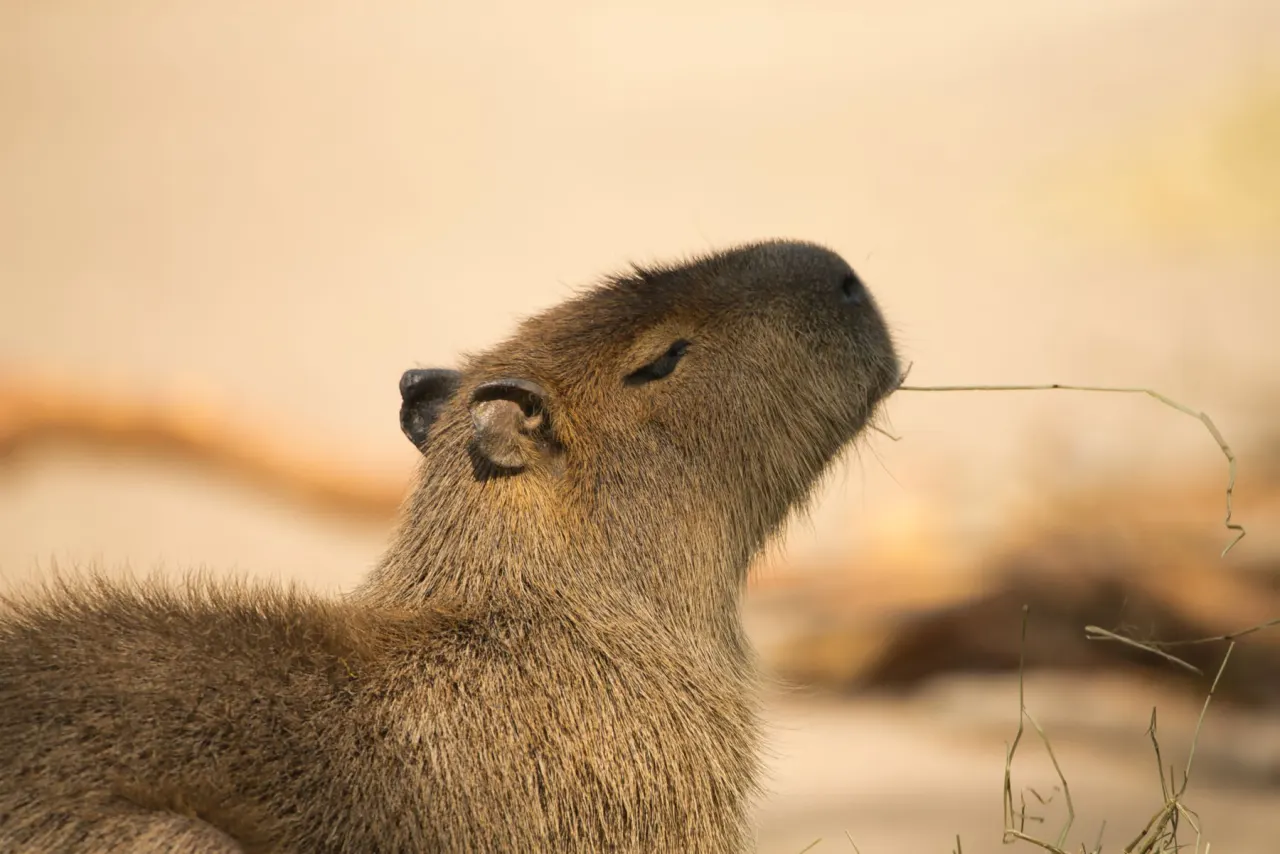
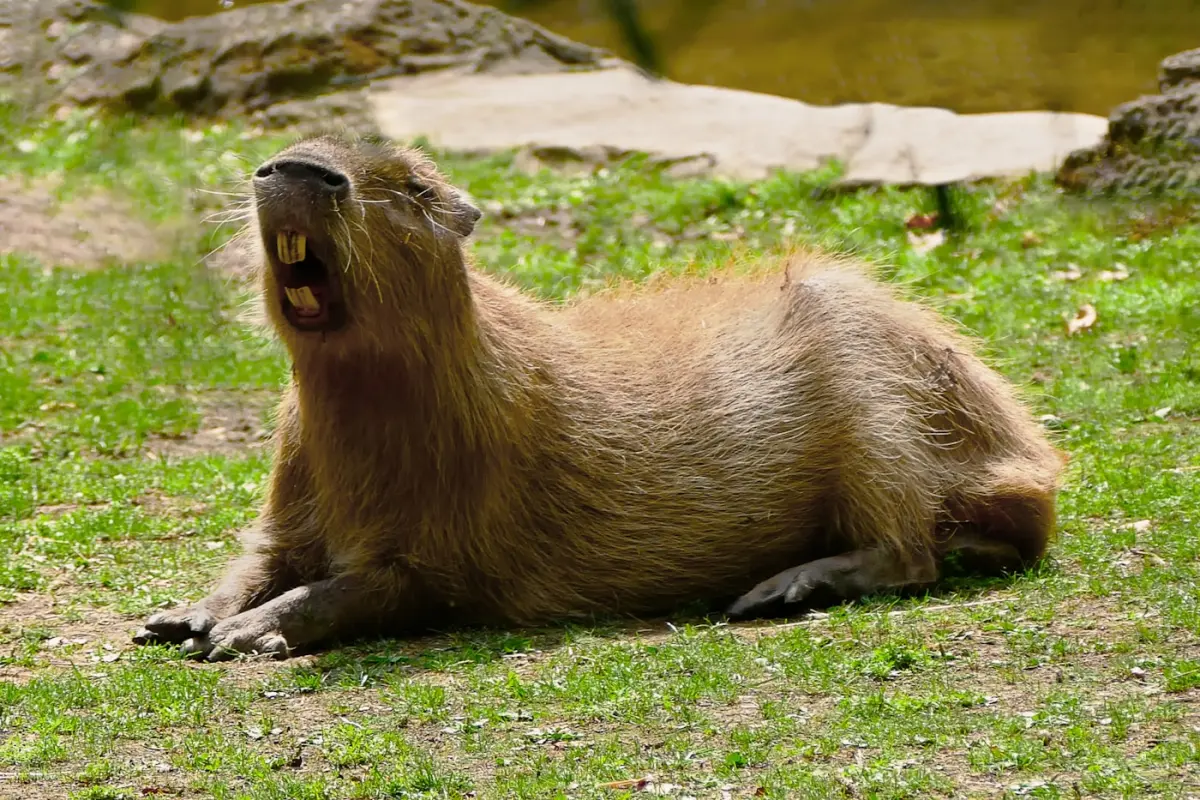
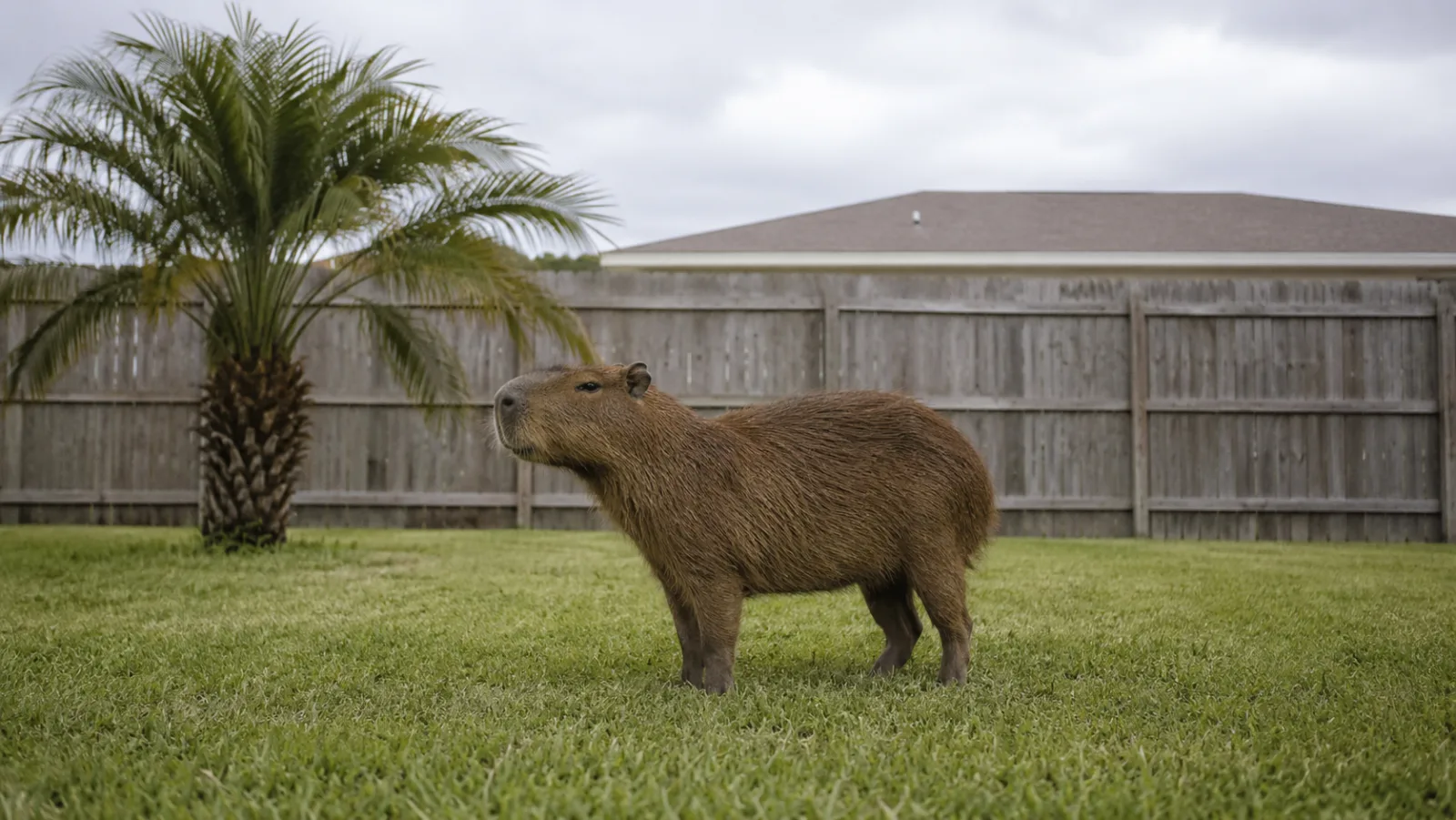
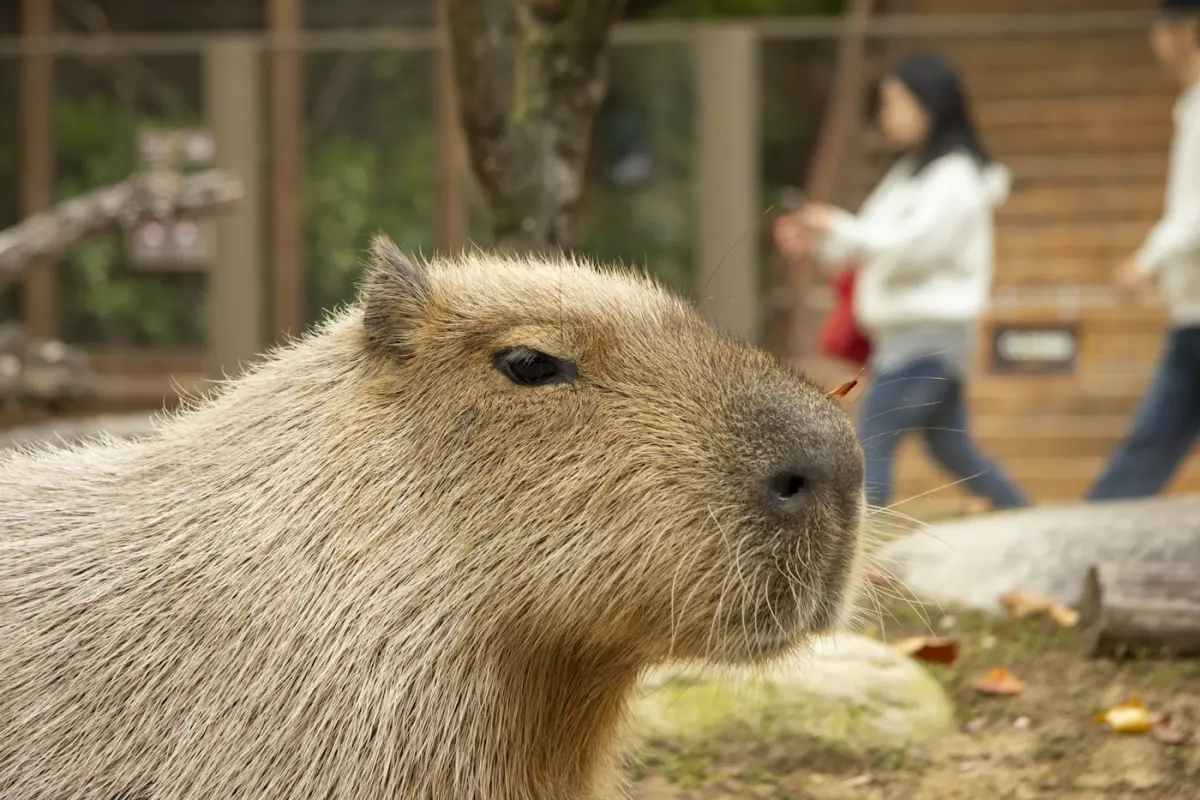
Capybara hair is coarse, stiff, and relatively sparse compared to most domesticated mammals. It is brownish to reddish-brown in most individuals, sometimes with lighter patches on the muzzle and underside. The coat lies close to the body rather than being fluffy or layered.
The sparse nature of the coat has functional consequences:
- Less insulation: capybaras cannot rely on fur for warmth in cold weather the way arctic mammals do. Water thermoregulation and behavioral shelter-seeking are their main cold-management tools.
- Less parasite hiding space: a dense coat harbors more ticks and mites than a sparse one — but capybaras still carry significant ectoparasite loads in the wild, which is why the cattle tyrant bird relationship exists.
- Easy visual inspection: the relatively open coat makes skin problems (sores, bald patches, mange lesions) more visible than in a dense-coated animal.
Social Grooming: The Primary Care System
In a wild or group-housed captive capybara population, grooming is primarily social. Allogrooming — one individual grooming another — is a documented behavior in capybara groups and serves both practical (parasite removal) and social (bond maintenance) functions.
Group members groom each other around the ears, face, neck, and other hard-to-reach areas. This is the primary mechanism for removing ticks, dried mud, and loose hair from areas the individual cannot reach itself.
The AZA Capybara Care Manual treats group housing as a welfare requirement, and social grooming is one of the behavioral benefits that group housing enables. An isolated capybara has no grooming partner — the behavioral need is present but cannot be fulfilled. Over time, this contributes to coat condition deterioration and social stress.
Captive Grooming: What It Looks Like
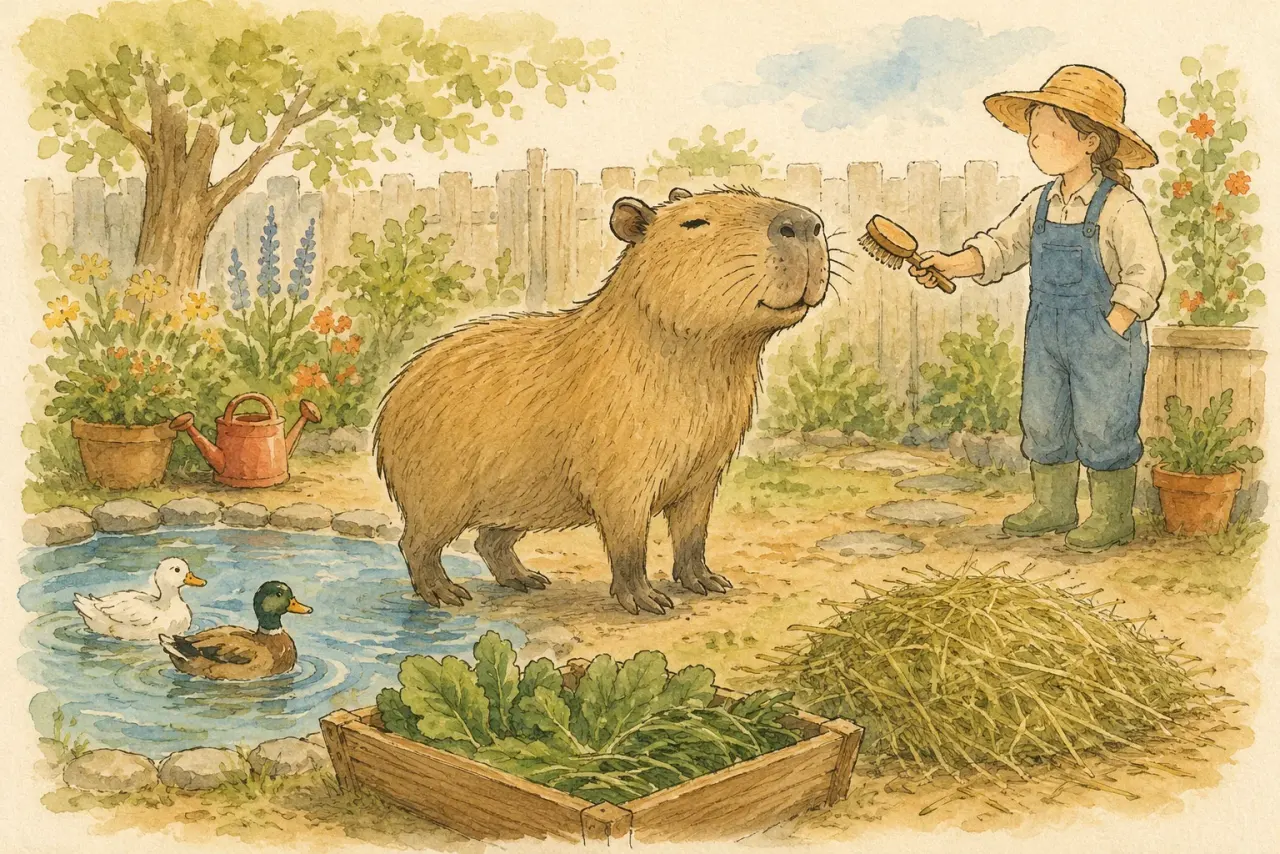
For a capybara that has been well-socialized to human contact, occasional gentle brushing or hand-grooming is accepted and often enjoyed. The target areas for brushing:
- Behind the ears and along the neck (common allogrooming zones)
- Along the back and flanks
- Around the haunches (avoid sensitive skin areas without building familiarity first)
A soft-bristle animal brush or a grooming mitt with soft rubber nubs works well. Start in areas the animal accepts before moving to less familiar zones.
Regular brushing serves several functions beyond coat maintenance:
- Builds and maintains trust with the handler
- Allows systematic inspection of the skin for parasites, sores, or coat condition changes
- Removes loose hair that would otherwise accumulate in the enclosure
- Provides social contact that supplements (but does not replace) contact with other capybaras
Human grooming should not be positioned as a substitute for social group grooming. It is a supplement — meaningful and welfare-relevant, but not equivalent to what a conspecific provides.
Skin And Coat Health Indicators
Regular coat inspection is more important than routine grooming. Signs to look for during handling or observation:
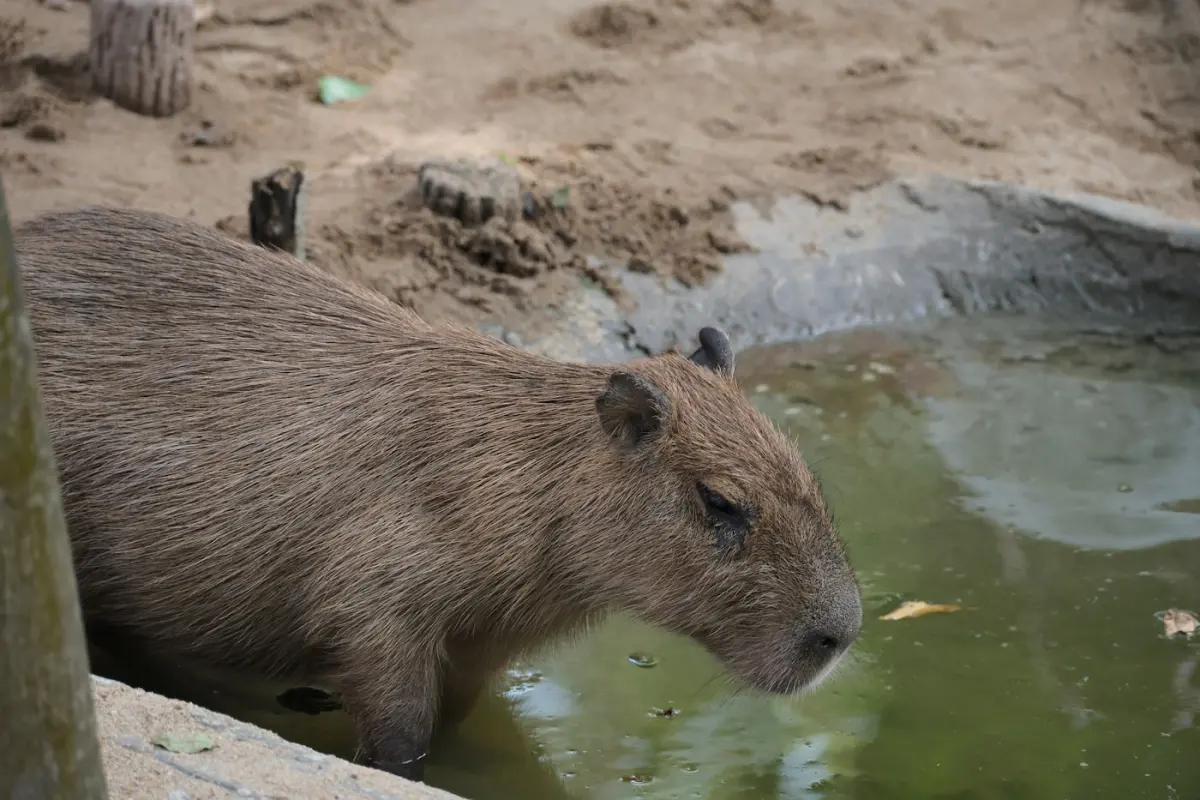
Healthy: coat is reasonably uniform, skin underneath is clear, no unusual scaling or flaking, no bald patches outside normal sparse areas.
Concerning:
- Bald patches not associated with normal sparse zones
- Excessive scaling or dandruff-like material
- Sores, crusting, or wetness on the skin surface
- Unusually dull or matted coat
- The animal repeatedly scratching one area
Any of these findings warrants a veterinary evaluation. Skin problems in capybaras — mange, fungal infection, bacterial dermatitis — require diagnosis before treatment because the presentations overlap and treatment protocols differ. See capybara health and common medical issues for the full health picture.
The coat is not the most important health indicator for a capybara — weight, appetite, and activity level matter more — but it is visible daily and changes in coat condition are often early signs of nutritional, parasitic, or water quality problems.