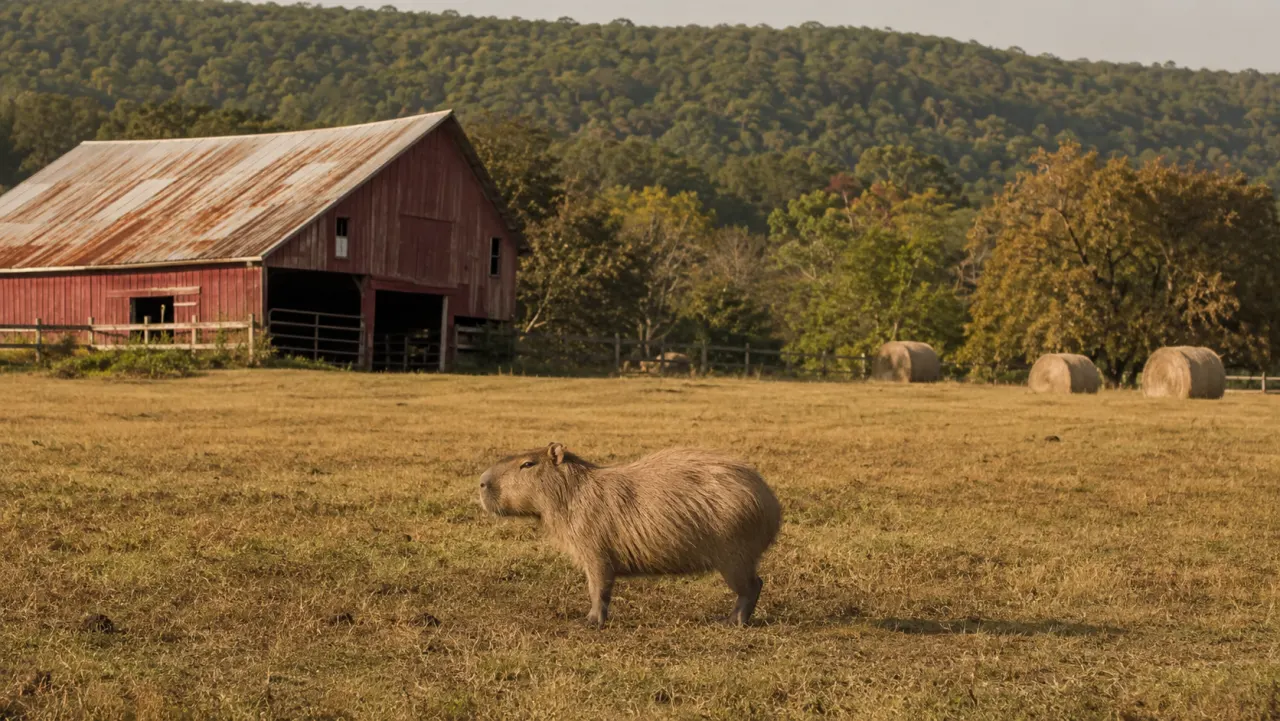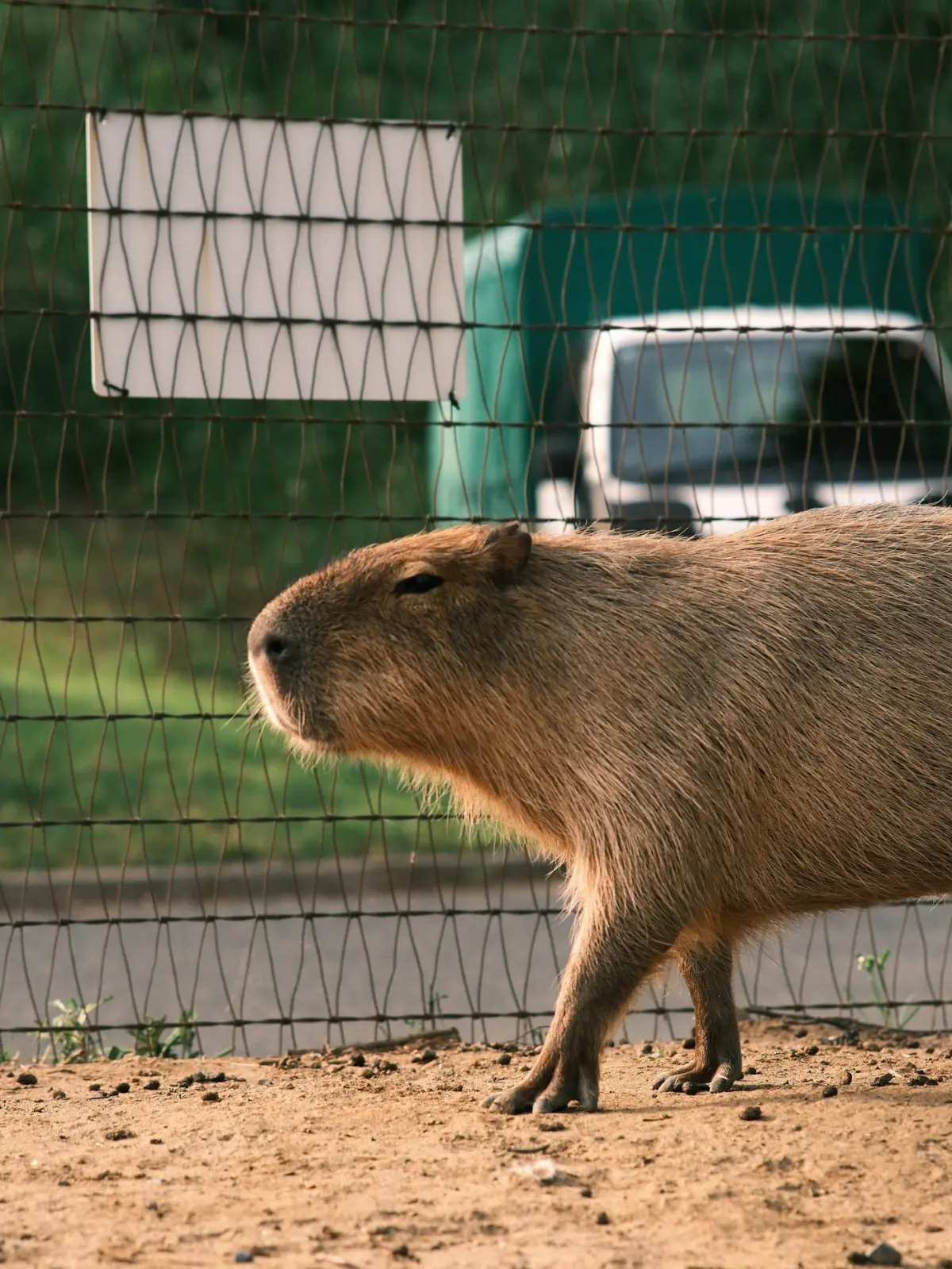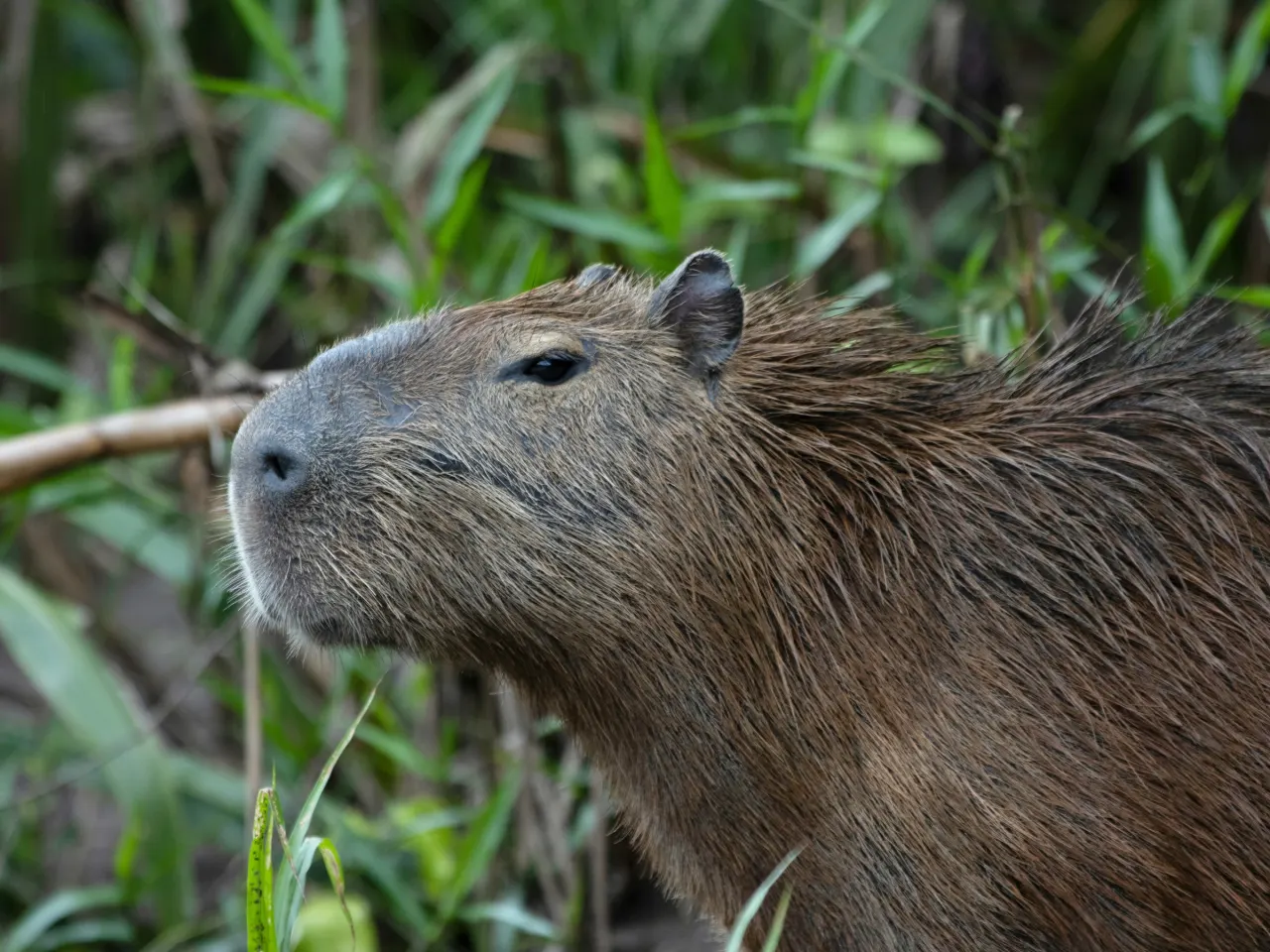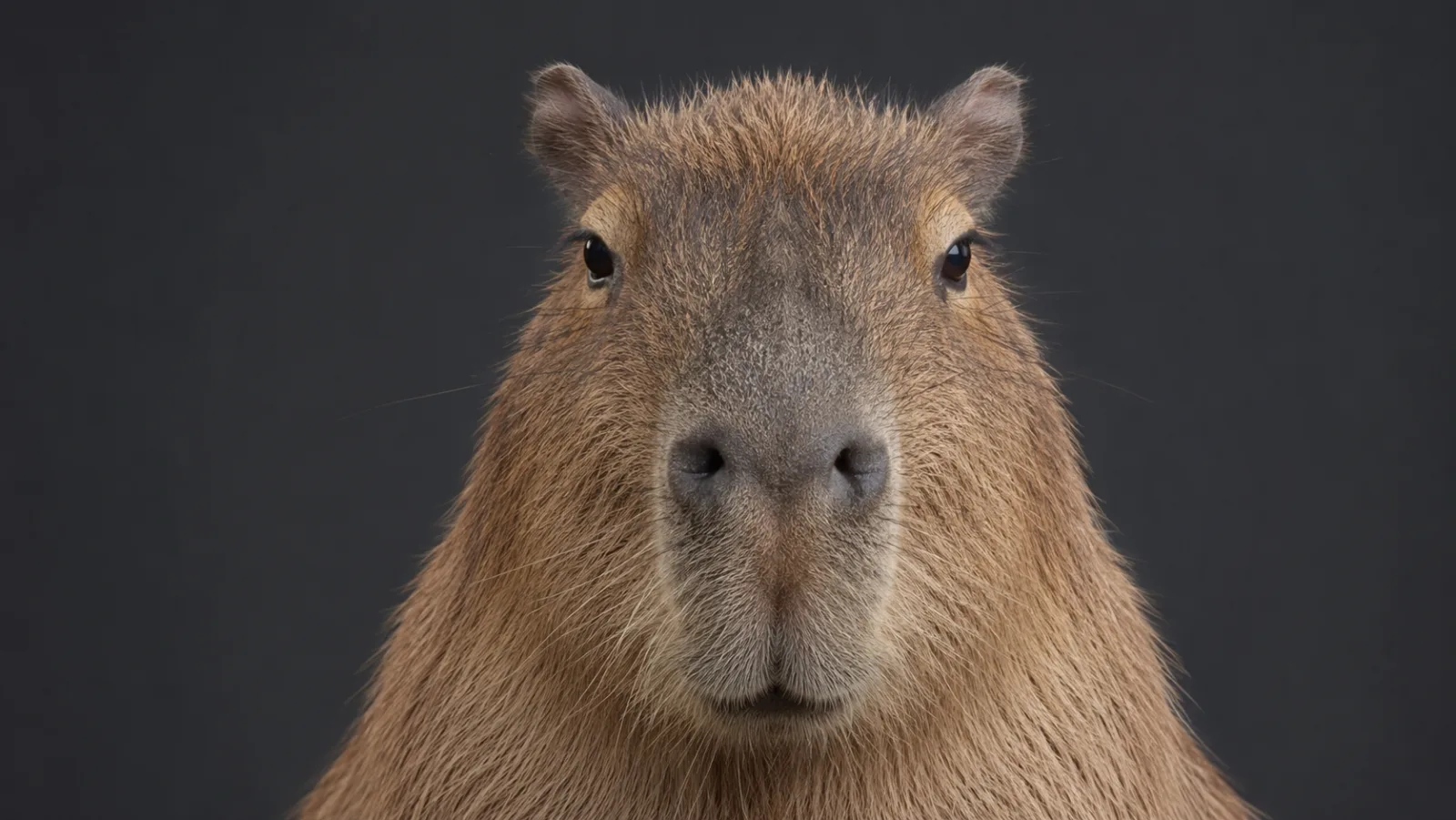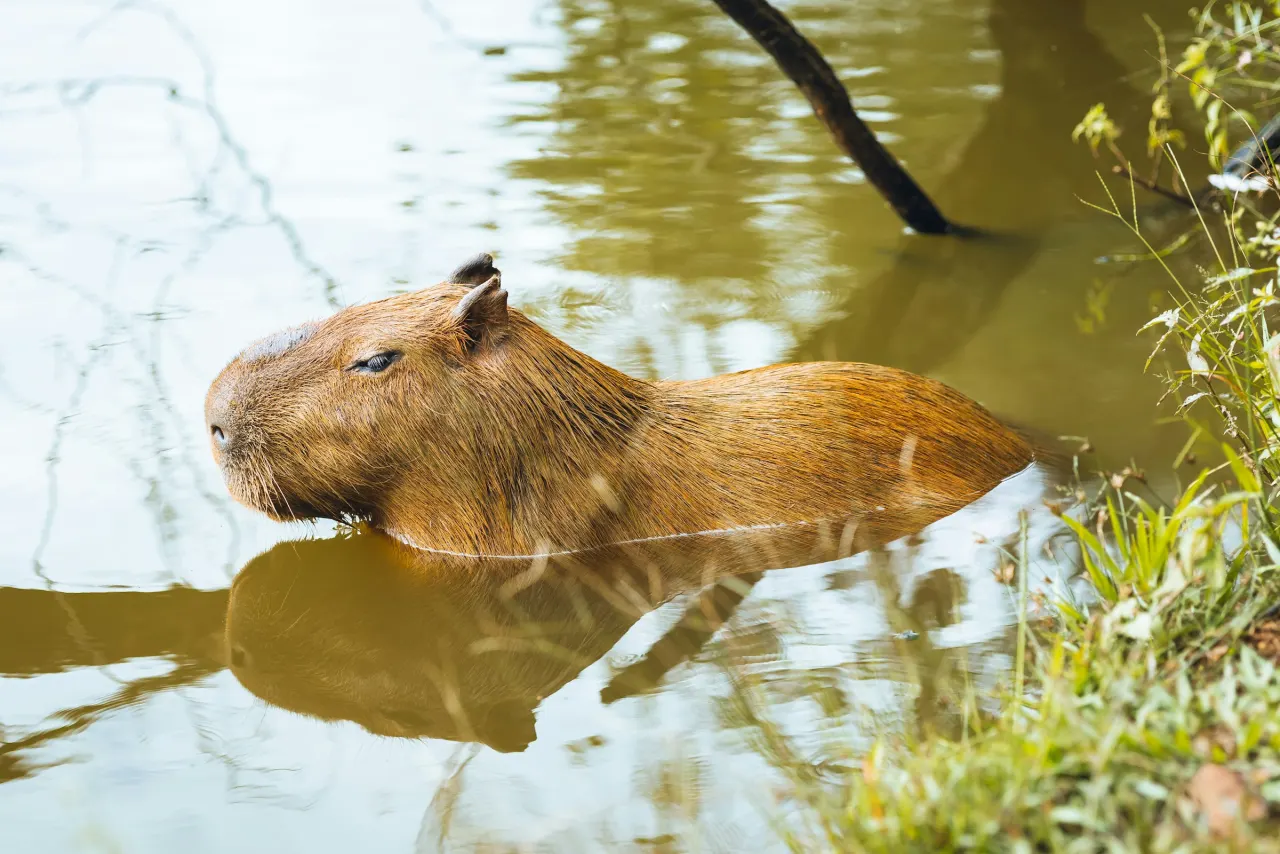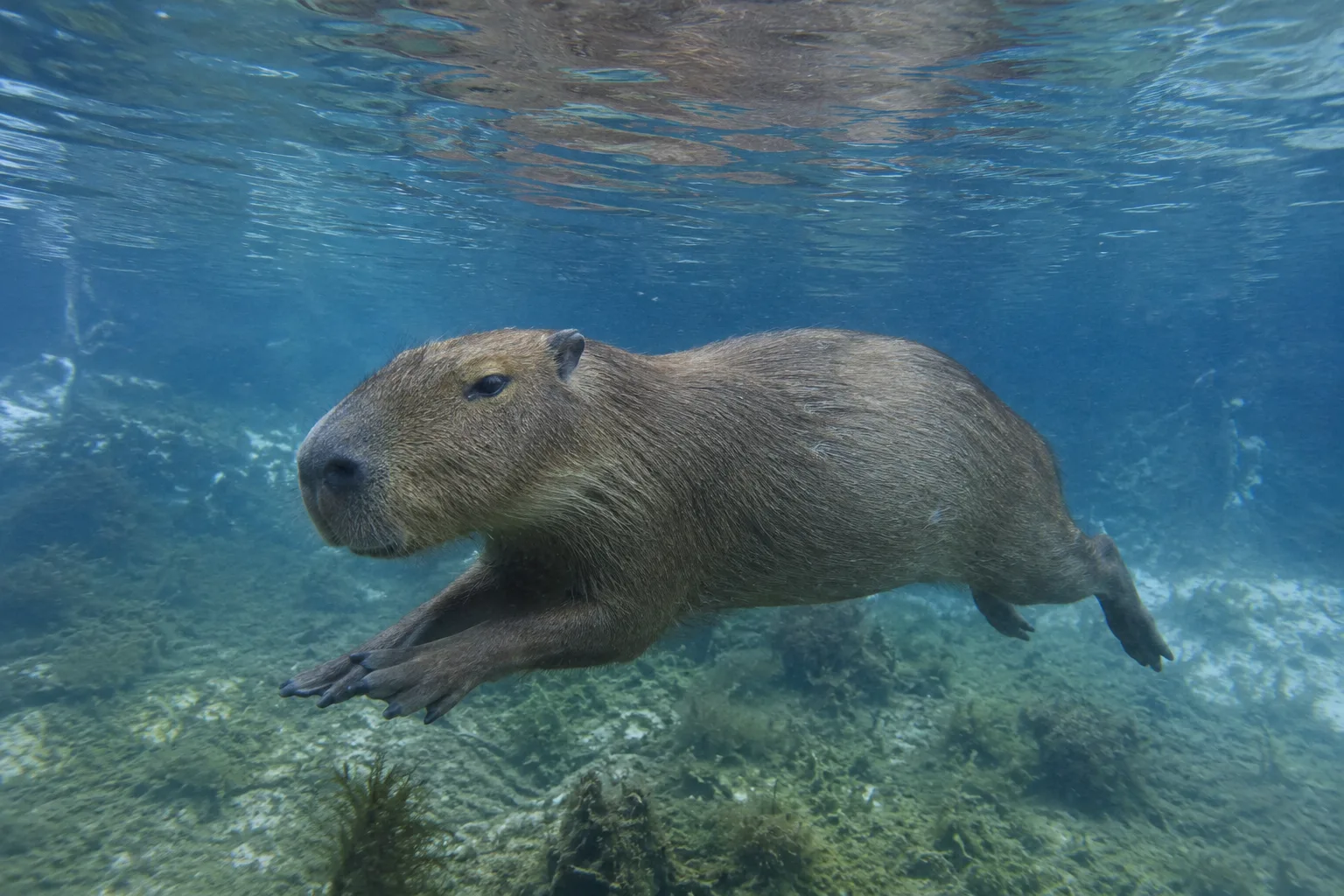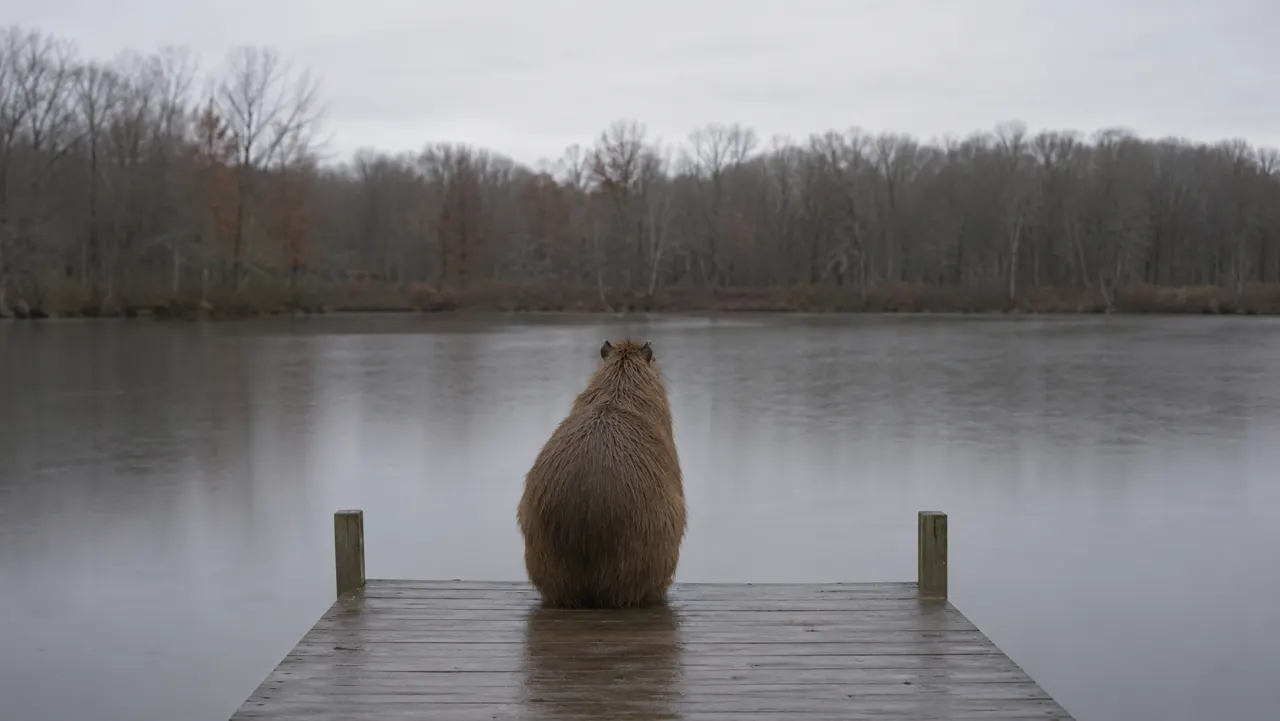
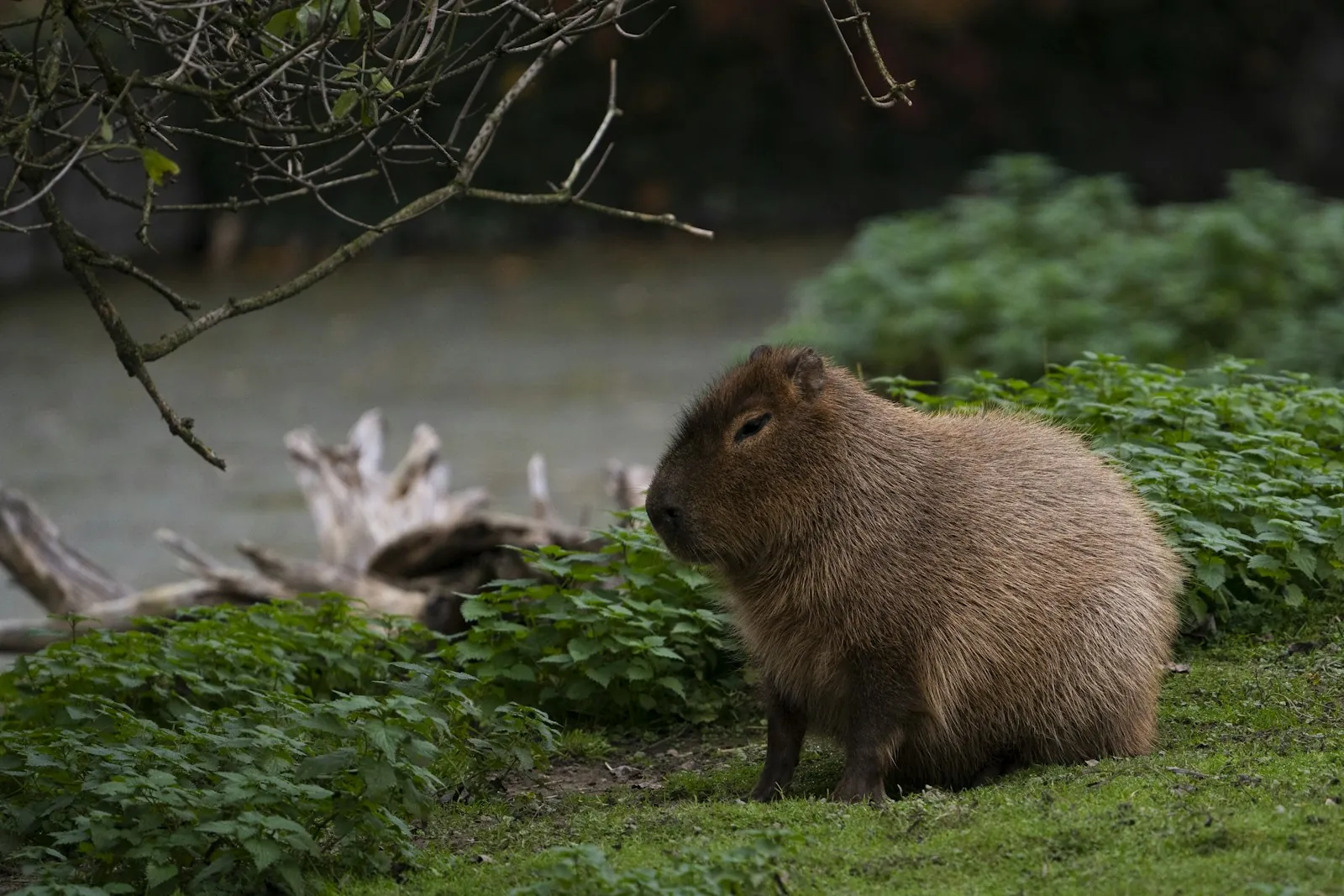
Capybaras exist in a world with a lot of animals that want to eat them. This is not a complaint about their situation — it is the central fact that explains most of their behavior. The group living, the water proximity, the crepuscular activity pattern, the five-minute breath-hold, the alarm calls — all of it is shaped by a predator list that approaches from land, water, and air simultaneously.
Understanding who is eating capybaras is the fastest way to understand why capybaras are the way they are.
The Predator List: All Six Threats
- Jaguar — primary land predator; documented by Animal Diversity Web as a major capybara predator across South America
- Puma — land predator with similar hunting behavior; takes capybaras throughout the range
- Black caiman / spectacled caiman — aquatic ambush predators; most dangerous in shallow water at night
- Green anaconda — aquatic constrictor; takes capybaras at the water’s edge and in shallow water
- Harpy eagle — aerial predator; primarily targets juveniles; capable of taking smaller adults
- Humans — hunting for meat and leather; historically significant in Venezuela, Colombia, and Brazil
| Predator | Approach vector | Primary target | Capybara counter |
|---|---|---|---|
| Jaguar | Land ambush, charges to bank | All ages | Group detection, water escape |
| Puma | Land stalk and rush | All ages | Group detection, water escape |
| Black caiman | Water ambush, bank approach | Adults and young | Shallows awareness, group alarm |
| Green anaconda | Water ambush, constriction | All sizes | Bank proximity, group alarm |
| Harpy eagle | Aerial stoop | Juveniles, small adults | Group cover, vegetation |
| Humans | Hunting, trapping | Adults | Behavioral shift toward nocturnal activity |
Jaguar And Puma: The Land Approach
Jaguars are documented as one of the most significant predators of capybaras across their South American range. Animal Diversity Web’s jaguar account explicitly lists capybaras as a prey species in multiple habitat contexts, particularly in wetland and riverine habitats where capybara density is highest.
Jaguar predation typically involves stalking through vegetation near water, then rushing toward the bank. The capybara’s response — detecting early through group vigilance, then sprinting to water — is specifically tuned to this approach. The capybara does not try to outrun a jaguar across open ground (jaguars can hit 80 km/h; capybaras max out around 35 km/h). The goal is to make it to water before the jaguar closes the gap from ambush distance.
Pumas follow similar hunting patterns in the parts of the capybara’s range where jaguars are absent or rare. Both cats can swim, which limits — but does not eliminate — the water escape advantage for capybaras.
Caiman And Anaconda: The Water Threat
This is the complication that makes capybara survival challenging. The land is dangerous; the water is also dangerous. The capybara is not simply fleeing to a safe zone when it enters water — it is trading one type of threat for another.
Spectacled caimans (Caiman crocodilus) and black caimans (Melanosuchus niger) are the primary aquatic reptile threats. Black caimans are particularly capable — adults can exceed 4 meters and are documented predators of large mammals, including capybaras. Animal Diversity Web and field documentation both note caiman predation on capybaras, particularly at night when capybara visibility in water is reduced.
Green anacondas (Eunectes murinus) are constrictors that ambush prey at the water’s edge and in shallow water. They are not fast pursuers, but an anaconda near a capybara’s water entry point is a serious problem. The anaconda’s ability to operate partially underwater and in dense vegetation makes it difficult to detect through the standard group-vigilance system.
The capybara’s answer to these aquatic threats is behavioral: stay in shallower water where large caimans and anacondas are less mobile, maintain group alertness near the water’s edge, and use submersion as a predator-confusion tool rather than deep-water retreat.

Harpy Eagle: The Aerial Problem
Harpy eagles (Harpia harpyja) are among the largest and most powerful raptors in the world, with talons capable of generating crushing force and a body weight of up to 9 kg. Animal Diversity Web’s harpy eagle account notes that their diet includes monkeys, sloths, large birds, and young capybaras. Adult capybaras at the heavier end of the weight range (60-70 kg) are generally too large for a harpy eagle to take, but juveniles and young adults are within range.
The aerial threat creates a different behavioral response. Group cover — staying under vegetation canopy or in the middle of a group — reduces the aerial exposure window. Individual animals that separate from the group or move through open ground away from vegetation are more vulnerable. Young capybaras stay close to adults in part because of the aerial threat, which is one reason capybara groups rarely let juveniles wander far.
Humans: The Sixth Predator
Historically and in parts of the contemporary range, humans are a meaningful predator of capybaras. In Venezuela, the Catholic Church’s 16th century classification of capybaras as “fish” (allowing them to be eaten during Lent) created a tradition of capybara meat consumption that persists. Capybara meat is legal and commercially available in some South American countries. Capybara leather is used in some regional markets.
The IUCN Red List notes that hunting is a significant pressure on capybara populations in parts of their range, though the species as a whole remains Least Concern at the global scale. Local population depletion in heavily hunted areas is documented. The behavioral shift toward more nocturnal activity in areas of human pressure — documented by Animal Diversity Web — is a direct response to human hunting and disturbance.
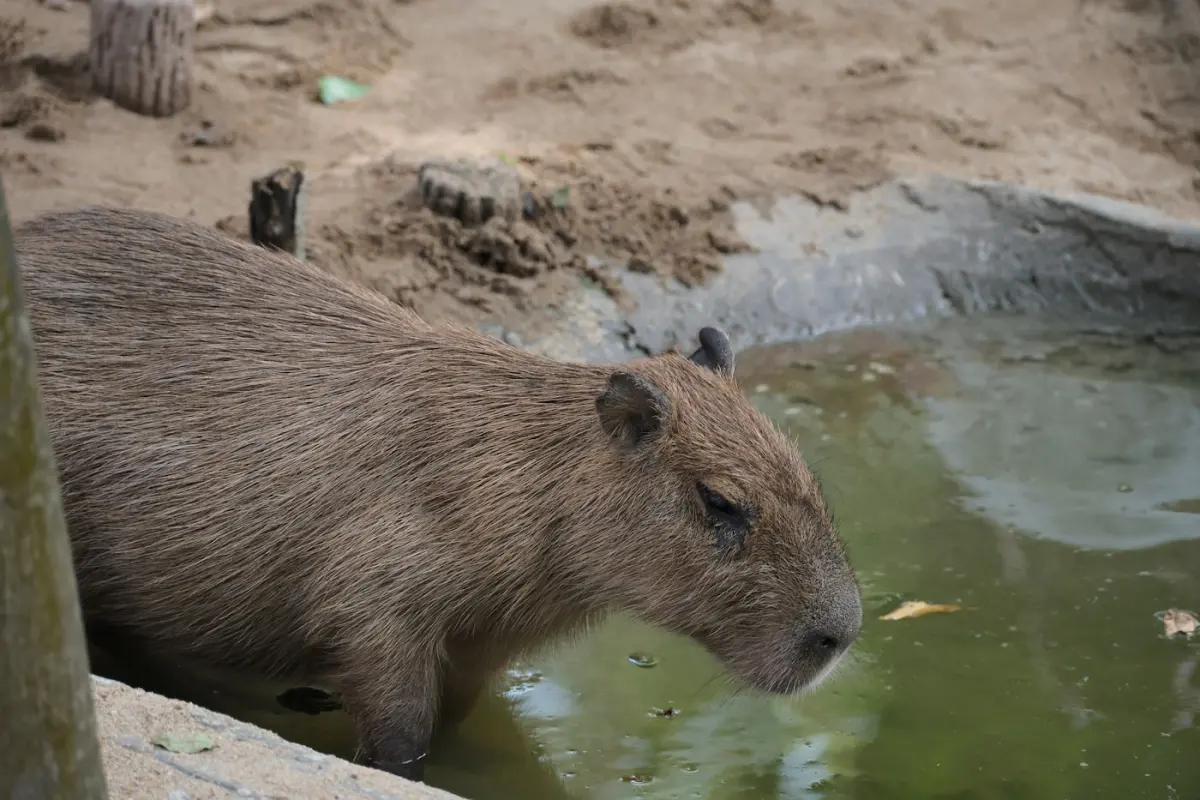
How Predator Pressure Shapes Capybara Behavior
Every major behavioral trait of capybaras maps to this predator list:
- Group living → distributed vigilance against land predators; alarm calls work because multiple individuals can detect threats from multiple directions
- Water proximity → land escape route from jaguars and pumas; but also a risk zone for caimans and anacondas
- Crepuscular activity → avoidance of jaguar hunting patterns (often dawn and dusk stalking) while avoiding full darkness (caiman risk) and full midday heat (human and land predator risk)
- Five-minute breath-hold → waiting out jaguar patience at the bank
- Bank-edge grazing pattern → never too far from water; always keeping the exit visible
- Alarm bark → rapid group communication that triggers collective water retreat
The capybara’s famous calm is not indifference to its situation. It is efficient threat management. A capybara that looks relaxed has assessed its current position as acceptable. Remove the group, remove the water, remove the bank visibility — the calm disappears with the conditions that made it possible.
Understanding the predator list is understanding why capybaras are built the way they are. The behavior, the anatomy, the social structure — it is all a response to that specific list of things that want to eat them, from specific directions, in specific ways. The capybara is a very good answer to a very specific question.