
British Columbia has a serious exotic-animal law that has nothing to say about capybaras. That is not a loophole and it is not an oversight. It is what happens when a province writes a regime for one specific problem — animals that can kill someone — and a grazing rodent turns up asking whether the regime applies to it.
Outside the provincial scheme entirely, so your municipality decides
Schedule 1 of the Controlled Alien Species Regulation designates mammals, birds, amphibians and reptiles. Its mammal entries run to primates, elephants, canids, ursids, felids, hippos, hyenas, rhinos, giraffes, gaur and African buffalo, several with named exceptions. The order Rodentia does not appear.
No CAS permit exists to apply for, and none is required. That is the whole provincial answer, and it settles less than people expect.
The Short Answer for BC
There is no provincial permit and no provincial prohibition. The capybara sits outside the Controlled Alien Species Regulation, which is the instrument that governs exotic animals in this province.
Everything real happens at the municipal level, and BC is the province where that is hardest to generalise about, because its cities did not copy one another the way Ontario’s did.
What the Controlled Alien Species Regime Covers
BC’s Wildlife Act permits the designation of species as “controlled alien species” — non-native animals considered a risk to human health or safety, or to property. The designations live in Schedule 1 of the Controlled Alien Species Regulation, which is organised by class and then by order or family.
The mammal designations run to primates, proboscideans, canids, ursids and felids — monkeys and apes, elephants, wolves and their relatives, bears, and the cats. Then the schedule moves on to birds, amphibians and reptiles.
Rodentia is not there. Not narrowly, not partially, not with exceptions. There is no rodent entry of any kind in the mammal designations.
What the CAS regime decides
- Whether a designated species may be possessed, bred, shipped or sold
- Permit conditions for the people who may hold one
- Enforcement and seizure powers for designated animals
What it does not decide
- Anything about a capybara, in either direction
- Whether your municipality permits one
- Enclosure or welfare standards in a private home
- Whether the animal may enter Canada at all
Why There Are No Rodents on the List
The origin of the regime explains its shape. BC’s controlled alien species framework was developed after a woman was killed by a privately kept tiger near 100 Mile House in May 2007, and the policy question driving it was direct: which privately held animals can seriously injure or kill a person, and who should be allowed to keep them.
Answer that question honestly and you arrive at big cats, bears, large canids, primates, crocodilians and venomous reptiles. You do not arrive at a semi-aquatic grazer that runs away from conflict.
"The province considered dangerous exotics and did not list the capybara" is true. "Therefore the province has approved capybara ownership" does not follow. The province answered a safety question, not a permission question, and nobody has yet put the permission question to it.
This matters more than it sounds, because it tells you what a future amendment might look like. Provinces that regulate exotics on a safety basis tend to expand their lists after incidents. Provinces that regulate on an invasive-risk basis expand them after escapes. BC’s mammal designations are a safety list, and a grazer that runs from conflict is not what triggers a safety amendment. That is a reasonable read on stability. It is not a promise, and it says nothing at all about your city.
Alberta, next door, took the other approach and named the nutria as a controlled animal on invasive-risk grounds while leaving the capybara off. Two provinces, two different logics, same outcome for this animal.
Which Leaves Your Municipality
This is where BC stops resembling Ontario. In Ontario the big cities share a near-identical rodent clause, so one page can tell most readers their answer. BC’s municipalities drafted independently, and reading three of them side by side turns up three completely different structures.
| City | Instrument | What it does about rodents | Capybara outcome |
|---|---|---|---|
| Surrey | Animal Responsibility By-law 19105, s. 4 + Schedule “A” item 23 | Prohibits “all rodentia”, with five named pet-trade exceptions | Prohibited |
| Victoria | Animal Control By-law 11-044 | No prohibited-species scheme of any kind | Not prohibited by this by-law |
| Vancouver | Animal Control By-law 9150; Wild Animal Prohibition By-law 6940 | Neither reaches it. 9150 has no species list; 6940 is a circus by-law naming no rodents | No municipal prohibition found |
Surrey prohibits it, and the exception list is the interesting part
Surrey is the province’s second-largest city and it gives the clearest municipal answer in BC. Section 4 provides that “no person shall: (a) breed; (b) possess; (c) exhibit for entertainment or educational purposes; or (d) display in public; either on a temporary basis or permanent basis, any prohibited Animal outlined in Schedule ‘A’ to this Bylaw.”
Schedule “A” is a list of prohibited animals by taxon, and item 23 reads:
“all rodentia, except the hamster, gerbil, guinea pig, domestic mouse, and domestic rat”
No weight threshold, no captive-bred test. The order is prohibited and five pet-shop animals are carved out of it. A capybara is not one of the five.
Look at which cavy made the list. Surrey excepted the guinea pig and said nothing about its very large cousin — the same split Quebec drew explicitly by genus, arrived at here by a completely different drafting route. Two jurisdictions, two mechanisms, one line through the middle of Caviidae.
Section 5 carves out city pound premises, police, the BC SPCA, veterinarians providing temporary care, premises holding a valid Wildlife Act permit, and facilities accredited by the Canadian Council on Animal Care. All institutional. None of them is a private home.
Victoria has no species list at all
Victoria’s Animal Control By-law contains no prohibited-animal provision, no exotic-animal section and no species schedule. Its schedules are dog off-leash areas, a dogs-prohibited area in Beacon Hill Park, a dangerous-dog sign, fees, and a wildlife-feeding area. What it does carry is enforceable care standards — shelter, sanitation, exercise, veterinary care — that apply to any animal.
The one place rodents appear is the fee schedule, which prices impounding a “Bird, rabbit, rodent or other animal” at $10. The city contemplates ending up with your rodent. It does not tell you not to have one.
Two cautions. The consolidation available to us is current to 1 January 2015, so confirm nothing has changed. And an absent by-law is not a durable answer — Victoria could write one, and a by-law passed after you buy does not reliably grandfather the animal.
Vancouver has two animal by-laws, and neither one reaches a capybara
This is the result we did not expect, and it took reading both instruments to be sure of.
Vancouver’s Animal Control By-law No. 9150 runs eleven sections — interpretation, administration, dog licences, control of dogs, keeping of dogs, impoundment, regulation of other animals, disposition, fees, offences, repeal — and two schedules, being dog licence expiry dates and fees. There is no prohibited-species list in it anywhere. (It is also a scanned document with no searchable text, which is its own small obstacle for anyone trying to check this.)
The obvious next stop is the by-law with the promising name: the Wild Animal Prohibition By-law No. 6940. It is three pages, passed in February 1992, and section 2 is the whole operative rule:
“No person carrying on the business of a circus shall use or permit to be used an animal listed in Schedule A which is attached to and forms part of this By-law.”
It is a circus by-law. It governs performances, not pets, and it has done since 1992.
And even reading it at its broadest, Schedule A does not help. The list runs through primates, felids, canids, ursids, elephants, pinnipeds, crocodilians, marsupials, snakes, both ungulate orders, hyaenas, birds, mustelids, procyonids, edentates and viverrids. Rodentia does not appear on it at all — the one order the capybara belongs to is the one the schedule skips.
So Vancouver, BC’s largest city, has no municipal prohibition on keeping a capybara that we could find in either of its animal by-laws. Combined with the provincial position, that makes Vancouver one of the more permissive major cities in Canada on this question, which is not a sentence anyone expected to write.
No prohibition is not permission. Zoning, nuisance and property-standards provisions apply regardless, strata by-laws bind a large share of Vancouver housing, and the city can write a rule at any time. It also means a Vancouver reader who opens the animal control by-law, finds nothing, and stops there has reached the right answer by the wrong route — and would reach a wrong answer that way in Surrey, thirty minutes down the highway.
And three things that say no regardless
- Strata by-laws. A very large share of BC’s urban housing is strata-titled, and strata corporations set their own pet rules. A strata by-law can prohibit an animal the city permits, and it can be amended by vote after you move in.
- Tenancy agreements. Landlords may restrict pets, and an exotic animal is not covered by any of the usual accommodations.
- Land use and nuisance provisions, which apply whether or not an animal-specific by-law exists.
A Mild Winter Is Still Not a Warm One
Coastal BC is the mildest climate in Canada and this is the one place in this series where the climate argument is not immediately fatal. It is still not favourable.
The AZA Capybara Care Manual treats outdoor housing as appropriate where lows reach roughly 4°C, and only with a heated shelter and bedding available. Coastal BC sits around or below that through the winter months, with sustained rain rather than deep cold. The Interior and the north are a different problem entirely and closer to the Alberta situation.
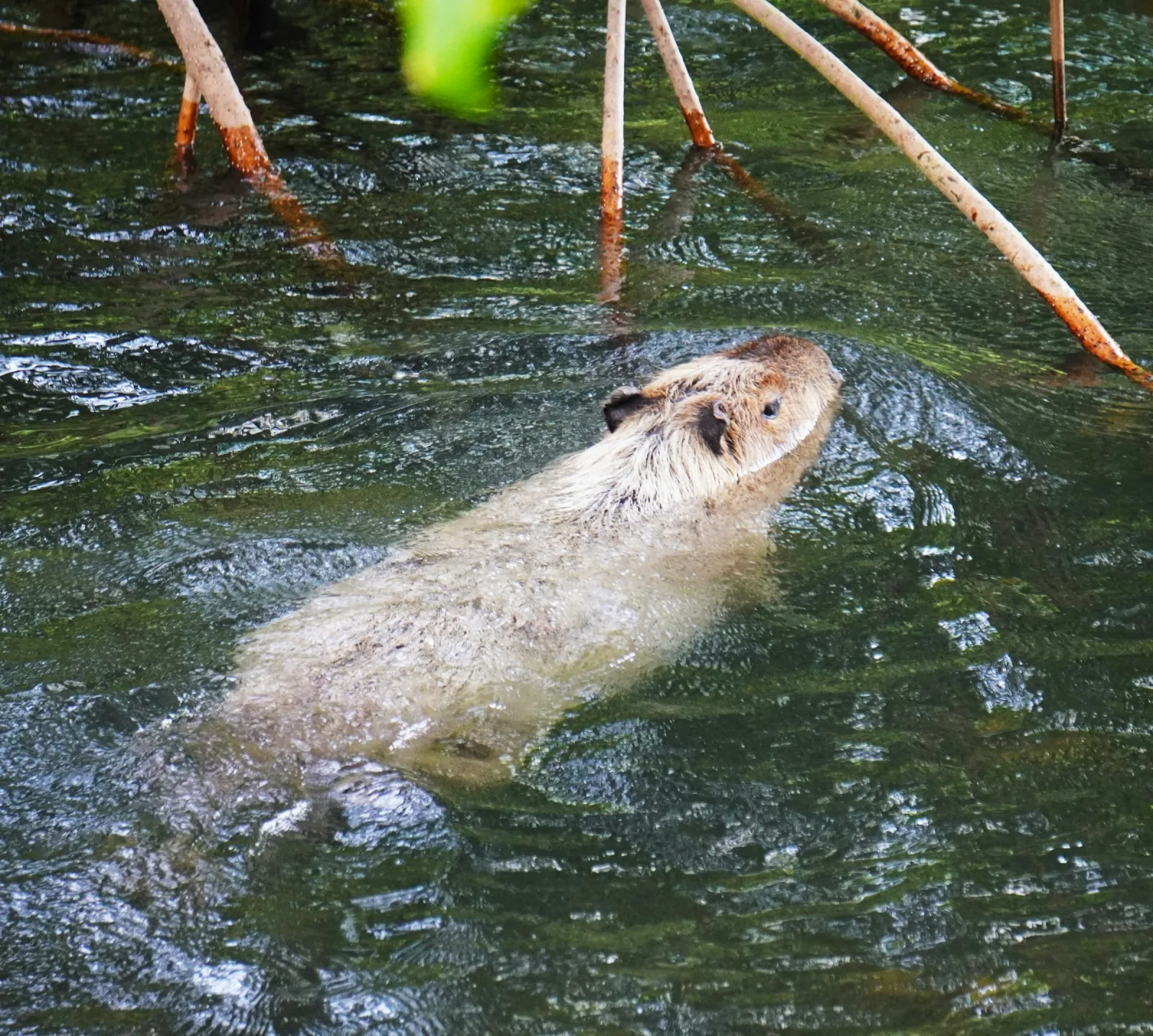
Persistent damp brings its own issue. Capybaras are semi-aquatic and handle water well, but they need to be able to get properly dry, and a permanently wet enclosure through a Lower Mainland winter is a skin and foot problem rather than a comfort one. What the care load actually looks like covers the enclosure requirements that follow.
The Order the Calls Should Go In
-
Your municipal hall
Ask whether the animal bylaw has a prohibited-species schedule or a large-animal provision, and get the bylaw number. This is the layer that decides.
-
Your strata or landlord
In much of urban BC this is the binding constraint regardless of what the city says.
-
The BC controlled alien species program, to confirm the schedule
Only to confirm the species is still unlisted. This page reflects the regulation as read on the date above.
-
The border, if the animal is coming from outside Canada
Federal, and separate from everything above. See the Canada overview.
-
An exotics vet who will take the animal
Confirmed before purchase. How to find one.
The Paper Trail, and What Moves Each Answer
| Ask this | Ask them for | Why it matters | What changes the answer |
|---|---|---|---|
| Your municipal hall | The animal by-law number and the text of any prohibited-species or large-animal clause | This is the deciding layer in BC, and it is not uniform | Council amending or adopting a schedule |
| Your strata corporation | The current pet provisions in the strata by-laws, in writing | In much of urban BC this binds regardless of the city | A three-quarters vote at a general meeting |
| Landlord, if renting | Written permission naming the species | Exotic animals sit outside the usual pet accommodations | A tenancy ending, or a new owner |
| BC controlled alien species program | Confirmation the species remains undesignated | Confirms the provincial gate is still open | A designation, which historically follows an injury |
| An exotics vet | Written confirmation they will accept the species | A 50 kg rodent is not a routine small-animal patient | The practice’s caseload, or the vet leaving |
The BC Bottom Line
BC’s provincial answer is clean and stable: not a controlled alien species, no permit, no prohibition, and no obvious reason for that to change.
Its municipal answer is unknown until you make one phone call, and unlike Ontario nobody can make that call for you from a desk. That is the accurate version, and any page that tells you BC is straightforwardly capybara-friendly has skipped the layer that decides.
For the federal import layer and the rest of the country, start with the Canada overview. If the goal is to see one rather than own one, Kangaroo Creek Farm in Kelowna is the closest thing in the province.
Current as of October 3, 2026. Statutes and by-laws are amended on someone else’s schedule, not yours. Confirm the text with your municipality and, if you are in a strata, your strata council before money changes hands or an animal moves. This is a screening path, not legal advice.